


What Causes Urinary Incontinence in Dogs and How to Manage It

Finding a wet spot where your dog was sleeping can be alarming. If you're dealing with unexpected puddles, you're not alone. Urinary incontinence in dogs is the involuntary leakage of urine—it’s a medical issue, not a behavioral one, and your dog has no control over it.
Understanding the root cause is the first step toward finding a solution. Leaks can stem from a weakened bladder muscle, hormonal changes after spaying, a urinary tract infection (UTI), or even a neurological problem. Your role is to spot the signs and work with your vet to create a management plan.
Why Is My Dog Leaking Urine Unexpectedly?
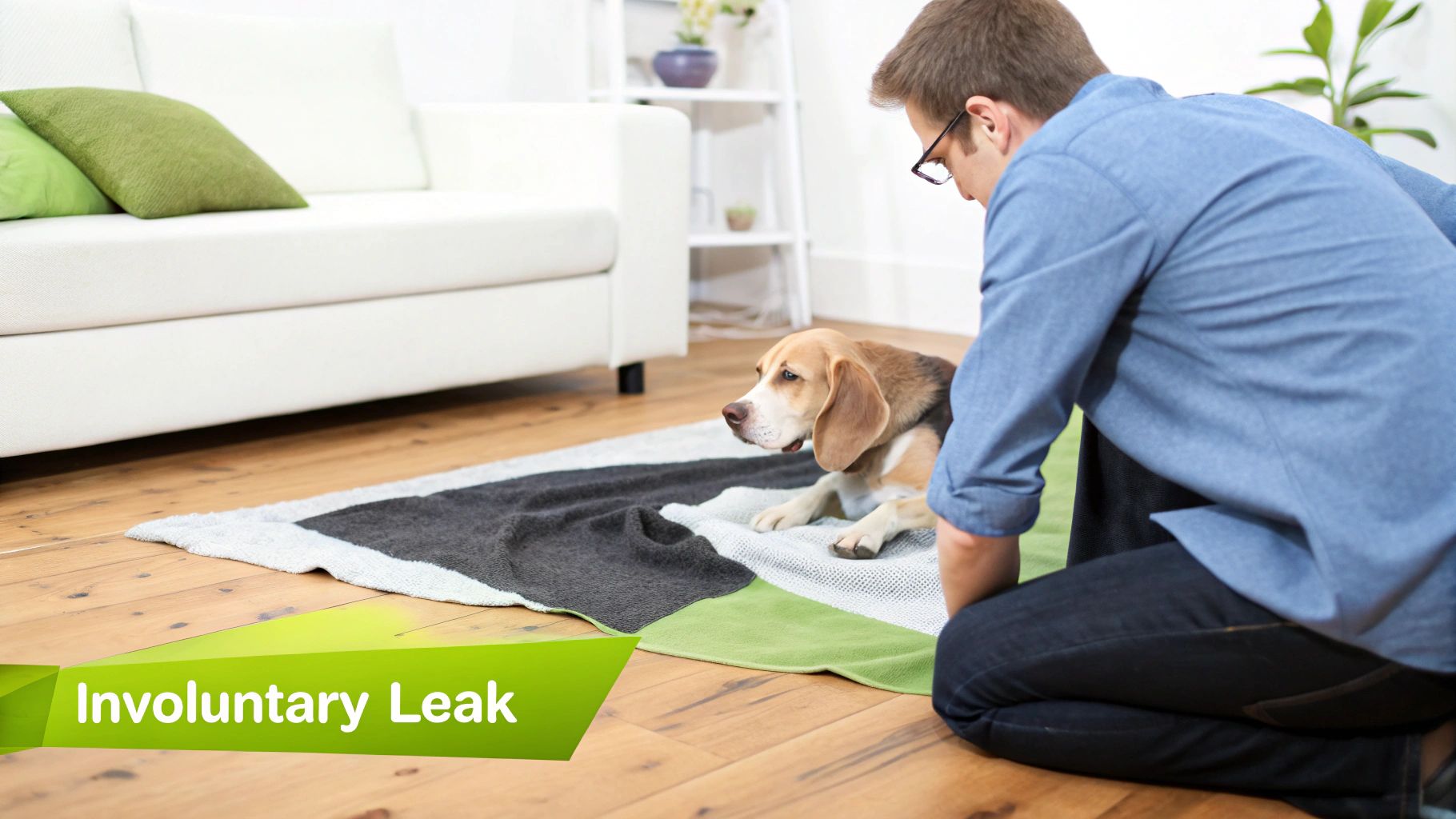
The most important thing to remember is that your dog isn't doing this on purpose. True incontinence is a physical failure of the bladder to hold urine, much like a leaky faucet. This is completely different from a dog making a conscious choice to urinate indoors.
Often, you'll find leaks when your dog is most relaxed or even asleep. They may get up from a nap and seem just as surprised as you are to find their bedding is wet. Recognizing this distinction is crucial for getting your veterinarian the right information to form an effective and compassionate treatment plan.
Differentiating Medical Leaks from Behavioral Accidents
To help your vet diagnose the problem, you need to be a good observer. Note when and where the leaks happen. Your insight is a critical piece of the puzzle.
Here are actionable signs of incontinence to report to your vet:
- Damp Bedding: You find wet patches on their bed or your furniture immediately after they stand up.
- Wet Fur: You notice the fur around their hind legs or genital area is frequently damp or smells of urine.
- Dribbling on the Go: You see small drips of urine leaking out as your dog walks or rests.
Actionable Insight: A dog with urinary incontinence is physically unable to control the leakage. Your first action should always be to schedule a vet visit, not to correct their behavior.
The good news is that this condition is highly manageable. A proper diagnosis from your vet, combined with supportive care at home, allows your dog to live a comfortable and dignified life. Your immediate goal is to identify the root cause.
This guide will provide the actionable insights you need—from identifying common causes and risk factors to implementing proven treatments and practical management tips that protect your pet and your home.
Diving Into the Main Medical Reasons for Incontinence
To solve your dog's leaking, your vet must first identify the specific breakdown in their urinary system. Think of their bladder and urethra as plumbing—when every part works correctly, urine stays put until it's time to go.
When one component fails, leaks occur. Several medical conditions can be the culprit, and each requires a different treatment strategy. Getting an accurate diagnosis is the single most important action you can take to get your dog comfortable and dry again.
Urethral Sphincter Mechanism Incompetence (USMI): The Usual Suspect
The most common cause of urinary incontinence in dogs is Urethral Sphincter Mechanism Incompetence (USMI). Your vet might also call it "hormone-responsive incontinence" or "spay incontinence," as it is extremely common in spayed female dogs.
Here’s a simple breakdown: the urethra (the tube that carries urine out) is sealed by a muscular valve called the urethral sphincter. In dogs with USMI, this valve becomes weak and can't maintain a tight seal. This leads to drips and puddles, especially when your dog is relaxed or sleeping.
This weakness is often linked to the drop in estrogen that occurs after a female dog is spayed. Estrogen helps keep the urethral sphincter strong. When estrogen levels fall, the muscle loses tone. While spaying is a major risk factor, the health benefits of the procedure are vast, and USMI is a manageable side effect.
Research points to Urethral Sphincter Mechanism Incompetence (USMI) as the cause for about 60% of all canine urinary incontinence cases. It's especially common in spayed females, affecting 3-5% overall, though some older studies found rates as high as 30-40% in certain large breeds. You can dig deeper into the full research about USMI in dogs.
While most prevalent in spayed females, USMI can also affect male dogs and intact females. The core issue remains the same: the muscle meant to hold urine has weakened, causing passive, unintentional leakage.
Urinary Tract Infections (UTIs): Creating a Constant "Gotta Go!" Feeling
Another frequent cause is a Urinary Tract Infection (UTI). This is a completely different issue from the passive leaking of USMI. A UTI is an active infection that irritates the bladder lining, creating a constant and urgent need to urinate, even if the bladder is nearly empty.
This intense urge can lead to accidents because your dog simply can't hold it. Their bladder muscles might spasm, forcing out small amounts of urine. It’s an overwhelming physical sensation that overrides their house training.
Actionable signs that point to a UTI include:
- Frequent attempts to urinate with little success.
- Straining or showing discomfort while trying to pee.
- Excessive licking of their genital area.
- Cloudy or bloody urine, a clear signal of infection.
A UTI is highly treatable. Your vet will prescribe antibiotics to clear the infection, and the incontinence should resolve as the irritation subsides.
Neurological Issues: When the Wires Get Crossed
Proper bladder control requires clear communication between the brain, spinal cord, and bladder. Nerves carry signals that tell the bladder when to store urine and when to release it. If these nerve pathways are damaged, the signals become scrambled, often resulting in incontinence.
Think of it as a faulty electrical wire. Nerve damage can prevent the brain from telling the sphincter to stay closed or the bladder to relax and fill properly.
Several conditions can cause this type of nerve damage:
- Spinal cord injuries: Trauma from a fall or accident can damage bladder-control nerves.
- Intervertebral Disc Disease (IVDD): Common in long-backed breeds like Dachshunds, a slipped disc can compress the spinal cord, disrupting nerve signals.
- Degenerative Myelopathy: A progressive spinal disease in older dogs that can eventually lead to complete loss of bladder control.
- Brain diseases or tumors: Any condition affecting the brain's urination control centers can be a cause.
If incontinence is due to a neurological issue, the treatment plan will focus on managing the underlying nerve condition first.
Structural and Congenital Problems: A Flaw in the Blueprint
Sometimes, the issue is physical—a structural problem in the urinary tract that has been present since birth (congenital). These issues typically become apparent when a dog is still a young puppy.
One of the most common congenital defects is an ectopic ureter. The ureters are tubes that carry urine from the kidneys to the bladder. Normally, they connect in a way that allows the bladder to store urine. With an ectopic ureter, one or both tubes bypass the bladder and connect directly to the urethra.
This means urine never gets stored properly and leaks out constantly. A puppy with this condition will likely have been dribbling urine since birth. In most cases, corrective surgery is the most effective long-term solution.
Understanding Your Dog's Specific Risk Factors
While any dog can develop incontinence, certain factors increase the likelihood. Knowing if your dog is in a high-risk category helps you stay vigilant and prepared. This allows you to act quickly at the first sign of trouble, leading to a faster diagnosis and a more effective management plan.
The Strong Link Between Spaying and Incontinence
The most significant risk factor for incontinence in female dogs is spaying. While spaying is a critical procedure for your dog's long-term health and population control, the resulting hormonal changes can impact bladder control.
Here's the connection: spaying removes the ovaries, the primary source of estrogen. Estrogen is vital for maintaining the muscle tone of the urethral sphincter—the valve that holds urine in the bladder. When estrogen levels drop, this muscle can weaken, leading to Urethral Sphincter Mechanism Incompetence (USMI).
This doesn't mean you should avoid spaying. It simply means you should be aware of this potential side effect. Research shows that 5.12% of spayed female dogs develop incontinence, with symptoms typically appearing about 2.3 years after surgery. If you're curious about the science, you can learn more about these findings on canine incontinence.
Age and Its Impact on Muscle Tone
Just like humans, dogs experience a natural loss of muscle tone as they age. The muscles controlling the bladder are no exception. This gradual weakening can make it more difficult for a senior dog to prevent leaks.
Age-related weakening can be the primary cause or it can worsen an existing condition like USMI. For a spayed female dog with an already slightly weak sphincter, the additional muscle loss from aging can be the tipping point that triggers incontinence. This is why the condition is most often diagnosed in middle-aged and senior dogs.
Actionable Insight: Don't dismiss urinary leaks as a "normal" part of aging. It's always a sign of an underlying medical issue that requires veterinary attention.
Breed and Genetic Predisposition
Genetics also play a role. Certain breeds have a higher inherited risk of developing incontinence, often linked to USMI.
Breeds with a known predisposition include:
- Cocker Spaniels
- Springer Spaniels
- Doberman Pinschers
- Old English Sheepdogs
- Irish Setters
If you own one of these breeds, it’s a smart move to mention this to your vet. This allows for proactive monitoring so you can catch any early signs.
The Role of Obesity in Bladder Health
Excess weight puts significant physical pressure on a dog's bladder and surrounding organs. This constant pressure, particularly from abdominal fat, makes it harder for the sphincter muscle to remain tightly closed.
For a dog already at risk due to age, breed, or spay status, being overweight can push a minor weakness into a full-blown incontinence problem. Your most powerful preventive action is to maintain your dog at a healthy weight through proper diet and exercise.
How Your Veterinarian Diagnoses the Issue
When you visit your vet for incontinence, their primary goal is to become a medical detective. A precise diagnosis is the only way to create an effective treatment plan. The investigation begins with your observations and a thorough physical examination.
Be prepared to provide a detailed history: when the leaks started, how often they happen, and any other changes you've noticed, such as increased thirst or straining to urinate. Your input provides the first and most critical clues. The physical exam will follow, where your vet will check for abdominal pain, spinal issues, or neurological deficits.
The First Step in Uncovering the Cause
To start narrowing down the possibilities, your vet will almost always begin with a few fundamental tests designed to rule out common culprits.
The most crucial initial test is a urinalysis. This analysis of a urine sample can quickly identify signs of a urinary tract infection (UTI), bladder crystals, or stones. It also measures urine concentration, which can point toward underlying diseases like kidney problems or diabetes.
Digging Deeper with Additional Diagnostics
Based on the initial findings, your vet may need more information to pinpoint exactly what causes urinary incontinence in dogs. These next steps provide a more complete picture of your dog's health.
Common diagnostic tools include:
- Blood Work: A complete blood panel assesses organ function and screens for systemic conditions like Cushing’s disease or kidney disease, giving your vet a baseline of your dog's overall health.
- Imaging Tests: X-rays or an ultrasound allow your vet to visualize the bladder, kidneys, and other urinary structures. These are used to look for bladder stones, tumors, or congenital defects like an ectopic ureter.
- Urine Culture: If a UTI is suspected but not confirmed by urinalysis, a urine culture is the definitive test. It identifies the specific bacteria causing the infection and determines which antibiotic will be most effective against it.
This process flow shows some of the primary risk factors vets consider when evaluating what causes urinary incontinence in dogs.
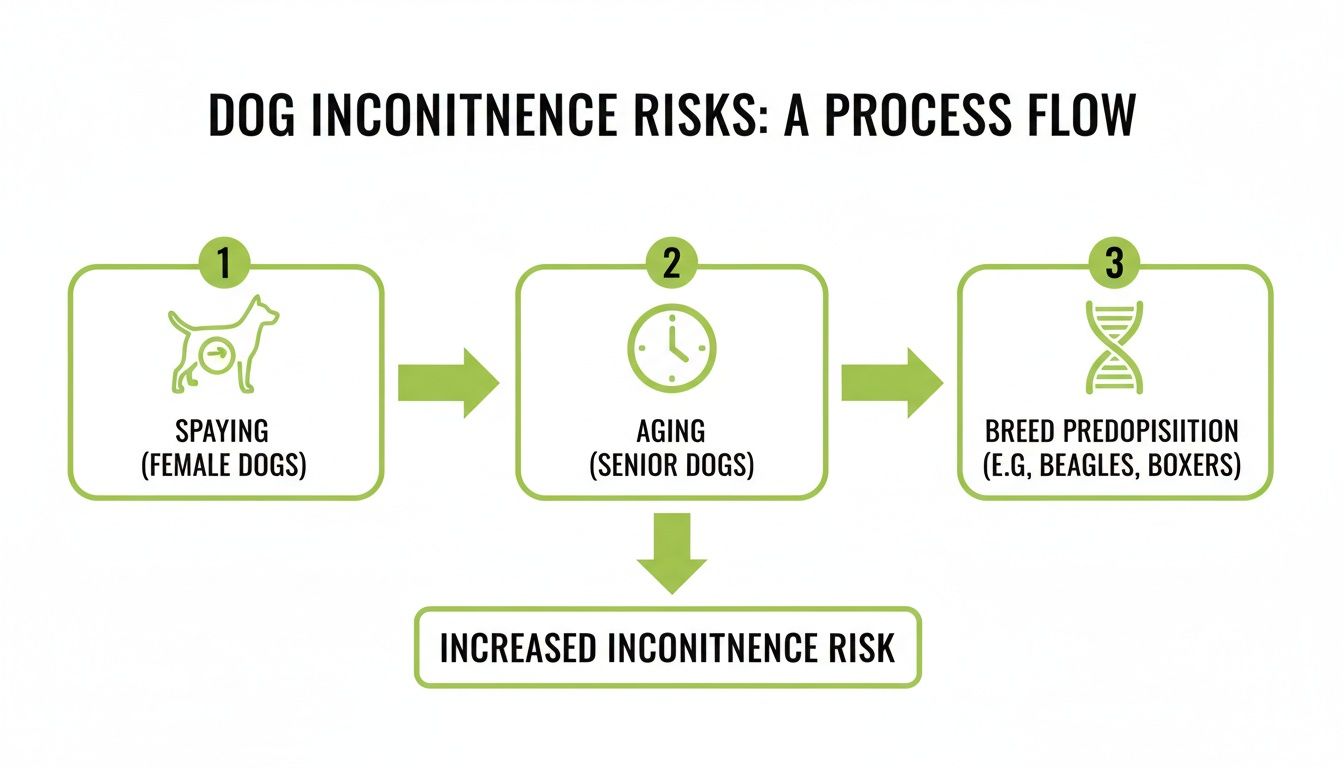
As the diagram illustrates, risk factors like spaying, aging, and breed predisposition help guide the diagnostic approach, allowing your vet to investigate the most likely causes first.
Actionable Insight: View the diagnostic process as a partnership. Each test provides a crucial piece of the puzzle, helping your vet create a targeted and effective treatment plan for your dog.
For complex cases, especially those involving potential neurological issues, your vet may refer you to a specialist for advanced imaging like a CT scan or MRI. This methodical process ensures the true cause of the leaks is identified, paving the way for successful management.
Proven Treatments and At-Home Management Strategies
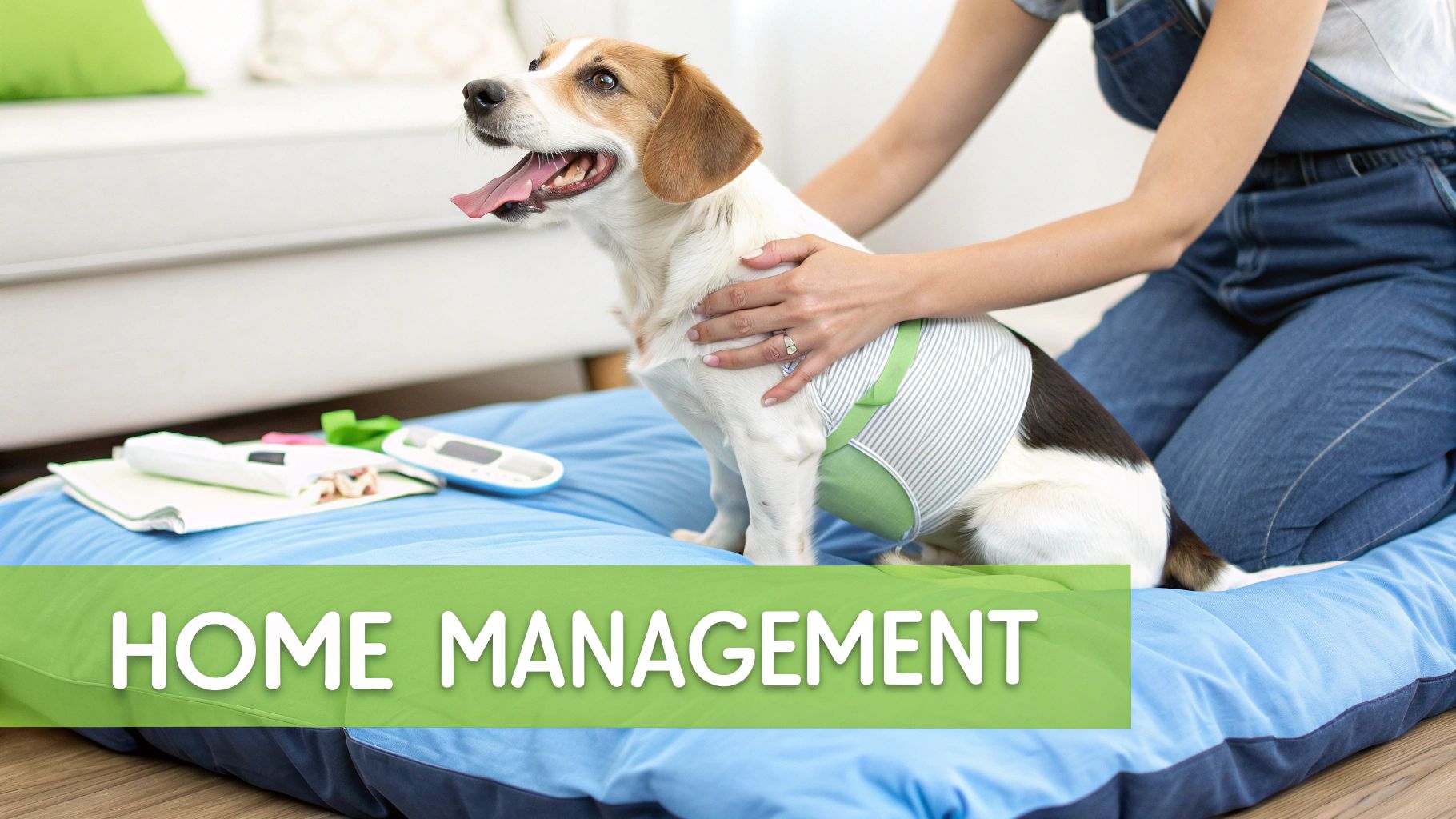
Receiving a diagnosis for your dog’s incontinence is the starting point for creating a successful management plan. The right strategy, combining medical treatment with practical at-home support, can dramatically improve your dog's comfort and quality of life.
Think of it as a two-part solution: your vet provides the medical intervention to address the underlying cause, while you provide the supportive care to manage the day-to-day symptoms. Both are essential for helping your dog live happily and with dignity.
Common Medical Treatments That Make a Difference
Once a diagnosis is confirmed, your vet will recommend a treatment plan. For many common causes of incontinence, medication is a highly effective first-line defense.
A frequently prescribed medication is phenylpropanolamine (PPA). It works by strengthening the urethral sphincter—the muscle that holds urine in the bladder. For dogs with USMI, PPA effectively "tightens the tap," often stopping leaks and dribbles with great success.
For spayed female dogs with hormone-responsive incontinence, estrogen therapy is another excellent option. Estrogen-mimicking medications help restore muscle tone to the sphincter that was lost due to low hormone levels.
Actionable Insight: Most incontinence treatments require long-term commitment. Your key to success is adhering strictly to the prescribed medication schedule and attending regular veterinary check-ups to monitor progress.
In cases where medication isn't sufficient or for structural issues like an ectopic ureter, surgery may be recommended. While more invasive, surgical correction can offer a permanent solution for certain anatomical problems.
At-Home Management: Practical Steps for a Dry and Happy Home
Veterinary treatments are the foundation, but your at-home actions are what make daily life manageable. These practical strategies protect your home, keep your dog clean, and reduce stress for everyone.
Here are actionable steps you can implement immediately:
- Invest in Quality Dog Diapers: Washable, reusable diapers are a game-changer. They provide a reliable way to manage leaks, allowing your dog to move freely without you worrying about accidents. A snug but comfortable fit is crucial for preventing leaks.
- Protect Furniture and Bedding: Use waterproof blankets and furniture covers on your dog’s favorite resting spots. This simple step saves your furniture from stains and odors and eliminates stressful clean-ups.
- Maintain Excellent Hygiene: Clean the fur around your dog’s hindquarters daily with pet-safe wipes. This prevents urine scald, a painful skin irritation caused by constant moisture. Keeping the area clean and dry is non-negotiable.
- Schedule Frequent Potty Breaks: Increase the frequency of trips outside, especially first thing in the morning, last thing at night, and after naps. This keeps their bladder from becoming overly full, reducing the likelihood of leaks.
By combining veterinary treatment with proactive at-home care, you create a comprehensive support system. To find the right product for your needs, review our guide on selecting the best dog diapers for incontinence. This integrated approach ensures your dog remains a happy and cherished part of your family.
Maintaining a Clean and Comfortable Home Environment
Living with an incontinent dog is about making smart adjustments, not overhauling your entire life. Your goal is to create a system that protects your home and keeps your dog comfortable without adding stress to your daily routine. A little preparation can turn a major worry into a manageable task.
Your dog's health and comfort should always come first. Urine is caustic to the skin, and constant dampness can lead to painful urine scald. A consistent hygiene routine is essential for preventing skin irritation and infections.
Essential Products for a Stress-Free Home
The right tools can make all the difference. These products are designed to contain messes, protect your home, and simplify cleanup, allowing your dog to continue being a fully integrated member of the family.
Implement these key items into your management plan:
- Washable Dog Diapers: These are the cornerstone of at-home care. High-quality reusable diapers are an effective, sustainable, and comfortable solution for managing leaks around the clock. They give your dog freedom and give you peace of mind.
- Waterproof Covers: Deploy these strategically. Cover your dog’s bed, their favorite spot on the couch, and any other area where they frequently rest. They provide an essential barrier that protects your belongings.
- Gentle Pet Wipes: Keep these on hand for quick cleanups. Wiping your dog’s skin and fur after a leak or during a diaper change is crucial for preventing irritation. Good hygiene is a critical component of successful management. Learn more in our guide on dog diaper rash treatment.
Creating a Hygiene Routine That Works
Consistency is key. A reliable daily routine helps prevent problems before they start, keeping your dog's skin healthy and your home fresh. This isn't just about cleaning spills—it's about proactive care.
If your dog sleeps with you, protecting your own bed is also a priority. Investigating the benefits of a mattress protector can save your mattress and preserve your peace of mind, especially overnight.
Actionable Insight: Managing incontinence successfully reinforces your dog's place in the family. By providing a clean and supportive environment, you help them live with dignity, regardless of their medical condition.
Ultimately, these strategies are about more than just cleanliness. They are about preserving the special bond you share with your dog, ensuring a manageable medical issue doesn't create frustration or distance. With the right tools and routines, you can focus on enjoying your time together.
Frequently Asked Questions About Dog Incontinence
When your dog starts having accidents, questions and concerns are natural. Here are clear, actionable answers to some of the most common queries.
Is My Dog's Incontinence Behavioral or Medical?
This is the most critical distinction to make. True incontinence is medical—your dog leaks urine involuntarily, often while resting or sleeping, and is unaware it's happening. This is a physical problem. Behavioral urination is a conscious choice, such as marking territory, submissive peeing, or stress-related accidents.
Your action plan: If your house-trained dog starts leaving puddles where they sleep, assume it's a medical issue. Your first and only step should be to schedule a veterinary appointment, not to scold or retrain them.
Can Urinary Incontinence in Dogs Be Cured?
The possibility of a "cure" depends entirely on the cause. For some issues, yes. A urinary tract infection (UTI), for example, can be completely cured with a course of antibiotics, resolving the incontinence along with it.
However, for chronic conditions like hormone-responsive incontinence (USMI), the goal is long-term management, not a cure. The great news is that management is highly effective. With consistent medication, lifestyle adjustments, and supportive products like washable diapers, most dogs can live a normal, dry, and happy life with the condition fully under control.
When Should I See a Vet for Urine Leaking?
Immediately. Do not wait. As soon as you notice your dog leaking urine—even small amounts—make a vet appointment.
Why act fast? An early diagnosis is key to effective management and allows your vet to rule out more serious underlying health conditions. Prompt action also prevents secondary complications like painful skin infections caused by urine scald. While waiting for your appointment, you can explore supportive care options like those discussed for dog incontinence with natural remedies to complement your vet's plan.
At Pet Magasin, we get it. Managing incontinence is all about keeping your dog comfortable and giving you peace of mind. Our premium washable dog diapers are designed to be reliable, comfy, and super easy to use, so your best friend can stay dry and happy. Shop our collection today.

Leave a comment