
A Practical Guide to Dog Diaper Rash Treatment

To treat your dog's diaper rash, you must first identify the cause. Your goal is to get the affected area clean, dry, and free from irritation so the skin can heal. This requires a focused routine of gentle cleaning, providing plenty of air exposure, and pinpointing the trigger.
Understanding Dog Diaper Rash and Its Causes
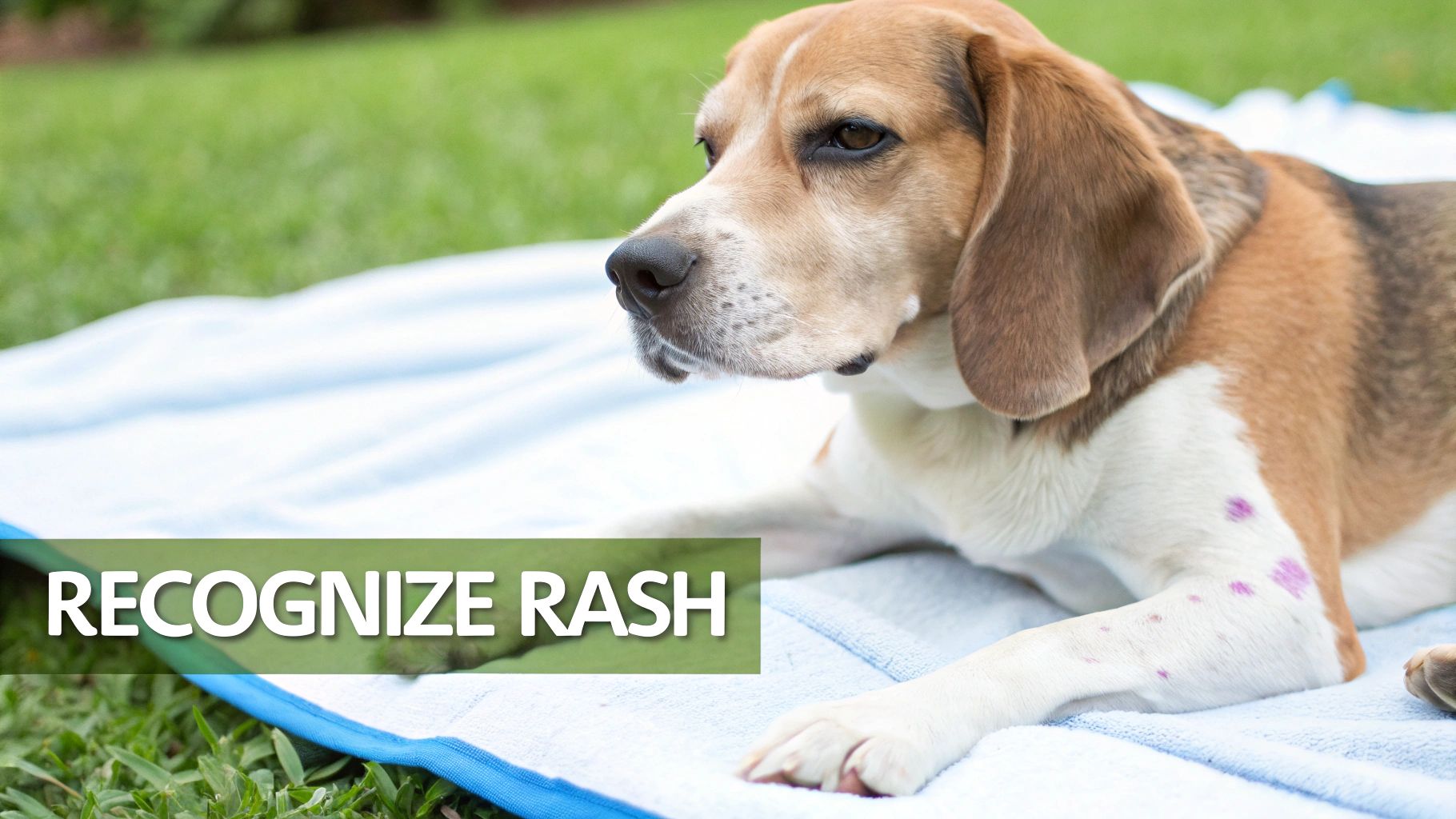
Before you begin treatment, you need to know exactly what you’re dealing with. Diaper rash, known as contact dermatitis by veterinarians, is skin inflammation. It can range from mild redness to painful, open sores. It's not just an isolated issue; it’s a clear signal of an underlying problem.
The most common culprits are a combination of moisture, friction, and bacteria that create an environment ripe for irritation.
- Prolonged Moisture: This is the primary trigger. Continuous contact with urine or feces will irritate the skin. A senior dog with incontinence who lies down frequently is at high risk, as trapped moisture quickly leads to a rash.
- Friction and Chafing: A poorly fitting diaper will rub against your dog's skin, especially around the legs and tail. This friction wears down the skin's protective barrier, a common issue for active dogs.
- Allergic Reactions: Some dogs are sensitive to the materials, fragrances, or chemicals in disposable diapers. An allergic reaction typically appears as a widespread, inflamed red rash.
Distinguishing Rash from Other Skin Issues
It is critical to determine if you're dealing with a simple diaper rash or a more complex condition. A yeast infection, for instance, often presents as bright red, shiny skin, possibly with small red bumps at the edges, and may have a distinct odor.
Skin problems are very common in dogs. A study from 2020-2022 found that skin issues accounted for 12.06% of all cases at one veterinary hospital, with parasitic problems often leading to secondary bacterial infections. This data highlights why an accurate diagnosis is essential before starting any home treatment.
Actionable Tip: If you notice a foul odor, discharge, or if the rash does not improve with basic care, it's a sign of a secondary infection. Stop home treatment and consult your vet.
The Role of Grooming and Hygiene
Proactive grooming is your first line of defense. Hair around the diaper area traps moisture and bacteria, worsening the situation. Keep this area neatly trimmed. Our guide on how to groom your dog at home offers practical steps for this task.
If you suspect a secondary bacterial infection, your vet will need to perform an examination. In some cases, they may use advanced tools like wound imaging for bacterial detection to assess the full extent of the problem. Your first step is always to identify the root cause—whether it’s friction, moisture, or a full-blown infection.
What to Do Right Away for Your Dog’s Irritated Skin
When you spot a red rash, act immediately to provide relief. Fast action not only soothes your dog’s discomfort but also prevents a minor irritation from escalating into a serious problem.
Your first step is to clean the area without causing more irritation. Do not use regular dog shampoo or any human soaps. These products contain harsh detergents and fragrances that will aggravate raw, inflamed skin.
Instead, perform a gentle cleaning with a simple saline solution. To make it, dissolve half a teaspoon of salt in one cup of warm water.
A Gentle Cleaning and Drying Routine
Use a soft cloth or cotton ball to gently dab the saline solution onto the affected skin. Your objective is to clean away urine and debris, not to scrub. Aggressive cleaning will only inflame the skin further and cause your dog unnecessary pain.
After cleaning, you must dry the area completely. Moisture is the number one enemy of diaper rash, so leaving the skin even slightly damp will reverse your efforts. Pat the area dry with a clean, soft towel—do not rub.
Pro Tip: For dogs with thick fur or those who are sensitive to touch, use a hairdryer on its lowest, coolest setting. Hold it several inches from their skin and keep it moving to prevent burns while ensuring the area is completely dry.
The Power of Diaper-Free Time
Once the skin is clean and dry, the most effective treatment is fresh air. Schedule dedicated diaper-free time in a safe, easy-to-clean area of your home, like a room with tile floors or a playpen lined with puppy pads.
Air exposure is a crucial part of the natural healing process. It reduces moisture, eliminates friction from the diaper, and allows the irritated skin to begin repairing itself.
Follow these steps for successful diaper-free time:
- Supervise your dog closely to manage any accidents.
- Ensure their space is clean to prevent bacteria from contaminating the irritated skin.
- Provide short, frequent breaks. Several 15-20 minute breaks throughout the day are more effective than one long period.
This simple routine of gentle cleansing, thorough drying, and ample air exposure creates the ideal foundation for healing and prepares the skin for any topical treatments you apply next.
Choosing The Right Topical Treatment
After cleaning and drying the irritated area, apply a topical treatment. Your goals are to soothe the existing rash and create a protective barrier that allows the skin to heal. Choose a product that calms inflammation and is safe if licked.
For mild cases—slight pinkness or chafing—a simple, natural remedy is often sufficient. Pure coconut oil is an excellent first choice; it moisturizes dry, irritated skin and contains lauric acid, which has gentle antimicrobial properties. Another effective home remedy is a colloidal oatmeal paste or a soothing soak, known for its natural anti-inflammatory compounds that reduce itching.
Vet-Approved Over-The-Counter Solutions
If the rash appears more inflamed or is not improving, you need a stronger solution. Creams containing zinc oxide are a classic treatment because they form a thick, waterproof barrier that shields the skin from moisture like urine. This protection gives the underlying tissue a chance to repair itself without constant re-irritation.
Medicated sprays can also be very effective, especially if you suspect a low-level infection. Products containing chlorhexidine are formulated to combat bacterial and fungal growth. If this seems necessary, learn how to correctly use a chlorhexidine spray for dogs to ensure it is the appropriate choice.
This decision tree helps visualize the immediate steps to take for any skin irritation.
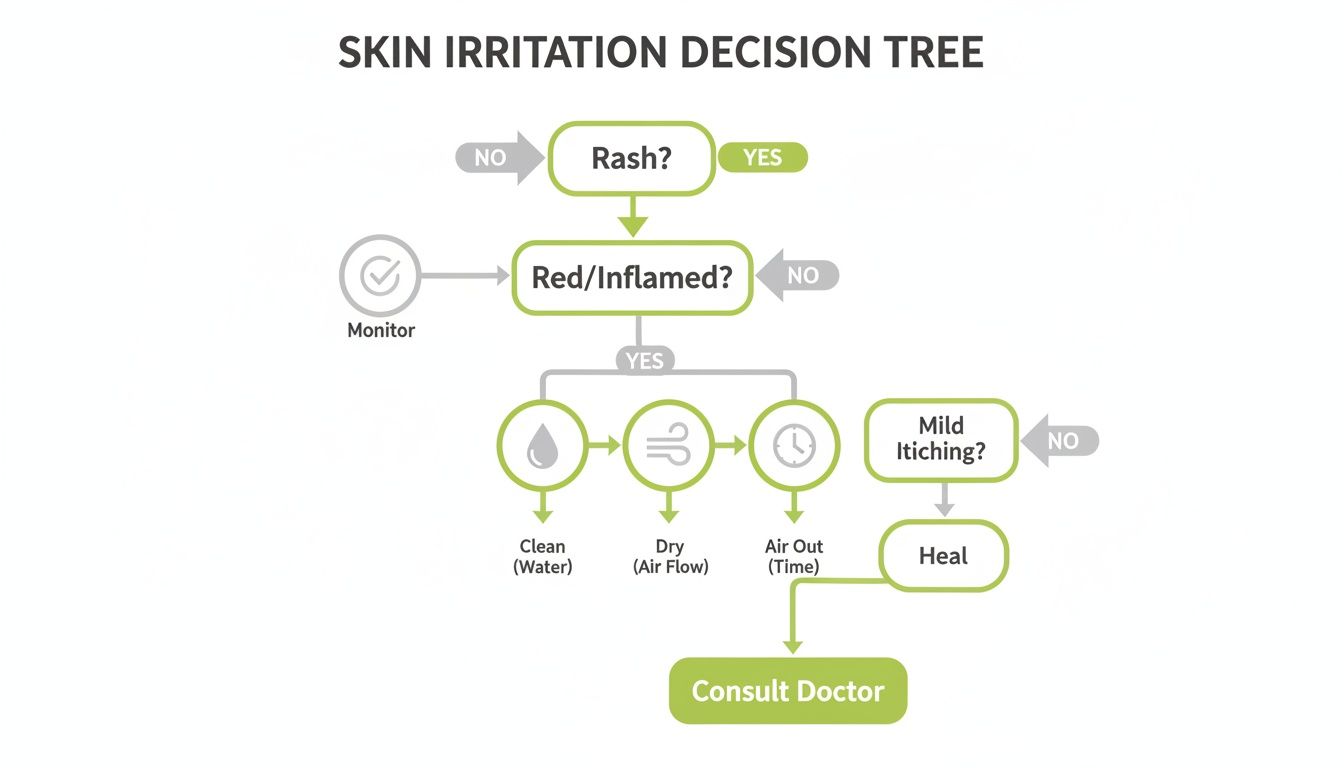
As the chart illustrates, the foundation of any treatment is to get the area clean, dry, and aired out before applying any topical product.
Use this table to help you select the appropriate treatment.
Choosing the Right Topical Treatment for Dog Diaper Rash
| Treatment Option | Best For | How It Works | Safety Notes |
|---|---|---|---|
| Coconut Oil | Mild redness, chafing, and dry skin. | Moisturizes the skin and provides a light, natural antimicrobial barrier. | Generally safe if licked in small amounts, but too much can cause an upset stomach. |
| Zinc Oxide Cream | Moderate to severe rash with moisture exposure. | Creates a thick, waterproof barrier that protects skin from urine and feces. | Choose a pet-specific formula. Some human versions contain toxic ingredients. |
| Chlorhexidine Spray | Rashes that seem infected, moist, or aren't healing. | An antiseptic that combats bacterial and yeast overgrowth on the skin. | Very effective but should be used as directed. Best to consult a vet first. |
| Colloidal Oatmeal | Itchy, inflamed, and irritated skin. | Contains compounds that soothe inflammation and calm the urge to scratch. | Extremely safe. Can be used as a paste or added to a shallow bath. |
This table is a guide. Always base your decision on your dog's specific needs and the rash's severity. When in doubt, call your vet.
What To Avoid Putting On Your Dog's Skin
Knowing what not to use is as important as knowing what to use. Many human products contain ingredients that are harmful or toxic to dogs if ingested.
- Human Diaper Creams with Salicylates: Some brands contain salicylates (related to aspirin), which are toxic to dogs. Always check the ingredients list.
- Hydrocortisone Cream (Without Vet Approval): While effective, using it without vet supervision can thin the skin over time or mask an underlying infection that requires a different treatment.
- Petroleum Jelly (in excess): Though not toxic, it prevents the skin from breathing and can trap moisture and bacteria if not applied to a perfectly clean, dry surface.
- Tea Tree Oil: Never use tea tree oil on your dog. It is highly toxic, even when diluted.
Important Note: If the rash persists, you may be dealing with more than simple irritation. Canine atopic dermatitis (CAD), an allergic skin disease affecting an estimated 3-15% of dogs, can mimic or worsen diaper rash. In such cases, treating the underlying allergy is necessary for lasting relief.
While human products can offer insights—for example, understanding why people consider using Aquaphor for diaper rash treatment highlights the value of a barrier cream—it is always safest to use products specifically made for dogs or those approved by your veterinarian.
Building a Proactive Rash Prevention Routine
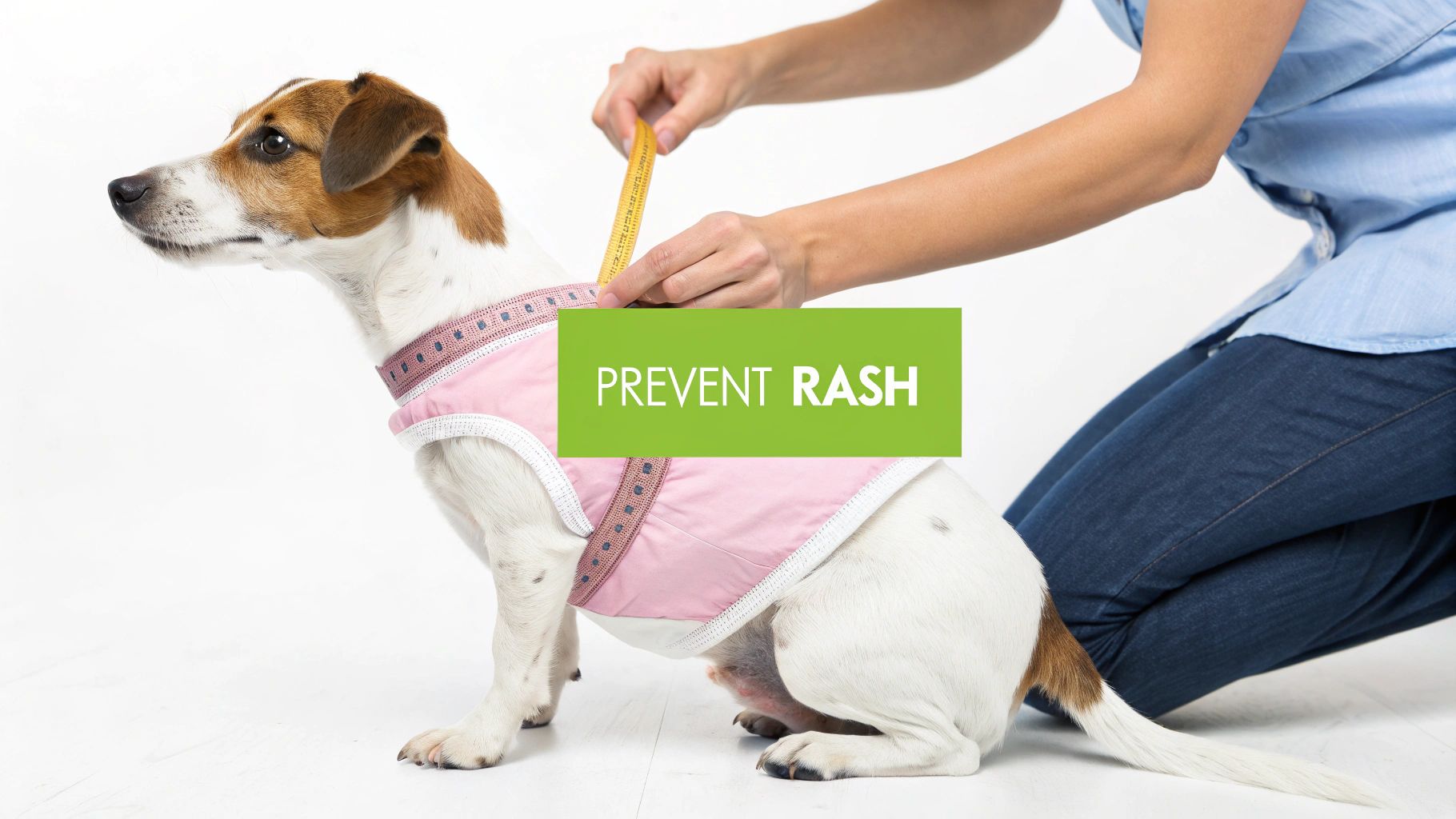
While knowing how to treat a rash is useful, preventing it from starting is the best strategy. A proactive routine is not complicated; it is about building consistent habits that protect your dog's skin.
This approach focuses on three core actions: ensuring a proper diaper fit, maintaining excellent hygiene, and implementing smart grooming practices.
Nailing the Perfect Diaper Fit
A correct fit is the first step to preventing friction rashes. A diaper that is too loose will slide and rub, while one that is too tight will constrict and chafe the skin, particularly around the leg openings and tail.
To find the right size, use a soft measuring tape to measure your dog’s waist just in front of their hind legs. Compare this measurement to the manufacturer's sizing chart, as sizes vary significantly between brands.
When you put the diaper on, you should be able to comfortably fit two fingers between the diaper and your dog’s waist. The leg gussets should be snug enough to prevent leaks but not so tight that they leave red marks. This ensures a secure fit that moves with your dog without causing irritation.
The global pet diapers market is projected to more than double by 2032, with dogs comprising nearly 79% of this demand. This growth, driven by the needs of aging and incontinent pets, is pushing manufacturers to develop higher-quality diapers designed to prevent skin issues.
Establishing Solid Hygiene Habits
A good fit is only part of the solution. Your actions between diaper changes are equally important. The key to preventing moisture-related rashes is to keep the area consistently clean and dry.
Change the diaper frequently and on a regular schedule. A good rule is to change it at least every 3-4 hours, and immediately if you know it is soiled. A wet diaper creates a warm, damp environment where bacteria thrive.
Between changes, use pet-safe, unscented wipes to gently clean the skin. Choose wipes that are free of alcohol and other harsh chemicals. Your goal is to remove any residual urine without stripping the skin's natural oils.
Actionable Tip: A consistent changing schedule is non-negotiable. Set reminders on your phone to stay on track. Preventing a rash is far less work than treating an existing one.
The Role of Smart Grooming and Materials
Grooming plays a significant role in rash prevention. For long-haired breeds, fur in the diaper area can trap moisture and debris against the skin.
- Keep it Trimmed: Regularly trim the fur around the diaper area to improve airflow and make cleaning more effective.
- Choose the Right Material: Consider the diaper's material. For dogs with sensitive skin, reusable cloth diapers are often a better choice because they are softer and more breathable than many disposables. If you are considering this option, our guide on the best washable dog diapers can help you find a comfortable and reliable choice.
By combining a perfect fit with diligent hygiene and thoughtful grooming, you create a powerful defense against diaper rash. This proactive approach is the most effective dog diaper rash treatment because it stops the problem before it starts.
When You Need to Call the Vet
While most diaper rashes resolve with home care, you must recognize when an irritation has become a more serious issue. Observe the area closely to catch warning signs early and get your dog the help they need promptly.
You should see some improvement within 24-48 hours of starting home treatment. If the rash is not getting better, or if it is spreading or looks worse, stop home care and call your veterinarian. A persistent rash often indicates an underlying problem, such as a secondary infection, that requires professional medical treatment.
Key Physical Warning Signs
The following symptoms are red flags that require immediate veterinary attention. Do not wait for them to improve on their own.
- Open Sores or Ulcers: Any break in the skin creates an entry point for serious infection. This is beyond simple irritation and needs medical intervention to prevent bacteria from spreading.
- Foul Odor: A pungent or yeasty smell is a classic sign of a bacterial or fungal infection. This is a distinct, abnormal odor, not the typical smell of urine.
- Pus or Discharge: Yellow, green, or cloudy fluid oozing from the rash indicates an active infection that must be treated with prescription medication from your vet.
Expert Insight: A rash that feels hot to the touch is another critical warning sign. Increased skin temperature often signals deep inflammation or infection that requires veterinary assessment.
Behavioral Changes to Watch For
Sometimes, the most significant clues are in your dog's behavior, not on their skin. A severe infection can make your dog feel sick all over. These behavioral changes are as urgent as physical symptoms.
Watch for a dog that is suddenly unusually tired or lethargic. If a normally playful dog wants to sleep all day, their body may be fighting off an infection. A loss of appetite is another major red flag. When a food-motivated dog refuses to eat, it is a strong indicator that they are unwell.
If you observe any of these physical or behavioral signs, you are no longer dealing with a simple diaper rash. It's time to let a professional take over. Calling your vet immediately will spare your dog unnecessary pain and ensure a faster, safer recovery.
Your Questions About Dog Diaper Rash Answered
Even with the best care, dealing with diaper rash can raise questions. Here are answers to some of the most common concerns from pet parents to help you manage any rash with confidence.
Can I Use Human Diaper Rash Cream on My Dog?
The answer is maybe, but only with extreme caution. While a basic zinc oxide cream might seem safe, many human products contain additional ingredients, such as salicylates (related to aspirin), which can be toxic if your dog licks them. Do not use products from your own medicine cabinet without professional guidance.
Before using any human product, you must consult your veterinarian. They can recommend a pet-safe cream or approve a specific human product after carefully reviewing its full ingredient list.
How Quickly Should a Dog Diaper Rash Heal?
If you start proper care early—keeping the area clean, dry, and using a suitable barrier cream—you should see improvement within 24 to 48 hours. The redness should begin to fade, and the skin should appear less irritated.
If the rash persists for more than a few days, worsens, or if you see open sores or notice a foul odor, stop home treatment and call the vet. A non-healing rash often indicates a secondary infection or an underlying allergy that requires a professional diagnosis.
Key Insight: Healing depends on more than just applying cream. Consistent diaper changes, proper hygiene, and scheduled "diaper-free" time are all critical components of an effective dog diaper rash treatment plan.
Are Certain Breeds More Prone to Diaper Rash?
Yes. While any dog wearing a diaper is at risk, some breeds are more susceptible due to their physical characteristics.
- Dogs with Skin Folds: Breeds like Bulldogs, Pugs, and Shar-Peis have wrinkles that can trap moisture and heat, creating an ideal environment for irritation and bacterial growth.
- Hairless Breeds: Dogs such as the Chinese Crested or Xoloitzcuintli lack a protective fur coat. Their skin is in direct contact with the diaper, increasing vulnerability to friction and moisture.
- Dogs with Known Allergies: Breeds prone to skin sensitivities, like Golden Retrievers and German Shepherds, may react more severely to diaper materials or trapped humidity.
Regardless of your dog's breed, prevention through a well-fitting diaper, frequent changes, and good hygiene is the most effective strategy.
What’s the Difference Between a Rash and a Yeast Infection?
Distinguishing between these two conditions is crucial because they require different treatments.
A standard diaper rash typically appears as red, chafed skin caused by moisture and friction. In contrast, a yeast infection often looks more severe. Look for a bright red, shiny rash, sometimes with small red bumps or pimple-like spots around the edges.
The most telling sign of a yeast infection is often the smell. A distinct, musty, or sweet odor coming from the area is a major red flag.
If you suspect a yeast infection, a vet visit is mandatory. A veterinarian can confirm the diagnosis and prescribe the necessary antifungal cream or wash, as a standard barrier cream will not resolve a fungal overgrowth.
For reliable and comfortable solutions to help manage your dog's needs, from grooming to hygiene, explore the high-quality products at Pet Magasin. Find everything you need at https://www.petmagasin.com.

Leave a comment