
Chlorhexidine spray for dogs: Your guide to safe skin care

Think of chlorhexidine spray as your dog's personal skin bodyguard. It's a veterinarian-recommended antiseptic solution for a host of common skin problems. From minor nicks and scratches to more persistent issues like hot spots, bacterial flare-ups, and post-grooming irritation, this spray is designed for effective action. Its primary job is to eliminate harmful germs, prevent infections, and promote faster skin healing.
Understanding Chlorhexidine Spray: Your Go-To Skin Solution
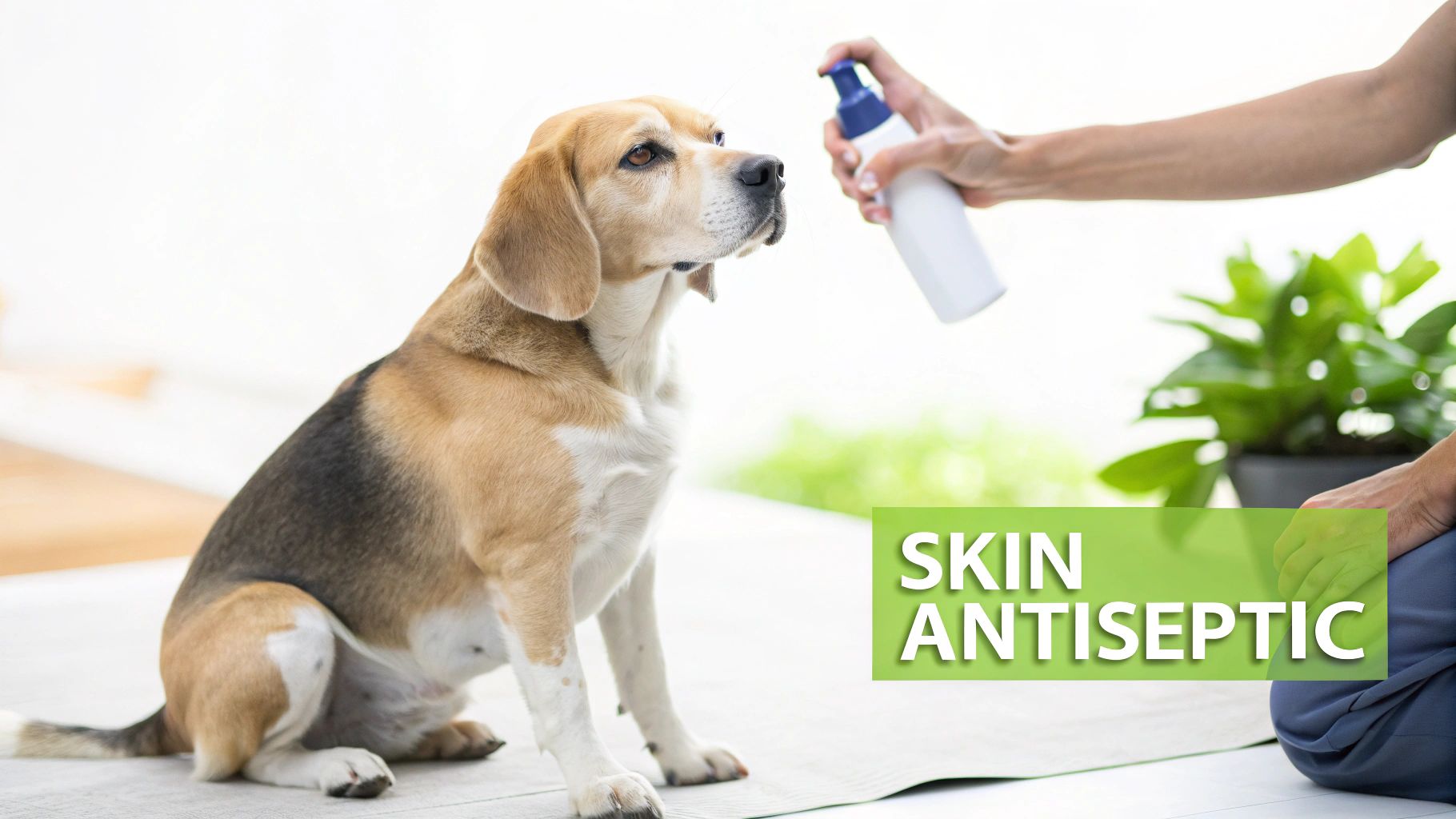
As a dog owner, you know that skin issues can be a constant battle. An incessant itch can disrupt their sleep, while an inflamed hot spot can appear seemingly overnight. These problems require a reliable solution, which is why a good chlorhexidine spray for dogs is an essential item for your pet care kit.
Chlorhexidine isn't just soap and water. It is a clinical-grade antiseptic, formulated to target the bacteria and yeast responsible for most skin ailments. When your dog sustains a small scrape, that protective skin barrier is compromised, creating an open invitation for germs to invade and cause infection.
What Makes It So Effective?
The power of chlorhexidine lies in its broad-spectrum antiseptic properties. It doesn't just rinse away dirt; it actively destroys microorganisms on contact and then creates a protective barrier for lasting defense. It’s a true multi-tasker.
This makes it incredibly effective for several key tasks:
- Preventing Infections: Apply it to a minor wound, bug bite, or scratch to create a clean environment. This action prevents a small issue from escalating into a serious, painful infection.
- Managing Active Skin Conditions: For vet-diagnosed skin infections like pyoderma or yeast dermatitis, the spray helps reduce the microbial load, allowing the skin to heal properly.
- Soothing Itchiness: By eliminating the root microbial cause of irritation, it helps break the miserable itch-scratch cycle that exacerbates skin damage.
This versatility makes chlorhexidine spray for dogs a first-aid MVP. Use it to clean a scraped paw after a hike, soothe a developing hot spot before it worsens, or keep a minor grooming rash from becoming infected.
Actionable Insight: Add a bottle of chlorhexidine spray to your pet's first-aid kit today. Being prepared to treat minor skin irritations immediately can prevent them from becoming larger, more painful, and more expensive problems down the line.
To provide a clearer picture, here’s a quick rundown of chlorhexidine's key functions.
Chlorhexidine At a Glance: Your Quick Guide
This table breaks down the primary uses of chlorhexidine spray, helping you understand exactly why it's such a valuable tool for maintaining your dog's skin health.
| Primary Use | What It Does | Common Applications |
|---|---|---|
| Antiseptic Cleansing | Kills bacteria, yeast, and other microbes on the skin's surface. | Minor cuts, scrapes, scratches, and insect bites. |
| Infection Management | Reduces the microbial load to help control existing skin infections. | Hot spots, pyoderma (bacterial infection), and dermatitis. |
| Post-Activity & Grooming | Provides a protective barrier to prevent infections after outdoor fun or grooming. | Cleaning paws after a walk, soothing clipper burn, or post-grooming care. |
| Itch & Irritation Relief | Addresses the underlying microbial cause of itching and discomfort. | Allergies, yeast overgrowth, and general skin irritation. |
Knowing what this solution does and why it's effective empowers you to act decisively. It's not just about treating problems; it's about being prepared to provide your dog with immediate relief, keeping them happy, comfortable, and ready for their next adventure.
How Chlorhexidine Actually Works on Your Dog's Skin
To understand why veterinarians trust chlorhexidine spray for dogs, it helps to know how it works on a microscopic level. Think of chlorhexidine as a specialized demolition crew for harmful microbes like bacteria and yeast.
When you spray it onto your dog’s skin, it doesn’t just wash germs away. The positively charged molecules in the solution are drawn like magnets to the negatively charged surfaces of microbial cell walls. This chemical attraction is the first step in a highly effective takedown.
Once attached, the chlorhexidine molecules begin to dismantle the microbe's defenses by disrupting the cell wall. This action causes the cell's internal components to leak out, effectively destroying the invader almost instantly.
Even better, chlorhexidine continues to work long after application. It binds to proteins in your dog's skin, creating a persistent protective shield that continues to fight off new germs for hours. This residual activity is crucial for preventing reinfection and providing the skin with a clean, safe environment to heal.
Understanding Concentrations: What 2% vs. 4% Really Means
When shopping for chlorhexidine sprays, you’ll notice concentrations like 2% or 4% on the label. This percentage indicates the amount of chlorhexidine gluconate—the active ingredient—in the solution. Both are effective, but they are intended for different levels of skin issues.
A higher number indicates stronger antiseptic action. Here’s a simple breakdown:
-
2% Chlorhexidine Spray: This is the standard for most day-to-day situations. It is ideal for cleaning minor cuts, scrapes, emerging hot spots, and mild skin irritations. It provides a powerful antiseptic effect while remaining gentle enough for regular use, even on sensitive skin.
-
4% Chlorhexidine Spray: This is a higher-strength formulation typically reserved for more severe or stubborn infections. A vet may recommend a 4% solution to treat advanced pyoderma or a widespread fungal infection that requires more aggressive therapy. It offers maximum germ-killing power but can be more drying, so use it under veterinary guidance.
For most at-home first-aid needs, a 2% spray is the appropriate and effective choice.
Fast-Acting and Long-Lasting Protection
Chlorhexidine’s dual-action approach—killing germs on contact and then providing lasting protection—is what sets it apart. Unlike some antiseptics that can be harsh or evaporate quickly, chlorhexidine works fast and remains on guard.
Actionable Insight: A major advantage of chlorhexidine is its ability to remain effective in the presence of organic material like dirt or blood. This makes it a reliable choice for cleaning real-world scrapes and cuts your dog might get while playing outside, as its antiseptic power isn't diminished.
This unique property means that when you use a chlorhexidine spray for dogs, you’re doing more than just cleaning a wound. You're establishing a strong, lasting defense that supports your dog's natural healing process in a clean and protected environment, leading to a quicker and more comfortable recovery.
Common Dog Skin Problems Solved with Chlorhexidine
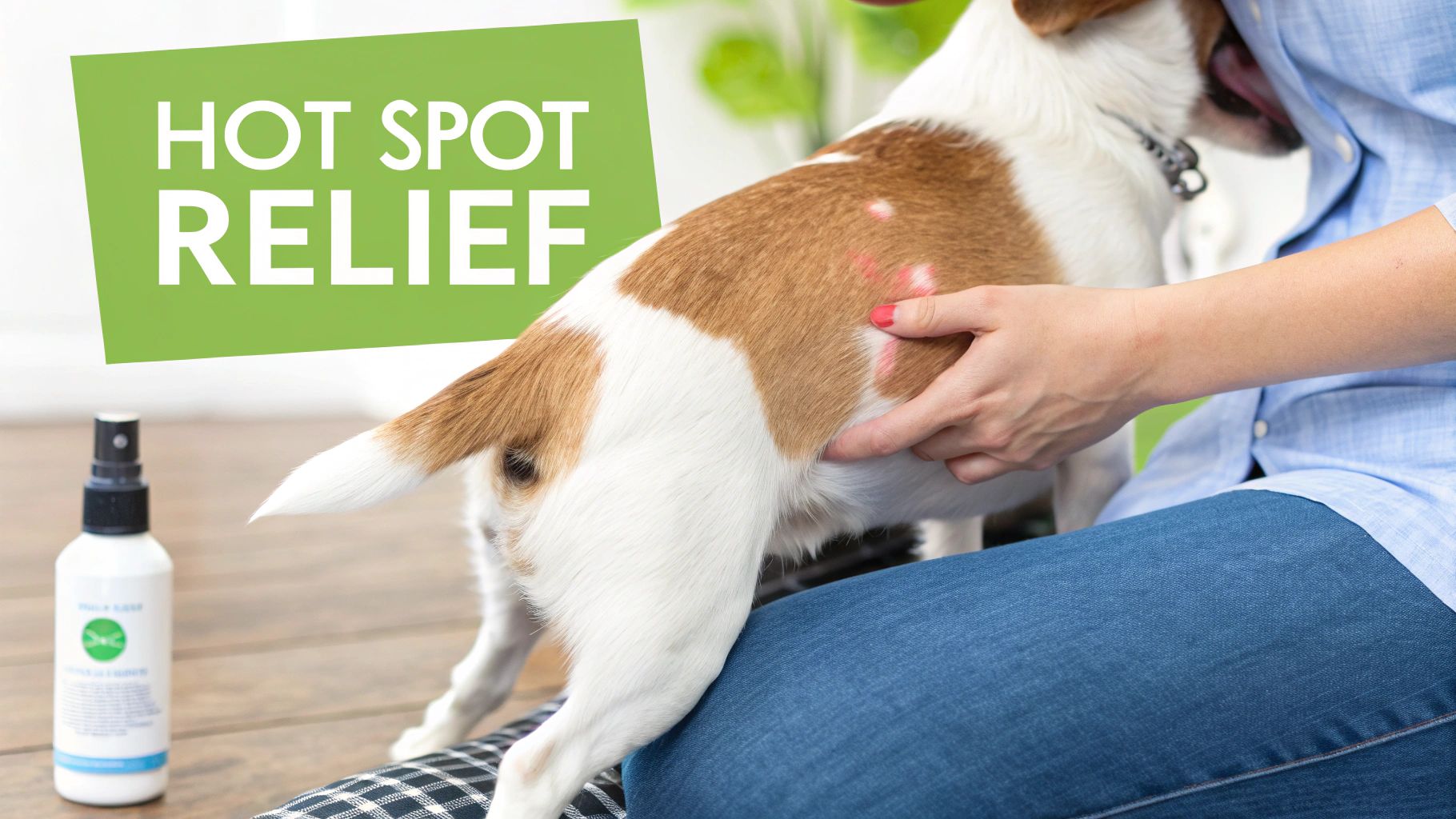
Now that you understand the science, let's focus on practical applications. A chlorhexidine spray for dogs is a problem-solver for many common skin ailments. From acute flare-ups to chronic bacterial or yeast issues, this is a tool veterinarians trust for effective management.
Think of your dog's skin as a garden. When healthy, it's in balance. But when weeds (like bacteria or yeast) invade, you need a targeted solution that removes them without harming the healthy plants. Chlorhexidine does exactly that—it targets the pathogens so healthy skin can recover.
The reliance on these products is clear. The global topical pet sprays market is valued at approximately USD 875 million and is projected to reach USD 1.45 billion by 2034. Medicated sprays, the category that includes chlorhexidine, make up a significant portion of this market at nearly USD 367 million, showing how many owners depend on these solutions.
Action Plan for Hot Spots
A "hot spot" (acute moist dermatitis) is a raw, inflamed, and intensely itchy patch of skin that your dog can't leave alone. Licking and chewing worsen the condition, creating a cycle of irritation and infection.
A chlorhexidine spray for dogs is your first line of defense. Here is your action plan:
- Trim the Fur: Carefully trim the hair around the hot spot to allow air to reach the skin and prevent trapped moisture, which bacteria thrive on. Maintaining a well-groomed coat can prevent mats that cause this; learn more with our guide on the https://www.petmagasin.com/blogs/product-guides/best-grooming-brush-for-dogs.
- Cleanse Gently: Use a mild antiseptic cleanser to clean the area, then pat it completely dry.
- Apply the Spray: Lightly mist the hot spot with chlorhexidine spray. Its antiseptic action begins immediately, reducing the bacteria that fuel the inflammation.
- Prevent Licking: This is a crucial step. The spray helps break the itch-scratch cycle. By controlling the bacteria, the irritation subsides, reducing your dog's urge to lick and allowing the skin to heal.
Soothing Minor Cuts and Scrapes
Dogs are natural explorers, which means minor cuts, scratches, and insect bites are common. If not cleaned properly, these small wounds can easily become infected. Use chlorhexidine spray as an on-the-spot antiseptic wash to flush out debris and kill germs before they cause a problem.
The spray's lasting protective barrier is a key benefit. A quick application after cleaning a minor wound keeps the area protected for hours, which is critical during the initial stages of healing. It is an essential component of any dog first-aid kit.
Combating Bacterial and Yeast Infections
Deeper skin infections like pyoderma (bacterial) or Malassezia dermatitis (yeast) require a veterinarian's diagnosis and a structured treatment plan, which often includes chlorhexidine.
Veterinarian Insight: For superficial bacterial infections, veterinarians often recommend chlorhexidine topicals. This approach effectively manages the infection without the immediate need for oral antibiotics, which helps combat the growing issue of antibiotic resistance.
In these cases, the spray helps control the microbial overgrowth. Your vet may direct you to use it two or three times a day to keep bacterial or yeast populations in check. This consistent application allows your dog’s immune system and any other prescribed medications to work more effectively, leading to a faster and more complete recovery.
How to Apply Chlorhexidine Spray Safely and Effectively

Knowing how to properly use a chlorhexidine spray for dogs is just as important as knowing when to use it. Correct application ensures you get the full antiseptic benefits without causing your dog unnecessary stress. The goal is to make the process quick, calm, and effective—transforming a necessary task into a simple part of their care routine.
Approach the task with the same care you would for a child. Be gentle, clean the area first, and ensure your dog feels secure. This transforms a simple spray application into a moment of focused care.
Preparing for a Calm and Successful Application
Before you begin, set the stage for a smooth experience. A calm dog is a cooperative one, so create a positive and relaxed environment, especially if you are treating a sensitive area.
Follow this preparation checklist:
- Gather Your Supplies: Have the chlorhexidine spray, clean cloths or gauze, and high-value treats ready and within reach. Searching for items mid-application will only create stress.
- Choose a Calm Space: Select a quiet, well-lit room where your dog feels comfortable and away from household traffic.
- Use Positive Reinforcement: Start with gentle petting, soothing words, and a treat. This helps create a positive association with the treatment process.
Making this a positive experience is key. For more tips on handling your dog during care routines, review our guide on how to groom your dog at home, as many of the same principles apply.
Your Step-by-Step Guide to Applying the Spray
With your dog relaxed and your supplies ready, follow these steps for a safe and effective treatment.
- Gently Clean the Area: The spray is most effective on a clean surface. If the area is dirty, wipe it gently with a damp cloth or a pet-safe antiseptic wipe. Pat it completely dry before spraying, as chlorhexidine works best on dry skin.
- Protect Sensitive Areas: This is non-negotiable. Always shield your dog’s eyes, nose, and mouth. Use your hand or a clean cloth to cover their face while spraying another part of their body. This product is for external use only.
- Apply a Thin, Even Layer: Hold the bottle 3 to 6 inches from the skin and apply a light mist to cover the affected area. Do not saturate the skin; a thin, even layer is sufficient.
- Let It Air-Dry Completely: Do not rub it in or wipe it off. Chlorhexidine requires contact time to work and form its protective barrier. This typically takes 10-15 minutes.
- Prevent Licking: Distraction is your most effective tool. Engage your dog with a puzzle toy, a brief training session, or a long-lasting chew to keep their mind off the treated area while it dries. For persistent licking, an E-collar may be necessary.
Key Takeaway: The "air dry" step is the most critical part of the process. If you wipe the spray off or let your dog lick it away immediately, the active ingredient doesn't get enough contact time to effectively do its job against the microbes.
Use this quick reference chart to master the application process and avoid common mistakes.
Chlorhexidine Application Do's and Don'ts
| Do | Don't |
|---|---|
| Do clean and dry the skin before application. | Don't spray near your dog's eyes, ears, or mouth. |
| Do hold the bottle at the recommended distance for an even mist. | Don't drench the area with too much spray. |
| Do allow the spray to air-dry completely without interruption. | Don't let your dog lick the treated spot until it is fully dry. |
| Do use positive reinforcement to keep your dog calm and comfortable. | Don't apply the spray to deep puncture wounds without veterinary guidance. |
By following this straightforward process, you can confidently apply chlorhexidine spray for dogs, ensuring they receive the maximum therapeutic benefit in a safe and caring manner.
Recognizing Side Effects and Knowing When to Call the Vet

While chlorhexidine spray for dogs is safe for most pets, responsible ownership means watching for potential issues. Like any topical product, there is a small chance of a reaction, though serious ones are rare.
Knowing what to look for allows you to act quickly. Your goal is to promote healing, not create new problems. Most reactions are minor and localized to the application site. Your task is to distinguish between temporary irritation and a red flag that requires a call to your vet.
Common and Mild Side Effects
After applying the spray, monitor the area for any changes. The most common reactions are minor and typically resolve on their own after you stop using the product.
Look for signs such as:
- Mild Redness or Irritation: The skin may appear slightly pinker than usual immediately after application.
- Dryness or Flaking: With repeated use over several days, the skin in the treated area may become slightly dry or flaky.
If you observe these mild signs, pause the treatment for a day. If the skin calms down, you can likely resume. If irritation persists or seems to bother your dog, contact your vet for advice.
Proactive Pet Parent Tip: The very first time you use any new chlorhexidine product, do a quick patch test. Just spray a tiny amount on a healthy patch of skin and wait 24 hours. If there’s no reaction, you're good to go.
This simple action can prevent discomfort and give you peace of mind. Continuing to use a product that causes irritation will only delay healing and may worsen the original skin problem.
Red Flags That Mean You Should Call the Vet Immediately
While minor redness is one thing, some symptoms are clear signals to seek professional help immediately. These red flags indicate a more significant issue, such as a serious allergic reaction or a worsening infection that requires veterinary intervention.
Call your vet immediately if you observe any of the following:
- Hives or Welts: Raised, itchy bumps that appear on the skin, often spreading beyond the application site.
- Facial Swelling: Any puffiness around the muzzle, eyes, or ears is a classic sign of an allergic reaction.
- Worsening Condition: If the hot spot or wound looks worse after a day or two—more inflamed, swollen, or weeping—stop the treatment.
- Signs of a Deeper Infection: A foul odor, significant pus, or a painful reaction to gentle touch.
- Breathing Difficulties: Any wheezing, coughing, or labored breathing after application is a medical emergency that requires immediate veterinary care.
Do not "wait and see" with these symptoms. Your vet can accurately diagnose the issue and prescribe the correct treatment. Your quick action is key to keeping your pet safe and healthy.
Making Chlorhexidine a Staple in Your Pet Care Kit
Proactive pet care is about preventing minor issues before they escalate, and a quality chlorhexidine spray for dogs is a key tool for this approach. It helps you maintain your dog's skin health and comfort, whether at home or on an adventure.
View chlorhexidine spray as more than just a treatment—it’s a fundamental part of your dog’s hygiene and first-aid toolkit. It complements your grooming routine and is an essential item for your travel bag, ready for life’s minor scrapes.
From Grooming Aid to Travel Essential
Good grooming is the foundation of healthy skin. After a trim, some dogs experience clipper burn or minor nicks. A light mist of chlorhexidine spray on these areas can prevent bacteria from causing irritation and infection. To create a comprehensive grooming routine, explore the best grooming tools for dogs to keep their coat and skin in top condition.
Its utility extends far beyond the grooming table. Every dog owner should have a well-stocked first-aid kit, and chlorhexidine spray is a critical component.
- Your Go-To for Outdoor Adventures: For active dogs that love hiking or playing at the park, scratches from branches or rough play are inevitable. Keeping a spray on hand allows you to clean and protect these minor wounds immediately, stopping infection before it starts.
- A Must-Have for Travel: A veterinary emergency is the last thing you want on the road. A travel-sized bottle in your kit provides peace of mind, enabling you to manage small skin issues quickly, wherever you are.
Proper Storage for Maximum Effectiveness
To ensure your chlorhexidine spray is effective when you need it, store it correctly. The active ingredients can degrade if not stored properly, reducing the spray's efficacy.
Actionable Insight: Store your spray in a cool, dark place, such as a cabinet or closet. Direct sunlight and extreme temperatures can break down the chlorhexidine, diminishing its antiseptic strength over time.
Make a habit of checking the expiration date. While an expired product is unlikely to be harmful, its germ-killing power will be reduced. Replace any expired bottles to ensure your first-aid kit is always ready with a product you can rely on.
Of course, a healthy pet requires a safe home environment. Investigate pet-safe pest control methods to protect your home from fleas and ticks without exposing your dog to harsh chemicals. By making smart, proactive choices, you create a comprehensive circle of protection to keep your best friend happy and healthy.
Got Questions About Chlorhexidine Spray? We've Got Answers.
Even with a good understanding of how to use chlorhexidine spray for dogs, specific questions often arise. Clear, straightforward answers help you proceed with confidence, knowing you're providing the best care for your dog's skin. Here are the answers to some of the most common questions from pet owners.
Can I Use This Skin Spray in My Dog's Ears or Mouth?
No. This is the most important safety rule to remember. Chlorhexidine sprays are formulated for external use on the skin only.
They are not safe for ingestion or for use deep within the ear canal, where the formula can be ototoxic and damage the delicate structures of the inner ear. Only use products specifically formulated and approved by your vet for oral or ear care. Misusing a skin spray in these sensitive areas can cause serious health problems, from severe irritation to organ damage.
How Often Should I Apply the Spray to a Hot Spot?
For an active issue like a hot spot, veterinarians typically recommend applying the spray two to three times per day. Consistency is crucial. This frequency prevents bacteria from repopulating and allows the inflamed skin to heal.
Always follow the directions on the product label or your veterinarian’s specific instructions. As the hot spot improves and begins to dry out, your vet will likely advise reducing the frequency of application.
Pro Tip: The biggest challenge? Stopping your dog from licking it right off! The chlorhexidine spray needs to air-dry completely to do its job, which usually takes about 10-15 minutes. An E-collar (the "cone of shame") or a fun distraction toy can be a lifesaver here.
Is It Harmful If My Dog Licks the Sprayed Area?
It is essential to prevent your dog from licking the area while it is wet. While a single, accidental lick of a dried spot is unlikely to cause a major problem, ingesting a larger amount of wet spray can lead to stomach upset, including vomiting or drooling.
The primary issue with licking, however, is that it renders the treatment ineffective. If your dog licks the spray off immediately, the chlorhexidine does not have sufficient contact time to eliminate the germs. Use an E-collar, a recovery suit, or a puzzle toy filled with a high-value treat to distract your dog until the area is completely dry.
What Are Some Natural Alternatives to Chlorhexidine?
For very minor abrasions or slight skin irritation, some owners use diluted natural solutions like witch hazel or apple cider vinegar. While these may provide some mild cleansing effects, they lack the potent, broad-spectrum antiseptic power of a medical-grade product like chlorhexidine.
Natural remedies are not equipped to treat a true bacterial or fungal infection. For any diagnosed infection, open wound, or persistent hot spot, a vet-recommended chlorhexidine spray for dogs is the safest and most effective solution for helping your pet heal.
For all the reliable pet care essentials you need, from top-notch grooming tools to dependable travel gear, you can count on Pet Magasin. We're here to provide the high-quality products that keep your best friend happy, healthy, and ready for adventure. Check out our collection at https://www.petmagasin.com.

Leave a comment