
A Practical Guide to the Best Grooming Brush for Dogs

Choosing the best grooming brush for dogs isn't about finding a single magic tool. It's about matching the right brush to your dog’s specific coat. The correct choice depends on fur length, texture, and whether your dog has a dense undercoat. A slicker brush is essential for a Golden Retriever, but a simple bristle brush is all a Boxer needs.
Finding the Right Brush for Your Dog

The grooming aisle can be overwhelming with its endless variety of brushes, combs, and tools. This isn't surprising, as the global dog brush market was estimated at around $1.5 billion in 2025 and is expected to grow by about 6% annually through 2033, driven by a surge in pet ownership.
This guide will give you the actionable insights needed to select the perfect tool. Remember, regular grooming is more than cosmetic—it's vital for your dog’s health. It prevents painful matting, distributes natural oils for a healthy coat, and controls shedding. For more detailed techniques, refer to our guide on how to groom your dog at home.
Key Brush Types at a Glance
The first step is to understand the main types of grooming brushes. Each is designed for a specific task and coat type, making the right choice critical for an effective and comfortable grooming session.
The single biggest mistake pet owners make is using the wrong tool for their dog’s coat, which can cause discomfort and make grooming an unpleasant experience for everyone involved.
Here’s a practical breakdown of the main contenders.
| Brush Type | Primary Use Case | Best For Coat Types |
|---|---|---|
| Slicker Brush | Removing tangles, mats, and loose undercoat fur. | Medium-to-long hair, double coats. |
| Pin Brush | General brushing, finishing, and fluffing the coat. | Long, silky, or curly coats. |
| Bristle Brush | Removing loose hair and stimulating the skin. | Short, smooth coats. |
| De-shedding Tool | Removing large amounts of loose undercoat fur. | Breeds with dense undercoats. |
| Rubber Brush | Massaging skin, removing loose fur during baths. | All coat types, especially sensitive skin. |
Matching Brushes to Your Dog's Coat Type
The most effective way to choose a grooming brush is to start with your dog's coat. A tool celebrated for a Beagle could be ineffective, or even painful, for a Poodle. Understanding your dog's fur is the most crucial step.
Using the wrong brush can lead to painful pulling, skin irritation, and significant discomfort. The goal is to select a tool that works with the fur’s natural characteristics, not against them. This ensures every grooming session is a positive experience.
For Short and Smooth Coats
Dogs with short, slick coats like Beagles, Boxers, and Greyhounds require minimal grooming, but regular brushing is still important. The goals are to remove dead hair and distribute natural skin oils for a healthy shine. You can skip heavy-duty detanglers, which are often too harsh for their skin.
Your best choice for these breeds is a rubber curry brush or a grooming glove. The soft rubber nubs effectively lift away loose fur while providing a gentle massage that improves circulation. This turns grooming into a pleasant petting session, which is a major benefit for dogs who dislike being brushed.
For Double Coats
Breeds like Siberian Huskies, German Shepherds, and Golden Retrievers have thick double coats, consisting of a soft, insulating undercoat and a weather-resistant topcoat. This combination can be challenging, especially during shedding seasons when the undercoat is released in large clumps.
To manage a double coat effectively and prevent matting, you'll need a couple of key tools.
- The Undercoat Rake: This is your primary tool during seasonal shedding. Its long pins reach deep to remove loose undercoat fur without damaging the topcoat.
- The Slicker Brush: After using a rake to remove the bulk of the shed, use a slicker brush to clear away remaining fluff and work through any surface tangles.
If you don't remove that dead undercoat, it gets trapped and forms dense mats. Those mats block air from getting to the skin and can cause irritation, hot spots, and other nasty skin problems. A rake isn't for every day, but it's essential when the coat "blows out."
For Long and Silky Coats
For long-haired breeds like Yorkshire Terriers, Shih Tzus, and Afghan Hounds, daily brushing is essential. Their fine, silky hair can form knots easily. Skipping even a day or two can result in mats that require professional attention.
The pin brush is the go-to tool for these delicate coats. Its long, polished pins glide through hair, separating strands without causing static or breakage. Actionable Tip: Follow up with a steel comb (often called a greyhound comb) to check for any hidden tangles, paying close attention to areas around the ears, legs, and tail where mats form quickly.
For Curly and Wiry Coats
Curly-coated dogs like Poodles and Bichon Frises have fur that is prone to matting close to the skin. Wire-haired breeds such as Schnauzers and many terriers have coarse coats that require specific care to maintain their texture. The right brush is crucial, as noted in breed-specific guides like Pomeranian care and their fluffy coats.
A quality slicker brush is essential for both coat types. Its fine, dense pins penetrate curly coats to break up tangles before they become severe. For wiry coats, a slicker brush effectively removes dead hair and debris, helping to preserve the coat's unique texture.
Dog Coat Types and Recommended Brushes
This chart simplifies the selection process by matching brush types to specific coats, helping you find the ideal tool for your dog.
| Coat Type | Example Breeds | Primary Brush Recommendation | Secondary Brush / Special Need |
|---|---|---|---|
| Short & Smooth | Beagle, Boxer, Labrador Retriever | Rubber Curry Brush or Grooming Glove | Soft Bristle Brush for shine |
| Double Coat | Siberian Husky, German Shepherd, Corgi | Undercoat Rake (during shedding season) | Slicker Brush for daily maintenance |
| Long & Silky | Yorkshire Terrier, Shih Tzu, Maltese | Pin Brush | Steel Comb for finding hidden tangles |
| Curly & Wavy | Poodle, Bichon Frise, Portuguese Water Dog | Slicker Brush | Steel Comb for finishing and detail work |
| Wiry Coat | Schnauzer, Airedale Terrier, Jack Russell Terrier | Slicker Brush | Stripping Knife for hand-stripping (if applicable) |
Use this table as your starting point. While every dog is unique, matching your primary brush to their coat type is the foundation of a successful grooming routine.
A Detailed Comparison of Dog Brush Types
Understanding the specific function of each brush is key to making an informed choice. Your decision should be based not only on your dog's coat type but also on the task at hand, whether it's daily maintenance, detangling, or enhancing shine. Let's examine the most common brushes in detail.
This decision tree provides a visual guide for matching your dog's coat to the right tool.
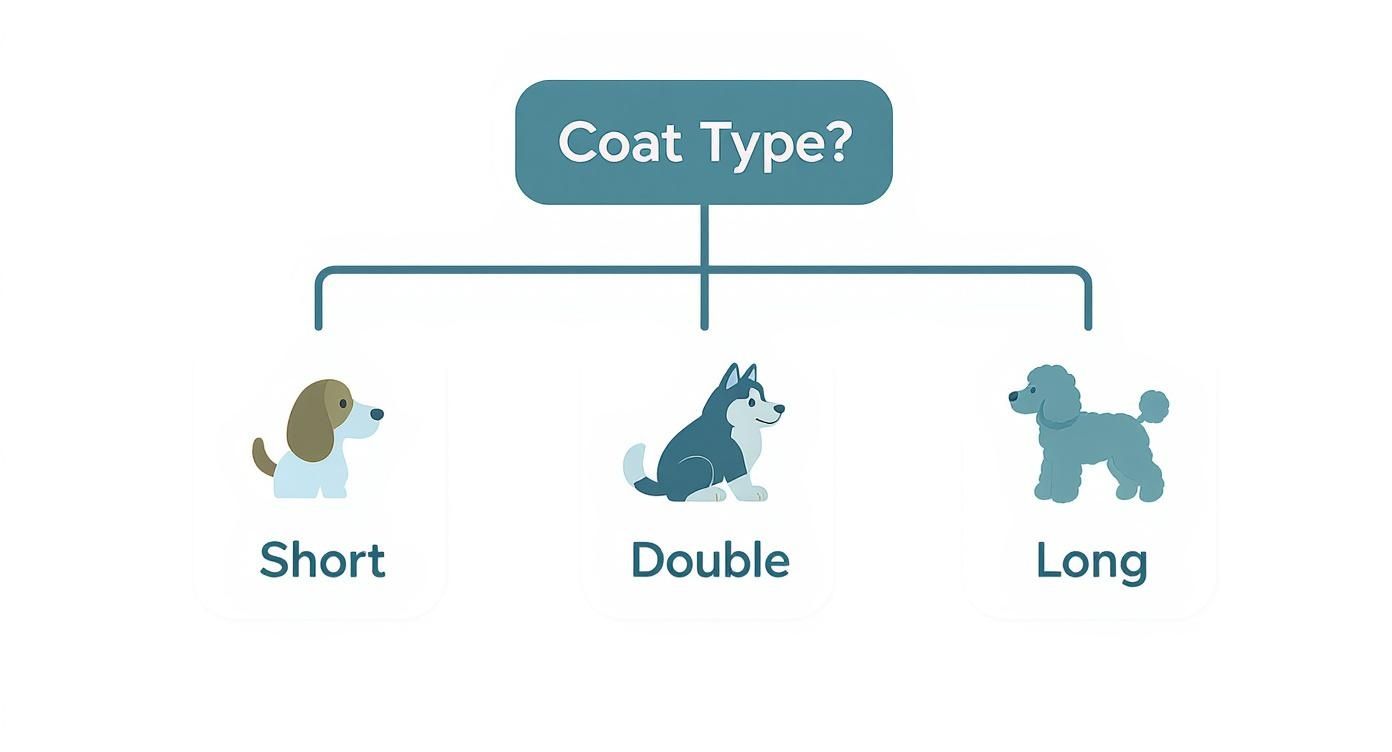
As shown, the path to a great grooming session begins with identifying your dog's coat, which then directs you to the most suitable brush for their needs.
Slicker Brushes: The Detangling Workhorse
The slicker brush features a wide head with fine, short, slightly bent metal pins. Its primary function is to work through mats, knots, and loose fur, especially in the dense undercoats of dogs with medium-to-long hair.
It's a specialized tool for thick, unruly fur, reaching deep into a Poodle's curls or a Golden Retriever's coat to prevent tangles from becoming severe mats. However, the pins are sharp and can cause "brush burn" or skin irritation if used with excessive pressure.
Actionable Insight: Always use a light hand with a slicker brush. Lay it on the coat and pull away without digging into the skin. Be extra careful in sensitive areas like the belly or armpits, working in small, gentle sections.
Pin Brushes: The Gentle Finisher
A pin brush resembles a human hairbrush, with long, straight pins often tipped with rubber or plastic for safety. Unlike a slicker brush, it is not designed for heavy-duty detangling. It is intended for gentle, everyday grooming of long, silky coats.
This is the ideal brush for breeds like Yorkshire Terriers or Afghan Hounds. It glides smoothly through the hair, separating strands, removing small debris, and fluffing the coat for a polished finish. While it is ineffective on a thick undercoat, it excels at maintaining the topcoat.
Slicker vs. Pin Brush: A Quick Comparison
| Feature | Slicker Brush | Pin Brush |
|---|---|---|
| Primary Job | Detangling & removing undercoat | General brushing & finishing |
| Best For | Double coats, curly coats | Long, silky coats |
| Intensity | High-intensity, requires care | Low-intensity, gentle |
| Common Mistake | Applying too much pressure | Using it on severe mats |
Bristle Brushes: The Polishing Tool
For adding a healthy shine to short, smooth coats, a bristle brush is unmatched. The bristles, which can be natural (boar) or synthetic (nylon), are excellent at distributing natural oils from the skin throughout the coat, conditioning the fur and enhancing its luster.
A bristle brush is perfect for a quick daily grooming session on a Boxer or Labrador. It effectively removes loose hair and dander from the surface without scratching the skin. Pro Tip: Match the bristle stiffness to the coat; stiffer bristles work better on coarse coats, while softer ones are ideal for fine hair or sensitive skin.
The focus on pet wellness has fueled a significant industry. Combs and brushes constituted a major part of the $1.53 billion global dog grooming market in 2025. This market is projected to nearly double to around $2.61 billion by 2034, reflecting a growing global emphasis on pet hygiene.
De-shedding Tools: The Undercoat Specialist
A de-shedding tool is a specialized instrument, not an everyday brush. It is designed specifically to remove a large volume of loose hair from a dog's undercoat. These tools feature a fine-toothed metal comb that bypasses the topcoat to grab and extract dead fur.
For heavy shedders like Siberian Huskies or Corgis, this tool is invaluable during seasonal "coat blows." Proper technique is crucial. Use gentle, long strokes in the direction of hair growth to avoid damaging the topcoat. Overuse can lead to bald spots or skin irritation, so limit sessions to once or twice a week during peak shedding seasons.
Rubber Brushes and Grooming Gloves: The Multipurpose Massagers
Rubber brushes (or curry brushes) and grooming gloves are the most versatile and gentle options available. Covered in soft rubber nubs, they are ideal for short-coated breeds, dogs with sensitive skin, and for use during bath time.
The rubber texture creates enough friction to lift away loose fur while providing a soothing massage that improves circulation. They are also effective for working shampoo deep into the coat and are often well-tolerated by dogs who dislike traditional brushes. While they won't tackle tough mats, they are excellent for daily maintenance and bonding.
For a look at a variety of options, feel free to explore the collection of grooming brushes available at Pet Magasin.
Key Features to Look for in a Grooming Brush
Once you've identified the right type of brush, examine the design details. Small features can significantly impact comfort, safety, and effectiveness. Investing time in this step ensures you choose a high-quality tool that makes grooming easier for you and more pleasant for your dog.
Handle Design and Ergonomics
Grooming, especially for long-haired or double-coated dogs, can be time-consuming. A poorly designed handle can lead to hand cramps and wrist fatigue, which can compromise your control over the brush.
Look for a brush with an ergonomic handle that fits comfortably in your hand. A non-slip rubber grip is essential for maintaining a secure hold, even if the brush gets wet. This stability prevents accidental slips that could injure your dog.
Pin and Bristle Characteristics
The "business end" of the brush makes direct contact with your dog's skin and fur, so its quality is critical for safety and performance.
Here’s what to look for:
- Safety Tips: For pin brushes, ensure the pins have rounded or coated tips to prevent scratching your dog's skin.
- Flexibility: The pins on a quality slicker brush should have some give. A flexible base allows the pins to conform to your dog's body shape rather than digging in.
- Material Quality: Choose stainless steel pins for durability and rust resistance. For bristle brushes, natural boar bristles are excellent for distributing oils, while sturdy synthetic bristles are better for removing debris from thick fur.
A brush with pins that are too stiff or sharp can quickly turn grooming into a negative experience. Professional groomers emphasize that gentle contact is key; the tool should glide, not scrape.
Brush Head Size and Shape
Match the brush size to your dog's size. Using a small brush on a Great Dane is inefficient, while using a large brush on a Chihuahua is awkward and potentially unsafe.
Actionable Tip: Use a small, triangular slicker brush for precision work around the face and paws of a small dog like a Yorkie. For a large dog like a German Shepherd, a large, rectangular slicker brush provides better coverage on broad areas like the back. Choosing the correct size makes the task faster and safer.
Ease of Cleaning and Maintenance
A brush clogged with fur is less effective and can harbor bacteria, dander, and oils. If a brush is difficult to clean, you are less likely to do it regularly.
Many modern slicker brushes feature a self-cleaning mechanism. With the push of a button, the pins retract, and the collected fur can be removed in a single sheet. This feature is a significant time-saver and helps maintain the hygiene of your grooming tools.
Our Top Dog Grooming Brush Recommendations
Now that you know how to match a brush to your dog's coat, here are some standout tools that deliver excellent results. These recommendations are categorized by common grooming challenges to help you find the best grooming brush for dogs that solves your specific problem.
Each product was chosen for its intelligent design, practical effectiveness, and ease of use, ensuring you select a tool that directly addresses your dog's grooming needs.
Best for Heavy Shedders
For dogs that shed heavily, a standard brush is insufficient. You need a tool that can address the source: the thick undercoat.
The FURminator Undercoat deShedding Tool is the industry standard for good reason. Its stainless steel comb features fine teeth that reach beneath the topcoat to safely remove loose, dead hair. The ergonomic handle ensures comfort during long grooming sessions, and the FURejector button simplifies hair removal from the tool.
When a Golden Retriever or German Shepherd is blowing their coat, this tool can cut down on shedding by up to 90%. I recommend using it once a week for about 10-20 minutes when the shedding gets serious.
This is a specialized tool for managing heavy shedding, not for daily brushing. It helps keep your home cleaner and prevents dead hair from forming painful mats. For more options, see our comprehensive guide on the best grooming tools for dogs.
Best for Sensitive Skin
Grooming a dog with sensitive skin requires a gentle tool that won't cause irritation, redness, or scratching.
The Kong ZoomGroom is an excellent solution. Made from a single piece of flexible rubber with soft, cone-shaped nubs, it provides a massage-like experience. It gently removes loose hair while stimulating blood flow and natural oil production, promoting a healthy, shiny coat without the risk of scratching associated with metal pins. It is also highly effective for lathering shampoo down to the skin during a bath.
This is the perfect choice for short-coated breeds like Boxers or Bulldogs, who benefit from regular brushing to manage shedding and maintain skin health.
Best for Everyday Maintenance
For daily tasks like light detangling, removing loose fur, and keeping the coat tidy, a versatile tool is ideal. A double-sided brush offers great value and flexibility.
The Pet Magasin Dual Sided Grooming Brush is a top choice for this purpose. One side features pins with rounded tips for working through tangles and lifting loose fur on longer coats without harming the skin. The other side has a soft bristle brush for smoothing the topcoat, distributing oils, and enhancing shine, particularly on short-haired dogs. This two-in-one design is perfect for multi-dog households or for dogs that require different tools for different areas of their body. The sturdy, non-slip handle provides excellent control.
Your Dog Grooming Brush Questions, Answered
Even with the right brush, questions can arise. Addressing these common concerns will help you establish a positive and effective grooming routine. Here are practical answers to frequently asked questions.
How Often Should I Brush My Dog?
The frequency of brushing depends on your dog's coat, shedding level, and lifestyle. Consistency is key to preventing tangles and mats.
- Long-haired or double-coated breeds (e.g., Collies, Huskies) require brushing almost daily to prevent mats and keep the undercoat healthy.
- Medium-length coats (e.g., Golden Retrievers) benefit from brushing two or three times a week to control shedding.
- Short, smooth coats (e.g., Beagles, Boxers) are the easiest; a weekly session is usually sufficient to remove loose fur and distribute oils.
During peak shedding seasons, you may need to increase the frequency for all coat types to manage loose hair.
Can I Use One Brush for Multiple Dogs?
This is not recommended unless your dogs have identical coat types. A brush designed for a short-haired dog will be ineffective and potentially uncomfortable for a long-haired dog.
For hygiene and effectiveness, each dog should have their own dedicated brush. This prevents the transfer of dander, skin oils, or parasites between them.
Using the right tool for the job is essential. Applying a slicker brush designed for a Poodle's dense curls to a Labrador's skin would be too harsh. Investing in separate, appropriate brushes is a small price to pay for their comfort and health.
What Is the Difference Between a Deshedding Tool and a Brush?
Many pet owners confuse these two tools, but they serve different functions.
A regular brush (e.g., slicker or pin brush) is for daily or weekly maintenance. Its purpose is to maintain the topcoat by removing loose fur, detangling knots, and promoting a healthy coat.
A de-shedding tool is a specialist instrument designed to penetrate the topcoat and remove dead, loose fur from the undercoat. It is more intensive and not intended for everyday use.
Use your standard brush for regular upkeep and the de-shedding tool for targeted sessions—perhaps once a week during shedding season—to manage the undercoat.
How Do I Properly Clean a Dog Brush?
A clean brush works better and is more hygienic. A clogged brush is less effective and can reintroduce dirt and bacteria to your dog's coat.
Follow these simple steps to clean your brush:
- Remove Hair: Use your fingers or a comb to pull trapped fur from the bristles. For slicker brushes, a toothpick can help dislodge stubborn bits.
- Prepare a Soapy Bath: Fill a small bowl with warm water and a small amount of gentle dog shampoo.
- Scrub the Brush: Swish the brush head in the soapy water. Use an old toothbrush to scrub between the pins and remove grime.
- Rinse and Dry: Rinse the brush thoroughly under clean water. Shake out excess water and let it air dry with the bristles facing down. This crucial step prevents water from seeping into the base and damaging the cushion or handle.
Here at Pet Magasin, we know that having the right tools makes all the difference. Our grooming products are designed to be safe, comfortable, and effective for you and your dog. Find the perfect brush to keep your best friend looking and feeling great. Explore our collection at Pet Magasin today.

Leave a comment