
How to Groom a Dog at Home: A Step-by-Step Guide for a Happy Pup

Grooming your dog at home is more than just a haircut—it’s a hands-on routine that strengthens your bond and keeps your pet healthy. The entire process breaks down into five key stages: preparation, bathing, brushing, trimming, and essential health checks.
Your success, however, depends entirely on patience and positive reinforcement. This guide provides the actionable steps you need to turn grooming from a chore into a calm, positive experience for you both.
Setting the Stage for a Stress-Free Groom
The secret to a successful at-home groom isn't the clippers or the shampoo; it's a foundation of trust and comfort. Before you trim a single hair, creating a calm, predictable environment is your most important task. This prep work transforms a potentially anxious ordeal into an activity you both can enjoy.
Many owners jump straight to the bath, but the session truly begins with managing your dog's energy. A dog bursting with excitement will be squirmy and uncooperative.
Choose Your Timing and Location Wisely
Timing is everything. Never try to groom a dog that's buzzing with energy. Schedule your grooming session after a long walk, a game of fetch, or a trip to the dog park. A physically tired dog is a mentally relaxed and more compliant partner.
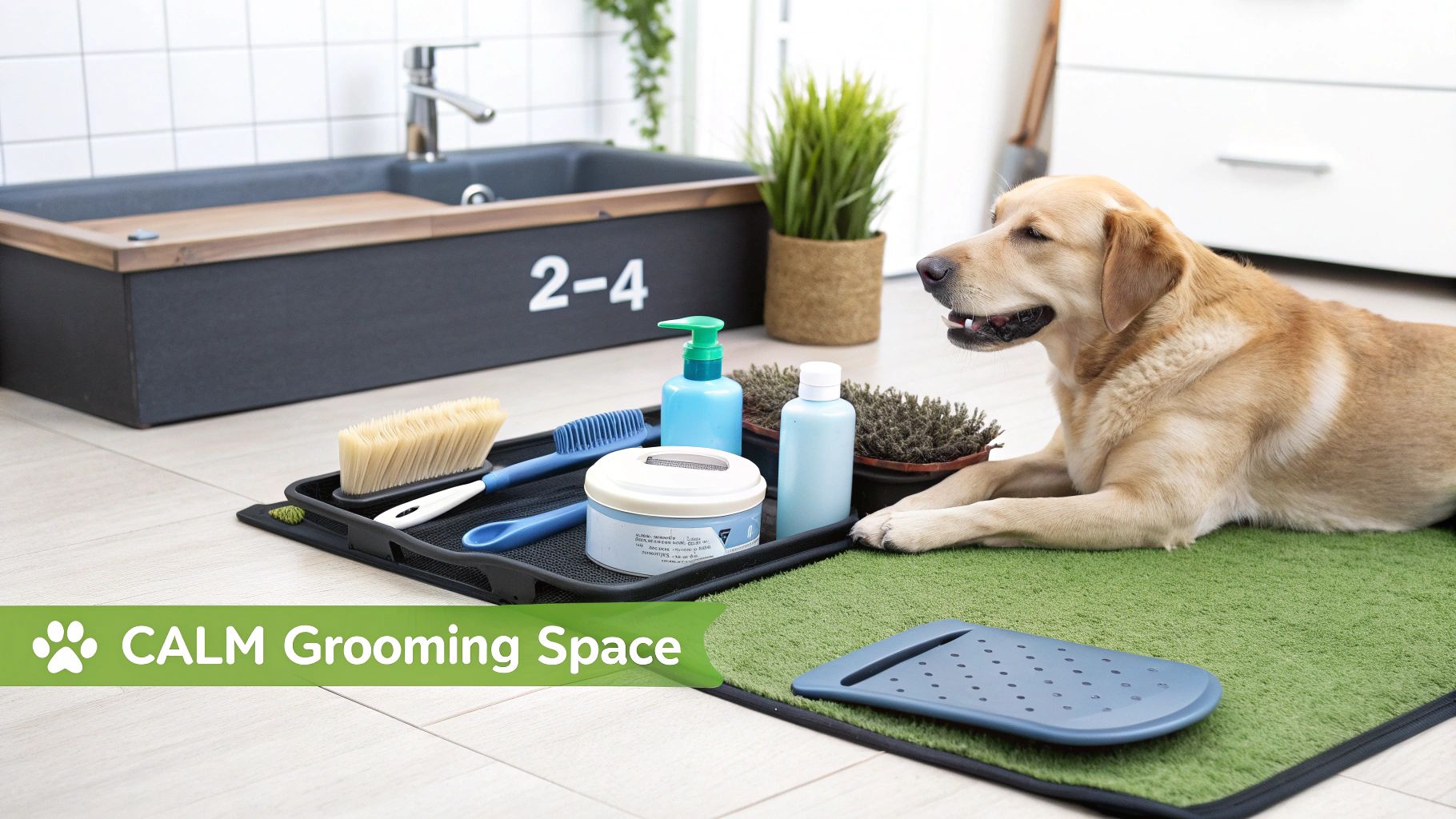
Your grooming location also plays a critical role. A slippery tub or a cold, unfamiliar room can escalate anxiety. Your goal is to create a secure and comfortable workspace.
- Action Step 1: Secure the Space. In the bathroom, place a non-slip mat in the tub to give your dog stable footing. For outdoor grooming on a warm day, ensure the area is safely enclosed to prevent escapes.
- Action Step 2: Create a Dedicated Station. If you plan to groom regularly, use a sturdy table with a non-slip surface. This dedicated spot signals "grooming time" to your dog and saves your back.
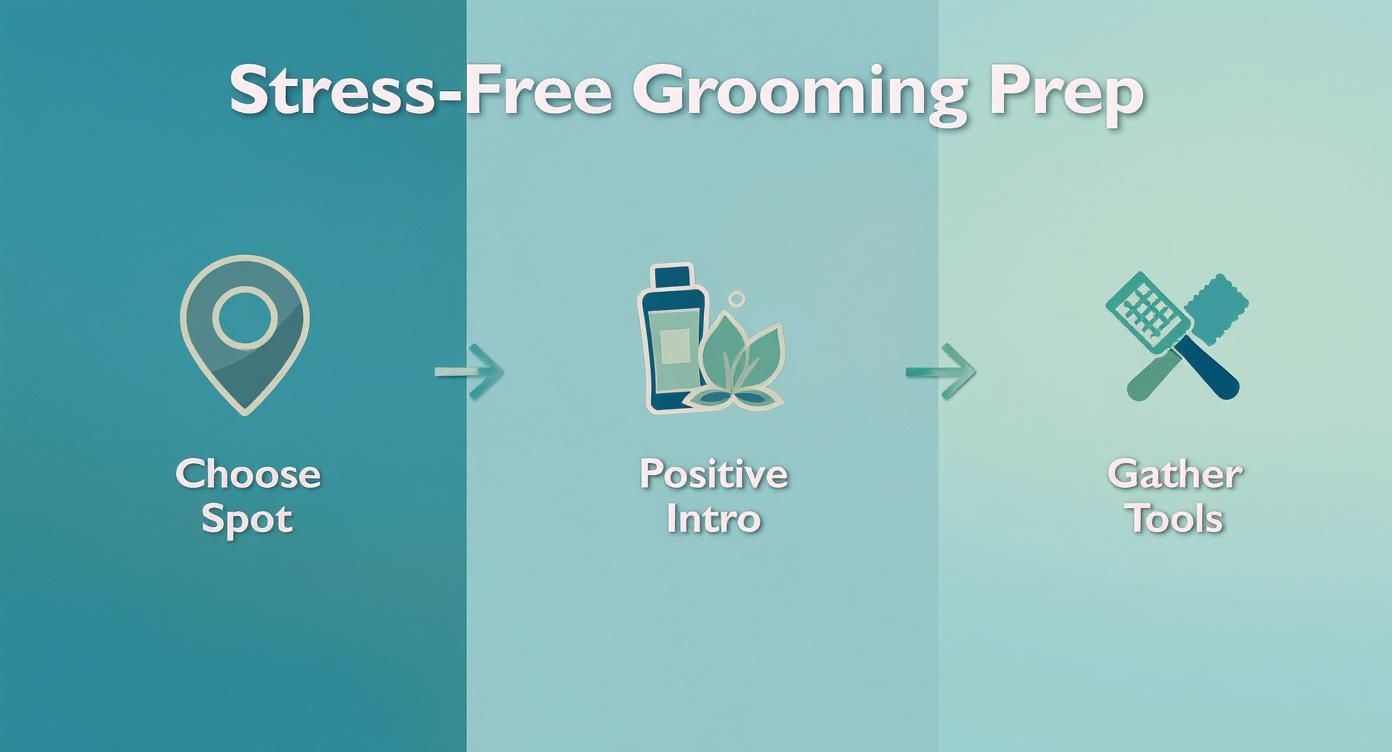
This guide highlights the core principle: success starts with environment and positive reinforcement, long before the clippers come out.
Create Positive Associations with Tools
Grooming tools can look and sound intimidating. The buzz of clippers or the sight of a strange brush can trigger fear if not introduced correctly. Your job is to build a positive association from day one.
- Action Step 1: Introduce Tools with Treats. Place a brush on the floor. When your dog sniffs it, give them a high-value treat. Repeat with clippers (turned off). Continue over several short sessions until the tools are boring objects.
- Action Step 2: Turn on Clippers Briefly. Once your dog is comfortable with the silent clippers, turn them on for just a second, then immediately give a treat and turn them off. Gradually increase the time the clippers are on.
Grooming anxiety is common but preventable. The goal is to make your dog see the brush and clippers as signals for good things, like treats and praise, not as threats.
This gradual introduction is crucial. For nervous dogs, many of the calming principles used for managing dog separation anxiety apply here. Before you bring your dog into the area, have your shampoo, towels, brushes, clippers, and treats within arm's reach. This organization keeps the process smooth and reduces your stress, which your dog will sense.
Your Essential Home Grooming Toolkit
Gathering your gear beforehand is a game-changer. It prevents fumbling and creates a calmer experience. Here is a checklist of the core tools for a successful home grooming session.
| Grooming Task | Essential Tool | Actionable Tip |
|---|---|---|
| Brushing & Dematting | Brush or Comb | Match the tool to your dog's coat (e.g., slicker for tangles, undercoat rake for thick fur). |
| Bathing | Dog-Specific Shampoo | Select a pH-balanced formula. Avoid human shampoo at all costs, as it irritates dog skin. |
| Drying | Absorbent Towels | Use microfiber towels to squeeze, not rub, the fur to prevent tangles. |
| Nail Trimming | Nail Clippers or Grinder | Choose the style you're most comfortable handling. A grinder is a safer option if you're nervous. |
| Hair Trimming | Grooming Scissors & Clippers | Use blunt-nosed scissors for sensitive areas like the face and paws. Use clippers for the body. |
| Ear & Eye Care | Gentle Cleanser & Wipes | Use vet-approved solutions only. Never insert anything deep into the ear canal. |
| Dental Care | Dog Toothbrush & Toothpaste | Use enzymatic toothpaste made for dogs. A finger brush is great for beginners. |
| Safety & Comfort | Non-Slip Mat & Treats | Provide secure footing with a mat and use high-value treats to build positive reinforcement. |
Having this toolkit ready ensures you have the right item for every step, setting you up for a professional-level groom at home.
The Art of the At-Home Dog Bath
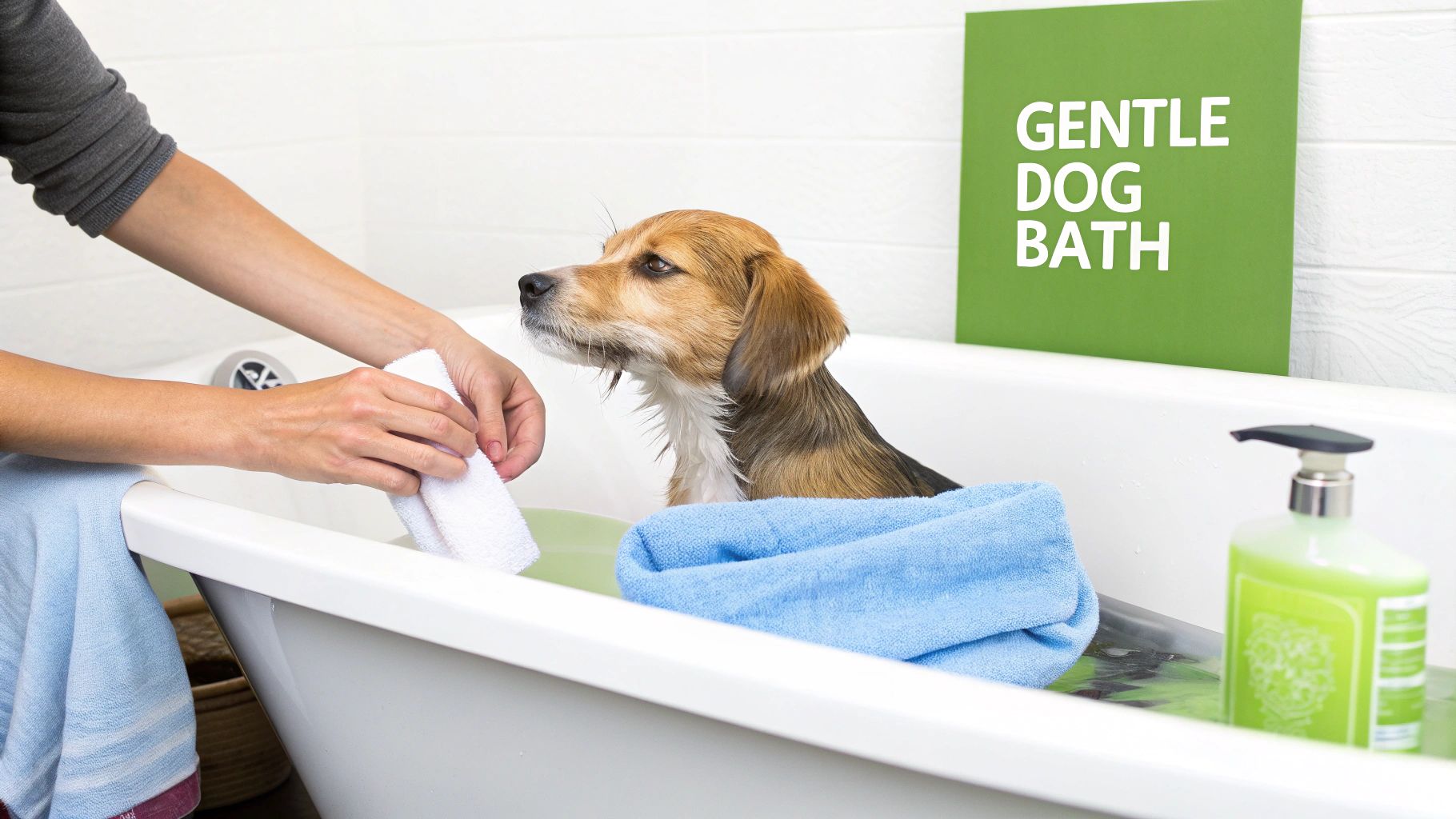
A proper bath is the cornerstone of any grooming session. It's not just about getting clean; it's about preparing the skin and coat for the next steps. The most important work, however, happens before you turn on the water.
A common mistake is thinking a bath will remove mats. It does the opposite. Water tightens knotted fur into painful clumps. Action Step: Always brush your dog thoroughly before the bath. This crucial first step removes loose hair, dirt, and existing tangles, making the entire process more comfortable for your dog.
Selecting the Perfect Shampoo
The pet aisle can be overwhelming, but choosing the right shampoo is vital for your dog's skin health. Human shampoo is a definite "no"—its pH is too acidic and will strip the protective oils from your dog's coat, causing irritation.
Here's how to choose a dog-specific shampoo:
- For Itchy/Sensitive Skin: Select shampoos with oatmeal, aloe vera, or hydrocortisone to soothe inflammation.
- For Dry/Flaky Skin: Use a moisturizing or conditioning shampoo to rehydrate the skin and reduce dandruff.
- For Puppies: Choose a gentle, tear-free puppy formula to protect their delicate skin and eyes.
- For Odor Control: Use a deodorizing shampoo for tough smells, but be aware they can be drying if used too frequently.
This focus on tailored care is part of a larger trend. The pet grooming market was valued at USD 2.88 billion and is projected to hit USD 4.75 billion by 2032. This growth reflects a demand for specialized products like organic shampoos and home grooming kits. You can discover more about the growing pet grooming market to see what's driving these trends.
Mastering the Washing Technique
- Step 1: Prep the Tub. Place a non-slip mat in the tub or sink.
- Step 2: Use Lukewarm Water. Test the water on your wrist. If it’s comfortable for you, it’s good for your dog.
- Step 3: Wet Thoroughly. Saturate your dog's coat down to the skin, avoiding the face and ears for now.
- Step 4: Lather Up. Apply shampoo and work it into a lather from their neck back toward the tail. Use this time for a gentle massage to create a positive association.
Pro Tip: Gently place a small, dry cotton ball just inside the ear canal opening before the bath to create a barrier against water. Remember to remove them immediately afterward!
- Step 5: Rinse Completely. This is critical. Leftover shampoo residue is a primary cause of skin irritation. Rinse until the water runs completely clear and the fur feels squeaky clean.
Drying Your Dog Safely and Effectively
Your drying method depends on your dog's coat and temperament. The goal is to get them dry quickly without causing stress.
Towel Drying
For short-haired dogs (Beagles, Boxers), a vigorous towel dry is often sufficient. Use an absorbent microfiber towel. Action Step: Squeeze the water out of the coat; do not rub aggressively, as this can create tangles.
Using a Pet-Safe Hair Dryer
For long or double-coated dogs, a hair dryer is essential. Never use a human hairdryer on a high heat setting. A dog's skin is sensitive and can burn easily.
- Safety First: Use a pet-specific dryer or a human dryer on its lowest heat and speed setting.
- Keep it Moving: Never hold the dryer in one spot. Move it continuously to distribute the heat evenly.
- Brush as You Dry: For fluffy coats, brush while you blow-dry to prevent tangles from setting and to achieve a smooth, professional finish.
Following these actionable steps will turn bathtime from a struggle into a calm, effective part of your home grooming routine.
Mastering Brushing for Every Coat Type
Once your dog is bathed and completely dry, it's time for the final brush-out. This step distributes natural oils for a healthy shine, removes loose fur that would end up on your furniture, and prevents painful mats.
Brushing is not one-size-fits-all. Using the wrong tool can be ineffective or uncomfortable for your dog. The key is to match the brush to their specific fur.
Brushing Smooth and Short Coats
For breeds like Boxers, Beagles, and Greyhounds, the goal is to remove loose hair and distribute skin oils. A rubber curry brush or a bristle brush is all you need.
Action Step: Use a rubber curry brush in a circular motion to lift dead fur and dirt. Follow with a soft bristle brush to smooth the coat and enhance shine. A few minutes once or twice a week is sufficient.
Caring for Double Coats
Breeds like Golden Retrievers, Siberian Huskies, and German Shepherds have a soft undercoat and a tougher topcoat, requiring a strategic approach to manage heavy shedding.
Your toolkit must include:
- An undercoat rake: To gently remove the loose, fluffy undercoat.
-
A slicker brush: To finish the job by removing tangles and smoothing the topcoat.
Action Step: Start with the undercoat rake, working in the direction of hair growth in small sections. Once the bulk of the loose fur is out, go over the entire body with the slicker brush for a polished look. During shedding season, do this several times a week.
Taming Long, Curly, and Wire Coats
Long-haired (Shih Tzu), curly-coated (Poodle), or wire-haired (Terriers) breeds are prone to mats and require frequent, even daily, brushing.
A slicker brush and a sturdy metal comb are non-negotiable.
Action Step: Use the slicker brush first to break up surface knots. Then, test your work with the metal comb. You must be able to run the comb from the root to the tip of the fur without it snagging. If it gets stuck, you've found a hidden tangle.
A slicker brush can make the surface look perfect, but a comb tells the truth. If the comb can't get through, the mats are still hiding underneath, right next to the skin.
If you need help choosing the right tool, our guide on the best grooming brush for dogs can help you find a quality option.
How to Safely Tackle Mats and Tangles
Never use scissors to cut out a mat. The skin is often pulled up into the base of the mat, and it's incredibly easy to cut your dog.
- Isolate the Mat: Hold the mat at its base against the skin to prevent pulling.
- Apply a Detangler: Spritz a conditioning or detangling spray onto the mat to add slip.
- Work it Apart with Your Fingers: Gently try to pull the mat apart into smaller sections.
- Use a Mat Splitter or Comb: Carefully use the tip of a metal comb or a mat splitter to pick at the tangle, working from the outer edges inward.
If a mat is too tight or your dog is in pain, stop. This is a job for a professional groomer who can safely shave it out.
Once the bath and brush-out are complete, it's time for the detail work. Trimming nails and clipping fur can seem daunting, but with the right tools and a patient approach, you can handle it like a pro.
The rise in at-home grooming is clear. The U.S. pet grooming and boarding industry is projected to reach $15.5 billion by 2025, with dogs making up 83% of that demand. This reflects a desire for hands-on pet care. You can read the full analysis on ibisworld.com to learn more about this trend.
A Guide to Safe Nail Clipping
Long nails can cause pain, affect posture, and lead to joint issues. The key to a stress-free trim is understanding the nail's anatomy and taking it slow.
Inside each nail is the quick, a core of nerves and blood vessels. Cutting it is painful and causes bleeding. On light-colored nails, you can see the pink quick. On dark nails, you must be cautious.
Action Step: Trim tiny slivers at a time. As you get closer to the quick, you'll see a small, dark circle appear in the center of the cut surface. That's your signal to stop.
The golden rule of nail trimming: it's always better to take off too little than too much. Frequent, small trims are far safer and less stressful than infrequent, drastic cuts.
Choosing Your Nail Trimming Tool
The best tool is the one you and your dog are most comfortable with.
- Scissor-Style Clippers: Best for large dogs with thick nails, offering good leverage.
- Guillotine-Style Clippers: Ideal for small to medium dogs, but can sometimes crush brittle nails.
- Nail Grinders: A great alternative for anxious dogs. It files the nail down gradually, reducing the risk of hitting the quick and leaving a smooth finish. Introduce the noise slowly with treats.
Pet Magasin's guide to choosing the perfect dog nail cutter offers a detailed breakdown of each type.
Trimming Fur in Sensitive Areas
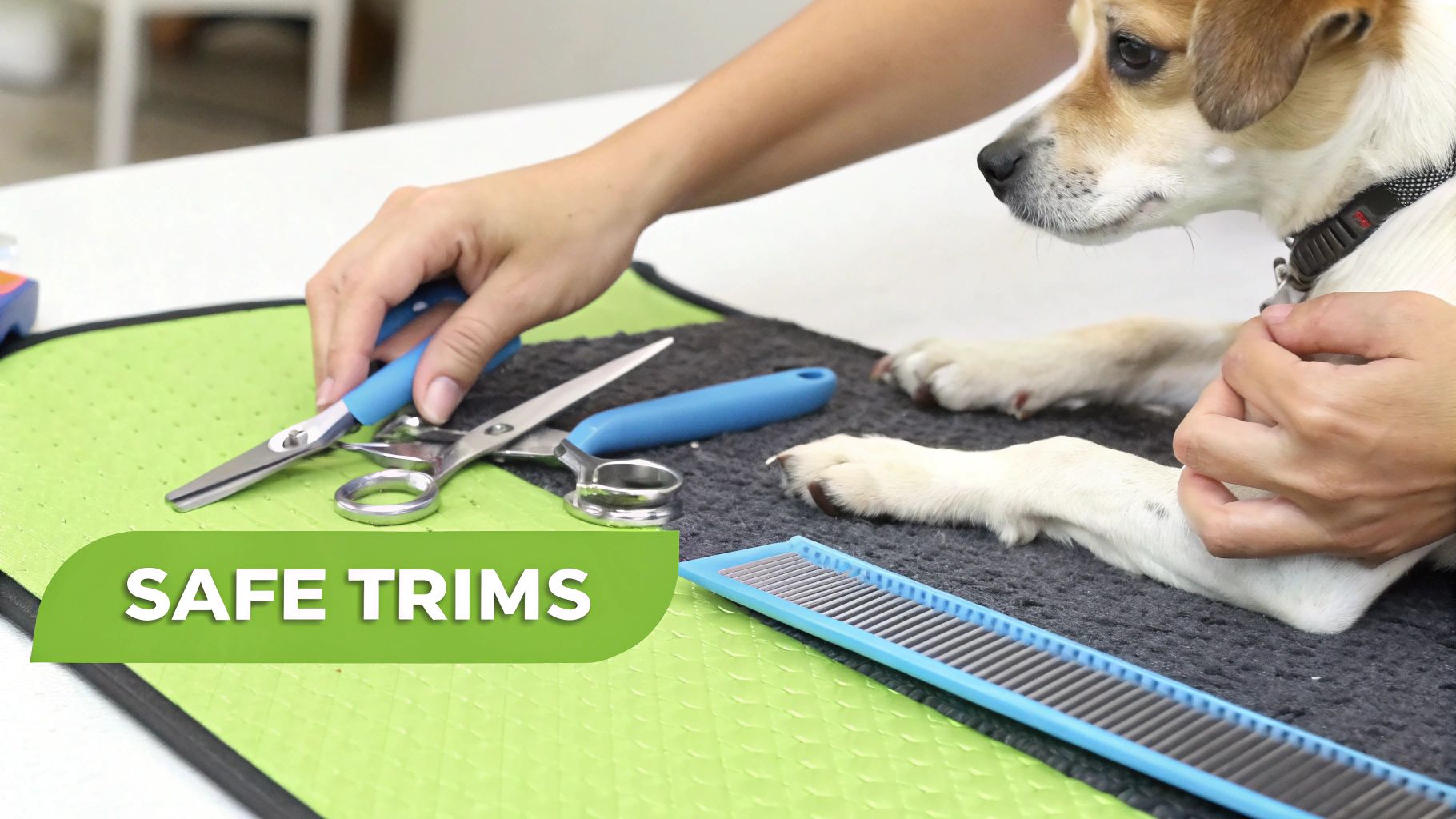
For some breeds, trimming fur around the face, paws, and sanitary areas is essential for hygiene. Always use blunt-nosed grooming scissors for safety.
Paws
Hair between paw pads traps dirt and debris. Action Step: Gently spread your dog's toes and carefully trim the hair so it's level with the pads.
Face and Eyes
Keeping hair out of the eyes prevents irritation. Action Step: Use a comb to pull hair away from the eyes. Place the comb flat against their face as a barrier and trim the hair that extends past the comb.
Sanitary Trim
This involves clipping the fur around your dog's rear end to keep it clean. Action Step: Hold the skin taut to create a flat surface and prevent nicks. Stay calm and confident; your dog will mirror your energy.
Essential Health Checks During Grooming
Grooming at home is your opportunity for a hands-on wellness check. It's the perfect time to spot small issues before they become big problems by examining your dog's ears, eyes, and teeth.
This blend of maintenance and health monitoring is why at-home grooming is so popular. The global pet grooming services market, valued at USD 6.89 billion, is expected to reach USD 10.35 billion by 2030. With dogs accounting for 83% of that, it’s clear owners are invested in their pets' well-being. You can read the full market research about pet grooming on grandviewresearch.com for more details.
Inspecting and Cleaning Your Dog's Ears
For breeds with floppy ears (Basset Hounds, Cocker Spaniels), ear health is a priority. Their ear shape traps moisture, leading to infections. A healthy ear is pale pink, clean, and has no odor.
Watch for these warning signs:
- Redness or Swelling: Indicates irritation.
- Excessive Discharge: Dark, waxy buildup may signal ear mites.
- Foul Odor: A yeasty smell often points to infection.
Action Step: To clean, use a vet-approved cleaning solution on a soft cotton ball. Never use cotton swabs, which can push debris deeper. Gently wipe the visible, outer parts of the ear only.
Gentle Eye Care
Your dog's eyes should be bright and clear. Some "sleep" in the corners is normal, but constant discharge, redness, or cloudiness is a red flag.
Action Step: Use a soft, damp cloth or a pet eye wipe to clean away crust. Wipe from the inner corner of the eye outward to pull debris away from the eyeball. If you see yellow/green discharge or your dog is squinting, call your vet.
By making these checks a regular part of your grooming routine, you establish a baseline for what’s normal for your dog. This makes it much easier to spot when something is off, allowing for early intervention.
The Fundamentals of Canine Dental Hygiene
By age three, 80% of dogs show signs of dental disease. Regular brushing is the best defense.
Action Step: Start slow. Let your dog lick dog-specific toothpaste (e.g., chicken or beef flavor) from your finger. Then, introduce the toothbrush. Brush a few teeth at a time in gentle, circular motions, focusing on the outer surfaces. Praise them heavily. Consistency is more important than perfection.
Got Questions? We’ve Got Answers.
Even with the best preparation, questions come up. Here are answers to common concerns to help you groom with confidence.
How Often Should I Groom My Dog at Home?
The frequency depends entirely on your dog's breed, coat, and lifestyle. Use this as a general guide:
- Brushing: Daily for long-haired or double-coated breeds to prevent mats. Weekly for short-coated breeds to remove loose hair.
- Bathing: Every 1-3 months is a good rule of thumb, or as needed when they get dirty. Over-bathing strips natural oils.
- Nail Trims: Every 3-6 weeks, or when you hear their nails "click-clack" on the floor.
- Ear Checks: Monthly, especially for floppy-eared breeds.
What If My Dog Hates Being Groomed?
This is a common challenge. The solution is patience and positive reinforcement. Forcing a scared dog will only worsen their fear.
Action Step: Start with micro-sessions. Keep sessions to just one or two minutes. Touch their paw with the clippers (don't clip), then give a high-value treat. Brush one small spot, then reward.
The secret is to always end on a high note, before your dog gets overwhelmed. This teaches them that grooming time is predictable and even rewarding, not something to dread.
Use a lick mat smeared with peanut butter or a puzzle toy to create a positive distraction during grooming.
When Should I Call a Professional Groomer?
DIY grooming is great, but some tasks are best left to experts with specialized tools and experience. Call a professional for:
- Severe Matting: If mats are tight against the skin, a groomer can shave them out safely. Do not attempt to cut them out yourself.
- Complex Breed-Specific Cuts: For the signature look of a Poodle or Schnauzer, a professional has the skill to execute it correctly.
- Extreme Fear or Aggression: If your dog panics or becomes aggressive, a trained professional can handle them safely.
Even with careful planning, accidents happen. It's always wise to be prepared for messes, and knowing how to clean pet accidents from a mattress can be a lifesaver.
At Pet Magasin, we truly believe that grooming is a cornerstone of your pet's health and happiness. With our durable, high-quality grooming utensils and accessories, you have everything you need to confidently care for your furry family member at home. Explore our collection and make your next grooming session a success at https://www.petmagasin.com.

Leave a comment