
A Pet Parent's Guide to Dog Shampoo for Fleas

That sinking feeling when you spot a tiny, dark speck moving through your dog’s fur is something no pet parent wants to experience. But when you find fleas, the right dog shampoo for fleas is your go-to for immediate relief. Think of it as the emergency first-response team for your dog's coat, giving you a powerful head start in the battle against an infestation.
Your First Line of Defense Against Fleas
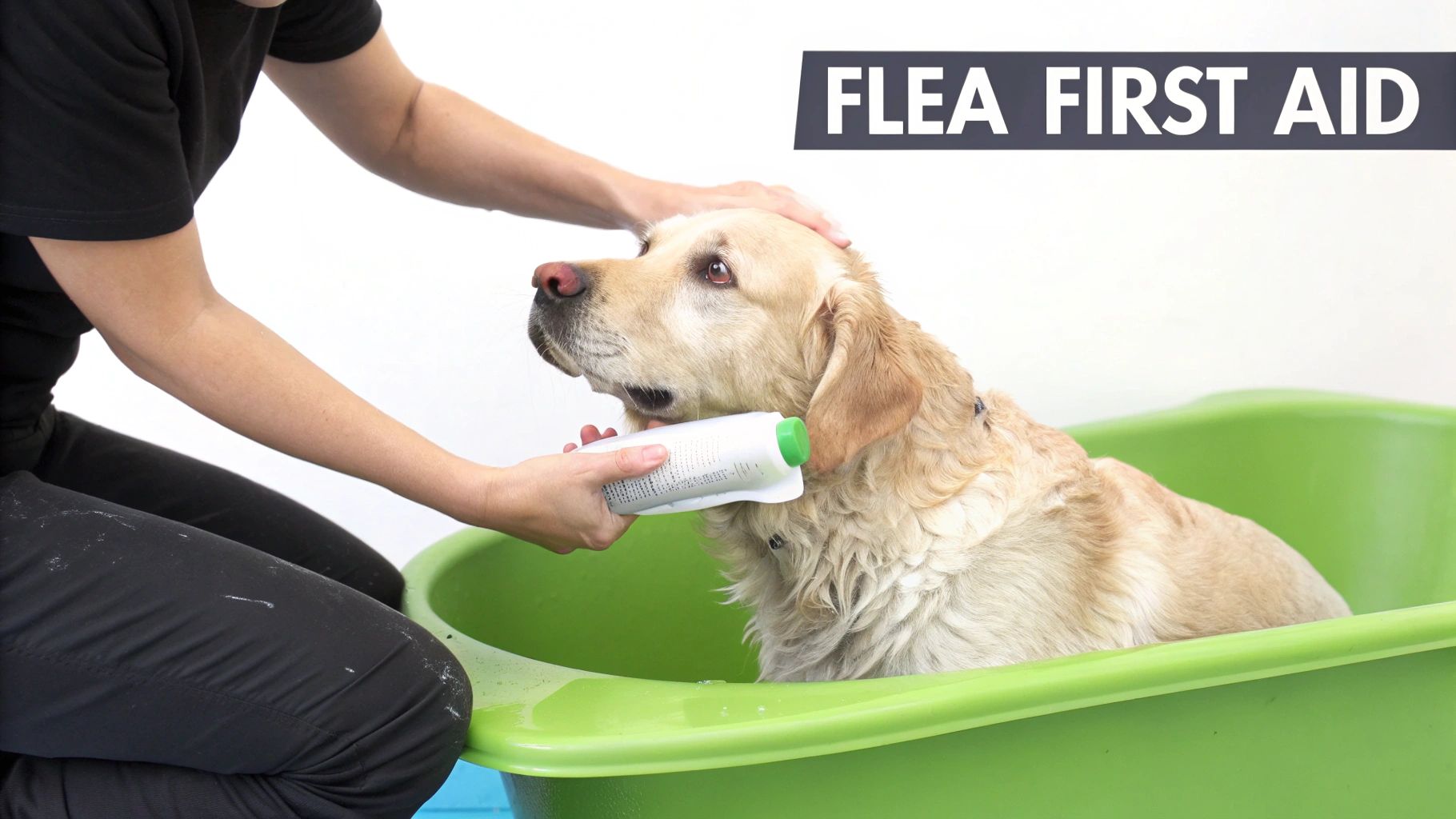
When you discover a flea problem, a medicated bath is the most effective first action you can take. A quality dog shampoo for fleas isn't just for cleaning; it’s a targeted treatment designed to kill fleas on contact, providing immediate relief for your dog.
Unlike standard grooming shampoos, these formulas contain active ingredients that attack fleas directly, offering instant comfort to an itchy, miserable pet. This immediate action is critical. A single female flea can lay up to 50 eggs a day, meaning a small problem can quickly escalate into a major infestation. Taking swift action with the right shampoo stops this cycle before it starts.
Attacking the Entire Flea Life Cycle
To eliminate fleas for good, you need a shampoo that does more than kill the visible adults. The most effective formulas are designed to disrupt the entire pest life cycle. Reading the product label is key to ensuring long-term success.
A comprehensive shampoo will contain two types of active ingredients working in tandem:
- Adulticides: These ingredients kill adult fleas on contact. This immediately stops the biting, scratching, and egg-laying.
- Insect Growth Regulators (IGRs): This is your secret weapon for long-term control. IGRs prevent flea eggs and larvae from developing into biting adults, effectively neutralizing the next generation of pests.
By targeting both adult fleas and their offspring, a high-quality flea shampoo moves beyond a temporary fix to end the infestation at its source. This dual-action approach is essential for making your dog comfortable and reclaiming your peace of mind.
Ultimately, choosing the right shampoo empowers you to manage a frustrating problem effectively. It sets the stage for a flea-free home and a happier, healthier dog. With this guide, you can turn a simple bath into a powerful flea-fighting tool.
How Flea Shampoos Actually Work
When you lather your dog with flea shampoo, you’re doing more than just cleaning their coat. You are delivering active ingredients designed to stop fleas in their tracks, offering a fast and effective way to bring your dog relief. It’s a targeted strike against the pests making your pup miserable.
Most medicated shampoos use active ingredients that act as neurotoxins specifically for fleas. As you work the lather into your dog’s coat, fleas absorb these compounds through their exoskeletons. This process quickly disrupts their nervous system, leading to paralysis and death.
The goal is to be tough on pests but gentle on your pet. This principle is also seen in products like a lice prevention shampoo for humans, which uses specific ingredients to target parasites without harming the host.
Two Main Lines of Attack
Flea shampoos typically use one of two approaches, depending on their ingredients. Understanding the difference will help you choose the right tool for the job.
- Insecticides: These are the heavy hitters. Ingredients like pyrethrins (derived from chrysanthemum flowers) or their synthetic counterparts, pyrethroids, act fast. They attack the nervous system of adult fleas, killing them on contact and providing immediate relief from biting and itching.
- Repellents: Other shampoos take a more natural route, using ingredients that make your dog an unappealing host for fleas. Essential oils such as cedarwood, peppermint, or clove oil may not kill fleas instantly but create an environment they avoid, helping to prevent re-infestation.
The market for these treatments is significant. The flea and tick product industry reached $8.04 billion in 2024 and is projected to grow to $14.40 billion by 2032. This reflects a strong focus on pet well-being, supported by studies showing these shampoos can be up to 95% effective when used correctly.
Why the Lather Time Matters
You’ve seen the instructions: "lather and let sit for 5-10 minutes." This is not a suggestion—it's the most critical step for the shampoo to work.
This waiting period allows the active ingredients enough time to penetrate the fleas' exoskeletons and effectively neutralize them. If you rinse the shampoo off too soon, you significantly reduce its effectiveness, leaving live fleas behind to continue the cycle of biting and itching.
By understanding how these shampoos work, you can use them more effectively. You’re not just giving your dog a bath; you're administering a targeted treatment to bring your best friend fast, lasting relief.
Decoding Ingredients on the Shampoo Label
Choosing the right dog shampoo for fleas becomes simple once you understand the ingredient label. It provides all the information you need to select a product that is both safe and effective for your dog's specific situation. Your goal is not just to kill fleas but to find the perfect match for your pet.
Think of the active ingredients as the shampoo's engine. Some are designed for rapid, powerful action against a heavy infestation, while others offer a gentler, sustained defense. Knowing how to distinguish between them makes you a more confident pet parent.
Synthetic Pesticides: The Fast-Acting Responders
When you need immediate relief from a serious flea problem, shampoos containing synthetic pesticides are your most effective option. These ingredients are engineered to target and eliminate fleas quickly.
Common synthetic ingredients to look for include:
- Pyrethrins: Derived from chrysanthemum flowers, these act as a natural insecticide, targeting adult fleas' nervous systems for a quick kill on contact.
- Pyrethroids (e.g., Permethrin): These are synthetic, more stable versions of pyrethrins. They are extremely effective but require caution—permethrin is highly toxic to cats, so never use a dog-specific product on them.
- Imidacloprid: Another fast-acting neurotoxin for insects that is generally considered safe for dogs when product directions are followed precisely.
These ingredients work by disrupting the flea's nervous system, causing paralysis and rapid death. To ensure they work correctly and safely, you must follow the label instructions exactly, especially the recommended lather time.
Natural and Plant-Based Ingredients: The Gentle Guardians
If your dog has sensitive skin or you prefer a gentler approach for routine maintenance, natural formulas are an excellent choice. These shampoos use essential oils and plant-based compounds to repel fleas or provide a mild insecticidal effect, making your dog an unappealing host for pests.
Here’s a look at the key active ingredients you'll find on the label and what they do.
Comparing Common Flea Shampoo Ingredients
| Ingredient Type | Examples | How It Works | Best For |
|---|---|---|---|
| Synthetic Pesticides | Pyrethrins, Permethrin, Imidacloprid | Disrupt the flea's nervous system, causing rapid paralysis and death. | Quickly eliminating heavy, active flea infestations. |
| Natural Repellents | Cedarwood Oil, Peppermint Oil, Clove Oil, Rosemary Oil | Use strong scents and natural compounds to make the dog's coat an unattractive environment for fleas. Some oils can also kill fleas on contact. | Routine prevention, dogs with sensitive skin, or households preferring a non-chemical approach. |
Knowing the difference helps you grab the right bottle off the shelf for your specific needs.
Look for these popular natural ingredients:
- Cedarwood Oil: A well-known natural flea repellent that can also kill fleas on contact.
- Peppermint Oil: Its strong scent repels fleas and can help soothe irritated skin.
- Clove Oil: Contains eugenol, a compound that acts as a natural insecticide.
- Rosemary Oil: Another powerful repellent that helps prevent fleas from returning after a bath.
While generally gentler, "natural" does not automatically mean "risk-free." Some dogs can be sensitive to certain essential oils. Always monitor your dog for any signs of skin irritation after using a new product, and contact your vet if you have any concerns.
Ultimately, the best dog shampoo for fleas is the one that matches your dog's current needs. For an active infestation, a pyrethrin-based formula provides immediate relief. For routine baths or a dog with sensitive skin, a shampoo with natural oils is an ideal solution. Reading the label is the key to making a smart choice for a happy, flea-free pet.
Choosing the Right Flea Shampoo for Your Dog
Selecting a flea shampoo for your dog requires more than just grabbing the first bottle you see. A one-size-fits-all approach doesn't work when their health and comfort are at stake. To be effective, you must match the shampoo to your dog’s specific needs.
Just as we have unique skincare needs, our dogs require products that are appropriate for their age, skin condition, and coat type. Making the right choice ensures you are not just killing fleas but also protecting their overall well-being.
Dogs account for 65% of the global pet shampoo market, and flea treatments are a major component. Notably, natural options now represent over 55% of sales, highlighting a growing preference for gentler solutions. You can discover more insights about the pet shampoo market on futuremarketinsights.com.
Consider Your Dog's Age and Health
A puppy’s skin is far more delicate than an adult dog’s, and their developing bodies are more vulnerable. Using a shampoo formulated for a mature dog can cause severe skin irritation or other health issues.
- Puppies (Under 12 Weeks): Always choose a formula specifically labeled "safe for puppies." These shampoos use milder ingredients that effectively kill fleas without harming sensitive skin.
- Senior Dogs: Older dogs may have thinner skin or underlying health conditions. Consult your vet before using a new medicated shampoo to ensure it's a safe choice.
- Pregnant or Nursing Dogs: These dogs require special care. Never use any flea shampoo on them without explicit approval from your vet, as some ingredients can be harmful to both the mother and her puppies.
Factor in Skin Sensitivity and Coat Type
Next, assess your dog’s skin. If they already suffer from dryness, allergies, or hot spots, the wrong shampoo can worsen the problem. Flea-related scratching only makes irritated skin more raw and painful.
A dog with sensitive skin needs a multi-tasking flea shampoo. It must kill fleas while also soothing and moisturizing their irritated skin. Look for formulas containing calming ingredients like oatmeal, aloe vera, or tea tree oil to reduce inflammation. If your dog has persistent skin issues, you might want to look into the best dog shampoo for itchy skin.
Your dog’s coat type is another important factor. A dog with a thick double coat, like a Siberian Husky, needs a shampoo that can penetrate all the way to the skin. In contrast, a Boxer with a short, fine coat may do well with a standard formula. Matching the product to your pet is the most effective way to eliminate fleas without creating new problems.
Your Step-By-Step Guide to a Flea-Killing Bath
Having the right flea shampoo is only half the battle; how you use it determines your success. A proper flea bath is a methodical process, not just a quick scrub. Follow these actionable steps to maximize the shampoo's effectiveness, eliminate fleas, and keep your dog safe and comfortable.
First, prepare your bathing area before getting your dog wet. Gather your flea shampoo, towels, a non-slip mat for the tub, and a flea comb. Brush your dog’s coat thoroughly to remove any mats or tangles, as fleas often hide in these areas and knots can prevent the shampoo from reaching the skin.
The Right Way to Lather and Soak
Once your dog is in the tub, wet their coat with lukewarm water. Now, execute the most important step: create a "soap barrier" around your dog's neck. Before washing their body, apply a thick ring of shampoo lather at the base of their head. This simple trick prevents fleas from fleeing to the high ground of your dog's head and ears.
With the barrier in place, work the shampoo into a rich lather over their entire body, starting from the neck and moving backward. Massage it deep into the coat, ensuring it reaches the skin where fleas are active. Pay close attention to their belly, between their paws, and along their tail.
Now for the step that ensures the product works as intended.
Let the shampoo sit for the full time recommended on the bottle, typically between 5 and 10 minutes. This waiting period is non-negotiable; it's when the active ingredients are actively killing fleas and larvae. Rinsing too early will render the treatment ineffective.
This guide provides a simplified look at the key factors to consider when choosing your flea-fighting tools.
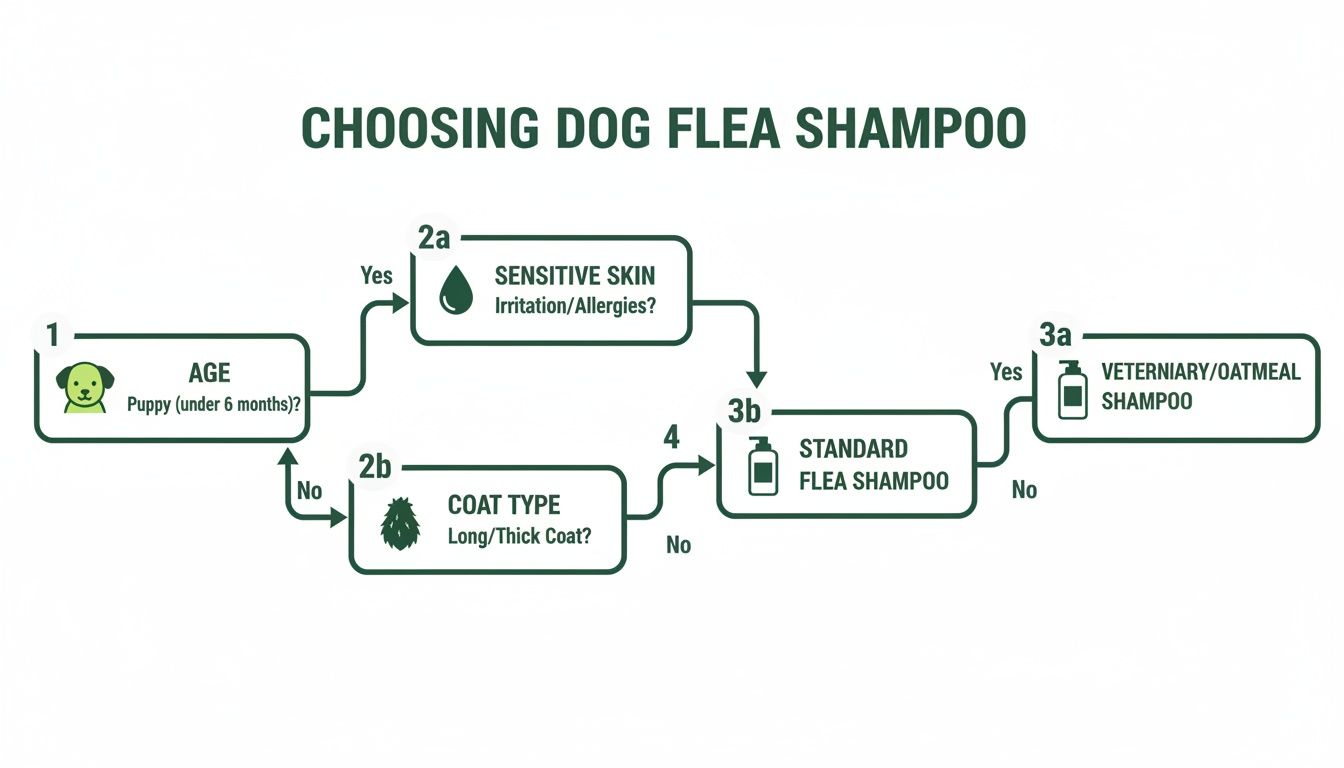
The flowchart above shows how things like your dog’s age, skin condition, and even their coat type all play a big role in picking the perfect shampoo.
Rinsing and Aftercare
Once the waiting time is over, it’s time to rinse thoroughly. Any leftover shampoo residue can dry out your dog’s skin and cause irritation. Use lukewarm water and continue rinsing until the water runs completely clear and their coat feels clean.
After towel-drying, perform one final step. While their fur is still damp, use a fine-toothed flea comb to go through their entire coat. This will remove any dead fleas, eggs, or debris. Keep a cup of soapy water nearby to dip the comb into, which will drown any remaining pests.
Finally, clean the tub and wash all towels and your dog’s bedding in hot water to kill any fleas that may have escaped. For a more detailed guide, you can check out our post on how to bathe a dog properly. By following these steps, you can turn a simple bath into a powerful flea treatment.
Beyond the Bath: A Complete Flea Control Strategy
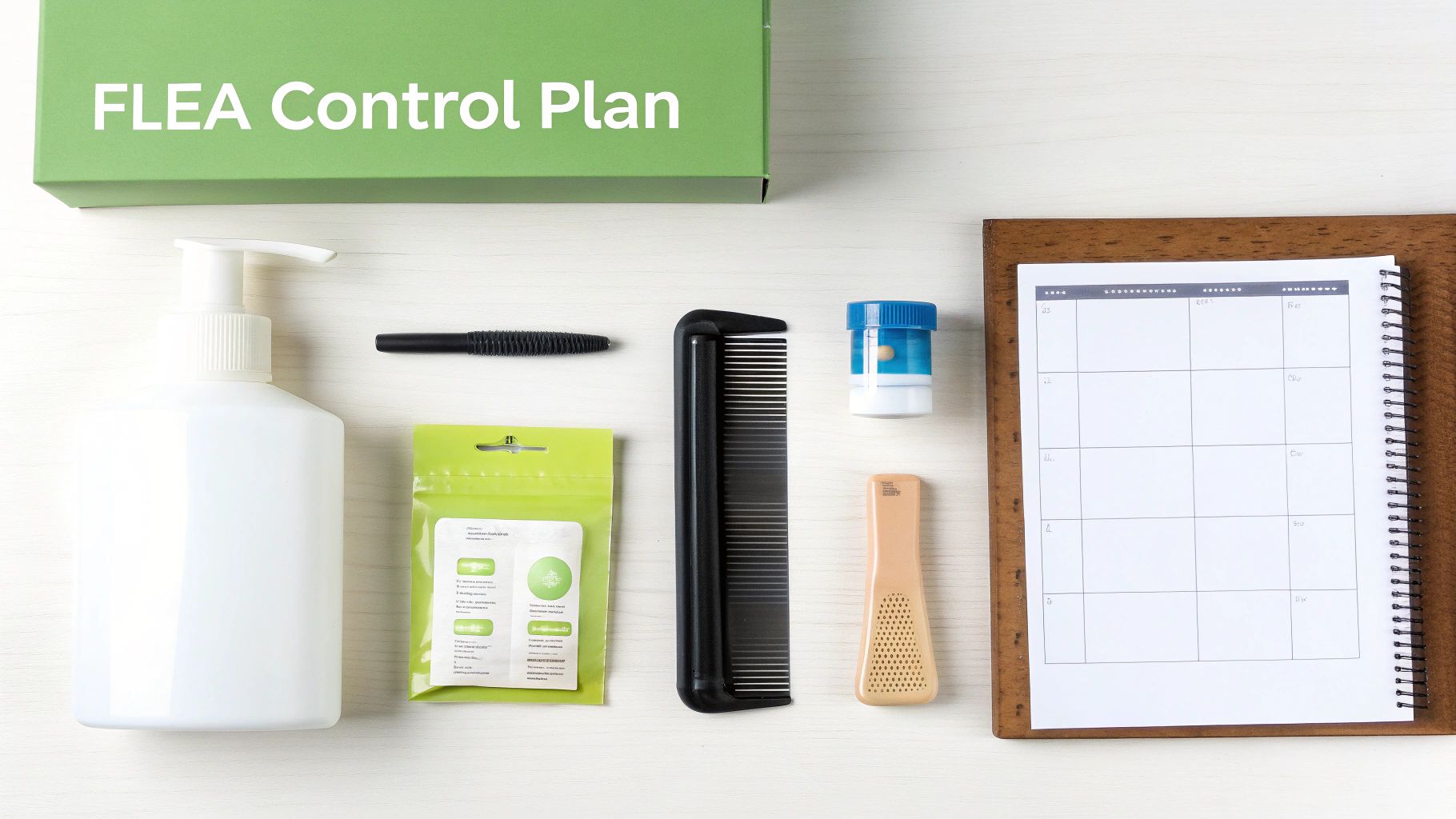
A flea bath provides immediate relief, but it's crucial to understand its role: it is the first step in a much larger campaign. The adult fleas you see on your dog represent only about 5% of the total infestation.
The other 95%—the eggs, larvae, and pupae—are hiding in your carpets, furniture, and your dog's bedding, waiting to mature and re-infest your pet. Relying solely on a dog shampoo for fleas is like mopping up a spill from an overflowing sink without turning off the faucet. To solve the problem permanently, you must address the source.
Creating Your Flea-Free Fortress
An effective flea control strategy requires a multi-layered approach that targets fleas both on your dog and in your environment. Each component works to break the flea life cycle and prevent future infestations.
Your complete flea control plan should include these key actions:
- Topical Spot-On Treatments: Apply these monthly treatments directly to your dog’s skin to provide long-lasting protection against adult fleas.
- Oral Medications: Flea pills or medicated chews work from the inside out. When a flea bites your dog, the medication kills it and often sterilizes any eggs it lays.
- Environmental Control: This step is non-negotiable. Vacuum all carpets, rugs, and furniture thoroughly and frequently. Wash your dog’s bedding in hot water weekly, and consider using pet-safe treatments for your home and yard.
Think of your flea control strategy like home security. The shampoo is the alarm that stops an intruder. The topicals and pills are the 24/7 surveillance system. And environmental cleaning is like locking your doors and windows to prevent future break-ins.
This multi-front approach is the only way to win the war against fleas. The global market for dog flea shampoos is projected to reach $500 million by 2025, growing 6% annually, as more owners recognize the need for a comprehensive strategy. If you're serious about battling flea infestation, your plan must extend beyond the bath.
Shift from a reactive to a proactive mindset. Incorporate other preventative tools, like a quality chlorhexidine spray for dogs, to maintain healthy skin that is less inviting to pests. By building a complete defense, you are protecting your pet and your home from the next invasion.
Still Have Questions About Dog Flea Shampoo?
It's normal to have questions when choosing and using a dog shampoo for fleas. You want to ensure you're doing what's best and safest for your pet. Here are actionable answers to some of the most common concerns.
A primary question is how often to use a flea shampoo. Unlike regular grooming products, most medicated formulas are treatments, not routine cleaners. Your default action should be to follow the label instructions. As a general rule, use a flea bath to initiate your flea control plan, not for weekly cleaning. Overuse can strip your dog's skin of its natural, healthy oils, leading to dryness and irritation.
What About My Specific Dog?
You are right to be concerned about your puppy or senior dog—age is a critical factor. Most flea shampoos have a strict minimum age requirement, typically 12 weeks, because puppies have sensitive skin that cannot tolerate harsh chemicals. For senior dogs, it is always wise to consult your vet before use. They may have underlying health conditions that make a gentler product a safer choice.
Another common issue is seeing fleas after a bath. Don't panic. The shampoo has killed the fleas that were on your dog during the bath. However, new fleas from your home environment—carpets, bedding, or yard—are now jumping onto your clean pet.
A single bath is just step one. To win the war against fleas, you must implement a comprehensive plan. This includes treating your home and yard and starting your dog on a long-term preventative like a spot-on treatment or oral medication. Use flea shampoo as your immediate, first-response tool, not a permanent shield.

Leave a comment