
How to Bathe a Dog Properly for a Stress-Free Clean

Let's be honest, for many dog owners, bath time feels more like a wrestling match than a grooming session. The splashing, the escape attempts, the full-body shake-off that covers your entire bathroom in water... it's a scene we all know.
But it doesn't have to be that way. The secret isn't just the shampoo; it’s about transforming the experience from a stressful chore into a calm, predictable routine. By shifting your approach, you can make bath time a positive bonding moment instead of a battle.
Transforming Bath Time From Chaos To Calm
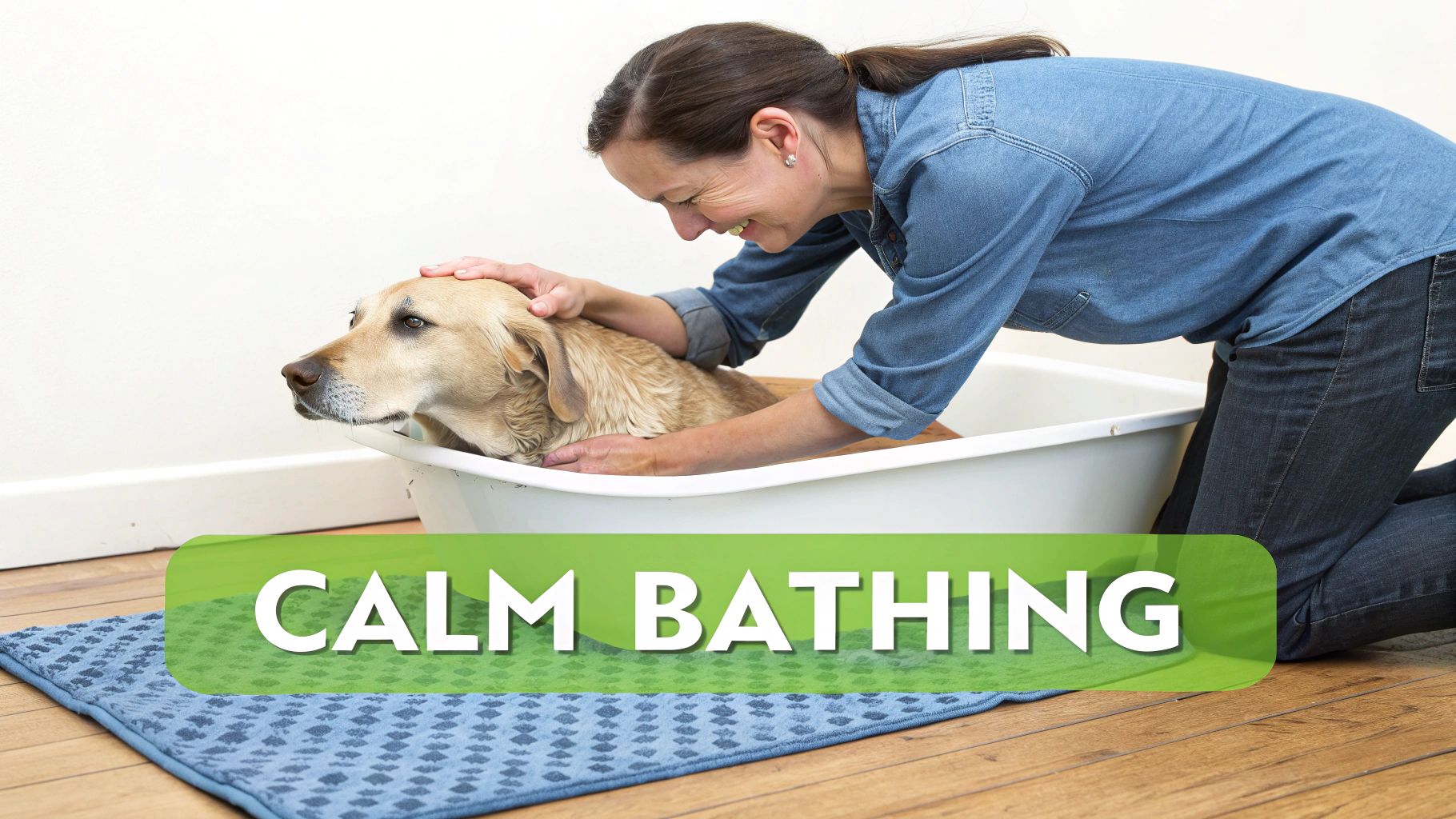
This guide is filled with actionable techniques that put your dog's comfort first. A proper bath is a key part of your dog's health, maintaining their coat and skin while preventing potential problems. More importantly, it’s a powerful opportunity to strengthen your bond.
The Foundation of a Fear-Free Bath
The goal is to build trust. This means reading your dog's body language and responding with calm reassurance, not force. When your dog feels safe, the entire process becomes easier for both of you.
Try to see the bathroom from your dog's perspective: a slippery tub, loud running water, and unfamiliar sensations can be overwhelming. A few simple adjustments make a huge difference:
- Create a Safe Space: Place a non-slip mat in the tub. This is a non-negotiable step. It prevents slips and gives your dog a secure footing, which immediately reduces anxiety.
- Keep a Calm Demeanor: Your dog mirrors your energy. If you're stressed, they will be too. Use a soothing, gentle voice and offer praise for calm behavior.
- Make it Predictable: Dogs thrive on routine. Follow the same steps every time you give a bath. This predictability helps them understand what to expect, reducing their stress over time.
A proper and thorough bath ensures that mud and grime won't lodge as easily into their coat. This simple act makes future clean-ups quicker and helps maintain a healthy coat between full washings.
Ultimately, knowing how to bathe a dog properly is about creating a positive association with grooming. By focusing on preparation and patience, you can turn a dreaded chore into a pleasant experience. This guide will show you exactly how.
Gathering Your Essential Dog Bathing Toolkit
A smooth bath starts long before you turn on the water. The key to a calm, successful bath is having everything you need within arm's reach. This prevents a frantic search for a towel while trying to keep a slippery dog in the tub.
When you aren't fumbling to open a shampoo bottle, you can put your full focus on your dog, keeping them calm and secure. It’s a simple preparation step that turns a chaotic experience into a controlled one.
The right supplies don't just get your dog clean; they protect their delicate skin and coat. There's a reason the global pet care market soared to $304.4 billion in 2023, with dogs making up over 60% of that spending—quality products genuinely make a difference.
Choosing The Right Shampoo and Conditioner
The most critical item in your toolkit is a high-quality, dog-specific shampoo. Never use human shampoo. It's formulated for our skin's pH balance and will strip the natural, protective oils from your dog’s coat, leading to dry, itchy, and irritated skin.
Select a shampoo based on your dog's specific needs:
- For Sensitive Skin: Choose gentle, hypoallergenic formulas with soothing ingredients like oatmeal or aloe vera.
- For Double Coats: Use a deshedding shampoo to help loosen the dense undercoat, making it easier to wash out and brush away later.
- For Dry or Itchy Skin: Medicated or moisturizing shampoos can provide relief. However, for persistent skin problems, always consult your vet first.
Conditioner is not essential for every dog, but it is highly recommended for dogs with long hair or dry coats. It restores moisture, simplifies detangling, and leaves their coat soft. Just like shampoo, ensure you rinse it out completely.
Essential Safety and Comfort Items
Beyond shampoo, a few other items are critical for a safe and efficient bath. These tools will elevate your home grooming from a stressful ordeal to a smooth, professional-style session.
First, a non-slip mat for the bottom of the tub or shower is an absolute must. Slippery surfaces can cause panic and lead to injury. This simple addition gives your dog secure footing, significantly boosting their comfort and confidence.
Next, have plenty of towels ready. Prepare two or three super-absorbent towels beforehand to reduce drying time and contain the inevitable post-bath shake.
Pro Tip: Keep a small, dry washcloth handy just for your dog's face. It's perfect for gently wiping around their eyes and muzzle, so you can avoid getting soap and water in those sensitive spots.
Your Essential Dog Bathing Supply Checklist
To ensure you're ready, gather these items before you bring your dog into the bathroom. Having them lined up and within reach is the key to a stress-free operation.
| Supply Item | Purpose and Key Features | Pet Magasin Recommendation |
|---|---|---|
| Dog-Specific Shampoo | Cleans the coat and skin without stripping natural oils. Always choose a formula based on your dog’s specific skin and coat type. | Varies based on dog's needs (hypoallergenic, deshedding, etc.) |
| Dog Conditioner | An optional but highly recommended step for dogs with long hair or dry skin. It restores moisture and makes detangling much easier. | Look for natural, moisturizing ingredients. |
| Non-Slip Mat | Provides your dog with secure footing in the tub, preventing slips and falls that can make them anxious about bath time. | Any standard rubber bath mat will work wonders. |
| Multiple Absorbent Towels | You'll need at least two: one for the initial dry-off in the tub and another for a more thorough drying on the floor. | Microfiber towels are great for absorbency. |
| Rubber Brush or Curry Comb | Helps work the shampoo deep into the coat for a better clean while giving your dog a nice massage. | Our grooming glove is perfect for this task. |
| High-Value Treats | Creates a positive association with the bath. Use special, tasty treats that are reserved only for grooming. | Small, easy-to-chew treats work best. |
With this checklist, you've got the foundation for a perfect bath time. If you're looking to build out your full at-home grooming setup, you might want to check out our complete guide on the best grooming tools for dogs.
Mastering the Bathing Process From Start to Finish
With your toolkit assembled, it's time for the main event. Knowing how to bathe a dog properly is about following a confident, flexible process. This step-by-step guide will help you navigate the entire bath, from the first brush-out to the final towel-off, ensuring your dog feels secure and gets completely clean.
The Critical Pre-Bath Brush Out
Before any water touches your dog, grab your brush. Brushing a dry coat is the most effective way to remove loose fur, dirt, and hidden tangles. Once matted fur gets wet, the knots tighten, becoming painful and almost impossible to remove.
This step is vital for double-coated or long-haired breeds. A thorough brush-out with an undercoat rake or slicker brush thins out dense fur, allowing shampoo and water to penetrate to the skin for a deeper clean. A few minutes of brushing now will save you frustration later and reduce the amount of fur clogging your drain.
Getting The Water Temperature Just Right
A dog's skin is more sensitive to heat than ours. Water that feels comfortably warm to you can be too hot for them. Always use lukewarm water. Test it on the inside of your wrist, just as you would for a baby's bath.
Start running the water before you bring your dog into the bathroom. The sudden noise can be startling, so letting it run for a moment helps them acclimate. Use a low, gentle water pressure to minimize stress.
A calm start sets the tone for the entire bath. If your dog is relaxed when you're just getting them wet, they are far more likely to stay calm through the shampooing and rinsing.
The Art of Wetting and Lathering
Once your dog is secure on the non-slip mat, it’s time to get them wet. A handheld sprayer on a gentle setting offers the best control. Start at their neck and work your way back towards the tail, ensuring their entire coat is thoroughly soaked.
Crucially, save their head for last. Most dogs dislike having water poured on their face. Following this order prevents a great deal of anxiety and head-shaking.
When you're ready to shampoo, follow this method:
- Dilute the Shampoo: Squeeze shampoo into your hand, add a little water, and rub your hands together to start a lather. This helps the product spread more evenly.
- Start from the Neck Down: Apply the shampoo along their back and work it into a rich lather, moving from their neck down to their tail and legs. Use a rubber curry comb to work the shampoo deep into the coat while giving your dog a massage.
- Clean the Head Carefully: Use a damp washcloth to gently clean your dog’s face. This gives you precise control to avoid getting soap in their eyes and ears.
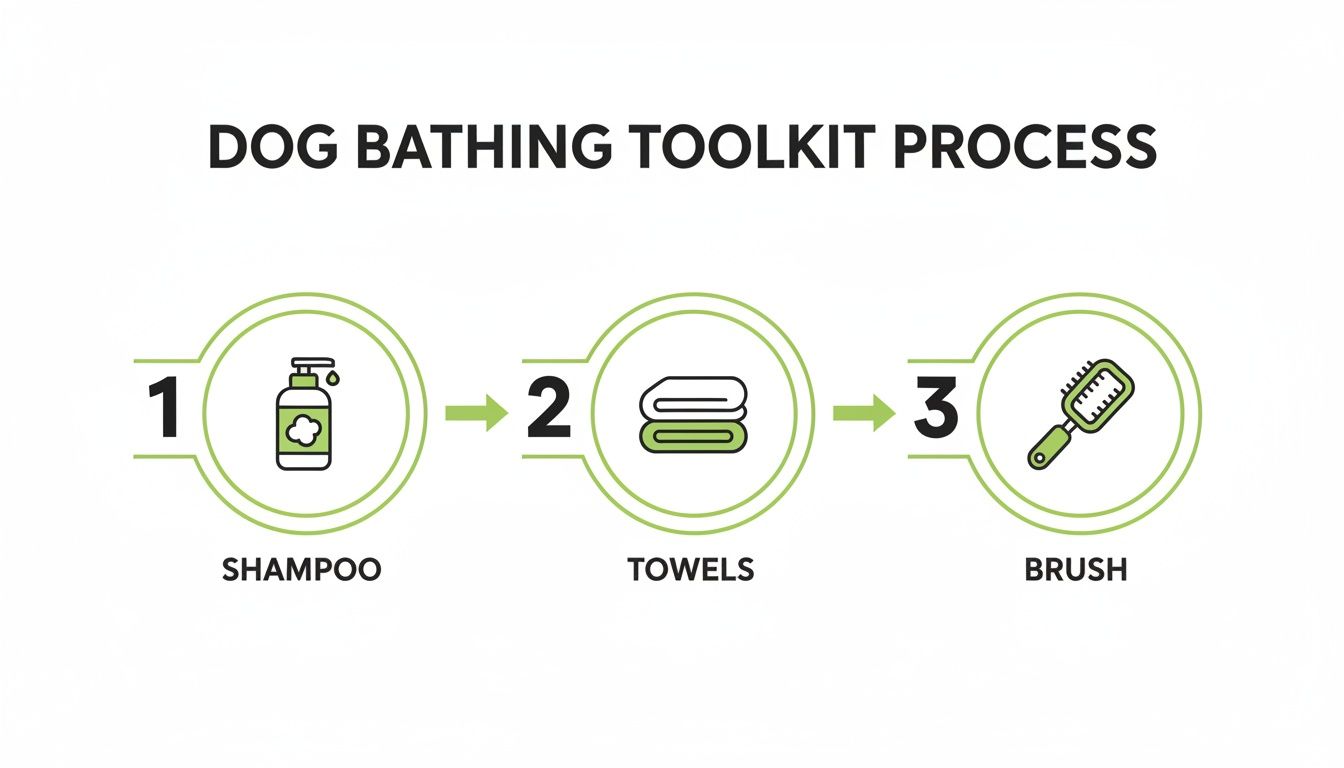
This visual guide breaks down the core parts of a successful bath. Having these three key items—shampoo, towels, and a brush—ready to go transforms the experience from chaotic to controlled. It shows that a good bath relies on a simple, well-prepared toolkit, emphasizing that your technique is just as important as the products you use.
Why a Thorough Rinse Is Non-Negotiable
This is arguably the most important step of the entire bath. Shampoo residue left on your dog’s skin can cause severe irritation, dryness, and itching, sometimes leading to painful "hot spots."
Rinse, and then rinse again. When you think you're done, do it one more time.
Run your hands through their coat as you rinse, feeling for any slippery, soapy spots. The water should run completely clear before you stop. Pay extra attention to dense areas like under their legs, their belly, and around their tail.
For a comprehensive look at keeping your dog's coat and skin healthy at home, check out our guide on how to groom your dog at home. It offers deeper insights that pair perfectly with a good bathing routine.
Drying Your Dog The Right Way
The "big shake" is inevitable, so be prepared. The moment you turn off the water, drape a towel over your dog’s back to catch most of the spray.
First, use your hands to gently squeeze excess water from their legs, tail, and ears. Then, use a super-absorbent towel to blot and pat their coat dry. Avoid vigorous rubbing, as this can create tangles, especially in long-haired dogs.
For some dogs, particularly those with thick coats, a pet-safe blow dryer on the lowest heat and speed setting can be helpful. Introduce the dryer slowly, keep it moving to avoid heating one spot too much, and never point it directly at their face. If your dog shows any signs of fear, stick to towel drying. Ending the bath on a positive note is crucial for making the next one easier.
Adapting Your Technique for Different Breeds and Coats
A one-size-fits-all bathing method doesn't work for dogs. The technique that leaves a short-haired Beagle sparkling clean would be a disaster for a thick-coated Samoyed, potentially causing mats and skin issues.
Think of a dog's coat like a unique fabric. You wouldn't wash a delicate silk shirt with rugged denim. The same principle applies here. Each coat type has its own structure and requires a specific approach to keep it healthy.
Caring for Long-Haired Breeds
For long-haired breeds like Golden Retrievers, Shih Tzus, and Collies, the pre-bath brush-out is the most critical step. Long hair tangles easily, and water tightens these tangles into painful mats. Use a slicker brush or a long-toothed comb to remove all knots before you turn on the water.
During the wash, use gentle, downward strokes that follow the direction of hair growth. Avoid circular scrubbing, which creates new tangles. A high-quality conditioner is essential to restore moisture and make the final comb-through much smoother.
Managing Double-Coated Dogs
Dogs like Huskies, German Shepherds, and Labradors have a dense, insulating undercoat and a water-resistant topcoat. The main challenge is getting water and shampoo to penetrate to the skin. A rubber curry comb is an excellent tool for working the lather deep into their fur.
Rinsing is equally critical. Trapped shampoo in the undercoat can cause skin irritation. Rinse until the water runs completely clear, and then rinse for another minute to be certain. Squeeze sections of their coat to check for any hidden suds.
Key Insight: Whatever you do, never shave a double-coated dog, even in the summer. That two-layer system is their natural insulator, regulating body temperature in both hot and cold weather. Shaving it away removes their built-in protection.
Bathing Dogs with Short or Smooth Coats
Breeds like Boxers, Pugs, and Beagles may seem low-maintenance, but their short fur provides less of a barrier, making their skin more prone to environmental allergens. While they don't need extensive detangling, using a gentle, moisturizing shampoo is key to supporting skin health.
Because their coats dry quickly, they can get chilled easily. Ensure the room is warm and have towels ready for a quick, thorough dry-off immediately after the bath. A fast brush-down after they're dry will help distribute natural oils and give their coat a healthy shine.
Addressing Specific Skin Conditions
For some dogs, bath time is therapeutic. If your dog has sensitive, dry, or oily skin, choosing the right products is essential to soothe their condition, not aggravate it.
- For Dry, Itchy Skin: Look for shampoos with calming ingredients like oatmeal or aloe vera to soothe inflammation and rehydrate the skin.
- For Oily Coats: Some breeds, like Cocker Spaniels, are prone to oily skin. A clarifying shampoo designed to gently remove excess sebum without over-drying can help restore balance.
If you're dealing with a specific health issue like allergies, adapting your routine is crucial. Understanding conditions like understanding canine atopic dermatitis can help you provide specialized care. Always consult your vet before using medicated products to ensure you're addressing the root cause of the problem.
Post-Bath Care and Building Positive Associations
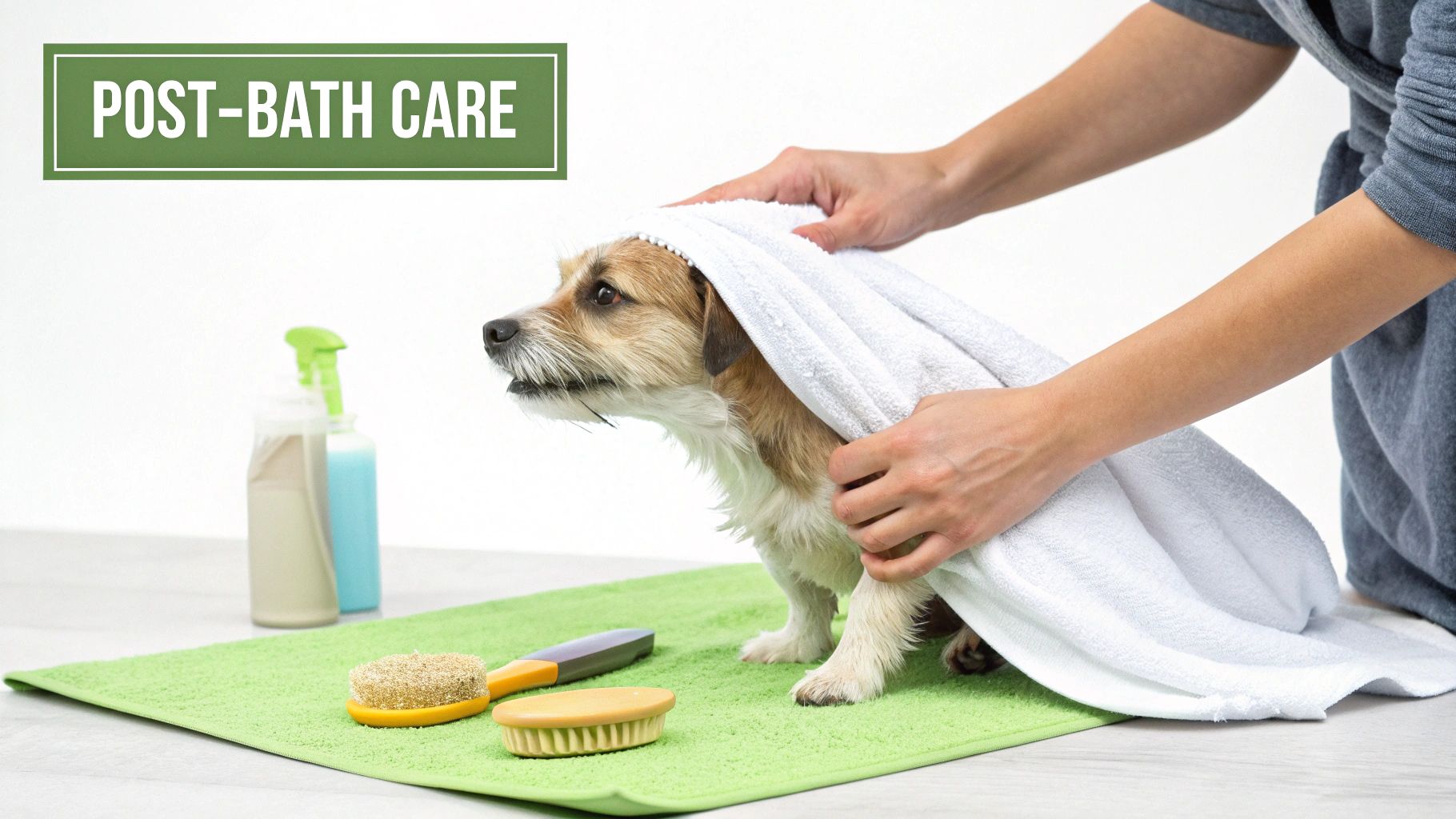
The job isn’t done when the water is turned off. What happens immediately after the bath is crucial for your dog's health and their perception of the entire experience.
This post-bath window is your golden opportunity to reinforce that grooming is a positive, rewarding activity. This is how you teach your dog that tolerating the tub leads to great things afterward.
Essential Aftercare Steps
Once your dog is mostly towel-dried, perform a few final checks. A quick, gentle brush-out with a slicker brush or comb will catch any new tangles and help their coat dry smoothly, preventing mats.
Next, check their ears. Moisture trapped in the ear canal can lead to painful infections. Gently wipe the visible parts of your dog’s ears with a dry cotton ball or a pet-safe ear wipe. Never insert anything deep into the ear canal.
After the bath is a good time to inspect their skin for any irritation. For minor issues, our article on using chlorhexidine spray for dogs offers helpful information. For anything serious, a vet visit is always the best course of action.
The Power of Positive Reinforcement
This is how you solidify a positive association with bath time. The moment the bath is officially over, make it a celebration. This step is what makes learning how to bathe a dog properly a long-term success.
Your dog just tolerated something they likely don't enjoy, so show your appreciation for their cooperation. Here’s how:
- High-Value Treats: Use a special treat they only get after a bath, like a piece of chicken or a favorite chew.
- Engaging Playtime: Initiate a fun game of tug or fetch with their favorite toy.
- Affection and Praise: Offer enthusiastic praise, petting, and cuddles. Let them know they were the best dog ever.
By immediately following the bath with something your dog absolutely loves, you're actively changing how they feel about the experience. Over time, they start to see bath time as just the boring part before the treats and fun begin.
Of course, we've all seen the post-bath "zoomies," where a freshly cleaned dog goes wild, running around the house. This is a totally normal way for them to release all that pent-up energy and get themselves dry.
Since this is a pretty common occurrence, keeping a pet-friendly home is just as important as the grooming itself. It's a good idea to look into safe carpet cleaning practices for pet owners to handle any post-bath messes. When the whole process—from the tub to the living room—is a safe and positive one, you build the kind of trust that lasts.
Common Dog Bathing Questions Answered
Even experienced dog owners have questions about bath time. Here are direct answers to some of the most common queries, providing a quick reference for those tricky situations.
How Often Should I Actually Bathe My Dog?
A good starting point for most dogs is a bath every 4 to 8 weeks. This frequency keeps their coat clean without stripping the natural oils that protect their skin.
However, this is just a guideline. If your dog frequently gets muddy or swims, you will need to bathe them more often. The key is to always use a high-quality, dog-specific shampoo and conditioner. The right products are gentle enough for more frequent clean-ups without drying out their skin.
Can I Ever Use Human Shampoo on My Dog?
No, you should never use human shampoo on a dog. Human shampoo is formulated for our skin's acidic pH, while a dog's skin is more alkaline. Using our products will strip their natural protective oils.
This can lead to several problems:
- Dry, flaky skin that causes constant itching.
- An increased risk of skin irritation and infections.
- A dull, brittle coat that has lost its natural softness and shine.
Always use a shampoo specifically formulated for dogs to meet their unique skin and coat needs.
What If My Dog Absolutely Hates Water?
If your dog panics around water, forcing them into a bath will only worsen their fear. The key is to change their association with the experience through gradual, positive reinforcement.
Start by making the bathroom a fun place without any bathing. Play games and give treats there. Next, introduce the tub slowly, rewarding them for simply putting a paw in, then for standing in the dry tub.
When you reintroduce water, start small. Use a damp washcloth at first, then a tiny trickle of water over their paws. Pair every single step with high-value treats and a calm, happy voice. This slow and positive process helps rewrite their entire association with water from scary to rewarding.
How Do I Know I've Rinsed All the Soap Out?
Leftover shampoo is a primary cause of post-bath itchiness. To be certain you've removed it all, rinse thoroughly, and when you think you’re done, rinse one more time.
Run your hands through their coat. If it feels at all slippery or slimy, there's still soap. The water running off their fur should be completely clear with no suds.
Be extra meticulous in spots where soap can hide:
- Under their armpits and down their legs
- Around their belly and groin
- At the base of their tail
Taking an extra two minutes for a final, thorough rinse can save your dog from days of discomfort and keep their skin healthy.
At Pet Magasin, we believe the right tools and a little know-how can turn pet care from a chore into a wonderful bonding experience. Our grooming products are made with your pet’s comfort and your convenience in mind, helping you get professional results right at home. Check out our full line of supplies at https://www.petmagasin.com.

Leave a comment