
Finding the Best Dog Shampoo for Itchy Skin: A Complete Guide

When your dog can't stop scratching, the right shampoo feels like a miracle. To find it, look for formulas packed with gentle, natural soothers like colloidal oatmeal and aloe vera. These ingredients are specifically chosen to calm inflamed skin and restore moisture without harsh chemicals, giving your pup immediate, noticeable relief.
Why Your Dog Can’t Stop Scratching

Before you can choose the right shampoo, you need to understand why your dog is scratching. Constant licking, chewing, and scratching aren't just bad habits; they're direct signals that something is irritating their skin—their body's largest organ.
Think of your dog's skin as a protective brick wall. When healthy, the skin cells (bricks) and natural oils (mortar) form a solid barrier that keeps moisture in and irritants out. But when that barrier is damaged, tiny cracks appear. This allows allergens and irritants to sneak through, triggering inflammation and that relentless, maddening itch. Your first step is to figure out what's causing those cracks.
Common Culprits Behind the Itch
So what’s breaking down that wall? A few usual suspects are often to blame for weakening your dog's skin barrier and kicking off the scratch-fest. Identifying the likely cause is the most critical step toward finding an effective solution.
Here are the most common triggers to investigate:
- Environmental Allergens: Pollen, dust mites, and mold spores are major culprits, especially during seasonal changes. This is the canine version of hay fever. Actionable Insight: If itching worsens after walks or in certain seasons, environmental allergies are a likely cause.
- Pesky Parasites: Fleas, mites, and ticks are notorious itch-instigators. For a sensitive dog, a single flea bite can trigger a severe allergic reaction, leading to days of misery. Actionable Insight: Check your dog’s coat and skin thoroughly for signs of fleas (like tiny black specks of "flea dirt") and ensure their parasite prevention is up to date.
- Food Sensitivities: Sometimes, the problem starts with their diet. An ingredient, often a protein like beef, dairy, or chicken, can manifest as a skin issue. Actionable Insight: If itching is year-round and accompanied by digestive issues, consider trying a food elimination trial or switching to a novel protein diet like chicken-free dog food.
- Infections: Once the skin barrier is weak, bacteria or yeast can move in. These secondary infections cause hot spots, redness, and often a foul odor. They typically require more than just a bath to resolve. Actionable Insight: Look for greasy skin, a musty smell, or circular red patches. These are signs that you need a medicated shampoo and likely a vet visit.
Digging Deeper Than the Surface
While those are the big four, sometimes the scratching points to something more specific. If the itch is centered around the ears, for instance, it could be a sign of a condition like canine otitis externa. In these cases, understanding canine otitis externa and compounding solutions is key, as it often requires a more targeted treatment plan.
It's estimated that a whopping 40% of dogs will struggle with some kind of skin sensitivity or allergy in their lifetime. Knowing what causes the itch is a fundamental part of being a great pet owner.
Once you have a better idea of what might be bothering your dog, you can shift from just chasing symptoms to actually solving the root problem. This insight helps you make smarter choices about everything—from the best shampoo to their diet and environment. Getting to the 'why' behind the scratch is the most powerful tool you have.
How to Read a Dog Shampoo Label
The pet care aisle can be overwhelming, with dozens of bottles all promising relief. Your best tool for cutting through the marketing noise is learning to read the ingredient label. This isn't just about picking a good shampoo; it's about actively avoiding formulas that will make the itching worse.
Many shampoos are packed with harsh chemicals that strip the skin's natural, protective oils. This can turn a mild itch into a full-blown crisis. Learning to spot beneficial and harmful ingredients is the most important skill you can have in your search for the best dog shampoo for itchy skin.
The Heroes: Soothing Ingredients to Look For
When your dog's skin is red and irritated, you need ingredients that calm, moisturize, and promote healing. These natural powerhouses help patch up the cracks in your dog's skin barrier to keep irritants out.
Look for these key ingredients on the label:
- Colloidal Oatmeal: This finely ground powder forms a protective film over the skin, locking in moisture and soothing inflammation. It's a game-changer for breaking the itch-scratch cycle.
- Aloe Vera: Known for its cooling effect, aloe vera is a natural anti-inflammatory with antibacterial properties. It provides immediate relief to angry, "hot" skin, similar to using it on a sunburn.
- Chamomile: This herb contains compounds that reduce swelling and calm irritated nerve endings in the skin. It's particularly effective for dogs with allergic reactions.
One study showed that shampoos with colloidal oatmeal led to a significant drop in itching and inflammation for over 67% of dogs suffering from allergic dermatitis. It just goes to show how one powerful, natural ingredient can make a massive difference.
These ingredients work by addressing the root of the irritation without creating new problems.
The Villains: Red Flag Ingredients to Avoid
Knowing what to look for is only half the battle; you also have to know what to avoid. Some of the most common ingredients in dog shampoos can make itchy skin worse by stripping the very oils it needs to stay healthy.
Here is your "do not buy" list of ingredients:
- Sulfates (SLS/SLES): Sodium Lauryl Sulfate and Sodium Laureth Sulfate are harsh cleaning agents that create a rich lather. This lather comes at a cost—it strips away protective natural oils, leaving skin dry, vulnerable, and even itchier.
- Artificial Fragrances and Dyes: A "fresh scent" is usually a cocktail of unnamed chemicals, which are common triggers for allergic reactions. Actionable Insight: If a shampoo has a strong, perfume-like smell, put it back. Opt for fragrance-free or naturally scented products.
- Parabens: These are chemical preservatives used to extend shelf life. They can be absorbed through the skin and have been linked to irritation and other health issues.
- Certain Alcohols: Harsh alcohols like isopropyl or denatured alcohol are extremely drying and will only worsen flaky, irritated skin.
Using a shampoo with sulfates on itchy skin is like trying to put out a fire with gasoline. It may seem like it's cleaning, but it's ultimately making the underlying problem much worse.
To make things simpler, here’s a quick cheat sheet to help you at the store.
Shampoo Ingredient Cheat Sheet for Itchy Skin
| Ingredient Type | Look For (Beneficial) | Why It Helps | Avoid (Potential Irritant) | Why It Harms |
|---|---|---|---|---|
| Soothing Agents | Colloidal Oatmeal, Aloe Vera, Chamomile | Calms inflammation, reduces redness, and provides immediate relief. | Artificial Fragrances, Dyes | Common allergens that can trigger intense itching and skin reactions. |
| Cleansers | Coconut-based cleansers (e.g., Cocamidopropyl Betaine) | Gently cleans without stripping natural oils from the skin. | Sulfates (SLS, SLES) | Harsh detergents that dry out the skin, making it more prone to irritation. |
| Moisturizers | Glycerin, Shea Butter, Vitamin E | Hydrate the skin and help repair its protective barrier. | Propylene Glycol | Can be a skin irritant and may enhance the absorption of other harmful chemicals. |
| Preservatives | Natural preservatives (e.g., Phenoxyethanol) | Prevents bacterial growth while being gentle on the skin. | Parabens, Formaldehyde-releasers | Can cause skin irritation, allergic reactions, and other health concerns. |
This guide is your secret weapon in the pet aisle. A quick glance can tell you if a shampoo is formulated to heal or harm.
Decoding the Ingredient List
The ingredient list is your most reliable source of information. Ingredients are always listed in order of concentration, from highest to lowest. This means the first five ingredients make up the bulk of the formula.
Actionable Insight: If you see water, aloe, or oatmeal near the top of the list, that’s a great sign. If you see a sulfate or a long chemical name you can't pronounce in those first few spots, be cautious. A trustworthy product will be transparent, often highlighting that it’s "sulfate-free" or "paraben-free." Don't just fall for marketing terms like "natural"—always flip the bottle over and verify the ingredient list.
Matching the Shampoo to the Itch
Picking the best dog shampoo for itchy skin isn't about finding a single miracle bottle. It's about matching the shampoo’s active ingredients to your dog’s specific problem.
Using the wrong shampoo is like using the wrong tool for a job—at best, it won't work, and at worst, it will make things worse. You wouldn't use a dandruff shampoo for a sunburn, and the same logic applies here. To give your dog real relief, you have to target the root cause.
Shampoos for Allergies and Sensitive Skin
Choose this if: Your dog's itching is seasonal (worse in spring/fall), flares up after being outdoors, or if their skin looks generally red and irritated. This points to environmental allergies from things like pollen, dust, or mold.
What to look for: A hypoallergenic shampoo. These formulas are intentionally simple, free of common irritants like fragrances, dyes, and sulfates. Instead, they focus on calming ingredients like oatmeal and aloe vera that soothe inflammation without adding more potential allergens.
An effective hypoallergenic shampoo acts like a gentle reset button for your dog's skin. It washes away surface-level allergens that have accumulated on their coat, providing immediate relief from the external triggers causing the itch. For a dog that gets itchy paws after every walk, a weekly bath with a gentle, oatmeal-based hypoallergenic shampoo can dramatically reduce licking and chewing by simply removing the pollen from their fur and feet.
Shampoos for Infections: Bacterial or Fungal
Choose this if: Your dog's skin feels greasy, has a musty or "yeasty" smell, or shows red, circular patches or pimple-like bumps. These are classic signs of a bacterial or fungal infection, which often occurs after a dog has damaged their skin barrier from excessive scratching.
What to look for: A medicated shampoo. These contain active ingredients designed to kill the microorganisms causing the trouble.
- For Bacterial Infections: Look for shampoos with chlorhexidine. It's a powerful antiseptic that kills bacteria on the skin's surface.
- For Fungal (Yeast) Infections: Look for shampoos containing ketoconazole or miconazole. These ingredients stop fungal overgrowth.
Pesky parasites like fleas can also cause intense itching that leads to secondary infections. If you think fleas are the culprit, our guide on the best flea shampoo for dogs has some targeted solutions for that specific problem. As pet owners focus more on wellness, the demand for these specialized shampoos is growing—the market is expected to expand at a 5.8% CAGR through 2035.
This chart gives you a quick and easy way to check a shampoo label for the good stuff (soothing ingredients) and the bad stuff (irritants).
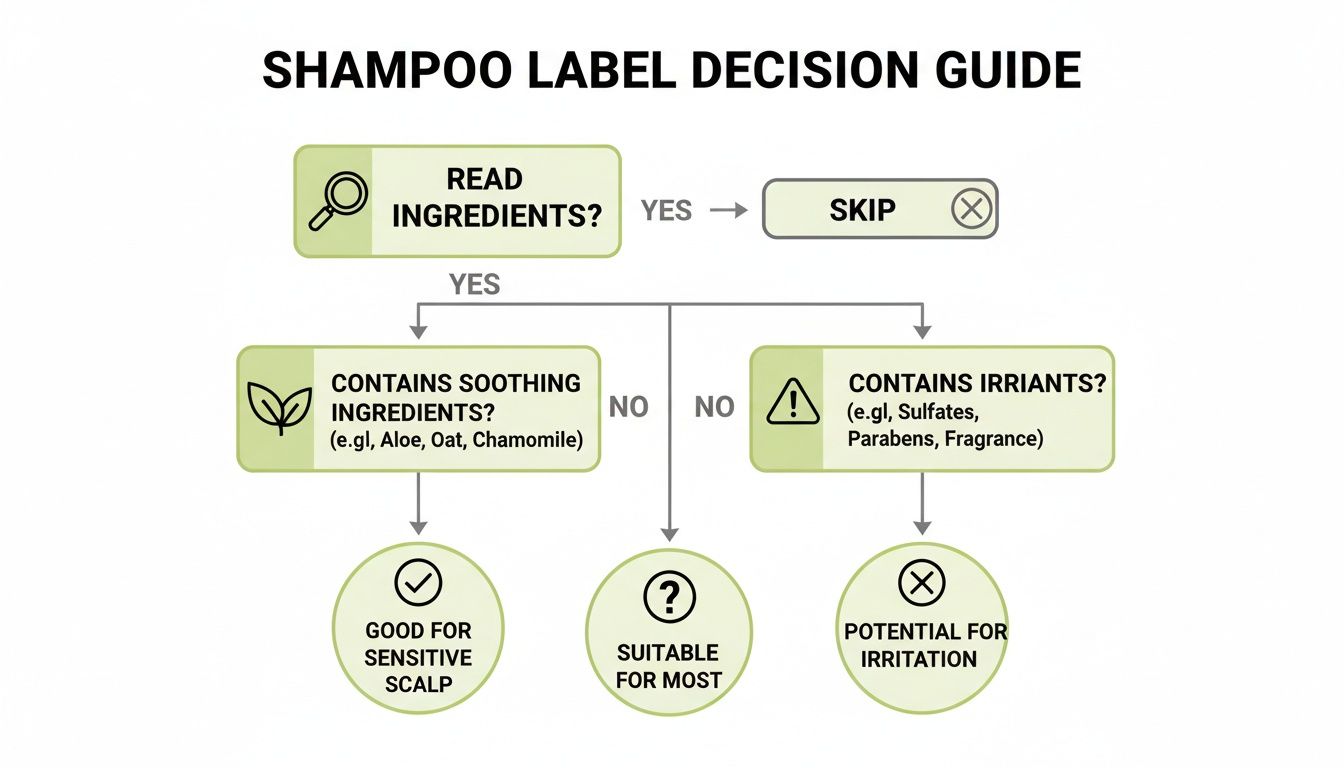
It’s a great reminder to always choose formulas packed with soothing agents while steering clear of known irritants to get your dog's itchy skin under control.
Shampoos for Dry, Flaky Skin
Choose this if: You notice white flakes on your dog’s coat or bedding (similar to human dandruff) and their skin appears dull or scaly. This can be caused by low humidity (especially in winter), nutritional deficiencies, or genetics.
What to look for: A moisturizing shampoo. The goal here is hydration. Look for formulas loaded with ingredients that replenish natural oils and repair the skin's barrier.
Key moisturizing ingredients to look for include:
- Shea Butter: A rich emollient that deeply moisturizes and locks in hydration.
- Coconut Oil: Contains fatty acids that nourish the skin and improve coat shine.
- Vitamin E: An antioxidant that supports skin health and helps repair damage.
Remember, using a moisturizing shampoo on a dog with a yeast infection won't solve the underlying problem. By correctly identifying the type of itch—whether it's from allergies, an infection, or just dryness—you can choose a shampoo with the right ingredients to bring your pup true, lasting relief.
Your Step-by-Step Therapeutic Bathing Routine
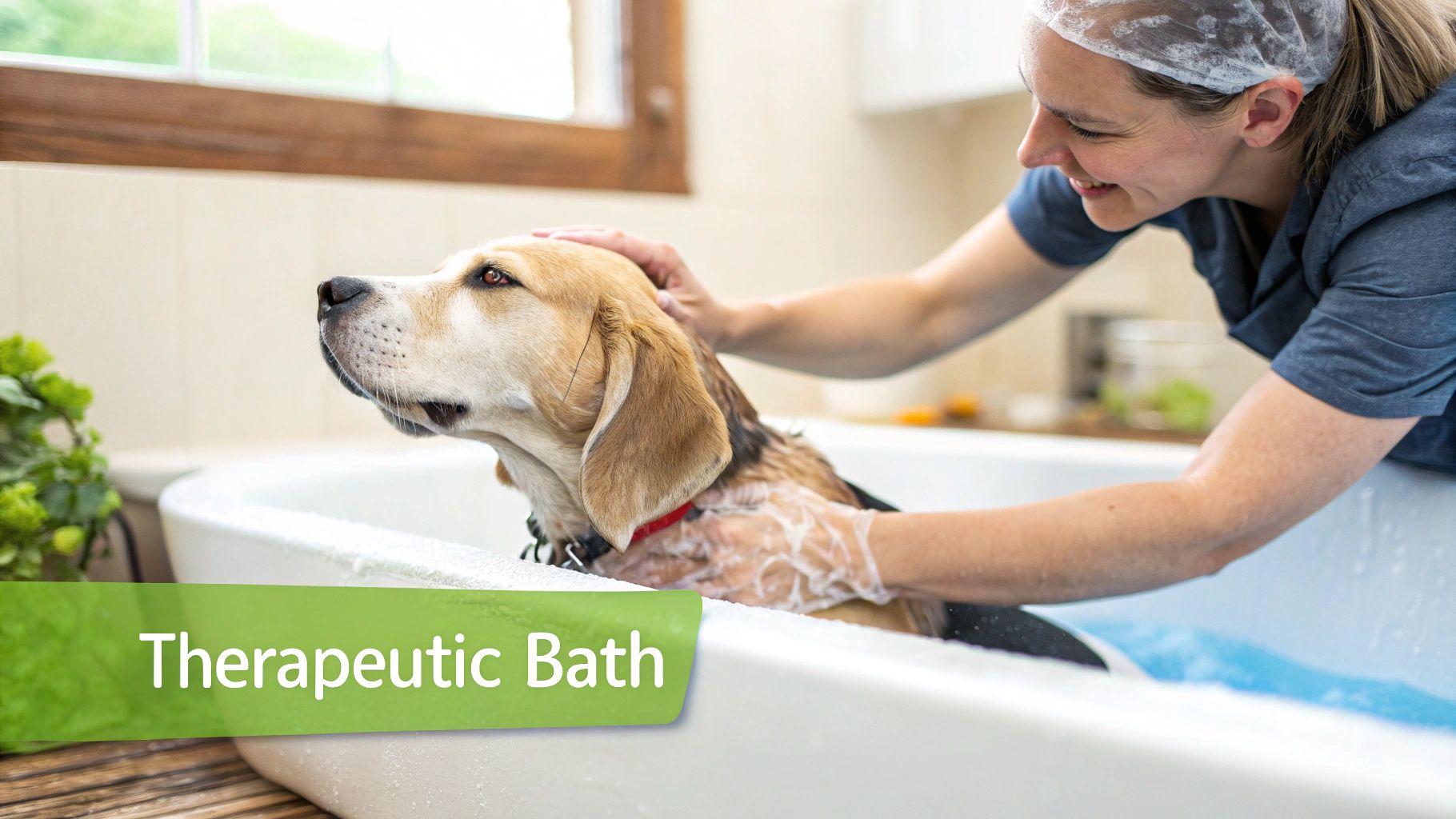
Choosing the best dog shampoo for itchy skin is the first step, but its real power is unlocked by how you use it. A therapeutic bath is not a quick scrub; it's a deliberate process designed to soothe, treat, and protect your dog’s sensitive skin.
Transforming bath time from a chore into a calming treatment means every detail matters. This is about giving the active ingredients in the shampoo the time and environment they need to work. From water temperature to contact time, each step is crucial for providing lasting relief.
Step 1: Prepare for a Calm Experience
A little prep work prevents a lot of stress. The key to a calm bath is having everything you need within arm's reach before the water starts running.
Your pre-bath checklist:
- Brush thoroughly first: This removes loose fur and dirt, allowing the shampoo to make direct contact with the skin. It also breaks up mats that can trap moisture and breed bacteria.
- Gather all supplies: Have the shampoo, several clean towels, and cotton balls (to gently place in your dog's ears to keep water out) ready to go.
- Create a non-slip surface: Place a rubber mat or a towel at the bottom of the tub. This gives your dog secure footing, making them feel safer and reducing the risk of panic.
Step 2: The Therapeutic Wash Process
Once your station is set, it's time for the bath. The goal is to be gentle but thorough, ensuring the medicated or soothing ingredients have a chance to work on the irritated skin.
Follow this washing technique:
- Use Lukewarm Water Only: This is non-negotiable. Hot water is a major irritant for inflamed skin and will increase inflammation. Test the water on your wrist; it should feel comfortably warm, not hot.
- Saturate the Coat Thoroughly: Wet your dog’s coat completely from the neck down, avoiding the head for now. Ensure water soaks all the way to the skin.
- Apply Shampoo and Lather Gently: Apply shampoo along your dog's back and work it into a soft lather. Use your fingertips (not nails) to massage it deep into the coat and onto the skin.
- Let It Sit for 5-10 Minutes: This is the most critical step. Active ingredients need time to work. Rinsing immediately washes all the benefits down the drain. Let the shampoo sit for 5-10 minutes, as directed on the bottle. Use this time to gently wipe your dog's face with a damp washcloth (without shampoo).
- Rinse Completely: After the time is up, rinse thoroughly. Any shampoo residue left on the skin can become a new source of irritation. Keep rinsing until the water runs completely clear and the coat feels squeaky clean.
A common mistake is rushing the rinsing process. Experts suggest rinsing for at least a few minutes longer than you think is necessary to ensure every trace of shampoo is gone, especially in thick-coated breeds.
For a deeper dive into bathing techniques that can make the process smoother for both of you, check out our guide on how to bathe a dog properly.
Step 3: Post-Bath Care for Lasting Comfort
What you do after the final rinse is just as important. The goal is to dry your dog gently without causing further irritation and to lock in moisture.
- Use Gentle Drying Techniques: Avoid vigorous rubbing with a towel, which can irritate sensitive skin. Instead, gently squeeze excess water from their coat and use an absorbent towel to pat them dry. If using a blow dryer, use only the lowest heat and speed setting, keeping it moving to prevent overheating any single spot.
- Apply Post-Bath Moisturizers: If your vet has approved a leave-in conditioner or moisturizing spray, now is the time to apply it. Applying it to damp skin helps lock in hydration and provides an extra layer of soothing relief.
By following this careful routine, you turn a simple bath into a powerful, comforting treatment. This approach makes sure your chosen shampoo can do its best work, giving your itchy pup the comfort they so desperately need.
Strategies for Lasting Skin Health
While a therapeutic bath provides crucial immediate relief, it primarily treats symptoms. For true, long-term comfort, you must look beyond the shampoo bottle and support your dog's skin from the inside out.
Think of it like gardening: you can spray leaves to deter pests, but for the plant to thrive, the soil must be nourished. Similarly, supporting your dog's internal health and managing their environment are key to finally breaking the itch-scratch cycle for good.
Nourishing the Skin from Within
A dog's skin and coat directly reflect their internal health. Nutritional gaps can weaken the skin's natural defenses, leaving it vulnerable to dryness, allergens, and infections. Strategic nutritional support can be a game-changer.
Action Plan:
- Add Omega-3 Fatty Acids: Fish oil, rich in EPA and DHA, is essential for building strong skin cells and calming systemic inflammation. A strong skin barrier, powered by omega-3s, keeps moisture in and allergens out, stopping the itch before it starts.
- Consider Probiotics: A healthy gut is directly linked to a healthy immune system and skin. Probiotics help balance gut bacteria, which can reduce the severity of allergic skin reactions.
Consult your vet before adding any new supplements to your dog's diet. Many of the same natural ingredients that soothe skin topically can also be beneficial when ingested; for example, you can explore the benefits of aloe vera for dogs.
Managing Your Dog’s Environment
If your dog suffers from environmental allergies, your home can be a major source of triggers like dust mites, mold spores, and pollen. Reducing their exposure doesn't require living in a sterile bubble; a few consistent habits can dramatically lower the allergen load.
Action Plan:
- Vacuum Frequently: Use a vacuum with a HEPA filter at least twice a week to trap tiny allergen particles instead of redistributing them into the air.
- Wash Bedding Weekly: Your dog's bed is an allergen magnet. Wash it in hot water once a week to kill dust mites.
- Use an Air Purifier: Placing an air purifier with a HEPA filter in the room where your dog sleeps can significantly reduce airborne allergens.
- Wipe Paws After Walks: Keep a damp cloth by the door and wipe your dog's paws when they come inside to prevent tracking pollen and other outdoor irritants through the house.
When you combine the best dog shampoo for itchy skin with a supportive diet and a cleaner home, you create a comprehensive wellness plan. This multi-faceted approach provides relief from every angle, leading to a much happier, more comfortable best friend.
Common Questions About Bathing an Itchy Dog
When you're dealing with an itchy dog, you're bound to have a few questions. Getting the right answers is the first step toward getting your furry friend some real relief. Let's dig into some of the most common things pet parents ask.
How Often Should I Bathe a Dog with Itchy Skin?
This depends on the cause of the itch. Your goal is to balance washing away irritants without stripping the skin's protective oils.
- For Active Infections or Severe Allergies: Your vet may recommend bathing 1-2 times per week with a medicated shampoo to control bacteria or yeast and remove allergens.
- For General Maintenance: For mild dryness or seasonal allergies, bathing every 1-2 weeks is often sufficient.
- The Key Takeaway: Pay attention to your dog's skin. If it seems drier or more irritated after a bath, you may be bathing too frequently. Always default to your vet's specific instructions.
Can I Use My Own Shampoo on My Dog?
No, you should never use human shampoo on a dog, especially one with irritated skin. It all comes down to pH balance. Human skin is acidic, while dog skin is more alkaline. Human shampoos are formulated for our acidic pH and will disrupt a dog's natural skin barrier, stripping its protective acid mantle. This leaves the skin vulnerable to bacteria, allergens, and parasites, making the itching far worse.
Think of it this way: using human shampoo on an already irritated dog is like pouring lemon juice on a sunburn. It’s only going to make a bad situation a whole lot worse.
When Is It Time to See a Vet?
While the right shampoo can resolve many mild issues, some problems require professional diagnosis and treatment. Book a vet appointment if you notice:
- Relentless itching: Scratching continues or worsens despite therapeutic baths.
- Open sores or hair loss: The presence of "hot spots" (moist, red, irritated areas), crusty scabs, or bald patches.
- A bad smell: A musty, yeasty, or otherwise foul odor often signals an infection that requires prescription medication.
- Behavioral changes: Lethargy, irritability, or loss of appetite can indicate the itch is a symptom of a larger health issue.
Your vet can identify and treat underlying causes like mange, deep-seated infections, or hormonal imbalances that over-the-counter products cannot fix.
Are "Natural" Shampoos Always the Best Bet?
Natural shampoos with ingredients like oatmeal and aloe are popular because they offer gentle relief without harsh chemicals. Natural formulas are projected to make up 55% of the pet shampoo market by 2025, showing a clear trend towards gentler care. You can learn more about from pet care market reports on factmr.com.
However, "natural" does not automatically mean "hypoallergenic." Some dogs can be sensitive to natural ingredients, like certain essential oils. The best shampoo for your dog is one that soothes their skin without containing any of their specific triggers, whether natural or synthetic. Always monitor your dog's skin closely when trying a new product.
At Pet Magasin, we get it—a healthy pet is a happy pet. Our grooming tools are made to complement therapeutic shampoos, helping you manage shedding and keep your dog's coat and skin in prime condition. Check out our full lineup of quality pet supplies at https://www.petmagasin.com.

Leave a comment