
Choosing the Best Flea Shampoo for Your Pet

When you're dealing with fleas, the "best" shampoo isn't a one-size-fits-all bottle. The right choice is the one that’s specifically suited for your pet, considering their species, age, skin condition, and the severity of the flea problem. Your goal is to find a formula with the right active ingredients for your situation—whether that's a powerful insecticide for immediate relief or a gentle, natural option for sensitive skin.
Your Guide to Choosing the Best Flea Shampoo
Trying to pick the right flea shampoo can feel overwhelming, but it doesn't have to be. The secret is knowing that the "best" choice is a solution perfectly matched to your pet. A potent shampoo designed for a large, healthy dog could be harmful to a kitten or a dog with sensitive skin.
This guide provides the actionable know-how to make a confident decision. Instead of just listing products, we'll walk you through how to assess your pet's specific needs so you can select a shampoo that is both safe and effective.
Key Factors in Your Decision
To find the right flea shampoo, you only need to evaluate three key factors: your pet’s age and health, their skin condition, and the severity of the flea infestation. These elements will help you quickly narrow down the options to the few that are ideal for your furry family member.
- Age and Species: Puppies, kittens, senior pets, and pregnant animals are far more sensitive. Action step: Always use a product specifically formulated for their life stage and species. Some ingredients in dog shampoos, for example, are toxic to cats.
- Skin Sensitivity: If your pet has a history of allergies, dry skin, or other dermatological issues, you'll need a medicated or hypoallergenic formula. Action step: Look for shampoos with soothing ingredients like oatmeal or aloe vera and avoid harsh chemicals that could worsen their condition.
- Infestation Level: A few stray fleas can often be managed with a gentle, natural shampoo. A full-blown infestation, however, requires a more powerful formula with an insecticide to eliminate adult fleas quickly. Action step: Honestly assess the situation—are you seeing one or two fleas, or is your pet constantly scratching? Choose your shampoo's strength accordingly.
Using these points as a checklist is the most effective way to filter your choices based on safety and efficacy.
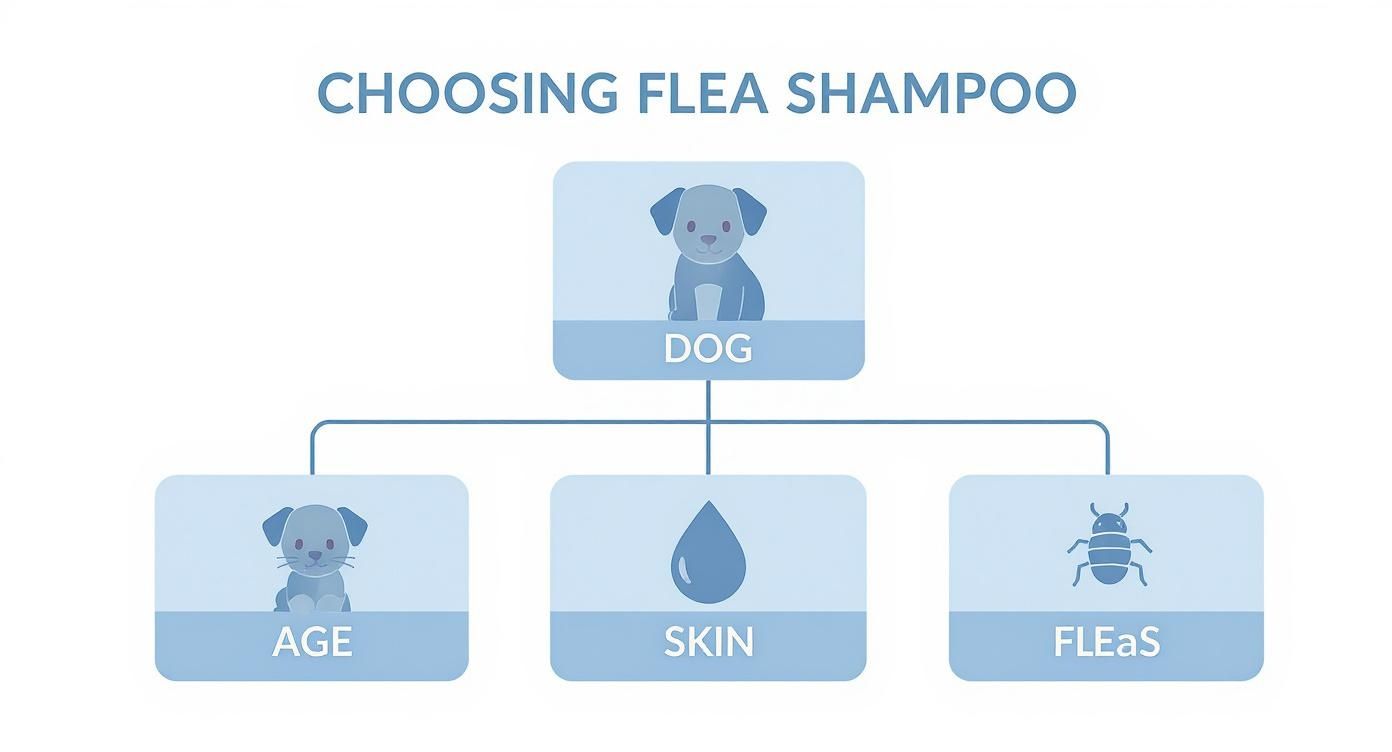
As you can see, the process starts with your pet's individual profile. From there, you can make an informed choice based on their specific health needs and the flea problem you're facing.
Moving Beyond a Simple Wash
Treat a flea bath not as a routine cleaning, but as a targeted medical treatment. Your objective is to eliminate the parasites without causing any harm to your pet.
The most crucial step is to match the product's strength and ingredients to your pet's unique physiology. A mismatch can lead to skin irritation or, in worst-case scenarios, more serious health issues.
This is why understanding the ingredient label is so critical. When you learn to identify the active components and what they do, you transform from a passive shopper into an informed advocate for your pet's health. In the next sections, we’ll break down those active ingredients, safety protocols, and the correct application techniques to achieve the best results.
Decoding the Ingredients in Flea Shampoos
Walking down the pet care aisle, you're faced with a wall of flea shampoos, each claiming to be the best. The secret to making the right choice isn't on the front of the bottle—it's on the back. Once you learn to read the active ingredients, you can cut through the marketing noise and find exactly what your pet needs.
Flea shampoo ingredients fall into two main categories: conventional insecticides and natural alternatives. Each has a different strategy for eliminating fleas. Understanding this difference is your first step toward winning the flea war. This knowledge is increasingly important, as the market for these products continues to expand.
In fact, the global pet shampoo market is expected to grow from USD 616.9 million in 2025 to over USD 1,084.1 million by 2035. This growth is driven by more households welcoming pets and seeking high-quality care products. Shampoos that both clean and fight fleas are a significant part of this trend, projected to make up 25.0% of the market in 2025. You can get more details about the pet shampoo market from Future Market Insights.
The Immediate Response Team: Insecticides
When you’re dealing with a severe flea infestation and your pet is suffering, you need something that works now. This is where conventional insecticides excel. They are formulated to kill adult fleas on contact, providing immediate relief from itching and irritation.
The two most common insecticides you’ll see are pyrethrins and pyrethroids.
- Pyrethrins: These are natural insecticides derived from chrysanthemum flowers. They deliver a "knockdown" effect that quickly paralyzes and kills adult fleas.
- Pyrethroids: These are synthetic, lab-created versions of pyrethrins, like permethrin. They are more stable and have a longer-lasting effect, making them highly effective at eliminating adult fleas.
While powerful, these ingredients require careful handling. Some pyrethroids, especially permethrin, are extremely toxic to cats. Never use a dog flea shampoo on a cat. A cat’s metabolism cannot process the chemical, which can lead to severe neurological damage.
The Long-Term Strategists: IGRs
Killing visible adult fleas is a good start, but it only addresses a fraction of the problem. The real threat lies in the unseen eggs, larvae, and pupae in your pet's coat and home. This is where Insect Growth Regulators (IGRs) become essential.
Think of IGRs as flea birth control. They don't kill adult fleas but halt the life cycle by preventing eggs from hatching and larvae from maturing.
By stopping the next generation from developing, IGRs provide long-term control and help prevent re-infestation. Common IGRs found in high-quality flea shampoos include:
- Methoprene
- Pyriproxyfen
Action step: For a comprehensive solution, choose a shampoo that contains both a fast-acting insecticide and an IGR. This combination delivers a powerful one-two punch: immediate relief for your pet and lasting protection against a future flea invasion.
Exploring Natural and Gentle Alternatives
For pet owners who prefer a gentler approach or for pets with sensitive skin, natural flea shampoos are an excellent choice. These formulas use plant-based ingredients and essential oils to repel or kill fleas without harsh chemicals.
Common natural ingredients include:
- Cedarwood Oil: Kills fleas on contact and acts as a repellent.
- Peppermint Oil: The strong scent naturally repels fleas.
- Rosemary Oil: Soothes irritated skin while making your pet less attractive to fleas.
- D-Limonene: Derived from citrus peels, this can be effective but should be used cautiously, as some pets are sensitive to it.
While these ingredients can be effective for mild cases or as a preventative measure, they may need more frequent application and might not be sufficient for a severe infestation. "Natural" does not automatically mean safe; always check the label to ensure the concentration of essential oils is appropriate for your pet, as some can be harmful, particularly to cats.
This table provides a quick comparison of the most common active ingredients. Use it to make a more informed choice at the store.
Common Flea Shampoo Active Ingredients Compared
| Ingredient Type | Examples | How It Works | Best For | Safety Notes |
|---|---|---|---|---|
| Pyrethrins | Natural pyrethrum | Natural insecticide from chrysanthemums; attacks the flea’s nervous system for a quick "knockdown." | Immediate kill of adult fleas during a bath. | Generally safe for most dogs and cats when used as directed, but can cause sensitivity in some pets. |
| Pyrethroids | Permethrin, Etofenprox | Synthetic, long-lasting version of pyrethrins; provides extended killing action on adult fleas. | Severe adult flea infestations on dogs. | Highly toxic to cats. Never use products containing permethrin on or near cats. Always follow label directions. |
| IGRs | Methoprene, Pyriproxyfen | Mimics flea hormones to stop eggs and larvae from developing into biting adults. Breaks the life cycle. | Preventing re-infestation and long-term control. Often combined with an adulticide. | Very safe for mammals, including puppies and kittens, as they target insect-specific hormones. |
| Essential Oils | Cedarwood, Peppermint, Rosemary | Repel or kill fleas through strong scents or direct contact. Actions vary by oil. | Mild infestations, sensitive pets, or as a preventative measure. | Effectiveness can vary. Some oils (like peppermint) can be too strong for cats. Always use pet-safe formulas. |
Understanding these ingredients is the key to selecting a flea shampoo that will solve your problem effectively. Whether you need the immediate power of a pyrethroid or the gentle prevention of an essential oil blend, knowing what's in the bottle puts you in control.
Critical Safety Rules for Using Flea Shampoo
Choosing a flea shampoo with the right active ingredients is only half the battle; how you use it is just as important. Think of a flea bath as a targeted medical treatment. Following safety protocols is essential to protect your pet while effectively eliminating pests.
The primary goal is to kill fleas without creating new problems for your pet. A few simple precautions can prevent everything from skin irritation to an emergency vet visit. By being diligent before, during, and after the bath, you can ensure the process is safe and successful.
Always Read the Label First
Before you open the bottle, the most critical action you can take is to read the entire label. This isn't just fine print; it's the instruction manual for your pet's safety. The label provides specific directions on the correct dosage, application method, and required contact time for the shampoo to work effectively.
Ignoring the label is a gamble with your pet's health. Misusing flea shampoo can lead to skin irritation or more severe adverse reactions. Always adhere to the manufacturer's guidelines. While reviewing the label, it's also wise to be aware of common damaging shampoo ingredients to avoid in any pet product.
The Golden Rule: Species-Specific Formulas
One of the most dangerous mistakes a pet owner can make is using a dog product on a cat. With flea shampoos, this is a critical error. Many dog formulas contain permethrin, an insecticide that is effective for dogs but extremely toxic to cats.
A cat's body cannot metabolize this chemical, and exposure can cause severe neurological damage, including tremors, seizures, and death. This rule is absolute.
- NEVER use a dog flea shampoo on a cat.
- ALWAYS choose a product specifically labeled for feline use.
- ACTION STEP: In a multi-pet household, keep your dog and cat separated after a flea bath until the dog is completely dry to prevent accidental transfer of the chemical.
Adhering to species-specific formulas is non-negotiable. The risk of a fatal reaction in cats is too high to ever make an exception.
Special Care for Vulnerable Pets
Just as you wouldn't give adult medication to a child, standard adult flea shampoos are often too potent for very young, elderly, or medically compromised pets. Their systems are more sensitive to the active ingredients.
Action step: Always check the product label for the minimum age requirement. Most flea shampoos are not safe for puppies or kittens under 12 weeks old. For these vulnerable pets, or any animal with known health issues, consult your veterinarian to identify the safest and most effective option. If your pet has pre-existing skin conditions, your vet might recommend other treatments; it can be helpful to learn how a chlorhexidine spray can help dogs in such cases.
Essential Pre-Bath Safety Checks
Before starting the bath, a couple of quick checks can prevent significant problems. The most important is the "patch test"—a simple way to screen for an allergic reaction before applying the shampoo to their entire body.
- Perform a Patch Test: Apply a small, diluted amount of the shampoo to a single spot on your pet’s skin, such as their belly or inner thigh.
- Wait 24 Hours: Leave the spot untouched for a full day and monitor for any changes.
- Check for Reactions: Look for redness, hives, swelling, or other signs of irritation. If you observe any reaction, do not use the shampoo. Wash the area gently and contact your vet.
This simple action takes only a minute but can prevent a painful, full-body allergic reaction, making bath time significantly safer.
How to Bathe Your Pet for Maximum Flea Control
A flea bath is more than a simple cleaning; it's a tactical strike against pests. To achieve the best results, you must follow a clear plan that transforms a routine wash into an effective flea-killing treatment, providing your pet with immediate relief.
The process begins with preparing your space and your pet. A calm environment and proper setup can make the experience less stressful for everyone involved.

Step 1: Get Your Bathing Station Ready
Before your pet gets wet, arrange all your supplies within easy reach. This preparation ensures you won’t have to leave a soaked and anxious pet unattended.
Your pre-bath checklist:
- The Flea Shampoo: Have the cap open and ready.
- Towels: At least two—one for the floor and one for drying.
- A Non-Slip Mat: Place in the tub to help your pet feel secure.
- Cotton Balls: Gently place in your pet's ears to keep water out.
- Eye Lubricant: Use a vet-approved, sterile eye ointment to protect their eyes from shampoo.
- Treats: Keep high-value treats on hand for positive reinforcement.
An organized station promotes a calm and efficient process. For more tips on mastering bath time, see our complete guide on how to groom your dog at home.
Step 2: The Critical Contact Time
This is the most crucial part of the process and the one most often overlooked. Flea shampoo is not ordinary soap; its active ingredients require time to work. Rinsing too quickly renders the treatment ineffective.
The "contact time" is the specific duration the lather must remain on your pet's coat to kill fleas, typically 5 to 10 minutes. This is a mandatory step, not a suggestion.
Action Step: Set a timer on your phone as soon as you have fully lathered your pet. While you wait, keep your pet warm and calm by speaking in a soothing voice or offering a distraction, like a lick mat with peanut butter.
The demand for effective treatments is rising. The anti-tick and flea pet shampoo market has seen steady growth, with a projected compound annual growth rate (CAGR) of around 7.3% in recent years. This reflects the increasing number of pet owners seeking reliable and safe solutions. You can find more insights about the growth of the flea shampoo market on archivemarketresearch.com.
Step 3: Rinsing and After-Care
Once the timer goes off, it’s time to rinse thoroughly. Any shampoo residue can dry out your pet's skin and cause irritation. Use lukewarm water and continue rinsing until the water runs clear and their coat feels completely free of soap.
Pay special attention to hard-to-reach areas like the armpits, belly, and under the tail. Once you're confident all the shampoo is gone, gently squeeze excess water from their fur and wrap them in a warm towel.
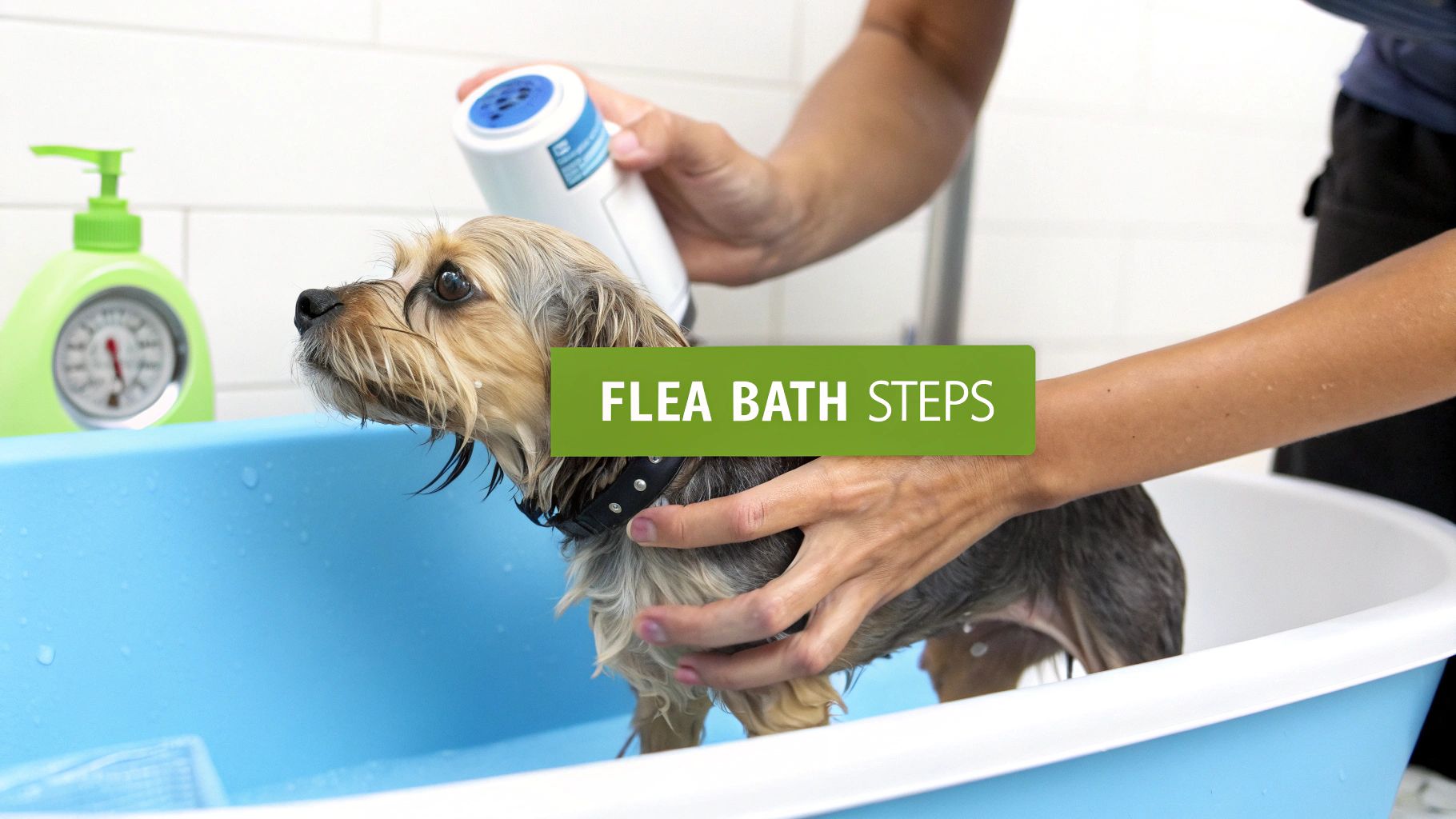
After towel-drying, allow them to air-dry in a warm, draft-free room, or use a pet-safe blow dryer on its lowest, coolest setting. When they are completely dry, use a flea comb to remove any dead fleas and remaining debris. This creates a clean baseline for your ongoing flea prevention strategy.
Building an Integrated Flea Control Plan
A high-quality flea shampoo is an excellent starting point, but it is only the first move in a larger strategy. The adult fleas on your pet represent just the tip of the iceberg. For every flea you see, dozens more exist in your home as eggs, larvae, and pupae.
An astonishing 95% of a flea infestation is composed of these immature stages, hidden in your carpets, furniture, and pet bedding. A single bath only eliminates the adult fleas currently on your pet. To achieve lasting freedom from fleas, you need an integrated plan that attacks the problem from all angles.
Combining Treatments for Continuous Protection
A flea shampoo provides immediate relief by killing the adult fleas causing your pet's discomfort. However, its effects are temporary. Once your pet is dry, they are again vulnerable to new fleas from the environment. This is why layering treatments is so effective.
The key to long-term protection is to combine a flea bath with a long-lasting preventative. Consider these options:
- Topical Spot-On Treatments: Applied monthly, these provide continuous protection by killing fleas that land on your pet, often before they can bite.
- Oral Medications: These chewable tablets work systemically, killing fleas when they bite. Some also interrupt the flea life cycle.
- Flea Collars: Modern flea collars can offer several months of protection by slowly releasing active ingredients that repel and kill parasites.
Action step: Consult your veterinarian to choose a long-lasting preventative that is compatible with your pet's health profile and lifestyle. Combining it with regular flea baths creates a comprehensive defense system. This integrated approach is becoming standard practice, reflected in the global flea products market, which was valued at USD 7.85 billion in 2024 and is projected to reach USD 17.57 billion by 2032.
Conquering the Flea Stronghold in Your Home
You cannot win the war against fleas without addressing their home base: your house. Environmental control is a non-negotiable part of breaking the flea life cycle. Skipping this step will result in a frustrating and endless cycle of re-infestation.
A clean pet in a flea-infested house will be a flea-covered pet again in no time. Treating your environment is just as important as treating your pet.
Here’s an actionable checklist to reclaim your home:
- Vacuum Everything, Everywhere: Your vacuum is your best weapon. It removes adult fleas, eggs, larvae, and pupae from carpets, rugs, and furniture. Crucial step: Immediately seal and dispose of the vacuum bag or empty the canister outside the house.
- Wash All Bedding in Hot Water: Machine wash your pet’s bedding, blankets, and toys in hot water to kill all flea life stages. Do the same for your own bedding if your pet sleeps with you.
- Use a Pet-Safe Home Spray: Choose an environmental flea spray that contains an Insect Growth Regulator (IGR). An IGR will kill remaining adult fleas and prevent eggs and larvae from developing, effectively sterilizing your home for months.
A rigorous cleaning routine is essential. For more advice on keeping your pet well-groomed, explore our guide to the best grooming tools for dogs.
Don't Forget Your Yard
Finally, address your yard, which can be a primary source of fleas. Fleas thrive in shady, moist areas like under decks, in shrubs, and in tall grass.
An effective flea control plan must extend to the outdoors. Using an effective yard treatment for ticks and fleas creates a barrier that stops pests before they enter your home. Simple maintenance like regular mowing and clearing leaf litter also makes your yard less hospitable to fleas.
Common Questions About Flea Shampoos
https://www.youtube.com/embed/PpgVD1DSxKs
Even with a solid plan, you may still have questions about using flea shampoo. Getting clear, actionable answers will give you the confidence to tackle the flea problem correctly and safely.
Here are the direct answers to the most common concerns from pet owners.
How Quickly Does Flea Shampoo Start Working?
Most quality flea shampoos begin working almost immediately. You will likely see fleas slowing down and falling off your pet during the bath, providing instant relief.
However, its effectiveness depends entirely on adhering to the "contact time" specified on the bottle. This is the 5 to 10 minutes the lather must remain on your pet’s coat to kill the fleas. Rinsing too soon will significantly reduce the shampoo's efficacy.
Remember, a flea shampoo is a treatment for the present moment, not a long-term preventative. Once rinsed off, it offers no residual protection. This is why it must be part of a broader flea control strategy.
Can I Use Flea Shampoo on My Puppy or Kitten?
This requires extreme caution. You must only use a flea shampoo that is explicitly labeled as safe for your puppy or kitten’s specific age and weight. Young animals are highly sensitive to the active ingredients in adult formulas.
Using the wrong product can cause severe health problems, from skin reactions to neurological issues. Action step: Always check the label for the minimum age, which is typically 12 weeks old. If you are unsure, call your veterinarian. They can recommend a gentle, age-appropriate product to protect your young pet safely.
Does Flea Shampoo Kill Flea Eggs and Larvae?
This depends on the ingredients. Most standard flea shampoos are adulticides, meaning they only kill adult fleas. They have no effect on the eggs or larvae also present in your pet's coat.
To break the flea life cycle, you must use a shampoo containing an Insect Growth Regulator (IGR), such as methoprene or pyriproxyfen. An IGR acts as a form of flea birth control, preventing eggs from hatching and larvae from maturing into biting adults.
Even with an IGR shampoo, you must still treat your home. An estimated 95% of the flea population (eggs, larvae, and pupae) resides in your carpets, bedding, and furniture, not on your pet.
What Should I Do If My Pet Has a Bad Reaction?
Adverse reactions are rare when instructions are followed, but they can occur. If you notice signs like severe skin redness, hives, excessive drooling, tremors, or vomiting during or after the bath, act quickly.
Here is your emergency action plan:
- Rinse Immediately: Return your pet to the tub and rinse them thoroughly with lukewarm water and a gentle, plain soap (like a mild dish soap) to remove all product residue from their skin.
- Contact Your Vet: Call your veterinarian or the nearest emergency animal hospital immediately.
- Keep the Bottle: Have the shampoo bottle on hand to inform the vet of the product and its active ingredients.
The best way to prevent a reaction is to perform a patch test 24 hours before the full bath. Apply a small amount of diluted shampoo to one spot on their skin and monitor for irritation. This simple step can prevent a significant amount of stress and potential harm.
At Pet Magasin, we believe that a well-informed pet owner is an empowered one. Our grooming tools and supplies are designed with safety and effectiveness in mind, helping you provide the best possible care for your furry family member. Discover our full range of products at Pet Magasin.

Leave a comment