
A Practical Guide to Dog Shampoo and Conditioner for a Healthy Coat

Choosing the right dog shampoo and conditioner isn't just about a clean pup; it's a key step in their overall health care. These products are specialized tools designed to clean, protect, and moisturize your dog's specific skin and coat. Think of them as the foundation of a healthy, happy coat.
This guide provides actionable steps to help you understand your dog's needs and choose the products that will deliver the best results, turning bath time into a beneficial grooming session.
Your Guide to a Healthier, Happier Dog Coat
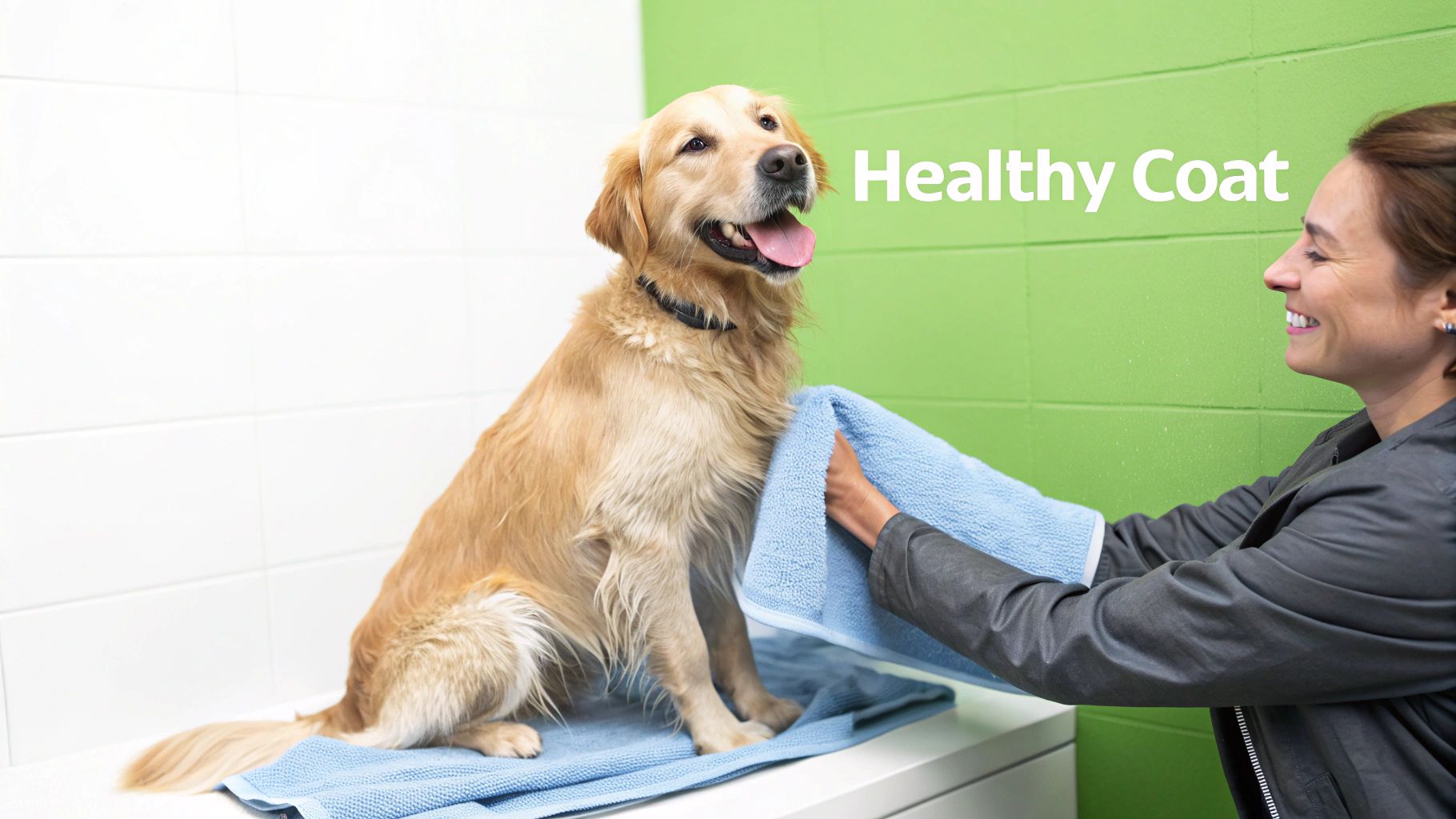
Grooming is an essential bonding activity and your first line of defense in preventative health care. The most fundamental tools in your kit are a quality shampoo and conditioner formulated specifically for dogs.
So, why can't you just use your own shampoo? The critical difference is pH balance. Human skin is acidic, while your dog's skin is more alkaline. Using a human product disrupts their skin's natural barrier, stripping away protective oils and leading to dryness, irritation, and potential skin problems. Action Step: Always check the label to ensure you're using a pH-balanced, dog-specific formula for every bath.
The Growing Importance of Canine Care
The rise in specialized dog grooming products reflects a shift in how we view our pets—as integral family members deserving of the best care. Market trends confirm this dedication.
The global dog shampoo market was valued at US$497.82 million in 2025 and is expected to rocket to US$943.29 million by 2035. This growth is fueled by owners committed to their pets' well-being. With approximately 66% of U.S. households owning a pet, the demand for high-quality care is stronger than ever.
Action Step: During each bath, perform a quick health check. Run your hands over your dog’s entire body to feel for ticks, fleas, rashes, lumps, or sore spots that might otherwise go unnoticed.
Creating a Healthy Environment
A healthy coat starts long before the bath. A clean, comfortable living space is crucial for your dog's skin and fur. For instance, ensuring you have the optimal dog kennel size can prevent skin issues caused by cramped or dirty conditions. This simple environmental check makes your grooming efforts far more effective.
Think of it this way: shampoo is the deep cleaner, and conditioner is the protective sealant. Together, they deliver comprehensive coat care.
A dog shampoo's main job is to break down and wash away dirt, grime, and oily buildup. To do this effectively, it must open the hair's outer layer, or cuticle, for a thorough cleanse.
However, this deep-cleaning process leaves hair shafts vulnerable. If you only shampoo, you risk causing dryness, brittleness, and tangles. This is precisely why a conditioner is a non-negotiable follow-up step.
Conditioner works to restore the hair by sealing the cuticle back down, creating a smooth, protective layer. This action locks in moisture, prevents breakage, and gives your dog's coat a silky, easy-to-brush finish.
How Shampoo Cleans and Conditioner Protects
The primary reason you can't use your own shampoo is the difference in pH balance. Human skin has an acidic pH (typically 4.5 to 5.5), whereas a dog's skin is more alkaline (between 6.5 and 7.5).
Using human products disrupts this balance by stripping the skin's protective barrier, known as the acid mantle. This can lead to several problems:
- Dryness and Flaking: Stripped of natural oils, the skin becomes dehydrated, causing dandruff.
- Irritation and Itching: An imbalanced pH can lead to significant discomfort and persistent scratching.
- Vulnerability to Bacteria: A compromised skin barrier makes your dog more susceptible to infections.
A quality dog conditioner does more than soften fur. It actively replenishes the essential oils shampoo removes, helping to maintain the skin's moisture barrier and prevent post-bath itchiness.
Why Both Steps Are Crucial for a Healthy Coat
Skipping conditioner is like washing your car without applying a protective wax coat. While the car is clean, it remains exposed to the elements. Shampoo removes the dirt, but conditioner is what keeps the coat healthy, manageable, and protected long after the bath.
Dog owners are catching on. The market for these products is massive, with dogs accounting for a 52.3% share of the pet shampoo market in 2024. With over 900 million dogs globally, the demand for correctly pH-balanced formulas has made canine grooming a leading category.
To clarify their roles, let's break down what each product does.
Comparing Dog Shampoo and Conditioner
This table highlights the distinct functions of these two essential grooming products.
| Feature | Dog Shampoo | Dog Conditioner |
|---|---|---|
| Primary Function | To cleanse the coat and skin by removing dirt, oil, and debris. | To moisturize, detangle, and protect the hair shaft after cleaning. |
| Effect on Hair Cuticle | Opens the cuticle to allow for a deep and thorough cleaning. | Seals the cuticle to lock in moisture and create a smooth surface. |
| Key Ingredients | Cleansing agents (surfactants), sanitizers, and often specific additives for skin issues. | Moisturizing agents (like shea butter or oatmeal), oils, and detangling compounds. |
| Main Benefit | A completely clean coat, free from impurities and buildup. | A soft, shiny, and manageable coat that is less prone to tangles. |
By using both, you provide a complete care routine for your dog's coat. For more details, explore our guide on why conditioner for dogs is a vital part of grooming. This two-step process is the most effective way to prevent mats, reduce shedding, and keep your dog looking and feeling their best.
Finding the Right Formula for Your Dog
Navigating the pet care aisle is easier when you know how to match a product to your dog's specific needs. The goal isn't to find a single "miracle" product, but to select a formula that addresses your dog's unique breed, skin type, and age.
Just as you would choose skincare based on your skin type, apply the same logic to your dog. Their individual needs should guide your purchasing decision.
Formulas for Common Coat and Skin Concerns
Most grooming products are formulated to solve specific issues. By identifying your dog's primary concern, you can quickly narrow down your options and make an informed choice.
Here is an actionable breakdown of the most common formula types:
- Moisturizing Formulas for Dry Skin: If your dog's skin is flaky or their coat appears dull, select a moisturizing shampoo. Action Step: Look for ingredients like oatmeal, shea butter, or vitamin E. These are excellent for soothing irritation in breeds prone to dryness, such as Retrievers and German Shepherds.
- Hypoallergenic Formulas for Sensitive Skin: For dogs with sensitive skin like Bulldogs, Pugs, and Boxers, a hypoallergenic formula is essential. Action Step: Choose products that are free of common irritants like harsh fragrances, dyes, and parabens. These use gentle cleansers to clean effectively without stripping natural oils.
- Medicated Solutions for Skin Conditions: If a vet has diagnosed a fungal infection, hot spots, or severe allergies, a medicated shampoo may be necessary. Action Step: These formulas often contain active ingredients like chlorhexidine. Always consult your vet before use to confirm it is the correct treatment for your dog.
- Gentle Tear-Free Shampoos for Puppies: Puppy skin is extremely delicate. Action Step: Use a tear-free puppy shampoo that is specially pH-balanced for young dogs. This ensures a gentle, positive bathing experience from the start.
This flowchart can help you decide when to use each product.
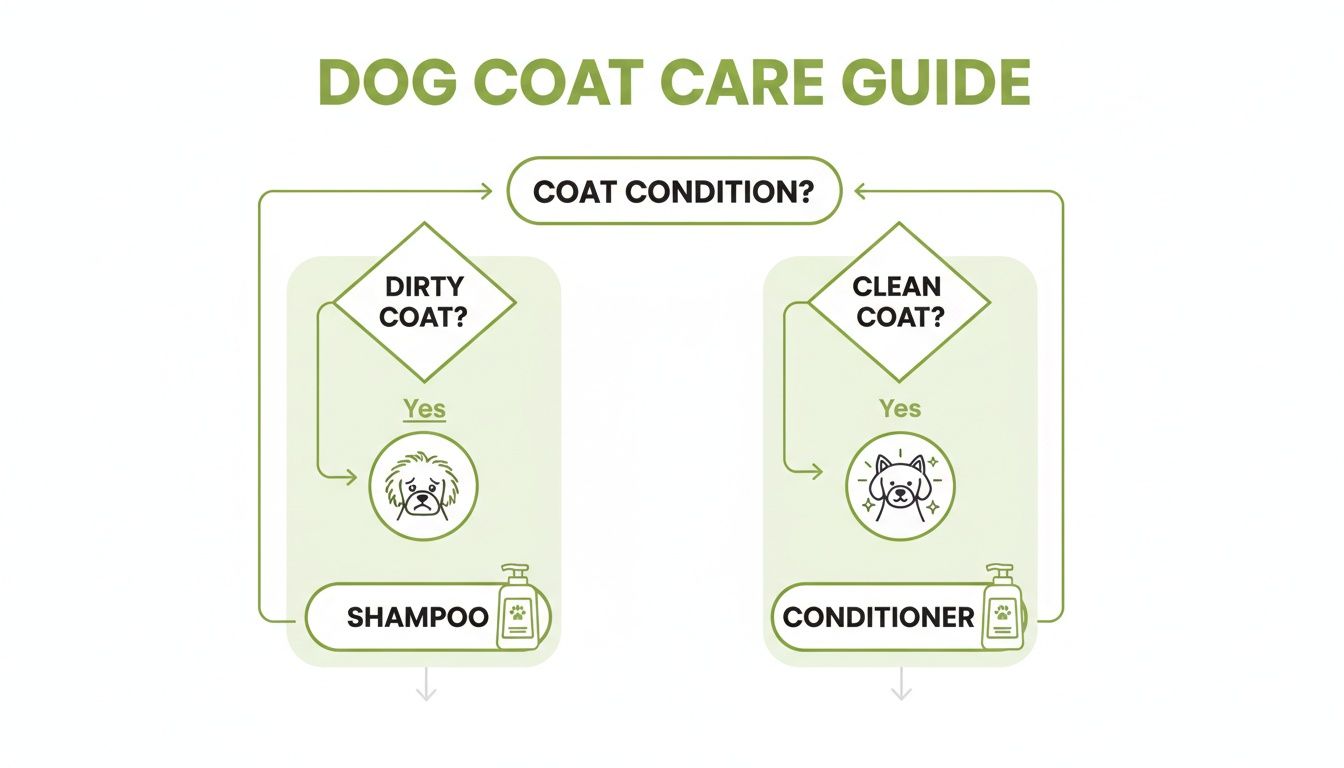
The takeaway is simple: use shampoo to clean and conditioner to nourish and protect afterward.
Key Ingredients to Look For and Avoid
Once you've identified the right formula type, your next step is to examine the ingredient list. Learning to read the label is a powerful skill for any pet owner. A clean, simple ingredient list is often the best indicator of a quality product.
For dogs that scratch constantly, the right ingredients can make all the difference. If this applies to your pup, find more targeted advice in our guide to the best dog shampoo for itchy skin.
Action Step: When selecting a dog shampoo and conditioner, remember that what is excluded is as important as what is included. Prioritize clean, simple formulas to minimize the risk of irritation and promote long-term skin health.
Here's what to look for and what to steer clear of on the label:
Ingredients to Look For:
- Oatmeal: A natural anti-inflammatory that is highly effective at soothing itchy, irritated skin.
- Aloe Vera: Known for its healing properties, aloe vera helps calm redness and supports skin repair.
- Shea Butter & Coconut Oil: Potent natural moisturizers that deeply hydrate the skin and leave the coat soft.
- Chamomile: A gentle botanical that calms sensitive skin and reduces inflammation.
Ingredients to Avoid:
- Sulfates (SLS/SLES): Harsh detergents that create lather but strip natural oils, leading to dryness and irritation.
- Parabens: Artificial preservatives that can disrupt a dog's hormones and cause skin reactions.
- Artificial Fragrances & Dyes: Synthetic additives that are a leading cause of allergic reactions in dogs. Opt for fragrance-free products or those scented with natural essential oils.
- Mineral Oil: A petroleum byproduct that can clog pores, preventing the skin from breathing and eliminating toxins.
With this knowledge, you can confidently select a shampoo and conditioner that not only cleans your dog but actively improves their skin and coat health.
Why Natural Ingredients Are Gaining Popularity
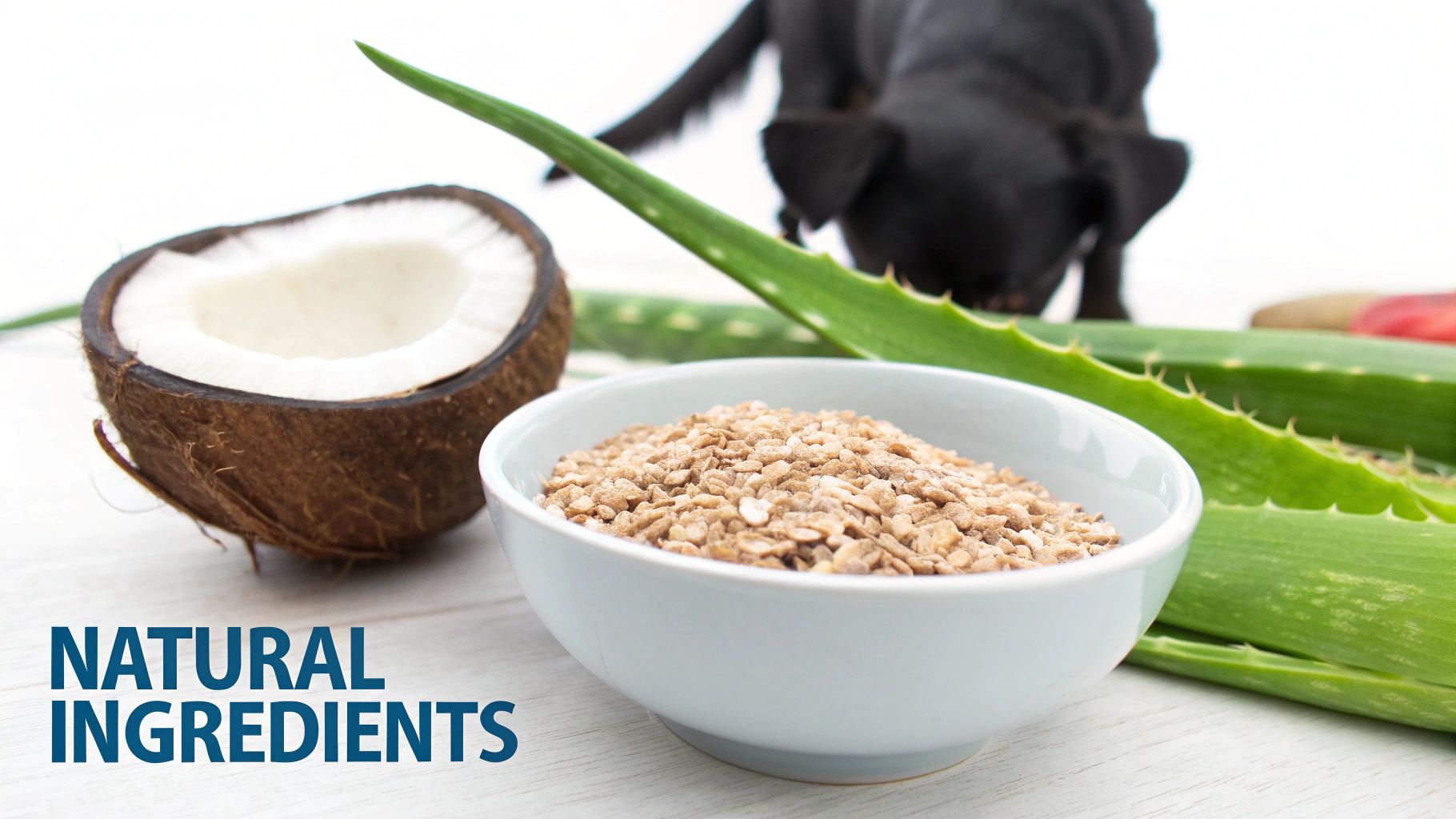
As we increasingly view dogs as family, our approach to their care has evolved. We no longer just grab the cheapest option; instead, we are reading ingredient lists and demanding the same quality for our pets as we do for ourselves.
This has driven a significant shift toward natural and gentle grooming products. This isn't just a trend; it stems from a better understanding of what promotes healthy skin and a shiny coat. Prioritizing safety and wellness means the ingredient list is now a key purchasing factor.
The market reflects this change. Demand for natural and herbal dog shampoos is rising, with predictions that the market could reach US$573.41 million by 2035. The prevalence of pet allergies—affecting about 10-15% of dogs—is a major driver, pushing owners toward hypoallergenic, plant-based solutions. With approximately 70% of owners seeking 'clean' labels for their pets, it is clear that high-quality, conscious care is the new standard. You can explore more about these pet care market trends to see how the industry is evolving.
The Power of Nature-Derived Additives
When you choose a natural dog shampoo and conditioner, you are selecting ingredients with a long history of safe, effective use. Unlike harsh synthetic chemicals that can strip a dog's skin of its natural defenses, these elements work in harmony with your dog’s body to soothe, heal, and protect.
They provide a gentle yet effective clean without the high risk of irritation, making them ideal for all dogs, especially those with sensitive skin.
Here are some of the most effective natural ingredients to look for:
- Soothing Oatmeal: The gold standard for calming itchy, irritated skin. Oatmeal contains compounds that reduce inflammation and help the skin retain moisture.
- Healing Aloe Vera: Renowned for its cooling and restorative properties, aloe vera is excellent for soothing redness and accelerating the healing of minor skin irritations.
- Moisturizing Coconut Oil: This natural oil penetrates deeply into the hair and skin to provide lasting hydration, leaving the coat soft and glossy.
Supporting a Healthy Skin Barrier
Your dog’s skin serves as the frontline defense against environmental irritants, allergens, and bacteria. A strong skin barrier is essential for their overall health. Harsh chemicals can weaken this barrier, leading to a cycle of dryness, itching, and infections.
Natural ingredients work to strengthen it. For example, oatmeal helps reinforce the skin’s lipid barrier, while coconut oil supplies essential fatty acids that keep it resilient and strong.
Action Step: By choosing formulas rich in natural botanicals, you are actively helping your dog's skin protect itself. This proactive approach helps prevent common issues before they start, promoting long-term health from the outside in.
Ultimately, the shift toward natural ingredients is about making more informed, conscious choices. Understanding what goes into your dog's grooming products empowers you to provide care that not only cleans but genuinely nurtures their skin and coat.
A Step by Step Guide to a Stress-Free Bath Time
For many dogs, the word "bath" triggers anxiety. However, you can transform this dreaded chore into a calm, positive experience with the right approach. The key is not just to get your dog clean but to create a safe, comfortable environment where they feel secure.
With proper preparation and a gentle technique, you can shift the dynamic from a struggle to a moment of bonding.
Preparing for a Smooth Bathing Experience
Effective preparation is the most critical part of the process. A few minutes of setup beforehand can significantly reduce stress for both you and your dog once the bath begins.
Action Step 1: Gather all your supplies and place them within arm's reach. This includes your dog shampoo and conditioner, several towels, a cup for rinsing, and high-value treats. Scrambling for supplies with a wet dog is a recipe for stress.
Action Step 2: Address the slippery surface of the tub. A non-slip mat provides a stable footing, which is a major factor in reducing a dog's anxiety. This simple addition helps them feel more secure and in control.
The Art of the Perfect Wash and Rinse
With your station prepared, you can begin. The goal is a thorough clean that is gentle on your dog's skin, followed by a nourishing conditioning treatment.
- Water Temperature Check: Always use lukewarm water. Test it on your inner wrist to ensure it is a comfortable temperature before wetting your dog.
- Saturate the Coat Thoroughly: Gently wet your dog's entire coat, starting from the neck and moving toward the tail. Action Step: Use a cup or a gentle sprayer and avoid spraying water directly into their ears, eyes, or nose to prevent discomfort and potential infections.
- Apply and Lather the Shampoo: Squeeze shampoo into your hands and lather it slightly before applying it to your dog's coat. Massage it in gently, using the opportunity to give them a calming rubdown.
- Rinse Completely: This is a critical step. Leftover shampoo residue is a common cause of skin irritation and itching. Rinse until the water runs completely clear and you can no longer feel any suds in their fur.
Applying Conditioner and Finishing Up
After shampooing, conditioner is essential to protect, detangle, and moisturize the coat, leaving it soft, shiny, and manageable.
First, gently squeeze excess water from your dog's fur. Apply the conditioner evenly, focusing on areas prone to tangles, like behind the ears or on the legs.
Let the conditioner sit for the time recommended on the bottle, typically a few minutes. This allows the ingredients to penetrate the hair and skin. Then, rinse thoroughly until the coat feels clean and free of product.
Action Step: Use bath time as a health check-in. As you wash and rinse, gently run your hands over your dog's entire body. This is the perfect opportunity to feel for any new lumps, bumps, or sensitive spots that might require veterinary attention.
Once the final rinse is complete, wrap your dog in a towel and gently pat them dry. Avoid vigorous rubbing, as this can cause tangles. Finally, offer plenty of praise and a favorite treat to reinforce a positive association with bath time. For a more detailed guide, learn more about how to bathe a dog properly and ensure every wash is successful.
When to Consult Your Vet About Skin Issues
A quality dog shampoo and conditioner can manage minor skin issues, but some problems require professional diagnosis. Your dog's skin is an indicator of their overall health, and knowing when to seek veterinary care is crucial.
While occasional scratching is normal, constant, frantic itching that disrupts sleep is a red flag. If a medicated bath provides no relief and your dog is in clear distress, it's time to call the vet. This level of discomfort often points to allergies, parasites, or an underlying infection that requires medical treatment.
Actionable Checklist for Vet Visits
Your grooming routine is your first line of defense, but it's important to know when to escalate an issue. The following signs warrant an immediate call to your veterinarian, as they can indicate more serious, interconnected problems that may worsen without treatment.
Watch for these warning signs:
- Bald Patches or Hair Loss: If you notice thinning fur or distinct bald spots (alopecia), it could signal anything from ringworm to a hormonal imbalance.
- Open Sores or Scabs: Any breaks in the skin, such as sores, crusty scabs, or "hot spots," create an entry point for infection and require veterinary evaluation.
- A Strong, Unpleasant Odor: A persistent musty or foul smell from the skin or ears, even after a bath, is a common sign of a yeast or bacterial infection.
- Changes in Skin Color or Texture: Be alert for skin that appears red, has flaky patches, or feels unusually greasy or thickened. These changes can indicate chronic inflammation or other serious conditions.
You know your dog best. Noticing these changes early is the most critical first step. While your vet has the tools to diagnose the root cause, it all begins with your observation that something is wrong. Make the call.
Got Questions? We've Got Answers
Even with the best products, you may still have questions about your dog's grooming routine. Let's address some of the most common queries to help you feel confident in your approach.
Getting these details right is key to ensuring every bath is safe, effective, and beneficial for your dog's skin and coat.
Can I Just Use My Own Shampoo or Conditioner on My Dog?
The answer is a definitive no. Human products are formulated for our acidic skin (pH around 5.5), while a dog's skin is much more alkaline (pH between 6.5 and 7.5).
Action Step: Never use human products on your dog. Using a shampoo with the wrong pH will strip the protective oils from their skin, leading to dryness, irritation, and potential bacterial infections. Always choose a formula specifically balanced for a dog's pH.
Should I Condition My Dog Every Single Time I Give a Bath?
Yes, conditioning after every shampoo is highly recommended. Shampooing opens the hair's cuticle to remove dirt, leaving the hair shaft exposed.
Conditioner's primary role is to seal the cuticle back down. This crucial step locks in moisture, protects the hair from damage, and makes brushing much easier. It is especially important for dogs with long fur, double coats, or hair prone to tangling.
What’s the Deal with 2-in-1 Dog Shampoo and Conditioners? Are They Any Good?
A 2-in-1 formula can be a convenient option for dogs with short, low-maintenance coats and no specific skin concerns. They provide a quick and efficient clean.
However, for dogs with long fur, thick undercoats, or issues like dry or sensitive skin, separate products are more effective. Using a dedicated shampoo followed by a targeted conditioner allows for a more potent treatment, delivering superior moisturizing and detangling results.
Are DIY Dog Shampoos a Safe Bet?
While the idea of a homemade shampoo is appealing, it carries significant risks. Many online DIY recipes are not pH-balanced for a dog's alkaline skin, which can easily cause irritation and dryness.
Action Step: Stick with professionally formulated products. These are developed by chemists and veterinarians to be safe, balanced, and effective for your dog's specific needs. They undergo rigorous testing to ensure they perform as intended without causing harm. For reliable and safe results, a professionally made product is the smarter choice. For more in-depth knowledge, a comprehensive guide to dog grooming can provide valuable insights.
Here at Pet Magasin, we believe a healthy, shiny coat starts with the right foundation. Our grooming products are expertly formulated to be safe, effective, and gentle, so you can have complete confidence that you're giving your furry family member the very best. Explore our collection today and see what a difference quality ingredients can make.

Leave a comment