
The Ultimate Guide to Conditioner for Dogs

Using a conditioner for dogs is a game-changer for your grooming routine. It's a critical step that restores moisture and essential nutrients to your dog’s coat and skin immediately after shampooing. Think of it not as an optional extra, but as a necessary restorative treatment to keep their fur soft, tangle-free, and healthy.
Why Your Dog Needs More Than Just Shampoo
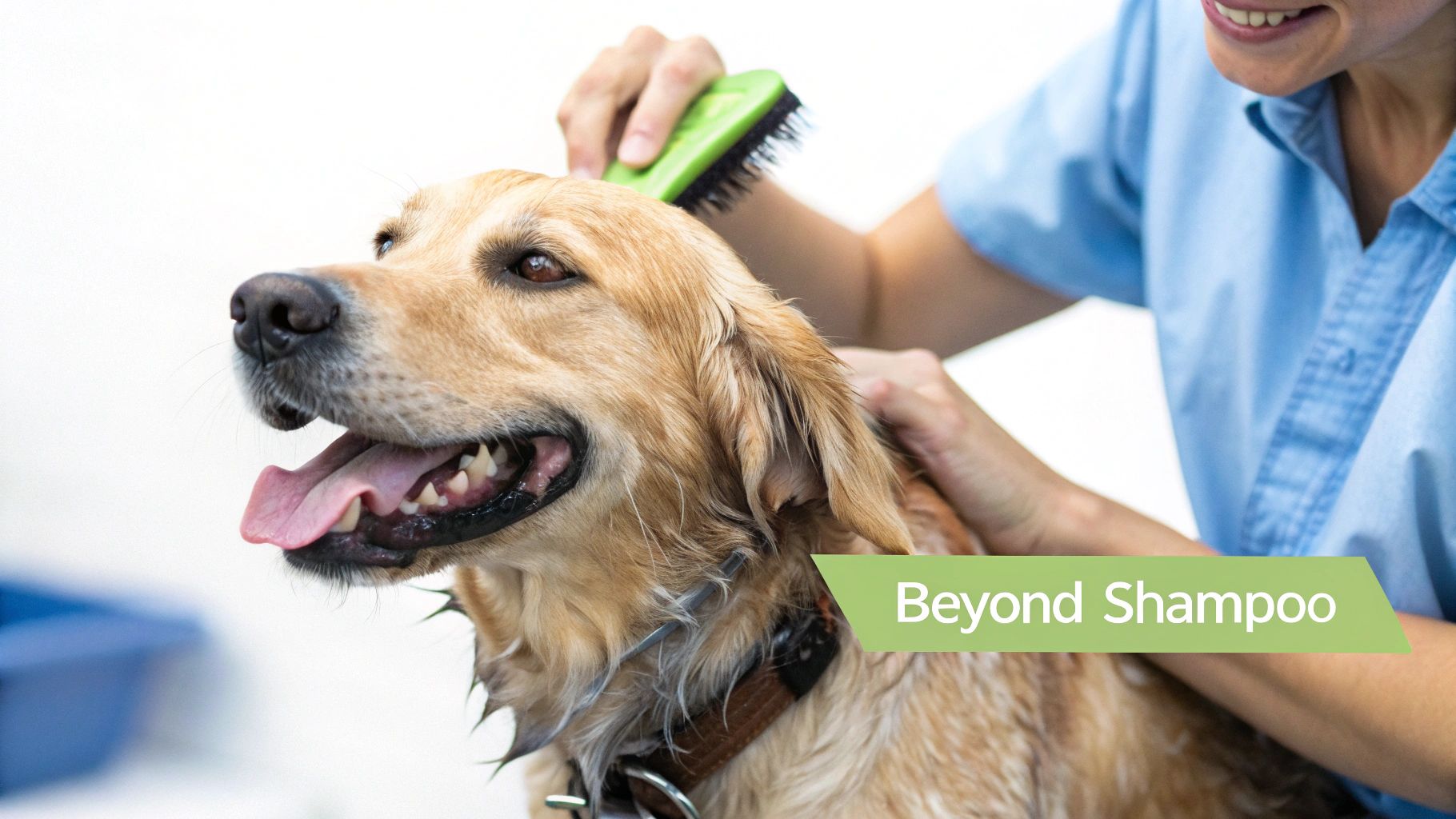
Consider your own hair care: shampoo cleans away dirt and oil, but without conditioner, it can leave hair dry and brittle. The same principle applies directly to your dog's coat.
While a quality dog shampoo effectively cleans your pup, the process can open the hair cuticles and strip the skin of its natural moisture. This is where a conditioner for dogs becomes essential.
Restoring a Healthy Balance
A conditioner's primary function is to seal the hair cuticles, locking in moisture to create a smooth, glossy finish. This simple action transforms a clean coat into one that is visibly healthy and soft to the touch. It also replenishes essential oils washed away by shampoo, preventing dry, flaky, or itchy skin.
A well-conditioned coat also offers practical benefits for you and your dog:
- Easier Brushing and Detangling: Conditioned fur has more "slip," allowing brushes and combs to glide through without snagging. This makes grooming faster and more comfortable for your dog, especially for long-haired breeds.
- Reduced Shedding: By moisturizing and strengthening individual hair strands, conditioner minimizes breakage. This translates to less loose fur around your home.
- Soothed and Hydrated Skin: Look for conditioners with ingredients like oatmeal or aloe vera. These provide tangible relief from dryness and irritation, directly soothing your dog's skin.
Actionable Tip: Treat conditioning as a core part of your dog's preventative care. A healthy coat is a direct result of healthy skin, and conditioner is your tool for maintaining both.
The Foundation of Good Grooming
Incorporating conditioner into your dog's bath time is a simple, proactive step to enhance their overall wellness. It actively strengthens their coat, improves their comfort, and keeps them looking their best.
For a complete approach to your dog's well-being that goes beyond home care, you might want to look into professional grooming or even skin consultations. For those needs, you could explore our comprehensive pet care services. Treating conditioning as a must-do ensures you're not just washing your dog, but truly nourishing their skin and coat from the outside in.
Decoding the Different Types of Dog Conditioners
Navigating the grooming aisle can be overwhelming. To choose the right conditioner for dogs, you need to understand the different types available. Each formula is designed for a specific purpose, from a deep post-bath treatment to a quick, tangle-fighting spritz.
The key is to match the product type to the grooming task at hand. You wouldn't use a heavy hair mask daily, and you can't expect a light styling spray to repair deep damage. Apply this same logic when selecting a conditioner for your dog.
This increase in specialized grooming options reflects a broader shift in pet care. The global cat and dog hair conditioner market reached approximately USD 1.2 billion in 2023 and is projected to more than double to USD 2.5 billion by 2033. This growth highlights how many owners are actively seeking high-quality grooming solutions. If you're interested, you can explore more data on this expanding market to understand the trends.
The Classic Rinse-Out Conditioner
This is the most common type of conditioner, designed to be used as the second step after shampooing. Its purpose is to deliver an intensive dose of moisture and nutrients to your dog's skin and coat when they are most receptive.
Shampooing opens the hair cuticles for cleaning; a rinse-out conditioner's job is to smooth them back down. This seals in hydration, helps replenish natural oils, and leaves the fur feeling soft and silky. For dogs with thick or double coats, a quality rinse-out is essential to penetrate the dense undercoat and combat dryness and shedding.
The Convenient Leave-In Conditioner
If a rinse-out is a deep treatment, a leave-in conditioner is your daily moisturizer. These are typically lighter formulas, like sprays or creams, that you apply to a dry or damp coat without rinsing. They provide continuous hydration and protection between baths.
Here’s when to use a leave-in conditioner:
- Dry Climates: If you live in an area with low humidity, a leave-in can prevent your dog's skin from becoming dry, itchy, and flaky.
- Daily Maintenance: For long-haired breeds, a quick spritz before brushing reduces friction and helps prevent small tangles from becoming large mats.
- A Quick Refresh: Use it to revive the coat and neutralize minor odors between baths, saving you the effort of a full wash.
Actionable Tip: Use a leave-in conditioner as your go-to tool for daily coat management. It's a quick, effective way to keep your dog's fur hydrated and manageable with minimal effort.
Specialty Sprays for Specific Jobs
Beyond general moisturizing, specialty sprays are designed to solve specific grooming challenges. These formulas are for targeted, as-needed use rather than being part of a regular routine.
The most common example is the detangling spray. If you have a long-haired breed like a Golden Retriever, Poodle, or Shih Tzu, this product is indispensable. It adds "slip" to the fur, allowing you to work through knots and mats without causing pain or breaking the hair. A few sprays on a stubborn tangle can make brushing a smooth, pain-free process.
To help you choose, here's a practical guide.
Which Conditioner Type Is Right for Your Dog?
Use this table to match a conditioner type to your dog's specific needs and your grooming routine.
| Conditioner Type | Best For | Primary Benefit | Application |
|---|---|---|---|
| Rinse-Out | All dogs after a bath, especially those with thick or dry coats. | Deeply moisturizes skin and fur, restores natural oils, and smooths hair. | Apply to a wet, shampooed coat and rinse out completely. |
| Leave-In | Dogs in dry areas, daily brushing, and refreshing between baths. | Provides ongoing hydration, eases daily grooming, and adds shine. | Spritz or work into a dry or damp coat and leave it in. |
| Detangling Spray | Dogs with long or curly fur that gets knotted easily. | Adds slip to fur, making it easy to remove tangles without breaking hair. | Apply directly to specific knots or mats right before you start brushing. |
Ultimately, the best conditioner for dogs is one that addresses your pet's specific coat and skin needs while fitting into your lifestyle. By understanding these core types, you can select the right product to keep your dog looking and feeling great.
Matching Conditioner to Your Dog's Unique Coat
Choosing the right conditioner for dogs requires a personalized approach. Just as people have different hair types, dogs have unique coats and skin needs. A conditioner that works wonders for a short-haired Bulldog may be ineffective for a tangle-prone Golden Retriever.
To find the perfect formula, you must match the product's ingredients to your dog's specific requirements. Look beyond marketing claims and focus on what will solve your primary grooming challenges, whether it's dry skin, persistent knots, or the delicate needs of a puppy.
For the Tangle-Prone Long-Haired Dog
If you own a breed like a Golden Retriever, Poodle, or Shih Tzu, you are familiar with the constant battle against knots and mats. For these dogs, regular brushing is essential to prevent painful skin issues. The right conditioner is your most powerful ally.
Your primary goal is to find a formula that provides excellent slip—a grooming term for the silky feel that allows a brush to glide through fur without snagging. Look for ingredients known for their smoothing and detangling properties.
- Silk Proteins: These molecules bond to the hair shaft, smoothing the cuticle to make fur slick and easy to comb.
- Panthenol (Pro-Vitamin B5): This ingredient moisturizes and adds a protective film to each hair strand, which helps prevent tangles from forming.
Use a detangling rinse-out conditioner after every bath to create a mat-free foundation. For daily upkeep, a light detangling spray is a must-have for working out small knots before they become a bigger problem.
For the Dog with Dry or Sensitive Skin
Some breeds, like French Bulldogs, Boxers, and Shar-Peis, are genetically predisposed to skin sensitivities, which can manifest as dryness, flaking, or itching. For these dogs, a conditioner's role shifts from cosmetic shine to therapeutic relief.
Select a hypoallergenic or medicated conditioner for dogs formulated with soothing, anti-inflammatory ingredients. The formula should be gentle, free of harsh chemicals, and designed to calm irritation while deeply moisturizing the skin.
Actionable Tip: For sensitive dogs, think of conditioner as a soothing treatment for their skin. Its main function is to rebuild the skin's moisture barrier, providing comfort and relief from itching.
Look for these key ingredients:
- Colloidal Oatmeal: A well-known skin protectant used to relieve itching and inflammation.
- Aloe Vera: Provides a cooling sensation and has natural healing properties that soothe irritated skin.
- Shea Butter: A rich emollient that delivers intense moisture to dry, cracked skin and helps seal it in.
Always choose products that are free from artificial fragrances, dyes, sulfates, and parabens, as these are common triggers for skin reactions in sensitive dogs.
If you're unsure which product to use, this flowchart will guide you to the right choice based on your immediate need.
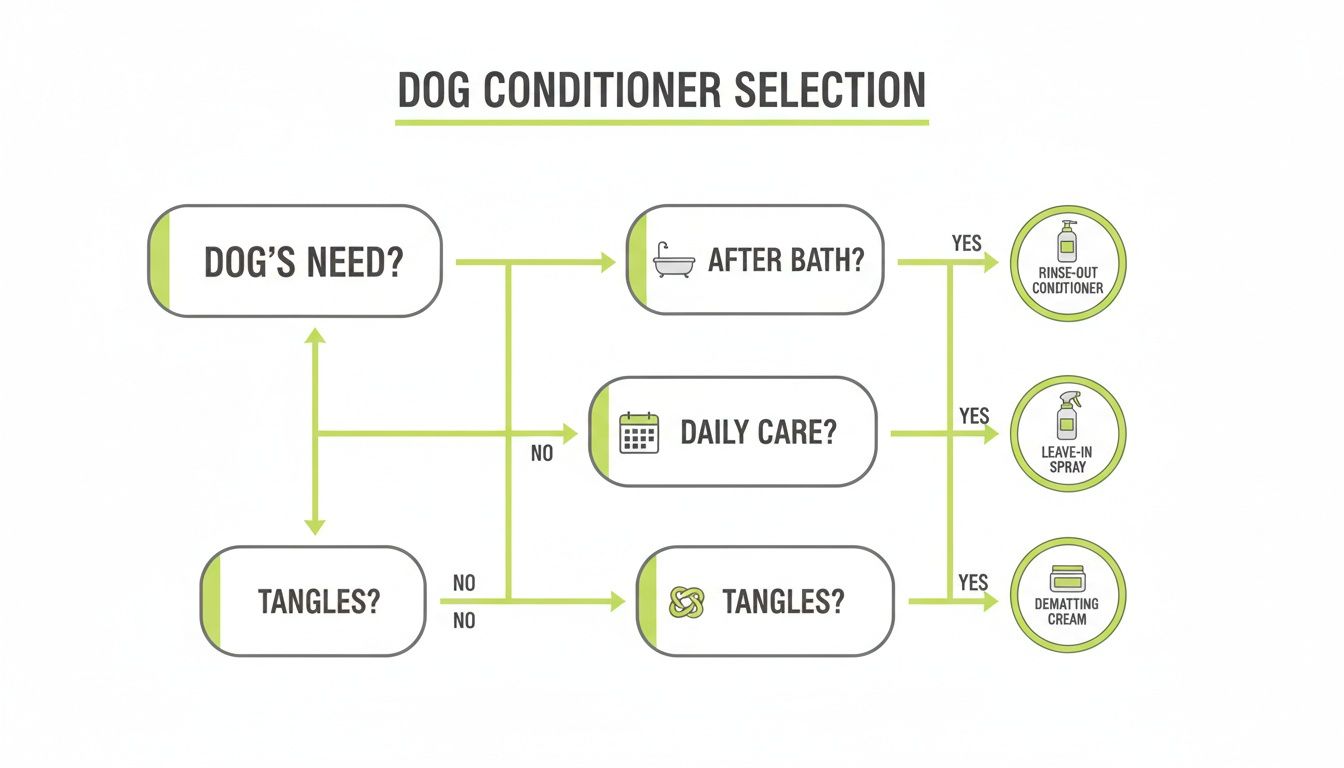
As this guide shows, your specific situation—whether you're conditioning after a bath, performing daily maintenance, or tackling tangles—directly determines the best type of conditioner for the task.
For the Delicate Needs of Puppies
A puppy's skin is thinner and more delicate than an adult dog's, making it more susceptible to irritation from harsh products. For their first baths, it is crucial to use a conditioner specifically formulated for gentleness.
Look for products labeled "puppy-safe" or "tear-free." These conditioners are pH-balanced to avoid stinging their eyes and stripping the natural protective oils from their developing skin and coat. The ingredient list should be simple and feature natural, calming agents like chamomile or calendula.
By matching the conditioner to your dog's specific needs, you transform a routine bath into a targeted treatment. This thoughtful approach makes grooming easier and contributes directly to your dog's health and comfort. To round out your grooming kit, explore our guide on the best grooming tools for dogs.
An Ingredient Checklist for Dog Conditioners
Have you ever looked at the ingredient list on a bottle of conditioner for dogs and felt lost? Understanding what's inside is the most reliable way to determine if a product is safe and effective for your pet.
Treat it like reading a food label: you want to see recognizable, nourishing ingredients, not a list of fillers and harsh chemicals. Once you know what to look for—and what to avoid—you can see past the marketing and choose a conditioner that will genuinely benefit your dog’s skin and coat. Use this checklist to become an expert at reading ingredient labels.
Ingredients to Look For
When you scan the ingredient list, prioritize natural, gentle ingredients known for their moisturizing and soothing properties. These are the components that restore hydration, calm irritation, and leave your dog's coat soft and healthy.
Here are the beneficial ingredients to look for:
- Natural Oils and Butters: Ingredients like shea butter, coconut oil, and almond oil are excellent. They form a protective barrier on the skin to seal in moisture, which is ideal for dogs with dry, flaky skin.
- Colloidal Oatmeal: This is a top-tier ingredient for soothing irritation. Its natural anti-inflammatory properties can calm red, itchy skin, making it essential for dogs with allergies or hot spots.
- Aloe Vera: Known for its cooling and healing abilities, aloe vera provides immediate relief for irritated skin while adding lightweight moisture to the fur.
- Vitamins: Look for Vitamin E and Panthenol (Pro-Vitamin B5). Vitamin E is an antioxidant that supports skin health, while panthenol strengthens hair follicles and adds a healthy shine to the coat.
- Herbal Extracts: Gentle extracts like chamomile and calendula are perfect for sensitive formulas. They help reduce inflammation and are ideal for puppies or dogs with delicate skin.
Actionable Tip: Think of these as the "whole food" ingredients of dog grooming. They are natural, effective, and provide real nourishment for your dog's skin and coat.
Ingredients to Avoid
Knowing what to look for is only half the battle; you also need to identify harmful additives. Many grooming products contain chemicals used to create lather, extend shelf life, or add fragrance. Unfortunately, these can be harsh on a dog's sensitive skin.
These additives can strip natural oils, leading to dryness, irritation, and even allergic reactions. Your task is to act as a detective and spot these red flags on the label.
Here are the common ingredients to avoid:
- Sulfates (SLS, SLES): These harsh detergents create a rich lather but can strip the natural oils from your dog's skin and coat, leading to dryness and irritation.
- Parabens: Used as preservatives to extend shelf life, parabens can be absorbed through the skin and have been linked to health issues. Opt for paraben-free products.
- Artificial Fragrances and Dyes: A pleasant scent might appeal to you, but synthetic fragrances are a leading cause of skin allergies in dogs. Artificial colors offer no benefit and increase the risk of an adverse reaction.
- Phthalates: Often hidden under the term "fragrance," phthalates are used to make scents last longer but can potentially disrupt a dog's endocrine system.
- Mineral Oil: This petroleum byproduct can clog pores, preventing the skin from breathing and eliminating toxins naturally.
With this checklist, you can confidently select a conditioner for dogs that is both safe and effective. This knowledge transforms bath time into a beneficial treatment, ensuring your dog's coat is not just clean but genuinely healthy. For specific skin concerns, it can also be useful to learn about medicated options, such as understanding how chlorhexidine spray for dogs can help.
How to Apply Conditioner for a Salon-Quality Finish
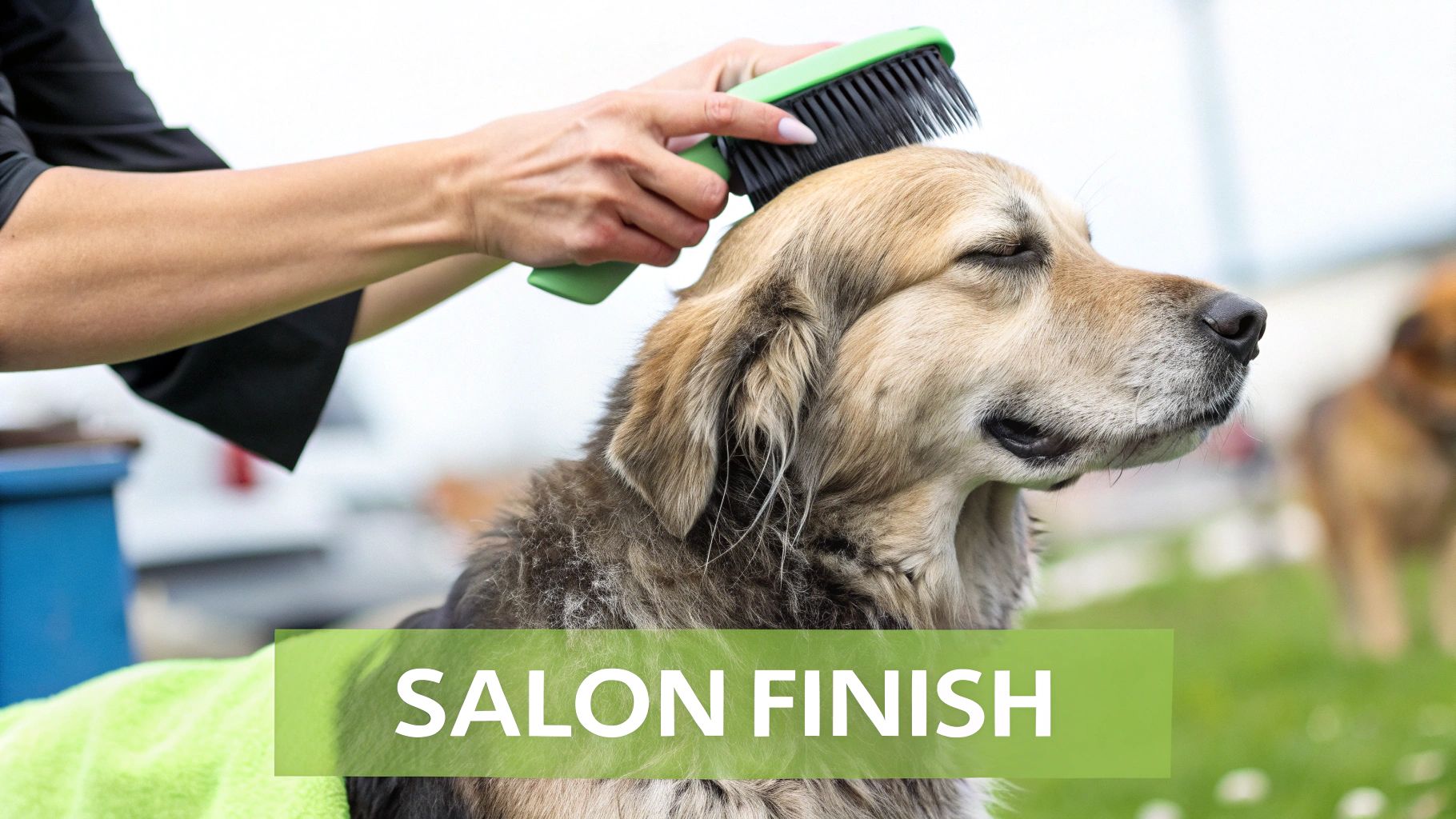
You've selected the perfect conditioner for dogs, but achieving a silky, salon-quality result depends on your application technique. Proper application ensures the product penetrates deep to hydrate the skin and smooth the coat, allowing every strand to receive the nourishment it needs.
Mastering these simple steps will elevate a standard bath into a spa-like experience for your dog. Let's review the correct way to apply different types of conditioners to maximize their effectiveness.
The demand for high-quality grooming is clear. The global market for dog grooming products was valued at USD 9.15 billion in 2024 and is projected to reach USD 19.38 billion by 2035. The shampoo and conditioner segment alone is a multi-billion dollar industry, reflecting a collective commitment to premium pet care. You can discover more insights about the dog grooming market if you're interested in market trends.
Applying a Rinse-Out Conditioner
A rinse-out conditioner is the main moisturizing treatment after shampooing. Before you begin, you may want to review our guide on how to bathe a dog properly.
-
Start with a Clean Slate: After thoroughly rinsing out all shampoo, gently squeeze the excess water from your dog’s coat. This crucial step prevents the conditioner from becoming diluted and ineffective.
-
Use the Right Amount: The amount needed depends on your dog's size and coat length. Start with a quarter-sized amount for a small dog and increase as needed. You will quickly learn the ideal amount for your pet.
-
Work It In Deep: Apply the conditioner to your dog’s back first, then work it down their sides, tail, and legs, avoiding the eyes and ears. Use your fingertips to massage it deep into the coat, ensuring it reaches the skin, especially in dogs with an undercoat.
-
Use a Tool for Thick Coats: For dogs with dense fur, such as a Husky or German Shepherd, a rubber grooming brush is an invaluable tool. It helps distribute the conditioner evenly and provides a stimulating massage for the skin.
-
Let It Sit: Allow the conditioner to remain on the coat for 2-3 minutes. This gives the active ingredients time to penetrate the hair shafts and moisturize the skin.
-
Rinse Thoroughly: This is the most important step. Rinse until the water runs completely clear and the coat no longer feels slick or soapy. Any residue left behind can attract dirt and irritate your dog's skin.
Using Leave-In Conditioners and Sprays
Leave-in products are ideal for maintaining coat health between baths. They provide a quick and easy way to add moisture, manage tangles, and freshen the fur without a full wash.
For a Leave-In Cream or Lotion:
- Dispense a small amount onto your hands and rub them together.
- Gently work your hands through your dog's dry or towel-dried coat, massaging the product in.
- Focus on areas prone to dryness or tangles, such as behind the ears, the tail, and down the legs.
For a Conditioning Spray:
- Hold the bottle 6-8 inches away from your dog's coat.
- Lightly mist the fur all over, avoiding the face.
- Use a brush to distribute the spray evenly from root to tip. This is particularly effective before a daily brushing session to prevent hair breakage.
Actionable Tip: With any leave-in product, start with a small amount. The goal is a light, even application, not a saturated coat. Too much product can leave the fur feeling greasy or weighed down.
Common Questions About Dog Conditioners
Even with a good understanding of the benefits and types, you might still have questions about using a conditioner for dogs. Getting clear, straightforward answers will help you groom your dog with confidence, knowing you are making the best choices for their health and comfort.
Here are answers to some of the most frequently asked questions from pet owners.
Can I Use Human Conditioner on My Dog?
The answer is an emphatic no. Never use a conditioner formulated for humans on your dog. The reason comes down to pH balance.
Human skin is naturally acidic, while a dog's skin is more alkaline. Products designed for our acidic pH can be extremely harsh on a dog's skin, stripping away its protective barrier of natural oils.
This can lead to several problems:
- Dry, Flaky Skin: Itchiness and dandruff are often the first signs of a compromised skin barrier.
- Irritation and Rashes: The skin may become red, inflamed, and uncomfortable.
- Increased Vulnerability: A damaged skin barrier makes your dog more susceptible to bacterial and yeast infections.
Always use a conditioner specifically formulated for a dog's unique skin pH to keep them safe and healthy.
How Often Should I Condition My Dog's Coat?
There is no single answer to this question. The ideal frequency depends on your dog's breed, coat type, lifestyle, and any existing skin conditions.
As a general rule, use a rinse-out conditioner every time you bathe your dog, which for most dogs is about once a month.
For dogs with long, tangle-prone fur or those with particularly dry skin, a leave-in conditioning spray can be used a few times a week between baths. This helps maintain moisture levels and keeps their coat manageable.
Actionable Tip: Observe your dog's coat and skin. If the fur feels brittle or you notice flaking, increase the use of a leave-in conditioner or ensure you are using a deeply hydrating rinse-out formula during baths.
Will Conditioner Help Reduce My Dog's Shedding?
Yes, conditioner can significantly help manage shedding. While it won't stop the natural shedding process, it addresses the issue in two key ways.
First, by moisturizing and strengthening each hair strand, it dramatically reduces breakage. Healthy hair is less likely to fall out prematurely.
Second, the process of massaging in conditioner during a bath helps loosen and remove dead, trapped hair from the undercoat. This allows you to brush out a large amount of fur in one session, rather than having it shed all over your home later. For maximum de-shedding benefits, choose conditioners rich in nourishing ingredients like omega fatty acids or Vitamin E.
Is a Conditioner Different From a Detangling Spray?
Yes, although they both soften the coat, they serve different functions. A traditional rinse-out conditioner is a deep moisturizing treatment. Its primary purpose is to replenish moisture and healthy oils in the skin and coat after shampooing, making it a foundational step for coat health.
A detangling spray, in contrast, is a targeted spot treatment. It is a lighter, leave-in product designed to add "slip" to the fur, making it easier to work through knots and mats without breaking the hair. You would typically use a detangler on dry fur right before brushing to address problem areas.
In summary, a good conditioner helps prevent tangles from forming, while a detangling spray is the specialized tool you use to remove them when they occur.
Of course, a healthy coat is just one part of a safe home environment. It's also vital to use products like safe floor cleaners for pets that won't cause them any harm.
At Pet Magasin, we know that a shiny, healthy coat starts with top-quality, safe ingredients. Our grooming tools and products are designed to help you get that professional-groomer finish right at home, making sure your dog not only looks amazing but feels great, too. Explore our collection and give your pet the TLC they deserve. https://www.petmagasin.com

Leave a comment