
Practical Dog Diaper Alternatives for a Comfortable and Clean Home

When you're dealing with your dog's accidents, heat cycles, or marking behaviors, disposable diapers can seem like an easy fix. However, there are often better options available. The best dog diaper alternatives range from washable diapers and belly bands for male dogs to targeted behavioral training and medical treatments, depending on the root cause. Choosing the right alternative means more comfort for your dog, significant cost savings for you, and a smaller environmental paw-print.
Why Dog Diapers Aren’t Always the Best Solution
Managing your dog’s messes can be overwhelming. While traditional diapers have their place, many pet owners seek alternatives due to concerns about comfort, skin irritation, environmental waste, and high long-term costs. There is no one-size-fits-all solution for every dog.
The best choice depends entirely on your dog's specific situation: is it a medical issue causing incontinence, a territorial marking habit, or a temporary setback in house-training? This guide provides actionable steps to identify the cause and choose the most effective dog diaper alternatives, starting with our top recommendation, washable diapers, which offer an ideal balance of comfort, cost-effectiveness, and sustainability.
Key Drawbacks of Disposable Diapers
Disposable diapers come with several trade-offs that lead pet parents to search for better options. Understanding these downsides is the first step toward finding a solution that works for you and your dog.
- Comfort and Fit: Many disposables are bulky and can restrict your dog's movement, leading to chafing and discomfort, especially with long-term wear.
- Skin Health: The plastic materials in disposable diapers trap heat and moisture, creating a breeding ground for bacteria. Without frequent changes, this can cause painful skin irritation or urine scald.
- Environmental Impact: Single-use products generate significant landfill waste. For eco-conscious owners, this is a major drawback.
The demand for these products is growing. The global pet diapers market is valued at over USD 771 million and is projected to reach USD 1.36 billion by 2033. This growth is driven partly by an aging dog population, as approximately 20% of senior dogs develop incontinence.
Actionable Insight: The right solution isn't just about preventing messes; it's about ensuring your dog's comfort, dignity, and overall well-being. A poorly fitting or uncomfortable diaper can cause more stress than it solves.
Even with the best plan, accidents can happen. It's wise to know the basics of removing pet stains from hardwood floors just in case. Your primary goal, however, should be to make a compassionate, informed decision for your pet and your home.
Before choosing a product, your first and most critical step is to determine why your dog is having accidents. The right dog diaper alternative depends entirely on the root of the problem. A belly band might be a perfect solution for a marking dog, but it will be useless for a senior dog with medical incontinence.
Think like a detective. Is your dog leaking urine while asleep, or are they deliberately lifting a leg on the sofa? The context provides crucial clues. Taking the time to investigate now will save you time, money, and frustration.
Medical Incontinence vs. Behavioral Marking
Your first task is to determine if you are dealing with a medical problem or a behavioral one. While both result in puddles on the floor, their causes and solutions are entirely different. Medical incontinence is an involuntary leakage, whereas behavioral marking is a conscious choice.
A classic sign of medical incontinence is finding a wet spot where your dog was resting or sleeping. They often seem completely unaware it happened. This is common in older dogs, spayed females, and dogs with underlying health issues like urinary tract infections (UTIs) or bladder stones.
In contrast, behavioral marking typically involves small amounts of urine left intentionally on vertical surfaces. This is a form of communication—claiming territory, asserting dominance, or reacting to stress. The posture, such as a male dog deliberately lifting his leg, is a key indicator. It’s an active choice, not a passive leak.
Common Scenarios and Their Symptoms
Here are common situations and the signs that accompany them, to help you identify the cause.
- Senior Dog Incontinence: Look for damp bedding after naps or dribbling while walking. Your dog may seem surprised by the wetness.
- Puppy House Training: Accidents can happen anywhere, as young puppies have not yet developed full bladder control and are still learning appropriate potty spots.
- Territorial Marking: You'll find small, targeted puddles on new items, near doorways, or on objects with unfamiliar smells. The behavior may increase when you have visitors.
- Submissive or Excitement Urination: Your dog urinates when greeted, during exciting play, or when being scolded. This is an involuntary emotional reaction, not a deliberate act.
Actionable Insight: Your veterinarian is your most important partner. Before assuming an issue is behavioral, a vet must rule out painful and treatable conditions like UTIs, diabetes, or kidney disease. A professional diagnosis is essential for your dog's health.
Ultimately, a vet visit is the only way to be certain. They can run tests to check for infections or other health issues. To learn more, you can explore the various causes of urinary incontinence in dogs in our detailed guide. With a clear diagnosis, you can confidently choose the solution that will truly help your dog.
A Detailed Comparison of Dog Diaper Alternatives
Choosing the right solution means understanding what each tool is designed for. A belly band that works perfectly for a male terrier marking territory is useless for a female Golden Retriever with spay incontinence. Let's break down the most popular diaper alternatives so you can see where each one excels.
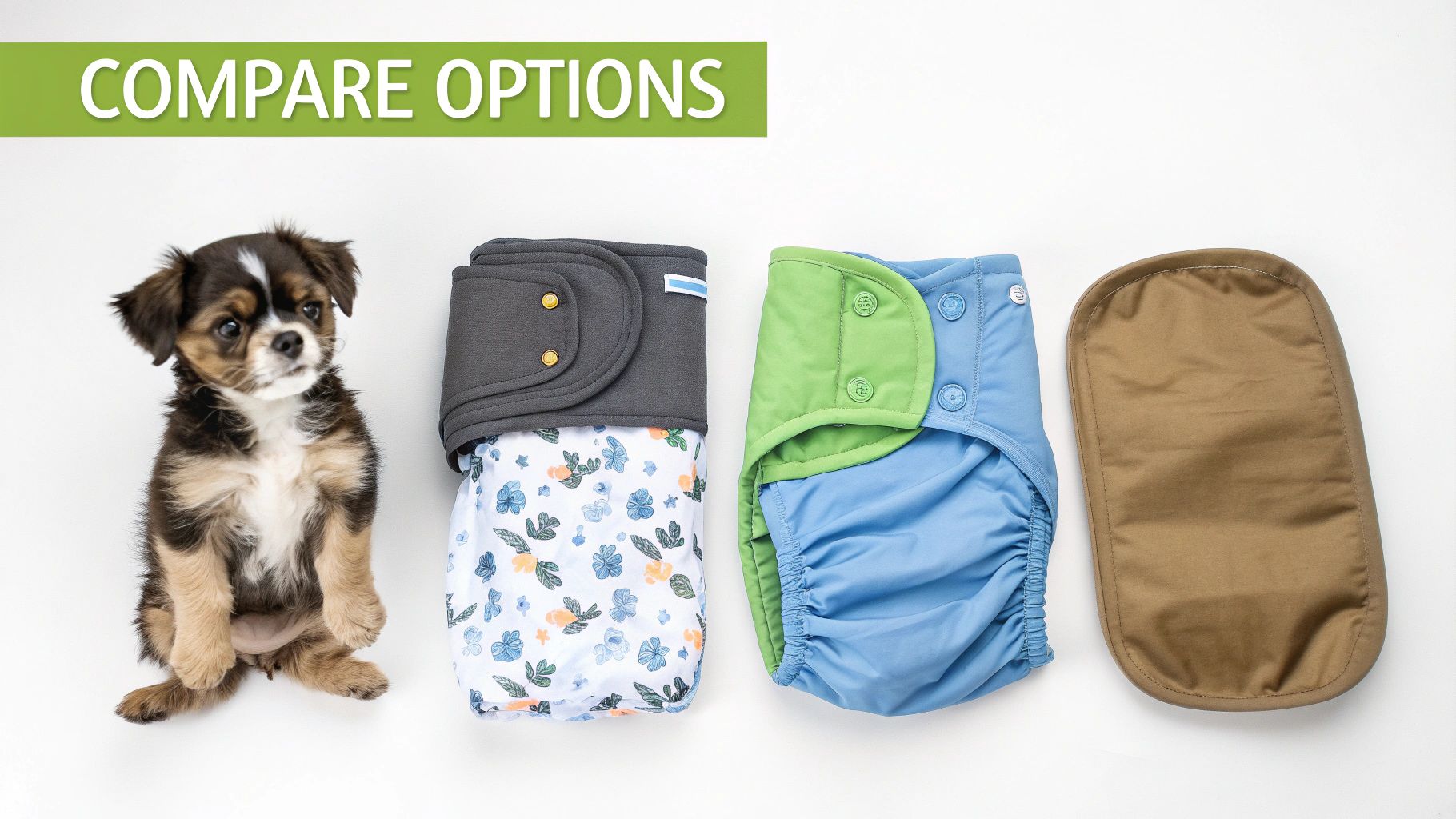
We will skip generic pro/con lists and get straight to practical advice. By evaluating each option based on its ideal use case, comfort, hygiene requirements, and cost, you'll have the information needed to make the best choice for your dog.
Premium Washable Diapers
For many situations, washable diapers are a significant upgrade from disposables and often the best all-around choice. They are made from soft, breathable fabrics with a waterproof outer shell, designed for comfort and long-term use.
These diapers offer full coverage, making them ideal for both male and female dogs. They can handle moderate-to-heavy urinary incontinence and the discharge from a female dog in heat. Unlike bulky disposable diapers, a good washable diaper features adjustable tabs and soft leg elastic for a snug, leak-proof fit that doesn't restrict movement.
While they require washing, the long-term savings and environmental benefits are substantial. If you are dealing with a daily, ongoing issue, this is one of the most reliable dog diaper alternatives available.
Male Belly Bands or Wraps
Belly bands are a specialized tool for a specific job: they are a targeted solution designed only for male dogs to stop urinary marking or manage light dribbling.
A belly band is a simple fabric wrap that fits around your dog’s waist, covering his penis. Its purpose is to absorb small amounts of urine from territorial marking or minor leaks. As it does not cover his rear, it provides no protection against bowel movements.
This streamlined design is less restrictive and more comfortable for many male dogs than a full diaper. It is the go-to solution for a dog lifting his leg on furniture but is completely unsuitable for dogs with heavy incontinence or bowel control issues.
Actionable Insight: The choice between a full diaper and a belly band comes down to the problem you're solving. Belly bands are for urine marking and light dribbles in males. Full diapers are for incontinence (urine and feces) in both genders and for females in heat.
Indoor Potty Systems and Pads
Indoor potty systems provide a designated "go spot" inside your home. These range from simple disposable pee pads to artificial grass patches with collection trays.
These systems are most effective for dogs with severely limited mobility, small breeds in high-rise apartments, or as an aid during house training. They do not solve incontinence—an incontinent dog cannot control where they go. Instead, these systems offer an acceptable indoor bathroom for a dog who has bladder control but cannot get outside in time.
Cleanliness can be a challenge. Disposable pads create waste and ongoing expense, while reusable grass pads require daily washing to prevent odors. Used correctly, however, they can be a lifesaver in certain living situations.
Comparing Dog Diaper Alternatives by Use Case
This table provides a side-by-side comparison to help you quickly identify the most practical option for your dog's specific needs.
| Alternative Solution | Best For | Effectiveness Level | Hygiene Factor | Typical Cost |
|---|---|---|---|---|
| Washable Diapers | Moderate to heavy incontinence, females in heat, post-surgery recovery. | High | Moderate (Requires daily washing) | Low (Long-term) |
| Male Belly Bands | Behavioral marking, light urinary dribbles in male dogs. | High (for target use) | Moderate (Requires frequent washing) | Low (Long-term) |
| Indoor Potty Pads | House training puppies, dogs with limited mobility, apartment living. | Moderate (Requires training) | Low (Requires constant cleaning/replacement) | Moderate (Ongoing) |
| Waterproof Covers | Protecting furniture and bedding from occasional leaks and accidents. | Supplemental | High (Easy to wash) | Low to Moderate (One-time) |
Waterproof Furniture Covers and Bedding
This final alternative is less about managing your dog and more about protecting your home. Waterproof blankets, furniture throws, and dog bed covers contain an impermeable layer that prevents liquids from soaking through to your couch or carpet.
These are not a primary solution for a dog with consistent incontinence but serve as an excellent backup. They are perfect for senior dogs who have occasional leaks in their sleep or for protecting furniture during the final stages of potty training.
Think of them as an insurance policy. You might use a washable diaper on your dog overnight and place a waterproof cover on their bed for complete peace of mind. They are easy to wash and can save you from replacing expensive furniture, making them a smart part of any management strategy. Just remember, they do not keep your dog clean and dry.
Getting to the Root of the Problem: Behavioral and Medical Fixes
While products like belly bands and washable diapers are excellent for managing messes, they are reactive solutions. The best long-term strategies are proactive, addressing the why behind the accidents. This means focusing on behavioral training and medical treatments that can reduce or even eliminate the leaks.
This approach is like fixing a leaky pipe instead of just mopping the floor. It not only keeps your home clean but also improves your dog's quality of life and strengthens your bond.
Smart Behavioral Adjustments
If the issue is behavioral—such as territorial marking, anxiety urination, or incomplete house-training—consistency is key. These adjustments require patience, but they can lead to a permanent solution.
Here are actionable steps to take:
- Create a Strict Potty Schedule: Take your dog out first thing in the morning, right before bed, and after every meal, nap, and play session. For an adult dog, this should be every 4-6 hours.
- Use an Enzymatic Cleaner: Regular soap will not work. You must use an enzymatic cleaner to completely break down urine proteins. If your dog can still smell a previous accident, they will be instinctually drawn to that spot again.
- Reduce Anxiety Triggers: Identify what causes stress-related accidents—new people, loud noises, or schedule changes—and work to create a calmer environment using puzzle toys or a designated quiet "den" area.
You can also implement gentle crate training methods as part of your strategy. A crate can serve as a safe, clean den, which naturally discourages dogs from soiling their personal space and can significantly reduce accidents.
Time to Call the Vet: Exploring Medical Options
If you suspect the accidents are beyond your dog's control, your first call should be to your veterinarian. Many medical causes of incontinence are highly treatable, offering a cure rather than just a management tool.
Your vet will likely start with a physical exam and urinalysis to check for common issues like UTIs, bladder stones, or diabetes. From there, they can develop a treatment plan that addresses the medical problem directly.
Actionable Insight: Your vet is your greatest ally in finding a permanent solution. What may seem like an irreversible sign of aging could be a simple infection or a hormonal imbalance that can be managed effectively with the right medical care.
Common Medical Treatments for Incontinence
Once your vet provides a diagnosis, a new set of solutions becomes available. These medical interventions are often simple, affordable, and can make a significant difference.
Here are a few common treatments your vet might recommend:
- Medications: For spayed females with hormone-responsive incontinence, a drug like phenylpropanolamine (PPA) can strengthen bladder sphincter muscles. Other medications may be prescribed to improve overall bladder control.
- Dietary Changes: Special prescription urinary diets can help dissolve certain types of bladder stones and prevent their recurrence. Increasing water intake with wet food or a water fountain can also help flush the urinary system and reduce infection risk. You can also learn more about natural remedies for dog incontinence to supplement a vet-approved plan.
- Surgical Procedures: In specific cases, such as an anatomical defect or certain bladder stones, surgery may be the best option. Procedures like colposuspension can reposition the bladder to improve your dog's control.
By combining these behavioral and medical strategies with management products, you create a comprehensive wellness plan. You are no longer just cleaning up messes—you are actively building a healthier, happier life for your dog.
Choosing and Implementing the Right Solution
Now it's time to match the right tool to your dog's specific problem. When you break it down by real-world scenarios, the best choice often becomes clear.
This decision tree is a useful visual guide. It helps you determine whether you are facing a behavioral issue or a potential medical condition, which is the first question you need to answer.
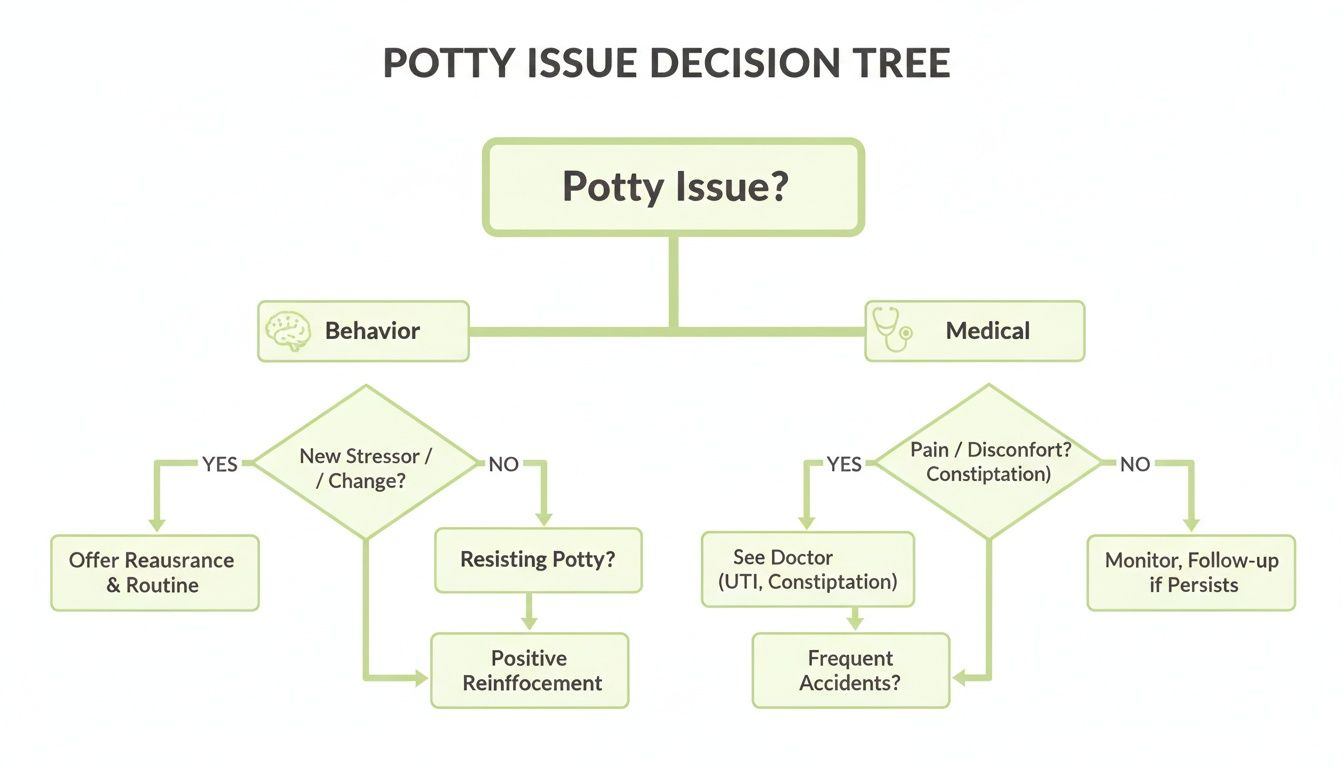
As you can see, potty problems diverge into two main paths: behavior or health. Identifying the "why" must happen before you can choose the right "what."
Matching the Solution to the Scenario
Here are practical solutions for common situations. Once you identify the root cause, you can select the most effective and humane option.
-
Scenario 1: The Young Male Dog Marking Furniture Your young, healthy male dog is marking your new couch. This is classic behavioral marking. Your best tool is a belly band. It is less intrusive than a full diaper and is designed specifically to catch small sprays, making the act of marking less rewarding. You can find some of the best belly bands for male dogs to ensure a proper fit.
-
Scenario 2: The Elderly Dog with Light Dribbling Your senior dog leaves small wet spots where she naps. This light, constant leaking is a classic sign of age-related medical incontinence. Washable diapers are the ideal solution. They provide full coverage with soft, breathable fabric that is comfortable for long-term wear and helps prevent the skin irritation often caused by disposables.
-
Scenario 3: The Spayed Female with Nighttime Leaks Your spayed female leaks urine in her sleep. This is likely hormone-responsive incontinence, a common and treatable issue. While washable diapers are an excellent tool to keep her bedding dry, your first step should be to call the vet. They can discuss medical options, such as medication, that may resolve the problem entirely.
A Practical Implementation Guide
How you introduce a product is critical to its success. A fearful or uncomfortable dog will resist wearing any new garment.
1. Measure for the Right Fit A poor fit is the #1 reason these solutions fail. Too loose, and it will leak. Too tight, and it will chafe.
- For Belly Bands: Use a soft measuring tape to measure your dog's waist, just in front of his back legs.
- For Washable Diapers: Measure the waist as above, and also measure the length from his waist over his back to the base of his tail.
2. Introduce with Positive Reinforcement Build a positive association from the start.
- Let your dog sniff the diaper or band.
- Place it on him for a few seconds, then immediately offer praise and a high-value treat.
- Gradually increase the wearing time over several days, always ending on a positive note before he becomes fussy.
Actionable Insight: The goal is for your dog to see their diaper or belly band as a normal part of their routine, like putting on a leash. Patience and positive reinforcement are your most effective tools.
3. Establish a Cleaning Routine Proper hygiene is non-negotiable to prevent painful skin infections and UTIs.
- Check for wetness every 2-3 hours.
- Change the diaper or band immediately if it is soiled.
- Keep at least 3-5 clean units on hand for proper rotation. Wash them with a pet-safe, fragrance-free detergent to prevent skin irritation.
Got Questions About Dog Diaper Alternatives? We've Got Answers
Even with the right solution, practical questions can arise. Here are answers to the most common queries from pet owners to help you use these alternatives safely and effectively.
How Often Should I Change a Belly Band or Washable Diaper?
For your dog’s health, change the band or diaper every 2-4 hours, or immediately if you notice it is soiled. This is critical for protecting your dog's skin.
Leaving a wet product on for too long can cause painful urine scald, skin infections, and urinary tract infections (UTIs). Make it a habit to perform quick checks every couple of hours. Having several clean diapers or bands ready for a quick swap makes this routine easy to maintain.
Can I Use These for a Female Dog in Heat?
Belly bands are designed exclusively for male dogs and will not work for females.
However, full-coverage washable diapers are an excellent choice for a female in heat. Many owners prefer them to disposables because they offer a snug, secure fit that effectively manages discharge. Their soft, breathable material is less likely to slip off and is more comfortable against the skin.
What if My Dog Keeps Taking Off the Diaper or Belly Band?
This is a common frustration but is almost always fixable.
First, double-check the fit. A diaper or band should be snug enough that it doesn't slide, but you should still be able to fit two fingers underneath it. If it’s too loose, it’s easy to escape. If it's too tight, it will be uncomfortable, and your dog will be motivated to remove it.
Actionable Insight: The most common reason a dog resists a diaper is discomfort. Before assuming it’s bad behavior, carefully check the fit and look for any redness or chafing.
Next, focus on positive association. When you put the diaper on, immediately give your dog a high-value treat, praise, or start a fun game. This helps your dog connect the diaper with positive experiences, turning it from a nuisance into a predictor of good things.
Are There Any Natural Remedies for Dog Incontinence That Actually Work?
While some online sources suggest remedies like corn silk or phytoestrogens, there is no solid scientific evidence to support their effectiveness. They should never replace a professional veterinary consultation.
Incontinence can be a symptom of a serious health problem, such as a UTI, bladder stones, or kidney disease. Only a vet can perform the necessary tests to determine the true cause.
Once a diagnosis is made, your vet can recommend proven, safe treatments and advise if any supplements are appropriate for your dog's specific condition. Attempting to self-diagnose with unproven remedies can delay proper medical care and potentially worsen the issue. Always start with a vet.
For reliable and comfortable solutions you can trust, Pet Magasin offers a range of high-quality washable diapers and belly bands designed with your pet's well-being at the heart of everything we do. Explore our thoughtfully designed products at https://www.petmagasin.com to find the perfect fit for your furry family member.

Leave a comment