
Finding the Best Belly Bands for Male Dogs

When you're trying to stop a male dog from marking or deal with incontinence, the best belly bands for male dogs are a lifesaver. To solve the problem effectively, you need a band that's highly absorbent, fits securely without irritating your dog, and is easy to wash. A good band is a crucial tool—it protects your home and gives you peace of mind while you address the training or health issues causing the problem.
Understanding Belly Bands and Their Purpose
So, what exactly is a belly band? It’s a simple but effective fabric wrap designed specifically for male dogs. You wrap it around his midsection, ensuring the absorbent pad is positioned directly over his private parts. This catches any urine from territorial marking, excitement pees, or incontinence, saving your furniture and floors from messes.
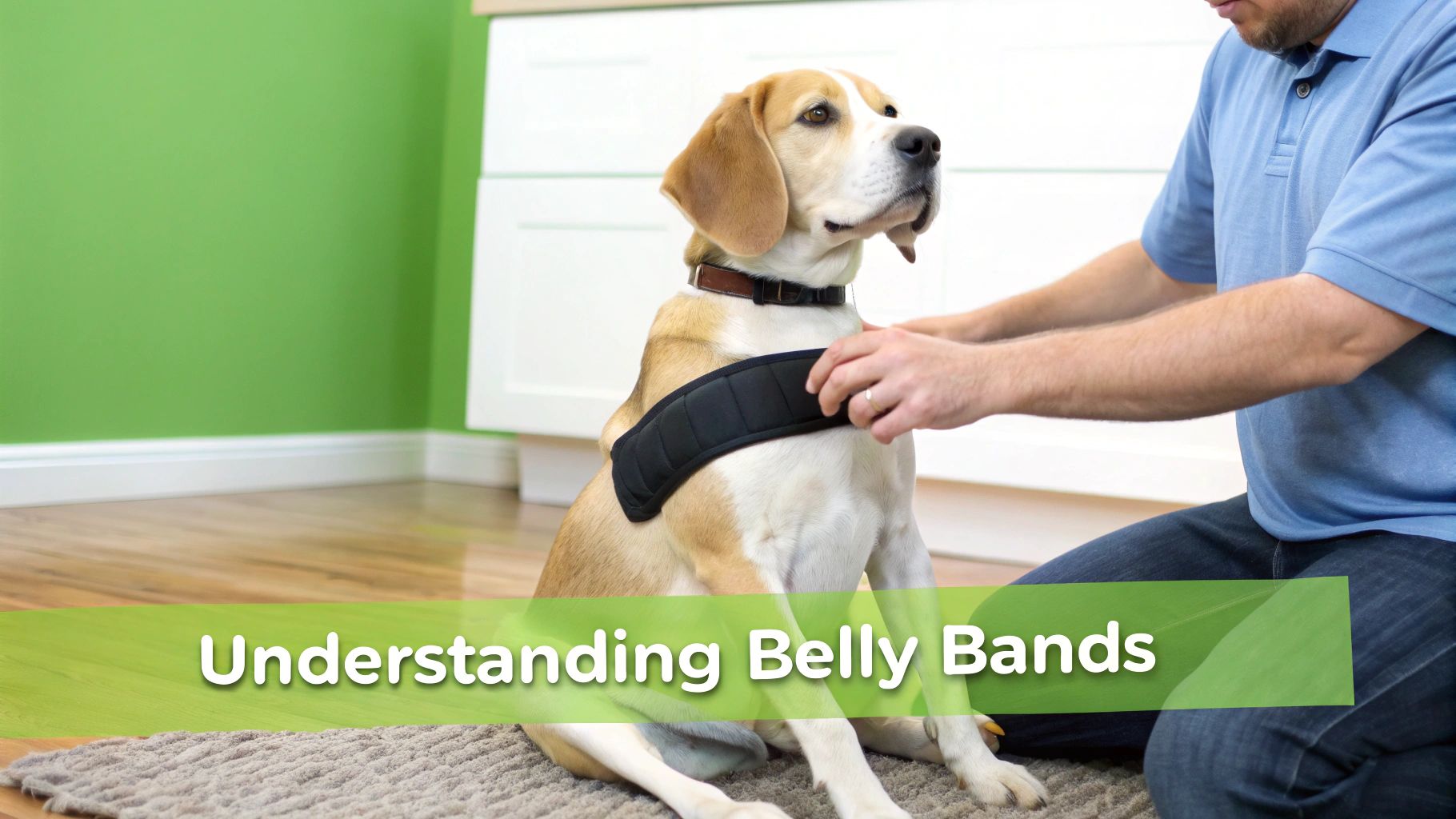
It’s important to understand that these aren't full diapers. While diapers cover the entire rear for both urine and feces, a belly band is a lighter, less intrusive solution just for urinary issues in male dogs. This makes it a more practical choice for many common situations.
Why Your Male Dog Might Need a Belly Band
There are several reasons you might find yourself searching for the best belly bands for male dogs. They aren't a replacement for a vet visit or consistent training, but they are an incredible management tool. Think of a belly band as a safety net that protects your home while you work on the root cause.
Here are the most common reasons to use a belly band:
- Territorial Marking: It's an instinct for many male dogs—even some neutered ones—to mark their territory. This often intensifies when you move to a new place or bring a new pet home. A band immediately stops the urine from hitting its target.
- House Training Support: Puppies and rescue dogs are still learning the rules. Using a belly band prevents accidents inside, which reduces frustration for both you and your dog during this critical learning phase.
- Senior Dog Incontinence: As dogs age, their bladder control can weaken. While incontinence is common in spayed females (affecting about 20% of them), it's also a significant issue for senior male dogs.
- Excitement or Submissive Urination: If your dog dribbles when guests arrive or when he gets scared, a belly band is the perfect tool to manage it without scolding him for a behavior he can't control.
- Post-Surgery Recovery: After certain procedures, a dog might have temporary incontinence. A band can also act as a soft barrier, preventing him from licking surgical sites in that area.
The demand for these products is growing. The global pet diaper market, which includes belly bands, is projected to grow significantly, showing how many owners rely on them. To give some context, one report estimates the market will grow from $500 million in 2025 to $800 million by 2033.
Common Scenarios for Using a Dog Belly Band
To help you decide if a belly band is the right solution, here's a quick look at the situations where they are most effective.
| Situation | Key Benefit | Ideal For |
|---|---|---|
| Territorial Marking | Prevents damage to furniture and walls during training. | Intact males or dogs in new environments. |
| Senior Incontinence | Offers a dignified way to manage age-related leaks. | Older dogs with weakened bladder control. |
| House Training | Contains accidents, reducing cleanup and training stress. | Puppies and newly adopted adult dogs. |
| Excitement Urination | Keeps floors dry during high-stimulation events. | Young dogs or those prone to dribbling when excited. |
| Travel & Visits | Provides peace of mind when visiting others' homes or hotels. | Any male dog in an unfamiliar setting. |
Ultimately, a belly band is a tool to manage the symptoms. While you're working on the core issue, creating a comfortable and healthy environment is just as important. This includes practical items like an intelligent dog water dispenser to ensure they're always hydrated.
A Detailed Comparison of Belly Band Features
Choosing the right belly band for your dog involves more than just getting the size right. The best band is a combination of the right fit, materials, and design—all working together to keep your dog comfortable and your home protected.
Think of it this way: a super absorbent band is worthless if the clasps give way and it ends up on the floor. Likewise, a secure band won't do much good if the material is scratchy and leaves your dog with irritated skin. Let's break down what really matters when you're comparing your options.
Absorbency and Leak Protection
First and foremost, a belly band has one job: to contain urine. This all comes down to the layers inside the band, and this is where you’ll see the biggest difference between a cheap option and a quality one.
A simple, single-layer fabric band might catch a few dribbles, but that’s about it. For real-world use, you need a multi-layer design:
- Inner Layer: This is the part that touches your dog’s skin. You want something soft and moisture-wicking here. The goal is to pull urine away from his fur immediately, keeping him dry and preventing rashes.
- Absorbent Core: This is the powerhouse of the band. It's usually a thick, padded middle layer made to soak up and trap liquid. The better the core, the more accidents the band can handle before you need to swap it out.
- Outer Shell: The final line of defense should be a waterproof or water-resistant material. This layer is crucial for preventing any soaked-in liquid from seeping through onto your couch or carpet.
Actionable Tip: Don't be tempted by a thinner, cheaper band. A high-quality band with a proper absorbent core can hold 2-3 times more liquid. This translates to fewer leaks, less laundry, and a drier, happier dog.
Before you make a decision, it's helpful to see how these features stack up against each other.
Critical Features of a High-Quality Belly Band
This table breaks down the essential belly band features, helping you understand the trade-offs between different designs and materials for your dog.
| Feature | What to Look For | Impact on Performance | Best For |
|---|---|---|---|
| Absorbent Core | Multiple, thick inner layers. | Determines how much liquid the band can hold. Prevents leaks and oversaturation. | Dogs with heavy incontinence or those left alone for longer periods. |
| Inner Lining | Soft, moisture-wicking fabric (e.g., microfleece). | Pulls moisture away from the skin to prevent rashes, chafing, and discomfort. | All dogs, but especially those with sensitive skin or who wear bands often. |
| Outer Shell | Waterproof or highly water-resistant material. | Acts as the final barrier, stopping soaked-in urine from reaching furniture. | Households with carpets, upholstery, and anyone wanting peace of mind. |
| Fasteners | Wide, strong hook-and-loop (Velcro-style) that is "fur-friendly." | Ensures the band stays securely in place without slipping, shifting, or failing. | Active dogs, long-haired breeds, and for long-term, repeated use. |
| Fit & Shape | Contoured, anatomical shape with elasticized edges. | Provides a snug, gap-free fit that moves with the dog, preventing side leaks. | Dogs of all shapes and sizes, especially those with narrow waists. |
| Washability | Machine washable and quick-drying materials. | Makes cleanup easy and ensures bands are ready for reuse without a long wait. | Anyone using reusable bands as a long-term solution. |
Understanding these components helps you look past the marketing and focus on what will actually work for your dog and your home.
Material Quality and Overall Comfort
Since your dog might be wearing this for hours at a time, comfort is non-negotiable. An uncomfortable band will just create a new problem: a dog obsessed with chewing or pulling it off. Even worse, it can cause painful chafing and rashes.
When you’re looking at materials, prioritize softness and breathability. Soft cottons are nice, but synthetic wicking fabrics are often better for keeping the skin dry. Pay close attention to the edges of the band. Quality bands have soft, finished seams that won’t dig into your dog’s belly or groin area.
A poorly made band can feel like a stiff girdle, restricting your dog’s movement. The best ones are made from flexible materials that let him walk, run, and nap just like he normally would.
Fastener Types and Security
The fasteners hold the entire band in place. If they fail, the band is useless. Most bands use a hook-and-loop system, like Velcro, but they are not all created equal.
Cheaper versions can quickly lose their grip after a few washes or get so clogged with fur that they pop open. The best bands use heavy-duty fasteners that can handle repeated washing and daily wear.
Market leaders have refined this feature. Brands like Simple Solution and Pet Magasin use fur-friendly fasteners in their male belly bands, which aggregated user reviews in 2024 suggest reduce skin irritation by an estimated 25%. This focus on quality details is a big reason the market is growing. If you're interested in market trends, you can read the full research on the pet diaper market.
Fit and Contoured Design
Finally, the shape of the band ties everything else together. A simple rectangle of fabric might seem fine, but it’s prone to bunching up and leaving gaps on the sides—perfect escape routes for urine.
The best belly bands for male dogs usually have a contoured or anatomical shape. This curved design hugs the dog’s body better, creating a snugger seal around his waist and underbelly. Some also have elastic edges, a great feature that helps the band move with your dog and prevents gaps from opening up when he sits or curls up.
Getting the size wrong is the most common cause of leaks. Actionable Step: Always measure your dog’s waist (right in front of his back legs) with a soft tape measure and check it against the brand’s sizing chart. If he's between sizes, it's usually safer to size up; you can often adjust a slightly larger band to be tighter, but a band that’s too small is unusable.
How to Choose the Right Belly Band
Picking out the best belly band for your dog isn't just about comparing features online; it's about matching those features to your dog's specific needs and lifestyle. A band that’s perfect for a sleepy senior dog could be a failure for a hyperactive puppy. By applying the right criteria, you'll find a solution that works effectively and keeps your dog comfortable.
Think of it like choosing the right tool for a job. The belly band you choose has to solve your dog's primary problem, whether it's minor marking or serious incontinence. The key is to translate product specs into real-world benefits for your dog.
Matching the Band to Your Dog's Needs
Your dog's age, activity level, and the severity of the urination issue are the three most important factors to consider. Let's walk through common scenarios to see how these factors guide you to the perfect choice.
- For the Active Puppy Prone to Marking: An energetic dog requires a band built for security. Look for: Wide, strong hook-and-loop fasteners and a snug, contoured shape with elastic edges. This combination keeps the band in place, even during running and playing, to prevent leaks.
- For the Senior Dog with Sensitive Skin: An older dog, especially one with thinning fur or delicate skin, needs comfort above all else. Prioritize: A band with an ultra-soft, moisture-wicking inner lining. This is crucial for pulling urine away from his body immediately, which helps prevent painful chafing and skin irritation (urine scald).
- For the Dog with Heavy Incontinence: If you're dealing with frequent or heavy urination, absorbency is your top priority. A simple fabric wrap won’t be enough. You need: A band designed with a multi-layer absorbent core that can hold a lot of liquid, plus a completely waterproof outer shell to guarantee nothing leaks through.
For dogs with frequent or heavy urination, prioritize a band with a multi-layer absorbent core over a slimmer, less-padded design. This single feature is the most critical factor in preventing leaks and protecting your home.
This decision tree helps visualize how your dog's primary issue should guide your choice between features like absorbency and skin-friendly materials.
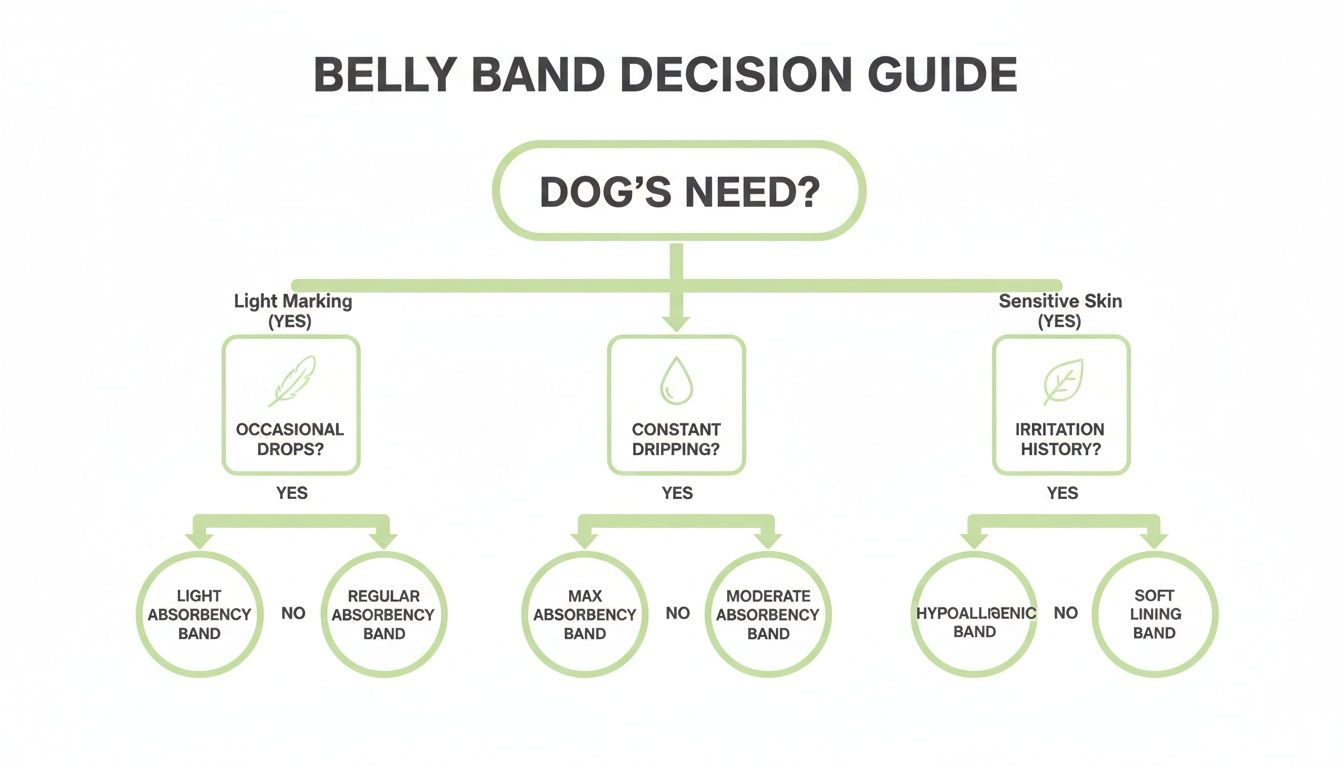
The main takeaway here is that different needs call for different priorities. A dog with a minor marking habit can get by with a slimmer band, but one with significant leakage absolutely needs a high-capacity absorbent core.
A Practical Checklist for Your Decision
Feel confident in your choice by thinking through your dog's situation. Before you click "buy," run through this quick checklist to ensure you've covered all the bases.
Your Dog's Profile Checklist:
- What is the main reason you need the band? Is it for territorial marking, age-related incontinence, excitement pees, or help with house-training? This answer defines your core need.
- How would you describe your dog's activity level? Is he more of a couch potato or always on the move? An active dog needs a band with a super-secure fit and tough fasteners.
- Does your dog have sensitive skin or long fur? If yes, a soft, non-abrasive inner lining and fur-friendly fasteners are non-negotiable to prevent irritation and matting.
- How often will the band be used? Daily use for incontinence demands higher durability and washability than occasional use for travel. For long-term use, understanding why you should go reusable can help both your budget and the environment.
- Have you measured your dog's waist correctly? Use a soft measuring tape and wrap it around his waist, just in front of his hind legs. An accurate measurement is the single most important step to prevent leaks.
By answering these questions, you go from a broad search to a focused selection. You'll be able to confidently pick a band that not only contains messes but also keeps your dog comfortable, secure, and happy.
Proper Use and Care for Belly Bands
Choosing the right belly band is the first step, but using it correctly and keeping it clean is what makes it a truly effective tool. When used properly, a belly band should blend into your dog's daily life, not become a source of stress. If you can nail the introduction, get the fit just right, and stay on top of hygiene, you'll have a happy, comfortable dog and a clean house.
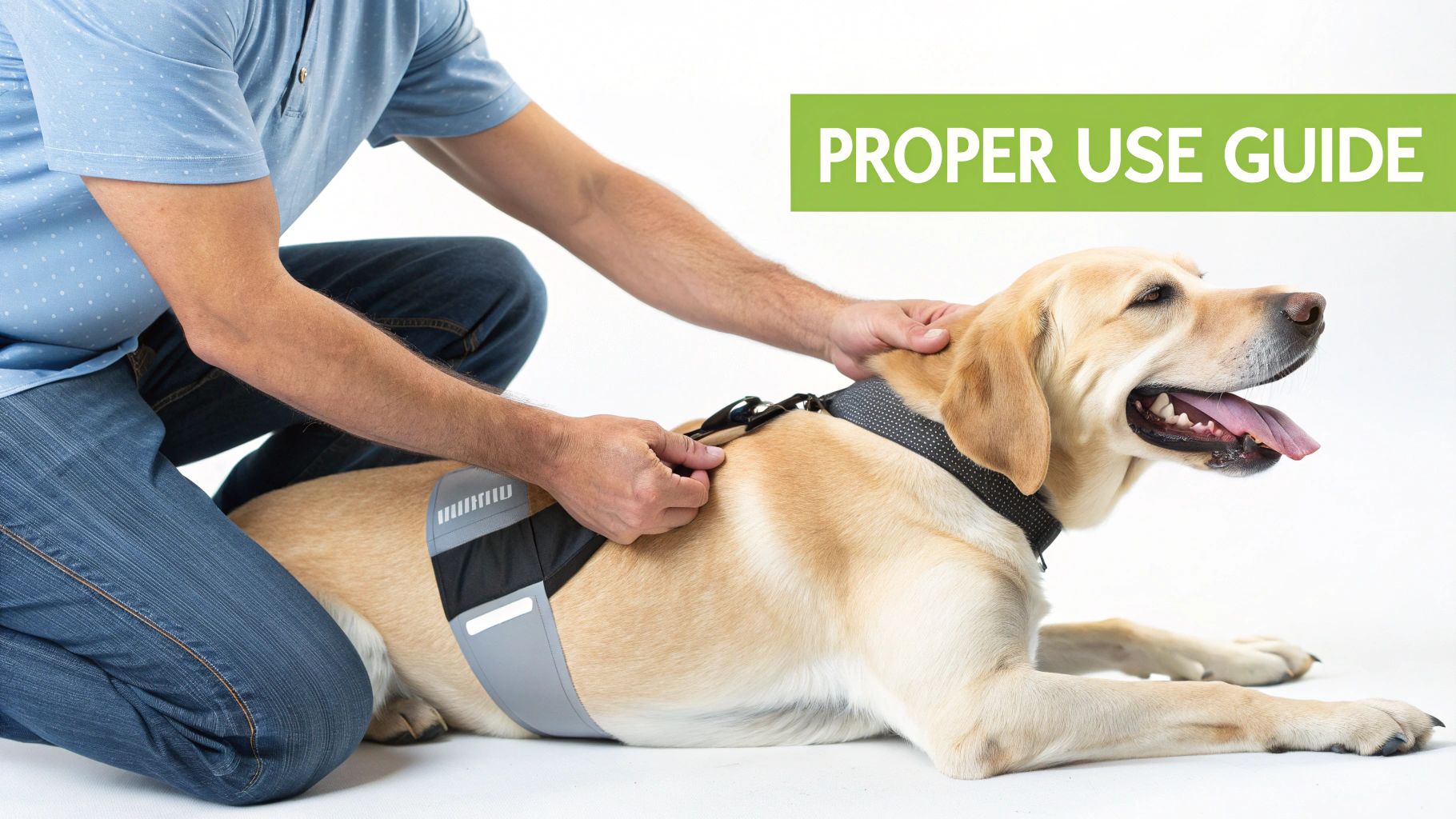
The goal is to make the belly band a normal, or even positive, part of your dog's routine. If he sees it as a punishment or an annoyance, he'll do everything he can to chew it off or wiggle out of it, defeating the purpose entirely.
Introducing the Belly Band Positively
The secret to a smooth start is positive association. You want your dog to see the band as just another piece of gear, like his collar or harness. Research shows that dogs adapt to new items up to 85% faster when introduced slowly with positive reinforcement.
Follow these simple steps to get him comfortable:
- Let Him Investigate: Before putting it on him, lay the new belly band on the floor. When he sniffs it, reward him with a treat and praise.
- Keep it Short and Sweet: For the first few times, leave it on for only a couple of minutes. The moment it's on, give him a high-value treat, his favorite toy, or start a fun game.
- Gradually Increase Wear Time: Over several days, slowly extend the time he wears the band. Add 10-15 minutes each session, always associating it with something enjoyable.
Actionable Tip: Never force the band on a dog that is scared or resisting. This will create a negative association that is difficult to reverse. Patience and a pocketful of treats are your best tools here.
Getting a Snug, Comfy Fit
An ill-fitting band is the top reason for leaks and an unhappy dog. Too loose, and it will slip around and fail to catch urine. Too tight, and it can cause painful rubbing and even restrict breathing. The goal is a fit that's snug but not constricting.
Use the two-finger test to check the fit. You should be able to easily slide two fingers between the band and your dog's belly. This indicates it's tight enough to stay in place but loose enough for comfort and movement. Ensure the absorbent pad is positioned to completely cover his private parts, with a little extra room in front to catch any accidents.
When you're out and about, the right gear makes all the difference. For more great tips for stress-free pet travel, proper use of tools like belly bands is a game-changer.
Keeping It Clean: Washing and Maintenance
Washing reusable bands properly is essential for your dog's health and the longevity of the bands. Think of them like your own underwear; they need to be changed and washed frequently. A dog left in a wet band can develop a painful skin rash called urine scald.
Here are the do's and don'ts for laundry:
- DO rinse the band in cold water immediately after removal. This helps prevent stains and odors from setting in.
- DO use a pet-safe, enzyme-based detergent. These are formulated to break down organic matter in urine.
- DON'T use bleach or fabric softeners. Bleach can degrade the absorbent layers, while fabric softeners coat the fibers, reducing their absorbency.
- DO air dry them if possible. High heat from a dryer can damage the waterproof outer layer over time.
Want to learn more about taking care of reusable products? Check out our guide on the best washable dog diapers. Much of the same advice applies to keeping your belly bands in top condition.
Our Top Belly Band Recommendation for Male Dogs
After analyzing all the features that make a great belly band, one product consistently stands out: the Pet Magasin Washable Belly Bands. This isn't just a sales pitch; when you evaluate the critical factors—fit, absorbency, comfort, and durability—this band delivers. Pet Magasin has clearly identified the common frustrations of dog owners and engineered a product to solve them.
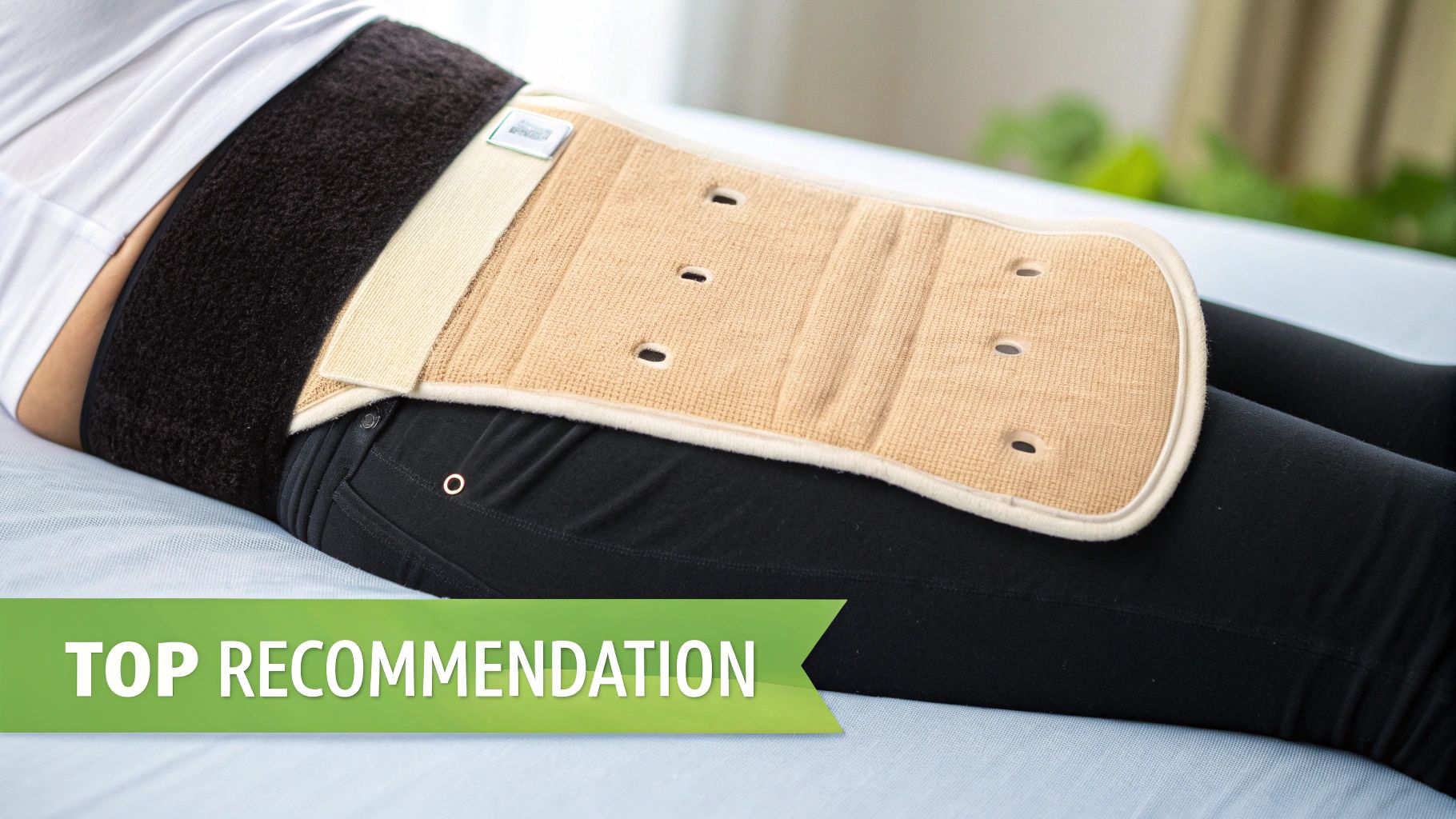
These bands excel because the details are right. The design thoughtfully combines features that solve real-world problems, whether you're managing a senior dog's incontinence or preventing a puppy from marking his territory. This focus on practical, everyday use is what makes it one of the best belly bands for male dogs available.
Solving Common Problems Through Superior Design
The most common complaints about belly bands are leaks, slipping, and skin irritation. Pet Magasin’s design directly addresses each of these issues. Their multi-layer construction is a perfect example of their problem-solving approach.
It starts with a highly absorbent inner core that soaks up moisture quickly. Against your dog’s skin is a soft, moisture-wicking liner that pulls urine away from his body, which is a key factor in preventing painful rashes like urine scald. Finally, a completely waterproof outer shell ensures that even if the core is saturated, your furniture and floors stay dry.
Actionable Insight: A belly band is only effective if it's both absorbent and comfortable. Pet Magasin’s fur-friendly fasteners and soft inner lining prevent the chafing and fur-pulling that cause many dogs to reject wearing them.
This intelligent combination of materials makes the band a reliable choice for everything from minor dribbles to more significant accidents.
Real-World Scenarios Where This Band Excels
So, how do these features translate into daily life? Let's look at a couple of common situations.
- Scenario 1: The Incontinent Senior Dog. An older dog often has more sensitive skin and may need to wear a band for extended periods. The Pet Magasin band’s gentle inner lining and powerful absorbency mean fewer changes are needed, allowing your old friend to rest comfortably. The strong fasteners also prevent it from twisting or sliding off a less active dog.
- Scenario 2: The House-Training Puppy. An energetic pup needs a band that stays put. The wide hook-and-loop closures create a secure fit that holds firm, even during a case of the zoomies. Plus, they're machine washable and sold in a pack of three, so you always have a fresh one ready for the next accident, simplifying the house-training process.
This versatility is what makes it a standout product. Whether you need a short-term training aid or a long-term management solution, this band is built to perform. You can explore the full lineup in their pet incontinence solution collection to find the right option for your dog.
Ultimately, the Pet Magasin belly band earns our top recommendation because it doesn't cut corners. It offers superior absorbency, a secure and comfortable fit, and the durability required for repeated washing, making it a reliable tool for any male dog owner.
Your Belly Band Questions, Answered
So, you've found a belly band that seems right for your dog, but you've probably still got a few questions about using it day-to-day. That's completely normal. Getting the little details right is what makes these bands a lifesaver instead of a hassle, all while keeping your dog comfortable and healthy. Let's dig into the most common questions we hear from dog owners.
How Often Should I Change My Dog's Belly Band?
This is the most critical rule of thumb: change it the second it gets wet. Seriously, think of it just like a baby’s diaper. Leaving a damp band on your dog is asking for trouble—it can lead to nasty skin irritation, painful rashes, and even bacterial infections, a condition sometimes called urine scald.
For a dog who marks all the time or struggles with incontinence, you might be changing the band every 2-3 hours. If your dog just has the occasional leak, you can go a bit longer. The trick is to check it frequently, especially when you're just starting out and learning his habits.
Here’s a simple guide to get you started:
- For Frequent Markers: Check every hour or two. Swap it out immediately after you know he’s marked.
- For Senior Dogs with Incontinence: Check every 3-4 hours and change it right away if it feels even slightly damp. Their skin is often more sensitive.
- For Overnight: Put a fresh, clean band on right before bed and make changing it the first thing you do in the morning.
It's a fact: studies on canine skin health show the risk of dermatitis skyrockets by over 300% when a dog is left in a wet wrap for more than a couple of hours. Changing the band often isn't just a friendly suggestion—it’s absolutely essential for your dog's health.
Can My Dog Wear a Belly Band All Day?
While it’s tempting to just leave it on, belly bands are not meant for 24/7 wear. Your dog’s skin needs to breathe to stay healthy. Keeping it covered all the time, especially if it gets a little damp, traps moisture and heat. That creates the perfect breeding ground for skin problems.
Try to give your pup several "band-free" breaks throughout the day. The best times for this are when you can keep a close eye on him, like during a walk, while playing outside, or even when he’s just hanging out in his crate. These breaks let air get to his skin and fur, keeping everything dry and preventing irritation. A good rule is to take it off whenever you're able to supervise him directly.
Will a Belly Band Actually Stop My Dog From Marking for Good?
It’s really important to see a belly band for what it is: a management tool, not a training solution. It does a fantastic job of keeping urine off your furniture and walls, but it won’t magically erase your dog’s instinct to lift his leg. He'll likely still go through the motions, but the band is there to catch the mess.
Think of the band as your window of opportunity. It takes the stress out of the situation so you can focus on the real issue. While your home stays clean, you can work on:
- Behavioral Training: Get in touch with a professional trainer to figure out why he's marking. It could be territorial behavior or even anxiety.
- A Vet Visit: It's always a good idea to rule out medical problems. Sometimes, things like a UTI can cause marking behavior.
Using a belly band is the first step in a bigger plan. It contains the immediate problem, giving you the breathing room to work on a permanent fix.
What if the Belly Band is Causing Chafing?
If you spot any redness, sores, or irritation on your dog's skin, take the band off right away. Let the area breathe and heal, and then it's time to play detective. Chafing is almost always a sign that something is off with the fit or your cleaning routine.
- Check the Fit: This is the usual suspect. A band that’s too tight will rub and chafe. Don't forget the two-finger rule: you should be able to slide two fingers comfortably between the band and your dog's body.
- Check the Material: Some dogs just have sensitive skin and might react to certain fabrics. Look for bands that have a soft, smooth inner lining that won't cause friction.
- Check Your Hygiene: Are you changing it as soon as it's wet? Are you washing it with a gentle, pet-safe detergent? Leftover urine residue or harsh soaps are common culprits for skin irritation.
If you’ve tried these fixes and the problem isn't going away, it’s time to call your vet. They can help you figure out if there's an underlying skin sensitivity and get you on the right track.
At Pet Magasin, we get it. We believe the best pet products are the ones that solve real problems without making your pet uncomfortable. Our washable belly bands are made with super-absorbent, skin-friendly materials to give you peace of mind and keep your dog happy and dry. Check out our solutions over at https://www.petmagasin.com.

Leave a comment