
What to Do If You Think Your Cat Has Fleas: A Step-by-Step Guide

If you're asking, "does my cat have fleas?" you’ve likely spotted some tell-tale signs, like obsessive scratching or unusual agitation. Fleas are one of the most common culprits behind a cat's discomfort, so it's smart to investigate.
This guide will walk you through how to confirm your suspicions, what immediate actions to take, and how to create a flea-free home for good.
Spotting the First Signs of a Flea Problem
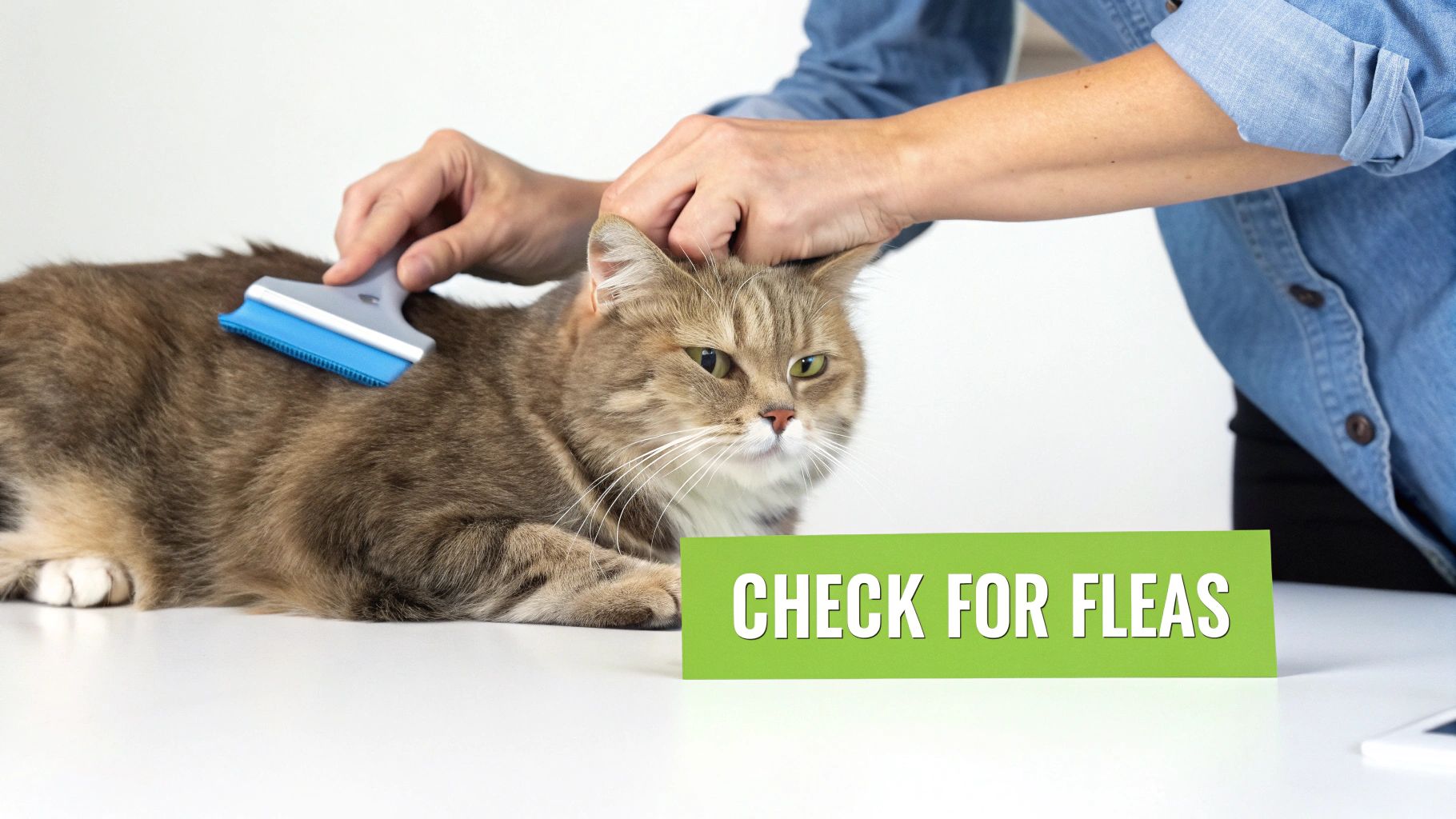
It’s a huge myth that only outdoor cats get fleas. The reality is that flea infestations are shockingly common, even for cats who’ve never set a paw outside. A global survey found that while 66% of outdoor cat owners have dealt with fleas, a surprising 43% of exclusively indoor cat owners have, too.
These little pests are master hitchhikers, easily catching a ride into your home on your clothes, other pets, or even a visiting friend. That's why every cat owner needs to know what to look for. You can learn more about these eye-opening flea and tick survey findings.
Before you start a full-blown flea hunt, pay attention to small changes in your cat's daily routine. These subtle clues are your best early warning system.
Early Behavioral Clues
Is your normally mellow cat suddenly acting restless, irritable, or just… off? Fleas are a constant, nagging annoyance that can seriously impact your pet’s mood and well-being.
Look for these specific behaviors:
- Excessive Scratching or Biting: This is the number one sign. A cat frantically scratching its neck, back, or especially the base of its tail is a major red flag.
- Over-grooming: You might see your cat licking one area so intensely that the fur thins out or the skin becomes red and raw. These are often called "hot spots."
- Sudden Bursts of Activity: Has your cat ever suddenly leaped up and bolted from the room as if startled? That can be a direct reaction to a painful flea bite.
Of course, some of these actions can mean other things. A twitching tail could signal annoyance from fleas, but it's also a normal part of your cat's tail language. The key is to notice when a behavior becomes obsessive or feels completely out of character for your cat.
Here’s a quick reference to help you connect the dots between what you’re seeing and what it might mean.
Quick Guide to Flea Symptoms and Actions
This table breaks down the most common signs, what they likely indicate, and the immediate action you should take.
| Symptom | What It Means | Your First Action |
|---|---|---|
| Intense Scratching | Classic sign of flea irritation. The bites are incredibly itchy. | Grab a flea comb and gently check the neck, back, and tail base. |
| Red Bumps or Scabs | Your cat may have an allergic reaction to flea saliva (Flea Allergy Dermatitis). | Inspect the skin closely. Look for small, crusty bumps, especially around the neck. |
| "Flea Dirt" | These specks are flea feces (digested blood). This is definitive proof of fleas. | Place a white paper towel under your cat and comb them. Add water to any black specks that fall off. If they turn red, it's flea dirt. |
| Hair Loss/Bald Patches | This is often caused by over-grooming in response to the constant itching. | Check the affected areas for signs of fleas or flea dirt and schedule a vet visit. |
| Restlessness/Agitation | Your cat is uncomfortable and constantly being bitten. | Begin a thorough home and pet inspection immediately. |
This isn't a substitute for a vet's diagnosis, but it's a great starting point for any concerned cat owner. It helps you quickly assess the situation and decide on your next move.
Confirming a Flea Infestation With Confidence
You have a hunch. Now it's time to get hands-on and find definitive proof. The most reliable way to know for sure is a thorough inspection of your cat’s coat and skin, and a fine-toothed flea comb is the best tool for the job.
Gently run the comb through your cat’s fur, making sure the teeth reach the skin. Fleas love to hide in the warmest, most protected spots on your cat’s body, so pay extra attention to these areas.
Here are the key hotspots to focus on:
- The base of the tail, right where it connects to the lower back.
- The back of the neck and tucked in between the shoulder blades.
- The warm, dark areas under their legs (think kitty "armpits").
- Around their groin and across their belly.
I learned this the hard way. I once missed an early infestation on my own cat, a fluffy Ragdoll, because I only checked his back. Turns out the fleas were hiding near his tail and under his front legs—places I had completely skipped. Be more thorough than I was!
Identifying the Evidence You Find
As you comb, you’re looking for two things: adult fleas and flea dirt. Adult fleas are tiny, dark brown, and incredibly fast. You might part the fur and see one dart away before you can even react.
More often, you'll find flea dirt first. These tiny black specks are actually flea feces (digested blood). It’s easy to mistake for regular dirt or dandruff at first glance.
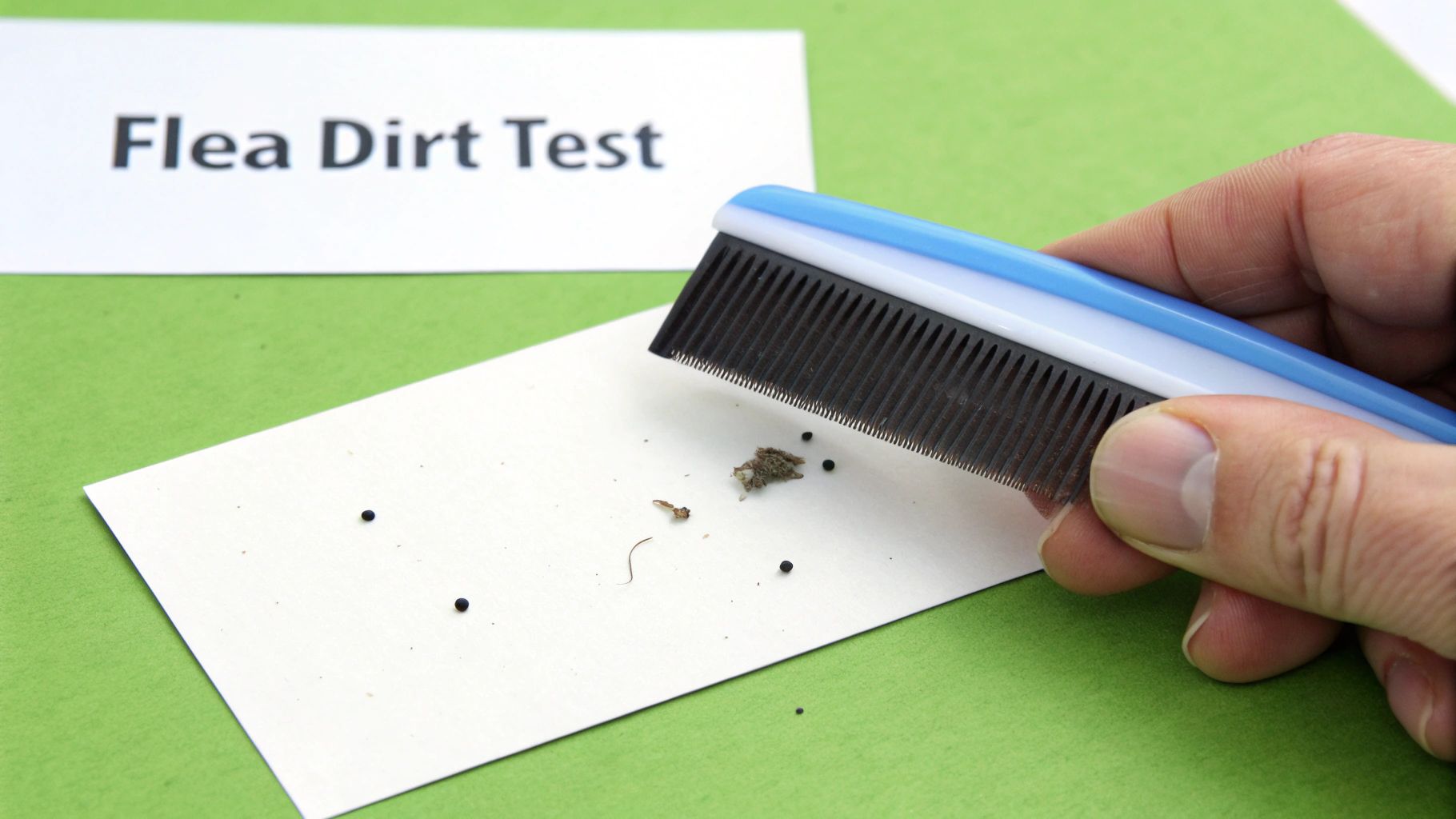
To know for sure, perform the "white paper test." It’s simple. Comb your cat while they’re standing over a white paper towel. When black specks fall off, add a drop of water to them.
If the specks dissolve and turn a reddish-brown color, that's flea dirt. This is your definitive proof that your cat has fleas, even if you haven't seen a single adult one.
Understanding the Flea You're Fighting
It helps to know your enemy. The fleas on your cat are almost certainly the cat flea, or Ctenocephalides felis. This species is the most common flea found on cats worldwide.
In fact, one major survey collected almost 2,000 fleas from cats and found a whopping 98.4% were this exact type. It really shows just how widespread this particular problem is for our feline friends. You can dig into the details of these flea prevalence findings if you want to see the full scope of the research.
Confirming you have fleas or flea dirt is the critical first step. Now that you have undeniable evidence, you can confidently move forward with a plan to treat both your cat and your home.
So, you’ve found fleas on your cat. Take a deep breath. It's overwhelming, but now's the time for a clear, calm plan.
What you're seeing—the adult fleas hopping around—is just the tip of the iceberg. Seriously. They only make up about 5% of the total flea population in your home. The other 95% is a hidden army of eggs, larvae, and pupae lurking in your carpets, furniture, and your cat's favorite sleeping spots.
The goal right now is twofold: get your poor cat some immediate relief and start a major cleanup of your house. This isn't a one-and-done fix, but it's a huge first step in knocking down the flea numbers and making your cat feel a whole lot better while you gear up for the bigger fight. Every single flea you remove today is one less that can lay dozens of eggs tomorrow.
Getting Your Cat Comfortable ASAP
Your cat's itchy misery is priority number one. Your best friend in this moment is a good, fine-toothed flea comb.
Gently work the comb through their fur, focusing on the spots fleas love most: the neck, along the spine, and especially the base of the tail. When you trap a flea in the comb's teeth, don't try to crush it—they're surprisingly tough. Just dip the comb into a small bowl of hot, soapy water. The soap breaks the water's surface tension, so they sink and drown instantly.
If you have a cat that turns into a tiny tiger at the sight of a comb, don't force it. Try these tricks instead:
- Keep it Short and Sweet: Forget a long grooming session. Aim for just a few five-minute combing bursts throughout the day.
- Bring on the Bribes: Make it a positive experience. Have their absolute favorite high-value treats on hand and offer lots of praise.
- Start with Their Happy Place: Begin combing where your cat loves being petted, like their cheeks or chin. Once they're relaxed, you can slowly move to other areas.
A bath can also work wonders for immediate relief, but only if your cat is one of the rare few that doesn't mind water. Use a shampoo made specifically for cats to kill fleas; shampoos for dogs or humans can have ingredients that are toxic to felines. A quick bath will wash away all that nasty flea dirt and drown the adult fleas, but think of it as a temporary truce, not a permanent solution.
The Main Goal: Right now, it’s all about physical removal. Combing and bathing (if possible) are your most powerful initial tools to get biting fleas off your cat and stop the itch.
Start the Home Decontamination
While you're tending to your cat, you also have to start cleaning their environment. Flea eggs aren't sticky. They fall right off your cat and scatter wherever your cat goes, seeding new infestations in your home.
Your first move is to gather up everything your cat sleeps or lounges on—their bed, blankets, pillows, and even any soft toys they cuddle with. Wash it all.
Use the hottest water setting your machine can handle to kill the eggs and larvae. Then, tumble dry everything on high heat for good measure. This one-two punch is incredibly effective.
If you have other pets, this step isn't optional for them—it's mandatory. Fleas are equal-opportunity pests and will happily jump to your dog or other cats, even if you haven't seen them scratching yet. Wash everyone's bedding. A coordinated effort is the only way to stop the fleas from just hopping over to an untreated host and starting the cycle all over again.
Choosing the Right Flea Treatment for Your Cat
You’ve found fleas. Now what? Walking down the pet store aisle can be overwhelming—you're hit with a wall of boxes, bottles, and collars, all promising to be the one-and-done solution.
There is no single “best” flea treatment for every cat. The right choice depends on your cat's age, health, lifestyle, and temperament.
This visual guide is a great starting point to help you figure out what to do next based on what you found (or didn't find) during your flea check.
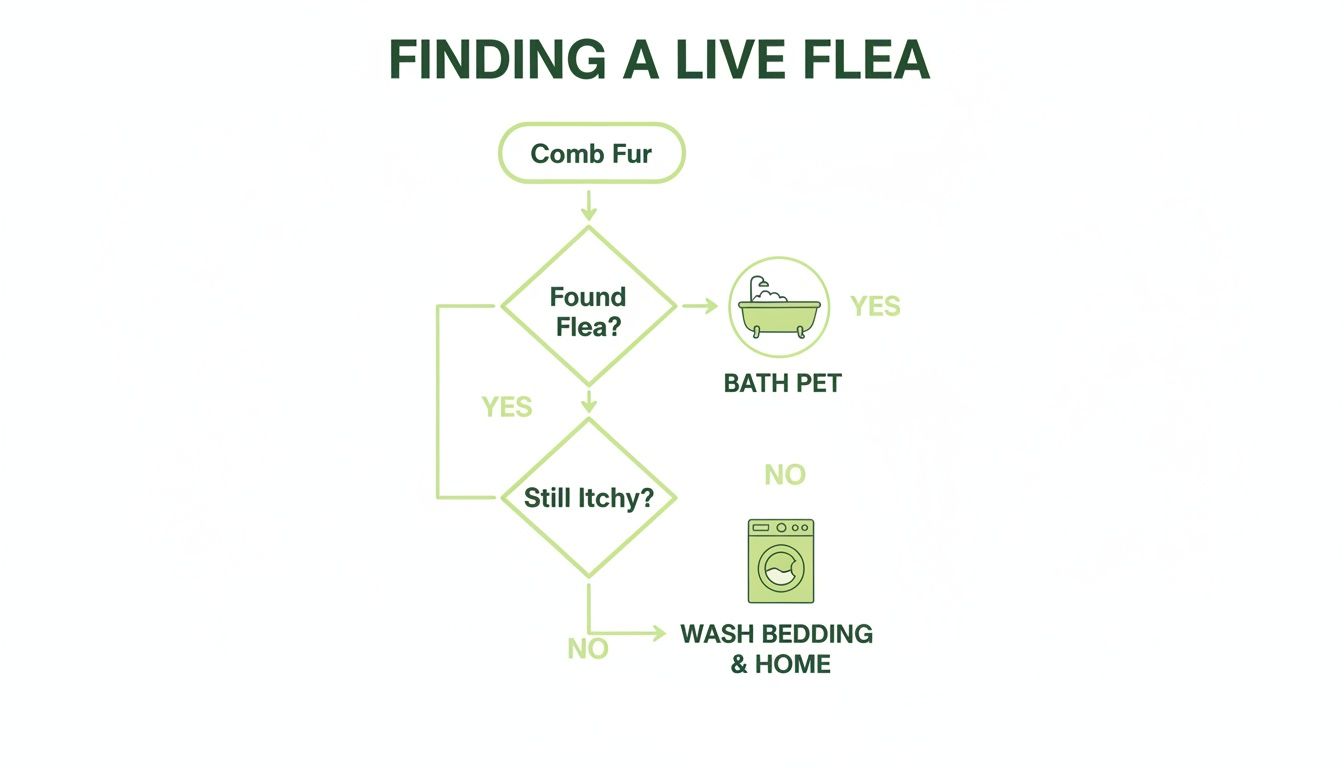
As you can see, whether you spot a live flea or just the evidence they leave behind, the next steps always involve cleaning your cat and tackling their environment.
Breaking Down Your Treatment Options
Flea treatments fall into three main categories. Understanding the pros and cons of each will help you make a smart choice.
- Topical (Spot-On) Treatments: These are liquid tubes applied to the skin between the shoulder blades. They are highly effective, kill fleas on contact, and offer a full month of protection. The main downside is potential skin irritation for sensitive cats.
- Oral Medications (Pills or Chews): Given by mouth, these work from the inside out. When a flea bites your cat, it ingests the medication and dies. This is a great choice for cats with skin issues or if you have small children who shouldn't touch topical treatments. The challenge can be getting a picky cat to take it.
- Flea Collars: Modern flea collars have improved significantly and can provide protection for up to eight months. They release active ingredients that kill and repel fleas. It is absolutely essential to choose one with a breakaway safety feature to prevent a choking hazard.
A huge mistake people make is grabbing any product off the shelf. You must always use a product made specifically for cats. Some dog treatments contain permethrin, an ingredient that is extremely toxic to felines.
Real-World Scenarios and Making the Right Call
Let me give you a real-world example. I once had a cat who developed an angry, red patch of skin right where I’d applied a spot-on treatment. It turned out he was sensitive to one of the ingredients. We switched him over to an oral tablet, and the problem vanished overnight. No more fleas, and no more irritated skin.
Your cat’s individual situation matters. A kitten under eight weeks, a pregnant cat, or a cat with a chronic illness has different needs than a healthy adult.
Consider your cat’s temperament. If applying a topical treatment is a monthly struggle, an oral chew hidden in a treat might be less stressful for both of you. If you have multiple cats who groom each other, an oral medication is a safer bet to prevent them from ingesting a spot-on product.
If you’re planning a bath to get some immediate relief, you can also check out our guide to the best flea shampoo options for cats.
The best course of action is to consult your veterinarian. They know your cat’s health history and can recommend a treatment that's perfectly suited to your pet, getting you on the fastest and safest path to being flea-free.
Building a Flea-Proof Home Environment

Treating your cat is the first step, but it’s only a small piece of the puzzle. The adult fleas on your pet make up just 5% of the total infestation.
The other 95% is a massive, hidden population of eggs, larvae, and pupae lurking in your carpets, furniture, and bedding.
This is why just treating your cat often fails. You kill the adult fleas, but a new generation hatches from the environment and jumps right back on. To win, you must fight a two-front war: on your cat and in your home.
Understand Your Enemy: The Flea Life Cycle
To get the upper hand, you need to know how these pests operate. A single female flea can lay up to 50 eggs a day—that's about 2,000 over her lifetime.
Under ideal conditions, their entire life cycle can complete in as little as 12-14 days, which is how a small problem explodes into a massive infestation. If you want to dive deeper, you can explore the flea life cycle from the Merck Vet Manual.
The toughest stage to kill is the pupae. Wrapped in a sticky, tough cocoon, they're resistant to most insecticides. They can stay dormant for months, just waiting for the right moment to emerge as hungry adults.
Persistence is key. Your goal is to break that cycle by relentlessly attacking every single stage of flea development in your home.
Your Home Defense Action Plan
Making your home flea-proof is about building consistent cleaning habits, not just one frantic deep clean.
Your vacuum cleaner is your number one weapon. Regular, thorough vacuuming can remove up to 96% of adult fleas plus a huge number of eggs and larvae from your carpets.
- Hit the Hotspots: Focus on places your cat loves to hang out: napping spots, under furniture, along baseboards, and deep within carpet fibers.
- Use Attachments: Use the crevice tool to get into cracks in hardwood floors, along the edges of every room, and between sofa cushions.
- Dispose of the Evidence: This is critical. As soon as you finish, remove the vacuum bag, seal it in a plastic trash bag, and get it into an outside bin. For bagless vacuums, empty the canister outside and wash it thoroughly.
Winning the War with Your Washer and Dryer
Beyond the vacuum, your laundry room is your next line of defense. Any soft surface your cat touches is a potential flea nursery.
This means you’ll want to wash:
- Your cat’s bedding and any blankets they use.
- Your own bedding, especially if your cat sleeps with you.
- Pillows, throw rugs, and even curtains in rooms your cat frequents.
Wash everything you can in the hottest water setting the fabric will allow, then tumble dry on high heat. Heat is a fantastic killer of all flea life stages.
This idea of a clean environment extends to every part of your cat's routine. For instance, a clean litter box is essential for hygiene and helps you keep an eye on your cat's health—a topic we cover in our comprehensive cat litter review.
Finally, fleas thrive in warm, humid places. Keeping your home's humidity below 50% makes it much less hospitable for them. A dehumidifier, especially in damp areas like a basement, can be a powerful addition to your defense strategy.
Why Fleas Are More Than Just an Itch
Thinking fleas are just a minor annoyance is a bit like assuming a small roof leak will fix itself. It starts as a tiny problem but can quickly spiral into serious damage for your cat, and honestly, for your whole household.
That little itch you notice can escalate into some pretty significant health issues before you know it.
One of the most common problems is flea allergy dermatitis (FAD). This isn't just regular itching; it's a full-blown allergic reaction to flea saliva. A single bite can trigger a cycle of frantic scratching and biting, often leading to bald patches and raw, painful skin that's wide open to infection.
But the trouble doesn't stop at skin irritation. Fleas are sneaky parasites with a few more tricks up their sleeves.
When to See a Veterinarian
For kittens, senior cats, or any cat with a chronic health condition, a flea infestation is a genuine emergency. Fleas feed on blood, and a heavy infestation on a small or frail cat can lead to anemia. This is a dangerous drop in red blood cells that can absolutely be life-threatening.
Fleas are also the primary carriers of tapeworms. When a cat grooms itself and swallows an infected flea, they can develop an internal parasite infection.
Don't wait if you see these signs: Pale gums, unusual weakness, lethargy, or what looks like tiny grains of rice around your cat's tail (those are tapeworm segments). These are major red flags that mean you need to call your vet right away.
Still Have Questions About Cat Fleas?
Even when you know what to look for, dealing with fleas can bring up a lot of questions. It's totally normal. Let’s tackle some of the most common things cat owners worry about when they suspect a flea problem.
Can My Indoor-Only Cat Really Get Fleas?
Yes, absolutely. This is one of the biggest myths. Fleas are expert hitchhikers and can easily enter your home on your clothes, a guest's pant leg, or another pet. They don't need a formal invitation to find their way to your cat. They can even get through window screens or small gaps under doors.
Will I Actually See Fleas On My Cat?
You might, but it’s harder than you think. Adult fleas are tiny—only 1-3 millimeters long—and they move incredibly fast. The second you part your cat’s fur, they dart away into the dense coat.
You are far more likely to find "flea dirt" (flea feces). That’s why the white paper test is one of the most reliable ways to get a definitive answer.
Don't assume you're in the clear just because you don't see a live flea. If your cat is scratching obsessively or you've found flea dirt, you have a flea problem.
Do Cat Fleas Bite People, Too?
Unfortunately, yes. While they prefer cats, they aren't picky when hungry. If a cat isn't available, or if the infestation is severe, they will bite humans. You'll usually notice small, red, itchy bumps, typically around your ankles and lower legs.
How Long Will It Take To Finally Get Rid Of Them?
Getting rid of a flea infestation is a marathon, not a sprint. Because of their stubborn life cycle, you must be consistent with treatment for at least three months to completely break the cycle.
Even the best products kill adult fleas, but new ones will keep hatching from eggs and pupae hidden in your home for weeks. Consistent treatment for your cat and diligent cleaning of your home are the only ways to win.
For all your pet care needs, from effective grooming tools to comfortable travel carriers, trust Pet Magasin to provide high-quality supplies for the furry members of your family. Find everything you need at https://www.petmagasin.com.

Leave a comment