
A Complete Guide to Cat Tail Meaning

You might think decoding your cat's tail is like learning a foreign language, but it's much more straightforward. That tail is a living barometer of their emotional state, telling you everything from "I'm happy to see you!" to "Back off, now." Understanding these signals allows you to respond appropriately and build a stronger bond.
Think of it as their most honest form of communication. An upright, happy tail is a clear sign of confidence you can encourage with playtime. A tail tucked tightly between their legs signals fear, telling you it's time to give them space and reduce stress.
Cracking Your Cat's Secret Code
A cat's tail is more than a tool for balance—it’s a sophisticated piece of signaling equipment. Learning to read these signals is one of the most practical things you can do to build a deeper, more trusting bond with your feline friend.
When you understand what they're "saying," you can respond in a way that makes them feel safe and understood. This means knowing when to offer a gentle scratch behind the ears and, just as importantly, when to give them the space they are clearly asking for.
This guide provides actionable insights you can use immediately. Once you start paying attention to the flicks, twitches, and curls, you'll become more attuned to your cat's inner world. You'll go from being just an owner to a companion who understands what your cat is trying to tell you, without a single sound.
This quick diagram connects some of the most common tail signals to their core emotions.
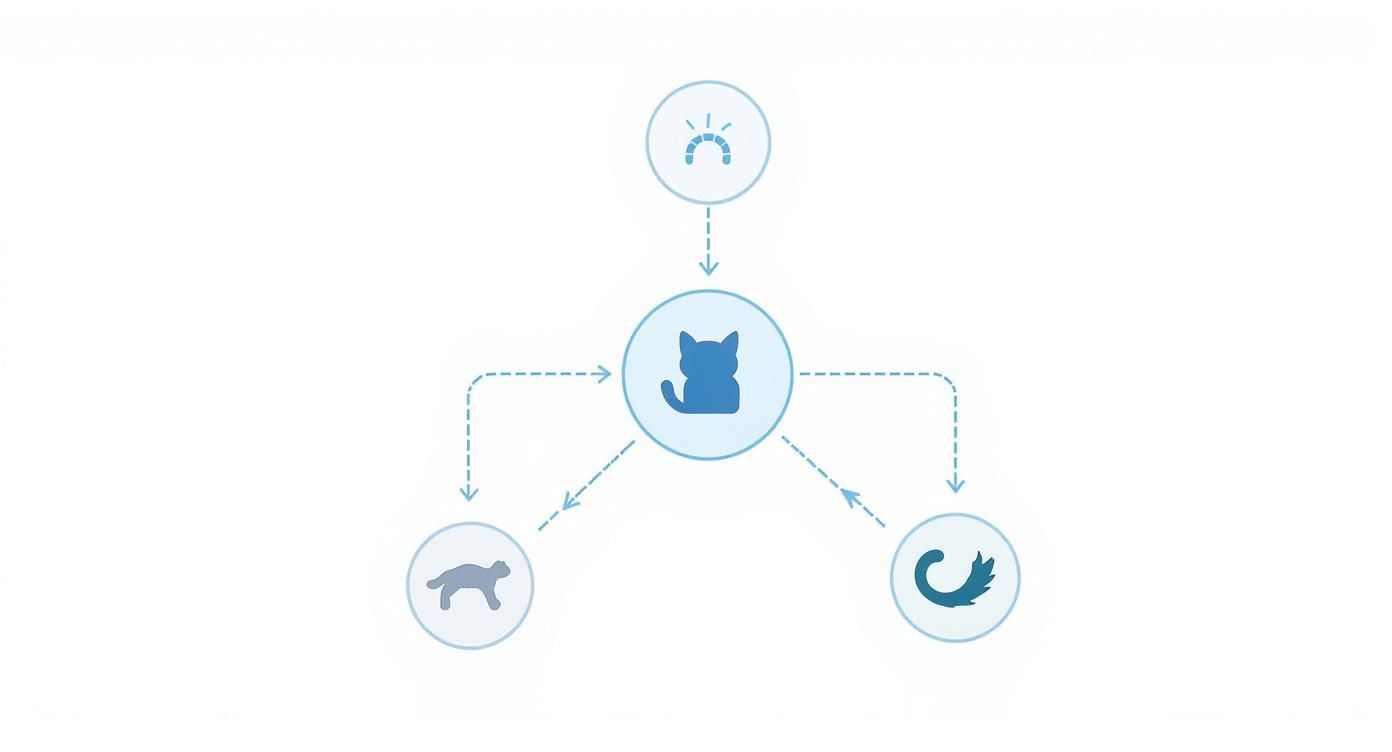
As you can see, a single body part can speak volumes, clearly linking tail positions to feelings like happiness, fear, and aggression.
Reading Tails Through The Ages
People have been trying to figure out what cats are thinking for thousands of years. In ancient Egypt, where cats were practically worshiped, their tail positions were often interpreted as messages from the gods. You can find carvings from as far back as the 12th Dynasty (circa 1991–1802 BCE) showing cats with those confident, upright tails, which was seen as a sign of divine favor.
Fast forward to today, and not much has changed. Modern surveys show that 87% of cat owners immediately connect a high, upright tail with a happy cat.
This ability to read your cat's mood is vital during stressful events, like a trip to the vet or a long car ride. Knowing your cat is feeling anxious ahead of time lets you prepare properly. On that note, if you travel with your pet, you might find our guide on airline-approved cat carriers helpful for making those journeys a bit smoother.
The tail is a tremendous resource for us in understanding feline emotion. Paying attention to it allows you to proactively recognize signs of discomfort long before other symptoms appear.
To make things even easier, here's a quick cheat sheet you can reference.
Quick Guide to Cat Tail Positions
This table breaks down the most common tail positions, what they generally mean, and how you can respond.
| Tail Position | Common Meaning | Owner's Actionable Insight |
|---|---|---|
| High, Upright | Confident, happy, friendly, and approachable. | This is a great time for interaction! Offer pets, playtime, or treats. |
| Puffed Up ("Bottlebrush") | Extremely fearful or agitated; trying to look bigger to ward off a threat. | Do not approach. Remove the stressor if possible and give your cat space. |
| Low and Tucked | Anxious, insecure, or submissive. A sign of fear or stress. | Speak in a calm voice. Avoid sudden movements. Let them come to you. |
| Wrapped Around Body/Paws | Content and relaxed, but can also indicate nervousness. | Look at other cues. If their body is relaxed, they're likely just chilling. |
| Question Mark Shape | Playful, curious, and friendly. A very positive sign! | A perfect invitation to play! Grab their favorite feather wand or laser pointer. |
| Twitching or Thrashing | Agitated, irritated, or overly stimulated. A warning sign. | Stop whatever you're doing (e.g., petting) and give them space to calm down. |
Remember, context is everything. Always look at the tail in combination with your cat's ears, posture, and vocalizations to get the full picture of what they're feeling.
The High Tail: A Classic Sign of a Happy Cat
When your cat strolls over to you with its tail held straight up, that’s the feline equivalent of a big, happy wave. This is the most positive and easy-to-read signal in their body language playbook. It’s an open invitation, a sign of confidence, and a clear message that they are happy, comfortable, and pleased to see you.
Think of that upright tail as a welcoming flag. A cat in this state is feeling social and approachable. They aren't threatened by their surroundings and are often looking for positive attention—whether that's a gentle chin scratch, a few kind words, or their favorite snack. It's a behavior they learn as kittens to greet their mother and let her know they're safe.
Reading the Friendly Variations
Not all high tails are stick-straight. A slight curve at the tip, creating a "question mark tail," adds a dash of playfulness and curiosity to their happy greeting. This is your cat explicitly asking you to come and interact.
When you see this, it’s the perfect green light to engage:
- Start a Play Session: This is your cat saying, "I'm in the mood for some fun!" Grab the feather wand or laser pointer and get a game going.
- Offer Affection: A cat with this tail posture is almost always receptive to petting, snuggles, or a good scratch behind the ears.
- Give a Treat: Reinforce this positive, social behavior with a tasty reward to encourage more of it.
This posture isn't just a mood ring; it's a core part of how cats show good manners.
When a cat holds its tail upright with a curve at the tip, experts call it a "pro-social behavior." This gesture is a deliberate and friendly invitation for interaction, showing a high level of trust and comfort with you.
A Universal Sign of Friendship
This high-tail greeting isn't just for their favorite humans. Cats use this exact same signal with each other to show they come in peace. It’s a non-threatening posture that immediately lowers any tension and opens the door for friendly sniffing, head-butting, or even mutual grooming.
Behavioral studies have locked this down as a key part of feline communication. In fact, research shows that the tail-up position was used in 72% of friendly approaches between cats, making it the most common sign of good intentions. Interestingly, this friendly signal was spotted more often in female cats than in males. You can dive into the fascinating details and learn more about these findings on cat social interactions.
Your action is simple: when you see this friendly gesture, respond positively. By doing so, you strengthen your bond and make your cat feel even more safe and happy in your home. It’s a simple but incredibly powerful way to communicate back in a language they already understand.
Low and Tucked Tails: The Signs of Fear and Anxiety
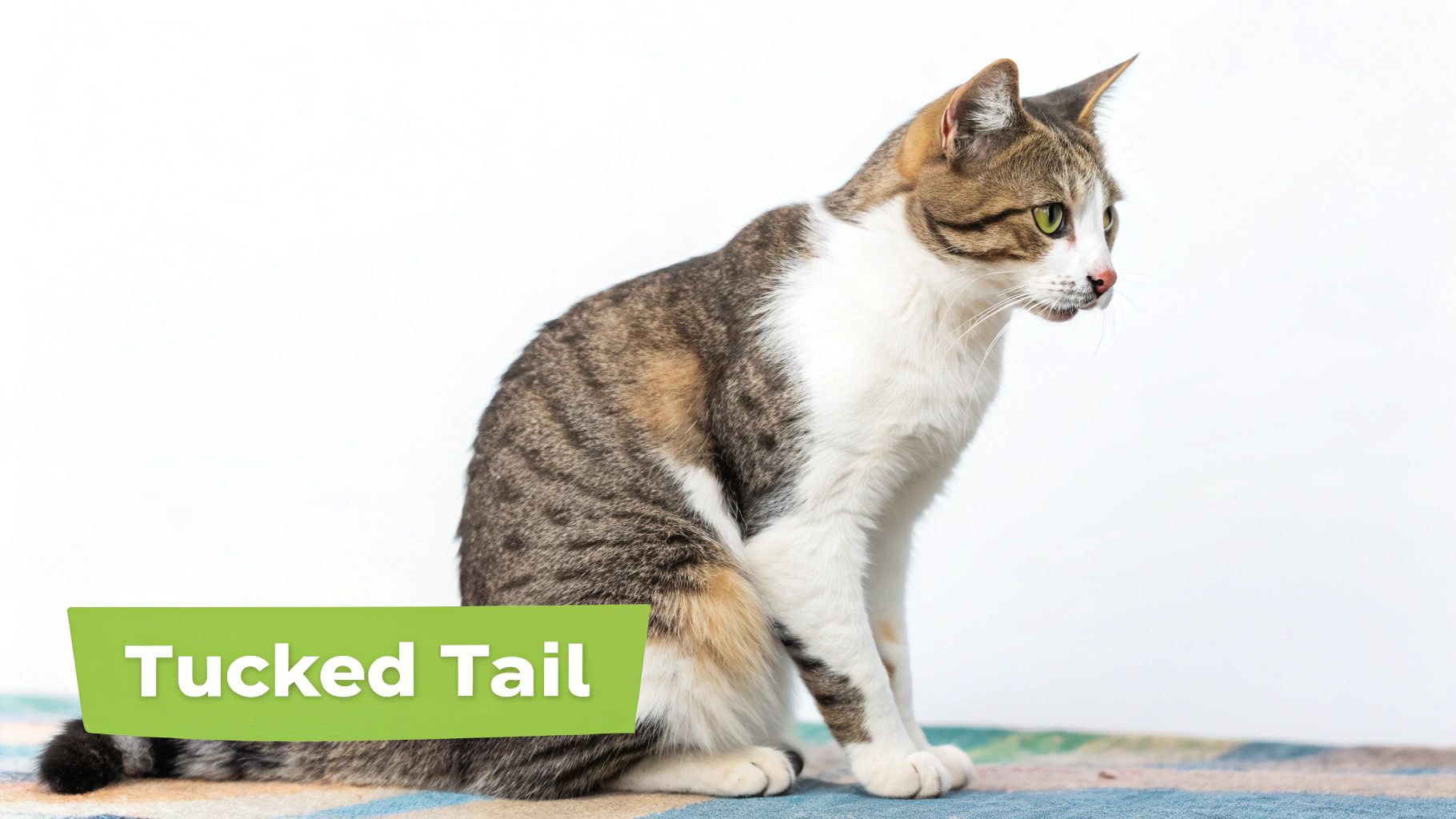
While a high tail is an open invitation, a low or tucked tail sends the opposite message. When a cat drops its tail, it's a clear signal of fear, anxiety, or submission. It’s an instinctual move to make themselves look smaller and less threatening to whatever is scaring them, whether it's a loud noise, a new person, or another animal.
Understanding this posture is vital for building trust. A tail held low and roughly parallel to the ground means the cat is uneasy. But when that tail gets tucked tightly between their legs, it signals a much higher level of fear. This cat is trying to become invisible to avoid confrontation.

How to Respond to a Fearful Cat
When you spot these signs, your reaction is critical. Forcing an interaction will only increase their stress and can lead to defensive swipes or bites. The goal is to reduce the tension and show them they're safe.
Here are actionable steps you can take immediately:
- Avoid Direct Eye Contact: In the cat world, a direct stare is a challenge. Look away or offer a slow, gentle blink to signal that you are not a threat.
- Speak in a Soft Voice: Use a calm, low, and soothing tone. Loud or high-pitched sounds can be jarring to an already nervous cat.
- Provide an Escape Route: Make sure they have a clear path to a safe space, like another room or under the bed. A cornered cat is a stressed cat.
Forcing interaction with a fearful cat is counterproductive. The best approach is to create a safe, low-pressure environment and allow the cat to calm down and approach you on their own terms. This builds trust and reinforces that you are a source of security, not a threat.
Creating a Sense of Security
Recognizing what a low or tucked tail means empowers you to be a source of comfort. Never try to pick up, cuddle, or restrain a cat that's showing these clear signs of fear. Your job is to let them set the pace.
By moving slowly, keeping your movements non-threatening, and giving them the space they need, you're speaking their language. This patient approach teaches your cat that their home is a secure place and that you are a reliable protector, which strengthens your bond and prevents unnecessary stress.
Twitching, Thumping, and Flicking Tails
While a happy cat's tail is easy to read, faster movements require more careful interpretation. Quick twitches, sharp flicks, and loud thumps reveal your cat’s inner drama. Misreading these signals is how a peaceful petting session can turn into nursing a sudden scratch.
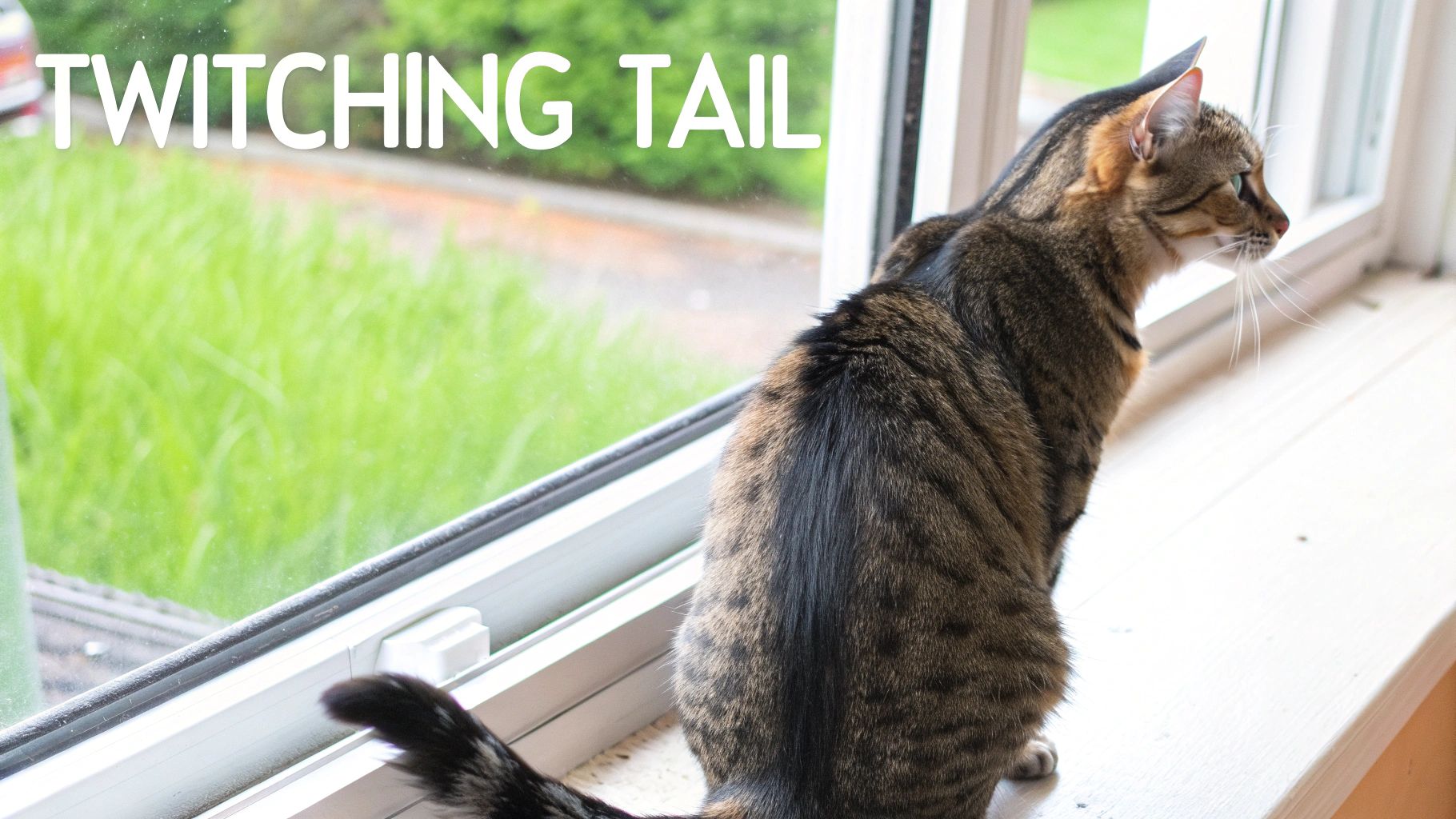
Think of these movements as a countdown. A gentle, slow twitch at the tip of the tail might just mean your cat is focused on something, like a bird outside the window. This is pure concentration, not necessarily a bad mood.
But when that subtle twitch turns into a full-on, whipping flick or a heavy thump-thump-thump on the floor, that countdown is nearing its end. Your cat is now broadcasting its growing annoyance, frustration, or a general feeling of "I've had enough."
From Focus to Frustration
Knowing the difference between these movements is essential for respecting your cat’s boundaries. Let's say you're stroking your cat, and everything seems fine. Then you feel it—that rhythmic thumping of their tail against the couch. This isn't a happy wag; it's their firm way of saying, "Okay, we're done here."
Ignoring this warning is a common reason owners get swatted or nipped, often complaining it came "out of nowhere." It didn't. Your cat gave you a clear warning that was missed in translation. Research backs this up, too. One study noted that sharp tail flicks happened in 18% of cat interactions they watched, often right before a more aggressive move. You can discover more insights about cat communication research online to see just how consistent these signals are.
A thumping or lashing tail is what behavior experts call a "distance-increasing" signal. Your cat is literally trying to tell you, or another animal, to back off and give them some room.
Actionable Insight: When to Give Space
Learning to see that shift from a relaxed tail to a tense, moving one is a game-changer. It helps you head off stressful situations and shows your cat you're listening, which builds trust.
Here’s your action plan for speedy tail signals:
- Tip Twitching: Your cat is likely just watching a toy or "cat TV" out the window. This is normal focus. Let them be unless they seem to be getting wound up.
- Full Tail Flicking or Whipping: This is serious irritation. Stop whatever you're doing—petting, playing, etc.—and remove the source of their annoyance if you can.
- Thumping on a Surface: A definite sign of being overstimulated or angry. The best action is to give them space and let them cool down on their own schedule.
When you pay attention to these cues, you become a much better friend to your cat. You understand their boundaries before they have to enforce them, keeping your time together positive and building a bond that will last a lifetime.
Reading the Whole Cat, Not Just the Tail
A cat’s tail is a fantastic emotional barometer, but trying to understand their mood from the tail alone is like reading the last page of a book and expecting to know the whole story. To truly get what your cat is feeling, you must look at the entire picture. The tail is just one piece of the puzzle, and its meaning can change completely depending on the other signals they’re sending.
For example, a high tail usually means a happy cat. But if that same high tail is puffed up like a bottlebrush, their ears are pinned flat, and you hear a low hiss, the message is no longer "Come pet me!" It's "Back off, right now." Observing the whole cat is essential to getting the message right.
The Full Body Language Checklist
To become fluent in "cat," you need to pull together information from a few different sources. The next time you see your cat’s tail doing something interesting, run through this quick mental checklist to get the full story.
- Ears: Are they pointed forward (curious/happy), swiveling (listening), or flattened back (scared/angry)?
- Eyes: Are their pupils a normal size, or are they wide and dilated (fear/excitement)? A slow, gentle blink is a huge sign of trust you can return to them.
- Whiskers: Are they relaxed and sideways (calm), bunched forward (focused), or pulled back flat against their cheeks (defensive/afraid)?
- Posture: Is their body relaxed and loose, or tense and rigid? An arched back is a defensive pose, while a low crouch could mean they're about to pounce on a toy or are feeling insecure.
It’s also important to consider your cat’s environment. A cat that feels safe and comfortable is much more likely to show relaxed, happy body language. For example, providing comfortable resting spots for large cats can make a world of difference in their overall sense of well-being.
The most accurate way to interpret your cat's mood is to view their tail, ears, eyes, and posture as a complete sentence. Each part adds crucial context, and together they tell the whole story.
Learning to read all these signals together helps you avoid misunderstandings that could stress out your cat or earn you a scratch. It elevates your relationship from simply coexisting to one of real, mutual understanding. This can even help with daily care—a happy cat is more likely to be content with their litter box setup, and you can learn more about that in this comprehensive cat litter review.
When Your Cat's Tail Signals a Health Problem
While your cat’s tail is usually a mood barometer, it can sometimes be a red flag for a health issue. Spotting the difference between a mood swing and a medical problem is a critical part of being a responsible owner.
If you notice a sudden, dramatic change in your cat's usual tail behavior that you can't explain, it's time to pay closer attention and consider consulting a vet.
For example, a tail that suddenly goes limp, droops constantly, or seems unresponsive could point to nerve damage or an injury near the base of the spine—a condition sometimes called limber tail syndrome. This isn't a "wait and see" situation; it requires immediate veterinary attention to prevent permanent damage. Don't dismiss a lifeless tail as just a bad mood.
Key Warning Signs to Watch For
Beyond an obvious injury, other tail behaviors can signal that something is wrong. Your action should be to observe closely and call your vet if these behaviors persist.
- Compulsive Tail Chasing or Biting: While kittens play, an adult cat obsessively attacking its own tail is a cause for concern. This could signal neurological issues, high stress, or painful skin allergies from fleas. Using a good flea treatment is a great preventative step, and you can learn more about your options by checking out the best flea shampoo for cats.
- Lack of Normal Movement: If your normally expressive cat suddenly stops using its tail to communicate, take note. Cats are masters at hiding pain, and a still, quiet tail can be one of the first subtle clues that they're not feeling well.
- Constant Twitching or Tremors: A gentle twitch is normal. But persistent, uncontrollable tremors in the tail—especially with skin rippling along their back—could be a symptom of feline hyperesthesia syndrome, a neurological disorder that causes extreme skin sensitivity.
Any abrupt and lasting change in your cat's tail posture or movement is your cue to consult a veterinarian. It's always better to rule out a medical issue than to wait until a small problem becomes a serious one.
Ultimately, your cat’s overall health is reflected in its behavior. While we're focused on tails here, it's just as important to be aware of other signs of wellness, like the common symptoms of worms in cats. The biggest takeaway is to know what’s normal for your cat and to act quickly when you notice something is off.
Got More Questions About Your Cat's Tail?
Even after learning the basics, some tail behaviors can still be puzzling. Let's tackle some of the most common questions cat owners have, so you can get a clearer picture of what your feline friend is trying to tell you.
Why Does My Cat Wrap Its Tail Around My Legs?
This is a cat hug. When your cat winds its tail around your leg or arm, it’s a massive sign of affection and trust. They're essentially claiming you as one of their own, marking you as a cherished part of their inner circle.
Your Action: Acknowledge this special moment with a gentle scratch behind the ears or a few soft words. This reinforces your bond.
What Does a Puffed-Up Cat Tail Mean?
A "bottlebrush" tail is a dramatic signal that your cat is on the defensive. Through an instinct called piloerection, your cat is trying to make itself look larger and more intimidating to a perceived threat. This is usually accompanied by an arched back and hissing.
When you see that puffed-up tail, know that your cat is feeling seriously scared or threatened. Your only job is to de-escalate. Figure out the stressor, remove it if you can, and give your cat tons of space.
Do not try to touch or comfort a cat in this state. They are on high alert and might lash out with a scratch or bite out of fear.
Is My Cat Wagging Its Tail Like a Dog?
No, and this is a major source of misunderstanding. While a dog's wagging tail usually means happiness, a cat's tail tells a different story.
A fast, thumping tail almost always signals irritation, overstimulation, or frustration. They could be annoyed by petting, focused on a toy they can't reach, or preparing to pounce. A slow, lazy swish can mean contentment, but a sharp, whip-like wag is a clear warning to back off.
How Do Cats Without Tails Communicate?
Cats with naturally short tails or no tails at all, like the Manx or Japanese Bobtail, adapt by "speaking" more loudly with their other body parts. Without a long tail, they become masters of body language.
If you have one of these unique breeds, you'll need to pay closer attention to their other signals:
- Ear Position: Are their ears pointed forward in curiosity, flattened in anger, or swiveling to catch a sound?
- Eye Contact: Are they giving you a trusting "slow blink" or are their eyes wide with fear?
- Vocalizations: You'll learn the difference between their meows, purrs, and chirps and what each one means.
Their communication is just as rich. Your job is to look at the whole cat, not just the tail, to get the full story.
At Pet Magasin, we believe that understanding your pet is the key to a happy home. For more tips on pet care and to explore our range of high-quality products designed for comfort and safety, visit us at https://www.petmagasin.com.

Leave a comment