
A Step-by-Step Guide to Clipping Cat Claws Calmly and Safely

Clipping your cat's claws is a simple but vital task that directly impacts their well-being. A quick trim every 2-4 weeks prevents overgrown nails from painfully curling into their paw pads, causing mobility issues, and leaving accidental scratches on you and your furniture. Mastering this routine is a practical way to boost your cat's comfort and health.
Why Clipping Your Cat's Claws Is a Game Changer

For indoor cats, regular nail trims are non-negotiable. Unlike outdoor cats who naturally file their claws on rough terrain, indoor pets rely on us for maintenance. Without it, their claws continuously grow, leading to painful problems.
When claws get too long, they curve into the paw pads, causing pain, infection, and difficulty walking. Long nails also snag easily on carpets or blankets, which can lead to a painful tear or break. Vets increasingly emphasize regular claw clipping as a fundamental part of a cat's healthcare.
Here’s a quick breakdown of the actionable benefits.
Quick Look: The Benefits of Regular Claw Trims
| Benefit Category | Specific Advantage |
|---|---|
| Cat Health & Comfort | Prevents painful overgrown claws that can grow into paw pads. |
| Cat Safety | Reduces the risk of nails getting snagged and torn on carpets or furniture. |
| Home & Family | Protects your skin from accidental scratches and saves furniture from shredding. |
| Early Detection | Gives you a chance to inspect paws for cuts, swelling, or other issues. |
| Bonding | Creates a routine of trust and positive handling between you and your cat. |
Making claw clipping a calm, predictable event is a direct investment in your cat's long-term health and strengthens your role as their trusted caretaker.
More Than Just Preventing Pain
The benefits of keeping claws in check extend beyond physical comfort. Regular trims mean fewer painful scratches during play and less damage to your home. The process itself offers unique advantages:
- Spot Problems Early: Handling your cat's paws regularly allows you to notice issues like swelling, cuts, or foreign objects before they become serious.
- Build a Stronger Bond: With patience and rewards, nail trimming becomes a positive, trust-building experience rather than a struggle.
- Round Out Their Grooming: Nail care is a key part of overall hygiene. Complement it by learning about the best cat hair brush to complete your grooming toolkit.
Veterinary data confirms this. Shelters frequently see injuries, especially in older cats, caused by overgrown claws. Given that 60–70% of pet cats in many areas are indoor-only, a trim every two to four weeks is the recommended standard of care.
Choosing the Right Tools for a Calm Nail Trim
Before you begin, assemble the right tools. Using dull or improper equipment can turn a simple trim into a painful struggle, creating a negative association for your cat. The goal is a clean, quick snip, and that starts with the right toolkit.
The most critical item is a pair of sharp, high-quality nail clippers designed specifically for cats. Never use human clippers; their flat blades crush a cat's round claw, causing pain and potential splintering.
Scissor vs Guillotine Clippers
You have two main styles to choose from. The best option is whichever gives you the most confidence and control.
- Scissor-Style Clippers: These look like small scissors with curved notches in the blades to hold the nail securely. Many find them intuitive, as they provide a clear view for trimming just the tip.
- Guillotine-Style Clippers: This design uses a single blade that slides across a hole where you place the nail. They deliver a quick, clean cut, but the design can sometimes make it harder to see precisely where the blade will land.
The most important feature is the sharpness of the blade. A sharp blade slices cleanly. A dull one crushes the nail, causing pain and potential damage. For a complete comparison, see our guide to the best nail clippers for cats.
Your Essential Nail Trimming Toolkit
Beyond clippers, have these items ready to make the process smooth and safe. Assembling your kit beforehand keeps the procedure calm and efficient.
- Styptic Powder or Cornstarch: This is your safety net. If you accidentally trim too close to the quick (the pink part of the nail), apply a pinch of styptic powder with firm pressure to stop the bleeding instantly.
- High-Value Treats: Use special rewards, not everyday kibble. Small pieces of tuna, chicken, or a favorite lickable treat help transform nail trimming from a chore into a positive event.
- A Comfortable Towel: A soft towel provides comfort and can be used to gently swaddle a nervous cat, helping them feel secure without forceful restraint.
Properly clipping cat claws is a significant part of their welfare. As shelter staff note, good nail care is “of paramount interest” because well-maintained cats are calmer, less destructive, and more adoptable. At Pet Magasin, we believe pairing quality tools with clear guidance empowers owners to care for their cat’s claws confidently. You can learn more about how nail care impacts shelter outcomes and improves a cat's quality of life.
Let's dispel the myth that clipping cat claws must be a wrestling match. The secret to a calm trim is patience, positive reinforcement, and a step-by-step approach. Aim for progress, not perfection.
The foundation for success begins long before you pick up the clippers. Start by getting your cat comfortable with having their paws touched. Choose a time when they are relaxed and sleepy. Gently touch a paw for just a second, then immediately reward them with a high-value treat.
Repeat this daily, gradually increasing the duration of the touch. Work your way up from a brief touch to holding the paw, and finally to gently pressing a paw pad to extend a claw. Reward every small step with a treat and calm praise to build a positive association.
This visual guide shows the essential tools you'll need.
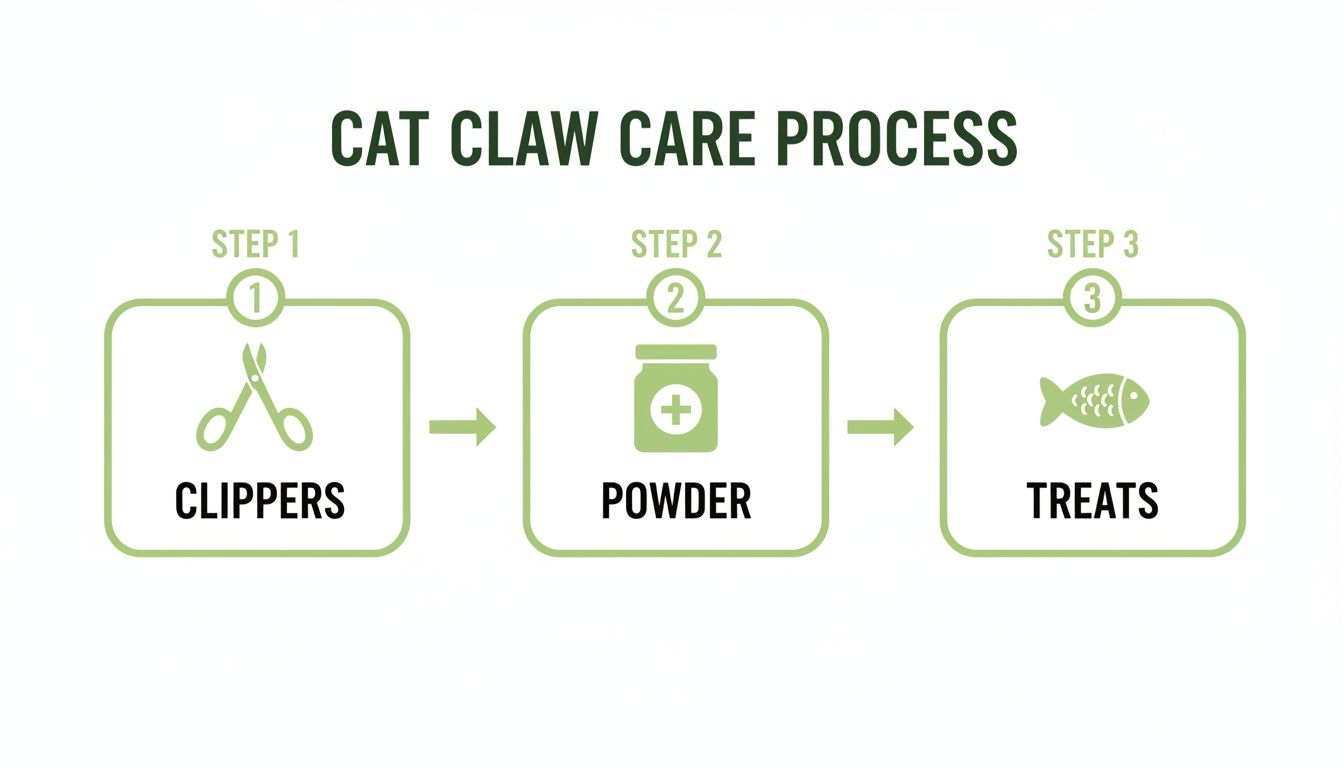
This serves as a great reminder that success depends on a cycle of preparation, a careful trim, and a positive reward to set the stage for next time.
Finding Your Clipping Rhythm
When you and your cat are ready, timing is crucial. Avoid trying to trim the claws of a cat that is playful or agitated. Wait until they are quiet and settled. Gather your tools and position your cat comfortably, often on your lap facing away from you.
Hold one paw gently but securely. Press the pad to extend the claw and identify the quick—the pinkish area inside the nail containing nerves and blood vessels. Your goal is to trim only the sharp, white tip, staying a safe distance away from the quick.
Clipping just the very tip is always the safest approach. If you are unsure, it's better to trim too little than too much. You can always trim more later.
For your first few attempts, aim to clip just one or two claws. Immediately follow up with abundant praise and treats, then let your cat go. This teaches them that trims are brief, predictable, and rewarding. As they become more comfortable, you can gradually increase the number of claws you trim in a single session.
Gentle Holding Techniques for Squirmy Cats
For cats that are naturally wiggly, a secure yet gentle hold is essential for safety. The key is to make your cat feel secure, not trapped.
- The Lap Hold: Sit on the floor or a chair and place your cat in your lap, with their back against your body. This position feels less confrontational and more secure for most cats.
- The 'Purrito' Wrap: For a very anxious cat, swaddling them snugly in a thick towel can be incredibly calming. Leave one paw exposed for trimming, then gently switch to another. This technique prevents struggling and protects both you and your cat.
Remember, this is a marathon, not a sprint. If you notice signs of stress—a twitching tail, growling, or attempts to flee—stop immediately. End the session with a treat and try again another day. Patience is your most effective tool.
So, How Often Should You Actually Trim Your Cat's Nails?
The common advice is to trim your cat's claws every two to four weeks, but this is just a guideline. The ideal schedule depends on your individual cat's age, lifestyle, and nail growth rate.
A senior cat who spends most of the day napping will need more frequent trims than an active kitten who naturally wears down their claws through play. By observing your cat, you can shift from a generic schedule to proactive, personalized care.
What Determines Your Cat's Clipping Schedule?
To create an effective routine, pay attention to these factors:
- Age and Activity: Young, active cats often wear down their back claws but may need their front claws trimmed regularly. Senior cats are less active and typically require more frequent trims on all paws to prevent their claws from curling into the pads.
- Scratching Habits: A cat who regularly uses a sisal scratching post is actively shedding the outer sheath of their claws, keeping them shorter. A cat who ignores their scratching post relies entirely on you.
- Their Environment: An indoor-only cat living on soft surfaces gets almost no natural filing. Their trimming schedule will be more frequent than that of a cat with access to a "catio" with wood or other rough surfaces.
A Little Science on Claw Growth
Recent research confirms that front claws grow faster than back claws. A 2024 study of indoor cats found the average daily growth rate was about 0.13 mm for front claws and only 0.08 mm for hind claws.
Practically, this means a front claw can grow about 4 mm in a month, while a back claw grows roughly 2.4 mm. Over a year, an untrimmed front claw could grow over 45 mm—long enough to cause painful splitting or pierce the paw pad. You can explore the findings on feline claw growth to understand the science behind this essential grooming task.
You don't need a ruler, however. Just use this guide.
Cat Claw Clipping Frequency Guide
Use this table to build a custom trimming schedule that fits your cat's specific profile.
| Cat Profile | Recommended Clipping Interval | Key Considerations |
|---|---|---|
| Young Kitten (Under 1 year) | Every 1-2 Weeks | Claws are fine but grow quickly. Frequent, gentle handling builds a positive habit for life. |
| Active Adult Cat (1-7 years) | Every 2-3 Weeks | Check front claws more often. They are likely wearing down their back claws through climbing and playing. |
| Indoor-Only Adult Cat | Every 2 Weeks | Soft surfaces provide no natural filing. They are completely reliant on you for maintenance. |
| Senior Cat (8+ years) | Every 1-2 Weeks | Less activity means less natural wear. Claws can become thick, brittle, and prone to overgrowth. |
| Outdoor/Catio Access Cat | Every 3-4 Weeks | Climbing on rough surfaces helps maintain claw length naturally. Still, a regular check-in is a good idea. |
While a schedule is helpful, direct observation is best.
An easy way to know it’s time for a trim is to listen. If you hear a click-clack sound when your cat walks on a hard floor, their nails are too long.
Check your cat’s paws weekly during cuddle time. A quick inspection will help you spot sharp tips and establish a rhythm that keeps your cat comfortable and healthy.
Handling Common Problems and Anxious Cats

Even with careful preparation, problems can arise. The key isn't perfection but knowing how to calmly and effectively manage issues like an accidental nick or a stressed cat.
The most common fear is cutting the quick. If this happens, do not panic. Your cat will sense your stress, making the situation worse. If you see a drop of blood, calmly reach for your styptic powder. Apply a small pinch directly to the nail tip and hold it with firm pressure for about 30 seconds. In the absence of styptic powder, cornstarch or flour can also work. Once the bleeding stops, give your cat a treat, offer praise, and end the session on a positive note.
Strategies for the Nervous or Wiggly Cat
For anxious cats, a patient and gradual approach is essential. A squirming cat is communicating discomfort, not defiance. Use desensitization by breaking the process into tiny, rewarding steps over several days or weeks.
- Touch and Treat: Start by touching the clippers to a nail without cutting. Immediately follow with a high-value treat to build a positive association with the tool itself.
- The Two-Person Team: Enlist a helper. One person can gently hold and distract the cat (e.g., with a lickable treat), while the other focuses on quickly clipping one or two nails.
- The Element of Surprise: Some owners find success by waiting until their cat is in a deep sleep. This "stealth clip" approach allows them to trim a nail or two before the cat fully realizes what's happening.
For a consistently anxious cat, keep sessions extremely short. Clipping one nail per day is far more productive than forcing a stressful full trim. The goal is to build trust, not win a battle.
Creating a calm environment is also crucial. For recurring stressors like nail trims or travel, check out the tips in our guide on moving across the country with cats.
Exploring Alternatives to Traditional Clippers
If your cat consistently resists clippers, consider other tools. The "snip" sound or pressure can be too much for some felines.
A pet-specific nail grinder is an excellent alternative. It uses a rotating file to gently sand the nail down instead of cutting it. While the sound and vibration require an adjustment period, many cats find it less startling than clippers. Use the same slow introduction method: turn it on near them, let them investigate, touch it to a nail briefly, and reward heavily. Grinders offer great control and reduce the risk of hitting the quick, boosting confidence for both you and your cat.
When It's Time to Call in the Pros
Learning to clip your cat's claws at home is a valuable skill, but it isn't the right solution for every cat or owner. Recognizing your limits is a key part of responsible pet care. Sometimes, the safest and kindest choice is to delegate the task to a professional groomer or veterinarian.
If every trim session becomes a struggle with hissing, swatting, or biting, it has become too stressful. A professional has the experience and techniques to handle a resistant cat safely and efficiently, completing the job in minutes.
Scenarios That Warrant a Professional Visit
Certain physical challenges can make DIY trims risky. If you encounter any of the following, seek professional help:
- Dark or Pigmented Claws: On dark claws, the quick is nearly impossible to see. A vet or experienced groomer knows how to judge the correct length, significantly reducing the risk of a painful cut.
- Signs of a Paw Problem: If you notice swollen paw pads, redness, limping, or a claw growing into the pad (ingrown nail), schedule a vet visit immediately. Do not attempt to trim it yourself.
- Thick or Brittle Nails: Senior cats often develop thick, brittle claws that can split or shatter if trimmed with standard clippers. Professionals have heavy-duty tools designed for this.
Opting for a professional trim is not a failure. It is a smart decision that prioritizes your cat's safety and your relationship. For an anxious cat, a quick, expert trim is far less traumatic than a prolonged struggle at home.
A professional nail trim is typically very fast. Vets and groomers use gentle but firm restraint to make the experience brief. For a small fee, you gain peace of mind knowing the job was done correctly, preserving the bond of trust between you and your cat.
At Pet Magasin, we believe great pet care comes from knowing all your options and picking what works best for your family. Whether you're a DIY grooming guru or you rely on the experts, having quality supplies makes everything easier. Check out our full range of thoughtfully designed pet products at https://www.petmagasin.com.

Leave a comment