
How to Find the Best Cat Hair Brush for a Shed-Free Home

Finding the best cat hair brush means matching the tool to your cat's specific coat. For most owners, the most effective combination is a high-quality slicker brush for daily detangling and a targeted deshedding tool for seasonal shedding. This pair is your best bet for maintaining a healthy coat and a fur-free home.
Your Action Plan for a Happier Cat and a Cleaner Home
Choosing the right cat brush goes beyond keeping fur off your furniture—it's a critical part of your cat's health care. A practical grooming routine prevents painful mats, reduces shedding, and minimizes hairballs. Think of it less as a chore and more as a bonding activity that keeps your cat healthy and comfortable.
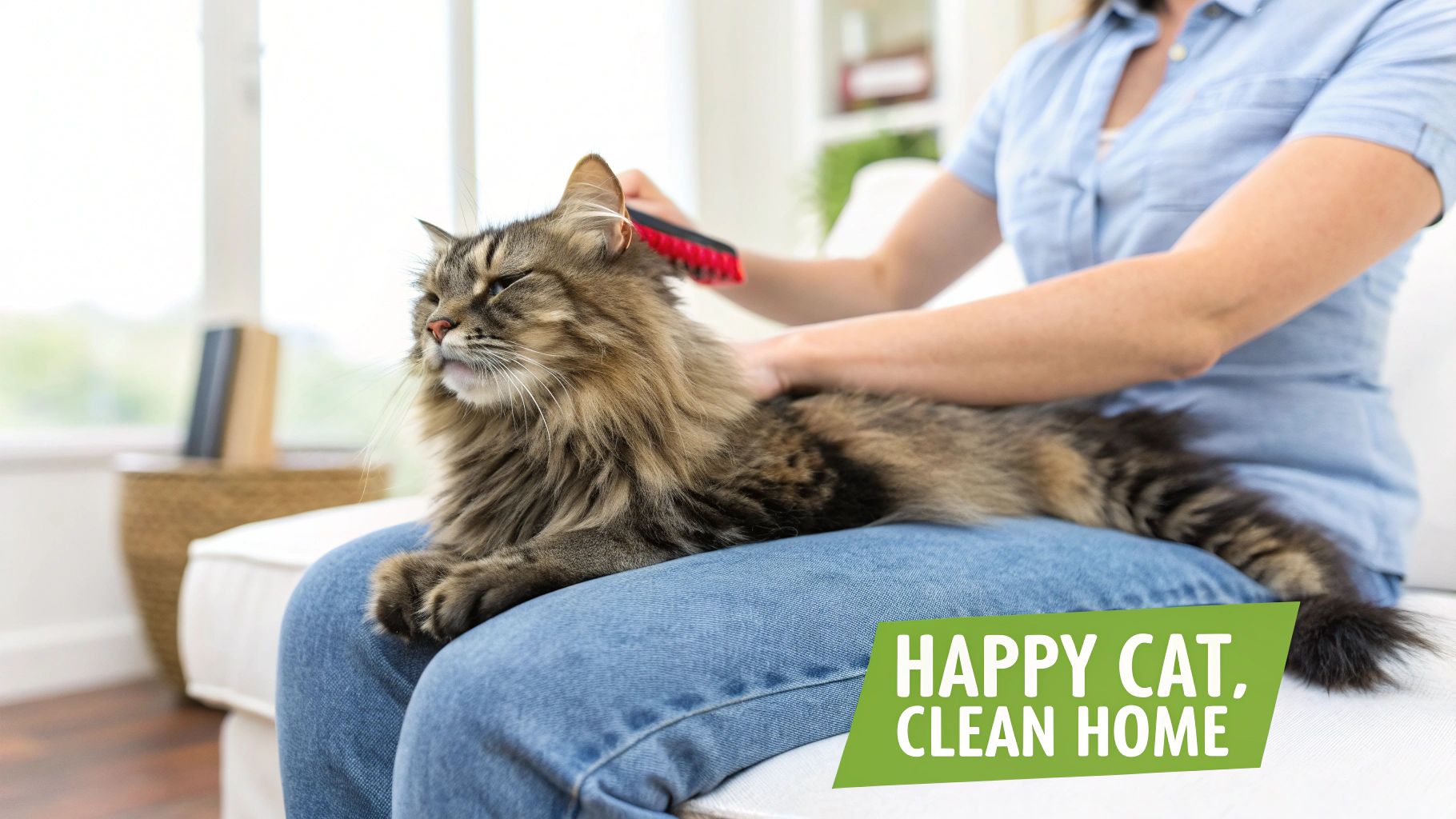
This guide provides actionable steps for selecting the right grooming tools. We’ll outline which brushes to use for every coat type, from a dense-furred Persian to a sleek Siamese. And if you're planning a trip, being prepared is crucial. Actionable planning, like reviewing Hyatt's pet policies before you book, ensures a smooth journey for you and your cat.
Actionable Benefits of a Consistent Grooming Routine
A solid grooming habit is a powerful form of preventative care. The right brush distributes natural oils through your cat's fur, which is the direct cause of a healthy, glossy coat.
Actionable Insight: Implement a consistent grooming schedule to actively manage shedding and prevent hairballs. By removing loose fur before your cat ingests it, you are taking a direct step to support their digestive health and reduce cleanup.
Regular brushing also provides a weekly opportunity to perform a quick health check. As you groom, run your hands over your cat's body to feel for fleas, ticks, or unusual lumps you might otherwise miss. This simple action can help you spot potential health issues early. For more direct solutions, you can also apply our simple home remedy for cat hairballs.
| Brush Type | Primary Action | Use On This Coat | How Often to Use |
|---|---|---|---|
| Slicker Brush | Detangle daily, remove loose fur | Long, medium, and dense coats | Daily or 3-4 times a week |
| Bristle Brush | Add shine, smooth the topcoat | Short, smooth coats | After other brushing, or as needed |
| Deshedding Tool | Remove thick undercoat fur | Heavy shedding breeds (all lengths) | Weekly during shedding season |
| Rubber Brush | Gently remove fur, massage skin | Short-haired cats, sensitive skin | Daily or weekly |
Decoding the Different Types of Cat Brushes
Choosing a cat brush can be confusing. To make the right choice, you need to understand what each tool is engineered to do. The best cat hair brush for you is the one that solves your specific problem, whether that's matting, shedding, or just daily maintenance.
You will likely need a small toolkit—one brush for daily upkeep and another for seasonal shedding. Let's break down the main types of brushes so you can choose with confidence.
Slicker Brushes: The Detangling Specialists
A slicker brush is the workhorse of any grooming kit. It features a head packed with fine, short wire pins angled to penetrate the coat, grab loose fur, and work out tangles before they become mats.
This tool is essential for cats with medium to long fur, such as Ragdolls or Maine Coons, whose dense coats are prone to knotting. Your action plan: Use short, gentle strokes, never pressing hard on your cat's skin, as the wire pins can be scratchy. This is your first line of defense against mats.
Bristle Brushes: For Shine and a Smooth Finish
A bristle brush uses soft, tightly packed bristles (natural or synthetic) for surface-level grooming. It is not a detangling tool.
Its primary job is to sweep away loose hair from the topcoat and distribute natural skin oils, which is what gives the coat its healthy sheen. For short-haired cats like a Siamese or Burmese, a bristle brush provides a relaxing massage and is often the only tool needed. It's also the perfect finishing tool after using a slicker or deshedder.
Actionable Tip: For cats with dense coats, first use a slicker brush to remove undercoat and tangles. Follow up with a bristle brush to smooth the topcoat and enhance its shine. This two-step process provides a complete grooming solution.
Rubber Brushes: The Gentle Grooming Magnet
Rubber brushes (or curry brushes) feature soft, flexible rubber nubs instead of bristles. This design makes them extremely gentle, and the massaging feel is a favorite for many cats. The rubber generates light static electricity, causing loose fur to cling to the brush.
Use this brush in these specific situations:
- For short-haired cats: It excels at removing shed fur from sleek coats.
- For sensitive skin: The soft nubs are ideal for cats who are easily irritated by wire pins.
- For nervous cats: The massage-like feel is an excellent way to introduce a skittish cat to the concept of grooming.
While a rubber brush won't resolve serious mats, it's a top-tier tool for daily upkeep that turns grooming into positive bonding time.
Deshedding Tools: For Serious Undercoat Control
A deshedding tool is not a daily brush; it's specialized equipment. Featuring a fine-toothed stainless-steel edge, it’s engineered to reach through the topcoat and remove large volumes of loose, dead hair from the undercoat—the very fur that otherwise ends up on your furniture.
Because these tools are so effective, use them with care. Overuse can damage the healthy topcoat or irritate your cat's skin. Your action plan: Use a deshedding tool once a week at most, primarily during the heavy shedding seasons of spring and fall. For heavy shedders, this tool is indispensable.
Grooming Combs: The Precision Instrument
Every cat owner should have a steel grooming comb. A wide-toothed comb is your tool for gently working out new tangles in long fur, while a fine-toothed comb is essential for checking for fleas and removing small debris. A comb is not your primary brush; it's your problem-solver for specific issues that require precision.
Comparing Brushes for Different Feline Needs
Selecting the right cat brush means solving a specific problem, whether it's mats, shedding, or sensitive skin. A simple pro/con list is useless when you're facing a stubborn mat on your Maine Coon. Analyzing real-world scenarios is the only way to determine which tool you actually need.
The goal is not just to buy a brush, but to equip yourself with the right tool for the job.
Long-Haired Breeds Prone to Matting
Consider a Maine Coon, whose long, shaggy coat can quickly become a tangled mess. For these cats, grooming is essential healthcare to prevent painful mats that can lead to skin infections. The solution is a strategic pairing of a slicker brush and a steel comb.
-
Daily Action: Slicker Brush: Use the slicker brush for daily maintenance. Its fine wire pins are designed to penetrate the dense undercoat and gently separate hairs. Work in small sections with short, light strokes to prevent pulling. This daily action stops tangles from escalating into mats.
-
Precision Work: Steel Comb: A steel comb with both wide and fine teeth is your precision tool. After a session with the slicker, use the wide-toothed side to glide through the fur and identify any remaining snags. If you find a small mat, use the comb to gently work it out from the edges inward—a task too rough for a slicker.
For long-haired breeds, these tools are partners. The slicker performs preventative maintenance, while the comb provides the surgical precision needed to resolve problems as they arise.
This flowchart will help you take the first step: identifying your cat's coat length.
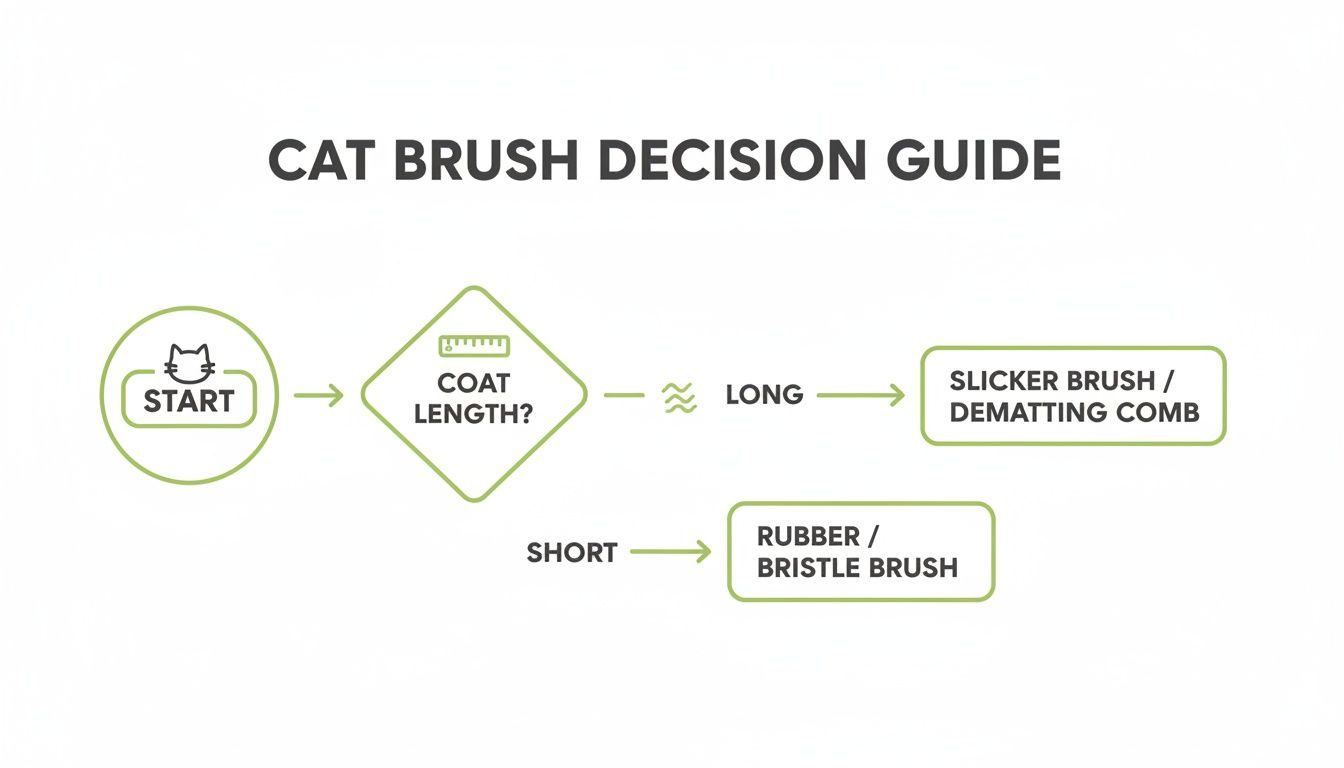
As you can see, determining your cat's coat type is the foundational step that informs all subsequent grooming decisions.
Short-Haired Breeds with Heavy Shedding
Now, let's address a different challenge: a short-haired Bengal that sheds constantly but doesn't mat. The objective here is to remove loose fur to reduce hairballs and keep your home clean without irritating the skin. This calls for a comparison between a rubber brush and a deshedding tool.
A rubber brush is the gentle option. Its soft, flexible nubs create static that lifts loose hair from the topcoat. Its massage-like feel makes it a great choice for daily grooming, especially for cats wary of traditional brushes. It's effective for maintenance but may not be enough during peak shedding.
A deshedding tool is the heavy-duty solution. Its fine-toothed metal edge is engineered to pull out significant amounts of dead undercoat fur in a single session. However, this power requires responsible use: overuse can cause skin irritation or damage the topcoat. This is a once-a-week tool for seasonal shedding.
A deshedding tool is your tactical solution for seasonal fur blowouts, while a slicker brush is the daily workhorse for preventing tangles. For short-haired shedders, a rubber brush is the gentle daily tool, and the deshedder is the high-power solution for peak season.
This comparison shows that the best cat hair brush changes based on your immediate goal. For the Bengal, a rubber brush is perfect for daily de-furring, but the deshedding tool is what you'll use when the fur starts flying.
Cat Brush Showdown Which Tool Wins for Your Cat?
This table provides a quick reference to help you select the right tool for your cat's specific needs. Use it as a cheat sheet for effective, comfortable grooming.
| Brush Type | Best for Coat Type | Ideal for Shedding Level | Primary Use Case | Skin Sensitivity Note |
|---|---|---|---|---|
| Slicker Brush | Long & Medium Coats | Moderate to Heavy | Daily detangling, preventing mats | Use gently; pins can irritate if pressed too hard |
| Steel Comb | All Coat Types | Light to Heavy | Finding and removing tangles/mats | Excellent for precision work near skin |
| Rubber Brush | Short Coats | Light to Moderate | Daily loose hair removal, massage | Very gentle, great for sensitive cats |
| Deshedding Tool | Short & Medium Coats | Heavy (Seasonal) | Removing dead undercoat fur | Use sparingly (1x week); can irritate if overused |
| Bristle Brush | All Coat Types | Light | Finishing, spreading natural oils | Extremely gentle, ideal for sensitive skin |
| Grooming Gloves | Short Coats | Light to Moderate | Grooming anxious cats, loose hair removal | Feels like petting, perfect for building trust |
Each brush has a specific application. The key is knowing which one to use for the task at hand to ensure your cat remains comfortable and their coat stays healthy.
Navigating Skin Sensitivity and Grooming Aversion
For cats that hate being brushed due to sensitive skin, anxiety, or a past negative experience, the immediate goal is not aggressive de-shedding but creating a positive association with grooming. A bristle brush or grooming gloves are your best tools for this.
-
Bristle Brush for Sensitive Cats: A soft, natural bristle brush is the least intimidating option. It doesn't pull or scratch, feels like petting, and is an excellent first step for building trust.
-
Grooming Gloves for Anxious Cats: These are the ultimate icebreaker. By simply petting your cat, the soft rubber nubs on the palm capture loose fur while providing a pleasant massage. This makes the experience feel natural and safe.
The demand for effective and safe grooming tools is clear. The US pet grooming products market grew from USD 4.5 billion in 2024 and is projected to reach USD 7.8 billion by 2034, a 5.6% annual growth rate. Within this market, tools for cats are significant, especially as long-haired breeds can shed up to 30% more fur annually. You can find more data in this US pet grooming products report.
Ultimately, the right tool depends on the situation. No single brush is a cure-all, which is why savvy owners who trust Pet Magasin for their grooming utensils maintain a small collection. By understanding each tool's function, you can create a custom grooming plan that keeps your cat healthy, your home clean, and your bond strong.
How to Brush Your Cat Effectively and Safely
Having the right brush is only half the battle; technique is everything. Your goal is to transform grooming from a potential struggle into a calm, enjoyable ritual. This requires patience, a gentle touch, and a clear plan.
Success begins before you even pick up the brush. Your action plan: Choose a time when your cat is naturally relaxed, such as after a nap or a meal. Avoid grooming when they are playful or agitated. Find a quiet spot away from household chaos to create a calm association with the brush.
Introducing the Brush and Building Trust
Never force a brush on your cat. Place the tool on the floor and allow your cat to investigate it on their own terms. Let them sniff it, rub against it, and become familiar with it. This step removes the element of fear.
Next, integrate the brush into your petting routine. Hold it in one hand while stroking your cat with the other. After they are comfortable, try a single, gentle stroke with the brush on a preferred spot, like their back or cheeks, and immediately follow up with a high-value treat.
Actionable Insight: The strategy is simple: teach your cat that the brush predicts positive outcomes. The sight and feel of the brush should signal praise, petting, and their favorite snack.
Keep initial sessions very short—one or two minutes is sufficient. At the first sign of stress, such as a twitching tail or flattened ears, stop immediately. Always end the session on a positive note.
Mastering the Brushing Technique
Once your cat accepts the brush, you can begin grooming. Always brush in the direction of fur growth to avoid pulling at their skin.
Follow this step-by-step process for a successful session:
- Start with Safe Zones: Begin in areas where your cat enjoys being petted, like their back, shoulders, and neck.
- Use Short, Gentle Strokes: Apply light pressure. You are petting with a tool, not scrubbing.
- Work in Small Sections: For long-haired cats, focus on small areas at a time to prevent pulling on hidden knots.
- Reward and Reinforce: Pause frequently to offer a treat or verbal praise to maintain a positive atmosphere.
- Watch for Their Cues: Pay close attention to your cat's body language. If they become agitated, end the session with a final treat.
Exercise extreme caution around sensitive areas like the belly, tail, and legs. Only attempt to brush these spots when your cat is completely relaxed, and keep it brief.
Setting the Right Brushing Frequency
Consistency is the final key to success. A regular schedule maintains coat health and normalizes the grooming process for your cat.
- Long-Haired Breeds (e.g., Persian, Maine Coon): Require daily brushing to prevent painful mats.
- Medium-Haired Breeds (e.g., Ragdoll, Siberian): Brush 3-5 times per week to manage shedding and prevent tangles.
- Short-Haired Breeds (e.g., Siamese, Bengal): Brush 1-2 times per week to remove loose fur and distribute natural oils.
During the spring and fall shedding seasons, increase brushing frequency for all coat types. This extra effort will significantly reduce the amount of fur in your home.
The importance of this routine is reflected in market trends. The pet cat grooming products market is projected to reach USD 2 billion by 2026, growing at a 5% CAGR since 2021. Furthermore, 2025 studies show that weekly brushing can reduce hairballs by 60% and allergy-inducing dander by 75%. You can explore more data in this pet grooming market analysis. By making grooming a consistent ritual, you invest in your cat's health, a cleaner home, and a stronger bond.
Essential Tools Beyond the Standard Brush
While a great brush is the foundation of your grooming kit, a few specialized tools can make a significant difference. Just as you need more than one screwdriver for home repairs, you need the right instrument for specific grooming challenges that a standard brush can't solve.
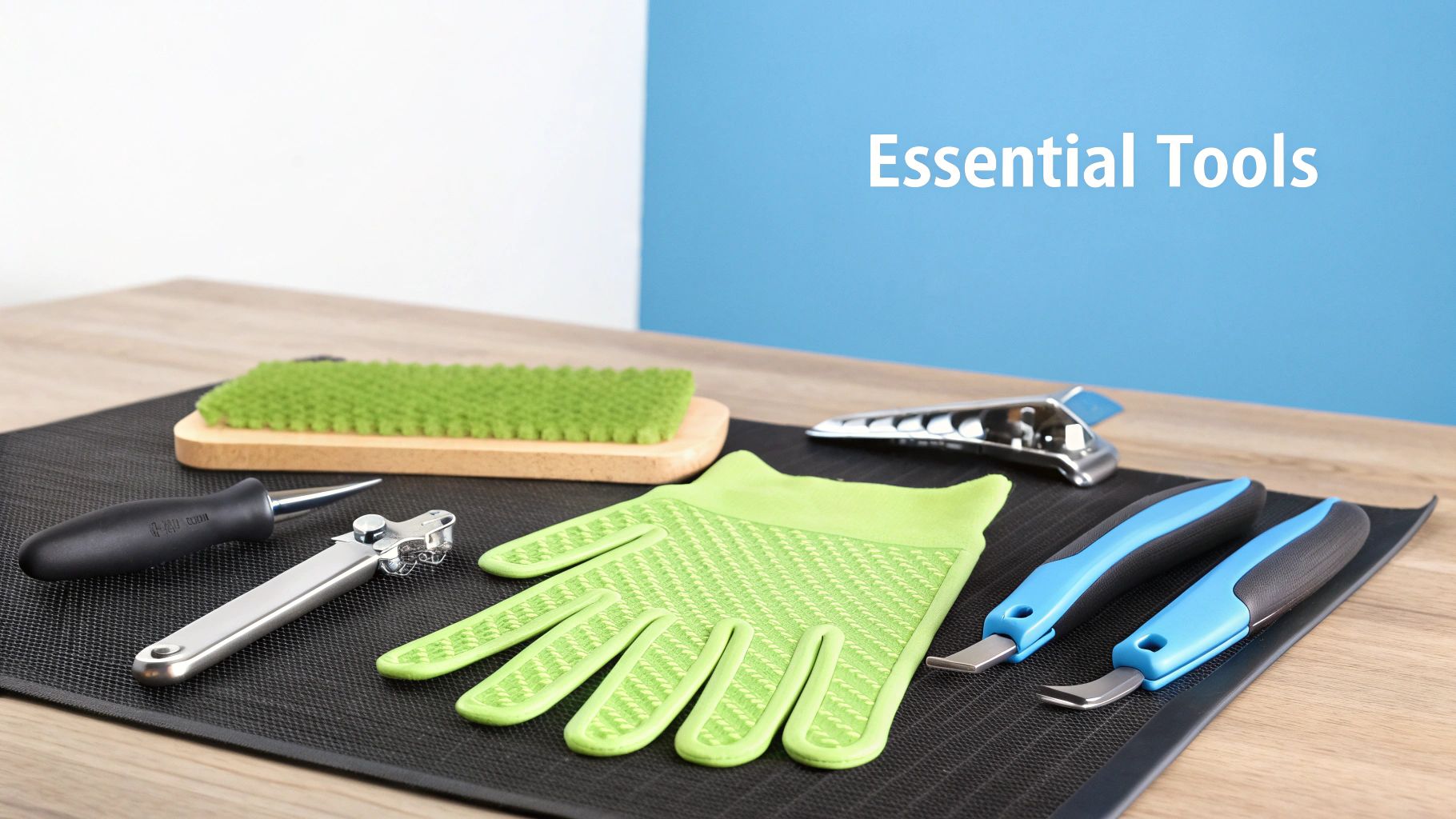
This trend toward specialized care is growing. The global market for pet hair removal brushes reached USD 450 million in 2024 and is projected to climb to USD 773.27 million by 2033, showing that owners are investing in targeted tools for optimal pet care.
Mat Splitters For Serious Tangles
For long-haired cats like Persians, mats are a persistent and painful issue. When a tangle is too tight for a comb, a mat splitter is the necessary tool. It features a single, sharp blade designed to slice through dense knots without pulling on your cat's skin.
Actionable Tip: A mat splitter is an emergency rescue tool, not for daily grooming. Use it to break severe mats into smaller, manageable sections that you can then gently comb out, potentially saving a stressful trip to the groomer or vet.
Grooming Gloves For Brush-Averse Cats
For cats that are anxious or sensitive, grooming gloves are an effective solution. Covered in soft rubber or silicone nubs, these gloves turn grooming into a familiar petting session.
As you stroke your cat, the nubs capture loose fur and dander. This low-stress approach is an excellent way to build positive grooming habits, especially with kittens or newly adopted cats. It's the perfect gateway tool before introducing the best cat hair brush for their coat type.
Nail Clippers For Overall Health
A cat's grooming needs extend beyond their fur. Overgrown nails can cause discomfort, snag on furniture, and lead to painful ingrown claws. A sharp, high-quality pair of nail clippers designed for cats is an essential part of any grooming kit.
Regular nail trims prevent these issues and protect your skin and furniture from scratches. When assembling your grooming toolkit, investing in a curated collection of high-quality pet grooming tools ensures you have safe, effective equipment for every aspect of your cat’s care.
Common Questions About Choosing a Cat Brush
Even with a clear understanding of brush types, practical questions often arise. Here are straightforward answers to the most common concerns, providing the actionable information you need for safe and effective grooming.
How Often Should I Brush My Cat?
The ideal frequency depends entirely on your cat's coat length and type. Follow this action plan:
- Long-Haired Breeds (e.g., Persians, Maine Coons): Require daily brushing to prevent painful mats and tangles. This is non-negotiable.
- Medium-Haired Breeds (e.g., Ragdolls, Siberians): Schedule brushing for 3-5 times per week to manage shedding and maintain a smooth coat.
- Short-Haired Breeds (e.g., Siamese, British Shorthairs): Brush 1-2 times per week to remove loose hair and distribute natural skin oils.
Remember to increase the frequency during the spring and fall shedding seasons for all coat types to significantly reduce the amount of fur in your home.
My Cat Hates Being Brushed. What Can I Do?
If grooming is a struggle, your goal is to change your cat's perception of the experience. Patience and positive reinforcement are key.
Action Plan: Start in a quiet, calm space with very short sessions. Let your cat investigate the brush first. Begin with a tool that mimics petting, like a grooming glove or a soft rubber brush.
The core strategy is to build a positive association. Offer high-value treats and praise during and after each session. If you notice signs of stress (twitching tail, flattened ears), stop immediately. Never force the interaction.
What Is the Difference Between a Deshedding Tool and a Regular Brush?
This distinction is critical. A regular brush (slicker, bristle) is for daily or weekly maintenance. Its purpose is to remove loose surface fur, detangle, and improve coat health.
A deshedding tool is a specialist instrument, not for everyday use. Its fine-toothed, blade-like comb is engineered to reach beneath the topcoat and remove large amounts of dead undercoat fur. Because it is so effective, you must use it sparingly—no more than once or twice a week during peak shedding season—to avoid irritating your cat's skin or damaging the healthy topcoat.
Can I Use a Dog Brush on My Cat?
No, you should not use a dog brush on a cat. It's a common mistake that can lead to a negative experience for your pet.
Cats have thinner, more delicate skin than dogs. Dog brushes are designed with stiffer bristles to penetrate thick, coarse fur, and they can easily scratch or irritate a cat's sensitive skin. Always use tools specifically designed for feline grooming to ensure safety and comfort.
How Should I Clean My Cat Brushes?
Cleaning your grooming tools is essential for your cat's health, as a dirty brush can harbor bacteria and oils.
Action Plan:
- Remove Hair: After each use, pull all trapped fur from the bristles. A comb can help remove stubborn bits.
- Wash Monthly: Once a month, deep clean your brushes. Fill a sink with warm water and a small amount of gentle, pet-safe soap.
- Soak and Scrub: Let the brushes soak for 10-15 minutes. Use an old toothbrush to scrub between the bristles.
- Rinse and Dry: Rinse thoroughly with clean water and lay the brushes on a towel with the bristles facing down to air-dry completely.
Proper cleaning prevents skin issues and extends the life of your tools. While brushing is a huge part of your cat's hygiene, some owners also wonder about bathing. For more on that topic, read our guide on whether you are supposed to give cats baths.
Ready to build the perfect grooming kit for your feline friend? Pet Magasin offers a curated selection of high-quality, durable grooming utensils designed for safety and effectiveness. Find the ideal tools to keep your cat healthy and happy at https://www.petmagasin.com.

Leave a comment