


Are You Supposed to Give Cats Baths? An Actionable Guide

The short answer to "are you supposed to give cats baths?" is almost always a firm no. For most cats, a bath is an unnecessary and stressful event. They are master groomers, naturally equipped to keep themselves immaculately clean without our intervention. Think of bathing as a last-resort tool in your grooming kit, not a routine task.
Why Your Cat Is Its Own Best Groomer
Unlike dogs who might enjoy a roll in the mud, cats are instinctively driven to be clean. This instinct stems from their predatory nature; staying scent-free was crucial for sneaking up on prey. Today, that same instinct fuels their relentless self-grooming.
Cats can spend up to 50% of their waking hours—about 3 to 4 hours daily—meticulously cleaning their fur. Their tongues are covered in tiny, hook-like barbs that act like built-in combs, efficiently removing dirt, dander, and loose hair. This meticulous routine makes water baths redundant for the average healthy house cat. All this grooming isn't just for appearances; it's a critical part of their health.
The Science of Self-Grooming
A cat's tongue is a marvel of biological engineering. Those tiny, backward-facing spines, called papillae, are incredibly effective at trapping debris. But their grooming does more than just clean. As they lick, they stimulate glands at the base of each hair to release an oil called sebum. This natural oil is essential for their well-being:
- Waterproofing: Sebum creates a protective, water-repellent layer on their fur.
- Skin Health: It acts as a natural moisturizer, preventing dry, flaky skin and giving their coat a healthy sheen.
- Temperature Control: Grooming helps them manage their undercoat, shedding it in warm weather and fluffing it for insulation when it's cold.
Actionable Insight: When you give a cat an unnecessary bath, you strip away these essential sebum oils. This disrupts their natural balance, leaving their skin vulnerable to dryness and irritation. Instead of intervening, trust the process that nature has perfected over thousands of years.
To help you make the right call, let’s look at when you should (and shouldn’t) step in.
Cat Bathing At-a-Glance Guide
Use this chart to quickly determine if a bath is the right course of action or if a simpler solution will suffice.
| Situation | Is a Bath Recommended? | Actionable Alternative |
|---|---|---|
| Routine Cleaning | No | Let your cat groom itself. Trust its natural instincts. |
| Minor Dirt/Dust | No | Use a damp cloth or a pet-safe wipe to spot-clean the area. |
| Normal Shedding | No | Implement a regular brushing schedule to manage loose fur. |
| Medical Condition | Yes | Follow your vet's instructions for prescribed medicated baths. |
| Toxic Substance | Yes | Bathe immediately to decontaminate, then call your vet. |
| Flea Infestation | Yes | Use a vet-approved flea shampoo as part of a comprehensive treatment plan. |
| Mobility Issues | Yes | Provide gentle bathing assistance for hard-to-reach areas. |
| Severe Soiling | Yes | Bathe to remove sticky or smelly substances they can't handle. |
| Hairless Breeds | Yes | Establish a regular bathing routine (often weekly) to manage skin oils. |
The takeaway is simple: reserve baths for situations of absolute necessity. If your cat is healthy, it has its hygiene under control.
When You Absolutely Must Bathe Your Cat
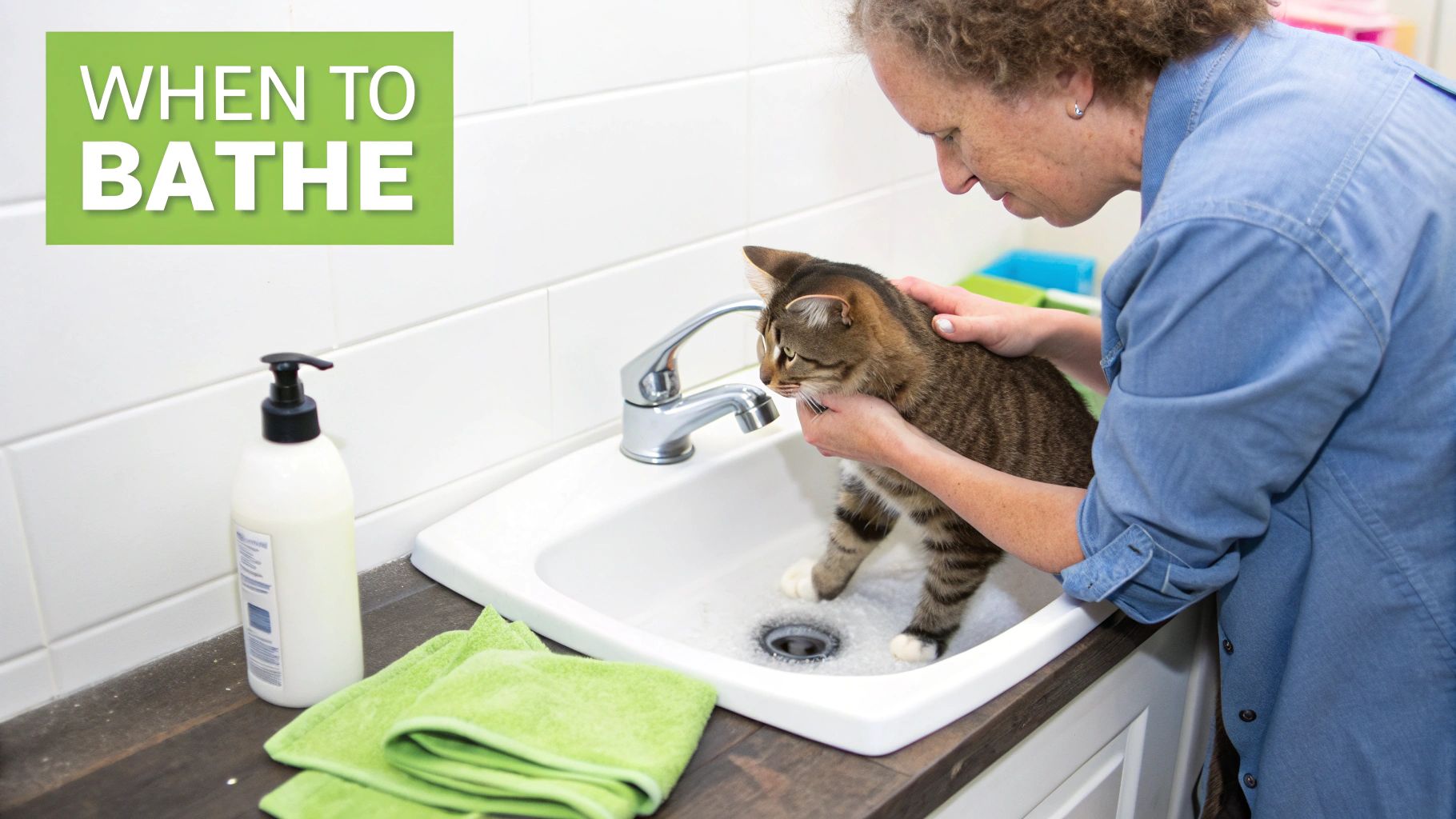
While cats are grooming experts, some situations are beyond their control. In these specific cases, a bath isn't just an option—it's a necessary action for their immediate health and safety. Your cat's tongue is perfect for daily dust, but it's no match for toxic chemicals or sticky messes. Licking these substances off can cause serious illness, making a bath your only responsible choice.
Exposure to Toxic Substances
This is the most critical reason for an immediate bath. If your cat comes into contact with a poisonous substance, you must wash it off before they ingest it through grooming. Every second is crucial.
Perform an emergency bath if they are exposed to:
- Automotive Fluids: Motor oil, gasoline, antifreeze.
- Paints and Solvents: Turpentine, paint thinner.
- Household Cleaners: Bleach, pesticides, potent chemicals.
- Human Medications or Lotions: Anything spilled on their fur.
Actionable Insight: In an emergency, focus on decontamination, not a perfect wash. The goal is to get the substance off their fur as quickly as possible. After the bath, immediately call your veterinarian or an animal poison control center for further instructions.
Medically Necessary Baths
Sometimes, your veterinarian will prescribe a bath as a medical treatment. These are not for general cleanliness but to address specific health issues. A vet may direct you to give medicated baths for conditions like fungal infections (ringworm), severe skin allergies, or parasite infestations. For example, a medicated flea bath is often the first step in providing immediate relief and kicking off a treatment plan.
When They Can No Longer Groom Themselves
Age, obesity, or chronic illness can hinder a cat's ability to groom effectively. Just as some people need help with daily care, some cats need assistance to stay clean and comfortable.
You may need to provide bathing assistance if your cat is:
- Overweight or Obese: They may be unable to reach their hindquarters, leading to soiled fur, matting, and skin infections.
- Senior or Arthritic: Joint pain can make the twisting and turning required for grooming too painful.
- Chronically Ill: Cats with other health problems may lack the energy to maintain their coat.
For these cats, a gentle, targeted bath is a practical act of care that prevents discomfort and maintains their skin health.
Some Breeds Just Play by Different Rules
While the "no bath" rule applies to most cats, breed-specific traits can change the game entirely. For a few breeds, the answer to "are you supposed to give cats baths?" is a definite "yes." Their unique coats—or lack thereof—require human intervention to stay healthy. A typical cat's coat is a self-cleaning system that distributes natural oils. For some breeds, that system is incomplete.
The Special Case of Hairless Cats
Hairless breeds like the Sphynx, Peterbald, and Donskoy are the primary exception. Without fur to absorb the natural sebum their skin produces, oils, sweat, and dirt accumulate directly on their skin, making them feel sticky or greasy. This buildup can clog pores and lead to bacterial or fungal infections. Contrary to popular belief, no fur means more maintenance, not less. For these breeds, a regular bath is essential preventative healthcare.
Actionable Insight: While up to 95% of cats despise water, some breeds require weekly baths for their health. Hairless breeds like the Sphynx cannot manage the buildup of skin oils, sweat, and dirt on their own. Without a bath roughly every 7 days, 60% of them are at risk for greasy buildup and skin infections. For more expert advice, check out Purina.com.
Long-Haired Breeds and Spot Cleaning
Long-haired breeds like Persians, Himalayans, and Maine Coons present a different challenge. While they don't need frequent full baths like a Sphynx, their dense fur is prone to painful mats, especially around their hindquarters, under their legs, and on their bellies. For these cats, bathing is often about targeted hygiene. A "sanitary bath" focused on their rear end can prevent feces from becoming trapped in their fur, which helps avoid skin irritation, infections, and uncomfortable mats.
Here’s a quick-action guide based on breed type:
- Hairless Breeds (e.g., Sphynx): Action is required. Implement a regular, full-body bathing schedule (often weekly) to manage skin oil.
- Long-Haired Breeds (e.g., Persian): Action is situational. Provide occasional "sanitary baths" or targeted cleanings as needed to prevent matting and hygiene issues.
- Most Short-Haired Breeds: No action needed for routine care. Trust them to handle their own grooming.
Understanding your cat's breed-specific needs is the first step to providing the right kind of grooming support.
The Unseen Damage of Over-Bathing Your Cat
It's a common mistake to think more baths equal a healthier cat. While sometimes necessary, frequent bathing can cause significant physical and psychological harm. The primary problem is the stripping of the cat's natural defenses. A cat's coat is protected by a thin layer of an oil called sebum, which acts as a natural moisturizer and waterproofer. Shampoo washes this critical layer away, leaving their skin exposed and vulnerable.
The Physical Consequences of Too Many Baths
Repeatedly removing these natural oils triggers a cascade of skin problems. Without its protective barrier, the skin becomes dry, leading to flaking, dandruff, and intense itching. This irritation often causes cats to over-groom—licking and scratching excessively until they break the skin, creating an entry point for bacterial or fungal infections. What began as a well-intentioned bath can quickly turn into a cycle of vet visits and treatments.
Actionable Insight: Vets warn that bathing a cat more often than every 4-6 weeks can lead to dry, irritated skin in as many as 75% of cases. This irritation can cause a feedback loop of itching, over-grooming, and potential infection. You can learn more about the health risks of over-bathing at Catster.com.
The Psychological Toll on Your Feline
The damage from over-bathing isn't just physical. For most cats, being submerged in water is a traumatic, high-stress event that triggers a fight-or-flight response. This has lasting consequences for their well-being and your relationship. During a bath, a cat's heart rate can spike by 150-200%. This extreme stress can manifest in several negative ways:
- Behavioral Problems: A traumatized cat may become withdrawn, aggressive, or start hiding. They may begin to associate you with the stressful experience, damaging your bond.
- Health Complications: Chronic stress is known to suppress the immune system, making cats more susceptible to illness. It can even trigger painful conditions like feline interstitial cystitis.
Respecting your cat's natural grooming ability is crucial. Knowing when not to bathe them is just as important as knowing when you must. This protects their health and preserves the trusting relationship you share.
Your Step-By-Step Guide to a Low-Stress Bath
When a bath is unavoidable, your approach determines the outcome. The goal is not just to get your cat clean but to do so with minimal stress for everyone involved. A calm, methodical process can transform a dreaded chore into a manageable task. The key to a successful bath begins long before the water is running. Preparation is 90% of the battle. Gather everything you need—cat shampoo, towels, a cup for rinsing—and place it all within easy reach before you get your cat.
Setting The Stage For Success
The right environment is critical for managing your cat's anxiety. A large, echoing bathtub can be terrifying. Instead, use a smaller, more enclosed space like a kitchen sink or a plastic tub placed inside the main bathtub. This helps them feel more secure.
Take these steps to create a safe and comfortable space:
- Provide secure footing. Place a non-slip mat or a folded towel on the bottom of the sink or tub. A slick surface will increase their panic.
- Pre-fill the water. Fill the tub with a few inches of lukewarm water before bringing your cat into the room. The sound of rushing water is often a major stress trigger. Test the temperature on your wrist first.
- Secure the area. Close the bathroom door to prevent escapes and muffle outside noises.
Actionable Insight: A low-stress bath is built on security. By preparing the environment to eliminate common triggers like loud noises and slippery surfaces, you can keep your cat calmer and focus on getting the job done efficiently.
The Bathing Process Step-By-Step
With your station prepared, you can begin. Use a soft, reassuring voice throughout the process to help keep your cat calm.
- Place Your Cat in the Water Gently: Hold your cat securely and lower them into the pre-filled basin. Keep one hand on them for support and control at all times.
- Wet the Fur (Avoid the Head): Use a cup or small, unbreakable pitcher to pour water over their body, starting from the shoulders and moving toward the tail. Do not pour water on their head or face.
- Lather Gently: Apply a small amount of cat-specific shampoo and work it into their fur with calm, slow strokes. Be careful to avoid getting water or soap in their ears.
- Rinse Thoroughly: This step is crucial. Use the cup to rinse away all shampoo residue. Leftover soap can cause skin irritation.
- Dry Immediately and Thoroughly: Lift your cat out and immediately wrap them in a large, absorbent towel. Gently pat them dry. For long-haired cats, a blow dryer on the lowest, coolest setting can be used, but only if the cat is not terrified by the noise.
Having the right pet grooming tools makes this process safer and more effective.
The infographic below illustrates how over-bathing disrupts a cat's natural balance, stripping essential oils and causing undue stress.
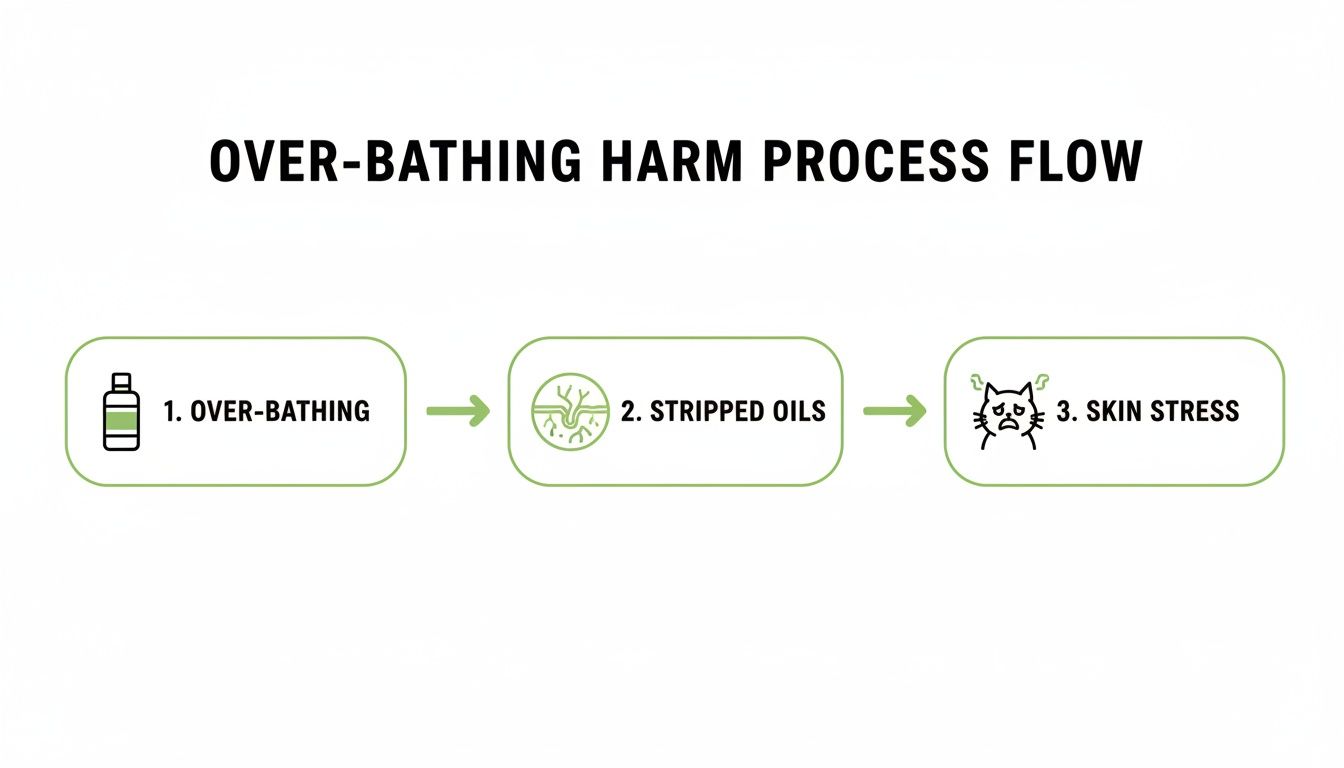
This serves as a visual reminder to reserve bathing only for when it is absolutely necessary.
Smarter Ways to Keep Your Cat Clean Without a Bath
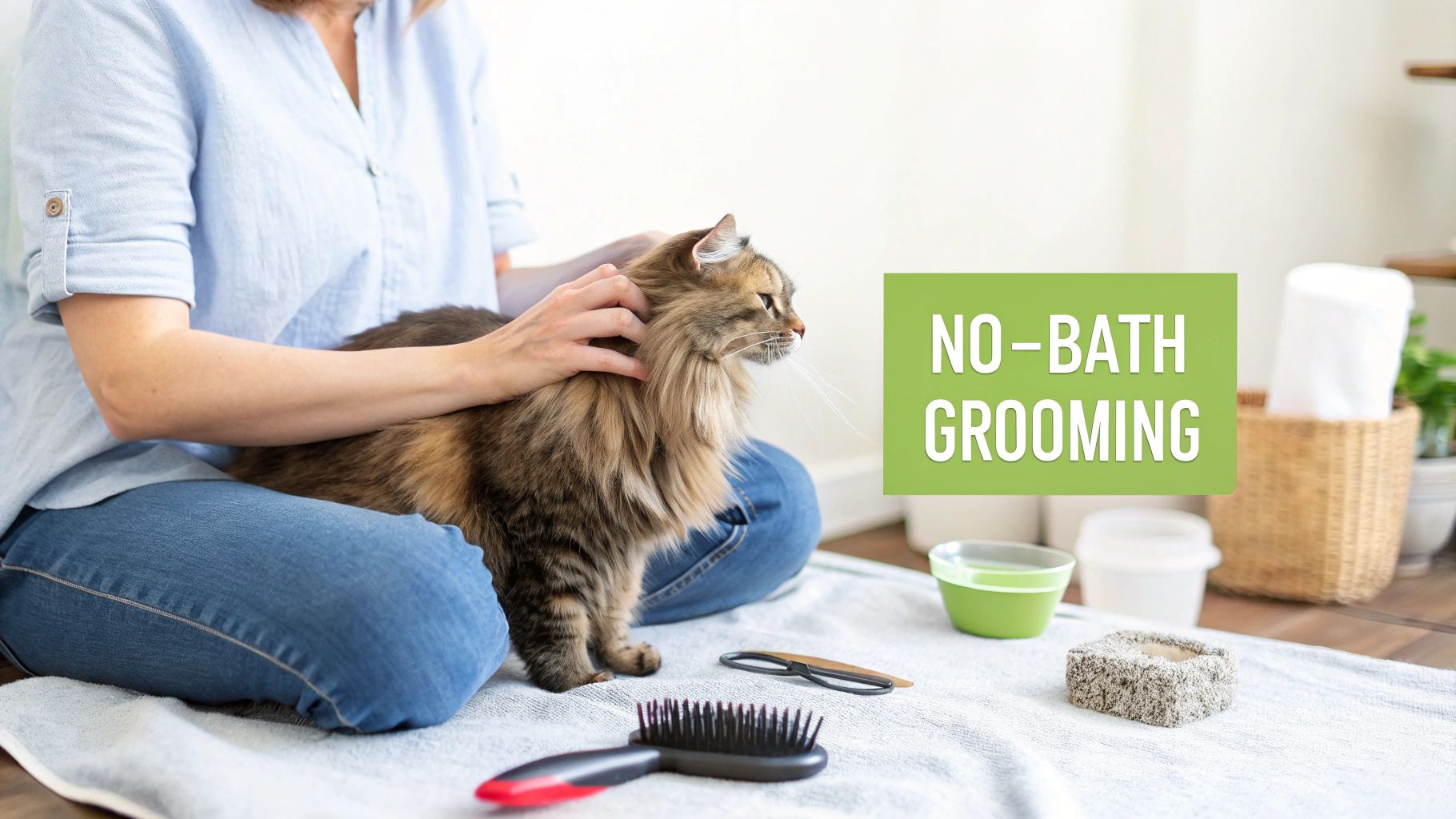
You can support your cat's hygiene without resorting to a stressful bath. The most effective approach is to work with their natural grooming habits, not against them. A few low-stress techniques can handle most messes, keeping full baths a rare necessity. The single most impactful action you can take is to commit to regular brushing. This simple task removes loose fur, prevents painful mats from forming, and distributes their natural skin oils, promoting a healthy, shiny coat. While essential for long-haired cats, even short-haired breeds benefit from weekly brushing to reduce shedding and dander.
Quick Fixes For Minor Messes
For small messes, targeted, water-free solutions are your best bet. These allow you to clean up your cat gently and without causing anxiety.
- Pet-Safe Grooming Wipes: Ideal for spot-cleaning muddy paws or wiping small soiled areas on their fur. Always use wipes formulated specifically for cats to ensure they are non-toxic if licked.
- Waterless or Dry Shampoos: Available as foams or powders, these products absorb excess oil and freshen the coat. They are an excellent choice for a quick refresh without the stress of water.
Actionable Insight: Focus on proactive maintenance. By incorporating regular brushing and using spot-cleaning tools, you become a partner in your cat's grooming. This approach provides gentle assistance when needed and strengthens your bond through positive, low-stress interactions.
Use this table to choose the right bath-free tool for the job.
Grooming Alternatives Compared
| Grooming Method | Best For | Pros | Cons |
|---|---|---|---|
| Brushing | Daily/weekly maintenance, mat prevention, shedding control | Removes loose fur, distributes oils, provides bonding opportunity | Requires the right tool for your cat's coat; some cats resist |
| Pet Wipes | Spot cleaning, dirty paws, small messes | Fast and convenient, portable, good for water-averse cats | Not suitable for deep cleaning, ongoing cost |
| Dry Shampoo | De-greasing, odor control, freshening up | No water required, easy application, absorbs oil | Can leave a residue, some cats dislike the scent or feel |
Integrating these tools into your routine allows you to support your cat's natural cleanliness effectively and kindly.
Proactive Cleanliness Strategies
Managing your cat's environment is another key strategy. If your cat has supervised outdoor access, you can minimize how dirty they get. For example, creating a clean outdoor space with options like the best artificial grass for pets can significantly reduce the mud and dirt they bring inside. Ultimately, these no-bath grooming habits do more than just keep your cat looking clean. Consistent brushing is also a powerful home remedy for cat hairballs, helping to remove loose fur before it can be ingested. This smarter, kinder approach is far more effective than the occasional dreaded bath.
Your Top Cat Bathing Questions, Answered
Even with a plan, questions can arise. Here are direct answers to the most common concerns about cat bathing.
Can I Just Use Human Shampoo or Dish Soap on My Cat?
No. This is non-negotiable. Never use products designed for humans on your cat. A cat's skin has a different pH balance than human skin, making our shampoos far too harsh. Using human shampoo, baby shampoo, or dish soap will strip the essential protective oils from their coat, leading to dry, irritated, and painful skin. These products can also be toxic if your cat licks the residue off later. Actionable Step: Purchase and use only shampoo formulated specifically for cats.
How Do I Get My Cat Used to the Water?
For a kitten, introduce them to water slowly and positively. Start by placing them in a sink or tub with only an inch of lukewarm water. Use toys and high-value treats to create a positive association. For an adult cat that is already fearful, your goal is tolerance, not enjoyment.
- Start small: Begin by simply wiping their paws with a damp cloth for a few sessions.
- Use positive reinforcement: Offer praise and their favorite treats throughout the process.
- Increase exposure gradually: Move from a damp cloth to a wetter one, gently wiping down more of their body over several sessions.
Actionable Insight: The goal is to build a neutral-to-positive association with water. Realistically, most adult cats will never enjoy baths. Focus your efforts on making the experience tolerable for those rare occasions when it's medically necessary.
What Are the Signs of Extreme Stress During a Bath?
Know the difference between mild protest and severe distress. Stop the bath immediately if you observe any of these signs of genuine panic:
- Deep, guttural growling or howling
- Intense hissing and spitting
- Frantic, uncontrolled scrambling and attempts to escape
- Uncontrollable shaking or panting
If you see these signs, your cat's well-being is at risk. Actionable Step: Stop immediately. Wrap your cat in a warm towel, speak calmly, and allow them to de-stress. If the bath was medically required, contact your vet or a professional groomer for guidance on how to proceed safely. Your cat's safety and emotional health are the top priorities.

Leave a comment