
Home Remedy for Cat Hairballs: Actionable Tips for Relief

The most effective home remedy for cat hairballs isn’t a magic potion—it's a proactive care plan. The goal is to help ingested fur pass through your cat's digestive system smoothly. This guide provides actionable steps, from grooming techniques to dietary adjustments, that get to the root of the problem and stop uncomfortable hairballs before they start.
Why Cats Get Hairballs and How You Can Help
We’ve all heard it. That unmistakable hacking sound, followed by the discovery of a damp, tube-shaped surprise on the rug. While finding a hairball (technical term: trichobezoar) is unpleasant, it’s a natural result of your cat's meticulous grooming. Understanding why they happen is the first step to managing them effectively.
When a cat licks its fur, its tongue's backward-facing barbs act like a comb, trapping loose hair. Most of this fur passes through the digestive system and ends up in the litter box. But when too much hair accumulates in the stomach, it can form a clump that needs to be expelled. That's when you get a hairball.
Factors That Increase Hairball Frequency
Not all cats are prone to hairballs. Pinpointing why your cat gets them will help you choose the most effective home remedies.
- Coat Length: Long-haired cats like Persians and Maine Coons swallow more fur during grooming, making them prime candidates for hairballs.
- Shedding Seasons: Cats shed their heavy winter coats in spring and summer, leading to more loose fur and a higher likelihood of hairballs.
- Excessive Grooming: Stress, boredom, or skin allergies can cause a cat to over-groom, dramatically increasing the amount of hair they swallow.
- Age and Mobility: Older cats may struggle to groom effectively, leading to mats and increased shedding, while their digestive systems may also be slowing down.
Understanding these root causes allows you to shift from reacting to messes to proactively keeping your cat healthy. For instance, if you know shedding season is coming, increase your daily brushing sessions to catch loose fur before it gets ingested.
Your Proactive Grooming Plan to Stop Hairballs
The single most effective home remedy for cat hairballs is removing loose fur before your cat can swallow it. A consistent grooming routine is your best defense and can become a positive bonding experience.
It’s a simple cycle: your cat grooms, swallows loose hair, and that fur can clump together into a hairball. This visual breaks it down perfectly, showing why stepping in at the grooming stage is so critical.
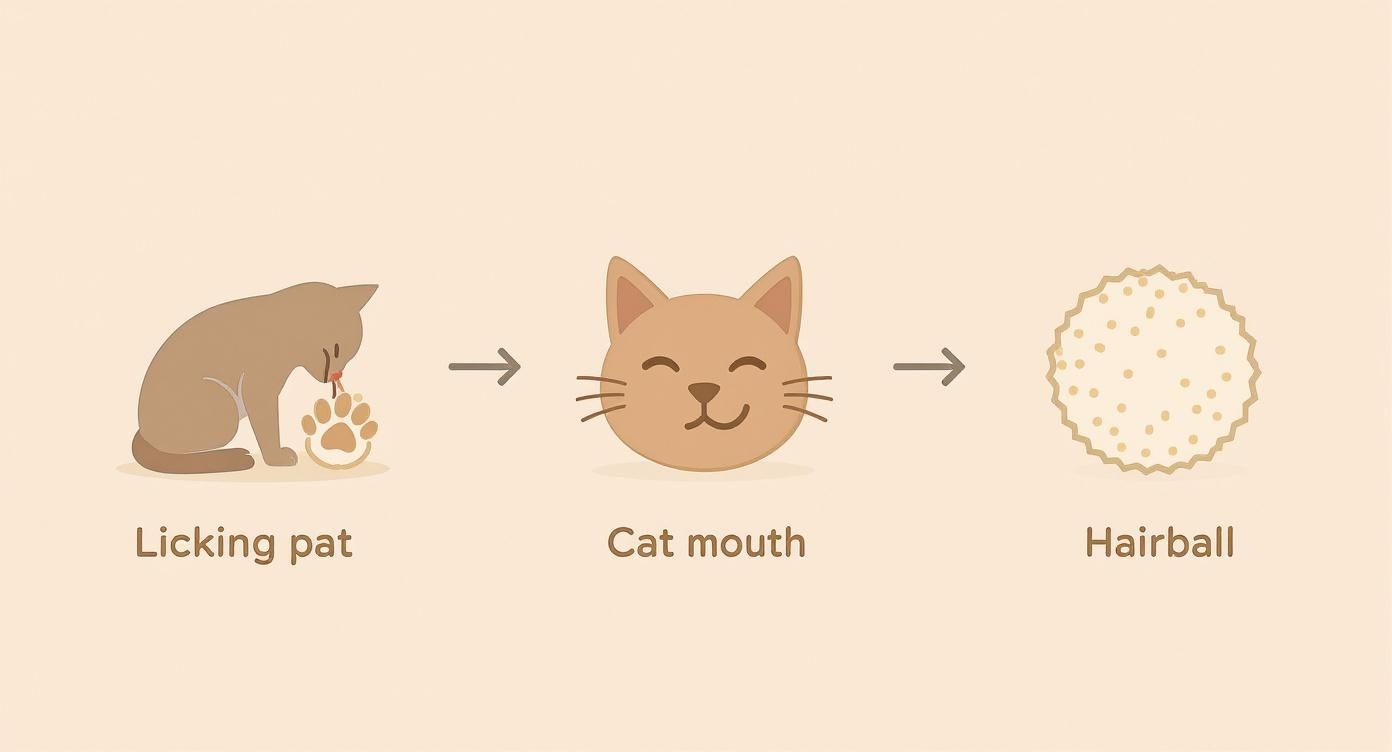
The takeaway is clear: when you brush away loose hair, you stop it from entering your cat's digestive system in the first place.
Tailoring Your Grooming to Your Cat's Coat
Using the right tool for your cat's specific hair type makes all the difference.
For short-haired cats, a rubber curry brush is a game-changer. Its soft nubs grip loose fur while giving your cat a gentle massage. A quick brushing session two or three times a week is usually sufficient.
Long-haired breeds like Maine Coons need more attention. Start with a slicker brush, using short, gentle strokes to work through the top layer and tease out tangles.
Pro Tip: Make grooming a positive experience. Choose a time when your cat is calm, keep initial sessions short (5-10 minutes), and follow up with a favorite treat or playtime. This helps them associate the brush with a reward.
After the slicker brush, use a sturdy metal comb. This step is crucial for long-haired cats, as the comb reaches deep to the skin to remove shed fur the brush missed. This two-step process prevents painful mats and significantly reduces the amount of hair they swallow.
Choosing the Right Grooming Tools for Your Cat
| Hair Type | Primary Tool | Secondary Tool | Grooming Frequency |
|---|---|---|---|
| Short Hair | Rubber Curry Brush | Fine-Tooth Comb | 2-3 times/week |
| Medium Hair | Slicker Brush | Metal Comb | 3-5 times/week |
| Long Hair | Slicker Brush | Metal Comb / Dematting Tool | Daily |
Use this table as a starting point and adjust the frequency based on your cat's individual shedding.
Making Grooming a Daily Ritual
Consistency is more effective than intensity. A routine of just 5 to 10 minutes of brushing every day can significantly reduce hairball formation and strengthen your bond.
Incorporate this into your daily schedule, such as during your wind-down routine in the evening. By trying different pet grooming tools, you'll find a combination that your cat enjoys, turning a chore into a special part of your day.
Using Diet to Manage Hairballs Naturally

While grooming is your first line of defense, diet is a powerful internal remedy. The right food helps fur move smoothly through the digestive system instead of coming back up.
Dietary fiber acts like a broom, sweeping ingested hair through the intestines so it can pass naturally. Without enough fiber, hair can get stuck in the stomach, forming a dense clump your cat is forced to vomit. Research confirms that increasing dietary fiber helps move hair out through feces, reducing hairball frequency. A two-week study found that a chew with soluble fibers led to a 29% reduction in hairball symptoms.
Action Step: Add Canned Pumpkin to Their Food
One of the simplest ways to add fiber is with pure canned pumpkin.
- What to use: Buy 100% pure pumpkin purée, not pumpkin pie filling, which contains sugar and spices that will upset your cat's stomach.
- How much to give: Start with half a teaspoon mixed into their wet food once a day.
- How to adjust: Monitor the litter box. If their stool remains firm, you can gradually increase the amount to one or two teaspoons daily.
Action Step: Switch to High-Moisture Wet Food
Hydration is crucial for a healthy digestive tract. Cats evolved to get moisture from their prey and often don't drink enough water, which can lead to a sluggish gut.
Switching to high-quality wet food is a game-changer. The high moisture content lubricates the digestive system, making it much easier for hair to pass through. Even adding one wet meal a day can make a significant difference.
A well-hydrated digestive system is like a waterslide—everything moves along much more smoothly.
Consider "Hairball Formula" Foods
"Hairball formula" foods are specifically designed with higher levels of fiber to help push ingested fur through the digestive tract. They are an excellent option, especially for long-haired cats or those prone to frequent hairballs.
When choosing one, look for formulas that also include omega fatty acids to promote a healthy coat and reduce shedding. For other cat care essentials, you can check out our selection of supplies for your cat.
Another excellent natural option is fresh cat grass. It is a highly effective dietary supplement, and you can learn about cultivating catnip grass for cats at home.
Safe Lubricants to Help Hair Pass Easily
Sometimes, even with consistent grooming and a fiber-rich diet, your cat needs extra help. Gastrointestinal lubricants are a gentle and effective home remedy for cat hairballs.
These products are not absorbed by the body. Instead, they coat swallowed hair, making it slick enough to slide through the digestive system and end up in the litter box. This is a crucial supportive measure for preventing fur from clumping in the stomach, especially for long-haired breeds or during heavy shedding seasons.
Using Commercial Hairball Gels
Over-the-counter hairball gels are a popular choice. They are typically petroleum-based and flavored with malt or tuna. They act as a mild laxative, providing lubrication to keep things moving.
Getting your cat to take the gel is the main challenge.
- The Paw Method: This is the easiest way. Squeeze a small ribbon of gel (about half an inch to an inch) directly onto the top of your cat's front paw.
- Why It Works: Cats are meticulous groomers and will instinctively lick their paw clean, consuming the gel without any fuss.
Always start with less than the recommended dose to see how your cat’s system reacts. Monitor the litter box to ensure it doesn’t cause diarrhea, and adjust the amount as needed.
For maintenance during shedding season, a dose two or three times a week is usually sufficient. If your cat is actively trying to bring up a hairball, you can use it daily for a few days, but always follow the product's instructions and call your vet if the problem persists.
Natural and Plant-Based Alternatives
Several plant-based options work similarly by soothing the digestive tract and providing lubrication.
A top natural remedy is slippery elm bark. When the powder is mixed with water, it creates a slick gel that coats the throat, stomach, and intestines, making it a great choice for cats with sensitive stomachs.
A small amount of pure coconut oil or butter can also offer temporary relief. Use these sparingly due to their high fat content—no more than a quarter teaspoon a few times a week.
Dosage and Application Tips
Getting the dose right is critical to avoid an upset stomach or diarrhea.
A Quick Guide to Lubricant Use:
| Lubricant Type | Starting Dose (for average cat) | Frequency (Maintenance) |
|---|---|---|
| Commercial Gel | ½ inch strip | 2-3 times per week |
| Slippery Elm | ¼ teaspoon of powder mixed with food | Once daily as needed |
| Coconut Oil/Butter | ¼ teaspoon | 1-2 times per week max |
Introduce any new supplement slowly. The paw trick works well for gels and coconut oil. For powders like slippery elm, mix it thoroughly into your cat's wet food.
Boosting Hydration and Activity for Digestive Health
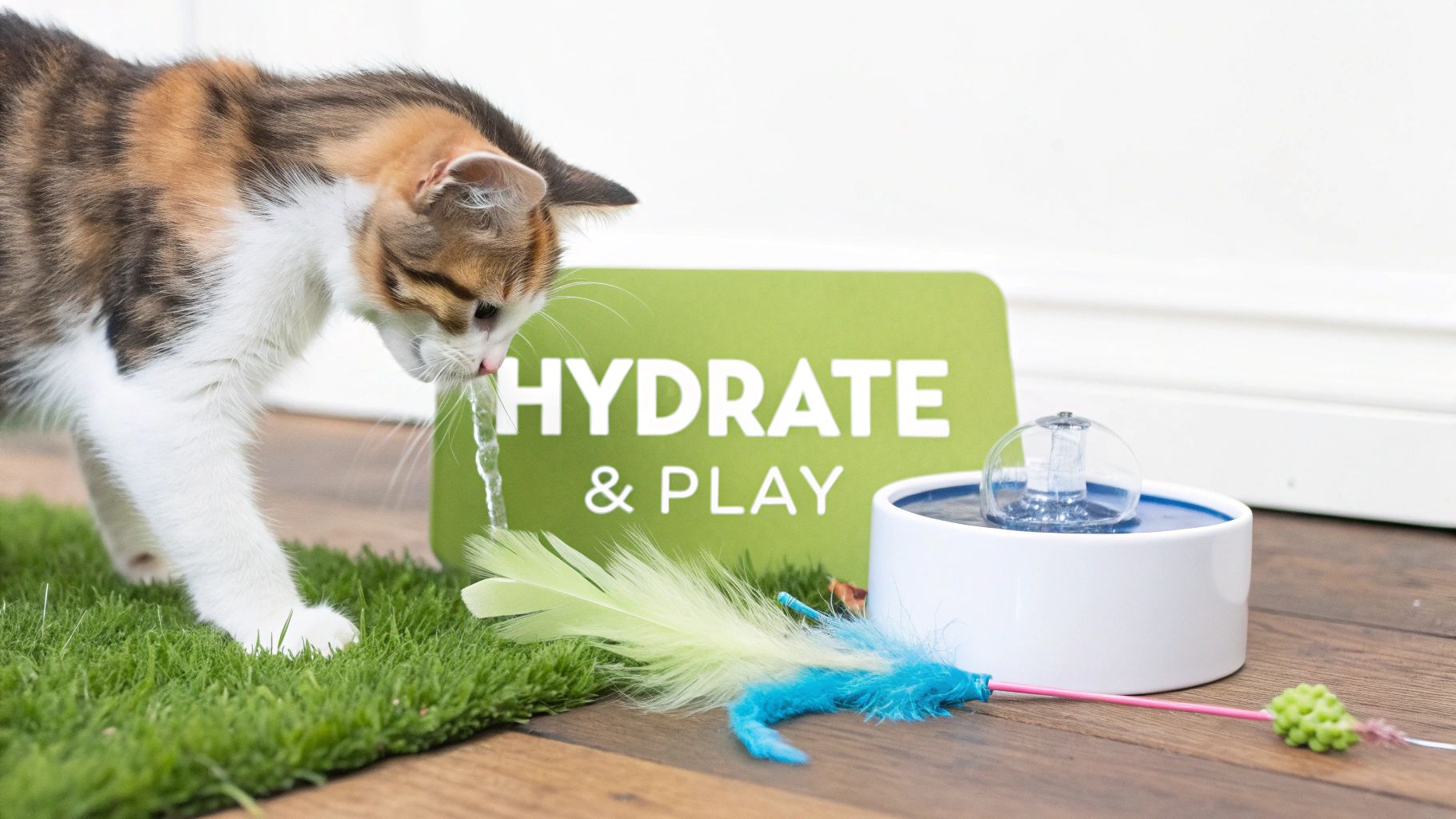
Two powerful and often overlooked tools for fighting hairballs are water and play. A hydrated, active cat has a more efficient digestive system, which is your best defense for moving ingested fur along. This makes hydration and activity a foundational home remedy for cat hairballs.
Many cats don't drink enough water because their ancestors got most of their moisture from prey. This can lead to a sluggish gut where hair is more likely to get stuck. As with humans, understanding daily water intake is critical for your cat’s overall health.
Actionable Steps to Encourage Drinking
Try these simple tricks to increase your cat's water intake:
- Introduce a Water Fountain: Cats are drawn to moving water. A fountain keeps water fresh and filtered, tempting them to drink more.
- Place Multiple Bowls: Put several fresh water bowls in quiet spots around your home. Keep them away from food bowls and litter boxes.
- Add Water to Wet Food: Mix a tablespoon of water into their canned food at mealtime for an easy hydration boost.
A common mistake is placing the water bowl next to the food bowl. Cats instinctively avoid water near food sources. Separating them is often a simple change that encourages more drinking.
Stimulate Digestion Through Play
Regular exercise stimulates the digestive tract, helping everything move smoothly. It’s like an internal massage for their intestines.
When your cat runs and jumps, it promotes the wave-like muscle contractions (peristalsis) that push food and fur through the gut.
Aim for 15-20 minutes of interactive playtime daily. Use feather wands, laser pointers, or other toys that mimic prey to engage their hunting instincts. This provides physical exercise and mental stimulation, which can also curb stress-related over-grooming. A daily play session is a fun and effective strategy for keeping your cat's internal systems running efficiently.
When to See a Vet About Hairballs
While most hairballs are a normal part of cat life, it’s critical to recognize when the situation is serious. Sometimes, hacking can be a sign of an internal blockage that requires immediate veterinary attention.
A hairball stuck in the intestines is a life-threatening emergency, and home remedies are not a substitute for professional care. You must be able to spot the red flags.
Warning Signs of a Serious Problem
If you notice any of the following symptoms, stop home treatments and call your vet immediately. These are signs of a dangerous obstruction.
- Repeated, Unproductive Retching: Your cat is trying to vomit repeatedly, but nothing comes up. This is a classic sign that something is stuck.
- Complete Loss of Appetite: A sudden refusal to eat or drink for more than a day is a major red flag.
- Noticeable Lethargy: Your cat is hiding, unusually quiet, or has no interest in normal activities or toys.
- Constipation or Diarrhea: A blockage can prevent your cat from passing stool, causing them to strain in the litter box. Alternatively, liquid stool may seep around an obstruction, appearing as diarrhea.
Trust your instincts. You know your cat's normal behavior. If they seem "off" and are showing any of these symptoms, it is always safer to get a professional opinion.
When Vomiting Isn't About Hairballs
Frequent vomiting can also be a symptom of other underlying health issues.
Conditions like asthma, inflammatory bowel disease, or pancreatitis can mimic a hairball problem. If your cat vomits often but rarely produces a hairball, a veterinary check-up is essential to rule out other causes. Monitoring their litter box habits can provide important clues, which is why a good guide to cat litter can be helpful.
At Pet Magasin, we believe proactive care is the best way to keep your furry family members happy and healthy. From innovative grooming tools to essential pet supplies, we have everything you need to manage hairballs and support your pet’s well-being. Visit us at https://www.petmagasin.com to explore our collection.

Leave a comment