
A Stress-Free Guide to Moving Across Country with Cats

Successfully moving across the country with your cat requires a solid plan. Start one to three months in advance to give yourself enough time for vet visits, microchip updates, and getting your cat comfortable with travel. Starting early is the key to turning a potentially chaotic event into a calm, managed process.
Your Pre-Move Game Plan for a Calm Cat
Cats are creatures of habit who thrive in their territory. A cross-country move disrupts their entire world. Your primary goal is to create a bubble of safety and familiarity for them, and that starts long before you pack the first box.
A successful plan covers everything from your cat's health records to the logistics of the trip itself. Treat it as a checklist to keep your cat's needs front and center.
Here is your actionable checklist:
- Veterinary Prep: Book a vet appointment to confirm your cat is healthy enough for the journey and get all necessary paperwork.
- ID & Safety: Update your cat's microchip and ID tags with your new address and phone number. This is non-negotiable.
- Carrier Acclimation: Begin training your cat to view their carrier as a safe space, not a source of fear.
- Route & Lodging: Book cat-friendly hotels and plan safe, quiet places to stop along your route.
Three Months Out: Laying the Groundwork
Your timeline starts now. The first step is to schedule a full wellness check with your veterinarian. Clearly explain your travel plans—driving versus flying requires different health certificates and vaccinations. Ask your vet for a copy of your cat's complete medical history.
Next, immediately update your cat's microchip information. Log into the registry's website or call them to change your address and phone number. A quick update is a simple step that could be critical if your cat gets lost during the move.
Two Months Out: Logistics and Supplies
With two months to go, focus on the details. If you’re crossing state lines, go to the destination state's Department of Agriculture website to look up their specific pet entry requirements. Some states require a Certificate of Veterinary Inspection (CVI) issued within a specific timeframe.
Now is the time to gather your travel gear. Finding necessary pet supplies before you're in a time crunch will reduce stress. You will need a sturdy, well-ventilated carrier, a travel-sized litter box, and calming aids like Feliway spray. The most important action you can take now is to introduce the carrier. Leave it open in the living room with soft bedding and a few treats inside. Your goal is to make your cat see it as a cozy hideout, not a trap.
A successful move isn't about having a perfect cat; it's about having a perfect plan. By addressing their needs early, you replace fear with familiarity, making the journey feel like a manageable adventure instead of a terrifying ordeal.
One Month Out: Final Touches
In the final month, lock down your travel logistics and continue positive reinforcement training. If you haven't already, book your pet-friendly hotels. Call the hotel directly to confirm their pet policy and any associated fees, as online information can be outdated.
Begin packing non-essential items, but leave the boxes out so your cat can investigate them. This helps gradually introduce changes to their environment. To make the boxes seem less threatening, spritz the corners with a calming pheromone spray.
Interestingly, this level of planning is becoming more common. The average number of cats per household has dropped to 1.8, the lowest it's been since 1982. This suggests that we're treating our cats more like premium family members who deserve special care during stressful times like a big move. You can learn more about these pet population trends and what they mean for modern pet parents. By putting this kind of thought into your pre-move plan, you’re putting your cat’s well-being first and ensuring they arrive at your new home feeling safe and secure.
Choosing the Best Travel Method for Your Cat
The biggest decision you'll make when moving across the country with your cat is how to get there. This choice should be based on your cat's personality and health, not just your convenience. Some cats handle car trips well, while others are better suited for a quick flight.
There is no single right answer. You must prioritize your cat’s well-being. A cat who gets stressed by new noises will find a multi-day car trip overwhelming. Conversely, a laid-back cat may prefer your presence in the car over the chaos of an airport.
Before you book travel, create a plan for essentials like vet visits and microchip updates. This flowchart will help you organize your tasks.
Whether you choose to drive or fly, these foundational steps are necessary to prepare your cat for the journey.
To help you make an informed decision, let's compare the practical aspects of driving versus flying.
Car Travel vs Air Travel: A Side-by-Side Comparison
Making the right call between a road trip and a plane ride comes down to knowing your cat and the logistics of your move. This table lays out the key differences to help you decide.
| Consideration | Car Travel | Air Travel |
|---|---|---|
| Control | You have total control over the schedule, temperature, and noise level. | You're on the airline's schedule. Subject to delays, cancellations, and airport chaos. |
| Cat's Comfort | Your presence is reassuring. Familiar smells from home can be comforting. | The experience is intense and full of strange sounds, smells, and people. Can be very frightening. |
| Duration | A multi-day journey. Can be very long and confining for a cat. | Much faster, reducing total travel time to just a few hours. |
| Cost | Can be cheaper, but factor in gas, pet-friendly hotels, and food over several days. | Can be expensive with pet fees, required vet visits, and specific carrier costs. |
| Safety | Generally safer as your cat is with you. Risk of escape at rest stops if you aren't careful. | In-cabin is safe, but cargo travel has inherent risks due to temperature extremes and handling. |
| Best For | Laid-back cats, multi-cat households, or owners who want to maintain constant supervision. | Cats who get extremely stressed by prolonged confinement but can handle a short, intense event. |
Ultimately, you know your cat best. A long car ride might seem daunting, but for many cats, having their favorite person nearby makes all the difference. For others, ripping the band-aid off with a quick flight is the lesser of two evils.
The Realities of Car Travel
For most cat owners, driving provides the most control. You set the pace, manage the car's climate, and can stop as needed. Most importantly, your presence can be a significant comfort to your cat.
However, a cross-country drive means days in a car, which can be stressful. Your job is to make their space in the car a safe, comfortable den.
- Secure the Carrier: Use a carrier that is large enough for your cat to stand and turn around, but not so large they can be tossed around. Buckle it securely into the back seat to prevent it from tipping over or sliding during sudden stops.
- Handle Litter Breaks Smartly: Never let your cat out of the car at a rest stop. Instead, plan breaks where you can offer a small, disposable litter box inside the car with all doors and windows securely shut. Many cats will hold it until you've stopped for the night, so don't be alarmed if they refuse.
- Use a Harness for Backup: Put a snug-fitting harness on your cat for the entire journey, even inside the carrier. If you must take them out, the harness provides a secure way to hold on and prevent an escape.
Decoding Air Travel with Your Cat
Flying significantly reduces travel time, turning a multi-day ordeal into a few hours. For a highly anxious cat, a shorter trip might be the better option.
Successful air travel depends on meticulous preparation and a thorough understanding of airline rules. You have two options: flying with your cat in the cabin or in the cargo hold.
Flying In-Cabin
This is the safest way for your cat to fly. They remain with you, tucked under the seat in front of you. Airlines have strict rules for in-cabin travel, including a combined weight limit for the pet and carrier, typically around 20 pounds.
You'll need a specific type of carrier. For detailed requirements, read our guide on finding a cat carrier airline approved for travel. Look for a carrier with excellent ventilation, locking zippers, and a waterproof bottom.
Flying in Cargo
This should be your last resort. While the cargo hold is pressurized and temperature-controlled, it is a loud, unfamiliar, and stressful environment. The greatest risk is the time spent on the tarmac, where temperatures can become extreme.
A crucial piece of advice: Before you even think about booking a ticket, call the airline directly. Talk to a real person about their pet policies, how to make the reservation, and what paperwork you'll need. Website information can be wrong, and you don't want any surprises on moving day.
In the end, whether you hit the road or take to the skies, the best choice comes from knowing your cat's personality. Be honest about what they can handle, factor in your own timeline and budget, and you'll make the kindest decision for your furry family member.
How to Prepare Your Cat for the Journey
A successful move begins weeks before travel day. Your goal is to transform new, scary things—like the carrier—into familiar, safe experiences. This preparation is your best tool for minimizing your cat's stress.
Your focus should be on two key actions: making the carrier a safe space and packing a dedicated travel bag with all their essentials.
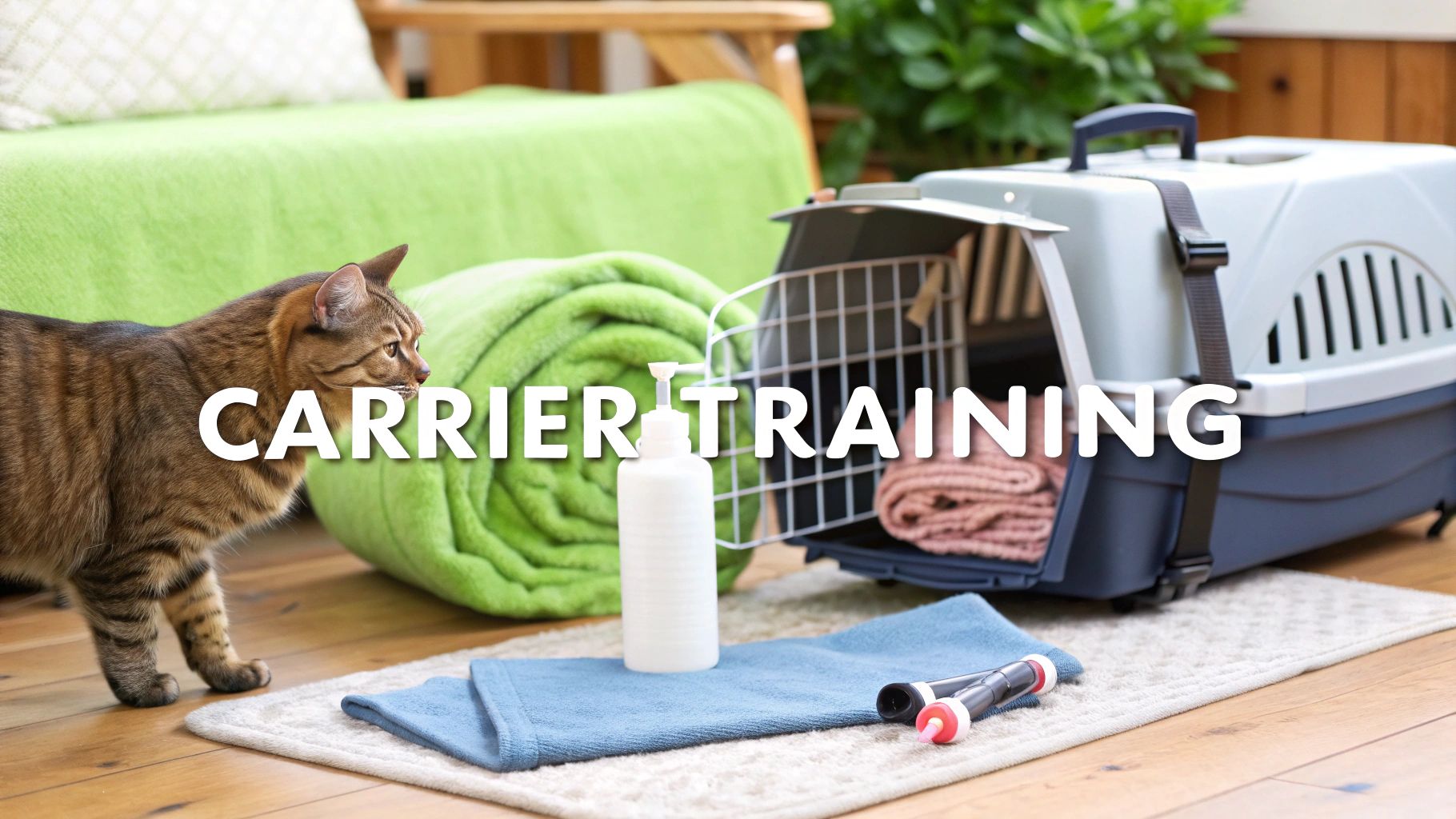
Turning the Carrier into a Safe Haven
Most cats only see their carrier right before a stressful vet visit. You must break this negative association. Weeks before the move, place the open carrier in a main area of your home, like the living room.
Leave the door open and allow your cat to explore it at their own pace. Never force them inside. To make it more inviting, toss high-value treats or favorite toys near it, and then inside.
Line the carrier with a soft blanket or an old t-shirt that smells like you to provide comfort. This simple step helps reframe the carrier from a cage into a personal den.
The single biggest mistake is waiting until moving day to introduce the carrier. A cat that views its carrier as a sanctuary is 90% less likely to experience extreme panic during travel. Gradual, positive reinforcement is the only way to achieve this.
Once your cat enters the carrier willingly, start closing the door for a few seconds at a time, immediately offering a treat upon opening it. Gradually increase the duration to build their tolerance. For more expert advice, see our comprehensive guide on how to travel with pets.
Packing the Ultimate Cat Go-Bag
A well-stocked, easily accessible bag of your cat's necessities is a lifesaver during unexpected delays. This isn't just luggage; it's your mobile command center for their comfort.
Keep this go-bag in the passenger area of your car—not buried in the trunk. You must be able to grab anything from it instantly.
Essential Items for Your Cat's Go-Bag
- Food and Water: Pack several days' worth of their usual food in an airtight container. Bring a gallon of water from your old home to prevent stomach upset. Include collapsible food and water bowls.
- Travel Litter Box: A small, disposable or collapsible litter box is essential. Pack a scoop and a small container of their regular litter.
- Medications and Records: Pack any necessary medications. Keep a waterproof folder with their vaccination records and health certificate readily accessible.
- Cleaning Supplies: Be prepared for accidents with paper towels, pet-safe enzymatic cleaning wipes, and disposable bags.
- Comfort Items: Include a favorite toy, a familiar blanket, and calming aids like a pheromone spray to manage anxiety on the road.
By preparing your cat and their supplies in advance, you remove the element of surprise from the journey. This planning turns a potentially chaotic ordeal into a manageable trip, setting you both up for a calm arrival at your new home.
Keeping Your Cat Safe and Calm During Transit
Travel day is often the most stressful part of the move for your cat. Your job is to manage their environment, ensure their security, and minimize anxiety. Anticipate their needs to prevent problems before they arise.
Managing Your Cat's Anxiety on the Move
A calm cat is a safe cat. Anxious cats are more likely to cry, refuse to eat or drink, or attempt to escape.
Use these tools to reduce their stress:
- Pheromone Sprays: Products like Feliway mimic natural feline pheromones, signaling that the environment is safe. Spray the carrier and bedding 15-20 minutes before placing your cat inside.
- Calming Treats: Treats containing ingredients like L-theanine or colostrum can promote relaxation without causing drowsiness. Test these treats a few days before your trip to see how your cat responds.
- A Familiar Scent: Place one of your unwashed t-shirts in the carrier. Your scent is a powerful source of comfort.
For cats with severe travel anxiety, consult your veterinarian. They may prescribe anti-anxiety medications, which are safer than sedatives. These medications reduce panic without impairing balance or breathing, but always test the prescribed dose at home first.
Escape-Proofing Your Journey
The number one fear for pet owners during a move is an escape. A frightened cat can disappear in an instant. Prevention is your most important tool.
Follow this golden rule: never let your cat roam free in the car. They must remain in their secure carrier at all times. If you must take them out, a properly fitted harness and leash are non-negotiable.
Here is how to handle a litter box break during a multi-day drive: First, pull into a safe, quiet location. Ensure all windows are rolled up and all doors are shut and locked. Only then should you open the carrier to allow your cat access to a travel litter box placed on the car floor.
The most nerve-wracking moments are the transitions—getting from the car to the hotel room, or going through the TSA checkpoint. In those moments, keep one hand firmly on the carrier handle and the other on the leash if they're harnessed. Always double-check that every zipper and latch on the carrier is fully secured before you start moving.
Food, Water, and Common Issues
Managing your cat’s physical comfort is as critical as managing their stress. A few small adjustments can prevent common travel-day problems.
Feeding to Avoid Motion Sickness:
Feed your cat a small meal three to four hours before travel begins. A full stomach can lead to nausea. On multi-day trips, offer small, light meals in the evening after you have checked into your hotel.
Encouraging Hydration:
Dehydration is a serious risk. Stressed cats often refuse to drink. Offer fresh water at every stop. If they refuse, try offering a spoonful of wet food for its moisture content or a few ice cubes to lick.
For those considering flying, it can feel like a huge ordeal, but it’s a very common way to transport pets. In fact, data from the U.S. Department of Transportation shows that over 99% of healthy pets travel safely by air. With the right airline and good preparation, it's a perfectly solid option. You can learn more about the safety of pet air travel from PetRelocation.com.
By focusing on these practical steps, you can navigate travel day with confidence and ensure your cat arrives at your new home safe and sound.
Settling Your Cat into Your New Home
You've arrived. The long journey is over, but for your cat, the most overwhelming part may be just beginning. A new, unfamiliar space can be terrifying. Your final job is to help them feel safe and confident in their new environment.
The key is to start small. Do not open the carrier and give your cat free rein of the entire house. Instead, set up a dedicated "sanctuary room" before letting them out. This room will be their home base for the first few days to a week.

Creating the Perfect Sanctuary Room
Choose a quiet, low-traffic room, such as a spare bedroom or home office. Before bringing your cat inside, set it up with their food and water bowls, bed, favorite toys, and litter box. Place the litter box away from their food and water to create a sense of normalcy.
Once the room is ready, bring the carrier inside, close the door securely, and then open the carrier door. Do not pull your cat out. Let them emerge on their own time. Sit quietly in the room with them so they associate the new space with your calm presence.
Your main goal here is to get back to a routine as fast as you can. Feed them at the exact same times you always have. This consistency is a huge comfort, sending a powerful signal that even though the scenery is different, their world is still safe and predictable.
Gradually Introducing the Rest of the House
After a few days, when your cat seems confident in their sanctuary room—eating well, using the litter box, and showing interest in playing—you can begin introductions to the rest of the house.
Start by opening the door to their room and letting them explore at their own pace. Supervise these first explorations and keep the rest of the house quiet. This slow approach allows them to leave their scent and claim territory gradually, preventing them from becoming overwhelmed.
Watch for signs of stress like spraying. This behavior indicates your cat feels insecure in their new environment. To address it, go back a step and reinforce their safety in the sanctuary room. You can learn more by checking out our guide on why some cats spray.
Essential Home Safety Checks
Before allowing your cat to explore freely, conduct a thorough cat-proofing sweep of your new home.
Use this checklist to identify potential hazards:
- Secure Windows and Screens: Check every window screen for sturdiness, holes, or loose edges that a paw could pry open.
- Block Unsafe Hiding Spots: Look for and block gaps behind appliances, under cabinets, or in wall cavities where a scared cat could get stuck.
- Remove Toxic Plants: Identify and remove common houseplants that are poisonous to cats, such as lilies, tulips, and philodendrons.
- Clean with Care: Use pet-safe, non-toxic cleaning products to avoid exposing your cat to harsh chemicals on surfaces they will walk on and groom from.
Taking these precautions ensures your cat's explorations remain safe as their confidence grows. Patience is your most valuable tool during this final stage of the move; it will turn a stressful transition into a happy new beginning.
Lingering Questions About Your Big Move with Your Cat
Even with the best planning, specific questions often arise when moving with a cat. Here are actionable answers to the most common concerns.
Should I Sedate My Cat for the Drive or Flight?
No. Most veterinarians strongly advise against sedating cats for travel, particularly for flights. Sedatives can interfere with their ability to regulate breathing and body temperature, which is dangerous at high altitudes or in a hot car.
Instead, ask your vet about anti-anxiety medication. These are not sedatives; they simply reduce panic without impairing vital functions. Always perform a trial run with a test dose at home a few days before you leave to see how your cat reacts.
How on Earth Do I Handle the Litter Box in the Car?
Managing bathroom breaks on the road is entirely possible with the right setup. The goal is to provide a safe, private opportunity.
Follow these steps for a long drive:
- Bring a travel box. A small, disposable litter box or a compact plastic tub fits perfectly on the floor of the back seat.
- Offer it during stops. Every few hours, pull over to a safe spot. Before opening the carrier, ensure all car doors are locked and windows are fully closed. Then, offer them the box inside the car.
- Don't sweat it if they refuse. It is normal for cats to hold it until you have stopped for the night.
- Set up their real box first. The moment you arrive at your hotel, the first thing you should do is set up their regular, familiar litter box to help them feel secure.
The golden rule of road trip potty breaks: Never, ever let your cat out of the car. In a new, loud environment, the risk of them panicking and bolting is just too high. It only takes a split second for a disaster to happen.
What’s the Best Way to Reintroduce My Pets in Our New Place?
A stressful move can reset the relationship between pets, even if they were previously friends. A slow, methodical reintroduction is crucial to prevent conflict.
Start by giving your cat their own "sanctuary room" for the first few days, keeping them completely separate from other pets. This allows them to decompress and establish a secure territory.
After a couple of days, begin scent swapping. Exchange their bedding so they can get used to each other's smell in the new home. Once they are calm with the scent, allow visual contact through a baby gate or a cracked door. Only after they seem relaxed and curious should you permit supervised interaction in a neutral space.
How Long Until I Can Let My Cat Outside Again?
This is a critical safety instruction. Even if your cat was an indoor-outdoor cat before, you must keep them exclusively inside for at least two to four weeks in the new home. This is non-negotiable.
This waiting period is essential for them to form a bond with the new house and recognize it as their home base. If you let them out too soon, their homing instinct may cause them to run away in an attempt to find their old territory.
When you are ready to let them out, follow these steps:
- Confirm that their microchip and ID tag are updated with your new address and phone number.
- Start with short, supervised visits in the yard just before feeding time. Hunger is a powerful incentive for them to return.
- Gradually increase their outdoor time as they become more comfortable with the new environment.
At Pet Magasin, we get it—your cat is family. That’s why we create products to make life’s biggest moves and smallest moments better and safer for them. From our durable grooming tools to our airline-approved carriers, we’re here to help you on your journey. Check out our full line of premium pet supplies at https://www.petmagasin.com.

Leave a comment