
Why Do Cats Spray and How to Stop It for Good

Yes, cats spray. It’s a completely normal behavior for both males and females, even if they’ve been fixed. This isn't your cat suddenly forgetting their litter box training; it’s a form of communication. To stop it, you first need to understand the message your cat is trying to send.
Unpacking the Truth About Cat Spraying
When you find that small, strong-smelling urine mark on a wall or your favorite chair, it’s easy to feel frustrated. But hold on. Understanding why cats spray is the first, most important step toward finding a solution. This behavior is a powerful and instinctive way for cats to talk to each other using the one thing they all understand: scent.
Instead of seeing it as a sign of a "bad cat," it's more helpful to think of it as their version of a social media post. Spraying serves several distinct purposes in the feline world. It’s their way of posting a status update, claiming their turf, or even sending out a dating profile. Shifting your perspective from punishment to problem-solving is key.
Common Triggers for Spraying
A few key things can trigger this marking behavior. If you can figure out the root cause, you're halfway to fixing it. The main motivations usually fall into one of these buckets:
- Territorial Marking: Cats use their spray to draw invisible lines around their territory, kind of like putting up a fence. This often happens when they see an unfamiliar cat lurking outside or sense another animal has moved into the home.
- Stress and Anxiety: Big changes can really throw a cat off. A new piece of furniture, a shift in your daily routine, or tension with another pet can make them feel insecure. Spraying in their main living areas is a way for them to surround themselves with their own familiar scent, which is incredibly comforting for them.
- Mating Signals: Unneutered cats are notorious for using urine marking to broadcast their reproductive status to any potential partners in the area. While neutering dramatically reduces this urge, the instinct can sometimes linger.
Spraying Is More Common Than You Might Think
This behavior is most often seen in cats that haven't been spayed or neutered, but it’s definitely not exclusive to them.
While a whopping 90% of intact males spray, the behavior also affects fixed cats. Studies have shown that 12% of neutered males and 4% of spayed females will still mark with urine from time to time.
The good news? Castration is incredibly effective. It eliminates or significantly cuts down spraying in as many as 90% of intact male cats. You can find more great insights on cat marking behaviors over at dvm360.com.
Decoding the Message Behind Your Cat's Spray
When you find a spot where your cat has sprayed, it's easy to get frustrated. But it's important to remember they aren't being bad or spiteful. They're actually sending a very clear message, and learning to "speak cat" is the first step toward fixing the problem for good.
Think of each spray mark as a social media update for other felines. It’s a powerful form of communication driven by deep-seated instincts. By playing detective, you can usually figure out what’s triggering this behavior and get to the root of the issue.
Territorial Marking
One of the most common reasons cats spray is to mark their territory. This is your cat’s way of putting up a "no trespassing" sign. They use the unique chemical signals in their urine, called pheromones, to leave a scent signature that clearly states, "This spot is mine."
This behavior often kicks in when another cat shows up. If your indoor cat spots a neighborhood stray wandering through the yard, or if you bring a new pet home, they might feel like their turf is under threat. Spraying on windowsills, doorways, and curtains are classic signs your cat is trying to reinforce their boundaries against a perceived intruder.
Key Insight: A cat's sense of security is tied directly to its territory. When that territory feels threatened, spraying is a natural, instinctive way for them to regain a sense of control and comfort themselves with their own scent.
Stress and Anxiety
Cats absolutely thrive on routine, so any disruption can throw them for a loop and cause some serious stress. Unlike territorial spraying that's aimed at outsiders, stress-spraying is more about self-soothing. When a cat feels anxious, they spray to surround themselves with their own familiar, calming scent.
The source of their anxiety can be something we humans might not even notice. It could be as big as moving to a new house or as small as rearranging the living room furniture.
Other common stressors include:
- A change in your work schedule
- Loud construction noises from next door
- Tension or fights with another pet in the house
Because spraying makes them feel more secure, it can quickly become a go-to coping mechanism if the underlying stress isn't handled. Cats are always communicating, and you can get a better read on their emotional state by learning what their different tail positions mean. Understanding their body language is a huge help.
Reproductive Signals
Finally, spraying is a fundamental part of mating behavior. An unneutered male cat will spray to let all the female cats in the area know he's available. His urine is packed with pheromones that advertise he’s healthy, strong, and ready to find a partner.
An unspayed female in heat might also spray to attract potential mates. This instinct is incredibly powerful and is a major reason for spraying in cats that haven't been "fixed." That's why neutering or spaying your cat is the single most effective step you can take to stop this type of marking before it even starts.
How to Tell if It's Spraying or Something Else
Figuring out whether your cat is spraying or just having a potty accident is the first, most crucial step. They're two very different behaviors, and knowing which one you're dealing with points you toward the right solution. Once you know the clues, becoming a "spraying detective" is easier than you might think.
The biggest giveaway is your cat's posture. A cat urinating normally will squat low to the ground. Spraying, on the other hand, almost always happens while the cat is standing up.
The Classic Spraying Stance
You can often catch a sprayer in the act just by their body language. Keep an eye out for these telltale signs:
- Standing Tall: The cat backs right up to a vertical surface—think a wall, the side of the sofa, or a doorframe.
- Tail Up: Their tail shoots straight up and might even tremble or vibrate at the very tip.
- Aiming Backward: They'll direct a small, targeted stream of urine straight behind them onto the object.
This is a very deliberate action, completely different from the squatting you see when a cat is simply emptying their bladder. The amount of urine is also much smaller, usually just a little patch or a few streaks running down the surface.
Location and Smell Are Your Other Big Clues
Where you find the mess is just as important as how it got there. Cats spray in locations that are socially significant to them; it's all about sending a message. You'll often find it on doorways, windows, new pieces of furniture, or even your shopping bags. They're marking areas that define their territory.
The smell of spray is another dead giveaway. It's way more pungent and sharp than regular urine because it's packed with extra chemical messengers called pheromones. That strong odor is designed to grab attention and stick around.
This simple decision tree can help you visualize some of the most common triggers that get a cat spraying.
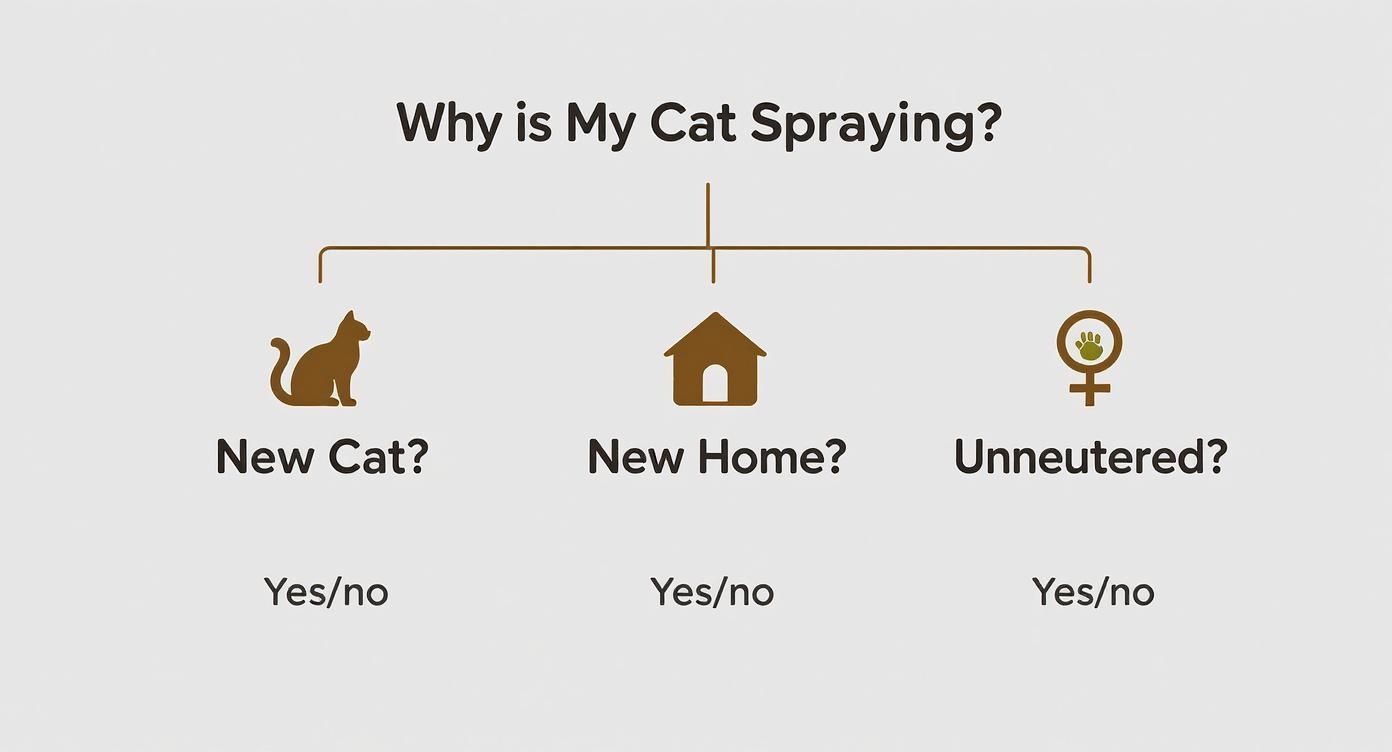
As you can see, big life changes—like bringing home a new pet, moving to a new house, or having an unneutered cat around—are often the main catalysts. Once you can confidently identify spraying by looking at the posture, location, and odor, you can stop stressing about the mess and start solving the real problem.
Building a Stress-Free Environment to Stop Spraying
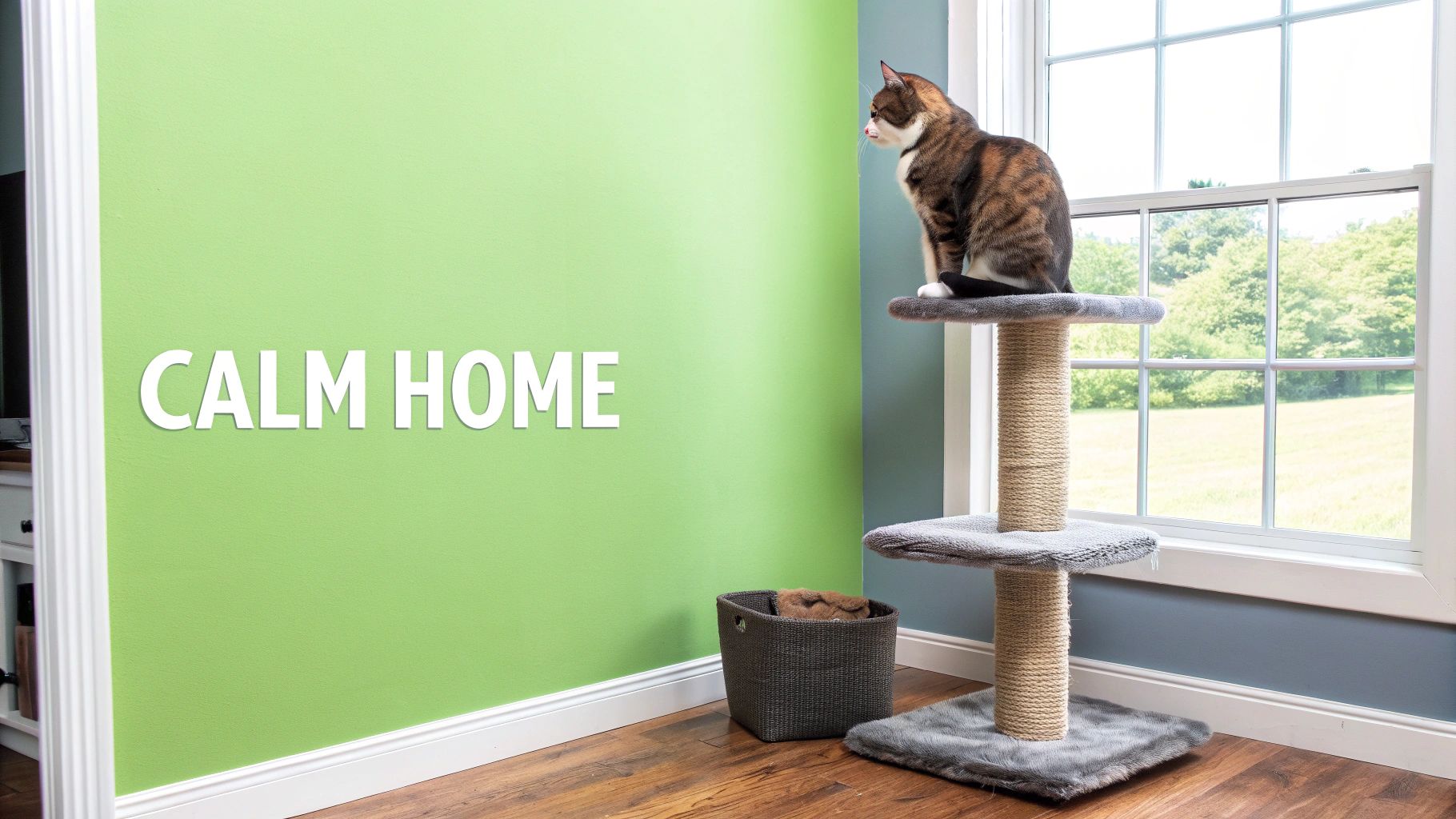
Since stress is one of the main reasons cats spray, the single most powerful thing you can do is create a calm, predictable home. Think of it as your cat's personal comfort zone. When that space feels stable and secure, the desperate need to send out anxious "messages" by spraying usually fades away. A few key adjustments can make a world of difference in managing your cat’s anxiety and bringing peace back to your home.
A stable routine is the bedrock of a cat's confidence. These guys are creatures of habit and find huge comfort in knowing what’s coming next. Simple things like feeding them at the same times each day, scheduling regular playtime, and keeping their litter boxes consistently clean create a predictable rhythm that just melts their stress away.
Increase Vertical Space and Resources
One of the best ways to give your cat a confidence boost is to expand their vertical territory. Cats instinctively feel safer when they can watch over their domain from up high. Getting them a cat tree, putting up some wall shelves, or even just clearing off the top of a sturdy bookshelf gives them a secure perch, far from the hustle and bustle of household traffic.
This is especially critical if you have more than one cat. Competition over resources is a massive source of feline conflict.
The Golden Rule: For essentials like litter boxes, food bowls, and water stations, the rule of thumb is always one per cat, plus one extra. This simple strategy keeps one cat from guarding a resource and blocking another, which is a classic trigger for stress-induced spraying.
Manage Outdoor Triggers
Sometimes, the source of your cat's stress isn't even inside your house. Just the sight of a rival neighborhood cat strolling through the yard can be enough to send your indoor cat into a territorial panic, prompting them to spray near windows and doors.
You can dial down this anxiety by managing what your cat sees:
- Apply Opaque Window Film: Stick a frosted or decorative film on the lower part of your windows. It still lets the light in but blocks the direct line of sight to any feline intruders outside.
- Use Motion-Activated Sprinklers: These are a totally harmless way to tell stray cats to keep their distance, which helps your own cat feel much more secure in their territory.
Environmental and social pressures play a huge part in why cats spray. Disruptions like a new cat in the neighborhood or squabbles in a multi-cat household can seriously increase the chances of spraying. While synthetic feline facial pheromones have been looked at to help, research hasn't yet shown statistically significant results, which you can read more about in this study of feline marking behavior.
Ultimately, a well-managed environment gets to the root cause of the anxiety. To really support your cat's health and happiness, understanding general pet care basics is key to building that stress-free home where your cat feels completely safe and secure.
How to Clean Cat Spray and Choose the Right Products
If your cat can still catch a whiff of a previous spray spot, you can bet they’ll target it again. Getting the cleaning right isn't just a suggestion—it's the only way to break this frustrating cycle. Simply covering up the scent with an air freshener won't fool their powerful nose; you have to completely obliterate the odor.
Be careful what you reach for under the sink. Many standard household cleaners, especially ones with ammonia or bleach, can actually backfire. Urine already contains ammonia, so when you use an ammonia-based product, you're essentially putting up a sign that says, "Another cat was here!" This often encourages your cat to double down and spray right over it.

The Power of Enzymatic Cleaners
To truly defeat the smell for good, you need to bring in the big guns: an enzymatic cleaner. These aren't just soaps. They’re packed with special proteins (enzymes) that are specifically designed to find and break down the uric acid and pheromones unique to cat spray. Instead of just masking the smell, they dismantle it on a molecular level.
For the best results, here’s what you do:
- Blot, Don't Rub: The moment you find a fresh spot, gently blot up as much as you can with a paper towel. If you rub, you’ll just push the urine deeper into the carpet fibers or upholstery.
- Saturate the Area: Don't be shy with the enzymatic cleaner. Thoroughly spray the spot and even a few inches around the visible stain to catch any splashback.
- Let It Sit: This is the most important step. Let the cleaner air dry completely. The enzymes need time to do their job, which could take a few hours or even a whole day.
- Repeat If Necessary: Old, stubborn stains can be tough. You might need to treat the area two or three times to completely knock out the lingering smell.
One of the hardest parts of this whole ordeal is figuring out how to remove pet urine smell from carpet and other surfaces without causing damage.
Supportive Products for a Peaceful Home
Cleaning is critical, but it’s only half the battle. You can also bring in some other products to help manage the stress that’s likely causing the spraying in the first place. Think of these as tools for creating a more secure and cat-friendly environment.
Calming Pheromone Diffusers: These plug-in wonders release a synthetic version of the facial pheromones cats leave when they rub against things to mark their territory as safe. Spreading these "happy messages" through your home can lower their anxiety and dial down the urge to mark with urine.
Another handy tool is a litter attractant. You just sprinkle this her-based additive into the litter box to make it a more desirable place to go. For a cat who is hesitant about using the box, this can be the little nudge they need. Of course, having the right litter is fundamental, and a good cat litter review can help you find one that your cat will actually love.
When You Need to See Your Veterinarian
While sorting out your home environment is a huge step forward, some spraying situations just need a professional eye. If you’ve made all the right changes but the behavior isn't letting up, your first and most important call should be to your veterinarian. It’s critical to rule out any underlying medical problems.
It’s a common mistake to think spraying is always a behavioral problem. Sometimes, it’s not. Medical conditions like urinary tract infections (UTIs), painful bladder stones, or even kidney disease can cause a cat to urinate outside their box in a way that looks an awful lot like spraying.
Your vet will start with a physical exam and likely run a urinalysis to check for these issues first. Getting your cat to the vet can be its own challenge, but using the right airline-approved cat carrier can at least help them feel more secure and comfortable on the journey.
Medical and Behavioral Interventions
If your vet gives your cat a clean bill of health, that’s great news! Now you can shift your full focus to behavioral solutions. For cats struggling with persistent anxiety that doesn't improve with environmental enrichment alone, your vet might suggest anti-anxiety medication.
For instance, a controlled trial on the medication clomipramine found it caused a major drop in spraying for 80% of cats. Most of the cats in the study showed at least a 75% decrease in spraying within just four weeks. It's a powerful tool when used correctly. You can read more about these findings to see how medication, when paired with behavioral changes, really delivers the best results.
Sometimes, a vet's intervention is the missing piece of the puzzle. Here’s a quick look at some common approaches they might take.
Veterinary Approaches to Managing Cat Spraying
| Intervention Type | Description | Reported Effectiveness |
|---|---|---|
| Physical Examination & Urinalysis | The first step. This rules out medical causes like UTIs, crystals, or bladder stones that can trigger spraying-like behavior due to pain or discomfort. | High. If a medical issue is found and treated, the spraying often resolves completely. |
| Anti-Anxiety Medication | For stress-related spraying, vets may prescribe medications like fluoxetine or clomipramine to help reduce the cat's underlying anxiety. | Moderate to High. Often most effective when combined with behavioral modification plans. Success rates can be up to 80%. |
| Dietary Changes | Prescription urinary diets can help manage conditions that cause bladder inflammation, which can be a trigger for inappropriate urination. | Varies. Highly effective for medically-induced spraying, less so for purely behavioral cases. |
| Referral to a Behaviorist | If the issue is complex, vets will refer you to a Certified Applied Animal Behaviorist (CAAB) for a more in-depth behavioral modification plan. | High. Behaviorists offer specialized, intensive support tailored to the specific cat and household. |
As you can see, a trip to the vet opens up a range of effective solutions that you can't access on your own. It's an essential part of a comprehensive plan.
When to Call in a Behaviorist
In really complex cases, like those involving severe aggression between cats or deep-seated anxiety, your vet might refer you to a specialist. A certified applied animal behaviorist (CAAB) or a veterinary behaviorist are the top experts in cat psychology.
These professionals can create a highly detailed, personalized plan that gets to the absolute root of the spraying. This kind of intensive support can be the key to finally resolving even the most stubborn spraying problems, giving both you and your cat a clear path back to a peaceful home.
Of course. Here is the rewritten section, designed to sound completely human-written, following the style of the provided examples.
Still Have Questions About Cat Spraying?
Even after you've started to connect the dots, it's completely normal to have more questions pop up. Dealing with cat spraying can feel like a bit of a puzzle. Let's clear up a few of the most common head-scratchers cat owners run into.
Will Neutering My Male Cat Magically Stop the Spraying?
Getting your male cat neutered is, without a doubt, the single best thing you can do. It works wonders, stopping the behavior entirely or significantly reducing it in up to 90% of male cats. That's a huge win!
But it's not a guaranteed "off" switch for everyone. About 10% of neutered males might keep spraying, usually because it’s a deeply ingrained habit or there’s still something in their environment causing them stress. Think of neutering as cutting off the main fuel supply (the hormones). It’s the most critical step, but you still need to address the "why" behind the behavior, like stress or territorial disputes.
My Female Cat Is Spraying. Is That Weird?
Not at all! While we hear about it more with male cats, females absolutely spray too. It’s less common, but it's estimated to happen in about 4% of spayed females. The triggers are exactly the same: anxiety, a tiff with another pet, or feeling like her territory is being threatened.
So, if you spot your female cat spraying, don't write it off as a fluke. Put on your detective hat and start looking for the same kinds of stressors you would for a male cat. The goal is to help her feel safe and secure again.
Important Takeaway: Whether it's a male or female cat, the root cause of spraying—stress, territory, or conflict—is the same. That means the solutions also follow the same path: make their environment better and reduce their stress.
How Can I Stop Spraying in a House with Multiple Cats?
When you've got a multi-cat crew, spraying is almost always a sign of social drama. It's usually about competition over resources or personal space. The secret to peace is creating a feeling of abundance, so no one feels the need to fight for their stuff.
Here's how to do it:
- Follow the "Plus One" Rule: Always have one litter box for each cat, plus one extra. This prevents anyone from "guarding" the potty and blocking access.
- Create Separate Stations: Don't make them share! Set up multiple, separate spots for food, water, and scratching posts.
- Go Vertical: Cats love to climb. Adding cat trees, window perches, and shelves gives them more territory to claim. It lets them get away from each other and observe from a safe distance, which is a huge stress-reducer.
By making sure every cat can easily get what they need without a staredown, you'll dial down the social tension that fuels spraying.
At Pet Magasin, we understand that a happy pet makes a happy home. We provide high-quality, thoughtfully designed supplies, from travel carriers to grooming tools, to support your pet's well-being and make your life easier. Discover our collection at https://www.petmagasin.com.

Leave a comment