


A Stress-Free Guide to Using Nail Clippers for Cats

Choosing the right nail clippers for cats is the first step toward making trims a calm, routine event. Your choice comes down to three main types: scissor-style, guillotine, or an electric grinder. The best tool depends on your comfort level and your cat's personality, but always look for two essential features: sharp, stainless steel blades and a comfortable, non-slip grip. A clean, quick cut prevents a painful crushing experience and sets the stage for drama-free nail trims for years to come.
Why Your Choice of Cat Nail Clippers Matters
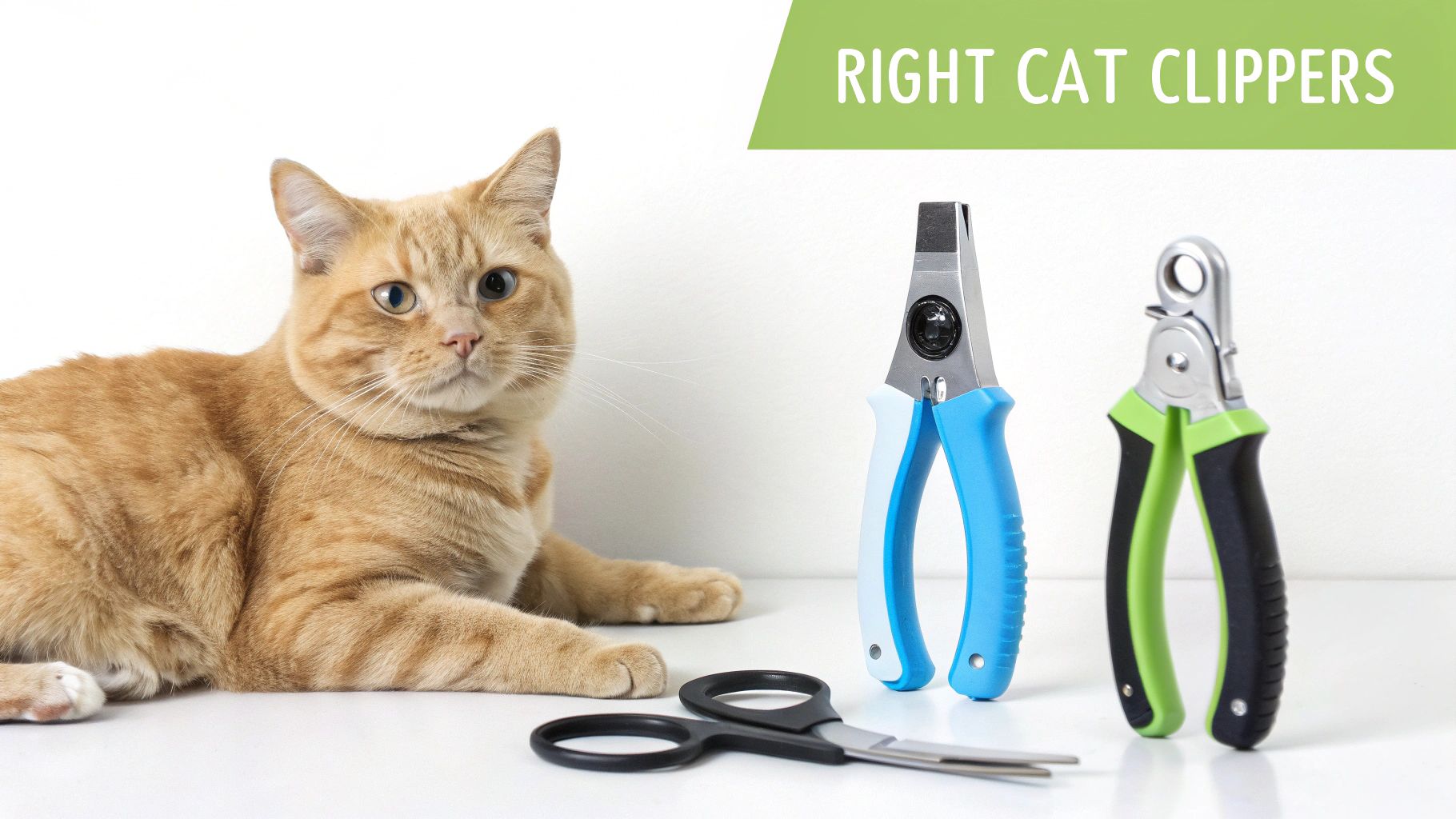
Selecting the right clippers is a practical step in building trust with your cat. The wrong pair can cause pain or injury, and your cat will remember. A dull blade doesn't slice cleanly through the nail; it crushes it, causing pain and making your cat dread the sight of clippers.
Conversely, a sharp, well-made clipper gets the job done silently and in a split second. This practical step minimizes stress and teaches your cat that nail trims are a quick and tolerable part of life. Think of it like using a sharp kitchen knife versus a dull one—one gives you a clean, precise cut, while the other makes a mess and requires more force.
Understanding the Main Types of Cat Clippers
When you shop for clippers, you will find three main designs: scissor clippers, guillotine-style clippers, and electric grinders. Each has specific advantages and disadvantages, so the best fit depends on what you are comfortable using and what your cat will tolerate.
- Scissor Clippers: These look like small scissors but feature a curved notch in the blade to securely hold the nail. They are highly intuitive, making them a top choice for beginners. This design gives you excellent control and a clear view of exactly where you are cutting.
- Guillotine Clippers: This style uses a loop that you place your cat's nail through. Squeezing the handle moves a single blade across to clip the nail. They provide a powerful and quick cut but can make it difficult to see the precise cutting point.
- Electric Grinders: This tool uses a rotating file to gently grind the nail down instead of clipping it. Grinders are an excellent choice for cats sensitive to the “snap” sound of clippers. The trade-off is that you must acclimate your cat to the buzzing sound and vibration, and the process takes longer.
Regardless of the tool, the primary goal is to avoid cutting the "quick"—the pink part of the nail containing blood vessels and nerves. Cutting it is painful, causes bleeding, and can create a lasting fear of nail trims. Your action plan is simple: only trim the clear, white tip of the nail.
Your main goal should always be a clean, quick cut. A quality pair of clippers with sharp stainless steel blades will slice through the nail cleanly. A dull pair will crush it, causing pain and turning your cat against the whole process.
To help you decide, here’s a quick breakdown of which clipper might work best for you and your cat.
Which Cat Nail Clipper Is Right for You
This table quickly compares the most common types of cat nail clippers to help you find the perfect match for your cat's personality and your comfort level.
| Clipper Type | Best For | Key Advantage | Potential Downside |
|---|---|---|---|
| Scissor Clippers | Beginners and cats who are relatively calm. Anyone who wants a clear view of the nail. | Easy to control, intuitive to use, and very precise. | May not be strong enough for very thick or tough nails. |
| Guillotine Clippers | Quick, one-handed cuts on cats who don't squirm too much. | Very powerful and makes a quick, clean cut. | Can be harder to see exactly where you're cutting, which is a risk for beginners. |
| Electric Grinder | Cats who are terrified of the "snap" sound of traditional clippers. | Leaves a smooth, rounded edge on the nail. Less risk of cutting the quick. | The noise and vibration can scare some cats. Takes longer than clipping. |
Ultimately, the best nail clippers for cats are the ones that let you work with confidence. While the tools might look a bit different, the core ideas of safety and comfort are universal for all pets. For another perspective on clipper features, you might find our guide on selecting a dog nail cutter helpful, as many of the principles about ergonomic design apply.
Preparing Your Cat for a Peaceful Nail Trim
A successful nail trim is 90% preparation and only 10% clipping. The objective is not just to trim the nails, but to normalize the experience so your cat remains calm. Do not resort to simply holding them down—that is a surefire way to create fear and turn every future trim into a struggle. Instead, build a positive association with both the nail clippers for cats and the act of having their paws handled. This process requires patience and is built on small, rewarding steps you will take long before you cut a single nail.
Create Positive Associations with Paw Handling
Many cats dislike having their paws touched. Your first task is to make gentle paw handling a normal part of your daily interactions, completely separate from nail trimming. Start when your cat is relaxed and cuddly, perhaps napping on your lap. Gently stroke their leg and then, for a second, touch their paw. The moment you do, give them a high-value treat they love. Do this only once or twice per session to begin.
Over the next few days, gradually increase the duration. Progress from a quick touch to holding their paw for a couple of seconds, then to gently massaging a single toe. The most critical step is to always reward them and end the session on a positive note before your cat shows any signs of annoyance.
This slow and steady approach is all about desensitization. It teaches your cat that paw handling is predictable and actually leads to good things. You're not trying to trick them; you're building a foundation of trust that will make all grooming so much easier. While we're talking about cats, these principles of positive reinforcement are pretty universal. You can see similar ideas in guides on how to groom your dog at home, where building that trust is just as vital.
Introduce the Clippers as a Neutral Object
Suddenly introducing a strange metal tool can be alarming for a cat. Your next step is to make the clippers a boring, neutral object in their environment. Leave the nail clippers out where your cat can see and investigate them, like on a coffee table or near their favorite sleeping spot. If your cat sniffs them, immediately reward them with a treat. This teaches them that the clippers themselves are not a threat.
After a day or two, implement these next steps:
- Touch and Treat: While your cat is nearby, pick up the clippers. Do not move toward them. Simply hold the clippers and immediately give them a treat.
- Sound Association: Get your cat used to the "click" sound. Hold the clippers away from them and make the clipping noise. The instant they hear it, give them a treat.
- Combine the Actions: During a calm moment, gently touch your cat’s paw as you've been practicing. With your other hand, touch the clippers to their paw without attempting to cut. Immediately follow up with praise and a favorite treat.
By breaking the process into these small, manageable steps, you dismantle the fear associated with nail trims. You are effectively rewriting the narrative in your cat's mind to one where paws and clippers lead to rewards, not stress.
The Art of Clipping Your Cat's Nails Safely
You have the right clippers and have completed the prep work. Now it is time to trim. A successful nail trim depends on staying calm, holding your cat securely, and knowing precisely where to cut. This is not a race; it is about safety and precision. Choose a time when your cat is at their most relaxed—perhaps dozing after a meal. A sleepy cat is more cooperative. Your cat will mirror your energy, so take a deep breath and act with gentle confidence.
Finding a Secure and Comfortable Hold
Your hold can determine the outcome of the entire session. You need a grip that is firm enough to prevent wiggling but gentle enough that it doesn't feel like a trap. A proven method is to sit with your cat in your lap, facing away from you. This position gives you a clear view of their paws and makes it harder for them to turn and nip.
For a particularly squirmy cat, use the "kitty burrito" technique. Wrap them snugly in a thick towel, leaving only one paw exposed. This helps them feel secure and prevents flailing, allowing you to focus on one nail at a time.
Identifying the Quick and Making the Cut
With your cat settled, take one paw in your hand. Apply gentle pressure on the top of the toe, on the paw pad just behind the nail, to extend the nail fully. Now, inspect the nail. You will see two distinct parts:
- The Outer Sheath: The hard, translucent tip. This is the only part you should cut.
- The Quick: The pink core inside the nail, which contains nerves and blood vessels. You must avoid cutting the quick at all costs.
On light-colored nails, the quick is easy to see. On dark nails, it can be nearly invisible. In these cases, be extra cautious and only snip off the very sharp, curved tip. It is always better to trim too little than too much.
When you are ready, position your nail clippers for cats to cut from top to bottom, not side to side. This vertical angle prevents the nail from splitting. Make one quick, decisive snip. If your cat remains calm, provide immediate praise and a high-value treat before moving to the next nail.
Don't try to be a hero. For your first few sessions, trimming just one or two nails is a huge win. You're building trust and teaching your cat that this whole process is quick, painless, and leads to something delicious.
This graphic breaks down the simple prep that makes all the difference.
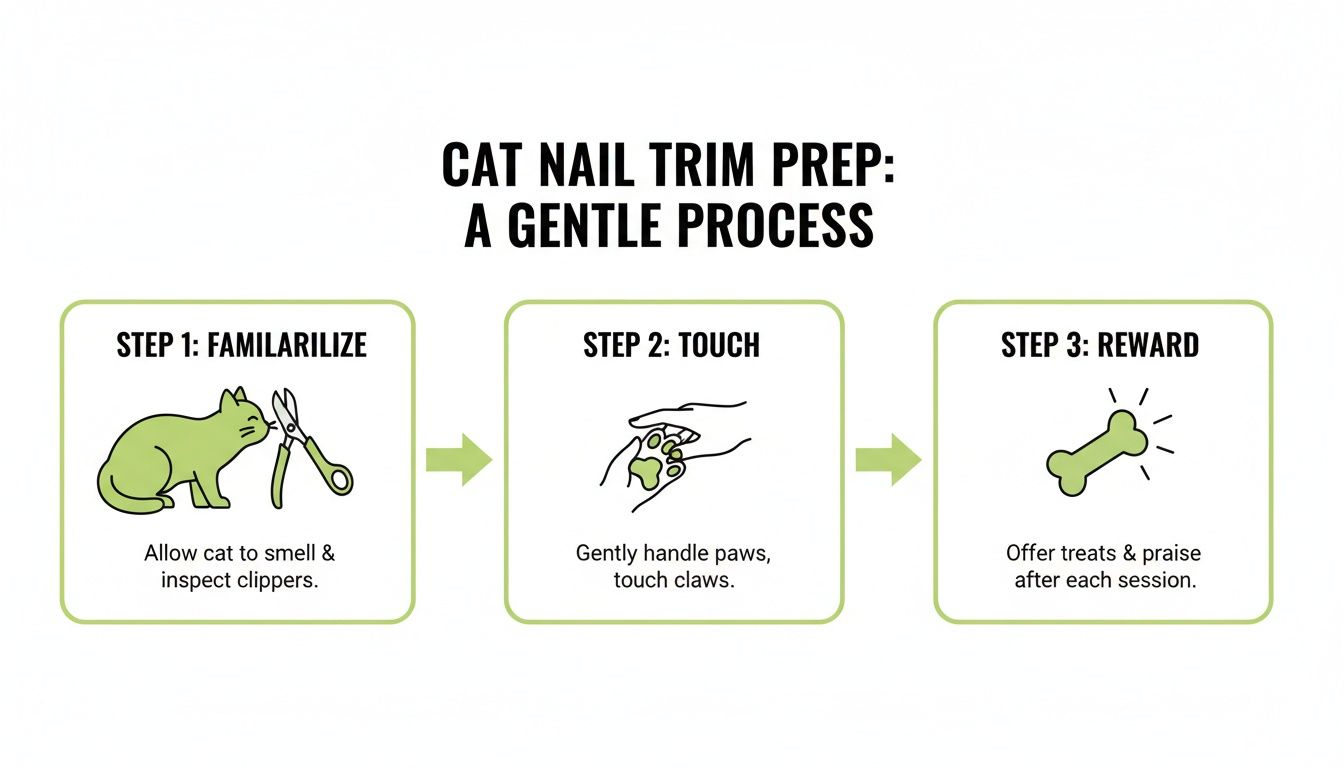
As you can see, getting them comfortable with you handling their paws before you bring out the clippers is the secret sauce.
What to Do If You Accidentally Cut the Quick
Even experienced owners can make a mistake. If you accidentally snip the quick, your cat will likely yelp, and the nail will bleed. Your most important action is to remain calm; panicking will only escalate your cat's distress. Before you even begin, make sure you have styptic powder in your grooming kit. If a bleed occurs, dip the nail directly into the powder or press some onto the nail with a cotton swab. Apply firm, gentle pressure for about 30 seconds to stop the bleeding.
Once the bleeding is controlled, immediately end the session. Give your cat affection, praise, and a special treat. Do not attempt to finish the other nails. End on the most positive note possible and try again in a few days.
Aftercare and Clipper Maintenance for Long-Term Success
The moment you snip the last nail is as important as the trim itself. Your immediate actions shape how your cat perceives future grooming. The goal is to solidify the session as a positive experience. The best way to do this is with an immediate, high-value reward. This should not be their regular kibble, but a special treat, a few crunchy snacks, or a minute of play with their favorite toy. This action creates the association: nail trim equals an amazing reward. This positive reinforcement makes your next session significantly easier by framing the entire experience positively.
Keeping Your Cat Nail Clippers in Prime Condition
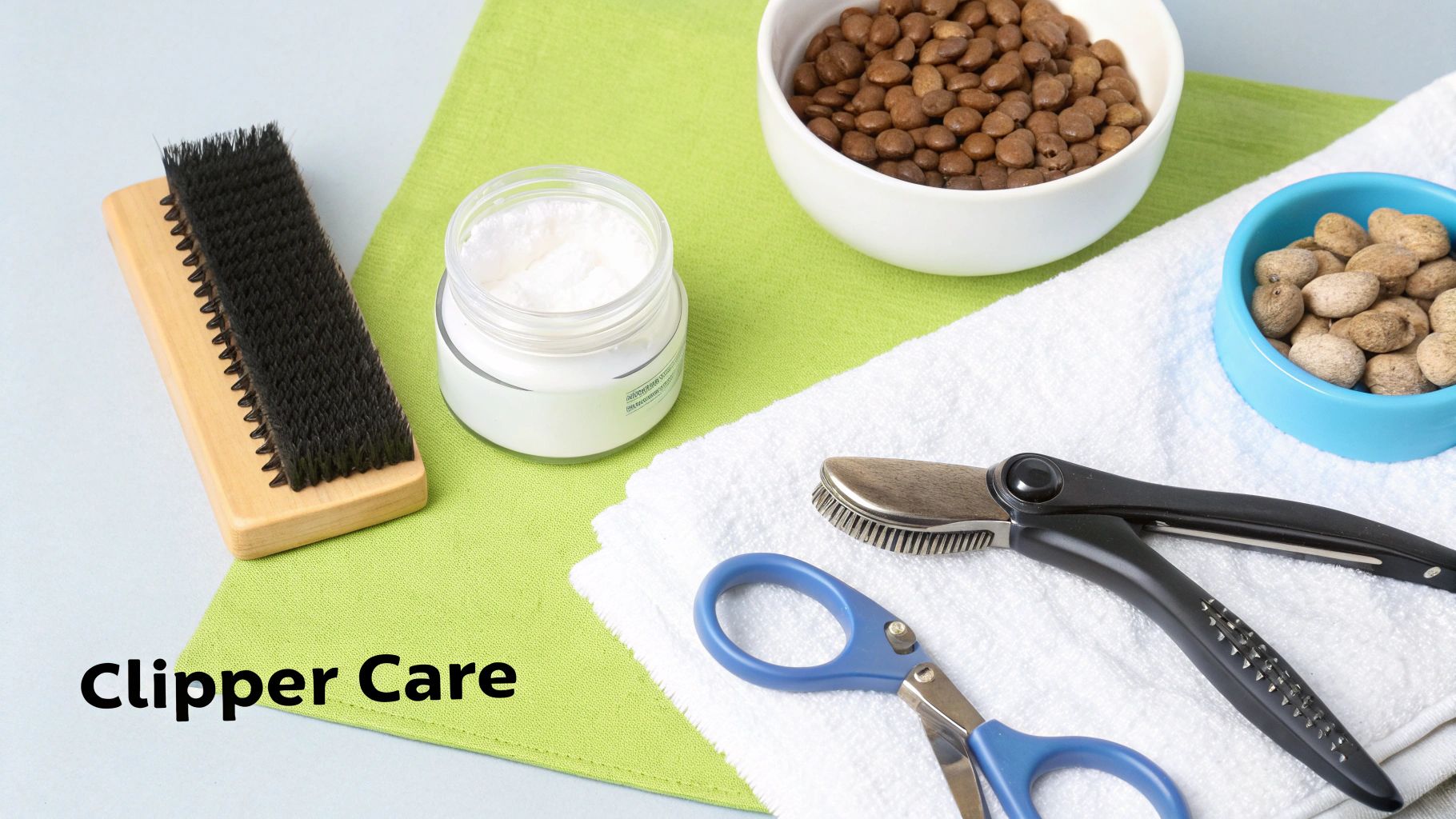
Your tools are as important as your technique. A dull or dirty pair of nail clippers for cats can crush the nail instead of cutting it cleanly, causing pain and undoing the trust you have built. Proper clipper care is a simple but non-negotiable step for a safe trim.
Follow this quick routine after each use to extend the life of your clippers and ensure every cut is clean:
- Clean the Blades: Use a soft cloth or a pet-safe antiseptic wipe to remove nail debris from the blades. This prevents bacteria buildup.
- Dry Them Thoroughly: Moisture causes rust, which dulls blades. Ensure the clippers are completely dry before storing them.
- Check for Sharpness: Periodically inspect the blades. If you notice they are crushing instead of cutting, it is time to sharpen or replace them.
- Store Them Properly: Keep your clippers in a dry, safe location away from humidity to prevent rust and damage.
A sharp, clean tool makes all the difference in the world. It guarantees a quick, painless snip that your cat will barely even notice. Letting your clippers get dull is a surefire way to create a negative grooming experience.
The market for high-quality pet grooming tools, especially clippers, is growing. The pet nail clippers market was valued at around $210 million in 2023 and is projected to reach nearly $340 million by 2032. This growth reflects that owners want reliable, safe tools for at-home grooming. You can read more about the trends in cat nail clippers and the growing market. Taking care of your clippers ensures you get the most out of your investment.
Troubleshooting Common Nail Clipping Challenges
Even with perfect preparation, some nail trims will be a struggle. The key is not to force it, but to have strategies ready for when your cat resists. If your cat is particularly squirmy, change your goal. Forget trimming all the nails in one session. Instead, adopt the "one-nail-a-day" approach. Trim a single nail, immediately follow up with their favorite treat, and end the session. These micro-sessions minimize stress and build tolerance over time.
Handling a Very Anxious Cat
For a terrified cat, you may need to return to basics. Put the clippers away and focus on reintroducing them as a neutral object. Let your cat sniff them, then offer a treat. The only goal is to reduce their anxiety about the clippers themselves. Sometimes, a change of location or an extra person can help. Try a quiet room with few distractions. A helper can provide a steady stream of treats and petting while you focus on clipping.
Tips for the Squirmy Cat and Dark Nails
For the classic wiggly cat, if the "kitty burrito" towel wrap isn't effective, commit to extremely short, positive sessions. Your mission is to get in, make one clean cut, and let them go before they have a chance to struggle.
Dark nails present a different challenge because the quick is invisible. Here is your action plan:
- Be Conservative: Snip only the sharp, curved tip. It is always safer to take off too little than too much.
- Use Good Lighting: Position a bright lamp or sit near a sunny window to help illuminate the nail's structure.
- Look Underneath: You can sometimes get a better view of where the quick might be by examining the underside of the nail.
Remember, your cat’s safety and comfort have to come first. If you're consistently struggling or your cat is showing extreme signs of distress, that's a clear signal to stop. Pushing through will only make things worse in the long run.
If you reach an impasse or accidentally injure your cat, consulting with a veterinarian is the correct action. A professional can perform the trim or provide advice tailored to your cat’s specific needs.
Got Questions? We’ve Got Answers.
Even with experience, questions often arise. Here are answers to common concerns to help you feel fully confident during trims. A frequently asked question is how often to trim. For most indoor cats, trimming nails every two to three weeks is a good rule of thumb. However, this can vary. An active young cat who uses a scratching post frequently may need trims less often than a senior cat who is less active. Older cats' nails can become overgrown without regular attention.
Can I Just Use My Own Nail Clippers?
While tempting, do not use human nail clippers on your cat. Human clippers are designed for our flat nails. A cat’s nails are round. Using a flat clipper on a round nail crushes it instead of cutting cleanly. This is painful and can cause the nail to split or splinter, creating a negative association with grooming.
Invest in a pair of proper nail clippers for cats. Their curved blades are specifically designed to encircle the nail for a clean, swift cut. This small investment makes a significant difference in your cat's comfort and safety.
What if My Cat Still Hates It?
You have tried everything: high-value treats, the purrito wrap, and short sessions, but your cat still panics at clipping time. It is time to stop. Forcing the issue will intensify their fear and increase the risk of injury to both of you.
You have other options:
- Call a Professional Groomer: Groomers have the experience and tools to get the job done quickly and with minimal stress.
- Ask Your Vet Tech: Your veterinarian's team can also perform nail trims. This is an excellent option for anxious or difficult cats, as they are trained to handle fearful animals safely.
As a caring cat owner, you're always thinking about your pet’s well-being, even when planning a vacation. Finding a comfortable and safe place for them is a top priority. For those who love to travel with their furry family members, resources like a guide to pet-friendly Smoky Mountain cabin rentals can be a lifesaver for planning the perfect trip.
The most important thing here is to put your cat's well-being first. There's absolutely no shame in getting professional help. In fact, knowing when to call in an expert is the mark of a truly responsible and loving pet owner.
Ready to make nail trims a calm and positive experience? Find the perfect clippers for your cat in the collection of high-quality grooming tools at Pet Magasin. Visit us at https://www.petmagasin.com.

Leave a comment