


Can You Crate Train an Older Dog: A Step-by-Step Guide

Yes, you can absolutely crate train an older dog. The old myth that you can't teach an old dog new tricks is simply untrue. With patience and a clear, positive game plan, you can teach any adult dog to see a crate as their personal safe space.
Why Crate Training an Older Dog Is a Game Changer
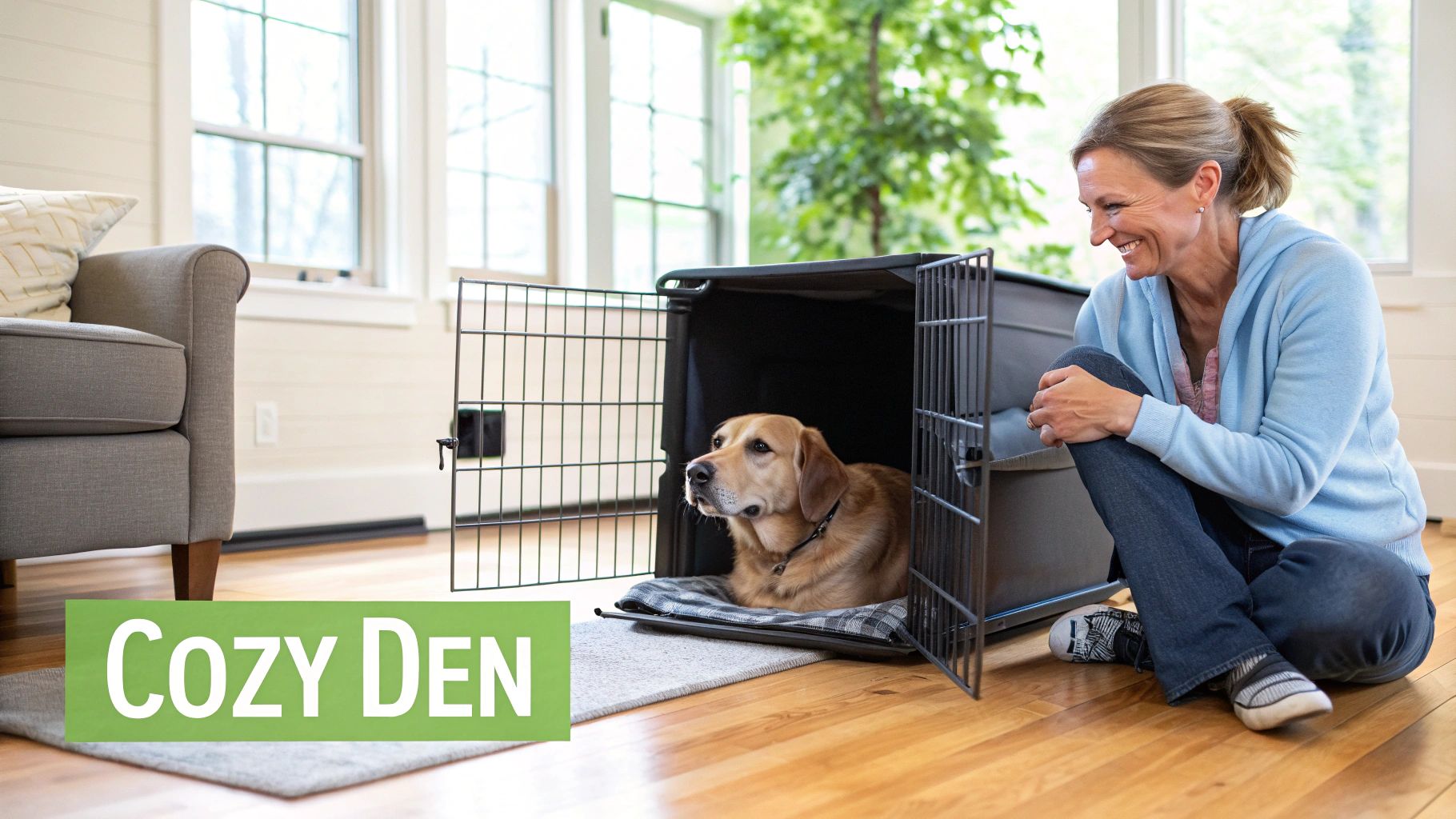
While crate training is often associated with puppies, it offers practical benefits for adult and senior dogs, especially rescues. The goal is not confinement; it’s about providing a secure den where your dog can genuinely relax.
The training process for an older dog relies on the same core principles as for a puppy: patience and positive reinforcement. If your dog has an unknown history, moving slowly and ensuring every crate interaction is positive is non-negotiable.
The Real-World Benefits for Adult Dogs
Proper crate training provides structure and safety that can resolve common behavioral challenges. It's a versatile tool for creating a calmer household.
- Solving Housetraining Mysteries: A crate leverages a dog's natural instinct not to soil their den. This makes it highly effective for reinforcing potty training with an adult dog.
- Easing Separation Anxiety: For a dog that panics when left alone, a crate can become a comforting sanctuary that helps them feel secure until you return.
- Ensuring Safety and Peace of Mind: The crate keeps your dog safe from household hazards when unsupervised. It also serves as a secure, familiar space during travel or vet visits.
The core principle is simple: your dog must associate the crate with positive experiences like treats, toys, and safety. This positive association is what transforms a box into their favorite spot.
So, can you crate train an older dog? The answer is a resounding "yes." Experts confirm that with consistency, the process is effective for dogs of any age.
Puppies may learn in a few days, but older dogs typically need 2-4 weeks to feel comfortable, with some taking a couple of months. The results are worth it—an impressive 85-90% of senior dogs show significant improvement in housetraining within the first month of proper crate training.
For more expert advice on training older dogs, check out the great resources over at Wag!. Starting this journey is the first step toward a calmer, happier life for both of you.
How to Choose the Right Crate for Your Adult Dog
Selecting the right crate is the first practical step and can determine the success of your training. For an older dog, factors like joint health, temperament, and past experiences are critical in finding the perfect fit.
The first decision is the crate type. Each style offers different benefits, and what works for an anxious dog needing a quiet retreat may not suit a social dog who wants a clear view of the room.
Crate Type Comparison for Older Dogs
Match the crate's features to your dog's specific needs. A senior dog with arthritis has different requirements than a healthy adult. This table breaks down the most common options to help you choose.
| Crate Type | Best For | Pros | Cons |
|---|---|---|---|
| Wire Crates | Dogs who enjoy being part of the action; good for airflow. | Excellent ventilation, easy to clean, often foldable for storage. | Can feel too exposed for anxious dogs; may not be as cozy. |
| Plastic Crates | Nervous dogs or frequent travelers; creates a secure, den-like feel. | More enclosed and private, durable, often airline-approved. | Less ventilation, can be bulky and hard to store. |
| Soft-Sided Crates | Calm, well-behaved dogs and for convenient travel. | Lightweight, portable, and easy to set up anywhere. | Not durable enough for chewers or dogs who try to escape. |
Ultimately, your goal is a safe, comfortable space. For many older dogs, a sturdy plastic crate or a wire crate paired with a cover strikes an effective balance between security and comfort.
Turning the Crate into a Cozy Den
Once you've chosen a crate, your next task is to make it irresistible. Think of it as outfitting your dog's personal bedroom to be so inviting they choose to enter on their own.
Here are three key items to create a five-star doggy den:
- Comfortable Bedding: For a senior dog, an orthopedic or memory foam bed is essential. It provides crucial support for aging joints and makes the hard floor comfortable for naps.
- High-Value Toys: Use a special puzzle toy or a long-lasting chew that they only get inside the crate. This builds a powerful positive association, making "crate time" an exciting event.
- A Secure Water Source: Use a clip-on water bowl. This ensures your dog stays hydrated without spilling water and soaking their bedding.
The right crate size is non-negotiable. Your dog must be able to stand up, turn around completely, and lie down comfortably with their legs stretched out. A crate that's too large can encourage them to use one end as a potty area, undermining housetraining efforts.
Place the crate in a social area of your home, like the living room, so your dog feels included. For an easy upgrade, a crate cover can instantly transform an open wire crate into a secure, cave-like retreat—a feature many dogs love.
To get the measurements just right, learn more about standard dog crate sizes to ensure a perfect fit for your companion.
Introducing the Crate Without the Stress
This is where your patient, step-by-step training begins. Forget about rigid schedules or forcing your dog into the crate. With an older dog, success comes from a gentle, dog-led approach that builds trust, not fear.
The goal for this phase is simple: convince your dog that the crate is a wonderful place.
To start, secure the crate door so it stays wide open. This removes any feeling of pressure. Your job is to make every interaction with the crate positive, transforming it from a box into their personal sanctuary.
Making the Crate a Destination
Your mission is to make your dog believe that the best things—treats, toys, and meals—happen in or near the crate. This process rewires their associations, which is crucial if they have negative past experiences.
Here's how to start:
- Toss Treats: Begin by casually tossing high-value treats (like small pieces of chicken or cheese) near the crate.
- Move Closer: Gradually toss the treats just inside the entrance.
- Go to the Back: Finally, toss them to the very back of the crate, encouraging your dog to step all the way inside.
- Feed Meals Inside: Place your dog's food bowl at the back of the crate during meal times. This creates a strong, positive routine where they must enter the crate fully to eat.
Reading Your Dog’s Body Language
Your progress depends on your ability to read your dog's comfort level. Pushing too fast will set you back. You must be their guide, knowing when to proceed and when to pause.
Watch for these signals:
- Green Lights (Relaxed Body): A loose, wiggly body, soft eyes, and a relaxed, gently wagging tail. This means your dog is comfortable and you can proceed.
- Red Flags (Signs of Stress): Lip licking, yawning when not tired, a stiff body, or showing the whites of their eyes ("whale eye"). Stop immediately. You've moved too quickly. Return to the previous step where they were comfortable.
This visual guide breaks down the process of setting up the crate to be a welcoming, secure space.
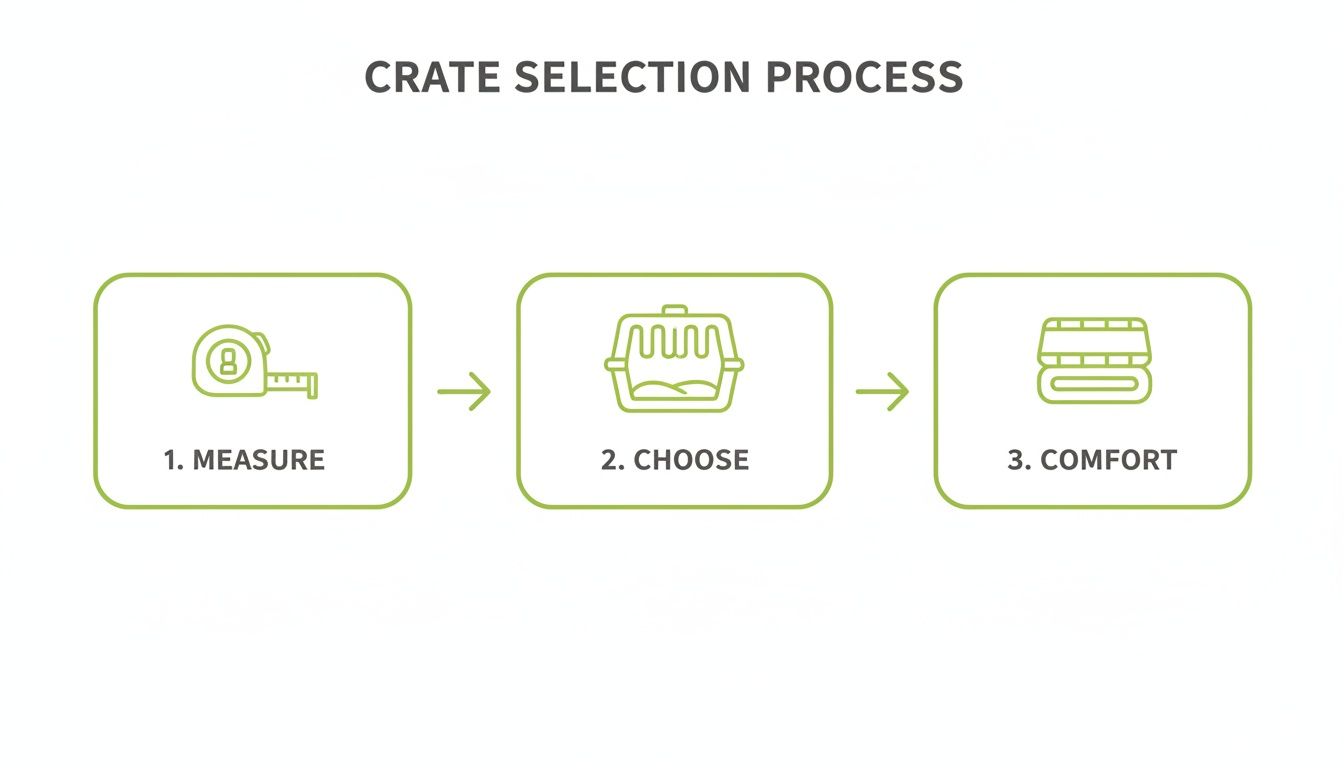
As the infographic shows, creating this positive space is a deliberate process. It starts with the basics, like measuring for the right size, but ends with the most crucial element: making it comfortable.
Practicing Short Door Closures
Once your dog confidently enters the crate for meals and treats, you can introduce the closed door. This is a delicate step. The goal is to show them that a closed door is temporary and always opens again.
Follow these steps:
- While your dog is eating or chewing a toy inside, quietly swing the door shut for one to two seconds.
- Open it again before they have a chance to react. Do not make a fuss.
- Repeat this several times in a session, gradually increasing the duration.
- Slowly work up to three seconds, then five, then ten, always staying nearby.
Golden Rule: Never force your dog into the crate or shut the door if they show panic. Every interaction must build confidence. If they get anxious, you’ve moved too fast. Go back to tossing treats inside with the door open.
The approach is similar to how you would crate train a puppy, but with an older dog, patience is paramount. You are rebuilding trust, one positive second at a time.
Using the Crate to Solve Common Dog Issues
Many owners explore crate training to solve two major problems: housetraining accidents and separation anxiety. The good news is that a crate, introduced correctly, is an incredibly effective tool for managing both. This isn't a quick fix; it's about leveraging your dog's natural instincts to build better habits.
A dog's instinct to keep their den clean is powerful. For housetraining, the crate taps directly into this, which is a game-changer when you're retraining an adult dog with a spotty past or dealing with age-related incontinence.
Tackling Housetraining Setbacks
When you combine crate time with a consistent potty schedule, you prevent indoor accidents. This breaks the frustrating cycle and reinforces the desired behavior: going potty outside.
This is one of the most significant benefits of crate training older dogs. In fact, some reports show up to a 75% reduction in indoor accidents within just two weeks of starting a proper crate routine.
It’s especially helpful for the estimated 25% of older rescues who come from unstable backgrounds or for the one in four dogs over age eight who struggle with age-related incontinence. The crate provides the structure they need.
Creating a Sanctuary for Separation Anxiety
For a dog who panics when you leave, the crate becomes their safe space. The goal is to reframe their perception of being alone, turning a time of high stress into an opportunity to relax.
This requires building an overwhelmingly positive association, which means the crate can never be used for punishment. Instead, make it the only place your dog gets their absolute favorite things.
The key is to position the crate as a predictable, safe haven that signals it's time to settle down. When the environment is consistent and rewarding, it can significantly lower their anxiety.
Here are actionable strategies to implement:
- Introduce "Crate-Only" Rewards: Reserve high-value puzzle toys, like a KONG stuffed with peanut butter and frozen, exclusively for crate time. This can make them look forward to you leaving.
- Use Calming Aids: A white noise machine can muffle startling outdoor sounds. A crate cover creates a cozier, den-like atmosphere that feels more secure.
- Practice Short, Calm Departures: Avoid emotional goodbyes. Give them their special toy in the crate, calmly close the door, and leave without fuss.
A well-crate-trained dog is also more adaptable, which is a lifesaver when traveling to pet-friendly vacation rentals. The crate becomes their familiar "home base," no matter where you are.
If separation anxiety is your main concern, we have a whole guide on how to help a dog with separation anxiety that you might find useful.
Troubleshooting Common Crate Training Problems
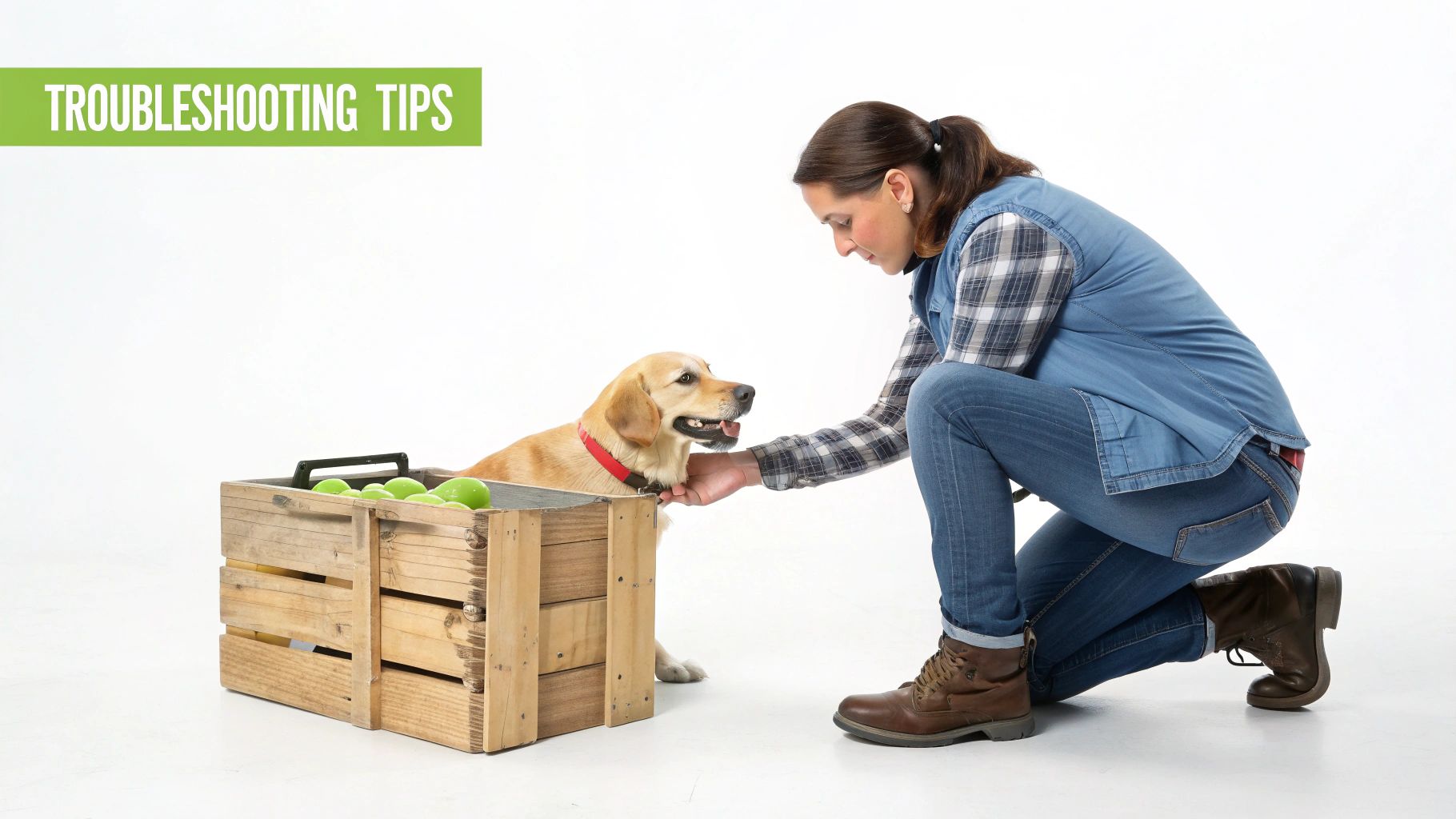
Even with a patient plan, you may encounter problems like whining, barking, or escape attempts. The key is to respond with calm, consistent leadership, not frustration. How you respond will either reinforce the unwanted behavior or guide your dog toward being quiet in their space. This isn't defiance; it's communication.
Decoding Whining and Barking
First, determine why your dog is making noise. Is it a bored whine or a panicked bark? A quick mental checklist can help you identify the cause.
- Attention-Seeking Whining: This is often a test. The best response is to ignore it. Wait for a moment of silence—even just a second—before opening the crate door.
- Distress Barking: This sounds urgent and is often paired with pacing or panting. It's a sign you've moved too fast. Scale back to shorter crate sessions and focus on rebuilding positive associations.
- Unmet Needs: Have they had a potty break? Have they been exercised? A tired dog is usually a quiet dog. A brisk walk or a puzzle toy before crate time can make a significant difference.
Never let your dog out of the crate while they are actively whining or barking. If you do, you’ve just taught them that making a racket is the magic button to open the door. Always, always wait for that golden moment of silence before you reward them with freedom.
Handling the Houdini Dog
An escape artist dog is frustrating and can be dangerous. If your older dog is trying to break out of their crate, your first priority is safety.
First, secure the crate. Inspect every latch, connection point, and bolt to ensure it is solid. For determined dogs, use zip ties or carabiner clips on the latches for extra security.
Next, shift your focus to making the crate a place they want to be. Provide high-value, crate-only rewards like frozen KONGs or special long-lasting chews. This redirects their escape energy into a positive activity.
This strategy is especially important for older rescues, who may be dealing with anxiety from their past. The good news is that consistent, positive crate training can be a game-changer, with some reports showing a 65-80% reduction in anxiety symptoms after just a few weeks. Something as simple as covering the crate with a blanket to create a dark, den-like space can increase their acceptance by as much as 50%. It truly can become the safe haven they crave. For more on this, check out these great insights on training older rescue dogs.
Common Questions About Crate Training Older Dogs
It's normal to have questions when crate training an older dog. Here are direct answers to the most common issues that arise.
How Long Can an Adult Dog Stay in a Crate
A healthy adult dog can typically stay in a crate for 4-6 hours during the day and up to 8 hours overnight. However, senior dogs or those with health conditions will need more frequent potty breaks. The crate is a short-term management tool for safety and comfort, not a full-time living space.
A good rule of thumb is that a dog can hold their bladder for about one hour for every month of age, maxing out around eight hours. For seniors, this can drop significantly, so you have to be observant.
What if My Dog Has a Bad History with Crates
If you suspect your dog has past trauma related to a crate, you must proceed with extra patience. The goal is to create entirely new, positive associations.
- Change the Crate Type: If they previously used a wire crate, try a plastic or soft-sided one to avoid triggering old memories.
- Make it Their Choice: Never force them inside. Every entry must be their own decision, motivated by high-value treats they can't resist.
- Consult a Professional: For severe fear or trauma, contact a certified dog trainer or veterinary behaviorist. They can create a customized plan for your dog's specific needs.
My Older Dog Just Whines and Barks What Should I Do
First, run through a quick checklist: Do they need to go out? Have they been exercised? Do they have water? If their basic needs are met, the noise is likely behavioral.
The golden rule is to never open the door while they are making noise, as this rewards the behavior. Wait for a brief pause in the barking or whining, then calmly open the door.
To encourage quiet, provide a special puzzle toy filled with a high-value treat (like frozen peanut butter) that they only get inside the crate. This redirects their focus from wanting out to engaging in a rewarding activity. If the barking sounds like a panic attack, you have likely pushed them too fast. Go back to the earlier, easier steps of training.
For all your pet's needs, from comfortable travel carriers to essential grooming tools, Pet Magasin provides high-quality supplies to help you give them the best care. Explore our collection at https://www.petmagasin.com.

Leave a comment