


A Step-by-Step Guide to Crate Train Your Puppy

The goal of crate training is to provide your puppy with a safe, personal den—not a jail. To succeed, you must create a cozy spot your puppy loves. Start by making the crate comfortable with soft bedding and special toys they only get inside. Next, use high-value treats and enthusiastic praise to build a strong, positive association with their new space. The key is to progress slowly, ensuring every crate experience is a good one.
Why Crate Training Is a Foundational Skill for Your Puppy
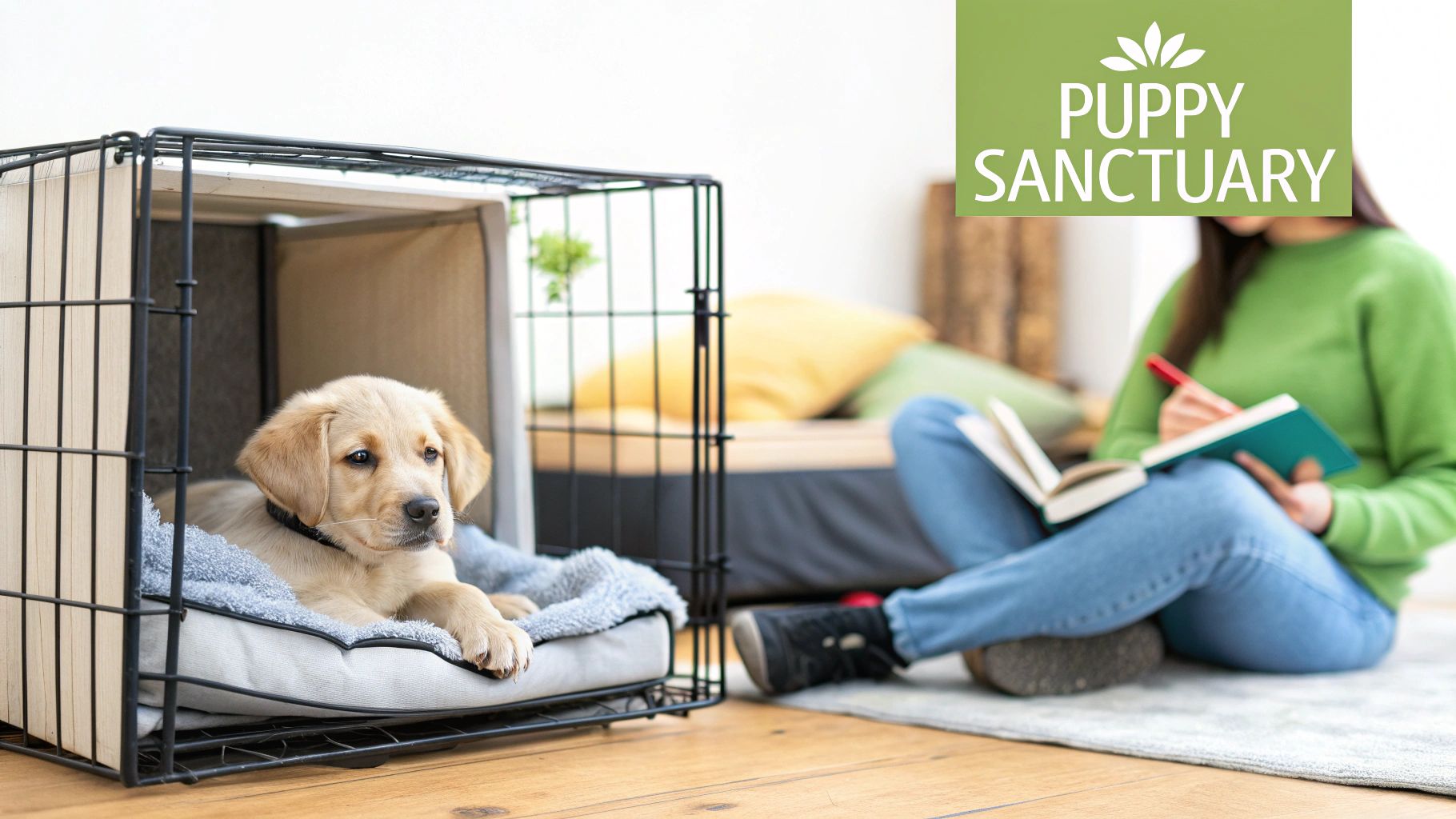
Many new puppy owners feel guilty closing the crate door for the first time. It can feel like you're caging your new friend. However, when done correctly, crate training is one of the most beneficial things you can do for your puppy's safety and well-being.
Instead of a cage, view the crate as your puppy’s private bedroom. Dogs are den animals by nature and instinctively seek small, enclosed spaces where they feel secure. A crate fulfills this instinct, giving them a reliable sanctuary when they are tired, overwhelmed, or need quiet time.
A Tool for Safety and Structure
A puppy-proofed home is a myth. Curious puppies can find trouble anywhere, from chewing electrical cords to ingesting harmful objects. The crate acts as a safe zone where they can relax without constant supervision, giving you peace of mind and keeping them out of harm's way.
It is also an indispensable tool for potty training. Dogs have a natural instinct not to soil their sleeping area. By using a crate that is sized correctly, you tap into this instinct, encouraging them to hold their bladder. This builds bladder control and establishes a predictable potty routine, significantly speeding up the house-training process.
Understanding Global Perspectives
It’s important to acknowledge that crate training is viewed differently worldwide. In some countries, particularly in Europe, the practice is regulated or banned due to cultural views on animal welfare. Spain, for instance, has prohibited crate training, classifying it as animal cruelty. This highlights the critical importance of using the crate as a positive management tool, not for long-term confinement. You can discover more insights about the crate controversy to understand these different perspectives.
The goal is not to confine your puppy, but to create a space they choose to be in. A properly introduced crate becomes a safe haven, reducing anxiety and preventing destructive behaviors rooted in boredom or stress.
Understanding these benefits allows you to approach the process with confidence. You are not just managing behavior; you are teaching a life skill that supports their well-being. Vet visits, car rides, and hotel stays become far less stressful when your dog has a familiar, portable safe space.
Choosing the Right Crate and Setting Up a Cozy Den
The path to a perfectly crate trained puppy begins with selecting the right crate. This choice sets the foundation for your puppy's entire experience with their new personal space. Your objective is to create a private sanctuary, not a holding pen. The right size, location, and comforts will determine whether your puppy views it as a punishment or a personal haven.
Finding the Perfect Crate Material
Crates are available in several materials, and your choice should depend on your puppy's temperament and your lifestyle. Here is a breakdown of the primary options:
- Wire Crates: Recommended by most trainers, these offer excellent airflow and visibility, helping your puppy feel less isolated. Most models are foldable for easy storage and include a divider panel, an essential feature for a growing puppy.
- Plastic Crates: Often called "flight kennels," these are ideal for travel. Their enclosed, den-like design can be comforting for anxious dogs who prefer more privacy. However, they can be bulky for everyday home use.
- Soft-Sided Crates: Made from fabric, these are lightweight and portable. They are best suited for puppies who are already comfortable in a crate and are not prone to chewing, as they lack durability.
For most new puppy owners, a wire crate with a divider offers the most flexibility and practicality for initial training.
Getting the Size Just Right
Sizing is a critical step that many new owners get wrong. The crate must be just large enough for your puppy to stand up, turn around, and lie down comfortably. A crate that is too large will encourage them to use one end as a toilet, which undermines house-training efforts.
A common pitfall is buying a crate that fits the puppy’s future adult size without using a divider. This extra space often invites potty accidents, complicating the house-training process and creating a negative association with the crate.
The divider panel included with most wire crates is your most valuable tool. Use it to adjust the internal space, moving it back as your puppy grows. If you are unsure about dimensions, you can learn more about finding the correct dog crate sizes to ensure a perfect fit.
Comparing Puppy Crate Types
If you are still undecided on the best material, this table provides a clear comparison to help you choose the right crate for your puppy and your home.
| Crate Type | Best For | Pros | Cons |
|---|---|---|---|
| Wire Crates | Everyday home use, growing puppies, and owners who need storage flexibility. | Excellent ventilation, great visibility, easy to clean, often includes a divider panel. | Can be heavy, may not feel as "cozy" without a cover, less portable than other types. |
| Plastic Crates | Travel (especially by air), anxious dogs who prefer a den-like feel. | More enclosed and private, durable, airline-approved options available. | Can be bulky, less ventilation, harder to store. |
| Soft-Sided Crates | Quick trips, car travel, and well-behaved puppies who don't chew. | Very lightweight, portable, and easy to set up and take down. | Not very durable, can be destroyed by chewers, difficult to clean thoroughly. |
Each type has its benefits, but for foundational home training, the versatility of a wire crate is unmatched.
Creating an Irresistible Den Atmosphere
Once you have the crate, your next task is to transform it into a welcoming den. This is how you begin building positive associations.
First, consider placement. Position the crate in a common area, like the living room, so your puppy feels included. At night, consider moving the crate into your bedroom for the first few weeks to provide extra reassurance.
Next, add comfort. A soft, durable bed or a simple fleece blanket is a good start. Choose bedding that is chew-resistant and easy to wash in case of accidents.
Finally, introduce crate-only treasures. Select one or two high-value toys, like a puzzle feeder or a special chew toy, that your puppy only has access to inside the crate. This simple tactic transforms the crate from a boring box into the place where the best things happen.
A Realistic Crate Training Schedule for Days and Nights
This is where your preparation becomes action. The key to successful crate training is to integrate short, positive sessions into your puppy's daily routine. The most important rule is to watch your puppy, not the clock—their comfort level should dictate the pace.
Your goal is to make the crate a predictable, safe space for rest. Avoid making it just the place they go when you leave. Instead, weave crate time into their natural daily rhythm.
Building Positive Associations From Day One
Before you close the crate door, your puppy must view the crate as a wonderful place. This initial stage is about creating fun, pressure-free experiences. Take your time, as these early interactions are crucial.
Here's how to start:
- Lure with Treats: Toss high-value treats near the crate, then just inside the entrance. Let your puppy enter and retrieve them without any pressure from you. Use a cheerful tone, saying something like, "Go get it!"
- Encourage Full Entry: Once they are comfortable, toss the treats to the back of the crate. As soon as they walk all the way in, offer enthusiastic praise. Let them walk right back out. This teaches them they are in control and that good things happen in the crate.
A Sample Daytime Crate Training Schedule
A puppy's routine is a cycle of play, eat, potty, and sleep. Your task is to integrate the crate into this natural flow. For an 8-10 week old puppy, a typical daytime schedule might look like this:
- 7:00 AM - Wake Up & Potty: Take your puppy directly from the crate to their designated potty spot outside.
- 7:15 AM - Breakfast Time: Feed your puppy their breakfast inside the crate with the door open to build a strong positive association.
- 7:30 AM - Post-Meal Potty Break: Take them out again immediately after they finish eating.
- 7:45 AM - Playtime: Engage in active play to burn off puppy energy. A tired puppy is a calm puppy.
- 8:30 AM - Crated Nap Time: When you see signs of sleepiness, guide your puppy into their crate with a safe chew toy. Close the door and stay nearby. Aim for a 30-60 minute nap.
- 9:30 AM - Potty & Play: As soon as they wake, take them straight outside for a potty break, followed by more playtime.
Repeat this cycle throughout the day. The most effective strategy is to crate your puppy when they are already tired and have an empty bladder. Forcing an energetic puppy with a full bladder into the crate will only create a negative experience. For more guidance on timing, refer to this puppy potty training schedule.
A puppy's ability to "hold it" is incredibly limited. Never ask them to stay crated longer than they are physically able. It only leads to accidents, which creates anxiety and setbacks in your training.
Managing Expectations for Nighttime Training
The first few nights with a new puppy can be challenging. They are in an unfamiliar environment, separated from their mother and littermates. Responding correctly to their cries is crucial for establishing a successful nighttime routine.
Your goal is twofold: teach them the crate is for sleeping and meet their physical need for potty breaks. It is unrealistic to expect a young puppy to sleep through the night without interruption. A general rule is that a puppy can hold their bladder for one hour for every month of age. Full bladder control is not typically achieved until around six months old.
Crafting a Successful Nighttime Routine
A consistent evening routine signals to your puppy that it's time to settle down. Follow these steps:
- Remove Water: About 60-90 minutes before bedtime, pick up the water bowl to reduce the likelihood of nighttime potty breaks.
- Final Potty Trip: Make the last potty trip of the night calm and uneventful. Use a consistent verbal cue like "go potty." When they eliminate, offer quiet praise and return inside immediately.
- Crate Placement: For the first few weeks, place the crate in your bedroom. Your presence is comforting and allows you to hear if they genuinely need to go out, helping you distinguish between a true need and simple fussing.
- Bedtime Cue: As you place them in the crate, use a calm, consistent phrase like "Night night." Provide a safe chew toy to help them settle.
When your puppy wakes you up, keep the interaction brief and boring. Take them out on a leash for a potty break, then return them directly to the crate with minimal fuss. This teaches them that nighttime wake-ups are for potty only, not for play.
How to Handle Whining, Barking, and Other Common Challenges
Even with a perfect plan, you will encounter challenges like whining, barking, and accidents. These are normal parts of the process to crate train a puppy. This is not a sign of failure but your puppy attempting to communicate. Your role is to determine the reason behind the behavior so you can address it effectively.
Decoding Your Puppy's Cries
A puppy's whine is their primary form of communication. Learning to differentiate their cries is key to responding appropriately.
- The "I Need to Go Potty" Whine: This is typically an urgent, insistent cry. Respond to this immediately, especially at night, to prevent accidents that undermine house training.
- The "I'm Lonely and Bored" Whine: This is often a lower-pitched, rhythmic complaint. The puppy is testing to see if noise will get them attention.
- The "I'm Scared" Cry: This is a cry of genuine distress that can escalate to panicked barking. It indicates the puppy feels overwhelmed and may be experiencing confinement anxiety.
Your response is critical. For potty whines, take them out immediately but keep it strictly business. For boredom whines, wait for a few moments of silence before letting them out. For panicked cries, you must slow down your training and return to building positive associations from the beginning.
Preventing and Managing Potty Accidents
Accidents will happen, especially with young puppies. Your strategy should focus on prevention first and proper cleanup second. An accident in the crate usually occurs for a few predictable reasons.
First, ensure the crate is sized correctly. If there is enough room to potty in one corner and sleep in another, they will. Use the divider to limit the space to just enough for them to stand up, turn around, and lie down.
Second, review your schedule. An accident is often a sign that the puppy was left crated too long. Shorten the intervals between potty breaks, especially after waking, playing, and eating.
Key Insight: Never, ever punish your puppy for an accident in the crate. All punishment does is create fear and anxiety around you and the crate, which will lead to much bigger behavioral issues down the road. Instead, see it as a simple communication breakdown and adjust your plan.
When an accident occurs, thorough cleaning is essential. Dogs are drawn to spots where they have previously eliminated, so any lingering odor will encourage repeat accidents. Use an enzymatic cleaner specifically designed to break down urine proteins and completely eliminate the scent. Since accidents are part of puppyhood, it's useful to know how to get urine smell out of a mattress or other fabrics.
This simple infographic breaks down the core positive reinforcement loop for crate training, showing how treats, play, and rest work together.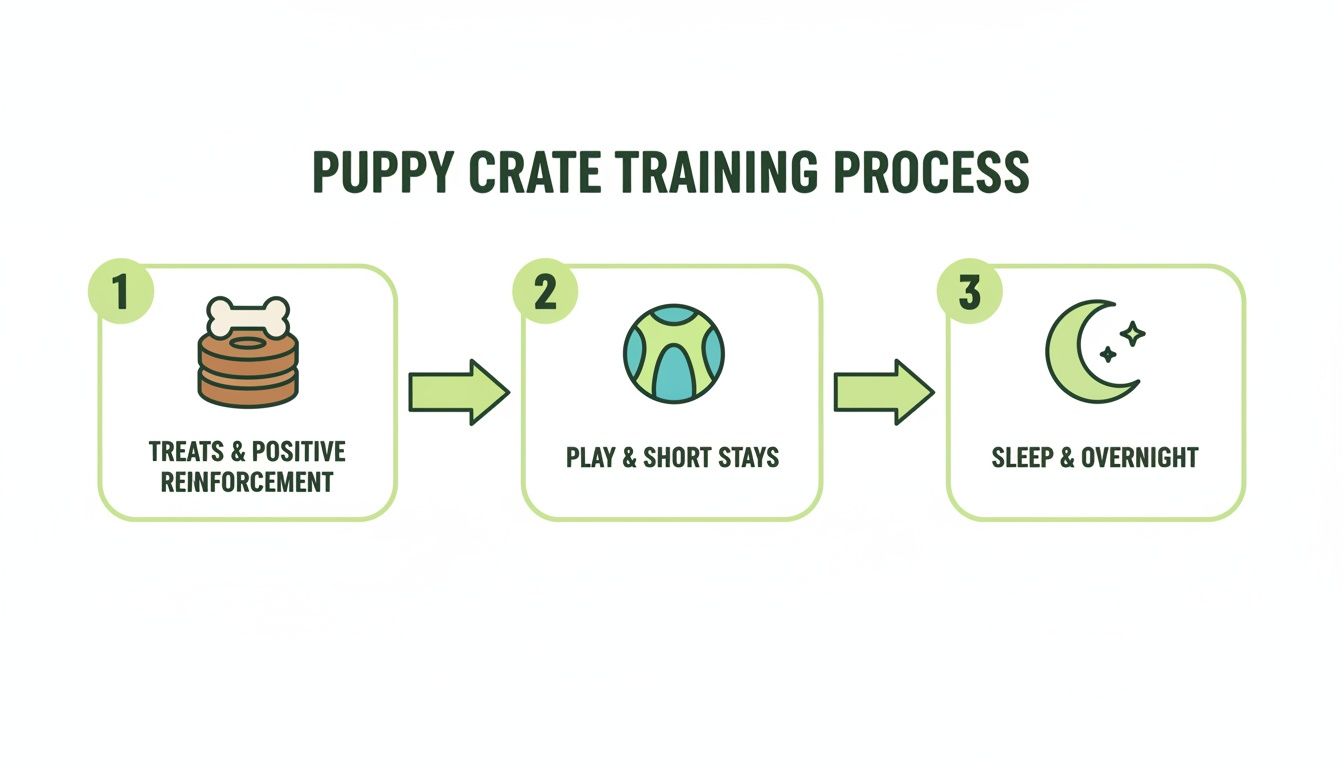
By consistently rewarding your puppy for good crate experiences, you build a foundation of trust that makes working through these little bumps in the road much easier.
Is It Separation Anxiety or Just Puppy Fussiness?
While it is easy to assume a protesting puppy has separation anxiety, true separation anxiety is a clinical condition and less common than simple incomplete crate training or confinement anxiety. Understanding the difference is vital for finding the right solution.
- Typical Puppy Fussiness: The puppy whines or barks for a few minutes after you leave but then settles down. This is normal adjustment behavior.
- Confinement Anxiety: The puppy panics almost immediately upon being enclosed, even if you are present. Signs include excessive drooling, heavy panting, and frantic attempts to escape the crate.
- Separation Anxiety: The puppy shows distress only when left alone, regardless of whether they are crated. Panic behaviors like barking, destruction, and accidents occur only in the owner's absence.
To determine the cause, set up a camera to observe your puppy when you are not there. If they panic in the crate but are calm when left alone in a puppy-proofed room, the issue is likely confinement anxiety. If they panic whenever they are alone, it may be separation anxiety.
For typical fussiness, return to short, positive training sessions. For suspected anxiety, consult a professional trainer or veterinary behaviorist.
Advanced Crate Training and Preparing for Travel
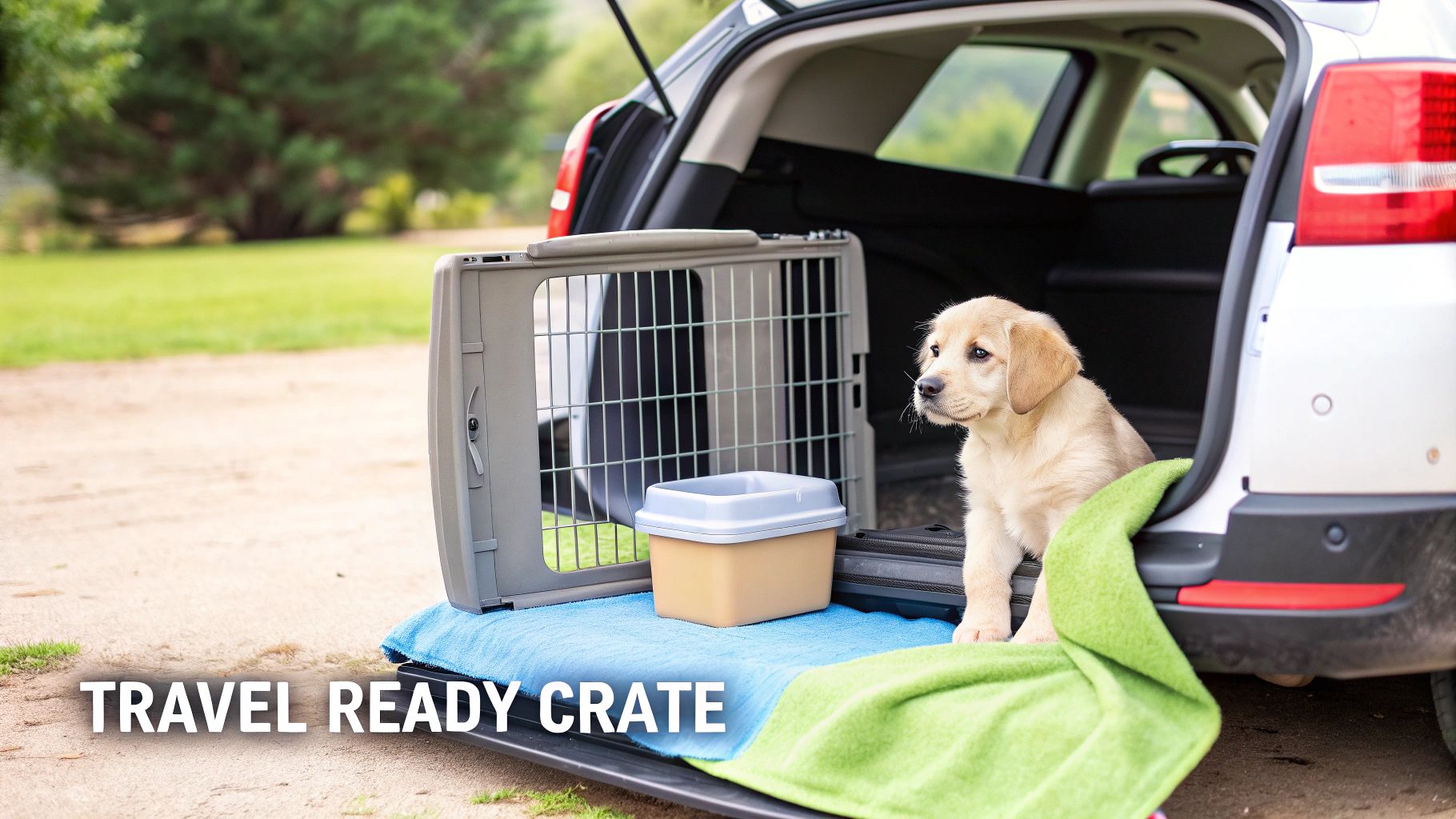
As your puppy becomes more comfortable with their crate, your role shifts from active trainer to supportive manager. The ultimate goal is for the crate to become a space they choose to enter. When you find your puppy napping in their open crate, you have achieved a major milestone. This indicates they see it as their personal den.
Extending Crated Time Safely
Once your puppy is comfortable with short periods in the crate, you can gradually increase the duration. The key is to proceed slowly to avoid pushing them past their comfort level.
Begin by adding just five or ten minutes at a time. If they are comfortable for 30 minutes, try 40. Always ensure they have had a potty break and some playtime before crating them so they are ready for a nap.
Avoid turning your departures into a dramatic event. Keep them low-key. A calm, simple cue like "I'll be back" is sufficient. The less fuss you make, the more your puppy learns that your comings and goings are normal.
The most successful way to crate train a puppy for longer periods is by making departures and arrivals as boring as possible. This teaches them that your coming and going is a normal part of the day, not a reason for anxiety.
Preparing Your Puppy for Car Travel
Accustoming your puppy to car travel early on will make future trips much easier. The car can be a strange and noisy environment, so introduce it with the same patience and positivity you used for the crate.
Follow these steps:
- Start While Parked: Begin by letting your puppy hang out in the back seat with their travel crate while the car is stationary. Keep the crate door open and offer treats and praise.
- Introduce the Engine: Once they are relaxed, turn the car on for a few seconds, then turn it off. Reward them for staying calm.
- Take Tiny Trips: Make the first few trips extremely short—just to the end of the driveway and back. Gradually increase the duration to a trip around the block, then to a nearby park.
You want your dog to associate the car with positive experiences, not just stressful trips to the vet.
Getting Ready for Air Travel
Flying with a puppy requires significant preparation. Airlines have strict regulations, and your puppy must be completely comfortable in their travel carrier long before your trip.
Introduce the soft-sided travel carrier at home, just as you did with their primary crate. Leave it open in a common area, toss high-value treats inside, and encourage them to explore and nap in it on their own.
Selecting the right carrier is crucial. It is wise to research the best pet carriers for air travel to find one that is TSA-approved and will keep your puppy safe and comfortable.
This advanced training solidifies the crate as a lifelong tool for safety and comfort, ensuring that every journey you take together is a positive one.
Answering Your Crate Training Questions
Here are practical answers to the most common questions from new puppy owners.
Can I Leave My Puppy in the Crate for 8 Hours While I Work?
No, an 8-hour period is too long for a young puppy. A general guideline is that puppies can hold their bladder for about one hour per month of age. Leaving them for a full workday will lead to accidents and crate aversion. Arrange for a midday potty break, whether it's from a friend, a dog walker, or yourself during a lunch break.
What if My Puppy Has an Accident in the Crate?
Do not panic or punish your puppy. An accident is a signal that your routine needs adjustment.
- Check Crate Size: Ensure the crate is not too large. Use a divider to create a space just big enough for your puppy to stand up, turn around, and lie down.
- Adjust Your Schedule: An accident usually means too much time has passed between potty breaks. Shorten the intervals, especially after waking, eating, and playing.
- Clean Thoroughly: You must use an enzymatic cleaner to eliminate the urine odor completely. Regular soap will not break down the proteins, and any remaining scent will encourage repeat accidents.
An accident isn't your puppy being naughty; it's them telling you their physical limits were reached. The solution is always to adjust the schedule, never to scold.
While puppy-proofing the crate, consider protecting your home as well. Using products like waterproof couch covers designed for dogs can prevent damage and reduce stress.
Should I Put Food and Water in the Crate?
Feeding your puppy their meals in the crate is an excellent way to build a positive association.
Water is a different matter. For short daytime periods of 1-3 hours, it is best to remove the water bowl to minimize the need for potty breaks. For overnight crating, pick up their water an hour or two before their final potty trip. For adult dogs or on hot days, a spill-proof crate bowl is a good option for longer durations.
My Puppy Hates the Crate! What Am I Doing Wrong?
If a puppy is panicking in their crate, it is usually because the introduction process was too fast. They feel trapped rather than safe.
The solution is to go back to the beginning. Re-establish the crate as a positive place by playing games near it and offering high-value treats that are given only inside the crate. Start with the door open, then close it for just a few seconds at a time, gradually increasing the duration as your puppy remains calm. Always ensure they are tired and have had a potty break before any crate time.
At Pet Magasin, we know that training your new friend is a journey with ups and downs. That’s why we create high-quality, reliable products to support you and your furry family member every step of the way. From our durable grooming tools to our TSA-approved travel carriers, we're here to help make pet ownership a joy. Explore our full collection at https://www.petmagasin.com.

Leave a comment