


Your Essential Puppy Potty Training Schedule

A solid puppy potty training schedule isn't about luck—it's about consistency and preparation. Before you worry about the clock, a few practical setup steps will make the whole process smoother and faster. Use this guide to turn a chore into a powerful bonding experience.
Setting Your Puppy Up for Potty Training Success
Bringing a new puppy home is exciting, but it's easy to feel overwhelmed. Instead of immediately enforcing a strict hourly schedule, focus on the foundational work in the first few days. This initial setup is what makes any schedule effective.
Your goal is to create clear routines, gather the right supplies, and manage your own expectations. Getting this part right makes potty training a collaborative effort between you and your pup, not a battle.
Create a Designated Potty Spot
First, decide on one specific spot for your puppy to do their business. This can be a patch of grass in your yard or a dedicated area for potty pads inside. Consistency is non-negotiable. Your puppy needs to build a strong scent association with this single location.
Each time you take them out, use a leash to lead them directly to that spot. Do not let them wander. The mission is clear: this spot is the bathroom. This repetition is the fastest way to teach them where to go, eliminating confusion and future accidents.
Choose a Consistent Verbal Cue
Next, pair the potty spot with a simple verbal cue. Pick a phrase like “go potty” or “potty time” and use it every single time you take your puppy to their designated area.
The trick is to say the cue as they are going to the bathroom. This forges a direct link between the words and the action. Avoid repeating the phrase while they sniff around; save it for when they're actively eliminating. Over time, this cue becomes a command, which is invaluable when you're in a hurry or facing bad weather. Find more tips on building positive habits in our complete guide to puppy potty training tips.
A puppy doesn't arrive knowing the rules of your home. It's your job to teach them with patience and clarity. Every successful trip to the potty spot is a victory worth celebrating, reinforcing the behavior you want to see.
Prepare Your Training Toolkit
Having the right supplies on hand makes the process manageable and effective. You don’t need much, but these items are essential for a successful puppy potty training schedule:
- High-Value Treats: Use small, delicious treats that are reserved only for successful potty breaks. This makes the reward special and highly motivating.
- Enzymatic Cleaner: Standard cleaners are not enough. You must use an enzymatic formula that completely breaks down urine proteins. This is the only way to eliminate the scent that encourages a puppy to soil the same spot again.
- A Leash and Collar/Harness: Always use a leash for potty breaks, even in a fenced yard. A leash keeps your puppy focused on the task at hand instead of getting distracted by leaves, sounds, or smells.
Actionable Potty Schedules for Every Puppy Age
A successful puppy potty training schedule adapts as your puppy grows. An 8-week-old's biological clock is vastly different from a 4-month-old's. Your job is to anticipate their needs before an accident happens.
The key is to structure their day around key events: waking up, eating, playing, and napping. This creates a predictable rhythm your puppy can understand. Use the schedules below as actionable blueprints, and adjust them to fit your specific routine.
The Hour-Per-Month Guideline
A practical rule of thumb is that a puppy can generally hold its bladder for about one hour for every month of its age. This means a 2-month-old puppy needs a potty break every 2–3 hours. A 4-month-old can often wait 4–5 hours.
When building your schedule, remember that a consistent structure is your most powerful tool. If you need help mapping out a daily plan, this ultimate daily schedule template guide offers excellent visual examples. It's all about repetition.
This simple diagram shows the core training loop you'll repeat for every potty break.
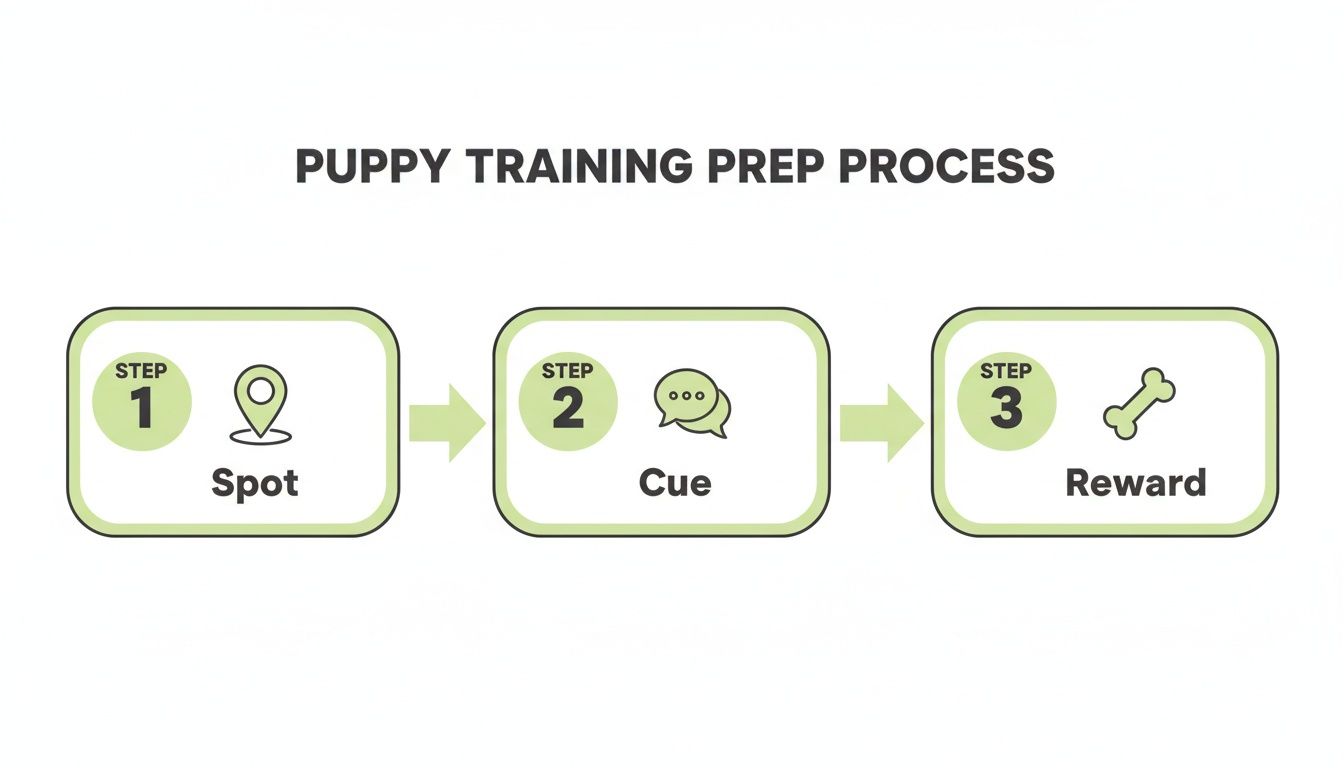
As you can see, the process is simple: take them to the same spot, use the same cue, and provide an immediate reward. This is how you build a reliable habit.
To make it even easier, here’s a quick-glance table showing how to adjust your schedule as your puppy grows.
Sample Puppy Potty Schedule By Age
| Time of Day | Action for 8-10 Week Old Puppy | Action for 3-4 Month Old Puppy |
|---|---|---|
| 7:00 AM | Wake up & take immediately outside for potty | Wake up & take immediately outside for potty |
| 7:15 AM | Serve breakfast, then take out again right after | Serve breakfast, followed by a short walk & potty break |
| 8:00 AM | Supervised playtime, with a potty break in the middle | Extended playtime or a longer walk |
| 9:00 AM | Crate for nap time | Nap time or quiet time in the crate |
| 10:30 AM | Take out immediately after waking up | Take out for a potty break after waking up |
| 12:00 PM | Serve lunch, followed by an immediate potty break | Midday potty break & short play session |
| 2:00 PM | Playtime, potty break, then nap in crate | Potty break after a nap |
| 4:00 PM | Take out immediately after waking up | Afternoon potty break & playtime |
| 6:00 PM | Serve dinner, followed by an immediate potty break | Dinner, followed by a walk & potty break |
| 8:00 PM | Final playtime & potty break | Quiet time with family, potty break before bed |
| 10:00 PM | Final potty break right before crating for the night | Final potty break right before bedtime |
| 2:00 AM | Set an alarm for a mandatory midnight potty break | May start sleeping through the night; listen for whining |
This table provides a solid starting point. Your most important job is to watch your puppy for their specific cues and needs.
Schedule for an 8 to 10-Week-Old Puppy
At this age, your puppy has a tiny bladder and zero control. Your schedule must be frequent. When they are awake, take them out every hour.
Your day will be a constant loop: wake up, potty, eat, potty, play, potty, nap. You cannot provide too many opportunities to go outside. The more successful trips you log, the faster they learn.
Schedule for a 10 to 12-Week-Old Puppy
As your puppy gets a bit older, you can begin to stretch the time between potty breaks from one hour to two. They are developing bladder control but still require constant supervision.
The structure remains the same: every potty break is tied to a key event (waking, eating, playing). Their naps may lengthen and playtimes become more active. Watch closely for signs they need to go, such as sniffing the ground, circling, or whining.
Schedule for a 3 to 6-Month-Old Puppy
Now your puppy has better physical control and understands what you're asking. You can implement a more predictable, time-based schedule, taking them out every 3-4 hours.
A sample daily action plan looks like this:
- 7:00 AM: Wake up, immediate potty break.
- 7:30 AM: Breakfast, followed by a walk with a potty opportunity.
- 12:00 PM: Midday potty break.
- 4:00 PM: Afternoon potty break.
- 6:00 PM: Dinner, then a walk with a potty opportunity.
- 10:00 PM: Final potty break right before bed.
Your puppy's reliability grows significantly during this period. Your consistent actions will cement this training for life. Stick to the plan to ensure fewer accidents and a more confident dog.
Mastering Crate Training for Peaceful Nights
A crate is your most powerful tool for implementing your puppy potty training schedule, especially at night. Frame the crate as a safe, cozy den—not a punishment. This taps into your dog’s natural instinct to keep their sleeping area clean, which is a game-changer for preventing overnight accidents.
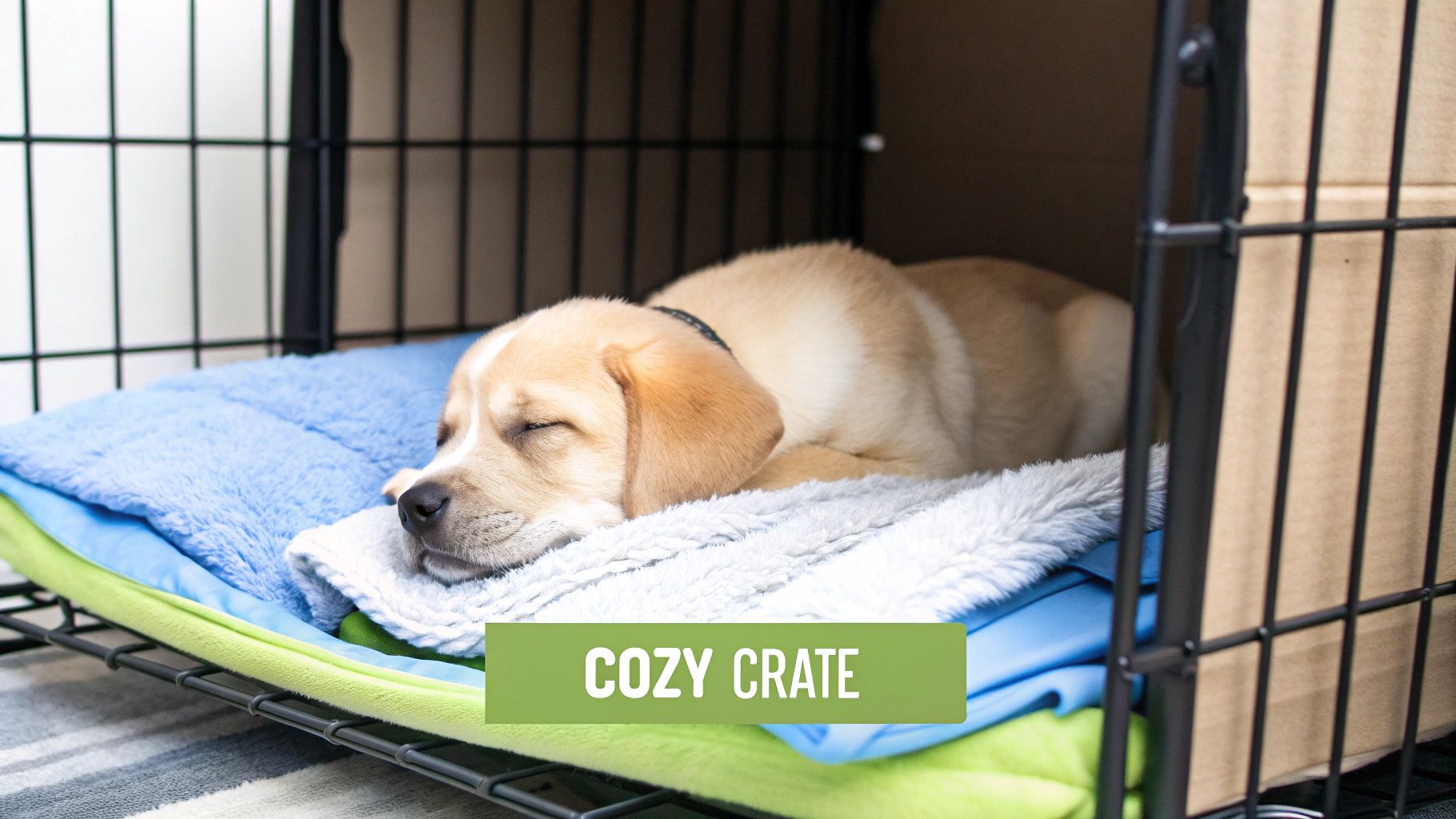
To build a positive association, make the crate comfortable with soft bedding. Add high-value treats and special toys that they only get when inside. This action transforms the crate from a place of confinement into their personal retreat.
Creating a Soothing Nighttime Routine
A predictable bedtime routine signals to your puppy that it's time to wind down, empty their bladder, and settle in for sleep. This isn't just about preventing accidents; it's about teaching your puppy how to sleep soundly through the night.
Here is an actionable routine that works:
- Last Call for Food and Water: Remove food and water bowls 2-3 hours before bedtime. This gives their system time to process everything before they sleep.
- Winding Down: An hour before bed, engage in calm activities like gentle play or a short training session. The goal is mental fatigue, not physical hype.
- The Final Potty Trip: Take them outside for one last potty break right before placing them in the crate. Keep this trip all-business: no playing or excited chatter. Use your potty cue and offer quiet praise when they go.
A common mistake is turning a midnight potty break into playtime. Keep these trips brief, quiet, and use only dim light. The goal is to get them back to bed as quickly as possible, reinforcing that nighttime is for sleeping.
Handling Whining and Midnight Potty Breaks
Whining is inevitable, especially in the first few nights. You must learn to distinguish an "I need to go potty!" whine from an "I'm lonely and want out!" whine. A puppy under 12 weeks will almost certainly need at least one potty break overnight.
When they wake you, take them out on a leash immediately. Give them a few minutes to eliminate. If they go, offer quiet praise. If they don't, take them straight back to the crate without any fuss. This teaches them that crying only results in a boring trip outside, not a fun play session.
The crate must be the right size: just big enough for them to stand up and turn around. To learn more about selecting the right one, check out this guide on choosing the best kennel for your dog.
How to Handle Potty Training Accidents and Setbacks
No matter how perfect your potty training schedule is, accidents will happen. Your reaction in these moments is critical. It shapes your puppy’s understanding and trust in you. Stay calm and consistent, even when you find a puddle on your favorite rug.
Remember, your puppy is not being defiant; they are a baby learning a complex skill. Scolding them creates fear and anxiety, which will sabotage your training efforts. Your response must be immediate, quiet, and focused on cleanup and getting back on schedule.
What to Do the Moment an Accident Happens
If you catch your puppy in the act, make a short, sharp noise like a quick clap or a firm "Ah-ah!" to interrupt them. The goal is to startle, not scare. The instant they pause, scoop them up and carry them directly to their designated potty spot outside.
If they finish their business outside, praise them enthusiastically with treats and happy talk. This action connects the dots: going potty in the right place earns them great rewards.
If you discover an accident after the fact, do not scold your puppy. They cannot connect your anger to a past event. Simply clean it up thoroughly with an enzymatic cleaner.
Your immediate reaction sets the tone. A calm interruption followed by a trip outside teaches the correct action. Punishment after the fact only teaches your puppy to fear you.
Even with the best intentions, accidents happen. Getting rid of lingering smells is key. For a deep dive into strategies for eliminating stubborn home odors, especially from pet mishaps, this guide is a lifesaver.
Understanding Different Types of Urination
Not every puddle is a simple training mistake. Identifying the "why" behind an accident helps you address the root cause effectively.
- Submissive Urination: This happens when a puppy feels intimidated, such as during a greeting. They may cower or roll over. To manage this, avoid looming over them and make greetings calm and indirect.
- Excitement Peeing: Common in young pups, this is an involuntary reaction during high excitement, like when you come home. Keep greetings and play sessions low-key to prevent this.
- Marking: More common as dogs mature, some puppies start marking territory early. This is different from a simple accident and often requires a focused management plan, including considering neutering.
Overcoming Potty Training Regression
It’s frustrating when a house-trained pup suddenly starts having accidents again. This is potty training regression, and it's a common developmental hiccup. It often happens when a puppy is given too much unsupervised freedom too soon.
The solution is to go back to basics. Implement a training reset. Tighten up your supervision as you did when they were a new puppy. Take them out more frequently, reward every outdoor success enthusiastically, and limit their free-roam time. This refresher course will get them back on track quickly.
Helpful Potty Training Tools and Products
While your puppy potty training schedule is the foundation of success, the right gear makes the process smoother. These are not shortcuts but support tools that help you maintain consistency and teach your puppy faster. Being prepared is half the battle.
A few smart purchases can reduce frustration and keep your training plan on track by making the correct choice—pottying outside—the easiest choice for your puppy.
Essential Cleanup and Management Gear
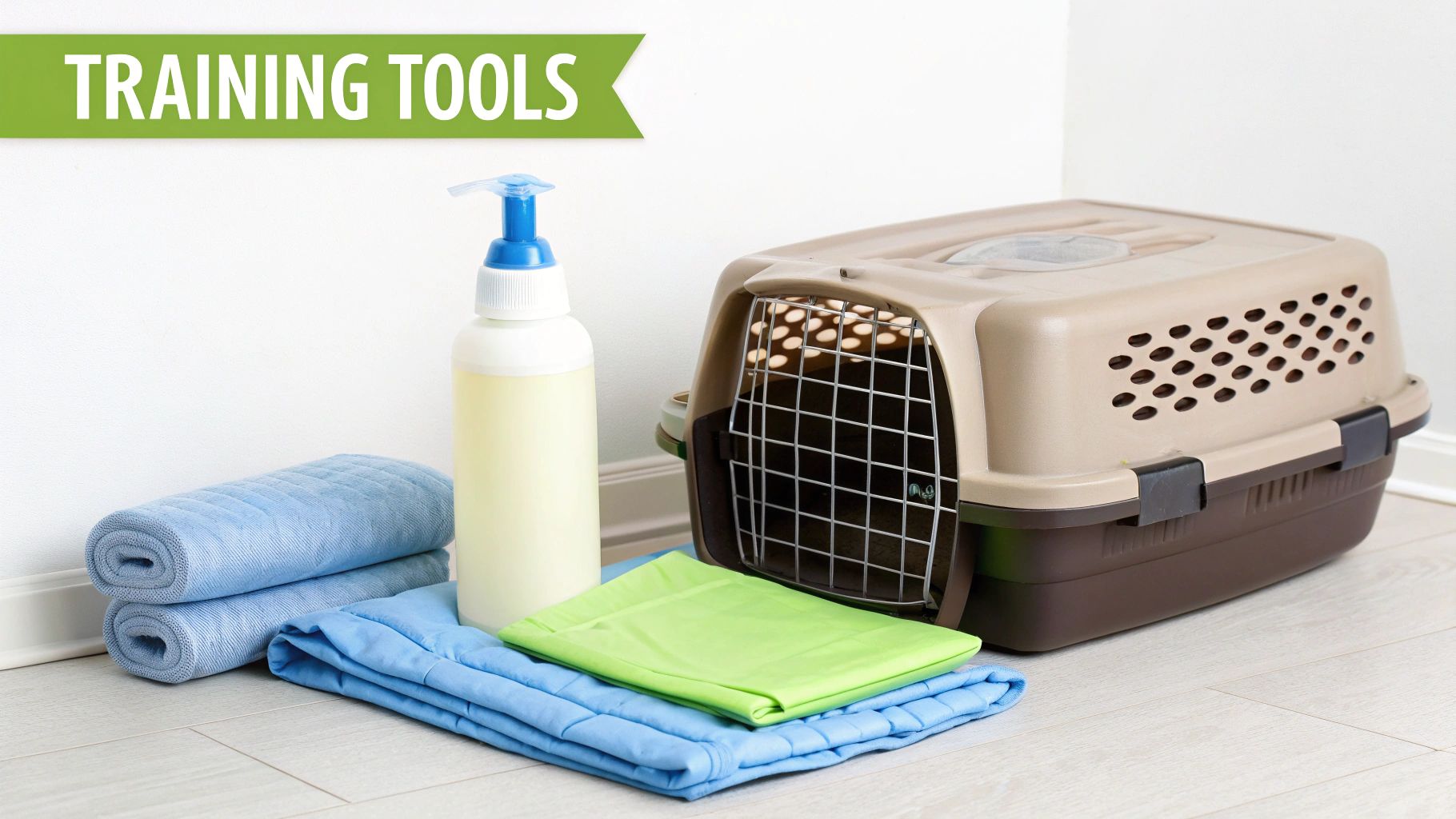
Accidents are a given. The right cleaner makes all the difference. An enzymatic cleaner is non-negotiable. It uses enzymes to completely break down urine proteins, eliminating the odor that tells your pup "potty here again." It is your single best defense against repeat accidents.
To manage your puppy’s space and prevent messes, consider these tools:
- Belly Bands: For male puppies prone to marking, a belly band is a sanity-saver. This simple wrap catches urine, preventing messes while you work on training the behavior away.
- Washable Pet Diapers: These are ideal for female pups, especially during travel or visits to new places. They provide peace of mind without creating landfill waste.
- Travel Crate: A portable crate helps you maintain a consistent schedule and provides your puppy a safe space, whether you're visiting family or on a road trip.
The Role of Potty Pads in Your Schedule
Potty pads can be a useful temporary tool, particularly for apartment dwellers or puppies who are not yet fully vaccinated. However, you must use them strategically to avoid confusing your puppy about the ultimate goal: going potty exclusively outside.
Use potty pads as a temporary bridge, not a permanent solution. Always place them in the same spot, ideally near the door you use for potty breaks, to help your puppy make the connection.
To use pads effectively, choose one spot and stick to it. Lead your puppy there at scheduled potty times and reward them with praise and treats when they use it. As your puppy gains bladder control, begin the transition by moving the pad progressively closer to the door, and then finally, right outside. For a reliable option, check out these super-absorbent training pads that prevent leaks.
Answering Your Top Puppy Potty Training Questions
Even with a perfect schedule, questions will arise. Potty training is rarely a straight line. Knowing how to handle common challenges will build your confidence and keep your puppy on track.
Here are clear, practical answers to the most common questions from new puppy owners.
How Long Does It Realistically Take To Potty Train A Puppy?
Every puppy is unique, but most are reliably house-trained between four and six months of age. Your consistency with the potty training schedule is the single biggest factor influencing this timeline. Some smaller breeds may take longer due to their tiny bladders.
Remember, "fully trained" means going several months without a single indoor accident. Your patience is as critical as your schedule.
What Should I Do If My Puppy Has An Accident In Their Crate?
First, do not scold them. A puppy soiling their den is not a behavior problem; it is a clear sign that the schedule failed. Immediately clean the crate and bedding with an enzymatic cleaner to completely eliminate the scent.
Next, analyze your routine. A crate accident almost always means one of three things:
- You waited too long between potty breaks.
- The crate is too large, allowing them to use one end as a bathroom.
- They did not have a successful final potty break right before being crated.
The fix is direct: shorten the time between potty trips and ensure the crate is just large enough for them to stand up and turn around, but no larger.
When a puppy soils their crate, it's a signal to re-evaluate your schedule, not a moment for punishment. The crate should always remain a safe, clean space. Adjust your timing and crate size to set them up for success.
Can I Potty Train My Puppy If I Live In An Apartment?
Absolutely. The core principles of consistency and frequency are identical. The main challenge is logistics. Since you cannot simply open a back door, every trip outside must be a planned event.
Always use a leash and go to the same designated potty spot every time. Some apartment dwellers use potty pads or a balcony grass patch as a temporary measure, but the ultimate goal must always be a full transition to going potty outside.
Why Did My Puppy Suddenly Start Having Accidents Again?
This is the dreaded potty training regression. It is frustrating but common, often occurring between four and eight months of age. Your first step is to consult your veterinarian to rule out a medical issue like a UTI.
If your pup gets a clean bill of health, go back to basics. Shorten the time between potty breaks, use high-value rewards for every outdoor success, and temporarily limit their freedom in the house. This brief return to Potty Training 101 almost always gets them back on track quickly.
At Pet Magasin, we believe that the right tools make pet ownership a joy. From washable diapers for extra peace of mind to durable travel carriers that keep your routine consistent, we have the high-quality supplies you need. Explore our products today at https://www.petmagasin.com.

Leave a comment