


The Best Shampoo for Dogs with Skin Allergies: An Actionable Guide

To find the best shampoo for a dog with skin allergies, you need a formula packed with soothing, anti-inflammatory ingredients like colloidal oatmeal, aloe vera, or pramoxine hydrochloride. Just as important is what isn't in the bottle—it must be free from harsh chemicals, sulfates, and artificial fragrances. Your best action is to choose a hypoallergenic or medicated shampoo designed to calm irritated skin, rebuild its moisture barrier, and stop the itch fast.
Your Guide to Soothing Your Dog’s Itchy Skin
It’s painful to watch your dog suffer from constant scratching and raw, irritated skin. Many owners feel lost in a sea of products that promise relief but fail to deliver. This persistent itching is a clear signal that your dog’s skin barrier—its primary defense—is compromised and needs immediate support.
This guide provides a clear, actionable roadmap to relief. We will cut through confusing marketing claims to give you a direct path forward. Our goal is to equip you with the knowledge to transform bath time from a stressful chore into a healing ritual for your dog.
The Allergy Problem is Bigger Than You Think
If you're dealing with this issue, you are not alone. Skin allergies are one of the most common health problems for dogs, driving a massive demand for effective solutions. The global pet shampoo market is projected to grow from USD 616.9 million in 2025 to USD 1,084.1 million by 2035, with allergy-relief shampoos being a major catalyst. This growth underscores how many owners are actively searching for a real fix.
Here's what you'll learn to do:
- Identify the key ingredients that actively soothe and heal irritated skin.
- Spot and avoid harmful additives that can worsen your dog's condition.
- Choose confidently between hypoallergenic, medicated, and natural formulas.
A Whole-Body Approach to Healthy Skin
While the right shampoo is a critical tool for managing allergies, the best results come from a comprehensive strategy. A therapeutic bath is excellent for washing away external irritants like pollen and dust, but supporting your dog's skin from the inside is equally vital.
Think of your dog's skin health like building a strong house. The shampoo is the protective paint on the outside, shielding it from rain and wind. But for the house to truly be secure, the foundation and internal framework have to be solid, too.
Beyond shampoo, a complete action plan for your dog's itchy skin should include investigating high-quality dog skin and coat supplements. By combining external relief with internal nutritional support, you create a powerful defense system that helps bring your dog lasting comfort. Let’s start building that plan.
Why Your Dog Can't Stop Scratching
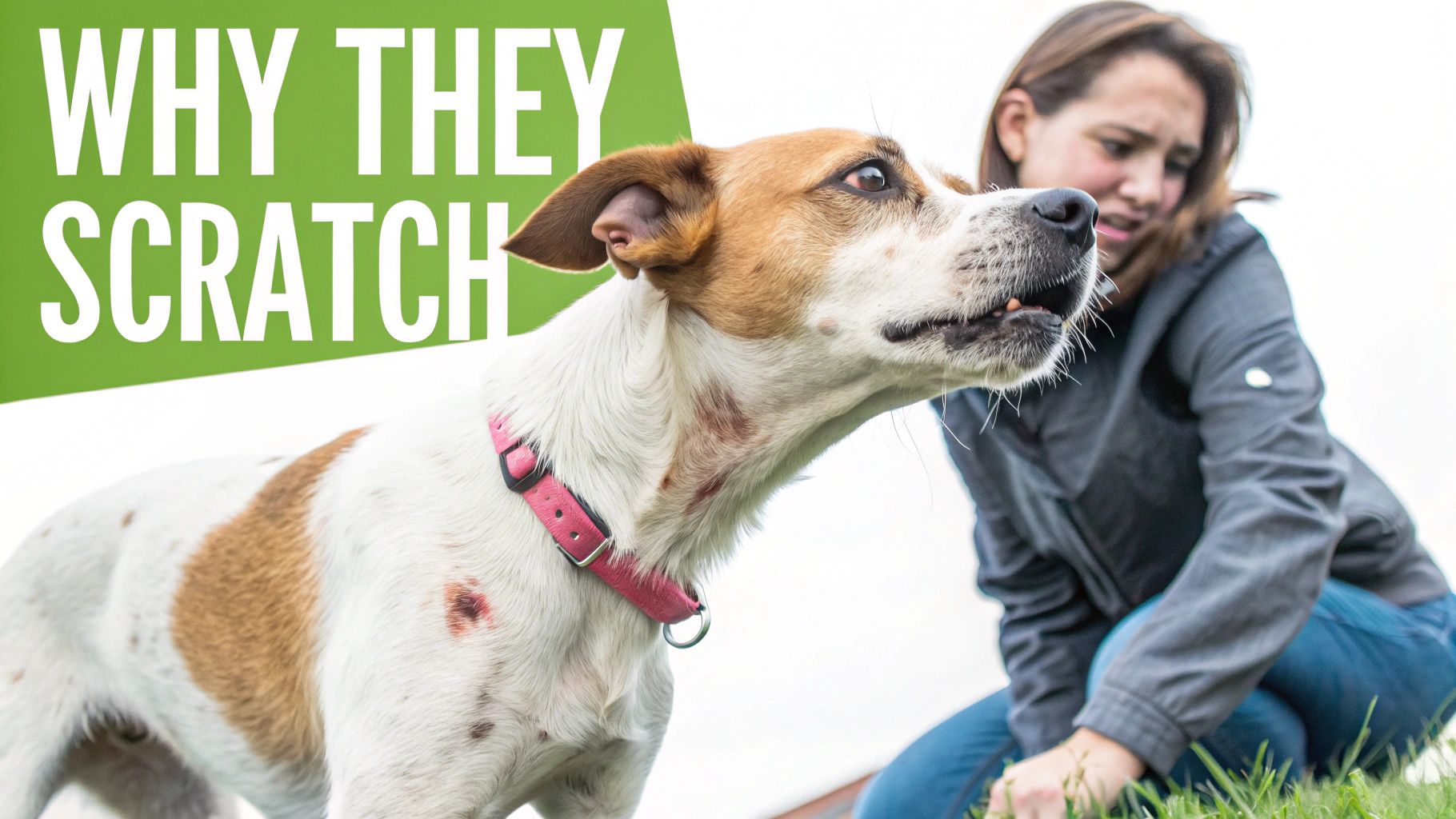
Before you can choose the right shampoo, you must understand the cause behind the relentless scratching, licking, and chewing. Your dog’s itchy skin is a direct signal that their body is overreacting to a perceived threat, turning their skin into a battlefield.
Your dog’s immune system is like a highly sensitive alarm. In most dogs, it only triggers for genuine dangers like viruses. In a dog with allergies, that alarm has a hair trigger, misidentifying harmless substances as dangerous invaders and launching an inflammatory attack.
This overreaction releases chemicals like histamines, causing the classic allergy symptoms: intense itching, redness, swelling, and painful hot spots. Understanding this helps you move beyond simply treating the itch to addressing the root cause.
The Three Main Allergy Culprits
Most skin allergies in dogs can be traced to one of three primary sources. Your first actionable step is to work with your vet to identify the likely trigger.
- Environmental Allergies (Atopy): This is the most common cause, similar to human hay fever. Allergens like pollen, mold spores, and dust mites are inhaled or absorbed through the skin, triggering the immune response.
- Food Allergies: A true food allergy is an immune system reaction to a specific protein, often chicken or beef. This is different from a food intolerance, which is a digestive issue.
- Flea Allergy Dermatitis (FAD): This is a severe allergic reaction to proteins in flea saliva. For a dog with FAD, the bite of a single flea can cause a massive, widespread itching episode that lasts for weeks.
As you investigate the itch, don't overlook external parasites. Implementing pet-safe flea control for your yard is a crucial step toward making your dog comfortable again.
Why the Skin Takes the Hit
Ever wonder why something your dog breathes in or eats causes such a dramatic skin reaction? A dog's skin is one of its largest organs, packed with immune cells called mast cells. These cells are primed to release histamine at the first sign of an allergen.
Think of your dog's skin as a field full of tiny histamine "bombs." When an allergen—whether it's pollen or a flea bite—trips the alarm, it sends a signal that detonates these bombs. This sets off a chain reaction of itching and inflammation all over their skin.
This chronic inflammation compromises the skin's natural protective barrier. A weakened barrier can't retain moisture, leading to dry, flaky skin. It also makes it easier for secondary bacterial and yeast infections to develop, creating more itching and often a foul odor. Your dog becomes trapped in a miserable cycle of scratching and infection.
This is why a specialized shampoo is more than just a bath. The best shampoo for dogs with skin allergies is a tool designed to perform three critical actions:
- Remove Allergens: It physically washes away irritants like pollen and dust before they can trigger a reaction.
- Soothe Inflammation: It uses active ingredients to calm the skin's overactive response directly at the source.
- Support the Skin Barrier: It hydrates and helps repair the skin's defense layer, making it more resilient.
By understanding the cause of your dog’s discomfort, you can have a more productive conversation with your vet and see why the right shampoo is a vital part of their treatment plan.
How to Read a Dog Shampoo Label
The pet care aisle can be overwhelming, with rows of bottles promising to solve your dog’s itchy misery. The key to making the right choice isn't on the front of the bottle—it's in the ingredient list on the back.
Learning to decode a dog shampoo label is the most critical skill for finding the best shampoo for dogs with skin allergies. It turns a confusing wall of text into a simple guide, helping you separate the effective healers from the potential irritants.
Treat it like reading a food label for your family. You avoid products with artificial chemicals and fillers; apply the same diligence to your dog’s skincare. The ingredient list reveals whether a formula is genuinely designed to soothe and heal or just to smell pleasant and create lather.
This isn't just about grooming; it's a key part of your dog's health. As pet owners increasingly demand better products, the market has responded. The dog segment now dominates the pet shampoo market with a 52.3% share. With North America accounting for 44% of global revenue and over 70 million U.S. households owning dogs, your choices matter. You can read the full report on pet shampoo market trends for more details.
The Healing Heroes: Soothing Ingredients to Look For
When you scan an ingredient list, your mission is to find the "heroes"—the active components that soothe inflammation, rehydrate dry skin, and give your dog a break from the itch.
Look for these key ingredients:
- Colloidal Oatmeal: This isn't breakfast cereal. It's a micro-fine powder that forms a protective barrier on irritated skin, locking in moisture and reducing inflammation.
- Aloe Vera: A proven natural remedy, aloe vera is known for its cooling and anti-inflammatory properties, offering immediate comfort to red, angry skin.
- Lidocaine or Pramoxine Hydrochloride: These are topical anesthetics. They gently numb the skin's surface to break the itch-scratch cycle and provide instant relief.
- Natural Oils (like Safflower or Coconut): Healthy fats are essential for rebuilding a damaged skin barrier. These oils replenish lost moisture and strengthen the skin against allergens.
A shampoo containing one or more of these ingredients is formulated not just to clean, but to heal.
The Hidden Villains: Irritants to Avoid
Just as important as knowing what to look for is knowing what to avoid. Many dog shampoos contain ingredients that strip the skin's natural oils, increase inflammation, and make a bad situation worse.
Using a shampoo with harsh chemicals is like trying to put out a fire with gasoline. It may seem to work initially, but it ultimately weakens the skin’s defenses and fuels the underlying problem.
Steer clear of formulas containing these common culprits:
- Artificial Fragrances and Dyes: A "fresh scent" might appeal to you, but synthetic fragrances are a primary trigger for allergic reactions in sensitive dogs. Always choose fragrance-free options or those scented with natural extracts.
- Sulfates (SLS/SLES): Sodium lauryl sulfate is a cheap detergent that creates a lot of lather. It's also incredibly harsh and strips the protective oils from your dog’s skin, leaving it dry and vulnerable.
- Parabens: These are chemical preservatives used to extend shelf life. They are known skin irritants and have been linked to other health concerns.
- Alcohol: While sometimes found in medicated formulas, certain types of alcohol can be extremely drying and will worsen flaky, itchy skin over time.
Use this quick guide to identify beneficial and harmful ingredients at a glance.
Beneficial vs Harmful Shampoo Ingredients
| Ingredient to Look For (The Heroes) | Why It Helps | Ingredient to Avoid (The Villains) | Why It Harms |
|---|---|---|---|
| Colloidal Oatmeal | Creates a protective barrier on the skin, soothes irritation, and helps lock in moisture. | Artificial Fragrances/Dyes | Common allergens that can trigger skin reactions, itching, and redness in sensitive dogs. |
| Aloe Vera | Naturally cools and calms inflamed skin, providing immediate relief from itching and redness. | Sulfates (SLS/SLES) | Harsh detergents that strip the skin of its natural oils, leading to dryness, irritation, and damage. |
| Lidocaine/Pramoxine | Topical anesthetics that numb the skin to stop the itch-scratch cycle and provide fast relief. | Parabens | Chemical preservatives that can cause skin irritation and have been linked to other potential health issues. |
| Natural Oils (Coconut, Safflower) | Replenish moisture, repair the skin's natural barrier, and strengthen its defense against allergens. | Alcohol (SD Alcohol, Isopropyl) | Can be extremely drying and will worsen flaky, irritated skin over time, especially with frequent use. |
By learning to spot both the heroes and the villains on a label, you take control. You can confidently choose a product that will soothe your dog’s discomfort and support their long-term skin health, turning bath time into a truly healing experience.
Choosing the Right Type of Allergy Shampoo
Not all allergy shampoos are created equal. They are specialized tools, and picking the right one depends on your dog's specific symptoms. To get results, you must match the formula to the problem.
Think of it like using a toolbox. You wouldn't use a hammer to tighten a screw. Similarly, a gentle hypoallergenic shampoo won't clear up a severe skin infection, while a heavy-duty medicated formula is overkill for minor seasonal itching.
Let's break down the three main types—hypoallergenic, medicated, and natural—so you can make an effective, targeted choice.
Hypoallergenic Shampoos: The Gentle First Step
Actionable Insight: Start with a hypoallergenic shampoo for mild, general itchiness or if you're unsure of the cause.
These formulas are designed to clean your dog's coat and skin without common irritants. They are free from harsh chemicals, artificial fragrances, dyes, and sulfates that are known to trigger allergic reactions.
Use a hypoallergenic shampoo for:
- Mild, general itchiness without visible sores or infection.
- Seasonal allergies that cause occasional scratching.
- Sensitive skin that reacts poorly to standard grooming products.
A good hypoallergenic shampoo washes away potential environmental triggers while cleansing gently, making it the safest starting point for managing sensitive skin.
Medicated Shampoos: The Targeted Treatment
Actionable Insight: Use a medicated shampoo only after a vet diagnosis to treat specific conditions like bacterial or yeast infections.
Medicated shampoos are therapeutic treatments containing active ingredients designed to resolve specific skin conditions that often accompany allergies.
A medicated shampoo is like a prescription for the skin. It’s formulated to treat a diagnosed problem, like a secondary infection that has taken hold because the skin's defenses are down from all the scratching and inflammation.
Your vet may recommend a medicated formula if your dog has:
- Secondary bacterial infections (pyoderma), often appearing as pimples or crusty sores.
- Yeast infections (Malassezia dermatitis), typically causing greasy skin, a "yeasty" odor, and thickened skin.
- Severe inflammation and itching that requires a topical anesthetic for immediate relief.
Common active ingredients include chlorhexidine (antibacterial), ketoconazole (antifungal), or pramoxine (a numbing agent). A proper diagnosis is crucial, as using the wrong medicated product can worsen the problem. If fleas are involved, the best flea shampoo for dogs may also be part of the treatment plan.
Natural and Organic Shampoos: The Soothing Alternative
Actionable Insight: Choose a natural shampoo for long-term maintenance and if you prefer plant-based ingredients, but always perform a patch test first.
Natural shampoos use plant-based ingredients like aloe vera, colloidal oatmeal, and chamomile to soothe and heal. They often overlap with hypoallergenic formulas by avoiding synthetic chemicals but focus on the gentle power of botanicals.
These are an excellent choice for long-term skin health maintenance. However, remember that "natural" does not mean "allergy-proof." Some dogs can be sensitive to certain essential oils or plant extracts, so always patch-test a new product on a small area of skin first.
This flowchart helps visualize the decision-making process when selecting a shampoo.
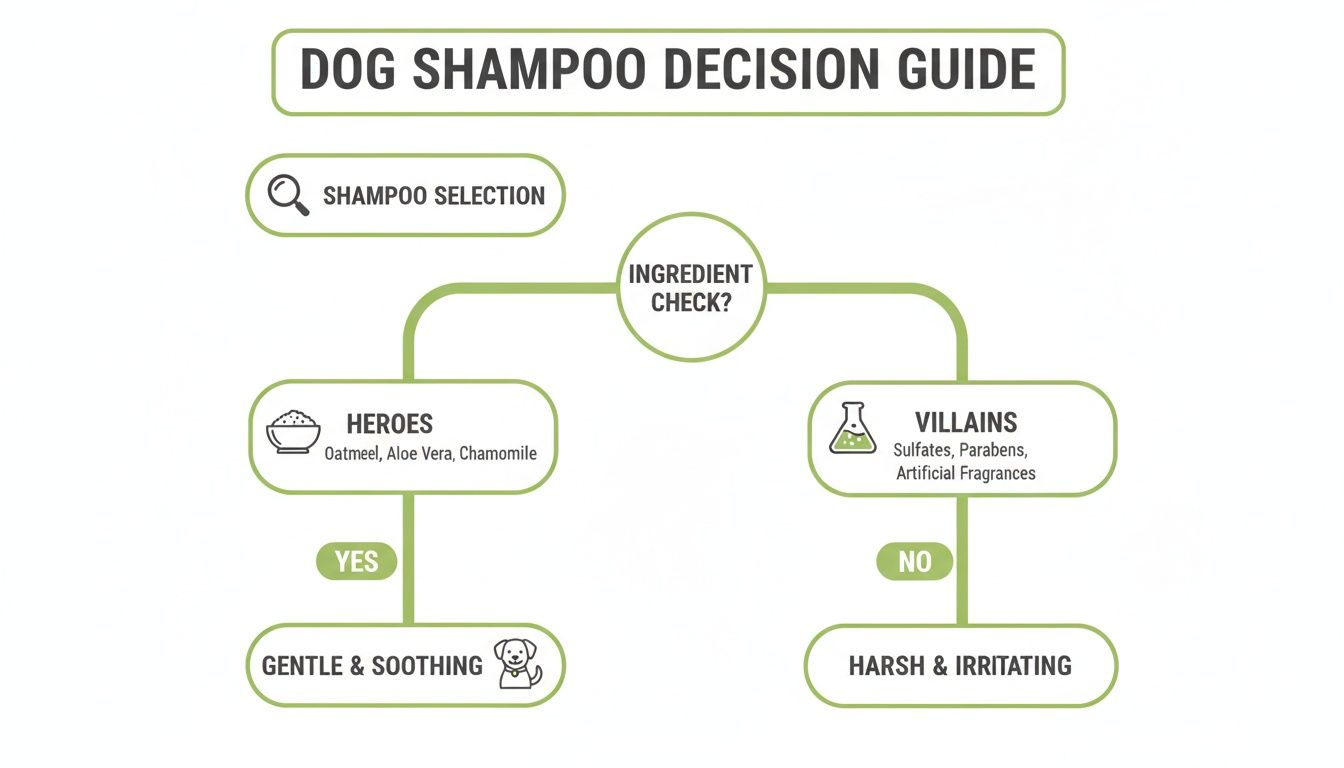
The key takeaway is to become an active label-reader. Look for beneficial "hero" ingredients while avoiding "villain" irritants. This habit is the secret to finding the best shampoo for dogs with skin allergies and providing your dog with targeted, effective relief.
A Step-by-Step Guide to an Allergy Relief Bath
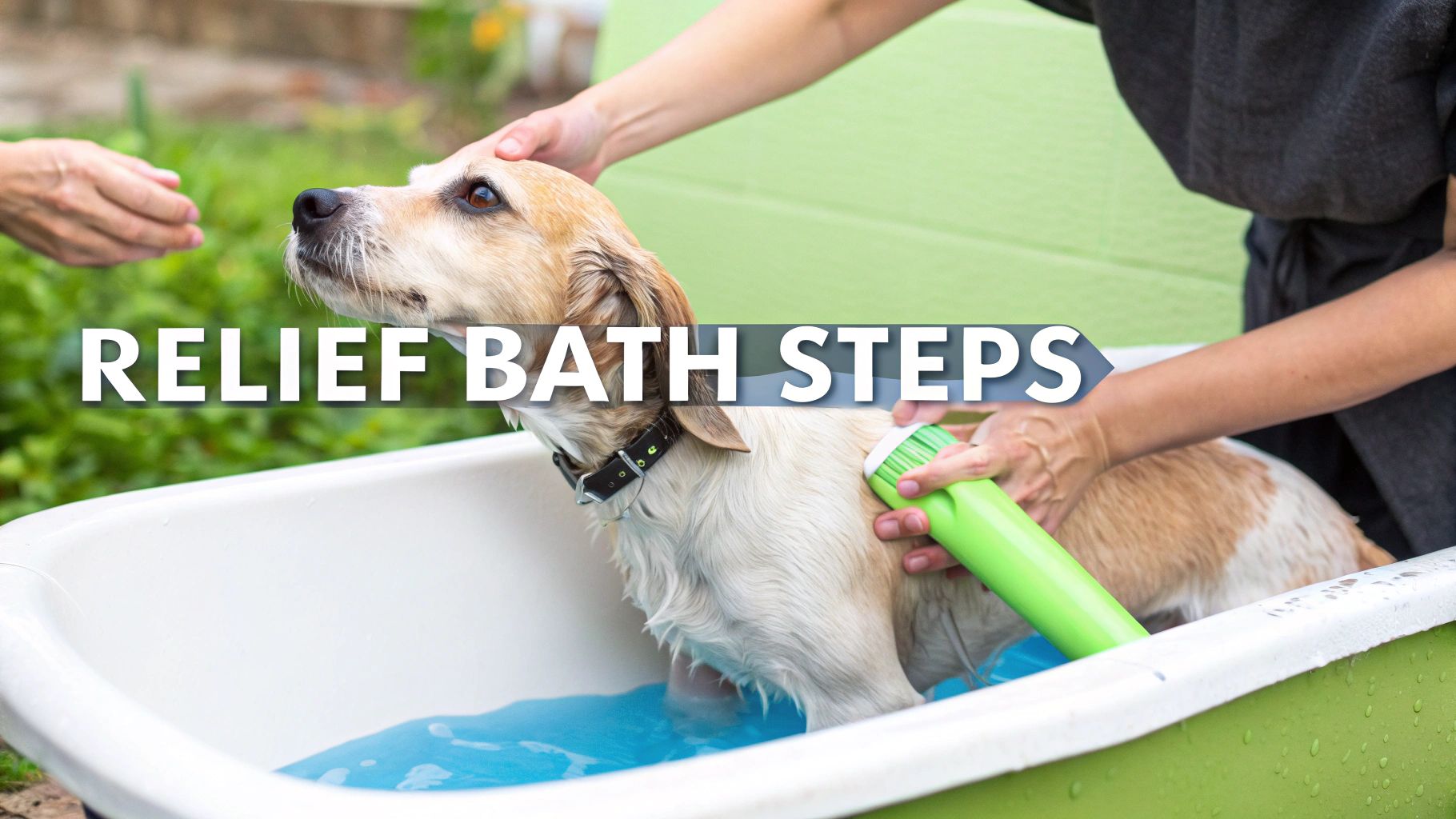
Choosing the right shampoo is only half the battle; how you use it determines its effectiveness. Your bathing technique can either soothe your dog’s irritated skin or make it worse. This guide will help you turn bath time into a calm, therapeutic session.
Think of it less as a quick wash and more as a gentle spa treatment. The goal is not just to get your dog clean but to calm inflammation, allow active ingredients to work, and help repair the skin's barrier.
Step 1: Prepare Your Soothing Sanctuary
Before you turn on the water, set up your bathing area to make the process smooth and stress-free for both you and your dog.
Action Checklist:
- Have the Right Shampoo Ready: Open the bottle and place it within easy reach.
- Gather Plenty of Towels: Use them for drying and to manage splashes.
- Place a Non-Slip Mat in the Tub: This prevents slipping and reduces anxiety.
- Use Cotton Balls (Optional): Gently place cotton in your dog's ears to keep water out and prevent ear infections.
Step 2: Master the Water and Lather
The water temperature is critical. Hot water can intensify itching, while cold water is uncomfortable. Always use lukewarm water.
Thoroughly saturate your dog's coat before applying shampoo to ensure even distribution. Start lathering at the neck and work your way down their back, gently massaging the shampoo deep into the skin. Carefully avoid their eyes and ears.
Crucial Action: Be patient. Medicated and therapeutic shampoos require 5-10 minutes of contact time with the skin for the active ingredients to work. Do not rinse early. Use this time to gently massage your dog or offer praise.
Step 3: Rinse Thoroughly and Dry Gently
Inadequate rinsing is a common mistake that leaves behind residue, causing more dryness and irritation. Rinse until the water runs completely clear, and then rinse for another minute, focusing on areas like armpits, the belly, and between the toes.
After rinsing, gently squeeze excess water from their coat. Do not rub vigorously with a towel, as the friction can irritate sensitive skin. Instead, pat them dry with soft, absorbent towels. If you must use a blow dryer, use the lowest heat and speed setting and keep it several inches from their skin.
A proper bath is a key component of your dog's allergy management. For more general tips, see our detailed guide on how to bathe a dog properly. Following these steps will help make every bath a source of relief.
Knowing When to Call Your Veterinarian
While the right shampoo is a powerful tool for at-home care, it is not a cure-all. It's crucial to understand its limitations and know when to seek professional help from your veterinarian.
Think of yourself as the first responder managing your dog's daily comfort and your vet as the specialist. You provide frontline care, but their expertise is essential when symptoms don't improve or new problems arise. Contacting your vet early can prevent a minor issue from escalating into a painful infection that is more difficult and expensive to treat.
Red Flags That Demand a Vet Visit
While bathing and caring for your dog, watch for signs that their condition is worsening. If you observe any of the following, schedule a vet appointment immediately.
Immediate Action Required for These Symptoms:
- Open Sores or Bleeding: Any break in the skin is an invitation for infection.
- A Persistent Foul Odor: A strong, yeasty, or musty smell often indicates a secondary bacterial or fungal infection.
- Worsening Symptoms: If itching, redness, or hair loss increases despite regular therapeutic baths, an underlying issue needs to be addressed.
- Spreading Rashes or Hot Spots: Rapidly expanding areas of inflamed skin require prompt medical intervention.
- Changes in Behavior: Lethargy, loss of appetite, or unusual irritability can signal that your dog's discomfort is more severe than it appears.
Your Final Checklist for Success
As you move forward, keep these final tips in mind to ensure the best outcomes for your dog. For severe infections, your vet might recommend additional treatments. Learning how a chlorhexidine spray for dogs can complement a medicated bathing routine is a great next step.
Golden Rule: Before using any new product, always perform a patch test. Apply a small amount of the shampoo to one spot on your dog's skin and wait 24 hours to check for any adverse reaction. This simple step can prevent a full-body allergic reaction.
By partnering with your vet and applying what you've learned here, you can provide your dog with lasting relief. You're not just giving a bath—you are actively restoring their health, comfort, and happiness.
A Few Common Questions About Dog Skin Allergies
Navigating dog skin allergies can be confusing. Here are direct answers to some of the most common questions from pet owners.
Can I Just Use My Own Shampoo on My Dog?
No. Human and dog skin have different pH levels. Our skin is more acidic, and our shampoos are formulated for that balance. Using human shampoo on a dog disrupts their skin's natural protective barrier, leading to dryness, irritation, and worsening allergy symptoms.
How Often Should I Be Bathing a Dog with Skin Allergies?
This depends on your vet's recommendation. For a severe flare-up, your vet might advise bathing with a medicated shampoo once or twice a week. For routine maintenance, bathing every 2-4 weeks is generally sufficient to remove allergens without stripping the skin of its essential oils.
It's a fine balance. Over-bathing can be just as bad as not bathing enough, especially if you're using the wrong product. The goal is to find a gentle shampoo that cleanses away irritants while actually supporting the skin's moisture barrier, not destroying it.
So, What's the Best Thing to Wash an Allergic Dog With?
Use a shampoo formulated specifically for sensitive dogs, such as a hypoallergenic or vet-recommended medicated formula. Look for beneficial ingredients like colloidal oatmeal and aloe vera. Most importantly, check the label to ensure the product is free from harsh sulfates, artificial fragrances, and dyes, which are common allergy triggers.
Will a Special Shampoo Cure My Dog's Allergies?
No. Shampoo is a critical management tool, not a cure. Allergies are a complex immune system condition. A therapeutic shampoo works by removing surface allergens, soothing inflammation, and treating secondary skin infections. Long-term relief requires a comprehensive approach developed with your vet, which may include diet changes, supplements, and other medical treatments.
At Pet Magasin, we know that seeing your pet comfortable and happy is what matters most. We've developed a range of high-quality, gentle grooming supplies designed to support your dog's skin and bring them the relief they deserve. Find the perfect solution for your furry family member in our Pet Magasin store.

Leave a comment