


Finding the Best Probiotics for Dogs: An Actionable Guide

Choosing the best probiotic for your dog means matching the product to their specific needs. Is your dog dealing with stress-induced diarrhea? Recovering from antibiotics? Or are you simply looking to support their daily health? Each situation calls for a specific approach, from the bacterial strains involved to the dosage.
This guide will show you exactly what to look for on the label and how to apply probiotics effectively, empowering you to make a confident choice for your pet's well-being.
A Simple Guide to Your Dog's Gut Health
Picture your dog's gut as a complex garden. This internal ecosystem is home to trillions of microorganisms, primarily bacteria. For your dog to be healthy, this garden needs to be in balance, with beneficial bacteria (the "good plants") flourishing and harmful bacteria (the "weeds") kept in check.
When this balance is disrupted by stress, illness, poor diet, or antibiotics, the "weeds" can take over. This imbalance often shows up as digestive issues like diarrhea, gas, and bloating. Probiotics act like expert gardeners, introducing beneficial bacteria to restore order and help the entire system thrive.
Why Gut Balance Matters More Than You Think
A healthy gut is your dog's wellness headquarters. When the internal ecosystem is balanced, the benefits extend far beyond healthy digestion.
Here’s a quick look at what a balanced gut microbiome does for your dog:
- Strengthens the Immune System: Approximately 70% of your dog's immune system resides in their gut. A balanced microbiome helps regulate immune responses, making your dog more resilient against pathogens.
- Improves Nutrient Absorption: Good bacteria are essential for breaking down food and unlocking key vitamins and minerals. Without them, even high-quality dog food may not deliver its full nutritional value.
- Supports a Calmer Demeanor: The gut-brain axis is a direct communication line between the digestive system and the brain. A healthy gut can help regulate mood and reduce stress-related behaviors.
- Promotes Healthy Skin and Coat: Gut inflammation often manifests externally as itchy skin, hot spots, or a dull coat. By reducing internal inflammation, probiotics can help improve your dog's skin and coat health.
Actionable Takeaway: A balanced gut is fundamental to your dog's overall health, impacting everything from their immunity to their mood. Prioritizing gut health is a proactive step toward long-term vitality.
Understanding this connection is the first step. It shows why you can't just pick any probiotic off the shelf. It's all about choosing the right "gardeners" for your dog's specific needs. As we go on, you'll learn exactly how to spot these key helpers and what to look for on the label.
Decoding Probiotic Labels for Your Dog
Choosing a probiotic can feel overwhelming due to complex labels. However, you only need to focus on three key elements: the probiotic strains, the CFU count, and the delivery form. Understanding these will allow you to bypass marketing fluff and select a product that delivers real results. Let's break down each component.
Probiotic Strains: The Specialist Team
Not all probiotics are created equal. Different bacterial strains perform specific jobs. One might excel at reducing inflammation, while another is skilled at fighting off harmful bacteria.
Look for products that list the exact strains, not just the general species. For example, a quality label will specify Lactobacillus acidophilus rather than just "Lactobacillus." This level of detail indicates a well-researched, targeted formula. A multi-strain probiotic provides a diverse team of "gardeners," making it suitable for addressing complex issues or for comprehensive daily support.
CFU Count: What Billions Really Mean
The CFU (Colony Forming Units) count indicates the number of live, active bacteria per serving. These numbers are typically in the billions to ensure enough bacteria survive the acidic journey through the stomach to colonize the intestines.
Actionable Takeaway: A higher CFU count isn't always better. The quality of the strains is more important than the quantity. A product with 10 billion CFUs of a well-researched strain is more effective than one with 50 billion CFUs of an unproven strain.
For general wellness, a daily dose of 1 to 10 billion CFUs is an excellent starting point. For specific issues like post-antibiotic recovery, your veterinarian may recommend a higher potency.
This infographic shows just how central a healthy gut is to your dog's digestion, immune system, and even their energy levels.
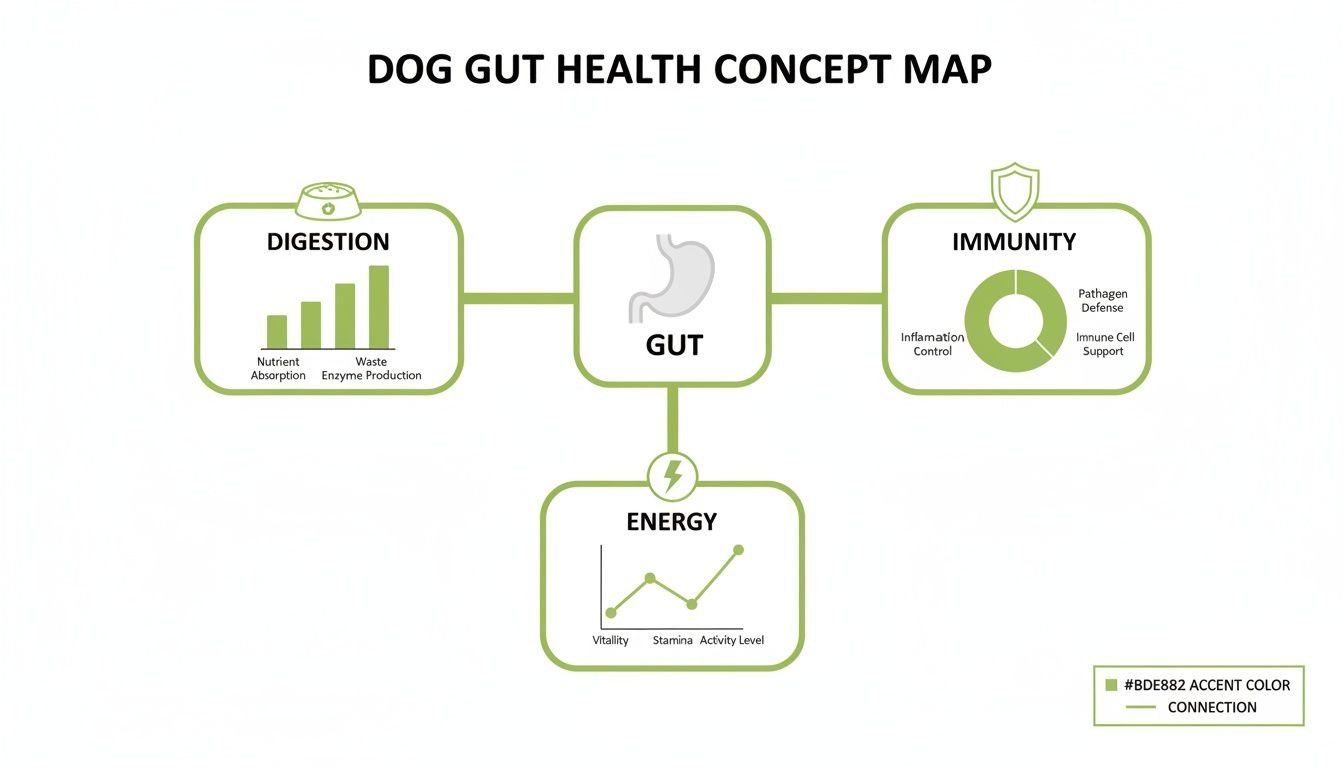
As you can see, all these systems are connected. That’s why choosing a good probiotic can have such a big impact on your dog’s overall well-being. It’s no surprise these supplements are becoming so popular. Dogs make up a huge 78% of the total revenue in the pet probiotics market, thanks to the massive pet population and solid research backing their benefits. Vets often recommend digestive health solutions—which account for 45% of the market—to help with things like diarrhea, gas, and improving stool quality. You can discover more about these market trends on Mordor Intelligence.
Delivery Form: Finding the Perfect Fit
The most effective probiotic is one your dog will actually take. Choose a format that integrates easily into your daily routine.
Here’s a comparison to help you decide which form is best for your dog.
Choosing the Right Probiotic Form for Your Dog
| Form Type | Best For | Pros | Cons |
|---|---|---|---|
| Powders | Picky eaters; precise dosing. | Easy to mix into food; dose is simple to adjust; often more stable and potent. | Can be messy; some dogs may reject the taste or texture. |
| Chews | Treat-motivated dogs; convenience. | Easy to administer as a treat; no measuring required. | May contain extra fillers or calories; can be less potent than powders. |
| Capsules | Dogs that take pills easily. | Often contain pure probiotics with minimal additives; precise, consistent dosing. | Can be difficult to administer to some dogs; may need to be hidden. |
| Liquid/Drops | Small dogs, puppies, or multi-pet homes. | Simple to add to water or food; dosage is easily adjustable. | Often less stable and require refrigeration; may have a shorter shelf life. |
By learning to evaluate strains, CFUs, and delivery forms, you can confidently select a probiotic that meets your dog's specific health needs.
When Your Dog Can Benefit from Probiotics
Probiotics are more than a daily supplement; they are a targeted tool for managing specific health challenges. Knowing when to use them can turn a general wellness product into a powerful solution.
Here are four key scenarios where a probiotic can provide significant support for your dog.
For Recovery After Antibiotic Use
Antibiotics are crucial for fighting bacterial infections, but they are indiscriminate, eliminating beneficial gut bacteria along with the harmful ones. This disruption often leads to diarrhea and an imbalanced gut microbiome.
Action Plan: Administer probiotics during and after the antibiotic course (separated by a few hours) to help repopulate the gut with good bacteria. This can reduce the severity of antibiotic-associated diarrhea and speed up the restoration of a healthy gut environment.
To Manage Ongoing Digestive Issues
If your dog frequently experiences gas, bloating, or inconsistent stools, their gut microbiome is likely imbalanced. Chronic digestive issues can stem from food sensitivities, stress, or a suboptimal gut environment.
Action Plan: Implement a daily probiotic regimen to increase the population of beneficial bacteria. This helps improve digestion, firm up stool, and reduce gas. Over time, this creates a more resilient gut lining, leading to noticeable improvements in your dog's daily comfort.
The secret is out, and it's driving a major trend in how we care for our pets. The global market for pet probiotic foods was valued at around USD 1.62 billion, with dog owners leading the charge. For intestinal supplements, a whopping 42% of sales went to probiotic-based products for tackling common issues like diarrhea and gas. You can learn more about these pet wellness findings from Petfood Industry.
For Stressful Situations and Anxious Dogs
The gut-brain axis means that stress directly impacts your dog's digestive system. Events like vet visits, kennel stays, or moving can trigger "stress colitis" and diarrhea.
Action Plan: Start giving your dog a probiotic a few days before a known stressful event to fortify their gut. For dogs with general anxiety, daily probiotic use can support a calmer gut, which in turn helps promote a more balanced mood through the production of neurotransmitters like serotonin.
Of course, sometimes gut issues aren't just from stress but from unwelcome visitors. It's always a good idea to rule out other causes, and you might find our guide on deworming for dogs helpful for more information.
For Puppies and Senior Dogs
Probiotics offer targeted support at both ends of a dog's life.
- Puppies: A puppy's gut microbiome is still developing. Probiotics help establish a diverse and robust community of good bacteria from the start, building a strong foundation for lifelong digestive and immune health.
- Senior Dogs: As dogs age, their digestive efficiency and gut bacterial diversity often decline. A daily probiotic can support an aging gut, enhance nutrient absorption, and bolster a weakening immune system.
Understanding Key Probiotic Strains for Canine Health
To choose the best probiotics for dogs, you need to know which bacterial strains are the most effective. Think of these strains as specialized workers, each with a distinct role. By understanding their jobs, you can match a product's formula to your dog's needs.
Let's focus on three of the most well-researched and effective strains for canine health.
Enterococcus Faecium: The Diarrhea Defender
Enterococcus faecium is a hardy and highly effective strain for managing digestive upset, particularly diarrhea. It is resilient enough to survive the acidic environment of a dog's stomach, allowing it to get to work quickly in the intestines. This strain helps restore balance by competing with harmful bacteria for resources, effectively crowding them out.
When to use it: Choose a probiotic with Enterococcus faecium if your primary goal is to manage acute diarrhea, support recovery from antibiotics, or improve overall stool quality. It's the first responder for digestive emergencies.
This is your go-to strain for:
- Managing acute diarrhea: It can help shorten how long the upset lasts and how severe it gets.
- Antibiotic recovery: It helps rebuild the good gut flora that antibiotics often wipe out.
- Improving stool quality: It helps firm up bowel movements for more consistency.
Bifidobacterium Animalis: The Immune System Ally
Bifidobacterium animalis is a key player in supporting and regulating your dog's immune system. While it also aids digestion, its primary benefit is strengthening the gut-associated lymphoid tissue (GALT), where a majority of the body's immune cells reside. It helps modulate immune responses, preventing overreactions that can lead to inflammation and allergies.
When to use it: Select a formula containing Bifidobacterium animalis to provide immune support for puppies, senior dogs, or any dog needing a more robust defense against illness.
This strain is a big help for:
- Boosting immune function: It supports the body's natural ability to fight off infections.
- Reducing inflammation: It helps calm an overactive immune system.
- Supporting puppies and seniors: It helps young dogs build strong immunity and supports the aging defenses of older dogs.
Lactobacillus Acidophilus: The All-Around Gut Balancer
Lactobacillus acidophilus is one of the most well-known probiotics and serves as an excellent all-arounder for daily gut maintenance. It produces lactic acid, which helps create a gut environment that is favorable for beneficial bacteria and inhospitable to pathogens like E. coli and Salmonella.
When to use it: A probiotic with Lactobacillus acidophilus is a great choice for everyday wellness, helping to maintain digestive regularity, prevent gas, and enhance nutrient absorption from food.
This all-star is a great choice for:
- Daily gut maintenance: It supports overall digestive health.
- Nutrient absorption: It helps your dog get more out of their food.
- Preventing gas and bloating: It keeps digestion comfortable and smooth.
By looking for these specific strains on an ingredient label, you can move beyond generic claims and choose a product with a formula designed for tangible results.
How to Safely Introduce Probiotics to Your Dog

The key to successfully starting your dog on a new probiotic is the "start low, go slow" method. This approach allows your dog's digestive system to adapt gradually to the new beneficial bacteria, minimizing the chance of temporary side effects like gas or loose stool.
Begin by giving your dog a quarter or half of the recommended dose for the first few days. This simple step prevents overwhelming their system and ensures a smooth transition.
Following Dosing and Building Consistency
After the initial introductory period, gradually increase the amount until you reach the full recommended dose, which is typically based on your dog's weight. Follow the product's instructions for the best results.
If you miss a dose, do not double the next one. Simply resume the regular schedule. Consistency over time is far more important for establishing a healthy gut microbiome than perfect daily adherence.
Actionable Takeaway: Always consult your veterinarian before introducing any new supplement. Your vet can confirm if probiotics are the right choice for your dog's specific health needs and rule out any underlying conditions.
Observing Changes Positive and Minor
Once your dog is on a consistent regimen, watch for positive changes. The first improvements are often related to digestion: firmer, more regular stools and reduced gas.
Be aware of potential minor side effects. Some dogs may experience a brief period of increased gas or bloating as their gut microbiome adjusts. This is normal and should resolve within a few days. If digestive upset persists or is severe, stop the supplement and contact your vet. For mild cases, a temporary dog bland diet can help soothe the stomach.
Taking it slow sets your dog up for success, letting their internal "garden" of good bacteria flourish. The ease of giving probiotics is a big part of why they're so popular. In fact, probiotic-infused dry food is the fastest-growing format, which helps explain why probiotics have a 47% dominance in the canine intestinal supplement market. Senior dogs, who account for 34% of the demand, especially benefit from easy-to-dose forms like chewables that take the guesswork out of it. You can discover more insights about the pet biotics market on Precedence Research.
The Surprising Benefits of a Healthy Gut
While probiotics are best known for improving digestion, their benefits extend throughout your dog's entire body. A balanced gut microbiome acts as a central command for overall health, influencing everything from skin condition to behavior.
When the good bacteria in your dog's gut are thriving, they create a cascade of positive effects that you might not expect.
Healthier Skin and a Shinier Coat
Chronic gut inflammation can manifest on your dog's skin, causing itchiness, redness, and a dull coat. An imbalanced gut allows inflammatory compounds to enter the bloodstream, triggering skin issues.
By restoring gut balance, probiotics help reduce this internal inflammation at its source. This calming effect leads to healthier skin, less scratching, and a visibly shinier coat.
Reduced Allergic Responses
Many allergies in dogs are linked to an overactive immune system. Since approximately 70% of a dog's immune cells are located in the gut, a balanced microbiome is essential for regulating immune responses.
Actionable Takeaway: Probiotics help strengthen the gut lining, creating a barrier that prevents allergens from entering the bloodstream and triggering an immune reaction. This can lead to a noticeable reduction in symptoms for dogs with environmental or food-related allergies. When addressing food sensitivities, you might also explore specialized diets like chicken-free dog food as part of a comprehensive strategy.
Improved Mood and Behavior
The gut-brain axis provides a direct line of communication between your dog's digestive system and brain. An unhealthy gut can send stress signals to the brain, contributing to anxiety and other behavioral issues.
Conversely, a healthy gut produces calming neurotransmitters like serotonin. By supporting the microbiome with probiotics, you can help increase the production of these "feel-good" chemicals, promoting a more stable and relaxed temperament. A happy gut helps create a happy dog.
Common Questions About Dog Probiotics
Here are direct answers to the most common questions pet owners have about using probiotics for their dogs.
Can I Give My Dog Human Probiotics?
No. Human probiotics are formulated for the human gut microbiome, which differs significantly from a dog's. The strains and dosages are not optimized for canine physiology.
Action Plan: Always use a probiotic specifically designed for dogs. These products contain clinically-researched canine-specific strains, like Enterococcus faecium, at doses proven to be safe and effective for them.
How Long Do Probiotics Take to Work in Dogs?
The timeline depends on the health issue. For acute digestive upset like diarrhea, you may see improvement within a few days.
For chronic conditions such as immune support or skin allergies, it can take four to six weeks of consistent daily use to establish a new microbial balance and see significant results.
Actionable Takeaway: Think of probiotics as a long-term strategy, not a quick fix. You are building a resilient internal ecosystem, which requires a consistent daily commitment.
Are There Any Side Effects of Probiotics for Dogs?
Probiotics are very safe for most dogs. The most common side effects are mild and temporary, such as gas or bloating, as the gut adjusts.
Action Plan: To minimize side effects, introduce the probiotic slowly. Start with a partial dose and gradually increase to the full amount over several days. If mild gas persists beyond a few days, consult your vet.
Do Probiotics for Dogs Need to Be Refrigerated?
It depends on the product. Many modern powders and chews are shelf-stable due to processes like freeze-drying, which keep the bacteria dormant until ingested. However, some products, particularly liquids, require refrigeration to maintain potency.
Action Plan: Always read and follow the storage instructions on the product label. Proper storage is crucial to ensure the bacteria remain viable and effective.
At Pet Magasin, we are committed to providing top-tier products that support your pet's complete well-being. From travel essentials to grooming tools, we believe every pet deserves the best. Explore our full range of high-quality supplies at https://www.petmagasin.com and give your furry family member the care they deserve.

Leave a comment