


A Pet Owner's Guide to Deworming for Dogs

Deworming isn't just a box to check at the vet's office. It’s the process of using medication to get rid of internal parasites—think roundworms, tapeworms, and hookworms. Following a proper deworming schedule is a core part of keeping your dog healthy, protecting them from malnutrition, organ damage, and other serious issues these nasty critters can cause.
Why Deworming Your Dog Is Essential
Think of regular deworming as essential maintenance for your dog's internal engine. It's one of the most actionable steps you can take to keep them healthy and happy. Internal parasites are far more than a simple nuisance; they can seriously compromise your dog's well-being.
These unwelcome guests literally steal vital nutrients from your dog. This can lead to poor growth, a dull coat, and low energy. If left unchecked, an infestation can spiral into much bigger problems, from severe anemia to intestinal blockages. And it’s not just about your dog—some of these parasites can be passed from pets to people, so a consistent deworming plan helps keep your entire family safe.
This guide will give you the practical knowledge you need to take control of your dog's health:
- Identifying the Enemy: Learn to spot the specific signs of common internal parasites so you can act fast.
- Building a Schedule: Discover how to create a deworming plan tailored to your dog’s age and lifestyle.
- Choosing Treatments: Understand the key differences between veterinary prescriptions and over-the-counter options to make an informed choice.
- Beyond Medication: Implement simple, practical prevention tips to lower the risk of future infections.
It’s clear that pet owners are taking this more seriously than ever. The global market for dog dewormers hit a staggering USD 5.72 billion in 2023 and is only expected to grow. This shows how crucial this simple preventive step has become for responsible dog owners everywhere.
Of course, a good parasite prevention plan has multiple fronts. While we’re focused on internal worms here, you also need a plan for external pests. If you're looking for solutions, our guide on the best tick shampoo for dogs can help you build a complete strategy. Ultimately, our goal is to give you the tools to keep your best friend safe, healthy, and thriving for years to come.
Identifying Common Internal Parasites in Dogs
To protect your dog, you need to know what you're up against. This section is your field guide to the most common internal parasites—the hidden enemies that can damage your dog's health. Recognizing their signs is the first step toward effective action.
These aren't just a minor annoyance; they're freeloaders that steal essential nutrients and can cause serious damage. Each type has a different method of attack, and knowing how to spot them is the key to choosing the right deworming strategy.
Roundworms: The Uninvited Spaghetti
Roundworms (Toxocara canis) are incredibly common, especially in puppies. They look like spaghetti and live in your dog's intestines—growing up to 6 inches long.
Puppies are most vulnerable, as they can be infected before birth through their mother's placenta or by nursing. Adult dogs typically get them by swallowing roundworm eggs from contaminated soil, feces, or from eating an infected rodent.
Actionable Tip: A "pot-belly" in a puppy is a classic sign of a heavy roundworm infestation. If you see a swollen tummy, especially combined with poor growth or a dull coat, contact your vet immediately.
Other symptoms to watch for include:
- Vomiting (sometimes you can even see the worms).
- Diarrhea or mucus in the stool.
- Coughing, as larvae can travel to the lungs.
- General weakness and failure to thrive.
Hookworms: The Tiny Vampires
Hookworms (Ancylostoma caninum) are tiny, blood-sucking parasites. Less than an inch long, they latch onto the small intestine wall and feed on your dog's blood.
This constant blood loss can cause severe anemia, which can be fatal for young puppies. Dogs can pick them up by swallowing larvae from contaminated soil or water, or the larvae can burrow directly through their skin, often on their paws.
Look for these warning signs:
- Pale gums and inner eyelids, a direct sign of anemia.
- Weakness, lethargy, and poor growth.
- Bloody diarrhea or dark, tarry stool.
- Skin irritation, especially on the feet where larvae might have entered.
Whipworms: The Stealthy Troublemakers
Whipworms (Trichuris vulpis) are stealthy parasites that live in the large intestine. They are hard to detect because they shed eggs inconsistently, meaning a fecal test might come back negative even if your dog is infected.
Dogs get infected by swallowing whipworm eggs from contaminated soil. These eggs are incredibly durable and can survive in the environment for up to five years, creating a long-term risk for reinfection in contaminated areas. Many light infections show no symptoms, allowing the parasites to cause damage silently.
When symptoms appear, they often include:
- Chronic, watery diarrhea that might contain mucus or blood.
- Weight loss despite a normal appetite.
- Signs of abdominal pain.
Tapeworms: The Segmented Hitchhikers
Tapeworms (Dipylidium caninum) are made of tiny, rice-like segments called proglottids. These segments, filled with eggs, break off and pass in your dog's feces.
The most common way dogs get tapeworms is by swallowing an infected flea. Fleas act as an intermediate host, carrying the tapeworm larvae. When a dog grooms and swallows an infected flea, the tapeworm can mature inside the dog's intestine. This direct link makes flea control a non-negotiable part of tapeworm prevention.
A clear sign of tapeworms is seeing small, white segments that look like grains of rice in your dog’s poop or stuck to the fur around their rear. This can cause an itchy bottom, leading your dog to "scoot" across the floor.
To help you keep everything straight, here’s a quick-reference table.
Common Dog Worms: Symptoms and Sources
| Worm Type | Common Symptoms | Primary Source of Infection |
|---|---|---|
| Roundworms | Pot-belly (in puppies), vomiting, diarrhea, coughing, poor growth, dull coat. | From mother (before birth/nursing), contaminated soil/feces. |
| Hookworms | Pale gums, weakness, bloody/dark stool, poor growth, skin irritation (paws). | Contaminated soil/water, larvae burrowing through skin. |
| Whipworms | Chronic watery/bloody diarrhea, weight loss, abdominal pain (often no signs). | Ingesting eggs from contaminated soil or surfaces. |
| Tapeworms | Rice-like segments in stool/fur, scooting, itchy rear end. | Swallowing an infected flea during grooming. |
Knowing what to look for is half the battle. If you spot any of these signs, contact your vet to get a proper diagnosis and start a treatment plan.
Building an Effective Deworming Schedule
An effective deworming schedule is not a one-size-fits-all calendar. It's a dynamic plan tailored to your dog’s specific age, lifestyle, and environment. Think of it as a personalized security plan for your pet, with protocols that adapt based on the threats they face daily.
Just as a young child needs more frequent check-ups, puppies require a more aggressive deworming schedule. Their developing immune systems make them vulnerable to parasites, some of which are passed down from their mother.
The Puppy Protocol
Puppies are highly susceptible to roundworms and hookworms, which can cause stunted growth and severe anemia. To combat this high risk, vets recommend a strict deworming plan to eliminate worms at every stage of their lifecycle.
Here is a standard, actionable deworming schedule for a new puppy:
- 2 and 4 Weeks Old: Administer the first doses to target worms passed from the mother.
- 6 and 8 Weeks Old: Continue treatments to eliminate newly matured worms.
- Monthly until 6 Months: Provide ongoing protection during their most vulnerable period of growth and exposure.
This rigorous schedule ensures any parasites are eliminated before they can cause lasting harm.
Adult Dog Deworming: A Lifestyle-Based Approach
Once your dog reaches adulthood, the deworming schedule usually becomes less frequent, but this is where their individual lifestyle becomes the deciding factor. For most adult dogs, deworming every 3 to 6 months is a solid baseline.
However, certain habits require more frequent deworming. A recent study in Spain confirmed that parasite risk factors in dogs are heavily influenced by their living situation and activities.
Your dog needs more frequent deworming if they:
- Are Avid Hunters: Dogs that eat rodents or other small animals have a higher risk for tapeworms and roundworms.
- Visit Dog Parks or Kennels: High-traffic areas are hotspots for parasite transmission.
- Live with Children or Immunocompromised Individuals: Keeping your dog worm-free adds a crucial layer of protection for vulnerable family members.
Special Considerations for Senior Dogs
As dogs enter their senior years, their immune systems can weaken, making them more susceptible to parasites again. It's a mistake to become complacent with their deworming schedule.
For senior dogs, stick to a consistent, vet-recommended deworming plan. Regular fecal exams become even more important to catch stealthy infections like whipworms, which might not show obvious symptoms but can slowly drain an older dog's health. Work with your vet to adjust their deworming schedule to support their changing needs.
This chart can help you identify potential culprits based on what you might see—or not see—at home.
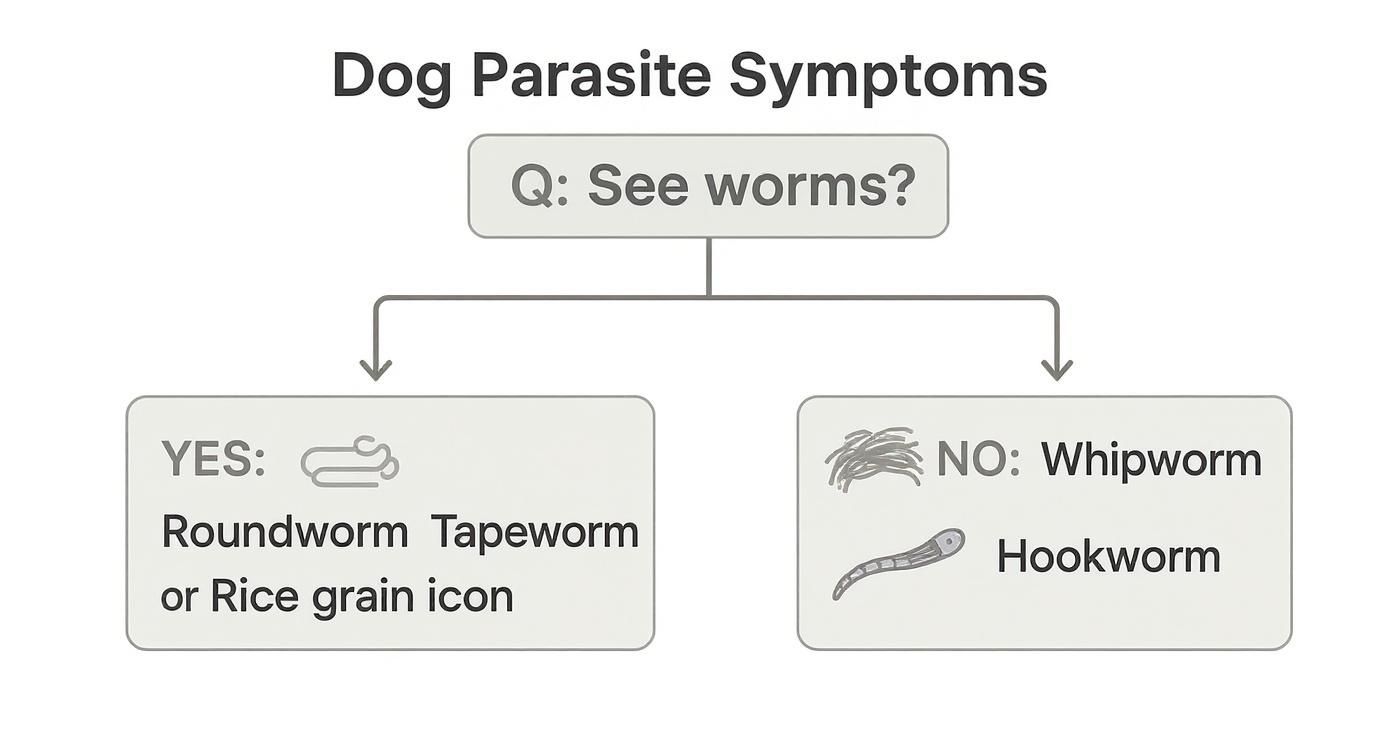
The key takeaway? You won't always see the evidence. Parasites like whipworms and hookworms often cause internal damage without ever appearing in your dog's stool, which is why a proactive, consistent deworming schedule is so critical.
Choosing the Right Deworming Treatment
Choosing a dewormer can be confusing, with both prescription and over-the-counter (OTC) options available. Making the right choice is about effectively targeting the right parasites to keep your dog safe.
Think of it this way: a vet's prescription is a specialized tool for a specific job, while an OTC product is more like a generic wrench—it might work, but it may not be the best fit. Knowing when to use each is key.
Different dewormers contain different active ingredients, each designed to tackle specific parasites. That’s why getting a proper diagnosis before starting treatment is the most effective approach.
The Power of Prescription Dewormers
A prescription dewormer is a solution chosen specifically for your dog based on a professional diagnosis, their health history, and local parasite risks.
Prescription medications typically offer broad-spectrum coverage, meaning a single dose can eliminate multiple types of worms at once, such as roundworms, hookworms, and whipworms. This is especially important for puppies or rescue dogs with unknown histories. Your vet will also calculate the precise dosage based on your dog's exact weight, ensuring the treatment is both safe and effective.
Understanding Over-the-Counter Options
OTC dewormers are convenient but come with limitations. Many have a narrower spectrum of action, meaning they might only work against one or two types of worms (like roundworms and hookworms), leaving your dog vulnerable to others like whipworms.
Actionable Tip: The biggest risk with OTC dewormers is using the wrong one. Without a vet's diagnosis, you are guessing which parasite your dog has. This can lead to treatment failure, allowing a serious infestation to worsen while you believe the problem is solved.
Here’s a simple breakdown to help you choose:
Prescription vs. Over-the-Counter Dewormers
| Feature | Prescription Dewormers (From Vet) | Over-the-Counter (OTC) Dewormers |
|---|---|---|
| Effectiveness | High; targets specific parasites based on diagnosis. | Variable; may not target the correct worm type. |
| Spectrum | Often broad-spectrum, killing multiple types of worms. | Typically narrow-spectrum, targeting only 1-2 worm types. |
| Safety | High; dosage is precisely calculated based on your dog's weight. | Risk of improper dosage (over or under) and potential side effects. |
| Guidance | Comes with expert advice and follow-up care from your veterinarian. | Relies on owner's judgment and interpretation of instructions. |
| Cost | Generally higher initial cost due to the vet consultation. | Lower upfront cost, but may be more expensive if ineffective. |
Making an Informed Decision with Your Vet
The most effective way to handle deworming is to partner with your vet. A simple fecal test can pinpoint exactly which parasites are present, removing all guesswork. Based on the results, your vet can recommend a treatment that is safe and effective for your dog’s age, breed, and health status.
How to Prevent Worms Beyond Medication
Deworming medication treats an existing problem, but proactive prevention can stop your dog from getting worms in the first place. By incorporating a few simple habits into your routine, you can build a strong defense that dramatically reduces the risk of infection.
This is all about breaking the parasite lifecycle. Worms like roundworms and whipworms spread eggs through contaminated soil and feces. A few environmental controls can interrupt this cycle and keep your dog safe.
Master Environmental Hygiene
Your dog’s environment is a major factor in worm transmission. A clean space is less hospitable to parasite eggs, which can survive in soil for months or even years.
The single most important habit is immediate poop-scooping. This isn’t just about being courteous; it’s a critical health practice. By picking up waste immediately in your yard or on walks, you prevent worm eggs from contaminating the ground where your dog plays.
Actionable Tip: The longer dog waste sits, the more time parasite eggs have to mature and become infectious. Cleaning it up within minutes is a simple but powerful way to break the chain of transmission.
The Crucial Link Between Fleas and Tapeworms
You can't prevent tapeworms without also controlling fleas. The most common tapeworm (Dipylidium caninum) requires a flea to complete its lifecycle. A dog becomes infected by swallowing a flea during grooming.
This means a year-round flea prevention plan is essential for complete parasite protection. In fact, dogs make up a dominant 37.6% of the pet dewormer market, driven by owner awareness of interconnected issues like this. The market is also shifting toward easier solutions, with oral treatments accounting for 45.7% of sales. You can see more about the pet dewormer market trends on market.us.
An effective flea control strategy includes:
- Topical or Oral Preventatives: Use a vet-approved product on schedule every month.
- A Clean Home: Regularly wash your dog’s bedding in hot water and vacuum carpets and furniture diligently.
- Good Grooming: Use a quality shampoo to wash away fleas from your dog’s coat. Our guide to the best flea shampoo can help you choose one.
Smart Habits for Daily Life
Beyond yard cleanup and flea control, small daily habits can make a big difference. These adjustments add up to a strong defense against worms.
Monitor what your dog puts in its mouth. Prevent them from eating things off the ground or drinking from puddles, as these are common sources of contamination. Supervise them closely in high-traffic areas like dog parks, where transmission risk is higher. Finally, always wash your hands after picking up waste or playing with your dog to keep the entire family safe.
Got Questions About Deworming? We’ve Got Answers.
Even with a solid plan, it's normal to have questions about deworming your dog. This section addresses the practical "what-if" moments that arise after giving your dog their medication. Our goal is to provide clear, actionable answers so you can feel confident in your choices.
We’ll cover everything from what to expect in your dog’s poop to how different medications work. Let's dive into the questions on every dog owner’s mind.
What Should I Expect After Giving My Dog a Dewormer?
The most common question is: "Will I see worms in my dog's poop?" The short answer is, you might—and if you do, it's a good sign!
After you give the medication, it paralyzes and kills the worms, which are then expelled through the digestive system. You may see worms in their stool for 2-3 days after treatment. While it can be unsettling, it's definitive proof that the dewormer is working.
It might look a little gross, but seeing worms is proof the treatment is working. Those parasites are no longer stealing nutrients and are being kicked out for good.
It's also common for dogs to experience mild, temporary side effects that usually pass quickly, including:
- Lethargy: Your dog might seem tired for a day or so.
- Mild stomach upset: This could include temporary diarrhea, vomiting, or a decreased appetite.
- Increased salivation: Some dogs may drool more, especially if they dislike the taste of the medicine.
These are signs your dog's body is processing the medication and expelling the parasites. However, if symptoms are severe or last longer than 48 hours, contact your vet.
How Can I Tell if the Deworming Treatment Is Working?
Besides seeing worms in their stool, you can gauge success by observing positive changes in your dog's health and behavior. The improvements might be gradual, but they are clear signs your dog is recovering.
Look for these signs of a successful deworming:
- Increased energy: As they absorb nutrients properly again, many dogs regain their playful energy.
- Healthier coat: A glossy coat is a strong indicator of good internal health.
- Improved appetite and weight: Your dog’s appetite should return to normal, and they may gain weight.
- Resolution of symptoms: Problems like chronic diarrhea, a pot-belly (in puppies), or scooting should gradually disappear.
Noticing these improvements confirms the dewormer worked and your dog is on the path to better health.
Are Natural or Homeopathic Dewormers a Good Idea?
Many owners ask about natural alternatives like diatomaceous earth, pumpkin seeds, or herbal remedies. While some of these may have mild anti-parasitic properties, they are not a reliable substitute for a veterinarian-approved dewormer.
The primary issue is that these remedies are unregulated and lack scientific evidence of effectiveness. They are not potent enough to eliminate a significant worm infestation. Worse, incorrect dosages can cause digestive upset without solving the underlying problem. For a serious health issue like parasites, stick with proven medical treatments recommended by your vet.
Does My Dog’s Monthly Heartworm Pill Cover Other Worms, Too?
This is an excellent question, and the answer is: it depends on the specific product.
Many modern monthly heartworm preventatives are multi-purpose. A single chewable tablet can protect against heartworms, fleas, ticks, and common intestinal parasites like roundworms and hookworms.
However, not all heartworm medications are the same. Older formulas or different brands may only protect against heartworm. Actionable Step: Check the product's label or ask your vet exactly what your dog’s current medication covers. If you're looking for more information, our Pet Magasin FAQ page provides additional details.
Never assume your heartworm pill offers complete protection. A quick conversation with your vet can confirm if you need a separate dewormer to ensure there are no gaps in your dog's defense.

Leave a comment