


Finding the Best Tick Shampoo for Dogs

The best tick shampoo for dogs is one that eliminates parasites on contact while being safe for your dog's age, skin, and health. To handle a severe infestation, choose a medicated shampoo with an ingredient like pyrethrins for a fast-acting solution. For routine prevention or for a sensitive pet, select a natural formula with essential oils for a gentler approach.
Why Choosing the Right Tick Shampoo Matters
When your dog comes inside after a walk and you spot a tick, you need an immediate plan of action. Ticks aren't just a nuisance; they transmit serious illnesses like Lyme disease, Rocky Mountain spotted fever, and anaplasmosis. Having the right tick shampoo ready to use is your first line of defense against these dangers.
A medicated tick shampoo is a specific tool designed to kill ticks, fleas, and sometimes their eggs and larvae on contact. This provides immediate relief and creates a pest-free baseline, making it an essential item to have, especially after your dog has been in high-risk areas like woods, tall grass, or busy dog parks.
Understanding the Active Ingredients
The effectiveness of a tick shampoo comes from its active ingredients—this is what makes it a pest-killer, not just a cleanser. These ingredients fall into two categories: chemical and natural, and each is designed for a different job.
To make an informed choice, look past the marketing and focus on the ingredient list. This helps you select a product that is both effective and safe for your dog's specific needs.
| Ingredient Type | Primary Function | Actionable Use Case |
|---|---|---|
| Chemical (e.g., Pyrethrins) | Kills adult ticks and fleas quickly by attacking their nervous system. | Use for immediate treatment after confirming your dog has been exposed to ticks or to manage an active infestation. |
| Natural (e.g., Essential Oils) | Repels and kills ticks gently while often soothing the skin. | Use for routine preventative baths, for puppies, or for any dog with known skin sensitivities. |
The Role of Shampoo in Your Overall Strategy
A common mistake is assuming one bath with a tick shampoo solves the problem permanently. While these shampoos are highly effective at eliminating pests on your dog at that moment, their protective effects are short-lived.
Think of a tick shampoo as a powerful reset button. It clears the immediate threat, ensuring your dog is pest-free today. It is not a replacement for long-term preventatives like collars, spot-on treatments, or oral medications.
This is a critical distinction. Use a tick shampoo to handle an immediate problem and to prepare a clean slate so your monthly preventatives can work effectively. By using shampoo as one part of a layered defense, you can keep your best friend safe all year long.
Comparing Chemical and Natural Active Ingredients
When you're choosing a tick shampoo, your main decision is whether to go with a chemical or a natural formula. This isn’t about which one is "better" overall, but about choosing the right tool for your current situation.
The active ingredients on the label determine how the shampoo works, how quickly it acts, and for which dogs it's safest. Understanding the practical difference between a potent insecticide and a gentler, plant-based repellent will enable you to make a confident choice for your dog.
The Power and Precision of Chemical Ingredients
When your dog returns from an outdoor adventure with ticks, you need a solution that works immediately. This is where you should turn to chemical shampoos. They are formulated with powerful insecticides that target the ticks' nervous systems, killing them on contact.
The most common active ingredients are pyrethrins (derived from chrysanthemum flowers) and permethrin (a more stable, synthetic version). Both disrupt nerve function in ticks and other insects, leading to paralysis and death. This rapid action provides instant peace of mind after a trip through a high-risk area.
However, these powerful ingredients require careful handling.
CRITICAL SAFETY WARNING: Permethrin is extremely toxic to cats. If you have a multi-pet household with cats, you must avoid permethrin-based dog shampoos. Even minimal exposure to the residue can be dangerous for felines.
Always read the product label for specific warnings and follow the usage directions precisely. This is your most important step in preventing skin irritation or other adverse reactions in your dog.
The Gentle Approach of Natural Ingredients
For routine baths, preventative care, or dogs with sensitive skin, natural active ingredients are the safer path. Instead of potent insecticides, these shampoos use essential oils and other plant-based compounds to make your dog an unappealing host for ticks.
Look for these common natural ingredients:
- Cedarwood Oil: This oil disrupts tick pheromones and can also dehydrate them, leading to their death without harsh chemicals.
- Neem Oil: A well-known natural pest repellent, neem oil not only deters ticks but also has anti-inflammatory and antibacterial properties that soothe irritated skin.
- Rosemary and Peppermint Oils: These are often combined to create a pleasant scent for humans that naturally repels ticks and fleas.
Choose these shampoos for regular bathing during tick season. They are an excellent option for puppies, senior dogs, or any dog prone to skin allergies. While they may not offer the instant kill of their chemical counterparts, they provide reliable protection without the risk of harsh side effects. Many owners use them as part of a layered defense. For more on pest-fighting shampoos, our guide on choosing the best flea shampoo offers additional insights.
To help you decide, here is a direct comparison of the most common active ingredients.
Active Ingredient Comparison for Tick Shampoos
Your choice between a fast-acting chemical and a gentle natural ingredient should be based on your dog's immediate situation and overall health. Use this table to match the right formula to your dog's needs.
| Ingredient | Type | Effectiveness Against Ticks | Actionable Safety Steps | Best For |
|---|---|---|---|---|
| Permethrin | Chemical | High. Kills adult ticks and fleas quickly on contact. Often provides residual effects. | DO NOT USE IN HOMES WITH CATS. Can cause skin irritation in sensitive dogs. Follow dosage instructions exactly. | Dogs with active, heavy tick infestations after high-risk outdoor activities. Not for homes with cats. |
| Pyrethrins | Chemical | High. A fast-acting neurotoxin for insects that kills on contact. | Less potent than permethrin but still potentially toxic to cats in high concentrations. May irritate sensitive dogs. | Immediate treatment of a known tick or flea infestation. Use for a quick clean-up after a hike. |
| Neem Oil | Natural | Moderate. Acts as a repellent and can inhibit the growth and feeding of ticks. | Generally very safe. Can have a strong, earthy smell. Rarely causes skin sensitivity. | Routine preventative bathing, dogs with sensitive skin, and owners who prefer a non-chemical approach. |
| Cedarwood Oil | Natural | Moderate. Repels and kills ticks by causing dehydration and disrupting pheromones. | Very safe for dogs and can have a calming scent. Non-toxic to cats and other pets. | Regular baths during tick season. An ideal choice for puppies, senior dogs, or multi-pet households. |
| Rosemary/Peppermint Oil | Natural | Low to Moderate. Primarily acts as a repellent due to its strong scent. | Generally safe, but potent concentrations can be irritating. Ensure it's properly diluted in a shampoo formula. | Boosting the repellent properties of a natural shampoo. Use for dogs with minor exposure risks. |
Ultimately, select the shampoo that fits your dog’s lifestyle. You might need a chemical option after a camping trip, while a natural formula is perfect for weekly baths at home.
The growing demand for these tailored solutions is clear. The pet tick and flea prevention market was valued at USD 10.1 billion in 2025 and is projected to hit USD 15.4 billion by 2035. While pills are popular, shampoos remain a go-to for owners who want to see immediate, visible results, especially for dogs who love the great outdoors.
Picking the Right Shampoo for Your Dog
Choosing the "best" tick shampoo requires you to find the right one for your dog. The most effective product is one that matches your dog’s specific age, skin condition, and coat type. By looking past marketing claims and focusing on your dog's individual needs, you can select a shampoo that is both powerful and safe.
This personalized approach is a practical way to ensure you are not just fighting ticks but also promoting your dog’s overall health and comfort. A young puppy has different needs than a senior dog with fragile skin, and your shampoo choice should reflect that.
Match the Shampoo to Your Dog's Age
Age is a critical factor in selecting a safe tick shampoo. Puppies and senior dogs have more sensitive systems, making them more vulnerable to the strong chemicals found in some products.
- Puppies (Under 12 weeks): A puppy's skin is still developing and is highly absorbent. Most chemical shampoos are too harsh. You must stick to gentle, natural formulas that are explicitly labeled "puppy-safe." These typically use ingredients like cedarwood or neem oil.
- Adult Dogs (1 year+): Healthy adult dogs can typically handle a wider range of products, including shampoos with active ingredients like pyrethrins when more aggressive tick control is needed.
- Senior Dogs (7 years+): Older dogs often develop drier, more sensitive skin. Select shampoos with moisturizing ingredients like oatmeal, aloe vera, or vitamin E. A gentle, natural formula is usually the safest choice to avoid irritation.
Always check the product label for the minimum age requirement before you purchase or use it. This simple action is crucial for your pet’s safety.
Consider Your Dog's Coat Type
A dog's coat is a protective barrier. The right shampoo must work with their fur, not against it.
For a dog with a thick double coat, like a German Shepherd, you need a shampoo that creates a strong lather to penetrate all the way to the skin where ticks hide. It must also be easy to rinse out completely to avoid leaving residue that could cause irritation.
For a short-haired dog like a Boxer or a Beagle, a deep-cleaning action isn't as necessary. A lighter shampoo that rinses easily while providing good coverage is sufficient. For these breeds, prioritize shampoos with skin-soothing properties.
What About Skin Sensitivities and Health Issues?
If your dog has allergies, hot spots, or generally sensitive skin, choosing the right shampoo is non-negotiable. Using the wrong product can quickly escalate a minor issue into a major one.
Look for hypoallergenic formulas free of harsh chemicals, dyes, and artificial fragrances. Ingredients like oatmeal and aloe vera are known for their calming, anti-inflammatory properties, making them ideal for dogs prone to irritation. In these cases, a natural tick shampoo is almost always the best choice.
"For any dog with a pre-existing health condition—be it skin allergies, kidney issues, or a compromised immune system—consulting your veterinarian before introducing a new medicated product is non-negotiable. They can help you weigh the risks and benefits of active ingredients to ensure the shampoo won't interfere with their health or other medications."
Take this advice to heart. Your vet has your dog's full health history and can guide you to a product that is both safe and effective for their specific situation. This collaborative approach is the best way to keep your dog healthy.
Proper Application for Maximum Safety and Results
Even the best tick shampoo is ineffective if used incorrectly. Proper application is the key to eliminating ticks while keeping your dog safe and comfortable. Treat the bath not as a quick rinse but as a targeted medical treatment where every step is important.
To maximize effectiveness, incorporate the shampooing process into your broader grooming routine. As noted in other effective home grooming tips, a consistent approach leads to a healthier, happier dog. This turns bath time into a key part of your dog's overall wellness plan.
Preparing for a Successful Tick Bath
A few minutes of preparation can make the entire process smoother and more effective. By creating a calm environment and having all your supplies ready, you can avoid the stress of a mid-bath scramble.
Your Pre-Bath Checklist:
- Gather Your Supplies: Before you start, have the tick shampoo, several towels, a non-slip bath mat, and protective gloves within reach. Wearing gloves is essential to prevent absorbing medicated ingredients through your skin.
- Brush First: Give your dog a thorough brushing to remove loose fur, mats, and tangles. This is a critical step that allows the shampoo to reach the skin where ticks are hiding.
- Protect Eyes and Ears: Apply a small strip of pet-safe eye ointment to protect their eyes from suds. Gently place a cotton ball in each ear to help keep water out of the ear canals.
The Step-by-Step Application Process
Once you are prepared, follow these steps precisely to ensure the shampoo works effectively without causing skin irritation.
-
Saturate the Coat: Thoroughly wet your dog's coat with lukewarm water. The fur should be soaked down to the skin to allow the shampoo to lather and spread evenly.
-
Apply the Shampoo: Start at your dog's neck and work your way down their back. Creating a "lather barrier" around the neck first helps prevent ticks from climbing toward the head and ears during the bath.
-
Lather and Massage: Work the shampoo into a deep lather, paying special attention to common tick hiding spots. Gently massage the shampoo around the neck, behind the ears, in the armpits, and between their paw pads.
The most common mistake I see pet owners make is rinsing the shampoo off way too quickly. Those medicated ingredients need time to work their magic. Always read the label and let the shampoo sit for the recommended time—usually 5-10 minutes—before you rinse.
-
Rinse Thoroughly: This step is critical. Rinse repeatedly with lukewarm water until it runs completely clear and no soapy residue remains. Leftover shampoo can dry out and severely irritate your dog's skin.
-
Dry and Check Again: Towel-dry your dog thoroughly. Once their coat is damp, perform one final, meticulous tick check from head to tail. You may find a few stubborn pests that have held on.
This chart helps you determine which type of shampoo to use based on your dog's specific profile.
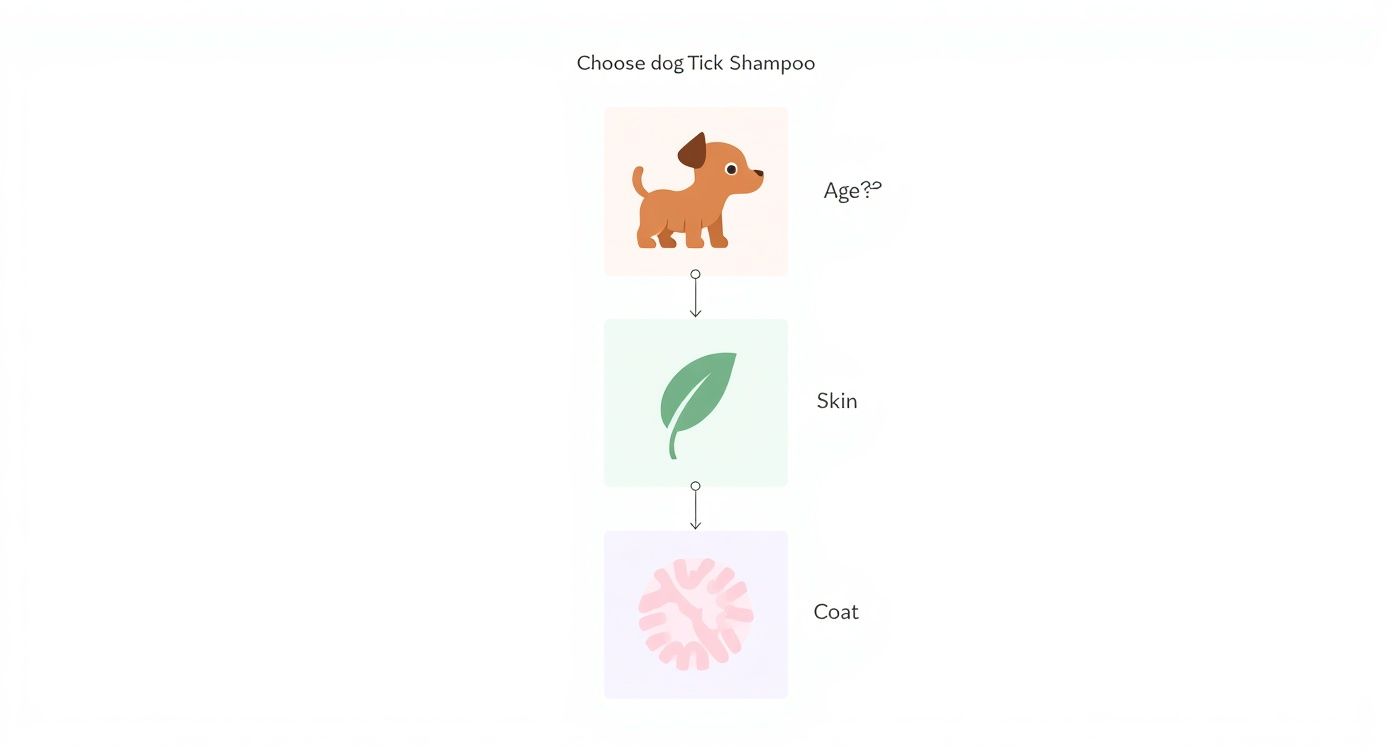
As the flowchart demonstrates, consider your dog's age, skin condition, and coat type to make a safe and effective choice before you begin the bath.
The demand for these specialized products isn't surprising when you look at the numbers. The global market for flea, tick, and heartworm products hit a value of USD 7.85 billion in 2024, and shampoos are a popular choice for their immediate, visible results. Application is just one piece of the grooming puzzle, and if you're looking for more guidance, check out our complete guide on how to groom your dog at home.
Building a Complete Tick Prevention Strategy
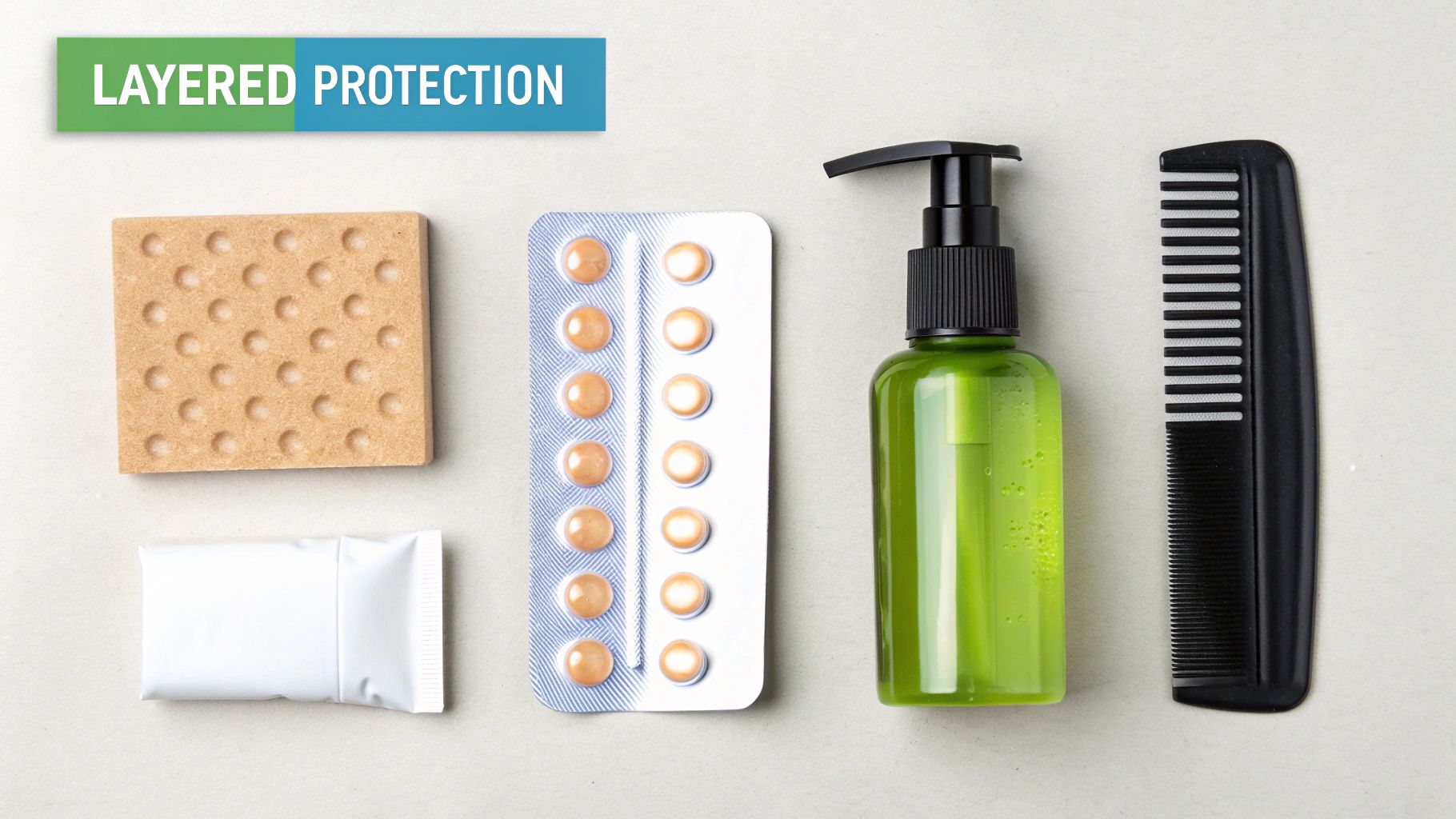
Selecting the right tick shampoo gives you a powerful tool for immediate tick removal. However, you should view it as one component of a larger pest-control system. A medicated bath is your reactive solution for clearing ticks your dog has already picked up. Its effects are potent but temporary, which can leave your dog vulnerable between baths.
An effective defense strategy requires layers. Combine the immediate clean-up from a shampoo with longer-lasting preventative measures. This approach eliminates gaps in your dog's protection, providing comprehensive safety throughout tick season and beyond.
Combining Shampoo with Long-Term Preventatives
For continuous, 24/7 protection, you must pair the reactive power of a medicated bath with proactive, long-term solutions. Each method offers a different type of defense, and using them in combination creates a formidable barrier against pests.
Here is how to integrate different preventatives with your tick shampoo routine:
- Spot-On Treatments: Apply these liquid treatments to the skin between the shoulder blades for approximately 30 days of protection. They kill ticks that crawl through your dog's coat.
- Oral Medications: Administer these chewable tablets monthly or every three months to work from the inside out. They kill ticks after they bite, which is crucial for preventing disease transmission.
- Tick Collars: Modern tick collars release active ingredients slowly over several months—often up to 8 months—to provide low-maintenance, long-lasting tick repellent and killing action.
Here's a pro tip: Use a tick shampoo right after a high-risk outing, like a long walk in the woods, to knock out any immediate freeloaders. Then, you can rely on your dog's monthly spot-on or oral chewable to handle any stragglers you might have missed and provide that critical ongoing protection.
Extending Protection to Your Environment
Your prevention plan must extend beyond your dog's coat. Ticks often lurk in your own yard, hiding in tall grass, leaf piles, and brushy areas. Managing your environment is a critical step in reducing your dog's exposure.
Implement simple landscaping habits to make a significant difference. Mow the lawn regularly, clear away leaf litter, and create a wood chip or gravel barrier between your yard and any wooded areas to dramatically reduce the local tick population. For persistent problems, use pet-safe professional yard treatments for an additional layer of security.
The Power of Daily Grooming and Tick Checks
The final and perhaps most crucial layer of defense is a daily routine. Make a quick tick check a non-negotiable habit after every walk or outdoor play session. Run your hands over your dog’s entire body, feeling for small bumps. Pay close attention to their favorite hiding spots: in and around the ears, under the collar, in their "armpits," and between their toes.
This daily hands-on check is also an excellent time for grooming. A quick brush-through helps you spot ticks more easily while keeping their coat healthy and tangle-free. For a complete list of essential items, review our guide on the best grooming tools for dogs.
This combination of vigilance and care is essential. Understanding these responsibilities is a core part of the joys and challenges of pet parenthood.
It's clear that owners take this seriously. The global market for dog flea and tick sprays was estimated at $500 million in 2025 and is expected to climb to around $850 million by 2033, all thanks to a growing awareness of tick-borne diseases.
Got Questions About Tick Shampoos? We’ve Got Answers.
When using medicated shampoos, it's normal to have questions about safety and frequency. Here, we provide clear answers to the most common concerns so you can feel confident in your tick protection plan.
Use this as your quick reference for those "what if" scenarios to ensure you are always prepared.
How Often Should I Actually Use a Tick Shampoo?
This is a critical question. During peak tick season, it's tempting to use a medicated shampoo frequently, but this can be counterproductive. This is a medicated treatment, not a standard grooming shampoo.
Over-shampooing can strip the natural oils from your dog’s coat, leading to dry, flaky, and irritated skin. The correct frequency depends on the specific product and the severity of the tick problem in your area.
Your best course of action is to follow the directions on the label. Most manufacturers recommend bathing every 1 to 4 weeks during peak season. Adhere to the instructions on the bottle.
Can I Use My Dog’s Tick Shampoo on My Cat or Puppy?
The answer is an unequivocal no. Never use a product formulated for dogs on another animal, especially cats. Many dog tick shampoos contain pyrethroids like permethrin.
While these ingredients work great for dogs, they are extremely toxic to cats. Exposure can lead to severe neurological issues, seizures, and can even be fatal. It’s a tragic accident that is completely preventable by using species-specific products.
Puppies also require special care. Their developing bodies and sensitive skin make them vulnerable to the strong chemicals in adult dog shampoos. Only use a shampoo that is explicitly labeled as safe for your puppy’s specific age and weight.
What if My Dog Has a Bad Reaction?
Even with the safest products, an adverse reaction is possible. If you observe any warning signs after a bath—such as excessive scratching, red skin, hives, or swelling—you must take immediate action.
Here’s what to do:
- Rinse, Rinse, Rinse: Immediately place your dog back in the tub. Use copious amounts of lukewarm water to wash off any remaining shampoo. You can use a gentle, non-medicated soap (like a mild dish soap) to help remove any residue from their fur and skin.
- Call Your Vet: After rinsing them thoroughly, call your veterinarian or the nearest emergency pet clinic. They will provide instructions for the next steps.
- Keep the Bottle: Do not discard the shampoo bottle. Your vet will need to know the active ingredients to determine the best course of treatment.
A solid grooming routine is your best defense against ticks and other nasty pests. At Pet Magasin, we have a whole line of high-quality grooming tools to help keep your dog healthy, happy, and comfortable. Check out our collection at https://www.petmagasin.com to find the perfect tools for your pet care arsenal.

Leave a comment