


Your Guide to a Soothing Dog Bland Diet

When your dog has an upset stomach, the last thing you want to do is give them something that makes it worse. This is where a bland diet becomes your most effective tool. It's a simple, temporary meal plan—usually boiled lean protein and a plain carbohydrate—designed to give their digestive system a much-needed break and promote healing.
Think of it as the doggy equivalent of the BRAT diet (bananas, rice, applesauce, toast) that we humans turn to when our own stomachs are out of sorts. This guide provides actionable steps to prepare the diet, feed your dog, and transition them back to normal food safely.
What Is a Dog Bland Diet
A bland diet for your dog is a temporary "reset button" for their gut. When your dog is dealing with mild gastrointestinal (GI) issues like diarrhea or vomiting, their system is irritated. Feeding them their normal, richer food can worsen the irritation.
The goal is easy digestibility. By using low-fat, low-fiber, and completely unseasoned ingredients, you reduce the workload on their stomach and intestines. This allows their body to recover naturally while still getting the basic nutrients and hydration they need to feel better.
When Is a Bland Diet a Good Idea?
A bland diet is your first line of defense for minor, short-lived digestive troubles. It’s an effective home remedy for symptoms that are concerning but not severe enough for an emergency vet visit.
You should consider putting your dog on a bland diet in these common situations:
- Mild Diarrhea: If your dog has loose stool but is otherwise acting normally.
- Occasional Vomiting: If they've thrown up once or twice but still have energy.
- Dietary Missteps: If you caught them eating something they shouldn't have, like table scraps.
- Post-Surgery Recovery: Your vet may recommend a bland diet for a day or two after a procedure to ease them back into eating.
Key Takeaway: A bland diet is a short-term solution, meant for only 3 to 5 days, to manage mild digestive upset. It is not nutritionally complete for long-term feeding.
With around 61 million pet dogs in the United States, tummy troubles are a common reason for vet visits. Studies show that 30% to 60% of dogs experience diet-related GI problems. This is why the bland diet is a staple recommendation from veterinarians and experienced owners.
When to Skip the Bland Diet and Call a Vet
A bland diet is effective, but it's not a cure-all. Certain symptoms are red flags for a more serious problem that requires immediate veterinary attention. Trying to manage these at home could delay critical treatment.
Use this chart to decide on your next step.
When to Use a Bland Diet vs Call the Vet
| Symptom | Consider a Bland Diet If... | Call Your Vet Immediately If... |
|---|---|---|
| Vomiting/Diarrhea | It happens once or twice and then stops. | It continues for more than 24-48 hours, or is severe and frequent. |
| Stool/Vomit Color | It's a normal (though loose) brown color. | You see any blood (bright red or black, tar-like) in the stool or vomit. |
| Energy Level | Your dog is still playful and acting mostly normal. | Your dog is extremely weak, unresponsive, or can't seem to stand up. |
| Physical Comfort | They are resting comfortably. | You notice signs of pain like whining, a bloated/hard belly, or the "praying" pose. |
| Appetite | They are still willing to eat the bland food offered. | They refuse all food and water for more than 24 hours. |
Trust your instincts. You know your dog best. If something feels seriously wrong, a call to the vet is always the right action.
Recognizing these warning signs is a key part of responsible pet ownership. For more tips on keeping your companion healthy, explore our other guides on dog care.
Choosing The Right Bland Diet Ingredients
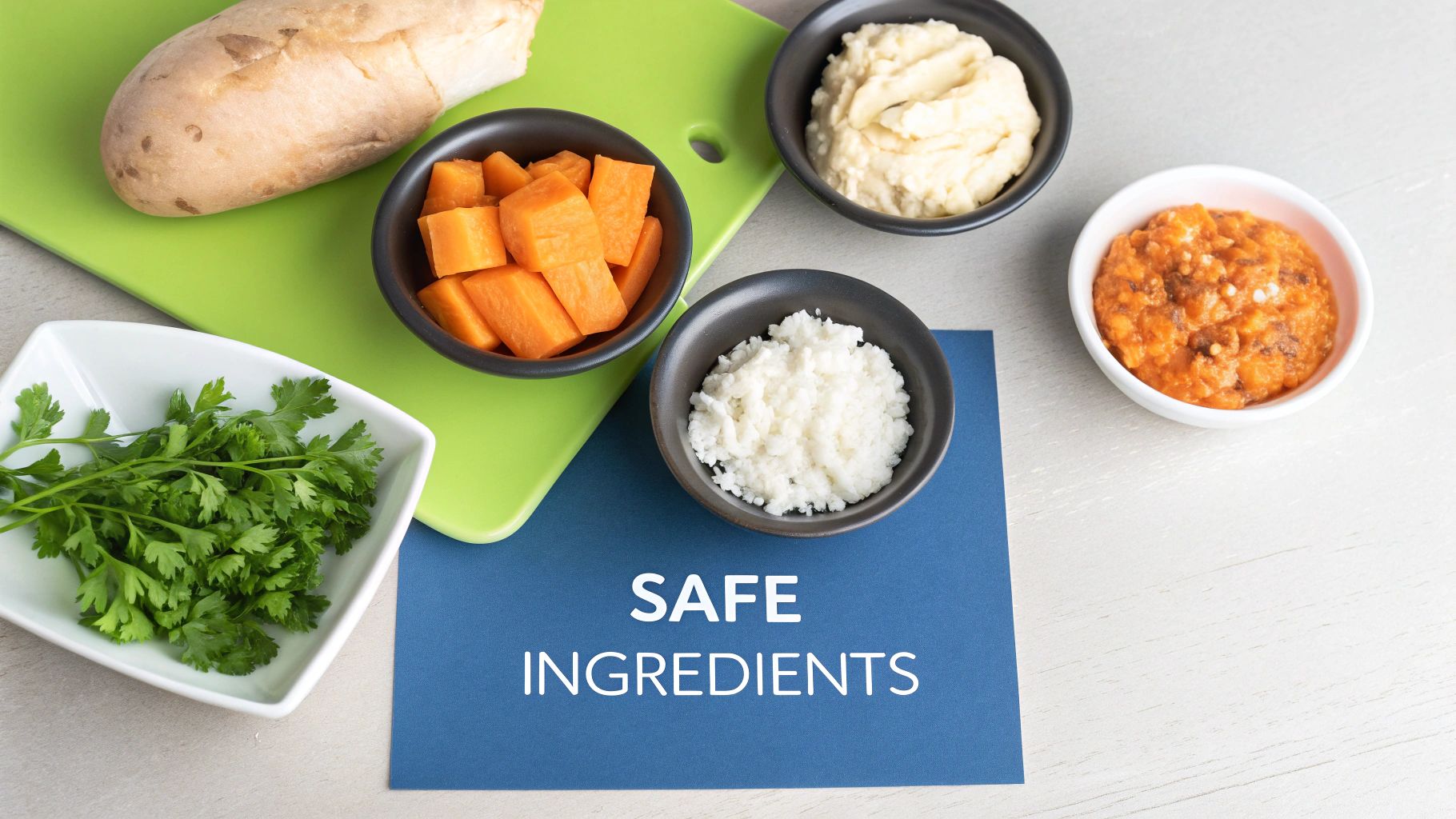
Assembling a bland diet is about simplicity. You will build a meal with just two components: one lean protein and one simple carbohydrate. Nothing else.
Intentionally strip away all extras—like fats, oils, or any seasonings—that can be tough on a sensitive digestive system. By sticking to these basics, you give your dog’s gut a chance to rest and heal without working overtime.
The Lean Protein Component
Lean protein is the foundation. It provides essential amino acids for gut repair without the heavy fats that can worsen diarrhea and vomiting.
It is critical that any protein you use is cooked completely plain. Boil or steam it with no salt, spices, or oils.
Here are some excellent, vet-approved options:
- Boiled, Skinless, Boneless Chicken: This is the standard choice. It's easy for dogs to digest and highly palatable, even when they’re not feeling well.
- Lean Ground Turkey: Another great option. Ensure the package is at least 93% lean to minimize fat content.
- Extra-Lean Ground Beef: If using beef, it must be extra-lean (95% or more). Actionable Tip: After boiling, rinse the cooked meat with warm water to wash away any remaining grease.
- Low-Fat Cottage Cheese: For dogs that handle dairy well, plain, low-fat cottage cheese can be a gentle, protein-rich alternative.
The goal is to provide nutrients in their most basic, digestible form. This principle applies to all food, which is why it's so important to read dog treat ingredient labels and be mindful of what goes into their bowl.
The Simple Carbohydrate Component
The second half of the meal is a simple, starchy carbohydrate. These ingredients provide easily accessible energy and help bind the stool if they have diarrhea. Like the protein, these must be cooked thoroughly and served plain.
Important Note: Avoid healthy whole grains like brown rice or quinoa for now. While great for a normal diet, their high fiber content can be too abrasive for an irritated digestive tract.
Stick to these safe and effective choices:
- Plain White Rice: The gold standard. Boil it until it’s soft and slightly mushy. White rice is low in fiber and helps absorb excess water in the gut.
- Boiled Sweet Potatoes: A vitamin-packed alternative to rice. Peel them first and mash them well before serving.
- Plain Canned Pumpkin: Ensure it’s 100% pure pumpkin and not spiced pumpkin pie filling. It is a digestive aid; its soluble fiber helps with both diarrhea and constipation. You can learn more about all the benefits of pumpkin for dog digestion.
Approved Bland Diet Foods and Preparation
Use this quick-glance table to pick and prepare the right ingredients for your dog's recovery meals.
| Food Item | Category | Preparation Method | Key Benefit |
|---|---|---|---|
| Skinless, Boneless Chicken Breast | Protein | Boil until cooked through, then shred. No seasonings. | Highly digestible and palatable for picky eaters. |
| Lean Ground Turkey (93% lean+) | Protein | Boil or pan-cook without oil, drain all fat. | Low in fat, excellent source of essential amino acids. |
| Extra-Lean Ground Beef (95% lean+) | Protein | Boil, drain, and rinse with warm water to remove grease. | Provides iron and protein with minimal fat. |
| Plain White Rice | Carbohydrate | Boil in water until very soft and slightly mushy. | Low in fiber, helps bind stool and soothe the gut. |
| Boiled Sweet Potatoes | Carbohydrate | Peel, boil until tender, then mash thoroughly. | Gentle on the stomach and rich in vitamins A and C. |
| 100% Pure Canned Pumpkin | Carbohydrate | Serve plain, directly from the can. | Soluble fiber helps regulate both diarrhea and constipation. |
| Low-Fat Cottage Cheese | Protein | Serve plain as an alternative protein source. | Provides protein and calcium for dogs that tolerate dairy. |
Combining one item from the protein column with one from the carbohydrate column is the perfect recipe for a gentle, healing meal. This two-part approach ensures every bite works to soothe your dog's upset stomach.
Simple Recipes and Feeding Schedules
Now that you have your vet-approved ingredients, it's time to prepare a simple, soothing meal. Making a bland diet is not about gourmet cooking; it's about simplicity and correct portioning.
Think of yourself as a short-term personal chef for a client with a delicate stomach. Every ingredient is chosen for a reason, portions are measured, and meal timing is just as crucial as the food itself. This careful approach helps your dog's digestive system reset.
The Ideal Bland Diet Ratio
The most common, vet-recommended ratio for a homemade bland diet is one part lean protein to two parts simple carbohydrate. For example, use one cup of boiled chicken for every two cups of cooked white rice.
This 1:2 ratio is intentional. The smaller amount of protein provides necessary nutrients without overworking the gut, while the larger portion of carbohydrate offers easy energy and helps firm up their stool. Adhering to this ratio is key to the diet's effectiveness.
A common mistake is adding too much protein, thinking it's more nourishing. For an upset stomach, too much protein can be difficult to digest, defeating the purpose of the bland diet.
Following this formula ensures you are giving your dog a meal that actively supports their recovery.
Classic Boiled Chicken and Rice Recipe
This is the gold standard because it's effective, easy to prepare, and most dogs will eat it even when feeling unwell.
Ingredients:
- 1 boneless, skinless chicken breast
- ½ cup of plain white rice (uncooked)
- 2 cups of water
Instructions:
- Cook the Chicken: Place the chicken breast in a pot and cover it with water. Boil until cooked through, about 15-20 minutes. Ensure there is no pink inside.
- Prepare the Rice: While the chicken boils, cook the rice. You want it soft and easy to digest—refer to this guide on how to cook rice perfectly. The goal is to cook it until it's very soft, even mushy.
- Shred and Combine: Remove the chicken from the water and let it cool. Shred it into small, bite-sized pieces. Mix the shredded chicken with the cooked rice, adhering to the 1:2 protein-to-carb ratio.
- Serve: Let the mixture cool completely to room temperature before serving. Never serve hot food to your dog.
Soothing Turkey and Pumpkin Mash Recipe
This is a great alternative, especially if your dog has a chicken sensitivity or needs the digestive support of pumpkin.
Ingredients:
- ½ pound of 93% lean (or leaner) ground turkey
- 1 cup of 100% pure canned pumpkin (not pumpkin pie filling!)
Instructions:
- Cook the Turkey: Sauté the ground turkey in a non-stick skillet over medium heat, breaking it into small crumbles. Do not add any oil, salt, or seasonings.
- Drain Thoroughly: This step is crucial. Once browned, place the turkey in a strainer and rinse it with warm water. This removes excess fat that could upset your dog’s stomach.
- Combine and Cool: In a bowl, mix the drained turkey with the pure canned pumpkin.
- Serve: Let the mixture cool to room temperature before feeding it to your dog.
Feeding Schedule and Portion Sizes
For an upset stomach, it's better to give smaller, more frequent meals instead of one or two large ones. This prevents overwhelming the digestive system. A good starting point is to offer 3 to 4 small meals spread evenly throughout the day.
To determine meal size, first calculate the total amount of food they need per day. A good rule of thumb is to feed 1/2 cup of the bland diet mixture for every 10 pounds of your dog's body weight, per day.
Use this chart as a quick reference:
| Dog's Weight | Total Daily Food Amount | Example Meal Size (4 meals/day) |
|---|---|---|
| 10 lbs | 1/2 cup | 1/8 cup per meal |
| 20 lbs | 1 cup | 1/4 cup per meal |
| 40 lbs | 2 cups | 1/2 cup per meal |
| 60 lbs | 3 cups | 3/4 cup per meal |
| 80 lbs | 4 cups | 1 cup per meal |
This is a starting point. Monitor your dog's energy and stool consistency, and adjust the amounts if needed. Following these recipes and schedules removes the guesswork and helps your furry friend get the gentle care they need.
Transitioning Back to Regular Dog Food
Just because your dog's symptoms are gone and they seem back to normal doesn’t mean the recovery is complete. Think of the bland diet like a cast on a broken bone; you wouldn't take it off and immediately go for a run.
Jumping straight back to their normal, richer food can shock their sensitive system, potentially causing a relapse of the vomiting or diarrhea you just resolved.
A slow, steady transition is crucial. It gives their gut time to fully heal and prepare for its normal workload. This gradual process helps their digestive enzymes and gut bacteria readjust, preventing further irritation. The goal is a smooth hand-off, not a sudden jolt.
This visual guide breaks down the core principles of feeding a bland diet, focusing on the right ratio, portion, and frequency to get your pup on the mend.
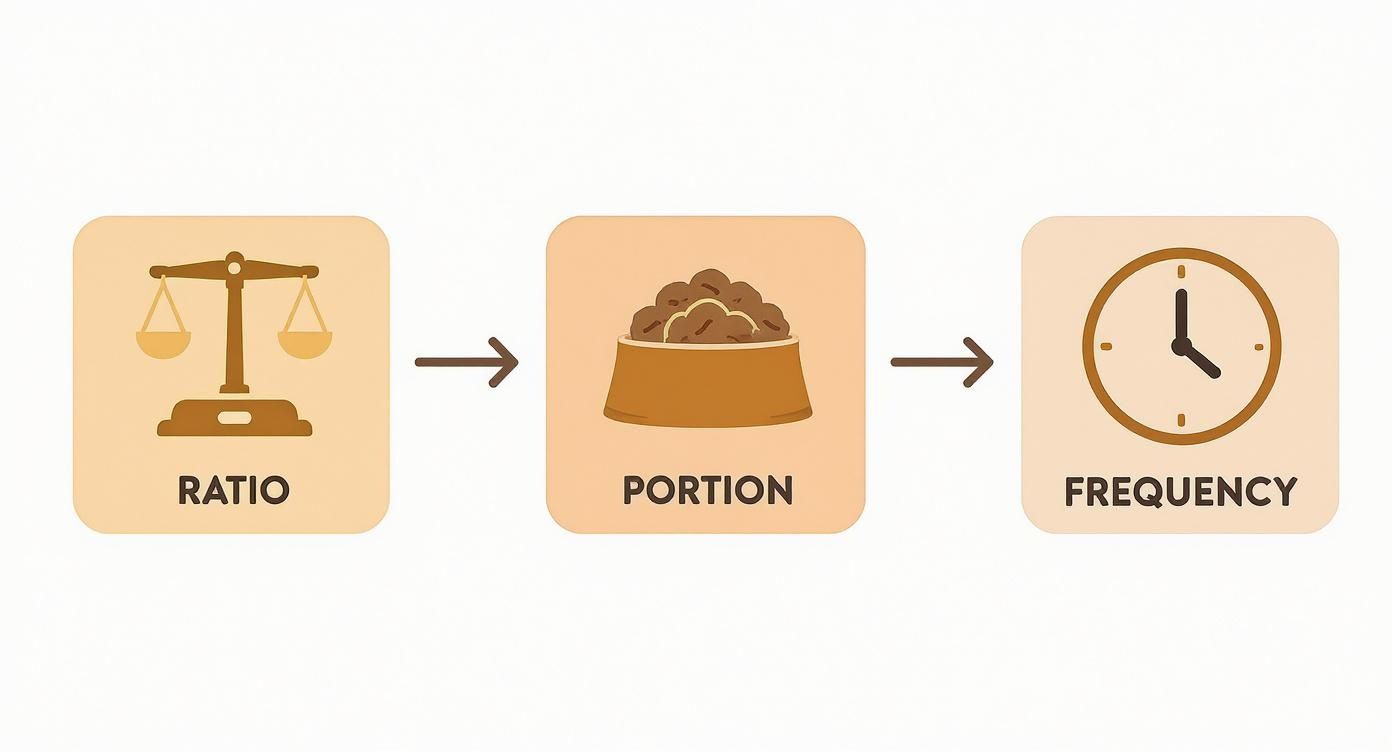
This illustrates how everything—from the protein-to-carb ratio to feeding frequency—works together in a gentle, effective recovery plan.
Creating a Gradual Transition Plan
A successful transition should take about 5 to 7 days. Rushing this is a common mistake. During this week, you will slowly mix their regular food into the bland diet, gradually increasing the proportion until they are fully back on their normal diet.
The purpose of a slow transition is to let the gut get re-acquainted with normal food. By introducing it in small increments, you allow the digestive system to rebuild its tolerance without being overwhelmed, ensuring a lasting recovery.
The popularity of specialized pet foods is growing. The global market for pet therapeutic diets, which includes these bland diets, was valued at around USD 4.3 billion and is expected to nearly double by 2034. While dry food is the biggest seller, wet and canned options make up 28.7% of sales and are often a great choice for sick dogs who have lost their appetite. You can learn more about the growth in therapeutic pet diets on gminsights.com.
Your Day-by-Day Transition Schedule
Here is a step-by-step schedule to guide you. The most important action is to monitor your dog for any signs of an upset stomach and be ready to adjust.
- Days 1 & 2: Mix 75% bland diet with 25% regular food.
- Days 3 & 4: If the first two days go well, increase to a 50/50 mix of bland and normal food.
- Days 5 & 6: Now, reverse the ratio to 75% regular food and 25% bland diet.
- Day 7: If their stool is firm and they show no signs of digestive trouble, you can return to 100% of their regular food.
Monitoring for Success and Setbacks
Throughout this process, your dog's stool is the clearest indicator of how well they're handling the change.
Signs of a Successful Transition:
- Stools remain firm and well-formed.
- No vomiting or signs of nausea.
- Energy levels are normal or improving.
- Appetite is strong and consistent.
Red Flags That Mean You Should Slow Down:
If you see soft stools, diarrhea, or vomiting, their system isn't ready. Actionable Step: Immediately go back to the previous ratio for another day or two before trying to move forward again. For example, if the 50/50 mix caused issues, drop back to the 75% bland diet / 25% regular food mix.
If symptoms persist even after slowing down, it's time to call your vet.
Common Mistakes to Avoid
Even with the best intentions, it's easy to make mistakes when preparing a bland diet. These slip-ups can slow down your dog's recovery.
Treat the bland diet as a specific, short-term medical tool. To ensure it works, you must avoid the common pitfalls that can set your dog's healing back.
Keeping the Diet Going Too Long
A very common mistake is keeping a dog on a bland diet for too long without veterinary guidance. While gentle, a homemade meal of chicken and rice is not nutritionally complete for long-term use. It lacks essential vitamins, minerals, and fats your dog needs for overall health.
A bland diet is a temporary fix for 3 to 5 days. If your dog’s digestive issues do not improve within this timeframe, it's a strong indicator that a more serious, underlying issue requires a veterinary diagnosis.
Prolonged use can lead to nutritional deficiencies, creating new health problems. Always view it as a temporary bridge back to their regular, balanced food.
Adding Fats or Seasonings for Flavor
It's tempting to add something extra if your dog seems hesitant to eat. However, adding oils, butter, salt, or any other seasoning completely defeats the purpose of a bland diet. These additions can further irritate an inflamed digestive tract.
The goal is to keep the meal as simple as possible.
- No Oils or Butter: Fats are difficult for a sensitive stomach to process and can worsen diarrhea or pancreatitis.
- No Salt or Spices: Seasonings can cause more stomach upset. Your dog does not need them.
- No Store-Bought Broth: These are nearly always high in sodium and additives. If you must use a broth, use a homemade bone broth with zero salt or seasonings.
Stick to plain, boiled ingredients for the quickest recovery.
Miscalculating Portion Sizes
Feeding too much or too little can also hinder healing. Too much food—even bland food—can overwhelm their system and cause more vomiting or diarrhea. Conversely, feeding too little will leave them weak and without the energy needed to recover.
The key is to calculate the correct daily amount based on your dog's weight, then divide that total into 3-4 small, frequent meals. This prevents their digestive system from being overloaded. If you are unsure how much to feed, call your vet for a specific recommendation.
The global dog food market, which includes specialized diets like the dog bland diet, was valued at around US$44.4 billion, reflecting how much owners now understand that proper nutrition is fundamental to digestive health. You can find more insights about the dog food market on marketresearch.com.
Frequently Asked Questions
When your dog's stomach is upset, having questions is normal. We've gathered the most common concerns to provide clear, actionable answers so you can help your pup with confidence.
How Long Should My Dog Stay on a Bland Diet?
A bland diet is strictly a short-term fix. It's first aid for a troubled gut, intended for use for only 3 to 5 days to manage minor digestive issues.
It gives their system a break to rest and heal. However, it is not a complete meal plan because it lacks key fats, vitamins, and minerals. If you don't see significant improvement within 48 hours, that is your signal to call the vet.
Can I Use Store-Bought Bland Diet Food?
Yes, and this is an excellent, convenient option. You can find commercial or prescription bland diets labeled as "gastrointestinal" or "sensitive stomach" formulas from trusted pet food brands.
These pre-made diets offer several advantages:
- Nutritionally Balanced: Formulated by veterinary nutritionists, they are complete and balanced, making them safer if your vet advises a longer duration.
- Convenience: They save you the time and stress of cooking when your dog is sick.
- Consistent Formulation: Every meal is identical, which is ideal for a sensitive stomach that needs consistency to recover.
You can find these at your vet's office or a local pet supply store.
What if My Dog Refuses to Eat the Bland Diet?
It's worrying when a sick dog refuses food. Before panicking, try these simple tricks. Gently warming the food can enhance its aroma and make it more appealing.
You can also try a different combination of approved ingredients. If they refuse chicken and rice, perhaps lean ground turkey with sweet potato will be more tempting. A small spoonful of plain, low-sodium bone broth (with no onions or garlic) can also add flavor and moisture.
Crucial Insight: An adult dog might skip a meal or two, but refusing all food for more than 24 hours is a red flag. If they are also lethargic or not acting like themselves, call your vet.
Are There Special Considerations for Puppies and Senior Dogs?
Yes, and this is critical. Puppies and senior dogs are more vulnerable and have different needs than healthy adult dogs.
For Puppies:
A puppy can become dehydrated or develop low blood sugar (hypoglycemia) very quickly because they lack the reserves of adult dogs. While a bland diet can help, you must consult your vet first. They will provide precise instructions on feeding amounts and frequency to keep your puppy's energy stable.
For Senior Dogs:
Older dogs may have other health conditions, like kidney or heart disease, that a standard bland diet could worsen. For example, a low-protein diet may be unsuitable for some, while the sodium in cottage cheese could be risky for others. Always check with your vet before making any dietary changes for a senior dog.
For more answers to common pet care questions, feel free to check out our FAQ page.
Can I Add Pumpkin to Every Bland Meal?
Plain, 100% pure canned pumpkin (not pie filling) is a useful tool, but it's best used with a purpose. Its soluble fiber is effective for both diarrhea and constipation.
It absorbs excess water to firm up stool during diarrhea and adds bulk and moisture to relieve constipation. A good rule of thumb is to add one teaspoon for every 10 pounds of body weight to a meal once or twice a day. You don't need to add it to every single meal unless your vet instructs you to.
Can Kibble Be Used in a Bland Diet?
It is best to avoid your dog's regular kibble while their stomach is recovering. Dry food is harder to digest and can be abrasive on an irritated digestive tract.
Furthermore, a key benefit of a cooked bland diet is its high moisture content, which helps keep your dog hydrated—this is crucial when they are losing fluids. If kibble is your only option, you can try soaking it in warm water for 15-20 minutes until it becomes a soft mush. However, a simple meal of boiled chicken and rice is almost always the better choice for recovery.
At Pet Magasin, we know your pet’s health means everything. That's why we create high-quality, reliable products to make caring for them just a little bit easier, from cozy travel carriers to sturdy grooming tools. Come see our full range of thoughtfully designed pet supplies at https://www.petmagasin.com.

Leave a comment