


What Age to Start Potty training Puppy: A Practical Guide

You've brought home a new puppy, and the first big question on your mind is, "When do we start potty training?" The ideal window to begin is between 8 and 12 weeks of age. Starting during this key developmental period allows you to build good potty habits from day one, before any bad ones have a chance to stick.
Understanding the Best Age for Potty Training
Figuring out the exact right moment to start is less about a specific date and more about your puppy's development. Kicking off training between 8 and 12 weeks gives you a significant advantage. Your puppy is old enough to have some bladder control but is still young enough to be highly receptive to learning new routines.
Think of it this way: if you wait too long, habits like having accidents inside can become the norm, making your job much tougher later on. Starting early sets the foundation for a lifetime of success.
The Science Behind the 8-Week Mark
Starting potty training right at 8 weeks old is the ideal kick-off point, as this is typically when a puppy leaves their mother and littermates to join your family. In fact, a 2023 survey found that owners who started training at 8 weeks saw 75% fewer accidents in the first month compared to those who held off until 12 weeks.
Jumping in early prevents your puppy from ever learning that the house is an acceptable place to go. You can find more detailed guidance in various puppy training resources.
This timeline provides a clear visual of the key stages: the ideal start at 8 weeks, the reinforcement period at 12 weeks, and the goal of a reliable, house-trained dog by 4 months.
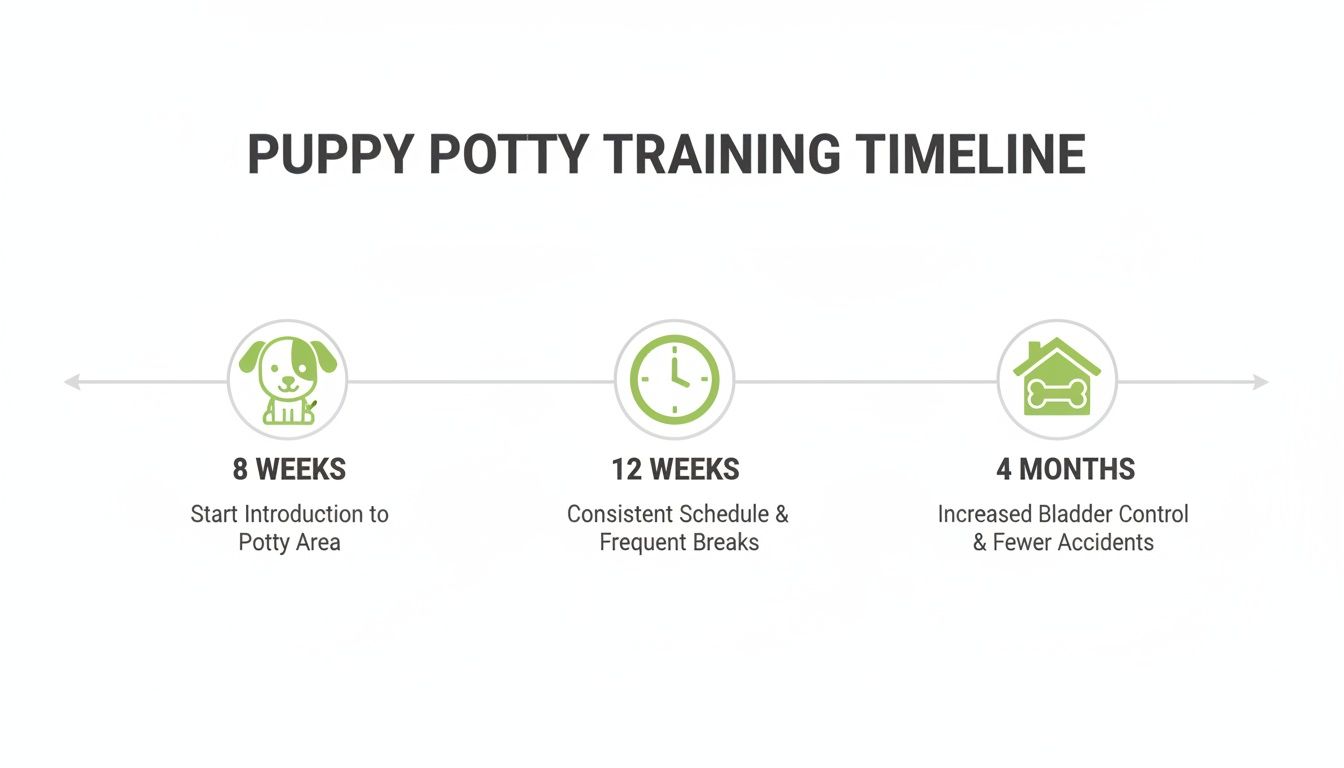
As the graphic shows, consistent effort from the start lays the foundation for a well-behaved, fully trained companion.
Key Age Milestones and What to Expect
To set realistic goals and make the process smoother, you need to understand what your puppy is physically and mentally capable of at each stage. Tailor your training plan to these milestones.
Here's a quick cheat sheet to help you match your training schedule with your puppy's development.
Puppy Potty Training Age and Expectations
Use this table as a reference guide for your puppy's bladder control and how often you should be taking them out for a potty break.
| Puppy's Age | Typical Bladder Control | Recommended Potty Break Frequency |
|---|---|---|
| 8-10 Weeks | Approximately 1-2 hours | Every 1-2 hours, plus after naps & meals |
| 10-12 Weeks | Approximately 2-3 hours | Every 2-3 hours |
| 3-4 Months | Approximately 3-4 hours | Every 3-4 hours |
| 4-6 Months | Approaching full control | Every 4-5 hours, becoming more reliable |
Remember that every puppy is an individual, but this chart provides a solid baseline for building a routine that works for your new best friend.
Recognizing the Signs Your Puppy Is Ready
While the 8-to-12-week window is an excellent guideline, your puppy's behavior tells the real story. The single most important skill you can develop is learning to read their individual signals.
Think of it as learning their language. Your puppy is constantly trying to tell you what they need. Once you can spot their "I have to go!" cues, you can work with their instincts instead of constantly cleaning up messes.
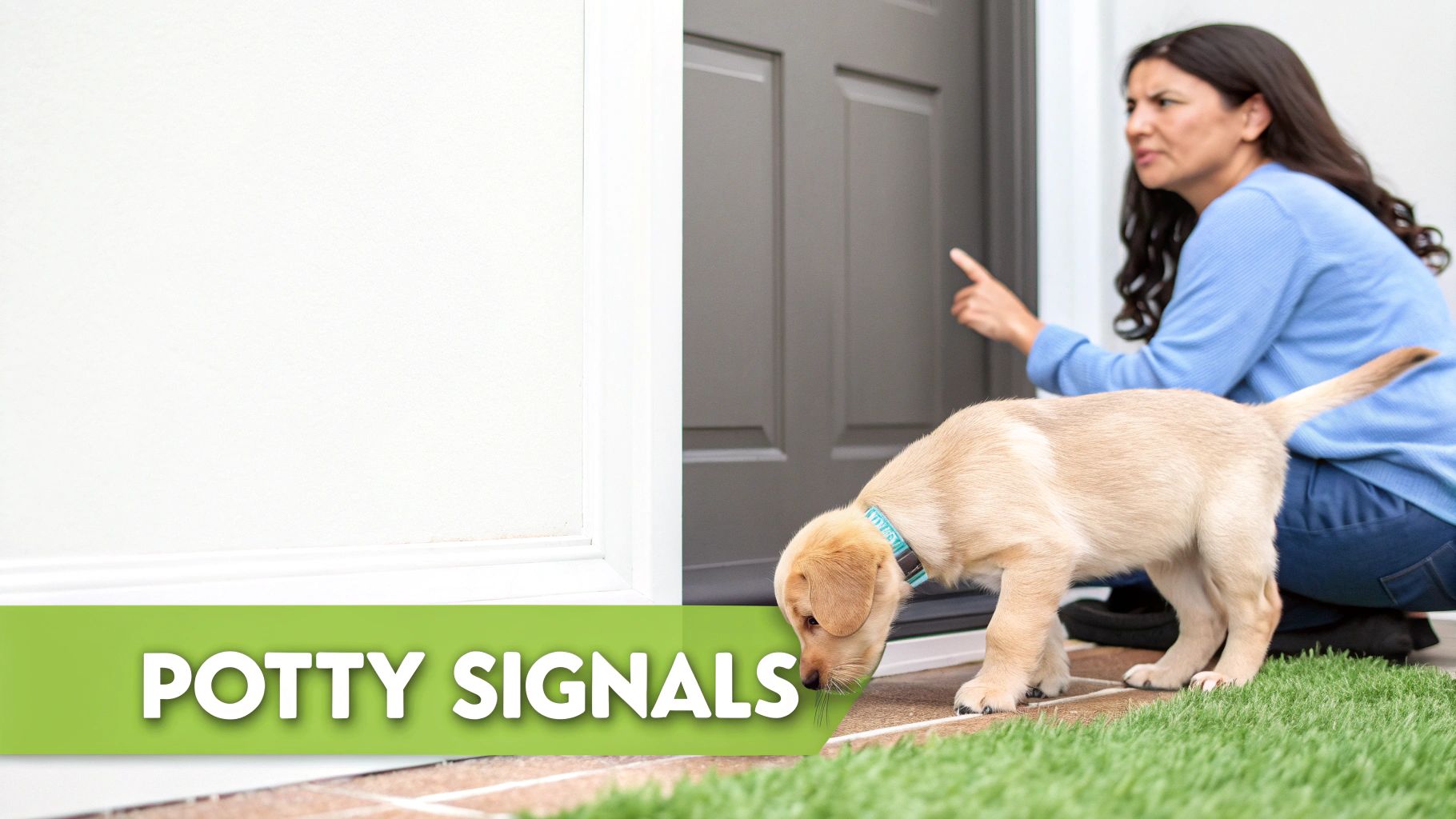
Decoding Your Puppy's Potty Signals
Certain behaviors are universal signs that a bathroom break is imminent. Catching these signals allows you to prevent a mess and turn it into a training win.
Watch for these classic pre-potty actions:
- Intense Sniffing: Your puppy will suddenly become laser-focused on sniffing the ground, often in a specific area, as they search for the right spot.
- Circling: Many puppies walk in tight circles right before they squat. This is one of the clearest signals you'll get.
- Whining or Barking: If your puppy whines, paws at the door, or barks, they are directly communicating their need to go out.
- Sudden Restlessness: A puppy who abruptly stops playing and starts wandering is likely looking for a place to relieve themselves.
A puppy doesn't have an accident to be naughty. They're communicating a basic physical need. Each signal is a golden opportunity for you to step in, guide them to the right spot, and shower them with praise.
The key is observation and positive redirection. The moment you see your puppy start circling, calmly say your potty cue, like "Outside!", and hustle them to their designated spot. This simple act builds a powerful connection between their urge and the correct action.
Other Key Indicators of Readiness
Beyond the "potty dance," other developmental signs show your puppy is mentally and physically ready for training. These indicators tell you their brain and body are starting to work together.
A major clue is their instinct to keep their "den" clean. You may notice your puppy trying hard not to have an accident in their crate or bed. This is a huge advantage, as it shows a natural desire to eliminate away from their living space.
Also, pay attention to how long they can "hold it." As they age, their bladder control will improve. A puppy that can go a few hours overnight without an accident is showing the physical maturity needed for a structured routine. Recognizing this growing capacity helps you create a realistic schedule from day one.
Building a Rock-Solid Potty Training Routine
If there's one golden rule in potty training, it's consistency. Puppies are creatures of habit and thrive on predictability. A solid routine gives your puppy a clear roadmap so they know what to expect—and what you expect of them.
Use this framework as your core strategy. By connecting potty breaks to specific, daily events, you build powerful mental associations that make learning click. This simple, repeatable system will dramatically reduce accidents and make the process less stressful for everyone.
The Four Pillars of a Potty Schedule
A puppy's tiny bladder and fast digestive system mean you need to be one step ahead. Build your routine around these four crucial moments to prevent the vast majority of indoor messes.
These are your non-negotiable, must-do potty breaks:
- First Thing in the Morning: The moment your puppy wakes up, take them directly outside. Their bladder is full, making this the most critical trip of the day.
- Right After Meals: Food stimulates the digestive system. Take your puppy out 10-20 minutes after every meal to prevent an accident.
- Following Playtime or Naps: Both excitement from play and the act of waking up are major triggers for needing to go. Always end these activities with a trip outside.
- Just Before Bedtime: One final potty break before tucking in for the night is your best strategy for a clean, accident-free morning.
A consistent schedule does more than prevent accidents—it teaches your puppy to trust you. They learn that you'll always give them a chance to do the right thing, building their confidence with every successful trip outside.
The Power of Repetition and Timing
A puppy's brain is wired to seek patterns. When you take them out at the same times every day, their internal clock syncs up. Potty training becomes a proactive, predictable part of your day instead of a reactive cleanup mission.
Owners who establish a strict schedule from the start can reduce total training time by up to 65%. Tying potty breaks to your puppy's age—like taking a three-month-old out every three hours—is far more effective than guessing. One study even showed that a consistent schedule slashed indoor accidents by 80% in the first week alone.
A crate can be a powerful tool, tapping into a dog's natural instinct not to soil their den. When used correctly, it helps you manage your puppy when you can't supervise them and is essential for preventing overnight accidents. If you need help, our guide on choosing the right dog crate sizes for your puppy can help you find the perfect fit.
Your Sample Schedule and Essential Tools for Success
Consistency is the secret to potty training, but having a solid plan and the right gear makes it much easier. A predictable schedule takes the guesswork out of the equation for both you and your puppy, building good habits quickly.
With a young puppy, especially one between 8-10 weeks old, your strategy is mostly defensive. A detailed schedule helps you stay one step ahead of their tiny bladder, turning potential accidents into training wins.
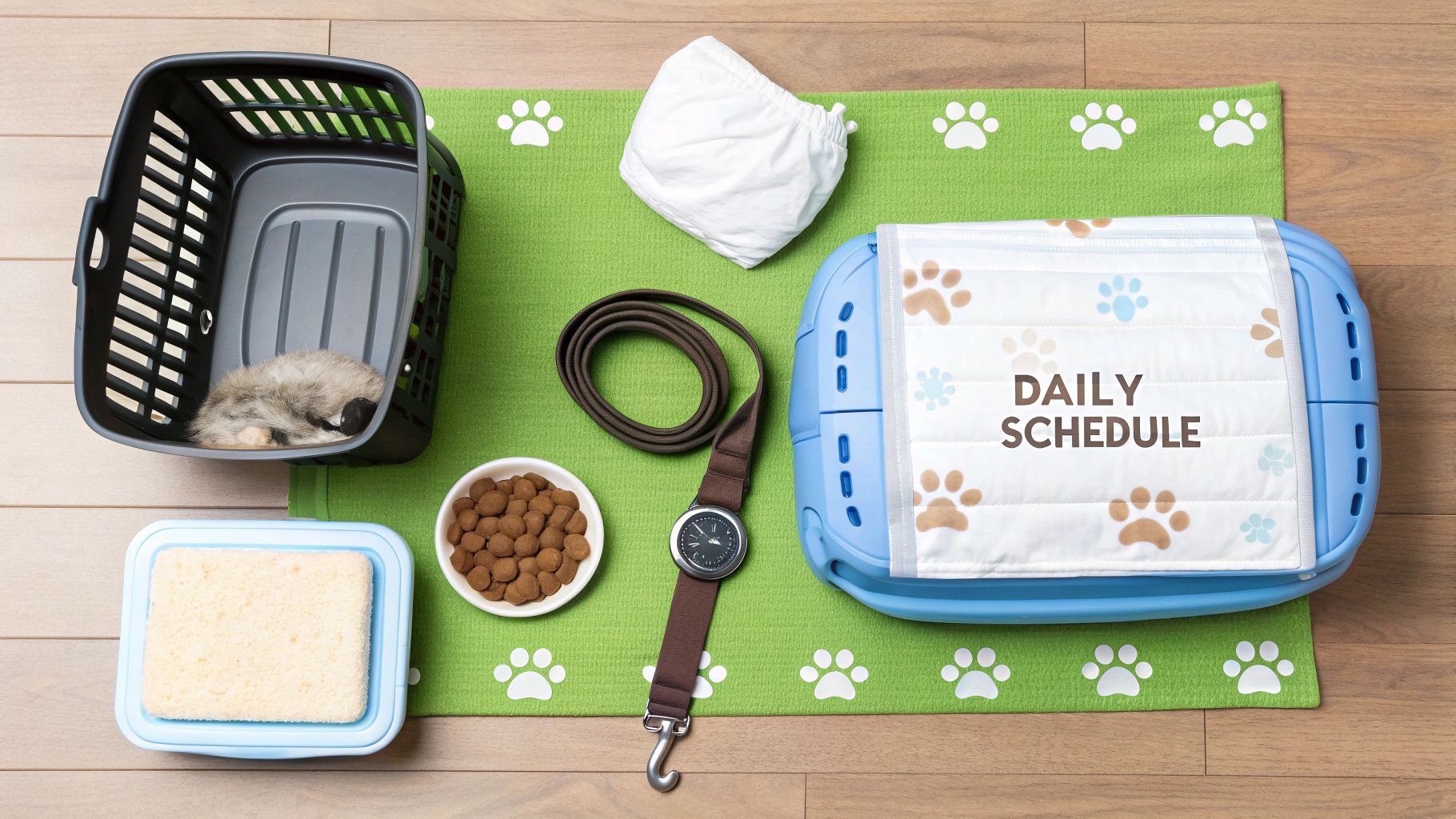
A Blueprint for Your Puppy's Day
Every puppy is different, but this sample schedule is an excellent starting point. Adjust the times to fit your life, but keep the sequence of events the same to create a reliable rhythm.
For more detailed plans, check out our guide on building a puppy potty training schedule.
Here’s a basic framework to get you started.
Sample Daily Potty Training Schedule for an 8-10 Week Old Puppy
This schedule is built around a young puppy's natural rhythms. The goal is to take them out before they even have a chance to think about having an accident inside.
| Time of Day | Activity | Potty Training Action |
|---|---|---|
| 7:00 AM | Wake Up | Immediately take the puppy outside to their potty spot. |
| 7:15 AM | Breakfast Time | Take them out again within 10-15 minutes after they finish eating. |
| 8:00 AM | Playtime | Follow every play session with another trip outside. |
| 9:00 AM | Nap Time (Crate) | Puppies need lots of sleep. The crate is their safe, cozy den. |
| 11:00 AM | Wake Up & Potty | The moment they wake up, take them straight outside. |
| 12:00 PM | Lunch Time | Take them out again 10-15 minutes after their midday meal. |
| 2:00 PM | Play & Train | Follow this burst of activity with another potty break. |
| 3:00 PM | Nap Time (Crate) | Another nap, followed by an immediate potty trip as soon as they're awake. |
| 5:00 PM | Dinner Time | The last meal of the day is followed by a potty break. |
| 7:00 PM | Evening Play | A calm play session, wrapped up with a trip outside. |
| 10:00 PM | Final Potty Break | One last trip out right before you go to bed. |
This may seem like a lot of trips outside, and it is. But this level of vigilance is what establishes a lifetime of good potty habits.
Essential Gear for a Smoother Process
Having the right tools can turn a moment of panic into a manageable cleanup. You don’t need to buy out the pet store, but a few key items will be invaluable.
Assemble this potty training starter kit:
- High-Value Treats: Use small, delicious treats that your puppy only gets after a successful potty trip outside. This makes the reward extra special and motivating.
- Enzymatic Cleaner: Regular household cleaners won't cut it. You need an enzymatic spray that breaks down the odor-causing proteins in urine, preventing your puppy from returning to the same spot.
- Washable Pet Diapers: These are lifesavers, especially for apartment dwellers or when you can't supervise your pup constantly. They contain accidents without derailing your training efforts.
- A Comfortable Carrier: A carrier is a key part of crate training, providing a safe den. It also helps you maintain your routine when you're away from home.
Common Potty Training Mistakes to Avoid
Every new puppy owner encounters a few bumps in the road, but knowing the common pitfalls can save you a world of frustration. Use this as your troubleshooting guide to turn potential setbacks into learning moments.
One of the biggest mistakes is punishing a puppy after an accident. Scolding your dog or pushing their nose into the mess doesn't teach them where to go—it only teaches them to fear you. This can cause them to hide when they need to relieve themselves, making your job much harder.
If you catch them in the act, use a calm but firm "Oops!" or "Outside!" to interrupt them. Immediately take them to their designated potty spot. This positively redirects the behavior, connecting the urge with the correct location without creating stress.
Giving Too Much Freedom Too Soon
Another major stumble is letting a new puppy have unsupervised run of the house. A puppy's world should be small at first. Granting too much space is an impossible task for them to manage.
Use baby gates, a playpen, or keep your puppy on a leash tethered to you (umbilical training). This allows you to watch them closely and learn their signals before an accident happens. When you can't supervise them, a properly sized crate becomes their safe space.
By managing their environment, you are proactively preventing accidents, not just reacting to them. This sets your puppy up for success and builds their confidence.
Using the Wrong Cleaning Products
Using the wrong cleaning supplies can sabotage your hard work. Standard household cleaners with ammonia can smell like urine to a dog, encouraging them to mark the same spot repeatedly.
You must use an enzymatic cleaner made for pet stains. These products contain enzymes that break down and eliminate odor-causing proteins, removing the scent cue for good. A clean, odor-free environment is a critical but often overlooked part of successful potty training. Learning some expert-backed strategies to get rid of home odors for good can support your training and keep your home fresh.
Managing Expectations and Handling Setbacks
Potty training is not a straight line. It's a journey with unexpected detours. It's crucial to set realistic expectations. While you can start laying the groundwork at 8-12 weeks, most puppies are not fully and reliably house-trained until they are between 4 and 6 months old.
So, what should you do when your puppy, who seemed to have it all figured out, suddenly starts having accidents again? Don't panic. This is called potty training regression, and it’s completely normal. It's almost always a temporary issue, not a sign of failure.
Understanding and Responding to Regressions
Regressions can happen for many reasons. Just as a toddler might act out during a stressful time, a puppy's habits can be thrown off by changes in their world.
Common triggers include:
- Changes in Routine: Moving to a new house, a change in your work schedule, or even rearranging furniture can unsettle a puppy.
- Teething Pain: Discomfort from adult teeth coming in can distract a puppy and make them forget their training.
- Adolescence: Around the 6-8 month mark, many puppies test boundaries, which can include their potty rules.
When a setback happens, stay calm and go back to basics. Do not scold them. Simply tighten up the schedule with more frequent, supervised potty breaks, just as you did in the first few weeks. This serves as a gentle reminder of the rules, not a punishment.
If accidents become more frequent during this phase, tools like the best washable dog diapers can save your sanity and your carpets. You can review our guide on how to choose the best washable dog diapers to find an option that works for your pup.
When to Consult Your Veterinarian
While most regressions are developmental, you should never ignore the possibility of a medical issue. If the accidents are sudden, frequent, and out of character, it’s time to rule out a health problem.
Call your vet if you notice any of these signs:
- Straining to urinate with little or no output.
- Needing to urinate much more frequently than normal.
- Cloudy or bloody urine.
- A strong, unusual odor in their urine.
These could be signs of a urinary tract infection (UTI) or other medical conditions that require a vet's attention. A quick visit can provide peace of mind and get your puppy the help they need.
Tackling Your Top Potty Training Questions
Even with a great plan, you'll likely run into a few specific challenges. Here are quick, actionable answers to the most common questions from new puppy parents.
Can I Really Potty Train a Puppy in an Apartment?
Absolutely. Apartment potty training requires extra diligence with your schedule. Establish a designated indoor spot, like a grass pad, for emergencies. Consistency is everything in this setup.
Make it a non-negotiable routine to go outside first thing in the morning and last thing at night. For inevitable accidents during the learning phase, washable pet diapers can be a lifesaver, protecting your floors and reducing stress.
How Do I Get Through the Night Without Accidents?
For the first few weeks, expect some sleep deprivation. A young puppy's bladder is too small to hold it for eight hours. Plan on setting an alarm for one or two nighttime potty breaks.
The key is to make these trips as boring as possible. Keep the lights low, don't play or talk much, and do not give treats. The goal is a quick trip outside to do their business, then straight back to the crate. This teaches them that nighttime is for sleeping. Most puppies can start sleeping through the night without a break around 16 weeks of age.
Help! My Potty-Trained Puppy Is Having Accidents Again!
First, take a deep breath. This is regression, and it happens to most puppies. It's often triggered by a change in routine, stress, or a medical issue like a urinary tract infection (UTI).
Your first step should be a vet visit to rule out any health problems. If your puppy gets a clean bill of health, go back to potty training basics for about a week.
This means more frequent potty breaks, closer supervision indoors, and enthusiastic praise for every successful trip outside. A simple, positive refresher is usually all it takes to get them back on track.
At Pet Magasin, we know that the right tools can make all the difference in your training journey. Check out our collection of high-quality, owner-approved supplies designed to support you and your new best friend every step of the way. Find your potty training essentials at Pet Magasin.

Leave a comment