
10 Actionable Traveling with Pets Tips for a Smoother, Safer Trip

Embarking on a journey with your furry family member transforms a simple trip into an unforgettable adventure. But ensuring their safety, comfort, and happiness requires more than just an open road and a destination. It demands preparation, foresight, and the right know-how. This comprehensive roundup moves beyond the basics, offering actionable insights designed to make your travel seamless and stress-free. From navigating airline regulations with the perfect TSA-approved carrier to mastering on-the-road grooming with durable tools, these traveling with pets tips provide the practical steps you need.
We'll cover everything from pre-trip veterinarian visits and essential documentation to managing your pet's routine while away from home. You'll learn how to assemble the perfect pet travel kit, protect them from motion sickness, and use proper safety restraints in any vehicle. We'll also dive into specific strategies for maintaining hygiene on the go with products like washable diapers and preparing for unexpected temperature changes. To start your journey on the right paw, consult this comprehensive ultimate guide to traveling safely with your dog for essential tips and considerations.
Whether you're planning a cross-country road trip or an international flight, consider this your essential checklist for a successful and joyful journey with your beloved companion. Each point is crafted to be immediately useful, providing the specific details needed to confidently plan and execute a pet-friendly trip. Forget generic advice; this is your roadmap to a smooth, enjoyable, and safe travel experience for every member of your family, two-legged and four-legged alike.
1. Choose a TSA-Approved Pet Travel Carrier
Selecting the right carrier is the foundational first step for smooth and safe air travel, making it one of the most critical traveling with pets tips. A TSA-approved pet carrier isn't just a bag; it's an engineered space that meets strict airline safety standards. These carriers are built with durable, pet-safe materials, feature ample mesh ventilation, and have secure, leak-proof bottoms.
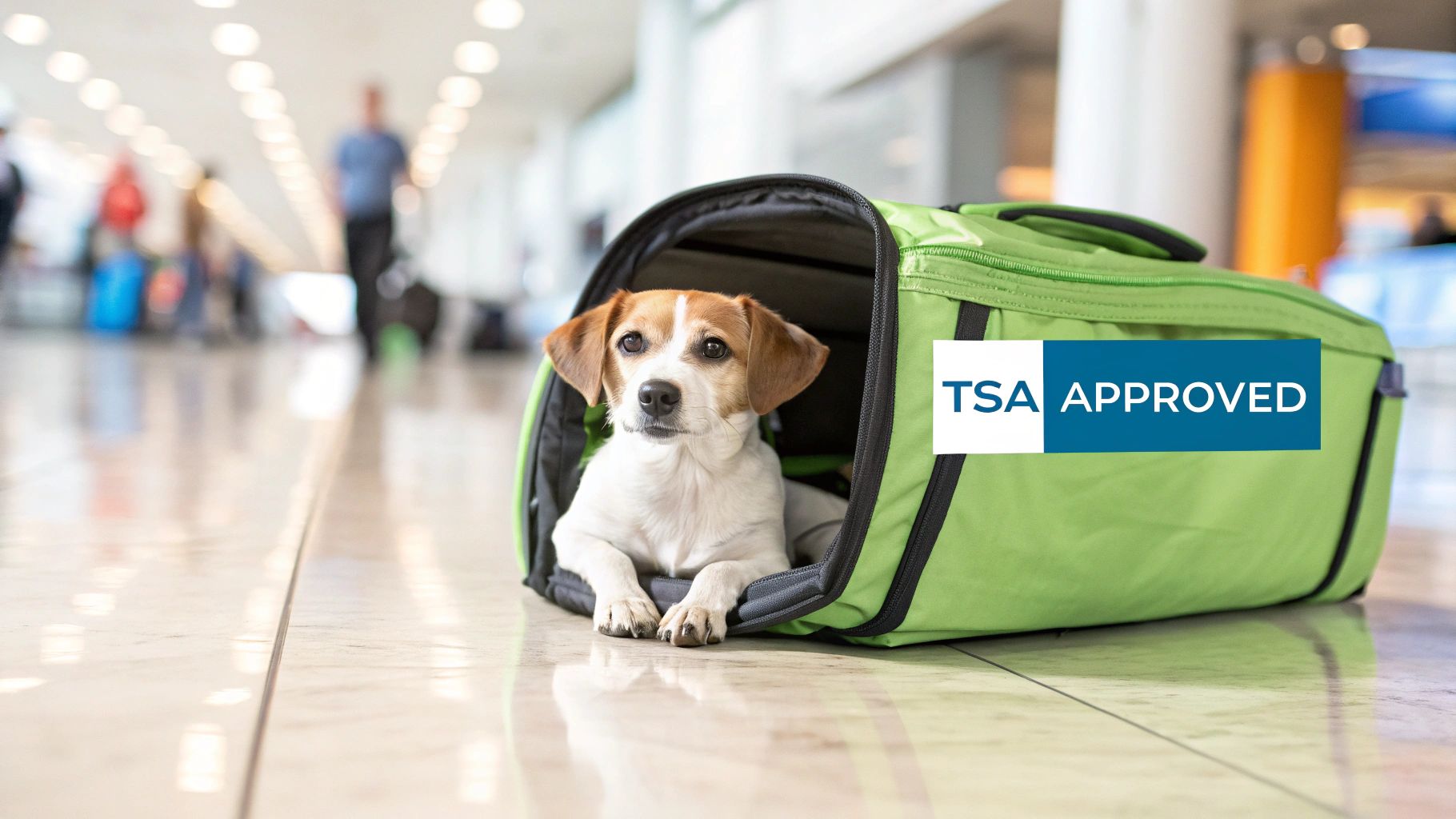
The primary benefit is ensuring you won't be denied boarding at the gate. Airlines like Delta and United, along with the International Air Transport Association (IATA), have strict dimension and feature requirements. Beyond general TSA guidelines, you must check specific airline pet transport information for their unique policies on carrier size, in-cabin rules, and cargo requirements. Leading brands such as Pet Magasin, Sherpa, and Sleepypod specialize in carriers that meet these diverse regulations.
How to Prepare Your Pet for the Carrier
To make travel day less stressful, your pet must see their carrier as a safe haven. Start this process weeks in advance by taking these specific actions.
- Introduce Early: Place the carrier in your living area with the door open and a familiar blanket inside. Allow your pet to explore it independently without pressure.
- Practice Short Trips: Once they are comfortable, take them on short car rides to a park. This action builds a positive association with the carrier, linking it to enjoyable outcomes.
- Use Positive Reinforcement: Immediately reward your pet with a high-value treat and praise whenever they enter or rest calmly inside the carrier.
- Confirm Sizing: Your pet must be able to stand up, turn around, and lie down comfortably. Measure your pet and compare it to the carrier's dimensions before purchasing. A carrier that is too large or too small is unsafe during transit.
By investing in the right carrier and acclimating your pet with these steps, you set the stage for a successful journey. For an in-depth guide on selecting the perfect model, you can learn more about finding the ideal airline-approved pet carrier.
2. Schedule a Pre-Travel Vet Visit
A pre-travel veterinary check-up is a non-negotiable step to confirm your pet is healthy enough for the journey and to secure essential documentation. This appointment is one of the most vital traveling with pets tips because it proactively addresses health, safety, and legal requirements. Your veterinarian will provide an official assessment of your pet's fitness for travel, update necessary vaccinations, and issue a Certificate of Veterinary Inspection (CVI), or health certificate, which is mandatory for most airline and international travel.
This visit safeguards your pet’s well-being and ensures you meet all travel regulations, preventing last-minute cancellations. Organizations like the American Veterinary Medical Association (AVMA) and government bodies such as the USDA and CDC set standards for animal transport, especially across state or international borders. For example, obtaining a rabies certificate is a standard requirement. Your vet can also discuss breed-specific risks, like the challenges brachycephalic (flat-faced) breeds face during air travel, and may prescribe medications for anxiety or motion sickness.
How to Prepare for the Vet Visit
To maximize the value of your appointment, schedule it at least 4-6 weeks before your departure and come prepared with specific information.
- Gather Travel Details: Bring your full itinerary, including flight numbers, destination addresses, and information on any planned activities. This helps your vet provide tailored advice.
- Request Documentation: Explicitly state that you need a health certificate for travel and specify if it's for domestic or international transit. Ask for multiple copies of all vaccination records.
- Discuss Health Concerns: Ask about motion sickness prevention, strategies for managing anxiety, and any climate-related risks at your destination (e.g., tick-borne diseases, heatstroke).
- Verify Microchip Information: Have the vet scan your pet’s microchip to ensure it is working correctly. Before the visit, log into the microchip registry's website to confirm your contact information is up to date.
By partnering with your veterinarian well in advance, you can address potential health issues, complete all required paperwork, and gain peace of mind for the journey ahead. For specific state-by-state requirements, the USDA APHIS Pet Travel website is an indispensable resource.
3. Organize All Travel Documents and Medical Records
Keeping your pet’s health and identification records organized and accessible is one of the most vital traveling with pets tips you can follow. These documents are your pet's passport to safe and legal travel, ensuring you can prove ownership, verify their health status, and get help quickly in an emergency. Proper documentation is a non-negotiable requirement for airline travel, border crossings, and even some pet-friendly accommodations.
The primary benefit of meticulous record-keeping is compliance. Whether you're flying domestically and need a recent health certificate or traveling to Europe with an EU Pet Passport, having the correct forms prevents last-minute travel disruptions. Organizations like the American Kennel Club (AKC) and the USDA Animal and Plant Health Inspection Service (APHIS) provide detailed guidelines on the necessary documentation. Action step: Always check the specific entry requirements for your destination state or country well in advance, as rules can vary significantly.
How to Organize Your Pet’s Travel Documents
A well-organized document portfolio can save you from significant stress during your trip. Take these steps well before your departure date to avoid any last-minute scrambling.
- Create a Digital Backup: Scan or take clear photos of all documents—including vaccination records, microchip registration, and health certificates—and save them to a cloud service like Google Drive or Dropbox for access on your phone.
- Keep Physical Copies: Store the original documents in a waterproof, clearly labeled folder. Place this folder in your carry-on bag, not in checked luggage.
- Include a Photo and Contact Info: Pack a recent, clear photo of your pet showing any distinguishing marks. Also, create a document with your contact information and the phone number for an emergency vet clinic at your destination.
- Update and Share: Ensure all records are current, especially the health certificate, which often has a limited validity period (e.g., 10 days). Share digital copies with a trusted friend or family member who is not traveling with you as an additional backup.
4. Assemble a Comprehensive Pet Travel Kit
Just as you pack your own suitcase, preparing a dedicated travel kit for your pet is a non-negotiable step for a seamless trip. This organized collection of essentials ensures your pet's health, comfort, and safety are covered. Having everything in one accessible place is one of the most practical traveling with pets tips, as it prevents urgent searches for food or a leash in an unfamiliar town.
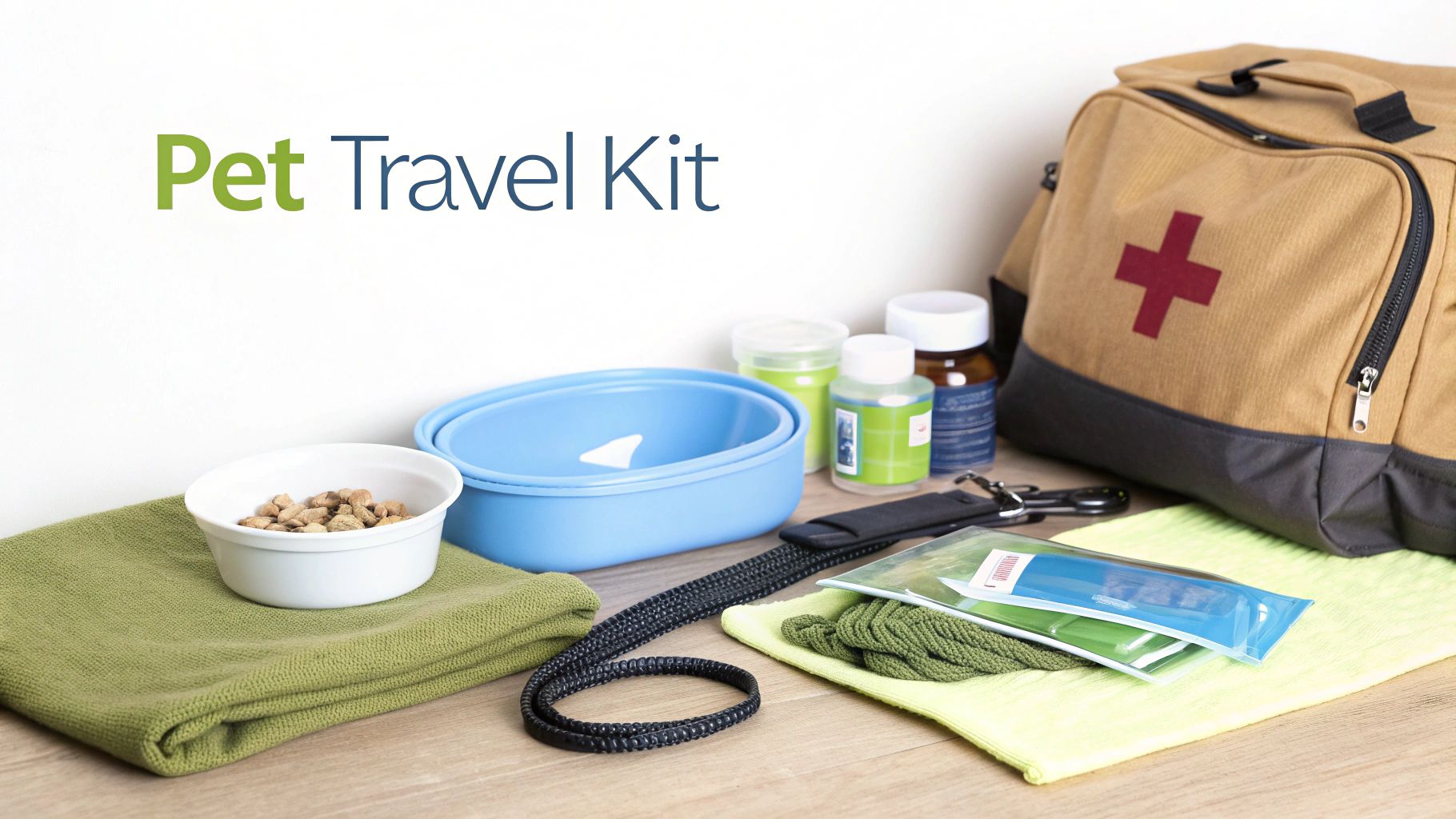
A well-stocked kit is a portable support system for your companion. It should contain everything from medications and grooming tools to comfort items and waste management solutions. For long road trips, products like Pet Magasin's washable pet diapers can be a lifesaver, preventing stress and messes in the car. Similarly, a portable grooming kit helps manage shedding and hygiene on the go, while a pet-specific first-aid kit, recommended by the ASPCA, prepares you for minor emergencies.
How to Assemble the Ultimate Pet Travel Kit
To build an effective kit, think about your pet’s daily routine and anticipate potential travel-related challenges. Take these actionable steps for a well-organized pack.
- Organize by Category: Use packing cubes or designated pouches for food, medical supplies, grooming tools, and toys. This makes finding what you need quick and easy.
- Portion Food and Water: Pre-portion your pet’s food into daily servings in spill-proof containers. Bring a collapsible water bowl and a large bottle of water from home to avoid upsetting their stomach with unfamiliar tap water.
- Include Comfort Items: Pack a favorite blanket or a worn t-shirt with your scent on it. These items provide a sense of security and reduce anxiety in new environments.
- Prepare for Messes and Grooming: Include waste bags, enzymatic cleaning spray, and paper towels. For longer trips, consider packing Pet Magasin’s washable diapers for accident-prone or senior pets. A small grooming kit with a brush and wipes keeps your pet comfortable and clean.
- Pack Backups: Always bring an extra leash and collar with up-to-date ID tags. It's also wise to have a copy of their prescriptions and a photo of your pet on your phone in case you get separated.
5. Maintain Your Pet's Regular Feeding Schedule
Maintaining consistency in your pet's diet and hydration is one of the most impactful traveling with pets tips for preventing digestive upset and stress. A sudden change in routine can be jarring for an animal, especially when combined with the unfamiliarity of travel. By sticking to their established feeding times, you provide a comforting sense of normalcy that helps keep them calm and healthy.
The primary benefit is biological stability. A consistent schedule helps regulate your pet’s metabolism and digestive system, reducing the risk of vomiting or diarrhea often associated with travel stress. For road trips, use your phone to set alarms for their normal meal times as reminders to pull over. For flights, feed your pet a light meal 3-4 hours before departure and their main meal upon arrival. This approach, championed by veterinary nutritionists, ensures your pet’s physical needs are met predictably, which directly contributes to a better-behaved travel companion.
How to Keep Your Pet's Diet Consistent on the Go
To successfully manage your pet's feeding routine, preparation is key. Use these practical actions to prevent scrambling for food or dealing with an upset stomach later.
- Pack Their Usual Food: Bring enough of your pet's regular food to last the entire trip, plus a 3-day surplus in case of delays. Never introduce new foods while traveling.
- Time Meals Strategically: Set alarms on your phone to maintain their home feeding schedule. To prevent motion sickness, feed a small, light meal 3-4 hours before a car ride or flight, not a large one.
- Use Portable Gear: Invest in collapsible, travel-friendly bowls and an airtight container for food to maintain freshness.
- Prioritize Hydration: Offer small amounts of water frequently during travel breaks. If your pet has a sensitive stomach, bring bottled water or water from home, as different mineral content in new locations can sometimes cause issues.
6. Prevent Motion Sickness and Anxiety
Many pets experience motion sickness or anxiety when traveling, which can turn a trip into a stressful ordeal. Addressing this proactively is one of the most compassionate traveling with pets tips you can follow. This involves a combination of behavioral conditioning, creating a calming environment, and consulting with your vet for potential medical aids.
Motion sickness is a physical response to movement, often resulting in drooling, panting, or vomiting. Anxiety is the psychological stress from a new environment. Addressing both is key. For example, a veterinarian may prescribe Cerenia (maropitant) for a dog prone to nausea on car rides, while a cat's carrier can be treated with a Feliway spray to create a sense of familiarity.
How to Prevent and Manage Travel Stress
To make travel day a positive experience, you must build your pet’s confidence and manage their physical comfort. Start these actions several weeks before your departure date.
- Consult Your Veterinarian: At least 4-6 weeks before your trip, discuss your travel plans with your vet. Ask specifically about prescription anti-anxiety or anti-nausea medications and get their professional recommendation.
- Practice Short Trips: Acclimate your pet to vehicle travel by starting with 5-10 minute rides to a fun destination like a park. This action breaks the negative association that car rides only lead to the vet.
- Create a Calm Space: Ensure the carrier is well-ventilated and at a comfortable temperature. Placing a familiar blanket or toy inside provides a comforting scent of home.
- Use Calming Aids: Test pheromone products like Adaptil (for dogs) or Feliway (for cats) on bedding at home before the trip to see if your pet responds positively.
- Adjust Feeding Times: To prevent nausea, withhold food for 3-4 hours before car travel. Small sips of water are generally fine.
By taking these steps to manage your pet’s well-being, you help ensure the journey is as safe and pleasant as the destination. Never leave your pet unattended in a vehicle, as temperatures can change rapidly.
7. Use Proper Restraint and Safety Equipment During Transport
Ensuring your pet is properly secured during transport is a non-negotiable safety measure. An unrestrained pet can become a dangerous projectile during a sudden stop, posing a severe risk to themselves and passengers. This is one of the most critical traveling with pets tips because it prevents injuries, reduces driver distraction, and minimizes the chance of a pet escaping in an unfamiliar area.
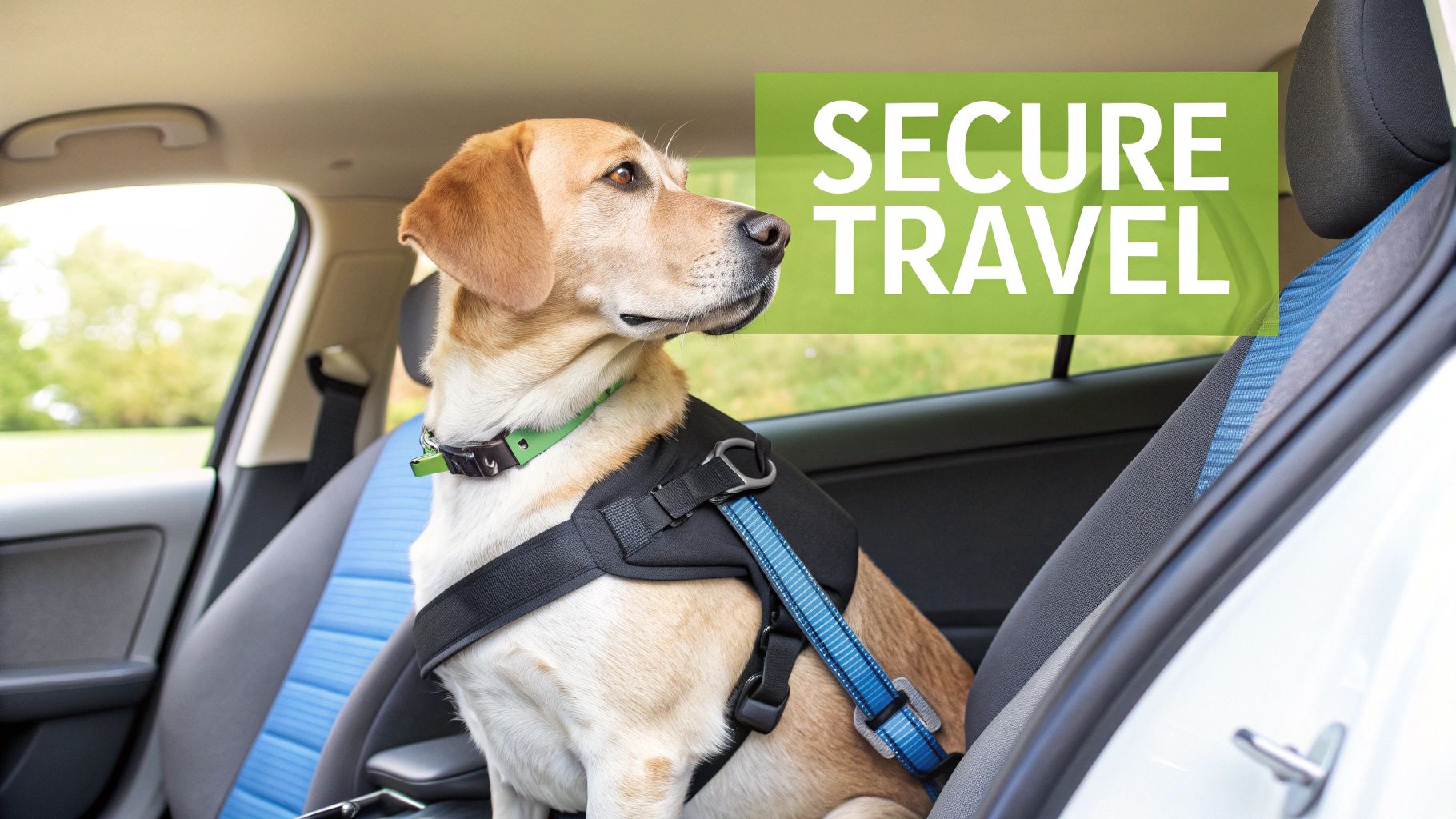
The goal is to create a secure, designated space for your pet. The Center for Pet Safety conducts independent crash tests on pet travel products, highlighting the importance of using certified equipment. Options range from crash-tested carriers and crates to specialized vehicle harnesses that integrate with the car's seatbelt system. For larger dogs in an SUV, vehicle barriers can effectively separate the cargo area from the passenger cabin, preventing interference with the driver.
How to Implement Proper Pet Restraints
Choosing and using the right equipment correctly is essential for maximum safety. The restraint must be appropriate for your pet's size, weight, and temperament, as well as your vehicle type.
- Select Certified Gear: Before buying, look for products that are officially crash-tested and certified by a third party like the Center for Pet Safety. This ensures they can withstand the forces of an impact.
- Practice Before You Go: Acclimate your pet to their new harness or carrier with short, positive trips around the neighborhood. Provide treats and praise to build a positive association.
- Ensure a Proper Fit: Adjust the harness so that you can fit no more than two fingers between the strap and your pet's body. Check the fit before every trip.
- Never Use Makeshift Restraints: Do not attach a leash to your pet's collar and secure it with a seatbelt. Human seatbelts are not designed for a pet's anatomy and can cause serious internal injuries in a crash. Stick to pet-specific safety products.
By prioritizing certified safety equipment, you transform your car into a secure environment for your furry companion. To explore different options and find the best fit for your needs, you can read detailed dog car seat reviews.
8. Plan Frequent Breaks During Road Trips
For long car journeys, planning frequent stops is a non-negotiable part of responsible pet travel. This practice is one of the most essential traveling with pets tips for road trips because it directly addresses a pet's physical and mental well-being. Regular breaks allow them to stretch their legs, relieve themselves, hydrate, and de-stress from the confinement of the vehicle, preventing anxiety and discomfort.
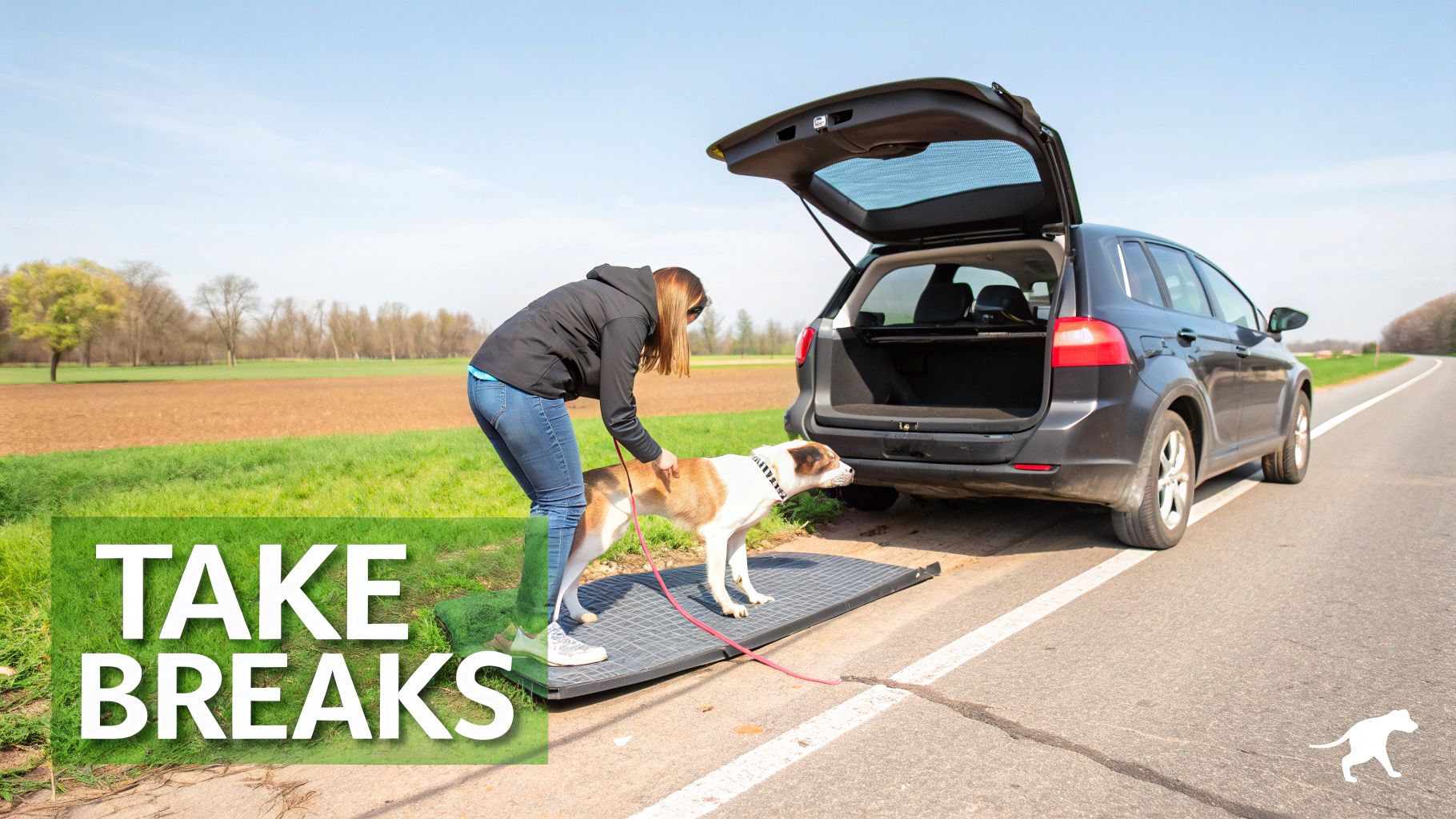
This action maintains your pet's comfort, which in turn keeps them calm and well-behaved. A pet that is restless or anxious is more likely to be a distraction. Before you leave, map out your route with pet-friendly stops. Resources like the pet travel website BringFido are invaluable for locating designated pet relief areas, parks, and even pet-friendly restaurants along your route, turning a potentially stressful endurance test into a manageable adventure.
How to Plan Effective Road Trip Breaks
A successful break is more than just pulling over; it requires planning to maximize safety and comfort. Take these actions to make stops effective.
- Plan Stops Every 2-3 Hours: Use your GPS to identify rest areas or parks at this interval. Aim for a 15-30 minute stop to allow for a short walk and potty break.
- Always Use a Leash: Before opening the car door, ensure your pet's leash is securely fastened. Unfamiliar environments can be unpredictable.
- Offer Water and a Small Snack: Keep a portable water bowl handy to ensure your pet stays hydrated. A small treat can also reinforce positive associations with travel.
- Pack a "Go-Bag": Keep a small tote bag within reach containing cleanup supplies (waste bags, paper towels), water, and a toy for quick access at each stop.
- Prioritize Safety: Choose well-lit, designated rest areas, especially when traveling at night. Avoid stopping on busy highway shoulders where there is a risk from traffic.
9. Maintain Grooming and Hygiene on the Go
Maintaining your pet's regular grooming routine on the road is a crucial aspect of responsible travel, making it one of the most practical traveling with pets tips you can implement. Consistent hygiene practices prevent skin irritations, infections, matting, and parasitic infestations. Packing portable, durable grooming tools allows you to manage your pet’s coat, nails, and overall cleanliness, ensuring they stay comfortable and healthy throughout your journey.
The primary benefit of this practice is preventing travel-related health issues. A matted coat can be painful, while dirty ears can lead to infections. Brands like Pet Magasin offer durable grooming utensils designed for travel. Using these tools for daily brushing on a road trip or bringing dry shampoo for a quick cleanup in a hotel room keeps your pet fresh. Following a consistent routine helps your pet feel secure and cared for, even in an unfamiliar environment.
How to Maintain Grooming on the Go
Integrating grooming into your travel schedule doesn't have to be complicated. A few focused minutes each day can make a significant difference in your pet's comfort.
- Pack a Travel Grooming Kit: Include durable tools like Pet Magasin’s brushes and nail clippers, along with pet-safe wipes, dry shampoo, and ear-cleaning solution.
- Brush Daily: This is especially vital for long-haired breeds to prevent tangles. A quick daily brush also removes dirt, burrs, and potential ticks after outdoor activity.
- Check Paws and Ears: At the end of each day, inspect paw pads for cuts or foreign objects and wipe them clean. Check ears for redness or debris.
- Utilize Waterless Products: Waterless shampoo foams are excellent for quick cleanups without needing a full bath. For times when a deeper clean is necessary, you can review expert advice on how to bathe a dog properly.
By prioritizing grooming, you ensure your pet remains a happy, healthy, and pleasant companion, allowing you both to fully enjoy the adventure.
10. Prepare for Temperature Control and Environmental Changes
Managing your pet’s exposure to extreme temperatures is a non-negotiable aspect of safe travel, making it a crucial entry in our list of traveling with pets tips. A pet’s ability to regulate its body temperature is less efficient than a human's, and sudden shifts in climate can pose significant health risks. Proactive preparation involves creating a controlled microenvironment for your pet, whether you're driving through a desert or flying to a colder region.
The primary benefit is preventing life-threatening conditions like heatstroke or hypothermia. The ASPCA warns that a car’s internal temperature can skyrocket to dangerous levels within minutes. Furthermore, high-altitude destinations can cause altitude sickness in pets. By actively managing these environmental factors, you safeguard your pet's health. This is especially vital for brachycephalic (flat-faced) breeds, who are notoriously susceptible to heat stress.
How to Manage Your Pet’s Environment
A successful strategy involves a combination of smart planning, the right gear, and constant vigilance. Implement these actions before and during your trip.
- Regulate Vehicle Temperature: Never leave a pet unattended in a parked vehicle. While traveling, use your car's climate control to maintain a safe temperature and use window shades to block direct sun.
- Pack Climate-Specific Gear: For warm weather, bring a cooling mat, a portable fan, and extra water. For cold climates, pack an insulated blanket or your pet’s sweater.
- Acclimatize Gradually: If traveling to a high-altitude location (above 8,000 feet), plan for a few quiet days to let your pet adjust to the thinner air before engaging in strenuous activities.
- Protect from the Elements: Apply a pet-safe sunscreen to exposed areas like the nose and ear tips if you’ll be in the sun. In winter, use paw balm to protect pads from ice and salt.
- Time Your Activities: During summer trips, schedule walks and potty breaks for the cooler early morning or late evening hours to avoid hot asphalt. Touch the pavement with your hand—if it's too hot for you, it's too hot for their paws.
Top 10 Pet Travel Tips Comparison
| Item | Implementation complexity 🔄 | Resource requirements & cost ⚡ | Expected outcomes ⭐📊 | Ideal use cases 💡 | Key advantages |
|---|---|---|---|---|---|
| Choose TSA-Approved Pet Travel Carriers | Medium 🔄 — select correct size/ventilation and verify airline rules | Moderate ⚡ — purchase $80–$300; choose soft or hard-sided option | High ⭐ — compliance with airlines, safer & calmer travel 📊 | Air travel (in-cabin/cargo); frequent flyers; small–medium pets | Ensures legal compliance; protects pets in transit; reusable |
| Visit Your Veterinarian Before Travel | Low–Medium 🔄 — scheduling & paperwork; medical review | Moderate ⚡ — vet fees $100–$300+; time for exams and certificates | High ⭐ — confirms fitness, provides required health certificates 📊 | Any interstate/international travel; pets with health concerns | Required documentation; prescription meds; peace of mind |
| Pack Essential Travel Documentation and Medical Records | Medium 🔄 — gather, organize, possible notarization | Low–Moderate ⚡ — copying, cloud storage; passport/notary fees if needed | High ⭐ — faster emergency care, legal compliance, reunification 📊 | International travel; border crossings; long trips | Quick access to records; legal proof of ownership; emergency-ready |
| Prepare a Pet Travel Kit with Essentials | Low 🔄 — assemble supplies and organize packing | Moderate ⚡ — food, meds, first-aid, bowls, waste supplies; extra luggage space | High ⭐ — comfort maintained, minor issues handled on the road 📊 | Road trips; multi-day travel; pets with medical needs | Reduces stress; maintains routine; enables on‑the‑go care |
| Maintain Your Pet's Regular Feeding and Watering Schedule | Low 🔄 — planning and meal timing | Low ⚡ — portable/collapsible bowls, enough familiar food | High ⭐ — prevents digestive upset, maintains energy & behavior 📊 | Any travel, especially long trips or sensitive-diet pets | Stabilizes digestion & behavior; simple to implement |
| Protect Your Pet from Motion Sickness and Anxiety | Medium 🔄 — vet consultation, acclimation practice | Moderate ⚡ — prescription meds, supplements, pheromones | High ⭐ — reduces vomiting/anxiety, improves tolerance to travel 📊 | Pets prone to motion sickness/anxiety; long drives or flights | Safer, calmer trips; fewer incidents; better pet comfort |
| Use Proper Restraint and Safety Equipment During Transport | Medium–High 🔄 — correct sizing and installation required | Moderate–High ⚡ — crash-tested carriers/harnesses $75–$300+ | Very High ⭐ — prevents injury, reduces driver distraction 📊 | Car travel, long road trips, safety-focused owners | Injury prevention; occupant safety; regulatory compliance |
| Plan Frequent Breaks and Exercise Stops During Road Trips | Low 🔄 — schedule and route planning | Low ⚡ — time cost; apps to find pet-friendly stops | High ⭐ — reduces restlessness, maintains hygiene and behavior 📊 | Long road trips; active breeds; senior pets | Improves health & behavior; provides driver rest; routine breaks |
| Maintain Grooming and Hygiene Habits During Travel | Low–Medium 🔄 — pack tools and maintain routine | Low–Moderate ⚡ — grooming tools, wipes, dry shampoo | Medium–High ⭐ — prevents matting/infections; reduces odors 📊 | Long trips; long-haired breeds; multi-day stays | Prevents skin issues; improves comfort; early problem detection |
| Prepare for Temperature Control and Environmental Challenges | Medium 🔄 — plan gear and acclimation for climates | Moderate ⚡ — cooling mats, blankets, sun protection, climate gear | High ⭐ — prevents heat stroke/hypothermia, improves comfort 📊 | Extreme climates, high-altitude travel, brachycephalic breeds | Protects from temperature risks; enables safer climate adaptation |
Final Thoughts on Creating Perfect Travel Memories with Your Pet
Embarking on an adventure with your pet is more than just a trip; it's an opportunity to deepen your bond. The journey from your doorstep to your destination, however, is paved with details that can make or break the experience. The comprehensive list of traveling with pets tips we've explored is a strategic blueprint designed to transform potential chaos into calm, confident travel. By internalizing these practices, you shift from simply bringing your pet along to becoming their proactive and prepared travel partner.
The core principle underpinning every successful pet-friendly journey is proactive preparation. This isn't about worrying; it's about anticipating needs and solving problems before they arise. It’s the difference between a frantic last-minute scramble for a vet’s note and having a neatly organized folder with all necessary documentation. It’s the foresight to choose a TSA-approved carrier that ensures smooth airport screening and the wisdom to acclimate your pet to it weeks in advance.
From Theory to Action: Your Next Steps
The true value of these tips lies in their application. Distill the most critical takeaways into actionable next steps you can take today:
- Build Your "Go-Binder": Start a dedicated travel folder or digital file now. Scan your pet’s vaccination records, add your vet's contact information, and save a PDF of your destination's pet import requirements. Having this foundation ready makes future travel planning significantly less stressful.
- Conduct a Gear Audit: Evaluate your current travel equipment. Does your carrier meet airline specifications? Is your car restraint crash-tested? Identifying gaps now gives you ample time to research and purchase high-quality items that prioritize safety and comfort, avoiding rushed, poor-quality decisions.
- Practice Travel Skills: Travel skills are learned behaviors. Take short car rides to fun places, practice "settle" commands in a travel crate, and get your pet used to having their paws wiped down. These mini-sessions build a positive association with the tools and routines of travel.
The True Reward: A Stronger, More Resilient Bond
Mastering these traveling with pets tips does more than just ensure a smooth vacation. It fundamentally enhances your relationship with your animal companion. When you prioritize their comfort, manage their anxiety, and maintain their routine, you are communicating a powerful message of safety and care. Your pet learns to trust you in new environments, strengthening their confidence and reinforcing your role as their steadfast leader.
This preparation also empowers you. Walking into an airport or hotel with a calm, well-behaved pet, armed with all the right documentation and supplies, is a uniquely rewarding feeling. It replaces travel anxiety with the pure joy of the experience. The memories you create—whether it’s watching your dog chase waves on a new beach or your cat purring contently in a sunlit hotel window—are the ultimate payoff. These are the moments that make every bit of planning worthwhile, turning a simple trip into a cornerstone of your shared life. Your adventures await, and with these strategies, you are more than ready to meet them together.
Ready to upgrade your travel gear and ensure your pet’s journey is as safe and comfortable as possible? Explore the thoughtfully designed travel carriers, grooming tools, and health supplies at Pet Magasin. Our products are crafted with the insights of dedicated pet owners like you, providing the practical, high-quality solutions you need to implement these traveling with pets tips effectively. Visit Pet Magasin today to find the perfect gear for your next adventure.

Leave a comment