
Your Step-by-Step Guide to Finding a Pet Travel Carrier Airline Approved for Flying

Seeing a "pet travel carrier airline approved" label is a great start, but it's not a guarantee. Before you make a purchase, it's crucial to understand what that tag really means. Think of it as a signal from the manufacturer that the carrier's features—like its size, ventilation, and locks—are designed to meet most common airline requirements. Your job is to confirm it meets the rules for your specific flight.
What "Airline Approved" Actually Means: A Practical Breakdown
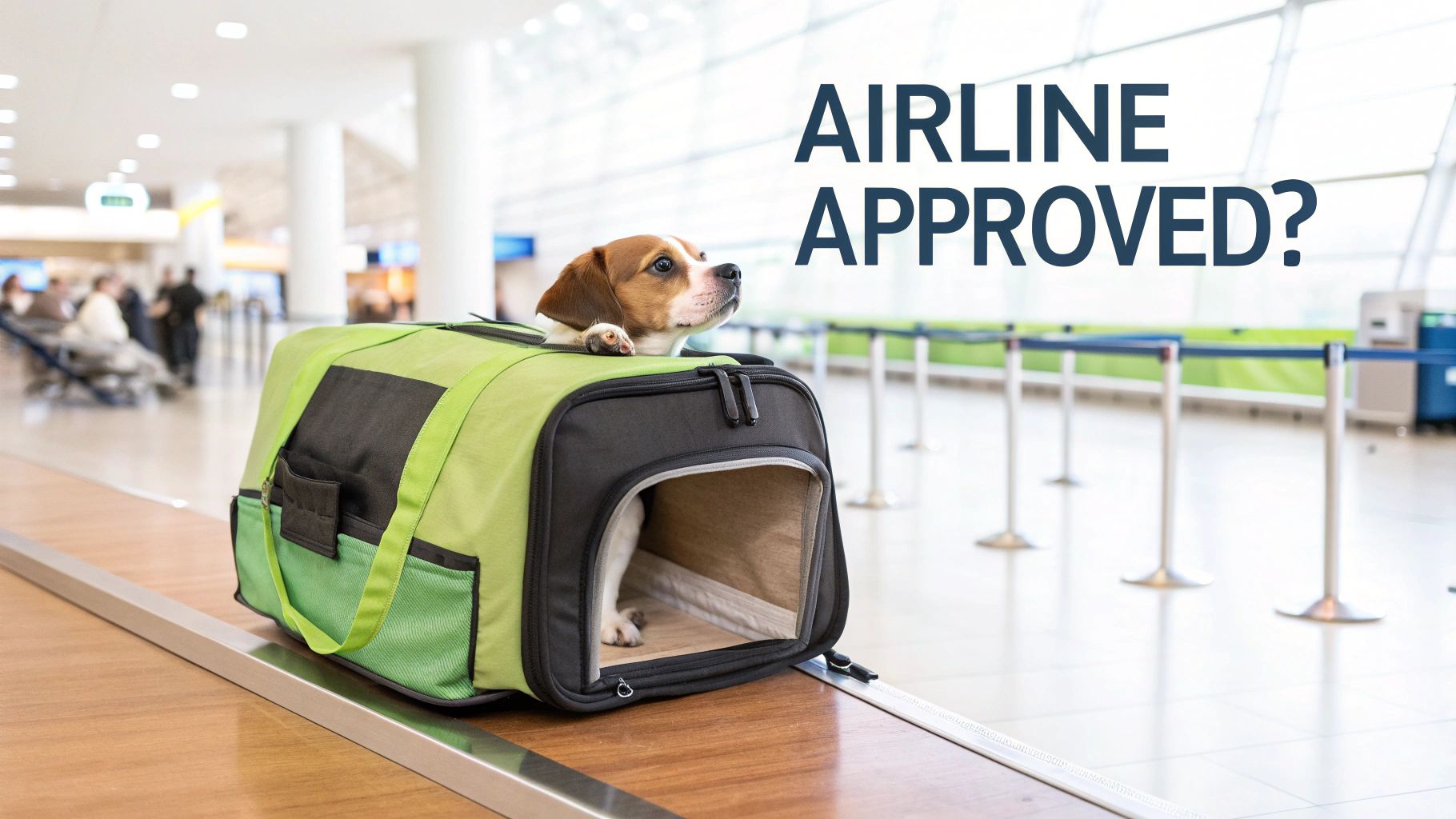
Treat the "airline approved" tag as a helpful starting point, not the finish line. It means the carrier likely has the right design, but it is not a universal pass that guarantees boarding on every flight. The only approval that counts is from the airline you are flying.
The gate agent has the final say on the day of travel. Their job is to ensure every pet and carrier meets the airline's specific safety and size regulations before you board. This is why you must check your airline's pet policy online or by phone—this step is non-negotiable.
The Role of Regulatory Standards
The standards for safe pet travel have been evolving for years, largely influenced by the International Air Transport Association (IATA). These guidelines provide a blueprint for manufacturers on everything from material strength and locking mechanisms to proper dimensions.
For example, a key IATA guideline mandates that carriers must have ventilation on at least two sides. This is a direct reason why you'll see quality carriers designed with multiple mesh windows to ensure proper airflow.
The term "airline approved" is a manufacturer's promise, not an official certification. Your airline's specific rules are the only approval that truly matters.
In-Cabin vs. Cargo: A Critical Distinction
The single biggest mistake you can make is assuming one carrier works for all types of air travel. The requirements for an in-cabin carrier (that fits under your seat) are completely different from those for a carrier checked as cargo.
- Action for In-Cabin Travel: Choose a soft-sided carrier. Its flexibility is key for fitting under the seat in front of you. Focus on finding one that meets the airline's maximum dimensions, has secure, locking zippers, and ample ventilation.
- Action for Cargo Travel: You must use a hard-sided, rigid kennel. These are typically constructed from heavy-duty plastic and assembled with metal bolts (plastic clips are not allowed). They are built to meet strict IATA standards for durability to protect your pet during loading and flight.
Understanding this distinction is the first practical step in selecting the right pet travel carrier airline approved for your journey. For specific tips on felines, a focused guide on choosing a cat carrier that is airline approved can provide extra insight. A few minutes of research now prevents major stress at the airport later.
How to Verify Your Carrier with Major Airline Pet Policies
So, you understand that "airline approved" is a guideline. Now, it's time for the most important step: confirming the specific rules for your airline and flight.
Every airline has its own set of rules. What is acceptable on one may not be on another. Failing to check the fine print can result in being denied boarding at the gate. A few minutes of prep now will save you from a travel-day disaster.
Getting a Handle on Major Airline Pet Policies
Your first action item is to visit your airline's official pet policy webpage. This is where you will find the critical numbers: maximum carrier dimensions and total weight limits for in-cabin travel. These are not suggestions; they are firm requirements.
While soft-sided carriers offer some flexibility, they must still fit completely under the seat without extending into the aisle.
To help you get started, here is a quick-reference chart for major U.S. airlines.
Action Step: Use this table as a starting point, then visit the airline's website or call them to confirm the rules for your exact flight, as policies can change.
Major US Airline In-Cabin Pet Carrier Requirements At a Glance
A comparative overview of the maximum carrier dimensions, weight limits, and pet fees for popular airlines. Note: Always verify with the airline before flying as policies can change.
| Airline | Max Carrier Dimensions (LxWxH) | Max Weight (Pet + Carrier) | Pet Fee (One-Way) |
|---|---|---|---|
| Delta Air Lines | Varies by aircraft. Must fit under the seat in front of you. | Not specified, but pet must be comfortable. | $95 |
| United Airlines | Hard-Sided: 17.5" x 12" x 7.5" Soft-Sided: 18" x 11" x 11" |
Not specified, but pet must be comfortable. | $125 |
| American Airlines | Varies by aircraft. Must fit under the seat in front of you. | 20 lbs | $150 |
| Southwest Airlines | 18.5" x 13.5" x 9.5" | Not specified, but pet must be comfortable. | $125 |
| JetBlue | 17" x 12.5" x 8.5" | 20 lbs | $125 |
| Alaska Airlines | Hard-Sided: 17" x 11" x 7.5" Soft-Sided: 17" x 11" x 9.5" |
20 lbs | $100 |
As you can see, there is no single standard. Airlines like American, JetBlue, and Alaska enforce a strict 20-pound weight limit for the pet and carrier combined. Others prioritize carrier dimensions. This variability is precisely why you must confirm the rules for your specific flight.
Mastering the TSA Security Checkpoint
Navigating the security checkpoint with a pet can be stressful if you're unprepared. Knowing the process ahead of time makes it a smooth, predictable part of your journey.
The Transportation Security Administration (TSA) has a clear, standardized procedure. The most important rule to know is that your pet will never go through an X-ray scanner.
Your pet carrier will be sent through the X-ray machine on the conveyor belt, but it must be completely empty. You will carry your pet through the walk-through metal detector.
Actionable Steps for TSA Screening:
- Prepare in Line: Before you reach the front, secure your pet's harness and leash. Have your boarding pass and ID ready.
- Remove Your Pet: A TSA officer will instruct you to take your pet out of the carrier. Hold your pet securely in your arms or keep them on a short leash.
- Scan the Carrier: Place the empty carrier in a bin on the conveyor belt. It will be scanned along with your other carry-on items.
- Walk Through: Carry your pet through the metal detector with you. If you are walking a leashed dog, you will walk through together.
- Re-secure Your Pet: After you pass through, collect the carrier. Step to the side, away from the main traffic, to safely place your pet back inside and fasten all zippers securely.
Following these steps methodically will eliminate confusion and help you and your pet move through security calmly.
How to Measure Your Pet for the Perfect Carrier
Choosing a carrier that meets airline dimensions is only half the task. The other, more critical part is ensuring it fits your pet properly. An undersized carrier is a primary reason for being denied boarding, as it poses a welfare risk.
To get it right, all you need is a soft measuring tape and a calm pet. A few moments of measuring will prevent a major headache at the airport.
Taking Your Pet’s Key Measurements
For an accurate fit, ensure your pet is standing naturally on all fours.
- Measure Length: Place the tape at the tip of your pet's nose and measure to the base of their tail (do not include the tail). Including the tail will result in buying a carrier that is too large.
- Measure Height: With your pet standing, measure from the floor to the top of their head or the tips of their ears, whichever is highest. This ensures they have adequate headroom.
Once you have these two numbers, add 2 to 4 inches to both the length and height measurements. This extra space is crucial for meeting the airline's primary welfare rule.
The "Stand Up and Turn Around" Rule
This is the non-negotiable golden rule of in-cabin pet travel. Your pet must be able to stand up completely and turn around comfortably within the carrier.
This rule isn't just a bureaucratic checkbox. It’s about making sure your pet can shift positions during the flight to avoid getting stiff and stressed. A carrier that’s too snug is a genuine safety issue.
The infographic below shows what you can expect when you get to the TSA security checkpoint.
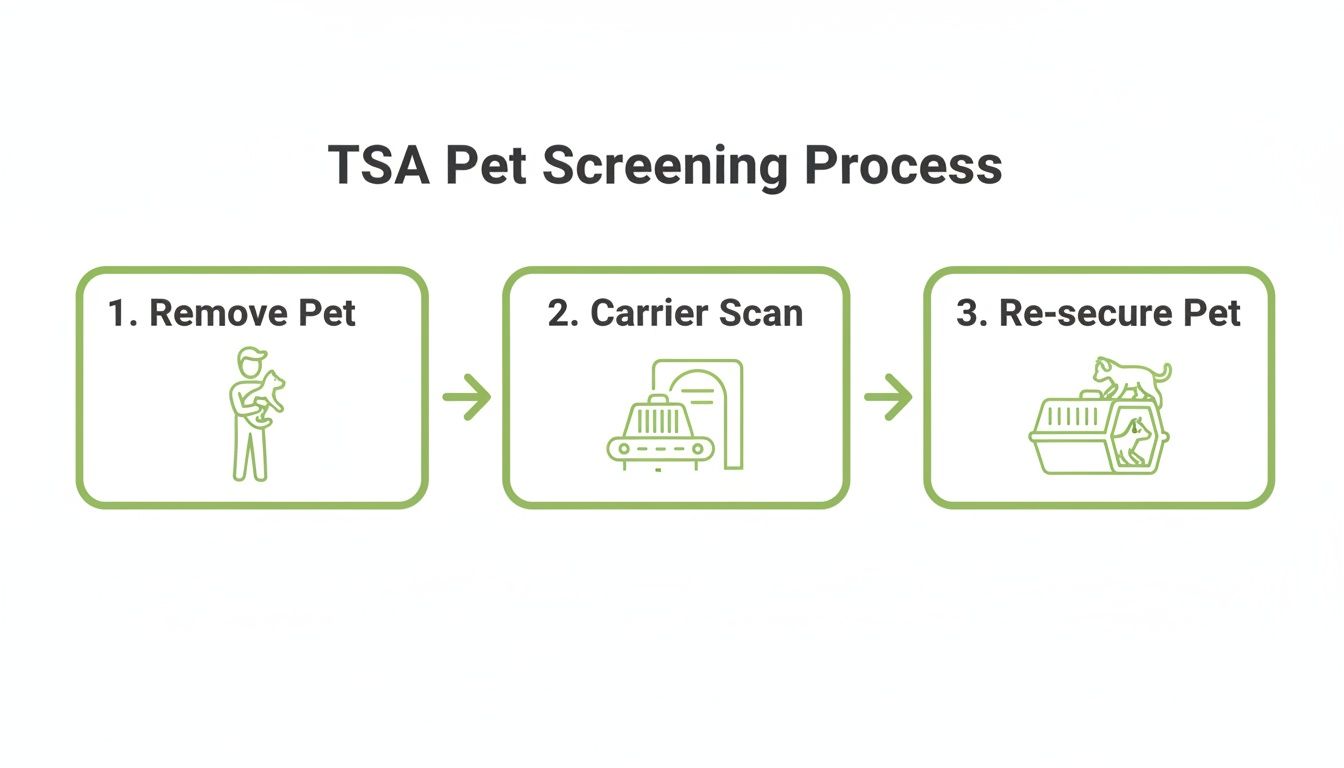
Knowing this process shows why a perfectly sized carrier is so important—you need to get your pet back inside smoothly after the screening. For a detailed guide on matching these measurements to airline rules, review our complete guide on airline pet carrier size requirements.
When you measure correctly, you’re not just choosing a pet travel carrier airline approved by the rules, but one that’s approved by your pet.
Choosing Between Soft-Sided and Hard-Sided Carriers
With your pet’s measurements in hand, your next decision is the type of carrier. For in-cabin travel, the choice is between a soft-sided or hard-sided model. This decision impacts everything from airport convenience to successfully fitting the carrier under your seat.
Compare it to your own luggage: a hard-shell suitcase provides rigid protection, while a soft duffel offers flexibility. The best choice for your pet balances security, convenience, and airline compliance.
The Case for Soft-Sided Carriers
For in-cabin travel, soft-sided carriers are overwhelmingly the most practical choice. Their key advantage is the "squish factor"—the ability to flex and compress slightly to fit into tight or unevenly shaped under-seat spaces.
This flexibility is a trip-saver, especially on smaller aircraft where under-seat space is limited. They are also lighter and often include shoulder straps, making them easier to carry through the airport. For your pet, the softer material can create a cozier, more comfortable den. The main trade-off is that they offer less impact protection and may not be suitable for pets that are prone to chewing or scratching.
When to Consider a Hard-Sided Carrier
While less common for in-cabin travel, hard-sided carriers offer superior protection against bumps and are very easy to clean in case of an accident.
However, their rigidity is also their biggest drawback. If a hard-sided carrier is even a fraction of an inch too large for the under-seat space, it will not fit. This makes them a gamble unless you have confirmed the precise under-seat dimensions for your specific flight.
Key Takeaway: For in-cabin flights, a soft-sided carrier's flexibility usually wins out over the rigid protection of a hard-sided one. The ability to fit under different seat layouts makes it the safer option for getting you and your pet on board without any last-minute drama.
Essential Features Your Carrier Must Have
Whether you choose a soft or hard model, certain features are non-negotiable for any pet travel carrier airline approved for flight. With dogs making up 58% of pets that fly, the demand for safer carriers has increased significantly. A major study revealed that 78% of pet owners prioritize features like ventilation, comfort, and secure locks. In response, airlines like Delta Air Lines have even introduced advanced carriers like the CarePod. You can read the full analysis on Passpaw.com to learn more about industry innovations.
Your Carrier Shopping Checklist:
- Superior Ventilation: Look for durable, claw-proof mesh on at least three sides to ensure excellent airflow and prevent overheating.
- Escape-Proof Zippers: Seek out carriers with locking zippers or safety clips that prevent a determined pet from opening them.
- A Waterproof Floor: A leak-proof bottom with a removable, machine-washable pad is essential for hygiene and easy cleanup.
- Sturdy Frame and Straps: A quality soft-sided carrier should have a firm wire frame that prevents the top from collapsing on your pet. It should also include a padded shoulder strap and standard carry handles for your comfort.
Finding a carrier with these features is crucial. For recommendations that meet these criteria, see our guide on the best pet carriers for air travel. Making a smart choice ensures your pet travels safely, securely, and comfortably.
Your Essential Pre-Flight Checklist for Pet Travel
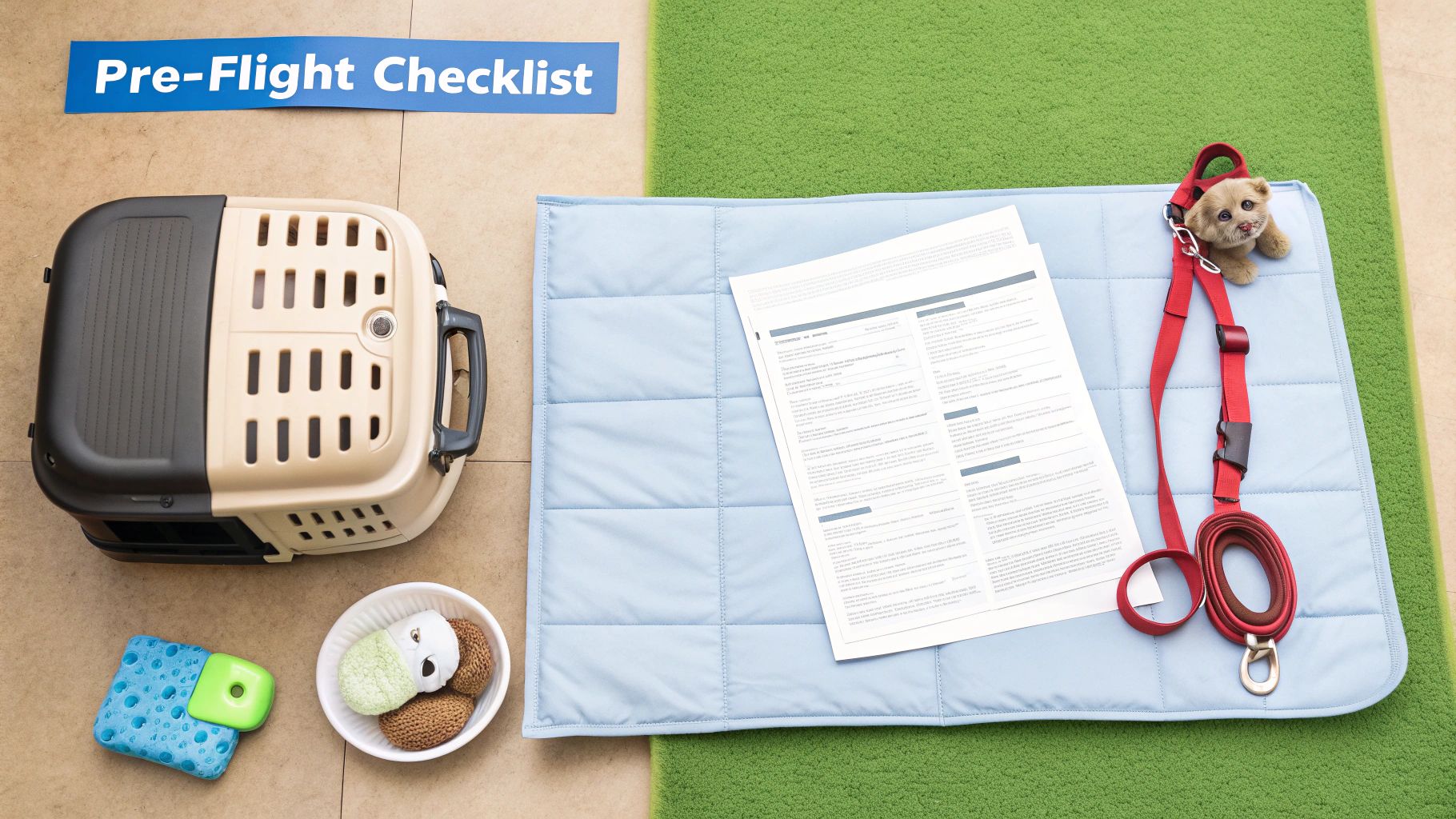
A smooth travel day with your pet is the result of careful planning. Selecting the perfect pet travel carrier airline approved for your flight is a great first step, but the key to a stress-free trip is preparation that starts weeks in advance.
Use this checklist to turn a potentially chaotic process into a calm, organized experience for both you and your pet.
One Month Before Your Flight
This is the time to secure your pet's spot and begin carrier acclimation.
- Book Your Pet’s Reservation: Immediately after booking your own ticket, call the airline to add your pet to your reservation and pay the fee. Airlines have a strict limit on the number of in-cabin pets per flight, so do not wait.
- Introduce the Carrier: Place the new carrier in your living room with the door open. Make it an inviting space by putting a favorite blanket, treats, or a familiar toy inside. The goal is for your pet to view it as a safe den, not a source of anxiety.
- Schedule a Vet Appointment: Book an appointment for approximately 10 days before your departure. This timing is critical for obtaining a valid Certificate of Veterinary Inspection (CVI), or health certificate, which is required by nearly all airlines.
Two Weeks Before Your Flight
Focus on paperwork and deepening your pet’s comfort with the carrier.
It's also a good time to research your pet's emotional well-being during travel. Look into practical tips for managing dog anxiety during travel to ensure a calmer journey for everyone.
Don't just pack the carrier; prepare your pet. A few weeks of positive reinforcement and familiarization can make a world of difference in reducing their travel day stress.
The Week of Your Flight
Finalize details, pack strategically, and review your travel day plan.
- Confirm Everything: Call the airline one last time to confirm your pet's reservation is secure.
- Attend the Vet Visit: Go to your scheduled vet appointment to get the health certificate. Make both physical and digital copies of it, along with your pet's vaccination records. Keep one set in your carry-on and the other on your phone.
- Pack Your Pet’s Bag: Prepare a small, accessible bag with essentials: a leash, a collapsible water bowl, a small portion of food or treats, and a favorite toy.
The global market for airline-approved pet carriers reached USD 1.47 billion in 2024, reflecting the growing trend of traveling with our pets as family. This boom highlights just how important and common pet travel has become.
Common Questions About Flying with a Pet Carrier
Even with the perfect pet travel carrier airline approved for your trip, last-minute questions can arise. Whether it's your first or tenth time flying with a pet, being prepared for common issues will help you navigate the airport with confidence.
Here are answers to the most frequent "what if" scenarios to ensure you and your pet arrive at the gate ready for a smooth flight.
What If My Carrier Is Slightly Too Big?
This is a common concern. If you've selected a soft-sided carrier, you have a bit of leeway. The "squish factor" of a soft carrier allows its flexible top to compress slightly, helping it fit under an airline seat without collapsing on your pet. Gate agents are familiar with this and may allow it if the carrier fits safely and does not block the aisle.
However, this is not a guarantee. A strict agent or a smaller aircraft with less space could lead to being denied boarding. The most reliable action is to choose a carrier that adheres as closely as possible to the airline's stated dimensions.
Can Two Small Pets Share One Carrier?
While it seems like a good way to comfort two bonded pets, the rule for nearly every airline is one pet per carrier. This policy is in place for safety, ensuring each animal has enough space to stand and turn around, receives adequate ventilation, and is not at risk of being injured by its companion during turbulence.
In extremely rare cases, an airline might permit two very young, small littermates to travel together. Do not assume this is allowed.
Crucial Takeaway: You absolutely must call your airline and get direct, verbal confirmation before even thinking about putting two pets in one carrier. Get the name of the agent you spoke to and the date you called. Honestly, be prepared for them to say no.
Should I Give My Pet Medication Before Flying?
It may seem kind to give an anxious pet a sedative, but veterinarians and aviation authorities strongly advise against this. The American Veterinary Medical Association (AVMA) warns that sedation at high altitudes can be dangerous, as the change in air pressure can negatively impact a sedated pet's breathing and heart rate.
Because of these safety risks, airline staff are trained to identify sedated animals and may refuse boarding. For more general travel advice, resources like FlipMyStay's Pet Travel Blog offer a wide range of useful tips.
Actionable, Safer Alternatives to Medication:
- Make the Carrier a Happy Place: For weeks before you fly, use positive reinforcement to make the carrier a familiar, safe space.
- Try Pheromone Sprays: Use a calming pheromone spray in the carrier 15-20 minutes before your pet gets inside.
- Use Calming Chews: Try natural supplements with ingredients like chamomile or L-theanine. Test them at home first to see how your pet reacts.
- Get Them Tired! A long walk or an energetic play session right before leaving for the airport is a great way to burn off nervous energy and encourage your pet to rest during the flight.
By focusing on thorough preparation and safe calming techniques, you can ensure your pet's journey is both compliant and comfortable.
At Pet Magasin, we design our airline-approved carriers with these real-world travel challenges in mind. We focus on creating safe, comfortable, and compliant travel solutions so you can focus on the adventure ahead with your furry family member. Explore our collection of TSA-approved pet carriers today.

Leave a comment