
The Ultimate Guide to Travel Accessories for Dogs

Hitting the road—or the skies—with your four-legged best friend is one of life’s great joys. But to make sure it's a great experience for them too, a little preparation goes a long way. The right travel accessories for dogs aren't just about convenience; they're the secret to a trip that's safe, comfortable, and stress-free for both of you.
From a quick drive to see family to a cross-country flight, having essential gear like a secure carrier, a spill-proof water bowl, and their favorite blanket makes all the difference. This guide will give you actionable steps to choose the right gear and travel like a pro.
Why Quality Dog Travel Gear Matters
Packing for your dog is like packing for a toddler—it’s all about anticipating their needs to keep them safe and content. A well-planned travel kit isn't just a bag of supplies; it's your strategy for creating a familiar, secure environment wherever you go.
This reflects a major shift in how we see our dogs: they're family. That's why the global pet travel accessories market, valued at a whopping USD 6.8 billion, is expected to nearly double to USD 12.1 billion by 2034. In the U.S. alone, over 2 million pets fly on commercial planes every year, proving just how many of us are bringing our companions along for the ride.
Core Pillars of a Dog's Travel Kit
To build the perfect travel kit, focus on these four key areas. This approach ensures you cover all your bases without overpacking.
- Safety and Security: This is your number one priority. Actionable Step: Before any trip, check that your dog's ID tags have your current cell phone number. For car travel, invest in a crash-tested harness or a crate that can be secured with straps.
- Comfort and Familiarity: New environments can be stressful. Actionable Step: Pack a portable bed or a t-shirt you've worn. The familiar scent is a powerful tool for reducing travel anxiety.
- Health and Hygiene: A consistent routine is key to a happy gut. Actionable Step: Pre-portion your dog's meals into zip-top bags for each day of the trip. Pack a small hygiene kit with paw wipes for quick cleanups after potty breaks.
- Convenience and Portability: Your gear should make life easier, not harder. Actionable Step: Choose collapsible bowls, a compact first-aid kit, and a machine-washable car seat cover. These items are designed for life on the move.
Focusing on these four pillars transforms packing from a chore into a smart strategy. It’s what separates a chaotic journey from a joyful adventure.
Getting these fundamentals right is the first step. Before we dive into specific products, it helps to have a high-level view of the essentials.
Essential Dog Travel Gear at a Glance
This table breaks down the must-have categories so you can build your checklist.
| Accessory Category | Primary Purpose | Actionable Insight |
|---|---|---|
| Carriers & Restraints | Keeps your dog safe and secure in vehicles. | For air travel, check airline dimension requirements before you buy. |
| Hydration & Feeding | Ensures access to fresh water and food on the go. | Choose collapsible silicone bowls—they're lightweight and easy to clean. |
| Bedding & Comfort | Provides a familiar, calming space in new environments. | Pack an item with your scent on it, like an old t-shirt or blanket. |
| Safety & First-Aid | Prepares you for emergencies and unexpected injuries. | Customize a kit with your dog's meds and your vet's number. |
With these basics in mind, you're ready to start building a travel kit that's perfect for your dog. For more general advice to get you started, check out our guide on tips for traveling with pets. It’s the perfect companion to the specific gear recommendations that follow.
Selecting the Right Carrier and Car Restraint
The most important safety decision you'll make is how your dog travels from point A to point B. The right carrier or car restraint is their personal seatbelt and safety bubble. It protects them from sudden stops and keeps them from becoming a dangerous distraction for the driver. This is a non-negotiable part of responsible pet travel.
In fact, dogs are the main reason the demand for pet travel accessories is so high, making up 46.74% of what is now a USD 6.71 billion global market. As more of us treat our dogs like family, spending on travel-specific gear like carriers has skyrocketed. With over 900 million pet dogs around the world, this trend is expected to push the market to USD 9.97 billion by 2030, which just goes to show how seriously we're all taking travel safety.
Choosing Between Soft and Hard Carriers
Your first decision is whether a hard-sided or soft-sided carrier is the right fit. A hard-sided carrier offers the best impact protection, making it a great choice for car travel, especially for anxious dogs who need a structured space to feel secure.
Soft-sided carriers are more like a comfy backpack. They’re lightweight, easy to store, and often have more mesh for ventilation. This makes them the go-to for in-cabin air travel since they can flex to fit under the seat.
- Hard-Sided Carriers: Best for maximum protection in the car and for dogs who might chew or scratch.
- Soft-Sided Carriers: Ideal for meeting airline rules and for portability with small to medium dogs.
Actionable Tip: Match the carrier to your primary travel method and your dog's temperament. A nervous dog on a long road trip will likely feel safer in a sturdy hard carrier, while a relaxed small dog will be fine in a soft carrier on a flight.
Navigating Airline and TSA Rules for Pet Carriers
If you're flying, you must understand airline and TSA regulations. Showing up with a non-compliant carrier will get you turned away at the gate. While rules vary slightly, some are universal for in-cabin travel.
The carrier must be large enough for your dog to stand up and turn around, but small enough to fit under the seat. It must have good ventilation on at least two sides and a leak-proof bottom. Airlines also require secure zippers that won't pop open.
Actionable Step: Always check your specific airline's pet policy on their website before buying a carrier. To get the right size, measure your dog from the tip of their nose to the base of their tail, and from the floor to the top of their head. Compare these measurements to the airline's approved dimensions.
This flowchart can give you a good visual of what you'll need for different kinds of trips.
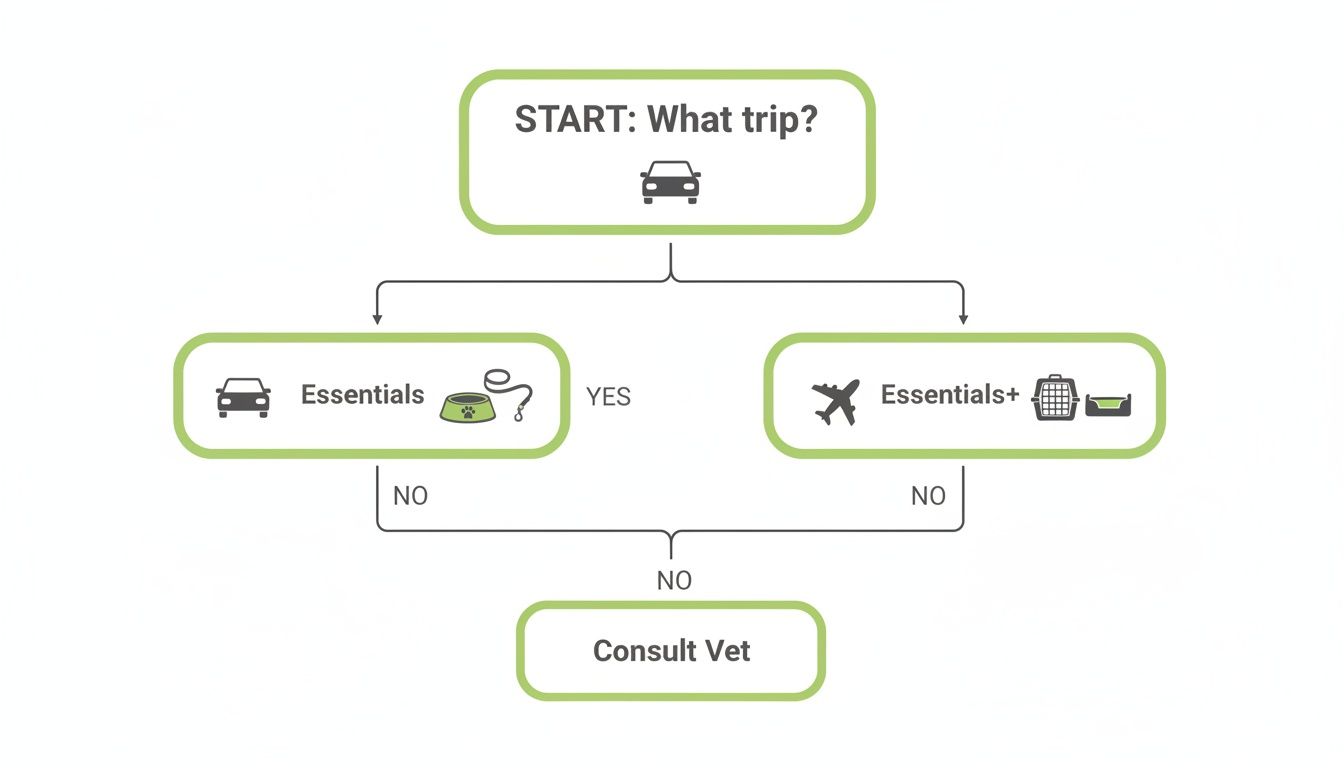
As you can see, the longer and more complex the journey, the more you need to pack—and a compliant carrier is non-negotiable for air travel.
The Life-Saving Importance of Car Restraints
For road trips, a loose dog is a serious safety risk. If you have to slam on the brakes, an unrestrained 60-pound dog can fly forward with an impact force of a staggering 2,700 pounds.
Car harnesses are one of the most effective ways to keep everyone safe. They are designed to clip directly into your car’s seatbelt system, keeping your dog securely in their seat while allowing them to sit or lie down comfortably.
Here’s a breakdown of how to choose the right restraint:
- Car Harnesses: Look specifically for "crash-tested" models that connect to the seatbelt buckle or latch system. This certification means they have been proven to hold up under serious force.
- Booster Seats: These are perfect for small dogs. They lift your pup up to see out the window, which can reduce car sickness, while keeping them safely tethered.
- Travel Crates: For large dogs, the safest spot is often a secured crate in the cargo area. Use tie-down straps to ensure the crate cannot slide or tumble over during sudden stops.
Actionable Tip: The best system depends on your dog's size and your car's setup. A large retriever is safest in a secured crate, while a Corgi will be secure and happy in a booster seat. To help you make the right call, check out our guide on selecting the best dog car safety harness.
Mastering On-the-Go Hydration and Feeding
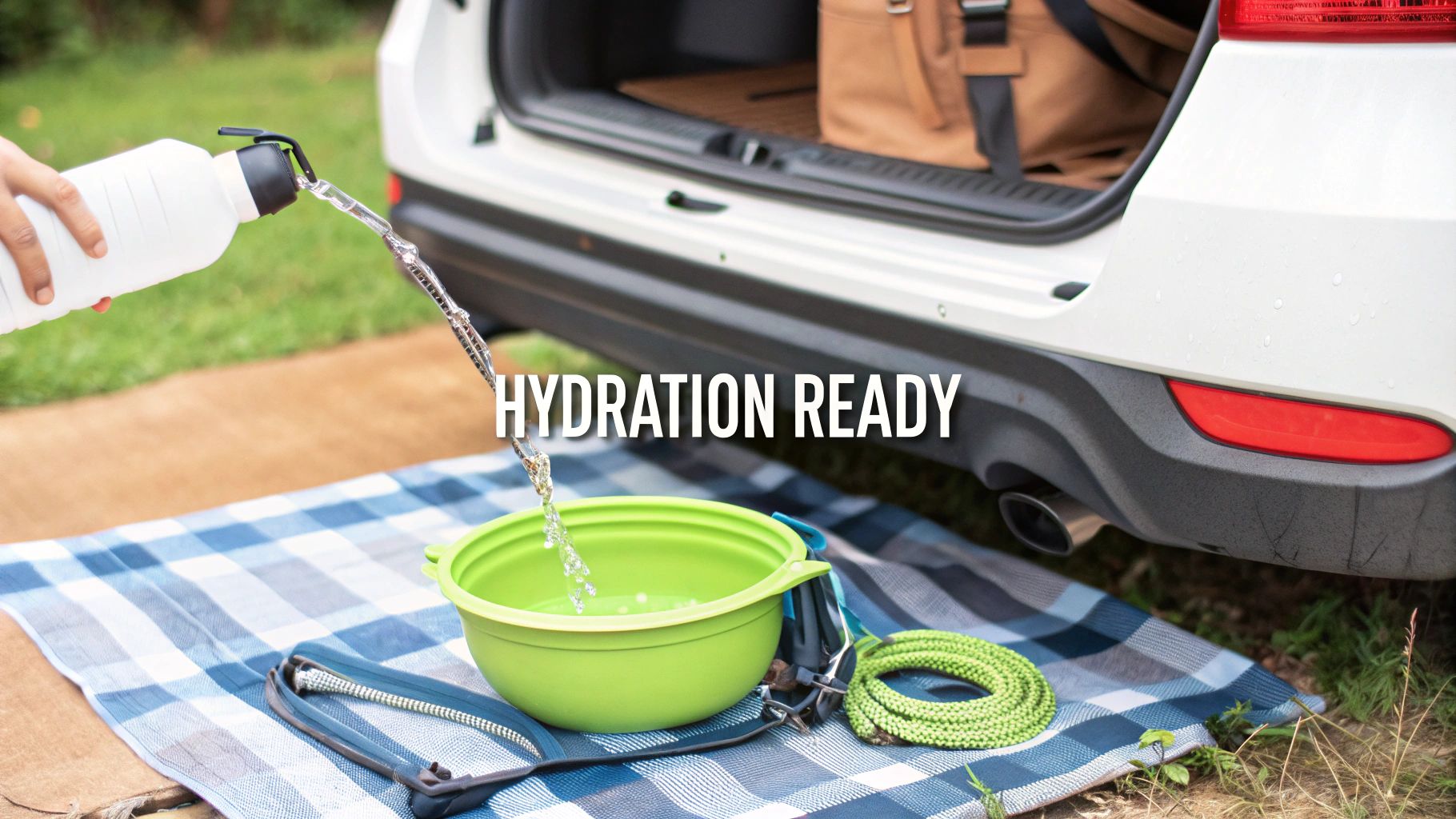
Maintaining your dog's feeding and water routine on the road is critical for their health. A sudden shift can trigger an upset stomach or dehydration, turning a fun trip into a stressful mess. With the right gear, serving meals and water is simple and clean, no matter where you are.
Your dog runs on an internal clock. They expect to eat at certain times, and disrupting that routine can cause anxiety. Portable bowls and water bottles are the tools that keep that clock on schedule, ensuring your dog stays healthy and full of energy for your adventure.
Space-Saving Bowls for Easy Meals
Bulky ceramic or steel bowls from home are impractical for travel. This is where collapsible silicone bowls prove they are one of the most useful travel accessories for dogs you can buy.
These bowls are lightweight and flatten down to the thickness of a coaster, easily slipping into a backpack pocket or glove compartment. Made from food-grade silicone, they are tough, easy to clean with a quick rinse, and ready for the next meal in seconds.
Here’s why they’re a game-changer for travel:
- Ultimate Portability: They collapse to free up a surprising amount of packing space.
- Simple Maintenance: The smooth silicone surface is easy to wash and dry on the go.
- Durability: You can squash them into a full bag, and they'll pop right back into shape.
Actionable Tip: Get a set of two—one for food, one for water. Use a carabiner to clip them to the outside of your backpack for easy access during hikes or pit stops.
Innovative Hydration Solutions
Keeping your dog hydrated is a top priority, especially on active trips. Juggling a separate water bottle and bowl is clumsy and often results in spills.
Portable water bottles with built-in dispensers are a brilliant solution. These gadgets combine the water container and bowl into one unit. Just press a button to release water into the attached trough. Any water they don't drink can be drawn back into the bottle, which means no waste and no mess.
Actionable Tip: Don't just rely on finding water at your destination. Always bring more water from home than you think you’ll need—a good rule is to have at least one extra day's worth on hand for emergencies.
Keeping Food Fresh and Secure
For any trip longer than a day, how you store your dog's food is just as important as how you serve it. A giant bag of kibble is a recipe for spills and stale food.
A travel-friendly, airtight food container is a smart investment. It will keep kibble fresh and protected from moisture. For shorter trips, pre-portion each meal into individual zip-top bags. This simple organization makes feeding time go smoothly, so you can spend less time scooping and more time enjoying your trip.
Keeping Your Dog Comfy and Clean on the Go
A comfortable dog is a happy dog, especially when traveling. The secret to a calm travel buddy is creating a slice of home wherever you are, while also being prepared for the inevitable messes that come with adventure.
This is all about managing their anxiety. An unfamiliar hotel room can be stressful. But a familiar scent from their own clean, dedicated space can turn a potentially tense situation into a fun experience.
Pack a Piece of Home with Portable Bedding
A travel bed or their favorite blanket is a portable comfort zone. These items are saturated with the smells of home, which is incredibly reassuring for a dog whose sense of smell is 10,000 to 100,000 times more powerful than ours.
Having their own spot also sets clear boundaries, telling them, "This is your safe place to relax." This simple cue can keep them off hotel furniture and give them a secure home base. For a clean, comfy resting spot on the road, a durable outdoor picnic blanket is a fantastic, easy-to-pack option.
Tackling Hygiene Challenges on the Road
Adventures mean dirt and mud. A small, well-stocked hygiene kit is non-negotiable for keeping your car, your rental, and your dog clean. The key is to be prepared before the mess happens.
Your go-to hygiene kit should include:
- Paw Wipes: Essential for a quick clean-up after potty breaks or a romp in the park. No more muddy paw prints.
- Absorbent Travel Towels: Microfiber towels are a game-changer. They’re lightweight, soak up a ton of water, and dry much faster than cotton towels.
- Poop Bags: Always pack more than you think you need. Running out is not an option. It's our responsibility to clean up after our dogs, wherever we go.
Actionable Tip: Keep your hygiene kit in an accessible side pocket of your bag or in the car's glove compartment, not buried at the bottom of your suitcase. You'll need it when you least expect it.
Managing Accidents and Shedding
Travel can be tough on puppies, senior dogs, or any dog prone to accidents. Washable, waterproof seat covers and pads are lifesavers. They create a protective barrier for your car's interior or hotel bedding that you can easily pull off and wash.
Stress can also kick shedding into overdrive. A compact grooming kit is smart to pack. A quick daily session with a brush or grooming glove can catch loose fur before it covers everything. Plus, it's a great calming routine that helps you and your dog connect while away from home.
If you’re traveling with a dog that might have accidents, learn about your options to bring peace of mind. Check out the benefits of washable dog diapers in our guide; they can be a stress-reducer on long journeys.
Packing for Safety and First-Aid Readiness
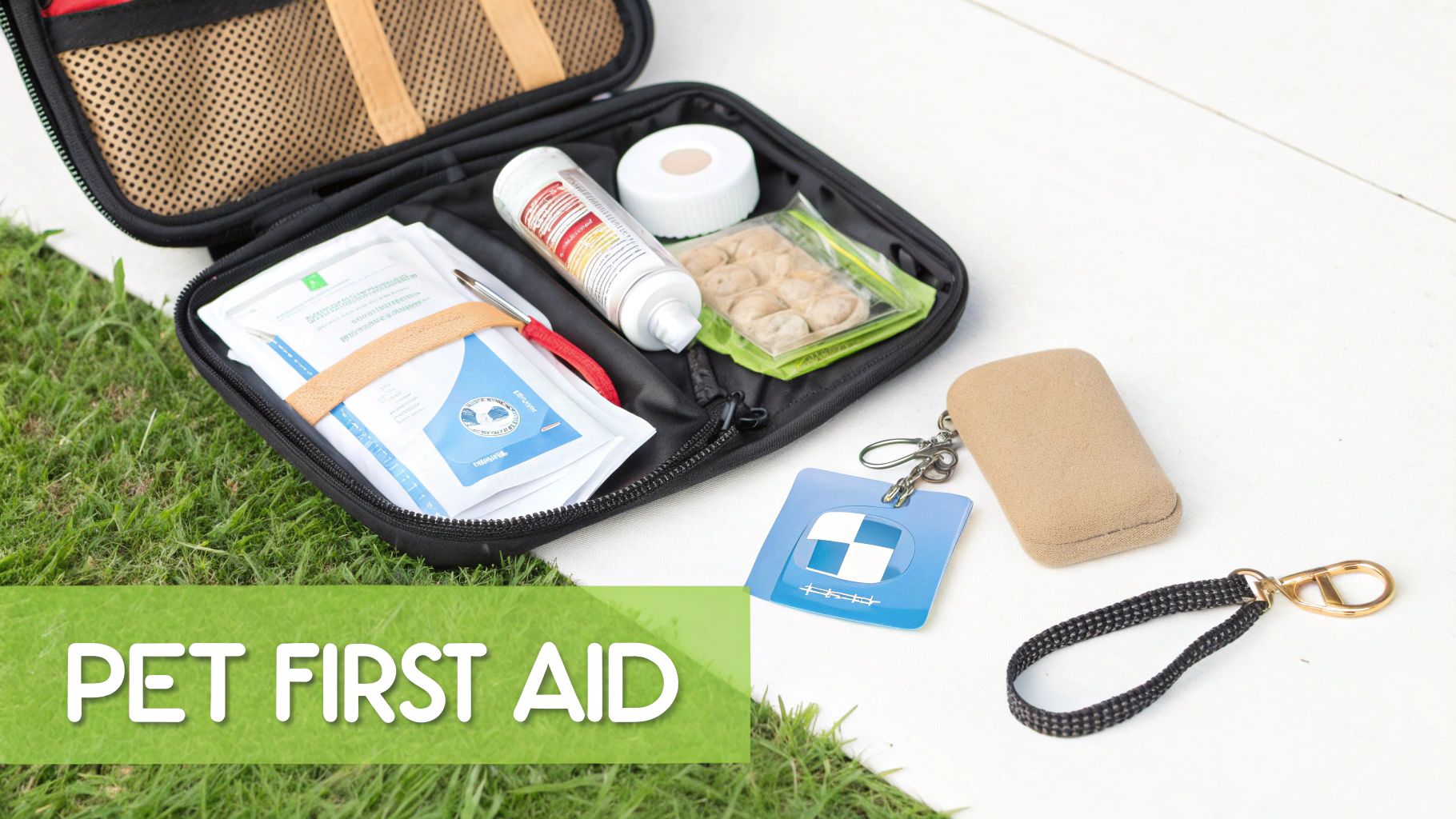 New territory means new risks. A sharp rock on a trail, an unexpected bug bite, or a moment of confusion in a strange place can happen in a flash. Being proactive about safety isn't just a good idea; it's essential.
Think of your safety gear as a three-part defense plan: immediate care for minor injuries, a recovery plan if you get separated, and protection from environmental hazards. Having this system in place gives you the confidence to handle whatever comes your way.
Assembling a Dog-Specific First-Aid Kit
You wouldn’t leave home without band-aids for yourself. Your dog deserves the same care. While you can buy pre-made pet first-aid kits, the best ones are customized for your dog and your destination. This kit is one of the most important travel accessories for dogs you'll pack.
Here’s a checklist to build a well-stocked travel first-aid kit:
- Wound Care: Antiseptic wipes, sterile gauze pads, medical tape, and a pet-safe antibiotic ointment for cleaning and protecting minor cuts.
- Tool Kit: Blunt-nosed scissors, tweezers for splinters, and a tick remover for safely dealing with pests.
- Medications: Pack any prescription meds. Also include a pet-friendly antihistamine for allergic reactions (ask your vet for the right brand and dosage!). Styptic powder is a lifesaver for stopping a bleeding nail.
- Emergency Info: On a waterproof card, write your vet's number, the contact for the nearest 24-hour emergency vet at your destination, and the ASPCA Animal Poison Control Center number: (888) 426-4435.
Actionable Step: Before you leave, program the Animal Poison Control number and your destination's emergency vet number into your phone. Don't wait until you're in a panic to search for it.
The Critical Role of Reliable Identification
A lost dog is every pet parent's nightmare. Your dog’s regular tag is a good start, but you need to level up your ID game for travel. One study found that microchipped dogs are 2.5 times more likely to be returned home.
Actionable Tip: Your home phone number isn't enough when you're on the road. Use a temporary tag with your cell phone number and the address of your rental or hotel written in permanent marker. For ultimate peace of mind, a GPS tracker that clips onto your dog’s collar provides real-time location data on your phone. A microchip helps if someone takes your dog to be scanned, but a GPS tracker lets you find them yourself, often within minutes.
Essential Safety Gear for Unfamiliar Terrains
Beyond first aid and ID, a few other pieces of gear can make a huge difference. For nighttime walks in a new place, a reflective leash, collar, or a small LED light will make your dog highly visible to cars and bikes.
If you’re going to be near water, a doggy life jacket is non-negotiable—even for strong swimmers. Unfamiliar water can hide strong currents or sudden drop-offs. A life jacket provides extra buoyancy and often has a handle so you can easily lift your pup out of the water if needed.
Customizing Your Packing List for Any Trip
Packing for a weekend road trip is completely different than prepping for an international flight. The key to a smooth journey is thinking ahead about what each specific trip demands. This way, you’ll have all the essential travel accessories for dogs without lugging around unnecessary gear.
A good checklist turns a potentially chaotic chore into a simple, organized process. It helps you dodge that last-minute panic when you realize their medication is still on the kitchen counter.
The Weekend Road Trip Checklist
For short drives, the goal is safety, convenience, and comfort. This is your grab-and-go kit.
Must-Haves:
- Car Restraint: A crash-tested harness or secured carrier is vital.
- Leash and Collar with ID: Double-check that tags have your current cell phone number.
- Food and Water: Pack their usual food and a portable water bottle.
- Collapsible Bowls: Takes up almost no space and are easy to clean.
- Poop Bags: Pack more than you think you’ll need.
Nice-to-Haves:
- A familiar blanket or toy to reduce anxiety.
- Paw wipes for quick cleanups before they get back in the car.
The Cross-Country Flight Checklist
Flying introduces a new layer of rules. Your packing list must focus on meeting airline regulations to avoid any issues at the airport.
Must-Haves:
- Airline-Approved Carrier: Measure your dog and check the airline's exact dimension requirements.
- Health and Vaccination Records: Have both digital and physical copies readily accessible.
- Leash and Harness: For navigating the airport before and after the flight.
- Absorbent Carrier Pad: Accidents can happen under stress, so be prepared.
Nice-to-Haves:
- Calming treats or a puzzle toy to keep them occupied during the flight.
Actionable Step: I can't stress this enough: double-check your airline's specific pet policy at least a week before you fly. These rules can vary and sometimes change without notice. Set a calendar reminder.
The Outdoor Camping Adventure Checklist
Heading into the great outdoors requires rugged, durable gear. This list focuses on keeping your dog safe in a natural environment.
Must-Haves:
- Dog First-Aid Kit: Include antiseptic wipes, bandages, and a tick remover.
- Reflective Collar or LED Light: Crucial for visibility around the campsite after dark.
- Paw Protection: Dog booties or paw wax can save their pads from rough terrain or hot surfaces.
- Durable Tie-Out or Hitching System: A reliable way to keep your dog safely contained at the campsite.
Nice-to-Haves:
- A doggy life jacket if your adventure involves being near water.
- An insulated, portable dog bed to keep them warm on chilly nights.
Packing Checklist by Trip Type
This quick comparison helps you see the priorities for each trip type so you can pack smart, not heavy.
| Accessory | Road Trip | Air Travel | Camping/Hiking |
|---|---|---|---|
| Carrier/Restraint | Yes (Harness or Crate) | Yes (Airline-Approved) | Optional (Tie-Out) |
| Food & Water Bowls | Yes (Collapsible) | Yes (Small, Packable) | Yes (Durable) |
| Leash & Collar w/ ID | Yes (Essential) | Yes (Essential) | Yes (Reflective) |
| Health Records | Good to Have | Yes (Required) | Good to Have |
| First-Aid Kit | Recommended | Recommended | Yes (Essential) |
| Paw Protection | Optional | No | Yes (Booties/Wax) |
| Waste Bags | Yes | Yes | Yes (Pack It Out) |
| Comfort Item | Yes (Blanket/Toy) | Yes (Small Toy) | Yes (Bed/Blanket) |
Packing the right gear comes down to where you're going and how you're getting there. A little planning goes a long way in ensuring both you and your dog have a fantastic, stress-free adventure.
Your Top Dog Travel Questions, Answered
Planning a trip with your furry co-pilot is exciting, but questions are normal. Here are straightforward answers to common concerns.
How Do I Pick a Carrier That the Airline Will Actually Allow?
This is critical, and getting it wrong can ruin your trip. It comes down to two things: your dog's measurements and the airline's specific rules.
First, your dog must be able to stand up and turn around inside the carrier. Measure their length (nose to base of tail) and height (floor to top of head).
Next, and most importantly, go to your airline's website and find their "traveling with pets" page. They will list the exact maximum dimensions for in-cabin carriers. Soft-sided carriers are often a great choice because their flexibility gives you some wiggle room when fitting them under the seat.
What's the Best Way to Keep My Dog from Freaking Out During Travel?
A calm travel day starts with preparation. The goal is to make the carrier or car seat a positive place long before you go anywhere.
Leave the carrier out in your living room for a few days. Toss high-value treats and a favorite toy inside. Let them explore it on their own terms so they associate it with a safe, rewarding den.
For long car rides:
- Tuck in a blanket or an old t-shirt that smells like you. Your scent is incredibly comforting.
- Provide a puzzle toy or a long-lasting chew to keep their mind busy.
- If your dog has severe travel anxiety, talk to your vet about calming supplements or other options.
Remember, your dog reads your emotions. If you're stressed, they'll be stressed. Take a deep breath and stay calm—your confidence will do more to soothe them than almost anything else.
How Much Food and Water Should I Actually Pack?
The golden rule is to always pack more than you think you’ll need. Flight delays and unexpected detours happen.
A safe plan is to pack enough food for the whole trip, plus at least two extra days' worth. This buffer is your safety net if things don't go as planned.
For water, a dedicated travel bottle is a must. On the road or in the air, offer your dog a drink every hour or two, especially in warm weather. A portable bottle with a built-in bowl makes it easy to provide a quick, spill-free drink anywhere.
At Pet Magasin, we design our travel gear with one thing in mind: making adventures with your pet safe, easy, and fun. From TSA-friendly carriers to tough, practical accessories for the road, we've got you covered. Check out our full collection at https://www.petmagasin.com.

Leave a comment