
Tips for traveling with pets: An actionable guide to safe, stress-free trips

Traveling with a furry family member transforms a trip into an adventure, but it requires a solid plan to ensure their safety and comfort. Navigating airline rules, managing anxiety on the road, and finding pet-friendly hotels can be overwhelming. Without a clear strategy, a dream vacation can quickly become stressful for both you and your pet. An actionable plan isn't just helpful—it's essential for a successful journey.
This guide provides a direct, actionable roadmap for pet travel. You'll learn how to select the right TSA-approved carrier, what to pack in an emergency kit, and how to acclimate your pet to travel before you leave. We'll also cover crucial topics like maintaining hydration, managing bathroom needs with tools like washable diapers, and ensuring your pet's well-being in cars or planes.
By implementing these practical tips for traveling with pets, you can manage the complexities of your trip with confidence. Our goal is to equip you with the knowledge to create a smooth, safe, and enjoyable experience, allowing you to focus on making lasting memories with your loyal companion. Let's dive into the essential steps for a successful shared adventure.
1. Choose TSA-Approved Pet Travel Carriers
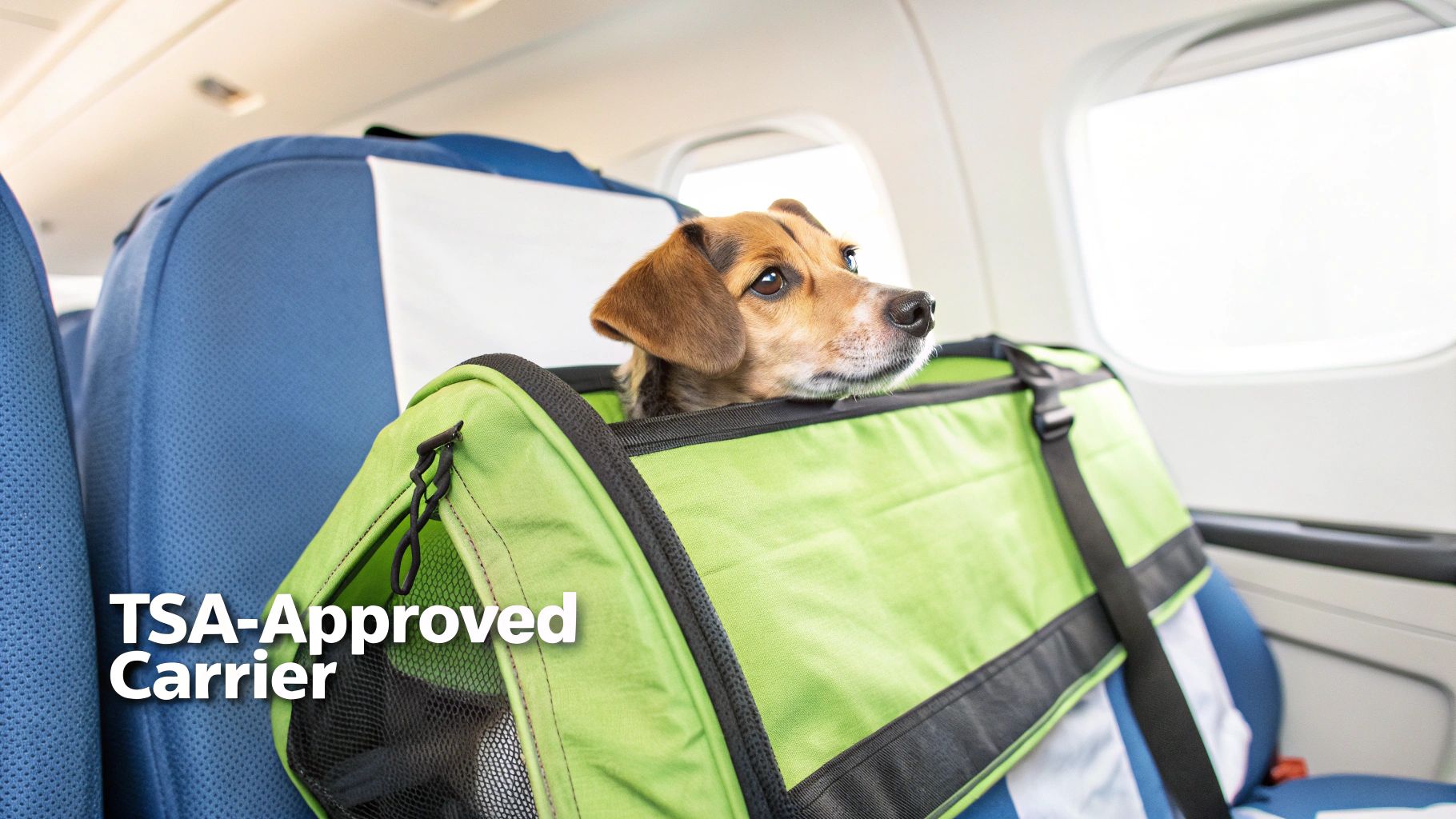
Your first step for any air travel is selecting the right carrier. A TSA-approved pet travel carrier is designed to meet strict airline and Transportation Security Administration (TSA) regulations. These carriers ensure your pet is secure, has proper ventilation, and fits under the seat in front of you. Using a compliant carrier is one of the most crucial tips for traveling with pets to avoid being denied boarding.
These carriers are typically soft-sided, which allows them to flex to fit under various seat dimensions without compromising your pet's space. Major airlines like Delta, United, and American Airlines have specific under-seat measurements; a compliant carrier is your ticket to avoiding last-minute travel disasters. The primary benefit is knowing your carrier meets all safety and size standards before you even arrive at the airport.
Actionable Steps for Carrier Selection
To implement this tip effectively, follow these practical steps:
- Measure First, Buy Second: Before purchasing a carrier, measure your pet's height (from floor to shoulder) and length (from chest to base of the tail). Your pet must be able to stand up and turn around comfortably inside.
- Check Airline Specifics: While TSA provides guidelines, each airline has its own maximum carrier dimensions. Always confirm these requirements on your airline's website. To simplify this, you can learn more about specific airline pet carrier size requirements on petmagasin.com.
- Prioritize Key Features: Look for carriers with ample mesh ventilation on at least two sides, a sturdy, waterproof bottom, and secure, self-locking zippers that your pet cannot easily nudge open.
- Practice at Home: Introduce the carrier weeks before your trip. Place treats, toys, or familiar bedding inside to create a positive association, turning it into a safe space rather than a source of anxiety.
2. Pack an Emergency Pet Travel Kit
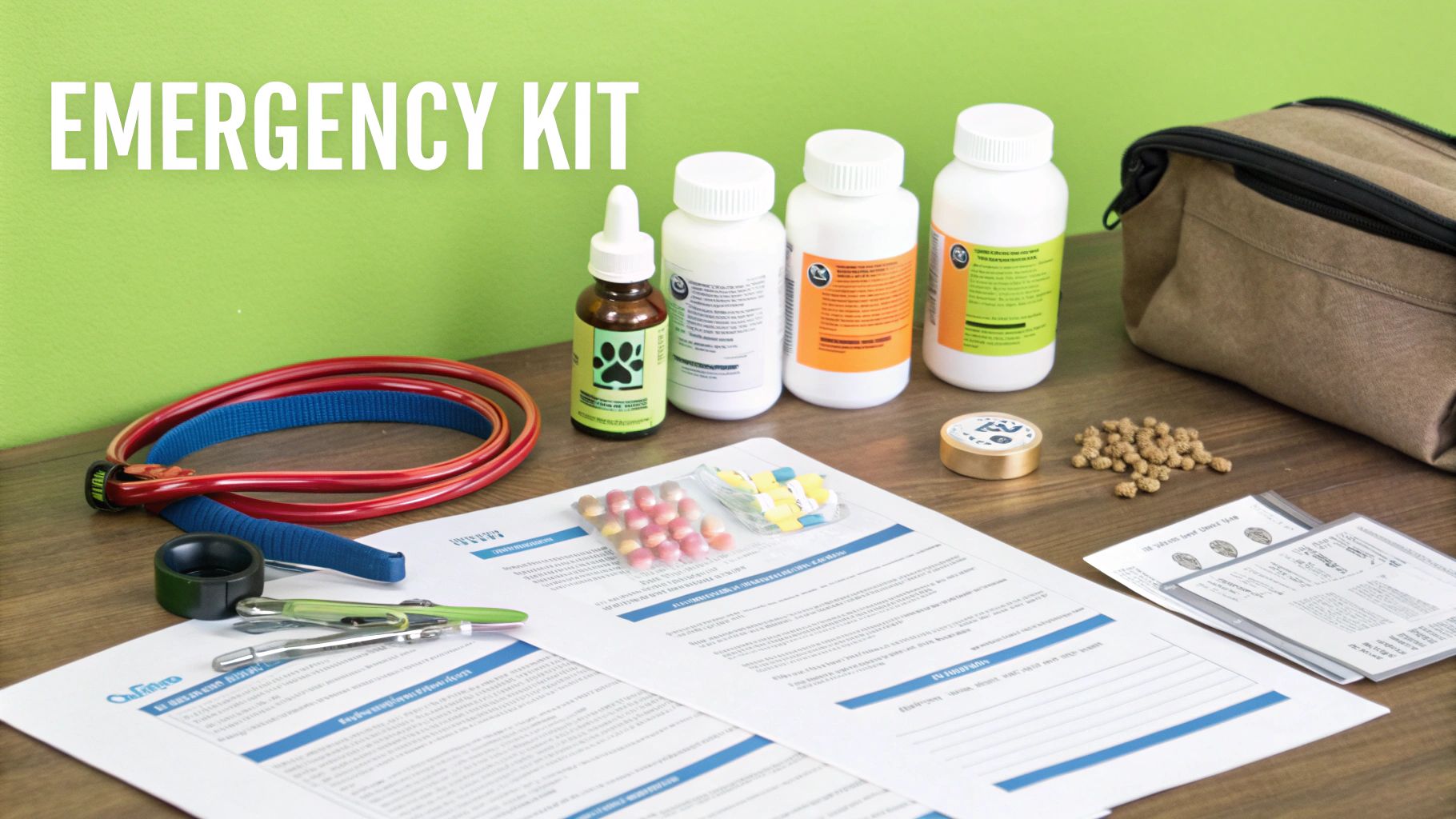
While planning for fun is exciting, preparing for the unexpected is one of the most vital tips for traveling with pets. An emergency pet travel kit is your pre-packed solution for handling unforeseen circumstances, from minor injuries to travel disruptions. Having this kit ready means you can respond quickly to a health issue, a lost pet situation, or an unexpected delay, providing critical care when it matters most.
This proactive step can be the difference between a minor inconvenience and a travel disaster. If your flight is delayed overnight or you need an emergency vet in an unfamiliar city, a well-stocked kit ensures you have your pet's medication, medical records, and identification on hand. This preparation offers peace of mind, allowing you to manage stressful situations with confidence.
Actionable Steps for Kit Assembly
To build a comprehensive and practical emergency kit, follow these steps:
- Gather Essential Documents: Compile copies of vaccination records, your pet's microchip number, and a recent photo. Store physical copies in a waterproof bag and create a digital backup on a cloud service like Google Drive or Dropbox for easy access.
- Organize Medical Supplies: Pack a pet-specific first-aid kit that includes antiseptic wipes, gauze, self-adhesive bandages, and any prescription medications in their original, clearly labeled bottles. Include enough medication to last several extra days beyond your planned trip duration.
- Update Contact Information: Before you leave, verify that your pet's microchip registration details are current with your cell phone number. An up-to-date microchip is the fastest way to be reunited with a lost pet.
- Include Familiar Comforts: Pack a small supply of your pet's regular food, a collapsible water bowl, and a favorite toy or blanket. These familiar items can significantly reduce stress in a new environment or during a long delay.
- Pre-Scout Local Vets: Research and save the contact information for a few 24-hour emergency veterinary clinics near your destination. Having this information ready saves precious time during a real emergency.
3. Maintain Regular Exercise and Bathroom Breaks
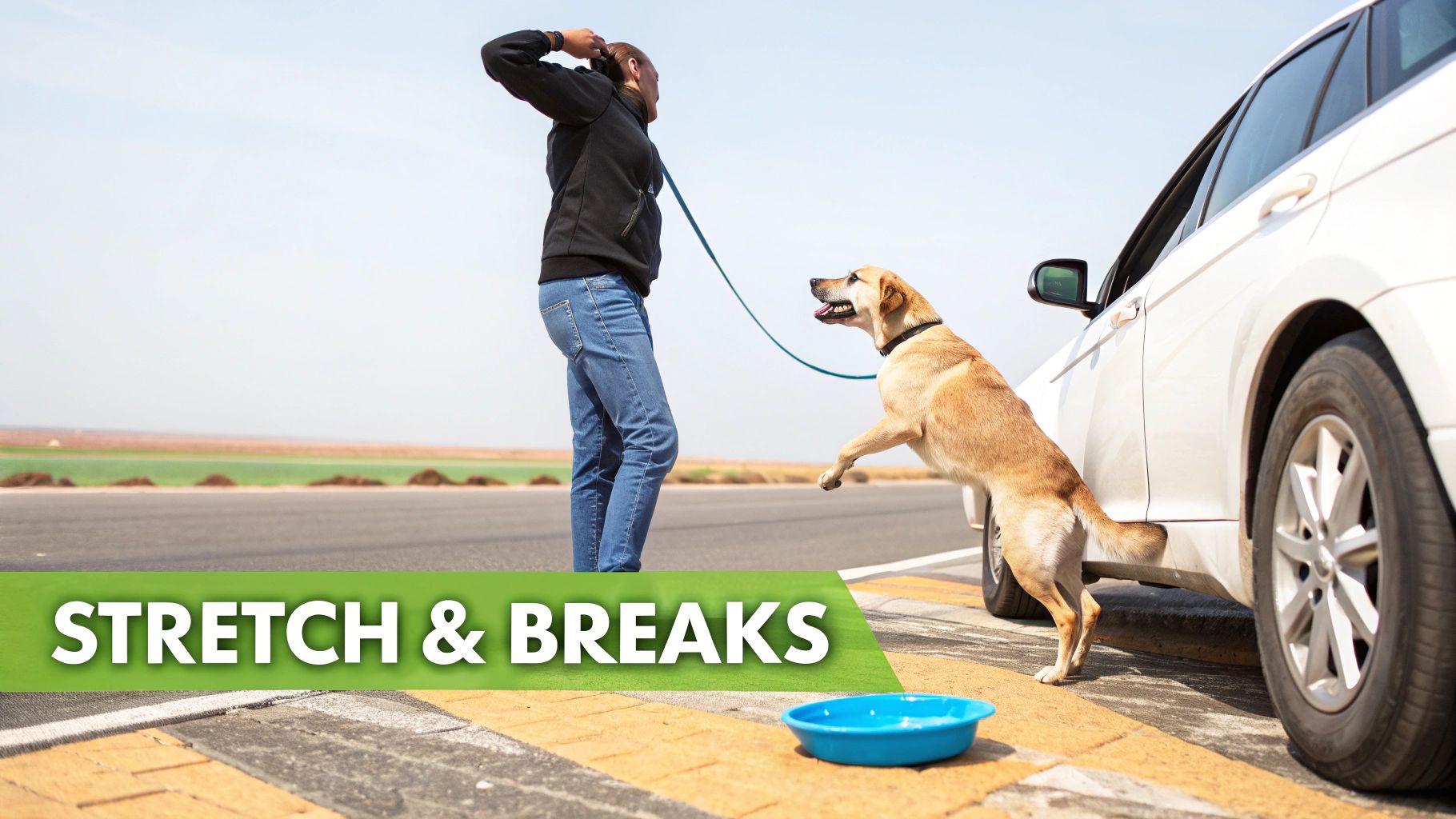
Just as humans need to stretch on long journeys, pets require consistent activity and potty breaks to stay healthy and comfortable. This routine is one of the most essential tips for traveling with pets, especially during long car rides. Scheduling stops prevents anxiety, reduces stiffness, and avoids accidents, making the trip more pleasant for everyone.
This proactive approach addresses both physical and mental needs. For dogs, a lack of exercise can lead to pent-up energy that manifests as barking or restlessness. By planning your route to include pet-friendly rest stops, you transform travel time from stressful confinement into an exciting adventure with built-in playtime.
Actionable Steps for Planning Breaks
To implement this tip effectively, integrate these practical steps into your travel plan:
- Plan Your Route Around Pet Needs: Before you leave, use apps like Google Maps or BringFido to identify and mark pet-friendly rest areas, parks, or trails along your route. Aim for a stop every 2-3 hours.
- Pack a "Go Bag" for Breaks: Keep a small, accessible bag with essentials like a leash, harness, collapsible water bowl, poop bags, and a favorite fetch toy. This makes stops quick and efficient.
- Prioritize Safety at Stops: Even in designated pet areas, always use a secure harness and leash. Unfamiliar environments can be distracting or overwhelming, and keeping your pet leashed prevents them from darting into traffic or getting lost.
- Maintain Consistency with Home Routines: Try to schedule breaks around your pet’s usual meal and walk times. This consistency helps regulate their digestive system and reduces stress caused by a disrupted schedule. During summer travel, plan for more frequent stops in cooler parts of the day.
4. Use Washable Pet Diapers for Extended Travel
Long journeys can disrupt your pet's regular potty schedule, leading to accidents. Washable pet diapers offer a reliable, eco-friendly solution for managing incontinence or messes during travel. These reusable garments provide comfort for your pet and protection for car seats and hotel rooms, making them one of the most practical tips for traveling with pets, especially for seniors or anxious animals.
Unlike disposables, washable diapers are designed for comfort with soft, absorbent fabrics and adjustable fits. They are beneficial for senior pets with bladder control issues, female dogs in heat, or anxious pets prone to marking. Using them ensures a clean, stress-free environment, allowing you to enjoy the trip without worrying about cleanup and saving you from potential cleaning fees.
Actionable Steps for Using Pet Diapers
To integrate this tip seamlessly into your travel plans, follow these practical steps:
- Ensure the Perfect Fit: A diaper that is too tight will be uncomfortable, while one that is too loose will leak. Measure your pet’s waist just in front of their back legs before purchasing to guarantee a snug but comfortable fit.
- Practice Before You Go: Have your pet wear the diaper for short periods at home in the weeks leading up to your trip. Reward them with treats and praise to build a positive association, ensuring they are comfortable wearing it for longer durations.
- Pack an Adequate Supply: For a long trip, pack at least three to five washable diapers. This allows you to have a clean, dry one ready while others are being washed and dried.
- Plan for Laundry: Bring a small wet/dry bag to store soiled diapers until they can be washed. If staying in a hotel, confirm laundry access or bring a small amount of pet-safe detergent for handwashing.
- Change Diapers Frequently: To prevent skin irritation and rashes, check the diaper every couple of hours and change it as soon as it's soiled. Keeping your pet clean and dry is essential for their health and comfort. To explore different options, you can discover more about the best reusable dog diapers on petmagasin.com.
5. Ensure Proper Hydration and Nutrition During Travel
Maintaining your pet's diet and hydration on the road is as critical as it is at home. Travel can be disruptive, and a sudden change in food or water can lead to digestive upset or dehydration. Ensuring consistent nutrition and easy access to fresh water is one of the most fundamental tips for traveling with pets that directly impacts their health.
Sticking to their regular feeding schedule and food brand helps maintain normalcy and prevents stomach issues. Dehydration is a significant risk during long car rides or flights, so providing constant access to water is non-negotiable. Proper planning here ensures your pet remains healthy and energetic enough to enjoy the destination with you.

Actionable Steps for On-the-Go Nutrition
To keep your pet properly fed and hydrated, follow these practical steps:
- Pack Their Home Food: Avoid buying different food at your destination. Pack enough of your pet's regular food for the entire trip, plus a few extra days' worth in case of delays. This consistency prevents digestive distress.
- Schedule Regular Stops: During car travel, plan for breaks every two to three hours. Use this time to offer your pet a chance to drink fresh water and have a small, light meal if it aligns with their feeding schedule.
- Invest in Travel-Friendly Gear: To keep your pet properly hydrated without sacrificing precious packing space, consider investing in the best collapsible water bottle for travel. These bowls and bottles are lightweight, easy to pack, and perfect for quick water breaks anywhere.
- Monitor Water Intake: Pay close attention to how much your pet is drinking. If they seem reluctant, you can encourage them by adding a small amount of bone broth (with no onion or garlic) to their water or offering ice cubes as a treat.
6. Acclimate Your Pet to Travel Before the Trip
One of the most effective tips for traveling with pets is to acclimate them to travel well before you leave. This means gradually introducing them to carriers and vehicles in a controlled, positive way. By desensitizing them to these new experiences ahead of time, you can significantly reduce their anxiety and prevent behavioral issues, turning a stressful event into a manageable one.
Proper acclimation builds a positive association with travel gear and motion. A cat that only sees its carrier for vet visits will likely be terrified. By making the carrier a familiar, safe space at home, you change that narrative. The goal is to make the car or carrier feel like a normal part of their routine, not a scary precursor to a stressful journey. This pre-trip training is fundamental to ensuring your pet remains calm.
Actionable Steps for Pet Acclimation
To effectively prepare your pet for travel, follow these actionable steps starting at least two to four weeks before your trip:
- Make the Carrier a Haven: Place your pet's carrier in a common area with the door open. Put their favorite blanket, toys, and occasional treats inside to encourage them to explore it on their own terms.
- Start with Short Sessions: Begin by closing the carrier door for just a few minutes while you're in the room, offering praise and treats. Gradually increase the duration as your pet becomes more comfortable.
- Practice Short Car Rides: Once your pet is calm in their carrier, take them on short drives around the block. Keep the experience positive with a calm voice and reward them with a high-value treat upon returning home.
- Gradually Increase Intensity: Over several sessions, extend the length of the car rides. Progress from a trip around the neighborhood to a drive to a nearby park, creating a fun destination at the end of the journey.
- Use Calming Aids: Consider using vet-approved calming pheromone sprays or playing calming music specifically designed for pets during your practice sessions to create a soothing atmosphere.
7. Keep Your Pet Cool and Protected from Temperature Extremes
Maintaining a safe temperature for your pet during transit is non-negotiable. Extreme heat or cold can quickly lead to dangerous health complications like heatstroke or hypothermia, especially in confined spaces like cars. Proactively managing your pet's environment is one of the most critical tips for traveling with pets to ensure their well-being.
This is especially vital for brachycephalic (flat-faced) breeds like Pugs and Bulldogs, who are more susceptible to respiratory distress in high temperatures. For car travel, this means using air conditioning and sunshades. For air travel, it involves ensuring the carrier has maximum ventilation. Diligent temperature control prevents medical emergencies and ensures your pet arrives healthy and comfortable.
Actionable Steps for Temperature Regulation
To effectively manage your pet's climate during travel, follow these practical steps:
- Never Leave Pets Unattended in Vehicles: Temperatures inside a parked car can rise to lethal levels within minutes, even on a mildly warm day with the windows cracked. This rule is absolute.
- Create a Cool Microclimate: Use reflective window sunshades to block direct sunlight and reduce heat buildup in your vehicle. For extended road trips or campervan travel, consider researching effective vehicle insulation strategies to maintain a stable internal temperature.
- Pack Cooling and Warming Gear: Depending on the climate, pack cooling mats, a portable fan, or a cooling vest for warm destinations. For colder weather, pack a pet-safe sweater and an extra blanket for their carrier.
- Monitor for Warning Signs: Learn the signs of heatstroke (excessive panting, thick drool, lethargy, red gums) and hypothermia (shivering, weakness, slow breathing). If you notice any of these symptoms, seek immediate veterinary attention.
- Plan Around Peak Temperatures: When possible, schedule your travel for early morning or late evening to avoid the hottest parts of the day, reducing ambient heat stress on your pet.
8. Plan Ahead for Accommodations and Boarding
Securing pet-friendly lodging or reliable boarding is a mandatory part of your pre-trip checklist. Spontaneity doesn't work when an animal's well-being is at stake. Confirming where your pet will safely stay removes significant stress from your travel experience. This planning is one of the most vital tips for traveling with pets.
Failing to book ahead can lead to stressful scenarios, like arriving at a hotel with no pet-friendly rooms or scrambling to find a reputable sitter. Use platforms like BringFido to find and verify hotels, or services like Rover to connect with trusted caregivers. Proactive planning ensures your pet has a safe, comfortable, and pre-approved place to rest, allowing you to focus on enjoying your trip.
Actionable Steps for Accommodation and Boarding
To ensure a smooth experience for both you and your pet, follow these practical steps:
- Book Well in Advance: For peak travel seasons, book pet-friendly accommodations or boarding facilities at least two to three months ahead of time. These specialized options fill up quickly.
- Verify Pet Policies Directly: Always call the hotel or facility to confirm their pet policy, even if it's listed online. Inquire about specific fees, weight or breed restrictions, and designated pet-friendly areas.
- Tour Boarding Facilities: If you're considering a local boarding kennel, schedule an in-person tour. Assess the cleanliness, staff interaction, and overall environment to ensure it meets your standards. Ask about their vaccination requirements and emergency veterinary protocols.
- Conduct Trial Runs: Before a long trip, acclimate your pet to a boarding facility or sitter with a short stay, such as a half-day or overnight visit. This helps reduce separation anxiety and familiarizes them with the new environment and caregivers.
9. Use Proper Grooming and Hygiene Maintenance During Travel
Maintaining your pet's grooming on the road is as important as it is at home. Travel exposes pets to new environments, dirt, and allergens, making a consistent routine crucial for their comfort. This goes beyond appearance; proper grooming prevents skin irritation, matting, and paw infections. Incorporating hygiene maintenance is one of the most practical tips for traveling with pets to prevent minor discomforts from becoming major problems.
A well-groomed pet is also more welcome in pet-friendly accommodations. A daily brush-down minimizes shedding in a hotel room, while quick paw cleanings prevent tracking dirt indoors. By packing a dedicated, travel-sized grooming kit, you can address these needs efficiently. This proactive approach keeps your pet feeling its best and simplifies cleanup.
Actionable Steps for Travel Grooming
To implement this tip effectively, follow these practical steps:
- Pack a Compact Grooming Kit: Assemble a small bag with essential tools, including a durable brush or comb, nail clippers, pet-safe wipes, and travel-sized pet shampoo. Portable grooming tools are designed to be lightweight and effective on the go.
- Maintain Daily Brushing: Dedicate five minutes each day to brushing your pet. This simple act prevents tangles and mats that can form from increased activity or different climates, and it helps distribute natural oils for a healthy coat.
- Prioritize Paw Care: After walks or hikes, inspect and wipe your pet’s paws to remove dirt, debris, or potential irritants like salt or burrs. This prevents them from licking harmful substances and protects their paw pads.
- Use Pet Wipes for Quick Cleanups: Keep a pack of grooming wipes handy for messes, spills, or a quick refresh between baths. They are perfect for cleaning faces, paws, and coats after a day of adventure. For a deeper understanding of grooming techniques, you can explore comprehensive resources about how to groom your dog at home on petmagasin.com.
10. Monitor Your Pet's Health and Behavior Throughout Travel
Vigilant observation of your pet during your journey allows for early detection of stress or illness. Travel disrupts an animal's routine, and environmental changes can trigger issues. Actively monitoring their condition is one of the most proactive tips for traveling with pets, enabling you to intervene quickly and prevent minor problems from escalating.
A change in behavior is often the first sign something is wrong. A pet that suddenly loses its appetite, becomes withdrawn, or shows anxiety like excessive panting may be struggling. By knowing your pet’s normal baseline, you can spot these deviations immediately. This attentiveness ensures their well-being and allows you to address their needs promptly, whether it's offering comfort or seeking veterinary care.
Actionable Steps for Health and Behavior Monitoring
To effectively implement this tip, integrate these monitoring practices into your travel routine:
- Establish a Baseline: Before your trip, pay close attention to your pet’s typical eating, drinking, sleeping, and bathroom habits. This knowledge is your benchmark for identifying unusual changes on the road.
- Perform Daily Checks: Each day, take a few moments to observe your pet for signs of stress, such as excessive drooling, pacing, hiding, or whining. Also, check for physical symptoms like lethargy, vomiting, diarrhea, or limping.
- Track Intake and Output: Monitor how much your pet is eating and drinking. A refusal to eat or drink for more than a day is a significant concern. Also, keep an eye on their bathroom habits to ensure they are regular and consistent.
- Trust Your Instincts: You know your pet best. If something feels "off" about their behavior or health, don't dismiss it. It's always better to be cautious and consult a veterinarian if you have any concerns.
Top 10 Pet Travel Tips Comparison
| Item | Implementation 🔄 | Resource Needs ⚡ | Expected Outcomes 📊⭐ | Ideal Use Cases 💡 | Key Advantages ⭐ |
|---|---|---|---|---|---|
| Choose TSA-Approved Pet Travel Carriers | Moderate 🔄🔄 — measure pet, verify airline rules | One-time purchase, minimal upkeep ⚡ — carrier, pads | High 📊⭐⭐⭐ — compliance, safer flights | Air travel, frequent flyers, in-cabin pets 💡 | Ensures airline compliance, reduces anxiety, reusable ⭐ |
| Pack an Emergency Pet Travel Kit | Moderate 🔄 — assemble documents & supplies | Low–Moderate ⚡ — meds, records, small kit | High 📊⭐⭐ — faster response to emergencies | Long trips, international travel, older pets 💡 | Speeds emergency care, aids identification, peace of mind ⭐ |
| Maintain Regular Exercise and Bathroom Breaks | Moderate–High 🔄🔄🔄 — schedule stops, find safe areas | Time and planning, portable supplies ⚡⚡ | High 📊⭐⭐⭐ — better behavior, fewer accidents | Road trips, long drives, active dogs 💡 | Reduces stress, prevents health issues, improves behavior ⭐ |
| Use Washable Pet Diapers for Extended Travel | Low–Moderate 🔄🔄 — fit and train pet to wear | Moderate ⚡ — multiple diapers, laundry access | Moderate 📊⭐⭐ — fewer accidents, cleaner environment | Senior/incontinent pets, hotel stays, long trips 💡 | Eco-friendly, cost-effective long-term, protects interiors ⭐ |
| Ensure Proper Hydration and Nutrition During Travel | Moderate 🔄 — pack food, maintain schedule | Moderate ⚡⚡ — food supply, bowls, coolers | High 📊⭐⭐⭐ — stable health, reduced digestive issues | Any travel, especially long/air trips, puppies/seniors 💡 | Prevents dehydration, maintains energy and immune support ⭐ |
| Acclimate Your Pet to Travel Before the Trip | High 🔄🔄🔄 — repeated short sessions, training | Time investment, treats, carrier practice ⚡⚡ | Very High 📊⭐⭐⭐⭐ — reduced anxiety, smoother trips | Anxious pets, first-time travelers, airline travel 💡 | Dramatically lowers stress, improves safety and compliance ⭐ |
| Keep Your Pet Cool and Protected from Temperature Extremes | Moderate 🔄 — monitor and equip for climate | Equipment and monitoring ⚡⚡ — cooling pads, vests, insulation | High 📊⭐⭐⭐ — prevents heat/cold emergencies | Hot climates, cold destinations, brachycephalic breeds 💡 | Prevents heat stroke/hypothermia, protects vulnerable pets ⭐ |
| Plan Ahead for Accommodations and Boarding | Moderate 🔄🔄 — research, book in advance | Cost and time ⚡⚡ — booking fees, deposits | High 📊⭐⭐⭐ — consistent care, reduced separation stress | Multi-night trips, business travel, pets needing care 💡 | Ensures reliable care, emergency support, routine continuity ⭐ |
| Use Proper Grooming and Hygiene Maintenance During Travel | Low–Moderate 🔄 — pack and perform routine care | Low ⚡ — travel grooming kit, wipes | Moderate–High 📊⭐⭐ — prevents matting, infections | Long stays, hairy/long-coated pets, dusty environments 💡 | Maintains comfort and health, reduces parasitic risks ⭐ |
| Monitor Your Pet's Health and Behavior Throughout Travel | High 🔄🔄🔄 — continuous observation, record keeping | Time and attention, vet contacts ⚡⚡ | Very High 📊⭐⭐⭐⭐ — early issue detection, timely intervention | Any travel, especially long or with medical-history pets 💡 | Catches problems early, enables prompt vet care, improves outcomes ⭐ |
Your Journey Awaits: Travel Confidently with Your Pet
Embarking on an adventure with your furry companion is one of the most rewarding experiences a pet owner can have. The journey, however, is just as important as the destination. Navigating travel requires meticulous planning and a deep understanding of your pet's needs. The collection of tips for traveling with pets we've explored offers a framework for transforming potential stress into a seamless, enjoyable experience. From choosing a TSA-approved carrier to managing your pet's behavior, each strategy is a crucial piece of the puzzle.
Successful pet travel is an active process. It begins long before you leave, with acclimation sessions and assembling an emergency kit. It continues on the road or in the air, where consistent routines for feeding, hydration, and exercise provide a comforting anchor of normalcy. You are your pet's advocate, comfort-provider, and safety officer, all rolled into one.
The Pillars of Confident Pet Travel
Let's distill the core principles that will serve as your compass on any journey. Mastering these takeaways is the key to unlocking a world of shared adventures.
- Preparation is Paramount: Your most powerful tool is foresight. This means researching airline policies, booking pet-friendly accommodations well in advance, and scheduling a pre-trip vet visit. It also means preparing your pet mentally and physically, ensuring they see their carrier as a safe space and are accustomed to the motion of a vehicle.
- Safety is Non-Negotiable: Your pet's well-being is the top priority. This commitment is reflected in tangible actions like securing their crate properly in a vehicle, never leaving them unattended in a car, and ensuring they are always wearing proper identification with up-to-date contact information. It’s about managing temperature extremes and having a first-aid kit at the ready.
- Consistency Creates Comfort: Pets thrive on routine. While travel inherently disrupts their normal schedule, you can create a sense of stability. Maintaining familiar feeding times, using their own blankets and toys, and incorporating regular potty and play breaks helps mitigate anxiety and keeps them grounded. Products like washable diapers offer a practical solution for maintaining hygiene and comfort during long stretches without a break.
Putting Your Knowledge into Action
The true value of these tips for traveling with pets lies in their application. Your next step is to move from reading to doing. Start by creating a personalized travel checklist based on the insights from this article. Assess your current gear: does your carrier meet airline standards? Is your travel water bottle spill-proof and easy to use?
Begin the acclimation process now, even if your trip is months away. Take short car rides to fun destinations like a park, making travel a positive experience. Practice having your pet spend short, relaxed periods in their carrier at home. By integrating these practices into your routine, you are not just preparing for a single trip; you are building a foundation of trust and resilience that will last a lifetime. Every journey becomes an opportunity to deepen your bond, creating a treasure trove of shared memories built on a foundation of safety, comfort, and confidence. The world is a vast, exciting place, and with the right preparation, there’s no reason your best friend can’t be by your side to experience it with you.
Ready to equip your furry co-pilot for your next grand adventure? Pet Magasin offers a curated selection of premium, travel-ready pet supplies, from TSA-approved carriers to hygienic washable diapers, designed to make your journey safer and more comfortable. Explore our collection and find the perfect gear to ensure your next trip is a resounding success at Pet Magasin.

Leave a comment