
Choosing The Best Dog Car Safety Harness For Safe Travels

When it comes to keeping your dog safe in the car, a crash-tested, front-clip harness is your most reliable choice. To find the best one, you need to prioritize certified safety tests and ergonomic designs that distribute force evenly during a sudden stop, preventing injury and keeping your dog secure.
Your Quick Guide To The Safest Harness
Securing your dog properly before you drive is a critical safety step. An unrestrained dog can become a projectile in an accident, posing a severe risk to themselves and everyone else in the vehicle.
The physics are undeniable: an 80-pound dog in a 30 mph crash can exert 2,400 pounds of force. This is why selecting the right car safety harness isn't just about comfort—it's about providing life-saving protection.
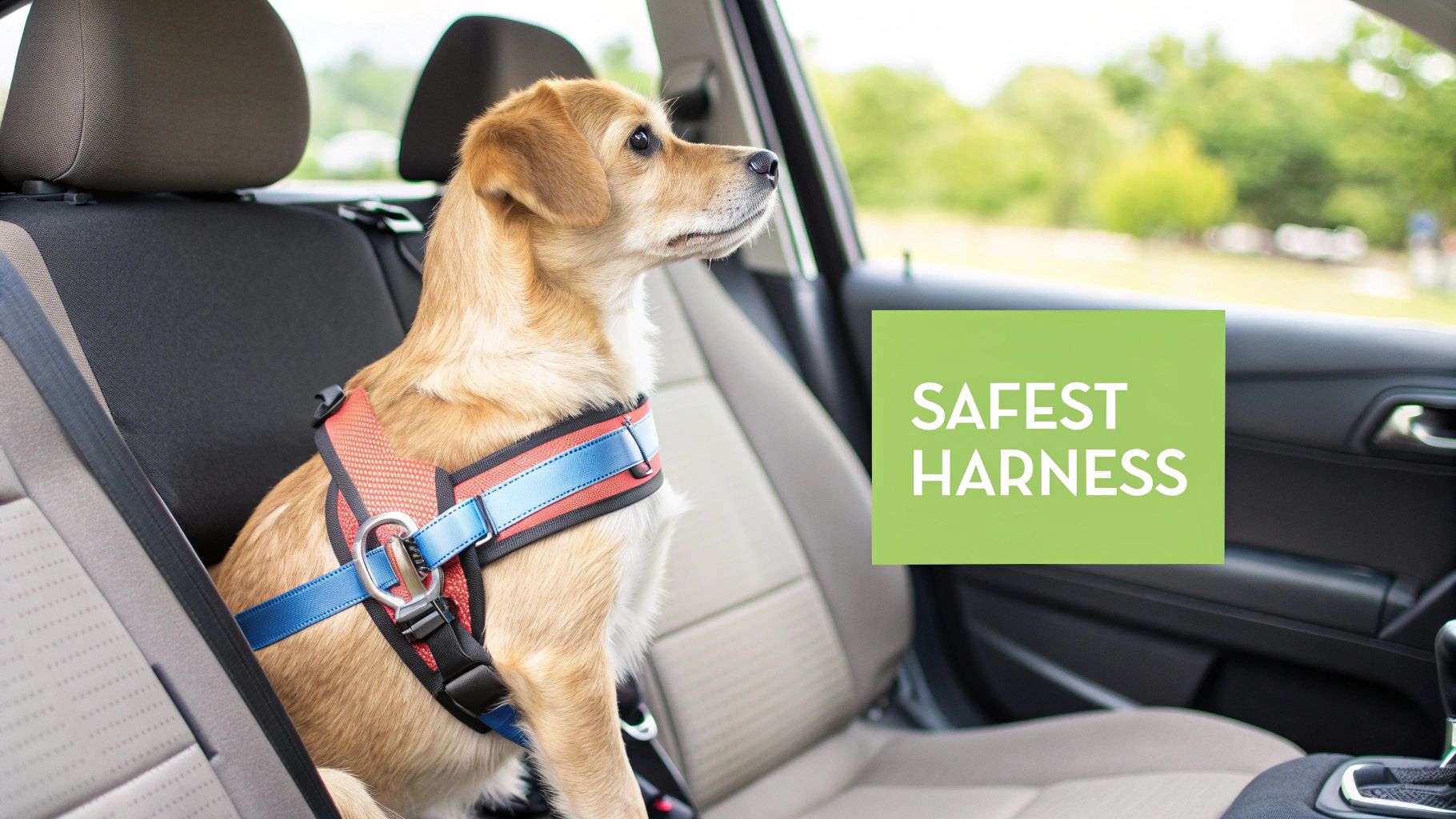
Why Crash Testing is a Non-Negotiable Feature
A true car safety harness has undergone standardized testing—similar to a child’s car seat—to verify its performance in a collision. These tests ensure that every component—webbing, stitching, and hardware—can withstand extreme forces without failing.
Actionable Tip: Don't just look for the words "crash-tested." Verify the claim. Look for certification from an independent organization like the Center for Pet Safety (CPS). This label is your assurance that the harness will perform as promised when it matters most.
A Look At Top Choices
To help you narrow down your options, here is a quick look at some top-rated harnesses. This comparison focuses on their standout safety features and the type of travel they are best suited for, so you can make a practical choice.
Top-Rated Dog Car Harnesses At A Glance
Use this table for a direct comparison of leading car safety harnesses. Identify the key features that best match your dog's needs and your typical travel style.
| Harness Model | Key Feature | Ideal For |
|---|---|---|
| Pet Magasin Safety Harness | Ergonomic Fit & Padded Chest Plate | Daily commutes and anxious travelers |
| Sleepypod Clickit Sport | Patented Infinity Loop Design | Maximum restraint and long road trips |
| Kurgo Tru-Fit Harness | Five-Point Adjustment System | Dogs of various shapes and sizes |
Each of these options offers specific advantages, whether you're running errands around town or embarking on a cross-country adventure.
Understanding Different Harness Designs And Safety Standards
When shopping for a dog car safety harness, you'll encounter many options, but it's vital to understand that a standard walking harness is not built to withstand the forces of a car accident. Effective protection comes from specific safety designs and, critically, proof of independent crash testing.
Harnesses typically come in two main designs: back-clip and front-clip. While back-clip harnesses are suitable for walks, they offer poor control in a vehicle. During a sudden stop, the back attachment point can cause a dog to lurch forward, increasing the risk of injury.
Why Front-Clip Harnesses Are a Smarter Choice for Car Safety
This is where front-clip harnesses excel for car travel. The tether attaches to a D-ring on the dog’s chest, which helps redirect their forward momentum during a sudden stop. This design discourages pulling and distributes impact forces across the stronger chest and shoulder areas, away from the vulnerable neck.
Front-clip designs hold a significant 25% global market share, largely due to their effectiveness in control and safety applications. Independent tests suggest their ability to manage momentum can reduce the risk of injury from sudden braking by up to 60%. You can explore more on these market trends at Maximize Market Research.
Actionable Tip: Always choose a front-clip harness for car travel. Its design inherently provides better stability and force distribution during sudden stops, turning a potentially dangerous moment into a more controlled one.
The Gold Standard: Crash-Test Certifications
Beyond the clip style, the most crucial factor is official crash testing. A "crash-tested" label signifies that the harness has undergone standardized tests simulating a real collision, often following protocols similar to those for child car seats.
Organizations like the Center for Pet Safety (CPS) conduct rigorous, independent evaluations to certify harnesses. These tests confirm that the webbing, stitching, and hardware can handle thousands of pounds of force, giving you verifiable proof of its protective capabilities.
To make an informed choice, here’s a breakdown of how these harness types perform in a car.
A Practical Comparison Of Harness Types
Use this table to understand the core differences between harness designs and select the right one for your dog's safety and comfort.
| Harness Type | Primary Design | Key Car Safety Benefit | Best Use Case |
|---|---|---|---|
| Back-Clip Harness | Leash attaches to a ring on the dog's back. | Minimal; better than a collar but offers poor momentum control. | General walking, not recommended for car travel. |
| Front-Clip Harness | Leash attaches to a ring on the dog's chest. | Excellent momentum control; distributes force across the chest. | Daily driving for dogs who pull or need better stability. |
| Crash-Tested Harness | Reinforced structure, often with a front-clip, and certified hardware. | Proven to withstand collision forces and keep the dog secured. | Essential for all car travel, especially long trips. |
Ultimately, you cannot compromise on a harness with a proven safety record. A front-clip design is a great starting point, but only a model with an official crash-test certification provides the verified protection your dog needs on the road.
Evaluating The Core Criteria For A Safe Harness
Selecting the best dog car safety harness requires a critical eye for detail. True safety lies in the quality of materials, the strength of the construction, and verifiable proof that it can withstand crash forces. To ensure you're getting genuine protection, you need to know exactly what to look for.
A reliable safety harness is engineered specifically to perform in a collision. Every component, from straps to buckles, is chosen for its ability to endure extreme stress. Here’s a practical checklist to help you evaluate any harness.
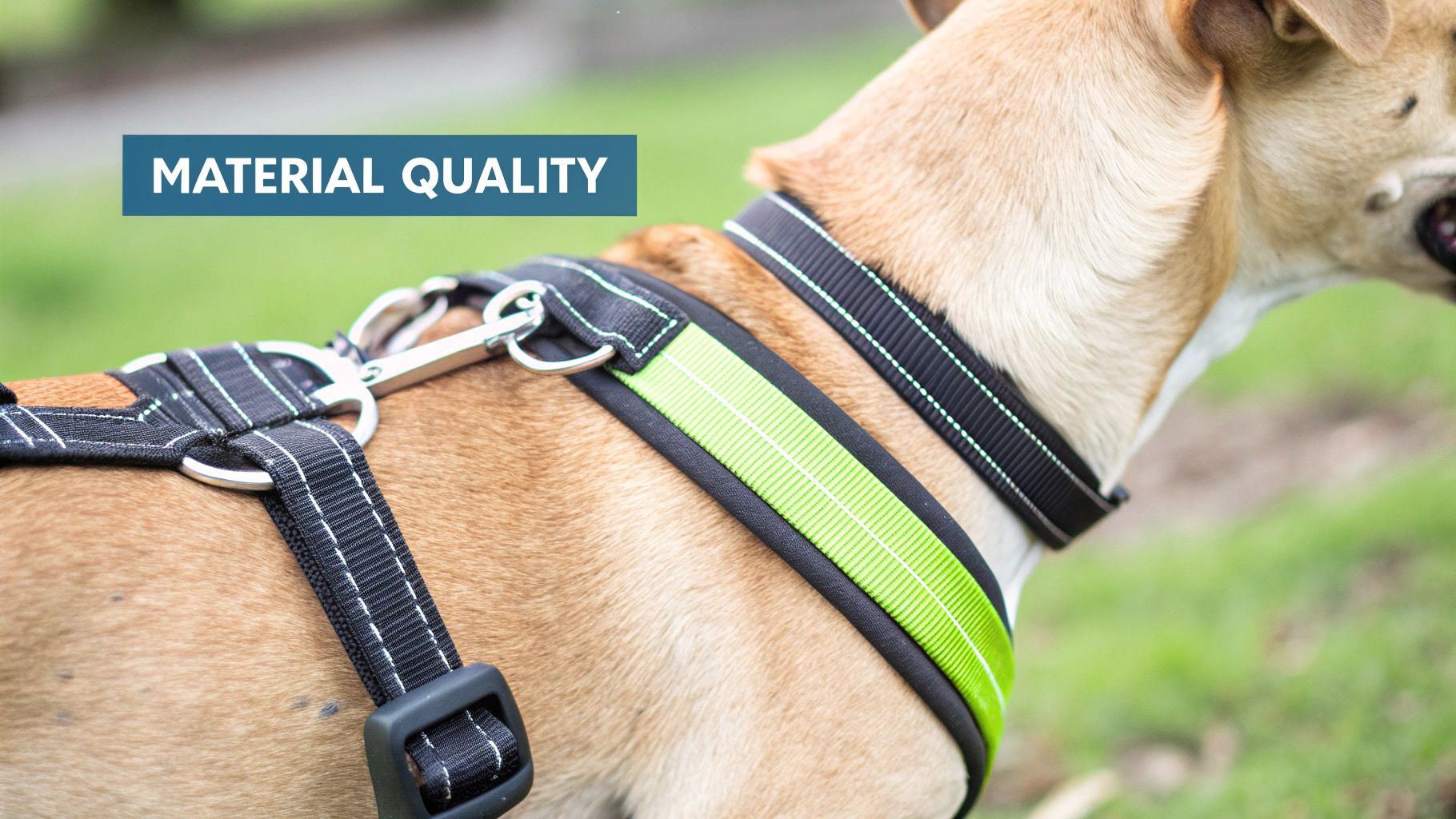
Unpacking Material Quality And Construction
The first step is a hands-on inspection. A high-quality safety harness will feel substantial and durable, unlike a lightweight walking harness.
-
Reinforced Nylon Webbing: Look for thick, automotive-grade webbing similar to the material in human seatbelts. This material is designed to resist tearing under immense force. Avoid flimsy, thin straps.
-
Durable Metal Hardware: This is a critical checkpoint. All buckles, D-rings, and adjusters must be made from strength-rated metal. Plastic components can shatter on impact, rendering the harness useless when needed most.
-
Secure Stitching: Examine the stitching, especially where straps connect to hardware. Look for reinforced patterns like box stitching (a square with an "X" inside) or heavy-duty double stitching, which prevent the harness from tearing under pressure.
The Importance Of Crash Test Verification
While quality materials are essential, the definitive proof of a harness's safety is independent crash testing. This is the single most important factor that distinguishes a true safety device from a simple restraint.
Actionable Tip: Don't trust a brand's claim of being "crash-tested" without evidence. Look for certification from a reputable, independent organization. These tests use crash-test dummies and simulate accidents at 30 mph or more to prove the harness can keep a pet secure without failing.
Properly harnessed dogs face 75% fewer injuries in a crash compared to unrestrained pets. Veterinarians corroborate this, noting a 22% decrease in emergency visits for pets in car accidents when a proper restraint is used. You can learn more about how safety is driving the growing pet travel accessories market.
Analyzing The Anchor System
Finally, a harness is only as effective as its connection to your vehicle. The anchor system is a crucial component of the overall safety equation. There are two primary methods.
-
Seatbelt Loop Integration: This common design involves threading the car’s seatbelt through a loop on the back of the harness. This system leverages your car's built-in, rigorously tested safety features to secure your dog.
-
ISOFIX/LATCH Connectors: Some modern harnesses include tethers that clip directly into your car's LATCH system (metal bars found in the seat crease). This creates a highly secure, rigid connection. Confirm your vehicle has these anchors, which are standard in cars made after 2002.
By systematically checking these three elements—materials, crash-test verification, and the anchor method—you can confidently choose the best and safest harness for your dog.
How To Measure Your Dog For A Perfect Fit
An improperly fitted car harness is a serious safety hazard. If it's too loose, your dog can be ejected from it in a crash. If it's too tight, it can restrict breathing and cause chafing. Taking a few moments to measure your dog correctly is the only way to ensure the best dog car safety harness can perform its job effectively.
All you need is a soft, flexible measuring tape. If you don't have one, a piece of string and a ruler will work just as well. The goal is to get accurate numbers to compare against the manufacturer's sizing chart.
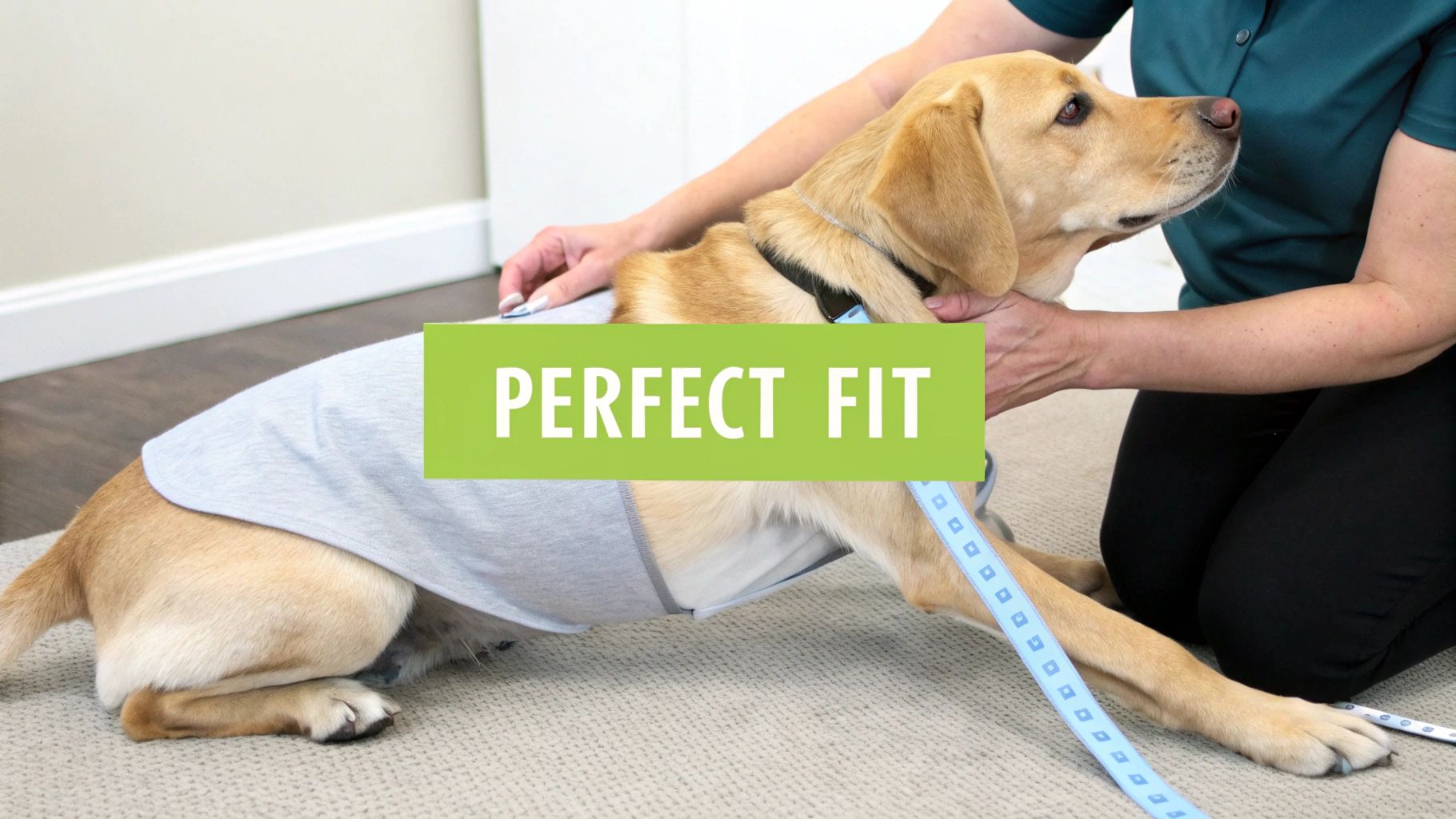
Taking The Key Measurements
A perfect fit depends on two primary measurements. Follow these steps to ensure the harness is both secure and comfortable.
-
Measure the Chest Girth: This is the most critical measurement. Wrap the tape around the widest part of your dog’s chest, typically just behind the front legs. The tape should be snug but not tight.
-
Measure the Neck: Some harnesses also require a neck measurement. Loop the tape around the base of your dog's neck, where a collar would naturally sit. Again, ensure it is snug but not constricting.
Once you have these measurements, consult the sizing chart for the specific harness brand you're considering. Never assume a "Medium" from one brand is the same as another, as sizes vary significantly. This is just as important for harnesses as it is for other gear, like what's discussed in our guide on dog crate sizes.
Confirming The Perfect Fit
When the harness arrives, perform a final fit check before your first trip. This ensures it's adjusted for optimal safety and comfort.
The Two-Finger Test: After putting the harness on and adjusting all straps, slide two fingers between any strap and your dog's body. If you can fit more than two fingers, it's too loose and needs tightening. If you can't fit two fingers underneath, it's too tight and should be loosened.
Taking these simple steps to measure and test the fit transforms a harness from a simple accessory into a reliable, life-saving piece of equipment.
Installing And Maintaining Your Harness For Every Trip
Selecting a high-quality car safety harness is the first step, but correct installation on every trip is just as crucial. A top-tier harness is ineffective if not properly secured. Treat it as a critical safety system that requires your attention before every journey.
The data backs this up: the market for dog car seats and restraints reached approximately USD 600 million in 2023. This is because studies show an unrestrained pet in a collision increases injury risk by a staggering 75%.
Step-By-Step Installation Guide
Proper installation is where safety theory becomes reality. While designs vary, most harnesses use one of two primary anchoring methods.
-
Seatbelt Loop Method: This is the most common technique. With your dog in the back seat, thread the vehicle's seatbelt through the designated loop on the harness. Click the belt into the buckle, then pull the shoulder strap to eliminate any slack for a snug fit.
-
LATCH/ISOFIX System: If your vehicle is a newer model, it likely has LATCH anchors in the rear seat creases. Some harnesses come with tethers that clip directly onto these metal bars for an exceptionally secure connection.
For our canine companions, proper installation is paramount. The same principles of secure fit apply to human occupants, as detailed in this guide to choosing and installing car safety adapters.
Actionable Tip: The most critical adjustment is the tether length. It must be short enough to prevent your dog from reaching the front seats or hitting a window in a sudden stop, but long enough for them to sit and lie down comfortably.
Creating A Maintenance Routine
Like any safety equipment, your dog's harness is subject to wear and tear. A quick, regular inspection ensures it remains in reliable condition.
- Before Every Trip: Perform a quick visual check. Look for frayed straps or visible damage to metal hardware and buckles.
- Monthly Deep Check: Take a minute to inspect the stitching, focusing on high-stress points like the chest plate and tether attachment. Gently pull on the hardware to ensure it is secure.
- After a Messy Adventure: Clean the harness according to the manufacturer’s instructions if it gets dirty. Dirt and grit can abrade webbing fibers over time, weakening the material.
Integrating these quick checks into your travel routine is a small habit that provides a significant safety benefit. For more practical advice, read our complete guide on how to travel with pets. By treating your dog’s harness with the same care as your own seatbelt, you ensure it’s ready to protect them when needed.
Matching The Right Harness To Your Travel Needs
The "best" dog car safety harness is not a one-size-fits-all solution; it's the one that best suits your dog, your vehicle, and your travel habits. A harness ideal for short city drives may not be the best choice for a cross-country road trip. To make an effective decision, analyze your typical travel scenarios.
Your daily routes, driving conditions, and your dog's temperament all factor into the equation. Matching harness features to your real-world needs provides the most reliable protection for your furry co-pilot on every ride.
For Daily Commuting And City Driving
If your car trips are mostly short and local—like visits to the dog park or errands—prioritize convenience and comfort built on a strong safety foundation. These trips often involve lower speeds and frequent stops.
For this type of travel, a harness that is easy to put on and take off is highly practical. Look for a design with a comfortable, padded chest plate that allows freedom of movement while still securing your dog during sudden braking. While full crash-test certification is always ideal, a well-constructed harness with solid metal hardware and a secure seatbelt loop is essential.
Even at a city speed of 30 mph, an 80-pound dog can generate 2,400 pounds of projectile force in a collision. This fact underscores the importance of a proper restraint for everyone’s safety, even on brief trips.
Use this decision tree to determine the best anchor system for your vehicle.
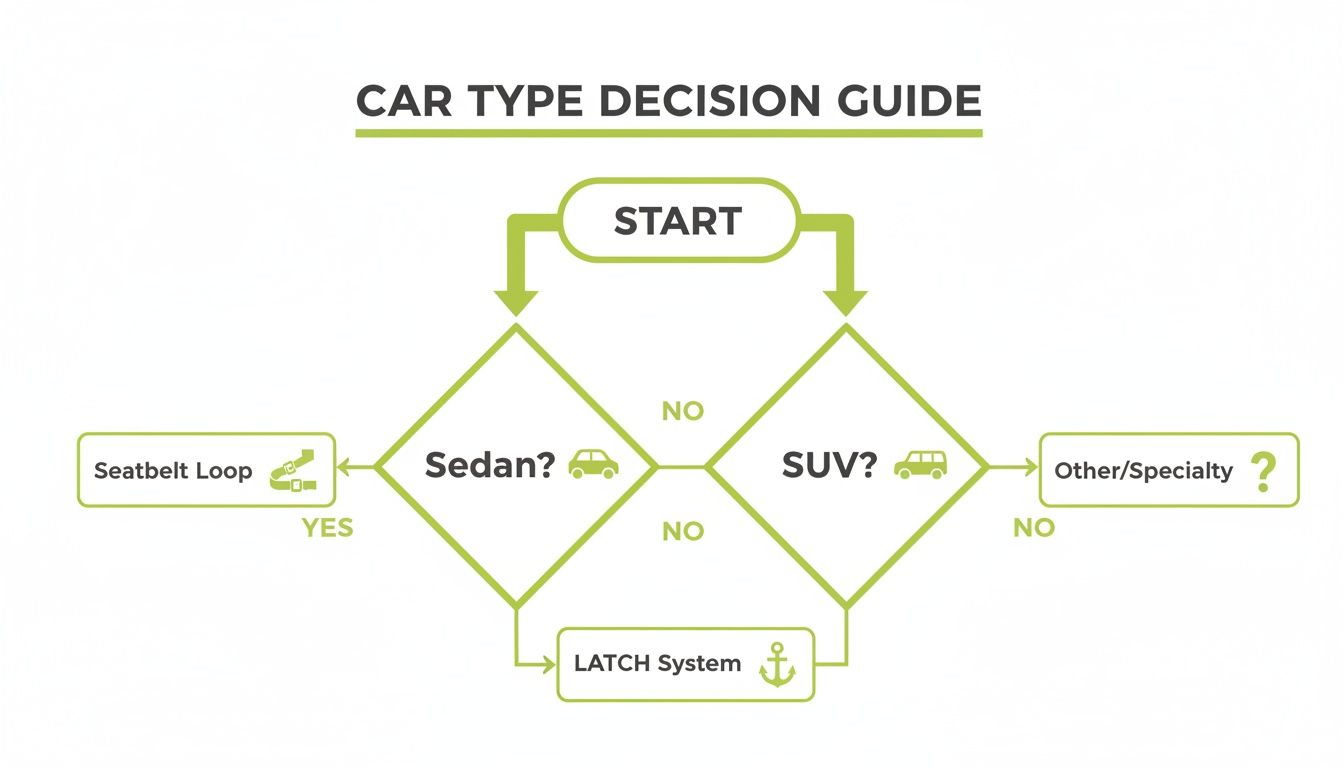
The key takeaway is that while a seatbelt loop works in nearly any car, an SUV or newer vehicle may have a LATCH system that offers a more direct and rigid connection.
For Long-Distance Highway Travel
For long road trips involving extended highway driving, the safety requirements are much higher. Increased speeds translate to greater forces in a potential accident, making a certified crash-tested harness an absolute necessity. This is not an area for compromise.
Here is what to prioritize for long-distance travel:
- Certified Crash Testing: Insist on a harness independently tested by an organization like the Center for Pet Safety (CPS). This certification is your only guarantee that it can withstand a high-impact collision.
- Minimal Rotation Design: The best long-distance harnesses are engineered to limit your dog's forward and lateral movement, keeping them securely in their seat and preventing harness-induced injuries.
- Comfort and Breathability: Since your dog will be harnessed for hours, choose one made from breathable materials with strategic padding to prevent overheating and chafing.
As you evaluate your choices, it’s also helpful to consult detailed dog car seat reviews to see how different products perform over extended use.
For Off-Road And Rugged Adventures
If your travels take you on rough, unpaved roads, you need a harness built for durability and stability. The constant vibrations and jolts of off-road driving place unique stresses on the equipment.
A harness for rugged use must have a secure, snug fit with multiple adjustment points to prevent your dog from sliding. Look for heavy-duty, all-metal hardware and reinforced stitching that can withstand rough conditions. The primary goal is to keep your dog stable and prevent them from being tossed around the cabin on bumpy terrain, which can be as hazardous as a crash. A robust vest-style design often provides the best all-around support.
Your Top Questions About Dog Car Safety, Answered
Navigating the world of dog car safety can be confusing. Getting clear, practical answers to common questions is the best way to ensure your pet is properly protected on every trip.
A frequent question is whether a standard walking harness is sufficient for car travel. The answer is an unequivocal no. A walking harness is designed to withstand gentle pulling, not the violent forces of a car crash. Its stitching and plastic buckles will likely fail on impact, offering no meaningful protection.
How Can I Tell if a Harness is Actually Crash-Tested?
To verify a brand's "crash-tested" claim, look for independent, third-party certification. The Center for Pet Safety (CPS) is the most respected authority. A reputable brand will prominently display their CPS certification and be transparent about their testing methods. Be wary of vague terms like "safety tested" that lack official proof.
Actionable Tip: For an anxious dog, choose a harness that offers a secure, calming fit. A padded, vest-style harness can provide gentle, constant pressure—similar to a thunder shirt—which often helps soothe nervous travelers.
For smaller dogs, avoid using a scaled-down version of a large-dog harness. Instead, select a model specifically engineered for small breeds. This ensures the hardware isn't too heavy and the fit is precise, providing security without overwhelming them.
Finally, you must acclimate your dog to their new harness. Start with short, positive sessions at home, using treats and praise. Progress to having them wear it in a parked car, then take a short trip around the block. Building this positive association is vital for stress-free travel. For more guidance, these general pet travel safety tips are an excellent resource. A little patience now will lead to safer, happier car rides for years to come.
Ready to give your dog top-tier safety and comfort on every trip? The Pet Magasin car safety harness is built with tough materials and an ergonomic design to keep your best friend secure. Check out our collection and travel with total peace of mind by visiting https://www.petmagasin.com today.

Leave a comment