


10 Actionable Tips for Traveling With a Dog in 2026

Traveling with your canine companion can transform a good trip into an unforgettable adventure. The shared experiences, new sights, and exciting smells create memories that last a lifetime. However, ensuring their safety, comfort, and happiness requires more than just an open road and a bag of treats. From navigating busy airports to settling into unfamiliar hotel rooms, every leg of the journey presents unique challenges that demand careful planning and preparation.
This guide moves beyond generic advice to provide a comprehensive collection of actionable tips for traveling with a dog. We've compiled an expert-vetted list designed to address every aspect of your trip, from pre-departure paperwork to on-the-road wellness. You will learn how to select the right gear, like TSA-approved carriers and essential travel kits, and how to maintain a sense of normalcy for your pet by sticking to their routine.
We’ll explore practical solutions for managing travel stress, choosing genuinely pet-friendly accommodations, and preparing for unexpected emergencies. By focusing on detailed, proactive strategies, you can eliminate the guesswork and anxiety often associated with pet travel. Our goal is to equip you with the knowledge and confidence needed to make your shared journey seamless and enjoyable for both you and your furry best friend. Forget the stress and get ready for adventure; this is your definitive checklist for a smooth and successful trip.
1. Invest in a TSA-Approved Pet Travel Carrier
One of the most crucial tips for traveling with a dog via air is to secure the right equipment, starting with a TSA-approved pet carrier. This is a non-negotiable requirement for bringing your pet into the main cabin on nearly every airline. These carriers are specifically designed to meet strict size, ventilation, and security guidelines, ensuring they fit safely under the seat in front of you while providing adequate airflow for your dog's comfort.
A proper carrier serves as your dog's personal safe space during the chaos of travel. It prevents them from escaping in a busy terminal and provides a familiar, enclosed environment that can help reduce anxiety. For example, business travelers who fly weekly with their small companions rely on soft-sided, airline-approved carriers for their flexibility and comfort. Similarly, families embarking on cross-country holiday trips find these carriers indispensable for a smooth journey.
How to Implement This Tip
To make this a seamless part of your travel plan, follow these actionable steps:
- Acclimate Early: Purchase your carrier several weeks before your trip. Leave it open in your living room with a favorite blanket or toy inside. This allows your dog to explore it on their own terms and begin associating it with positive, comfortable experiences rather than the stress of travel day.
- Practice Short Trips: Before the flight, take your dog on short car rides inside the carrier. This helps them get used to the feeling of motion while safely secured, making the actual flight less jarring.
- Check Airline Specifics: While a carrier may be "TSA-approved," each airline has its own specific dimension requirements for under-seat storage. Action step: Before purchasing, visit your airline's "traveling with pets" webpage and note the exact maximum dimensions (length, width, height). Bring these measurements with you when you shop to avoid being turned away at the gate.
Choosing the right model is foundational to a successful flight with your furry friend. If you need help navigating the options, you can find a detailed breakdown of the best airline-approved pet carriers to ensure you select one that meets all necessary regulations and comfort standards.
2. Pack a Comprehensive Pet Travel Kit
One of the most essential tips for traveling with a dog is assembling a comprehensive pet travel kit well before your departure date. A well-organized kit ensures all your dog's health, safety, and comfort essentials are in one accessible place. This organized approach eliminates the stress of last-minute searches for medications or important documents, allowing you to focus on a smooth and enjoyable journey.
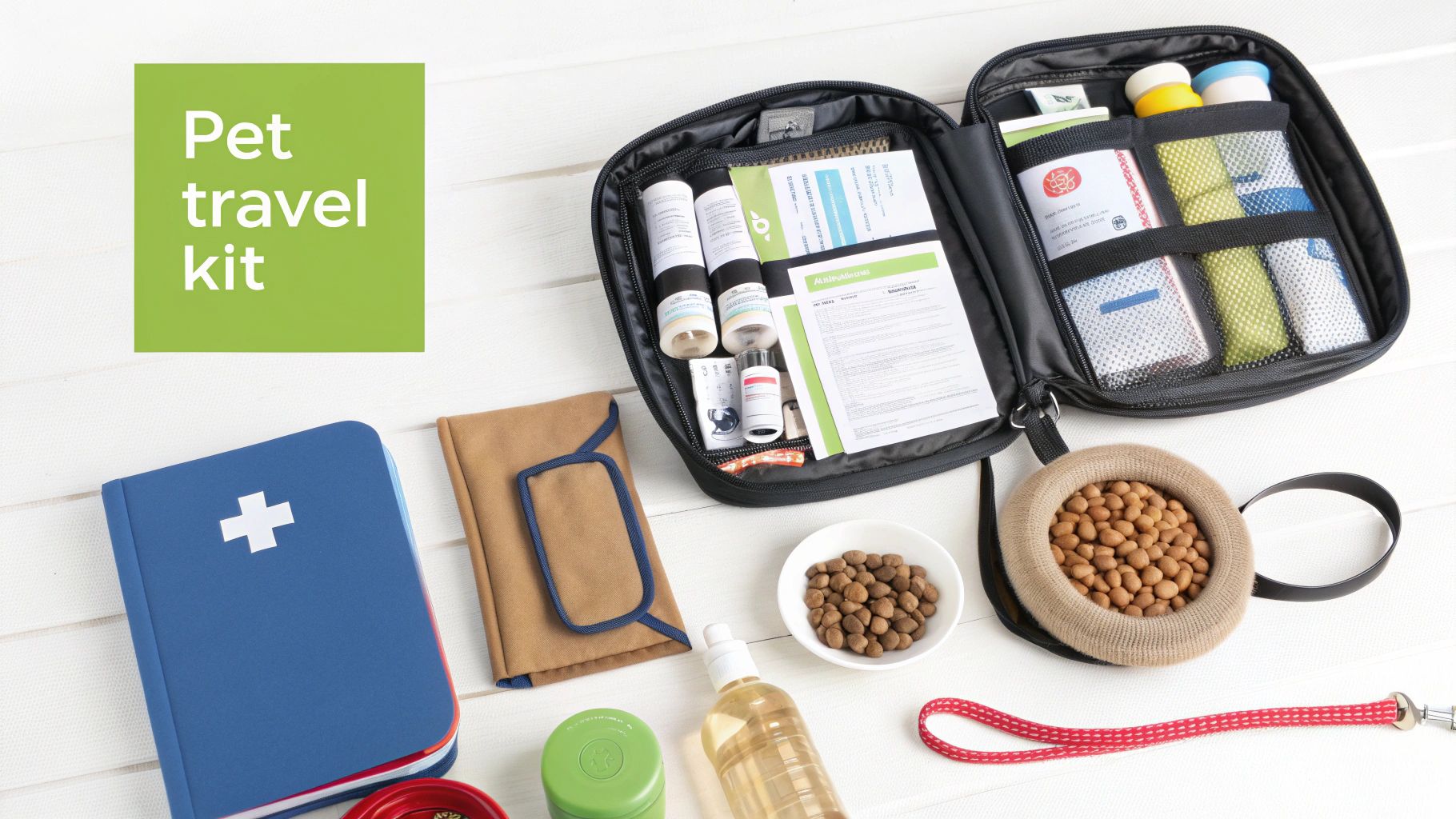
This kit serves as your dog's go-to resource for everything from routine needs to unexpected emergencies. For example, seasoned road trippers keep a kit in their car with first-aid supplies for minor scrapes and collapsible bowls for quick hydration stops. Similarly, international travelers rely on their kits to keep crucial health certificates, vaccination records, and microchip information organized and ready for inspection at customs.
How to Implement This Tip
To build an effective pet travel kit, follow these actionable steps:
- Create a Document Pouch: Use a waterproof zip-top bag or folder to hold copies of your dog’s vaccination records, a recent photo, microchip details, and any required health certificates. Also, include your vet's contact information and a list of emergency vet clinics along your travel route.
- Assemble a Health & Safety Module: In a separate pouch, pack a pet-specific first-aid kit, any necessary medications with clear dosage instructions, and extra food and water. For convenience on long trips, include items like washable pet diapers to manage accidents and prevent messes.
- Organize for Accessibility: Keep everything neatly organized in one grab-and-go bag. To effectively carry all these items, consider using a dedicated doggy bag. Action step: Before you leave, do a "test run" by finding three items in your kit (e.g., vet records, medication, a waste bag) in under 30 seconds to ensure it's organized logically.
Preparing this kit in advance is a foundational step for responsible pet travel, ensuring you're ready for any situation that may arise on the road.
3. Use Washable Pet Diapers for Extended Travel Days
Managing bathroom breaks is one of the biggest challenges on long travel days, especially during extended flights or cross-country road trips where stops are infrequent. One of the most practical tips for traveling with a dog is to use washable pet diapers. This eco-friendly solution prevents accidents in cars, hotel rooms, or carriers, offering peace of mind and keeping your dog comfortable and clean during long stretches without a proper potty break.
Washable diapers are particularly useful for senior dogs who may have less bladder control or for any dog experiencing anxiety-related incontinence in unfamiliar environments. For example, a family on an eight-hour drive can relax knowing an accidental piddle won't soil their car seats. Similarly, travelers with a nervous pup can prevent marking behavior in a new hotel room, avoiding potential cleaning fees and stress for everyone involved.
How to Implement This Tip
To effectively integrate washable diapers into your travel routine, consider these actionable steps:
- Introduce Diapers Before the Trip: Just like with a carrier, have your dog wear the diapers for short periods at home in the weeks leading up to your departure. Reward them with treats and praise to create a positive association, ensuring they are comfortable and not stressed by the new garment.
- Pack a "Diaper Duty" Kit: Create a small, accessible kit for changes. Include a few clean diapers, baby wipes for quick cleanups, and waterproof, odor-proof bags to store used diapers until they can be washed. This keeps messes contained and your travel space sanitary.
- Plan for Laundry: For trips longer than a few days, research your accommodations to see if they offer laundry facilities. Action step: Pack at least three to four diapers. This allows you to have one on your dog, one clean spare, and one or two in the wash, ensuring you never run out.
By planning ahead, washable diapers become an invaluable tool for a stress-free journey. If you are looking for the right fit and absorbency for your companion, you can explore a guide to the best reusable dog diapers to find a high-quality option that suits your dog's specific needs.
4. Maintain Your Dog's Regular Routine and Schedule
One of the most effective yet often overlooked tips for traveling with a dog is to maintain their regular routine as much as possible. Dogs are creatures of habit and thrive on predictability; their daily schedule of feeding, walks, and sleep provides a sense of security. When you're on the road, sticking to this familiar pattern can dramatically reduce their anxiety and prevent behavioral issues in new, stimulating environments.
A consistent routine acts as an anchor for your dog amidst the chaos of travel. It signals that even though the surroundings are different, their core world remains stable and safe. For example, a family on a cross-country road trip can prevent car sickness and restlessness by stopping for potty and stretch breaks at the same intervals their dog is used to at home. Similarly, a vacationer who maintains their dog's 7 AM breakfast and 9 PM final walk will likely find their companion adjusts to a hotel room much more peacefully.
How to Implement This Tip
To make this a seamless part of your travel plan, follow these actionable steps:
- Set Alarms for Key Events: Use your phone to set recurring alarms for feeding times, medication, and walks that match your at-home schedule. This ensures you don't lose track of time while sightseeing.
- Pre-Adjust for Time Zones: If traveling across time zones, begin gradually shifting your dog's schedule by 15-30 minutes each day in the week leading up to your trip. This helps their internal clock adjust slowly, preventing a sudden shock to their system.
- Pack Familiar Cues: Bring enough of your dog's regular food to last the entire trip to avoid digestive upset from an abrupt diet change. Using their familiar food and water bowls can also provide a comforting sense of normalcy.
By prioritizing your dog’s established schedule, you provide a powerful tool for managing their stress. This simple act of consistency helps them feel secure, making the travel experience more enjoyable for everyone involved.
5. Ensure Proper Hydration and Nutrition During Travel
Maintaining your dog's regular diet and hydration schedule is just as crucial on the road as it is at home. Travel can be stressful and physically demanding, and a sudden change in food or lack of water can lead to dehydration, digestive upset, or lethargy. Proper planning ensures your dog remains healthy, energetic, and comfortable throughout your journey, making this one of the most fundamental tips for traveling with a dog.
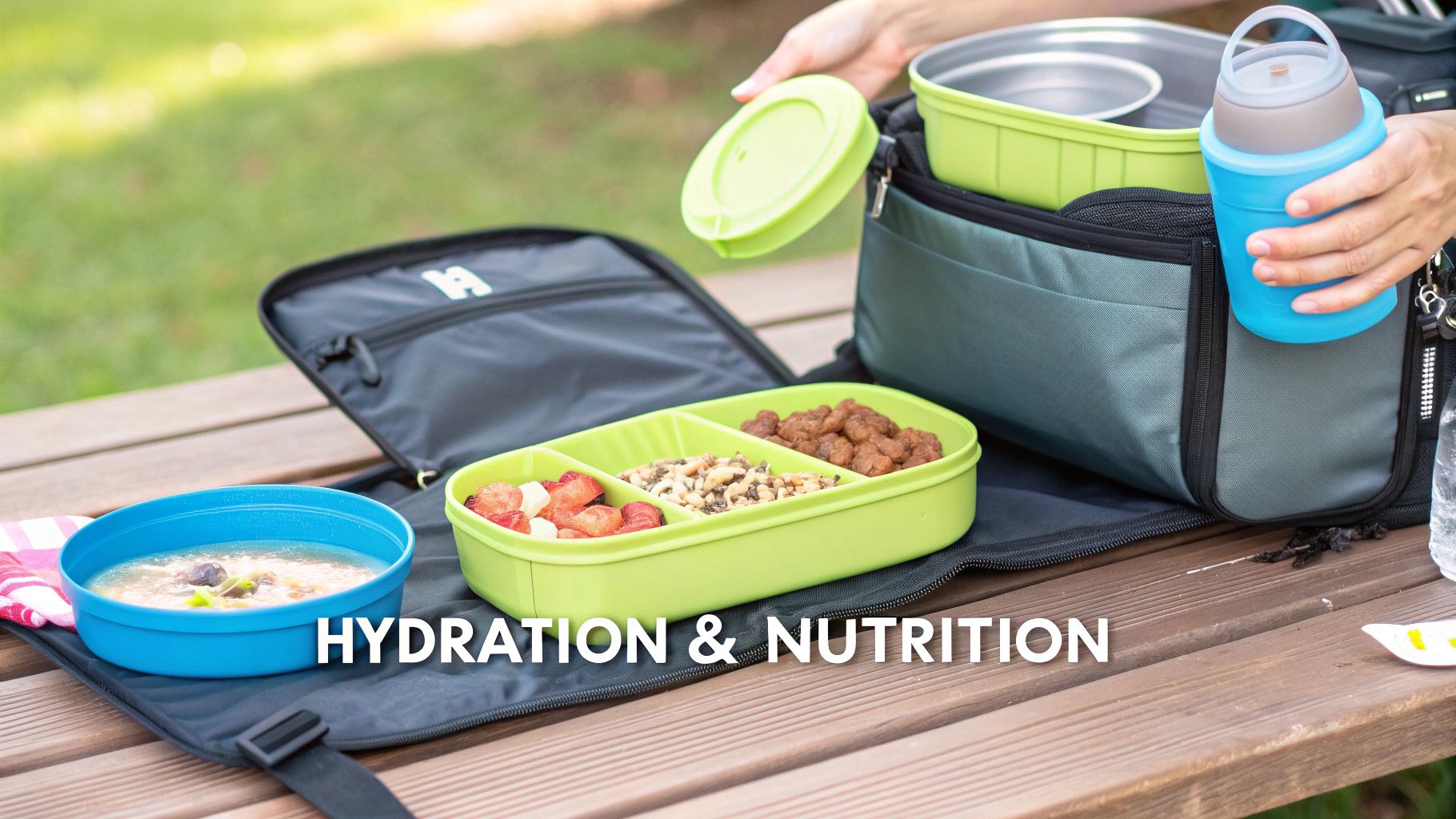
A consistent routine provides a sense of normalcy that can calm an anxious pet. For instance, a family on a cross-country road trip can prevent car sickness by offering small, frequent sips of water from a collapsible bowl at rest stops every two hours. Likewise, adventurers taking their dog on a hiking trip rely on portable water bottles and pre-portioned meals to maintain peak energy levels on the trail. This simple foresight prevents health issues and keeps the focus on fun.
How to Implement This Tip
To integrate this practice into your travel preparations, follow these actionable steps:
- Pre-Portion Meals: Pack their usual kibble or wet food in airtight, single-serving containers or bags. This simplifies meal times and prevents you from having to measure food on the go. Abrupt dietary changes are a common cause of stomach upset in dogs.
- Utilize Travel-Friendly Gear: Invest in collapsible silicone bowls for both food and water. They are lightweight, pack flat, and are easy to clean. A dedicated dog-friendly water bottle or portable dispenser is also essential for providing fresh water on the go, whether in a car or on a trail. For more advanced outdoor adventures, you may want to review additional hiking hydration tips and tricks to keep your companion safe.
- Schedule Hydration Stops: During long car rides, plan to stop every 2-3 hours specifically to offer your dog water. Action step: Set a timer on your phone or GPS as a reminder. Never let your dog drink from puddles or stagnant water sources, which can contain harmful bacteria or parasites.
6. Obtain Proper Travel Documentation and Health Certificates
Navigating the paperwork for your pet is one of the most critical tips for traveling with a dog, especially when crossing state or international borders. Depending on your destination, you may need a specific collection of documents, including vaccination records, a Certificate of Veterinary Inspection (CVI), and microchip registration. This isn't just bureaucratic red tape; it's a legal requirement designed to prevent the spread of disease and ensure your pet's health and safety.
These documents serve as official proof that your dog is healthy and meets the entry requirements of your destination. For instance, families relocating internationally rely on pet passports and USDA-endorsed health certificates to clear customs. Even for domestic travel, like a road trip to a state with strict entry laws like Hawaii, or checking into a pet-friendly hotel, having proof of rabies vaccination and a recent health check can prevent significant delays and potential quarantine.
How to Implement This Tip
To ensure your documentation is in perfect order, follow these actionable steps:
- Consult Your Vet Early: Schedule an appointment with your veterinarian at least four to six weeks before your trip. They are your best resource for understanding the specific health requirements for your destination and can issue the necessary certificates and update vaccinations.
- Verify Destination Requirements: Action step: Use the USDA Animal and Plant Health Inspection Service (APHIS) website for state-to-state travel rules and the destination country's consulate website for international regulations. Print this out as a checklist. Do not rely on secondhand information, as requirements can be complex and time-sensitive.
- Digitize and Duplicate: Make physical and digital copies of every document. Store photos on your phone and in a cloud service like Google Drive. This backup is invaluable if the original paperwork gets lost or damaged during your travels.
- Check Microchip Information: Before you go, call your microchip provider or log into their website to confirm your contact information is up to date. This is often a mandatory part of international travel documentation.
Properly preparing your dog's travel papers is non-negotiable for a hassle-free journey. Starting the process well in advance will help you avoid last-minute stress and ensure your companion is welcome wherever you go.
7. Choose Pet-Friendly Accommodations in Advance
Arriving at your destination only to discover your hotel has a strict no-pets policy is a nightmare scenario for any traveling dog owner. A crucial tip for traveling with a dog is to secure welcoming, pre-approved accommodations long before you hit the road. This proactive step eliminates stress and ensures both you and your pet have a comfortable, safe place to rest and recharge after a day of travel or exploration.
Booking in advance gives you access to the best options, from budget-friendly chains to luxury resorts that roll out the red carpet for their four-legged guests. For example, many families planning a road trip use platforms like BringFido to find hotels like La Quinta or Best Western that not only allow pets but also offer amenities like designated green spaces. Similarly, travelers seeking a home-like experience can filter for "pets allowed" on Airbnb or Vrbo, securing properties with fenced-in yards for their dog to enjoy.
How to Implement This Tip
To find the perfect pet-friendly haven for your trip, integrate these steps into your planning:
- Use Pet-Specific Search Tools: Start your search on dedicated pet travel websites like BringFido or GoPetFriendly. These platforms consolidate listings and, most importantly, feature reviews from other pet owners, giving you real-world insight into the experience.
- Verify Policies Directly: Even if a hotel is listed as pet-friendly online, your action step is to call the property directly to confirm their current policy before booking. Ask specifically about breed or size restrictions, pet fees, and rules about leaving pets unattended.
- Request a Suitable Room: When making your reservation, request a ground-floor room near an exit. This makes late-night and early-morning potty breaks significantly easier and quicker, minimizing disruption to other guests. Also, ask about nearby parks or safe walking areas.
- Read the Fine Print: Carefully review the hotel's pet rules upon check-in. Most establishments require that pets are not left unattended in the room. Planning ahead ensures your daily itinerary aligns with these regulations, preventing any unexpected issues during your stay.
8. Prepare a Comfortable Travel Space in Your Vehicle
When planning a road trip, one of the most important tips for traveling with a dog is to dedicate a secure and comfortable space for them in your vehicle. An unrestrained dog can become a dangerous distraction for the driver and is at high risk of injury during a sudden stop or collision. Properly setting up their travel area not only ensures their safety but also protects your car's interior and makes the journey more pleasant for everyone.
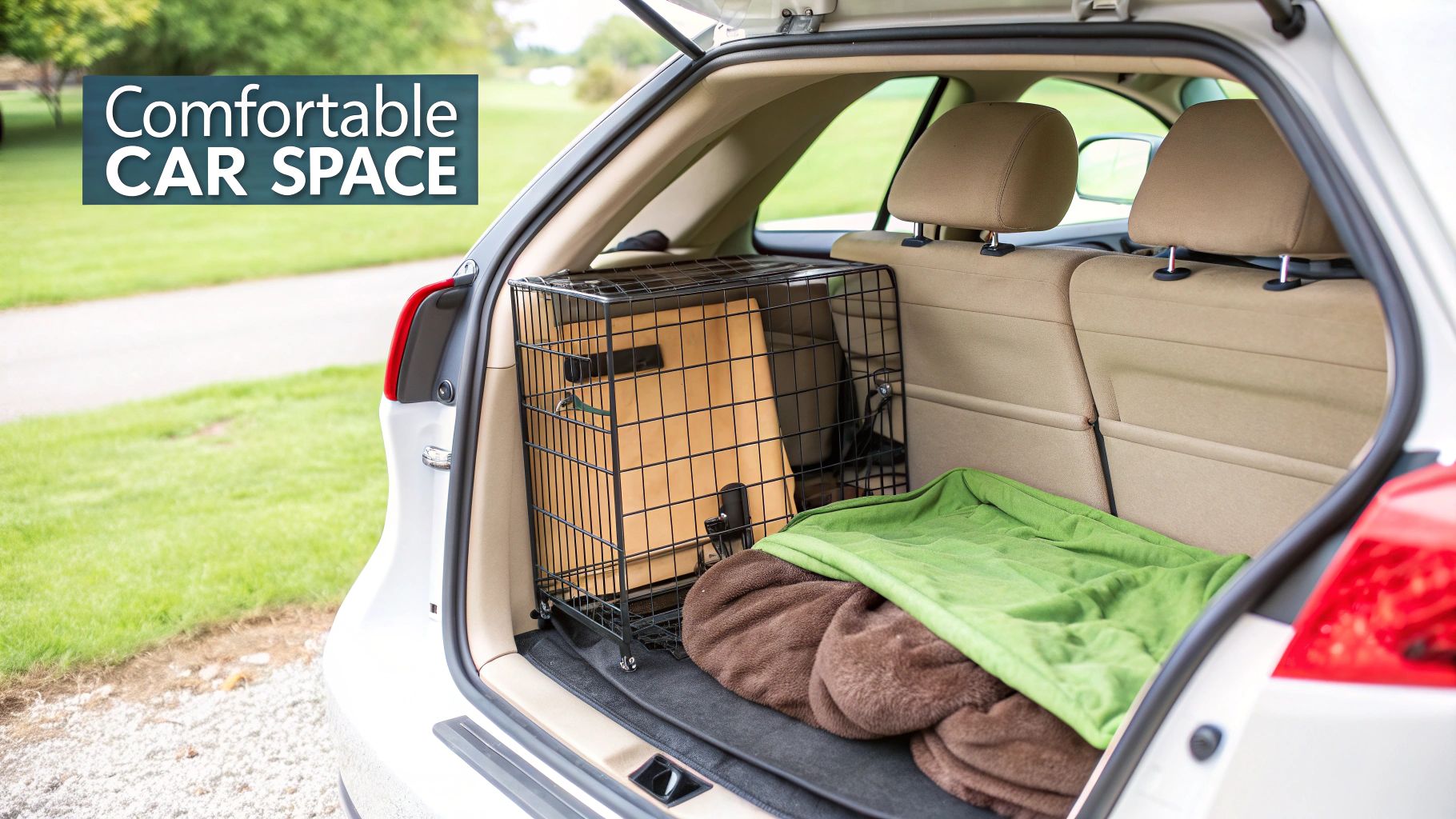
This designated space acts as your dog's safe zone, minimizing their anxiety and preventing them from interfering with your driving. For instance, families on cross-country road trips often use a sturdy, well-ventilated crate secured in the cargo area. Similarly, daily commuters might use a high-quality seat belt harness to keep their companion safely in the back seat, preventing them from jumping into the front.
How to Implement This Tip
To create a safe and comfortable car environment for your dog, follow these actionable steps:
- Choose the Right Restraint: Select a crash-tested travel crate or a specialized dog seat belt harness. A crate offers a contained, den-like space, while a harness allows more freedom of movement while still ensuring safety. Action step: Never attach a seatbelt tether to your dog's collar, as this can cause serious neck injury in a sudden stop. Always use a harness.
- Enhance Comfort and Cleanliness: Line the space with a familiar blanket and a washable, non-slip mat to prevent sliding during turns. This not only makes the ride more comfortable but also simplifies cleanup after the trip.
- Regulate Temperature: Use sunshades on the windows to keep the area cool and block direct sunlight. This is especially crucial for preventing overheating, even when the air conditioning is on.
- Secure All Equipment: Ensure any crate or carrier is firmly secured using tie-down straps or positioned so it cannot shift or tumble during transit. The goal is to create a stable environment that feels safe for your pet.
A proper vehicle setup is non-negotiable for safe travels. If you're considering a harness, you can explore the top options for dog car safety harnesses to find one that provides maximum protection and comfort for your furry co-pilot.
9. Manage Stress and Anxiety with Preparation and Comfort Items
Travel can be a major source of stress for dogs, who thrive on routine and familiar surroundings. New sights, sounds, and smells, combined with the motion of a car or plane, can trigger anxiety. Proactively managing this stress with comfort items and calming techniques is a crucial tip for traveling with a dog, ensuring the journey is pleasant for both of you and preventing potential behavioral issues.
A well-prepared comfort strategy turns an unfamiliar hotel room or vehicle into a safe haven. It gives your dog a sense of normalcy and security, which can significantly reduce signs of stress like excessive panting, whining, or destructive behavior. For instance, a dog prone to separation anxiety might settle quickly in a hotel room with a pheromone diffuser and their favorite bed from home. Similarly, an otherwise restless dog may sleep soundly through a long car ride when surrounded by familiar blankets and toys.
How to Implement This Tip
To effectively manage your dog’s travel anxiety, integrate these steps into your preparation:
- Pack Familiar Comforts: Bring items that smell like home. A favorite blanket, a well-loved toy, or even an unwashed t-shirt of yours can provide immense comfort. Place these items in their carrier and sleeping area at your destination.
- Explore Calming Aids: Action step: Weeks before your trip, talk to your veterinarian about options for managing travel stress. They can advise on natural calming supplements, pheromone sprays (like Adaptil), or prescription anti-anxiety medication if necessary. Never administer medication without professional guidance.
- Create a Safe "Den": Whether in the car or a hotel, set up a designated safe space for your dog. Use their travel crate or bed and surround it with their familiar items. This creates a predictable retreat where they can decompress away from overstimulation.
- Provide Mental Stimulation: Pack a puzzle toy or a long-lasting chew to give your dog a calming activity that distracts them from travel stressors. This is especially useful for keeping them occupied and quiet in a hotel room.
10. Research and Locate Emergency Veterinary Services Along Your Route
One of the most responsible tips for traveling with a dog is to plan for the unexpected by identifying emergency veterinary services before you even leave home. This crucial preparation involves mapping out 24-hour animal hospitals and clinics along your entire travel route and near your destination. Having this information organized and accessible means you can act quickly and decisively if your dog experiences a sudden illness or injury, potentially saving valuable time in a crisis.
This proactive step provides immense peace of mind, transforming a potential panic-inducing situation into a manageable one. For example, a family on a cross-country road trip with their senior Golden Retriever can travel with confidence, knowing exactly where the nearest emergency vet is at every major stop. Likewise, adventurers hiking in remote areas can pre-identify the closest clinics, understanding the potential travel time needed to reach them if an emergency like a snake bite or injury occurs.
How to Implement This Tip
To integrate this safety measure into your travel preparations, follow these actionable steps:
- Map Your Vets: Before your trip, use Google Maps to find and save the locations of emergency veterinary clinics for your entire route. For each major stop or overnight location, identify at least one 24-hour facility.
- Create a Contact List: Compile a simple document or note on your phone with the clinic's name, address, and phone number. Action step: Call each clinic ahead of time to confirm they are a 24-hour emergency facility and accept new patients.
- Keep Physical and Digital Copies: Save your vet list digitally on your phone and also keep a printed copy in your dog’s travel bag or your car's glove compartment. This ensures access even if your phone battery dies or you lose service.
- Assemble a Medical Summary: In your document pouch, include a one-page summary of your dog's medical history: vaccination dates, current medications/dosages, and any chronic conditions. This information is vital for an unfamiliar vet to provide effective emergency care.
By front-loading this research, you equip yourself to be a calm and effective advocate for your pet's health, no matter where your travels take you. For a comprehensive overview of how to handle pet emergencies on the go, the American Veterinary Medical Association offers excellent resources and first-aid tips.
10 Dog Travel Tips Comparison
| Item | 🔄 Implementation Complexity | ⚡ Resource Requirements | 📊 Expected Outcomes | 💡 Ideal Use Cases | ⭐ Key Advantages |
|---|---|---|---|---|---|
| Invest in a TSA-Approved Pet Travel Carrier | 🔄 Moderate — size fit, airline notice, acclimation | ⚡ Purchase + possible airline fees; low ongoing cost | 📊 High — cabin access, lower travel stress for small dogs | 💡 Air travel with small breeds, business trips, cross-country flights | ⭐ Safe, familiar space; cabin travel vs. cargo |
| Pack a Comprehensive Pet Travel Kit | 🔄 Moderate — assemble and maintain kit | ⚡ Moderate — supplies, storage space, periodic restock | 📊 High — faster response to issues, fewer missing items | 💡 Road trips, international travel, emergency preparedness | ⭐ Keeps essentials organized and accessible |
| Use Washable Pet Diapers for Extended Travel Days | 🔄 Low–Moderate — sizing, acclimation, laundering | ⚡ Low ongoing cost but needs laundry access and multiple sets | 📊 Medium–High — prevents accidents; eco-friendly over time | 💡 Long drives, senior dogs, incontinence management | ⭐ Reusable, cost-effective, reduces cleanups |
| Maintain Your Dog's Regular Routine and Schedule | 🔄 Moderate — planning and time management | ⚡ Low — time and consistency required | 📊 High — reduced anxiety, stable behavior and digestion | 💡 All travel types; especially time-zone changes and long trips | ⭐ Behavioral stability and better health outcomes |
| Ensure Proper Hydration and Nutrition During Travel | 🔄 Low — packing and offering water/food regularly | ⚡ Low–Moderate — collapsible bowls, airtight containers, extra water | 📊 High — prevents dehydration and energy loss | 💡 Hiking, road trips, trail days, flights with hotel stays | ⭐ Maintains health and consistent diet on the road |
| Obtain Proper Travel Documentation and Health Certificates | 🔄 High — vet appointments, country/state rules, lead time | ⚡ Moderate–High — vet fees, permits, time for paperwork | 📊 High — legal compliance; avoids quarantine/denied entry | 💡 International moves, regulated destinations, airline rules | ⭐ Ensures legal entry and smoother travel processing |
| Choose Pet-Friendly Accommodations in Advance | 🔄 Moderate — research, calls, booking adjustments | ⚡ Moderate — possible pet fees, time to vet options | 📊 High — predictable stays and fewer surprises | 💡 Multi-night trips, families, vacation rentals | ⭐ Guarantees pet-appropriate amenities and clear policies |
| Prepare a Comfortable Travel Space in Your Vehicle | 🔄 Moderate — install crate/barrier and secure tie-downs | ⚡ Moderate — crate, mats, harnesses, reduced cargo space | 📊 High — increased safety, less driver distraction | 💡 Road trips, daily commuting, long drives | ⭐ Enhances safety and cleanliness in vehicle travel |
| Manage Stress and Anxiety with Preparation and Comfort Items | 🔄 Moderate — acclimation, vet consult for meds if needed | ⚡ Low–Moderate — bedding, pheromones, calming aids | 📊 High — reduced anxiety-related behaviors, better rest | 💡 Anxious dogs, hotel stays, long or unfamiliar trips | ⭐ Improves comfort and reduces behavioral incidents |
| Research and Locate Emergency Veterinary Services Along Your Route | 🔄 Low–Moderate — mapping and contact collection | ⚡ Low — time to research, store digital/print copies | 📊 High — faster emergency care and peace of mind | 💡 Remote routes, long-distance travel, senior or ill dogs | ⭐ Enables rapid response in medical emergencies |
Start Your Journey with Confidence and Care
Embarking on an adventure with your canine companion transforms a simple trip into a shared experience, strengthening your bond and creating unforgettable memories. As we've explored, the secret to a seamless and joyful journey isn't luck; it's meticulous preparation. The difference between a stressful ordeal and a wonderful vacation lies in the details you manage before you even leave the driveway. By internalizing these comprehensive tips for traveling with a dog, you are not just planning a trip, you are engineering a positive experience for your most loyal friend.
The journey from your front door to your final destination is filled with variables, but your preparation acts as a constant source of stability. Think of it as building a "bubble of familiarity" for your dog. This bubble is constructed from their favorite blanket in a comfortable carrier, the predictable timing of their meals, and the reassuring presence of their usual toys. It's reinforced by your calm demeanor, which is only possible when you've done the legwork: securing health certificates, pre-booking pet-friendly hotels, and mapping out emergency vet clinics. This foresight is the ultimate expression of care.
Recapping Your Path to a Perfect Pet-Friendly Trip
Let's distill the core principles we've covered into actionable takeaways. These are the cornerstones of successful travel with your dog:
- Safety First, Always: Your primary responsibility is your dog's well-being. This extends from choosing a crash-tested, well-ventilated carrier and securing them properly in your vehicle to having emergency contacts readily available. Proactive safety measures prevent accidents and provide peace of mind.
- Consistency is Comfort: Dogs are creatures of habit. Maintaining their feeding, walking, and potty schedules as closely as possible minimizes stress. Familiarity is their anchor in a sea of new sights, sounds, and smells. Using tools like washable dog diapers can help manage this, especially during long transit days where routine is inevitably disrupted.
- Proactive Planning Prevents Panic: Last-minute scrambling is the enemy of calm travel. Booking accommodations early, confirming pet policies, and gathering all necessary paperwork well in advance eliminates major sources of travel-day anxiety for both you and your pet. A well-organized travel kit, packed with everything from food to first-aid, is your best friend on the road.
Key Insight: Successful travel with your dog isn't about avoiding challenges; it's about being so well-prepared that challenges become minor inconveniences rather than trip-ruining crises. Your preparation is a direct investment in a smoother, more enjoyable adventure for everyone.
Moving from Knowledge to Action
Now that you have this blueprint, the next step is to put it into practice. Don't wait until the week before your big vacation to start. Begin by acclimating your dog to their travel carrier on short trips around town. Do a trial run of packing their travel kit to see what you might be missing. Use our checklists as a living document, customizing them to your dog's specific needs, personality, and medical requirements.
Mastering these approaches transforms you from a pet owner who simply brings their dog along into a skilled and considerate travel partner. It demonstrates a deep understanding of your dog's needs, elevating their comfort and ensuring the trip is as exciting for them as it is for you. The reward is immeasurable: watching your dog joyfully explore a new hiking trail, doze peacefully in a new hotel room, or greet new people with a happy wag, all because you laid the groundwork for them to feel safe, secure, and cherished. Your adventure awaits, and now you have the tools to make it a resounding success.
Ready to equip yourself for the journey ahead? Explore the full range of thoughtfully designed travel and care products at Pet Magasin. From durable carriers to essential grooming tools and our reliable washable diapers, we provide the high-quality gear you need to implement these expert tips for traveling with a dog with confidence. Visit us today at Pet Magasin and make your next adventure the best one yet.

Leave a comment