


Finding the Best Airline Approved Pet Carrier

When you’re looking for the best airline-approved pet carrier, a few things should be at the top of your list: a soft-sided design, plenty of ventilation, and secure, locking zippers. The best carriers are all about flexibility, designed to squish just enough to fit under different airline seats while keeping your pet safe and comfortable for the whole flight.
Your Guide to Stress-Free Pet Air Travel
Flying with a pet adds a whole new layer to your travel plans. What should be a simple flight booking can quickly feel like a complicated puzzle, and the most important piece is the carrier. It's more than just a bag; it's your pet's safe space and the key to a smooth journey. But that little phrase, "airline-approved," can be seriously misleading and give a lot of pet owners a false sense of security.
This guide is here to provide actionable steps to clear up that confusion. We’ll show you how to select the right carrier by focusing on your airline's specific rules and your pet's safety and comfort.
Why Pet Travel Is on the Rise
More and more, we want to bring our furry family members along for the ride. This idea of "pet humanization" has turned pet carriers from a niche product into a must-have travel accessory. Today, over 2 million pets take to the skies on commercial flights in the U.S. every year.
This travel boom has created a huge demand for carriers that can meet strict airline rules. The pet travel accessories market, recently valued at USD 6.8 billion, is expected to hit USD 12.1 billion by 2034. That’s a whole lot of owners committed to traveling safely with their pets. If you're curious, you can explore the full pet travel market analysis on gminsights.com to see just how much this space is growing. This trend means you have more choices than ever, but it also makes understanding the rules even more important.
The Real Goal: Finding a Compliant Carrier
The biggest headache for any pet owner is trying to figure out the maze of rules that change from one airline to the next. A carrier that’s perfect for a Delta flight might be a no-go for United because their under-seat dimensions are slightly different. Our goal is to give you the practical knowledge you need to turn that travel anxiety into confidence.
The most crucial thing to remember is this: "Airline-approved" is a guideline, not a guarantee. On travel day, your specific airline's policy is the only one that truly matters.
We’ll walk you through everything you need to know, from the difference between TSA and airline regulations to how to measure your pet the right way. You'll learn what safety features you absolutely can't skip and how to prep for a smooth trip through the airport, ensuring you and your best friend can travel with total peace of mind.
Navigating Airline Pet Carrier Regulations
When you're trying to find the best airline-approved pet carrier, your first action isn't picking a brand—it's understanding the rules. The biggest source of confusion for most pet owners is the difference between TSA guidelines and individual airline policies.
Think of it this way: the TSA is the main security guard for the entire airport, while each airline is a specific tenant with its own set of house rules.
The TSA’s main job is security. Their rules are all about making sure nothing dangerous gets onto the plane. They'll ask you to take your pet out of the carrier so the bag can be X-rayed, but they typically won't be measuring its dimensions or weighing your pet.
Your airline, however, is focused on safety and space inside the cabin. Their rules are incredibly specific about carrier size, weight, construction, and where it has to be stored. This is exactly where travelers get into trouble, assuming a "TSA-approved" label means they're all set.
TSA vs Airline Carrier Policies At a Glance
The difference is absolutely critical. The TSA makes sure your pet isn't a security risk, while the airline makes sure your pet and its carrier fit safely on their specific plane. One check is about what's in the bag; the other is about the bag itself.
This quick table breaks down the core differences in what each party is looking for.
| Requirement Area | TSA Guideline (Security Focus) | Typical Airline Rule (In-Cabin Focus) |
|---|---|---|
| Primary Goal | To screen for security threats and prohibited items. | To ensure pet safety, passenger comfort, and carrier fit under the seat. |
| Carrier Inspection | Carrier must be empty to go through the X-ray machine. Pet is carried or walked through the metal detector. | Carrier is visually inspected at check-in or the gate for size, ventilation, and condition. |
| Size & Weight | No specific size or weight limits for the carrier or pet. | Strict maximum dimensions (e.g., 18"x11"x11") and a combined pet/carrier weight limit (e.g., 20 lbs). |
| "Approval" | No official "TSA-Approved" carrier designation exists. Their concern is the screening process. | Carriers must meet the airline's specific, published requirements to be allowed on board. |
At the end of the day, the airline gets the final say. A carrier can pass through the TSA checkpoint without a problem but still be rejected at the gate if it’s one inch too tall for that airline’s under-seat space.
To avoid a travel day disaster, you must check your airline's pet policy page every single time you fly. These rules can—and do—change. What was okay six months ago might not be today. Always find the "traveling with pets" section on their website and print out the policy to bring with you.
This simple infographic lays out the core steps for a smooth trip.
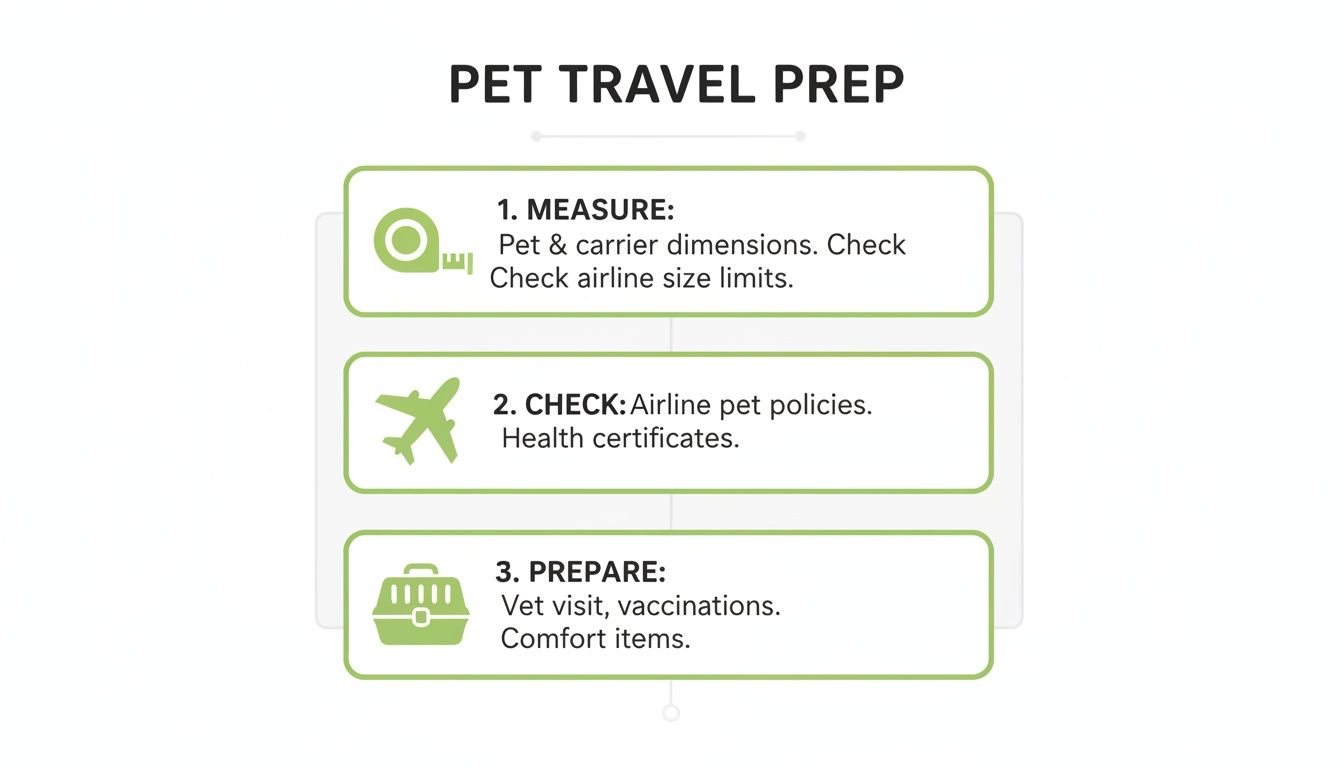
As the guide shows, measuring your pet, checking the specific airline's rules, and prepping the carrier are the essential building blocks for a stress-free journey.
Soft-Sided vs. Hard-Sided Carriers
Once you review your airline's rules, you’ll see a clear preference for one type of carrier for in-cabin travel: the soft-sided carrier. While hard-sided crates are mandatory for pets traveling as cargo, they're just too rigid and bulky for the cramped space inside the cabin.
Airlines prefer soft-sided carriers because they're flexible. Here’s why they usually make the best airline-approved pet carrier for flying with you in the cabin:
- Under-Seat Fit: This is the biggest advantage. They can compress slightly to fit into tight spots. The space under an airline seat is rarely a perfect box, and a soft carrier can squish down an inch or two to fit without bothering your pet.
- Comfort and Portability: They are much lighter and easier to carry through a busy airport. Many also come with padded shoulder straps and handy storage pockets for things like treats and vet documents.
- Pet Well-Being: For a nervous pet, the pliable material can feel cozier and less intimidating than being in a hard plastic box.
However, you still have to make sure the carrier meets the airline's size rules. Most airlines will list maximum dimensions, like 18" L x 11" W x 11" H. A soft carrier gives you a little wiggle room, but it can't be way over these limits.
If you need a more detailed walkthrough, our guide to airline pet carrier size requirements breaks down exactly how to measure your pet and match the carrier to specific airline rules. This step isn't optional—it's what ensures your pet is allowed on board. Making the right choice here is the difference between a smooth check-in and a canceled trip.
Choosing the Perfect Carrier Size and Type
Picking out the right carrier is way more than just checking a box on an airline's list. It's really about creating a safe, cozy little den for your pet during what can be a pretty stressful day of travel. The real goal here is to find a carrier that not only follows the airline's rules but also gives your pet just enough room to feel secure.
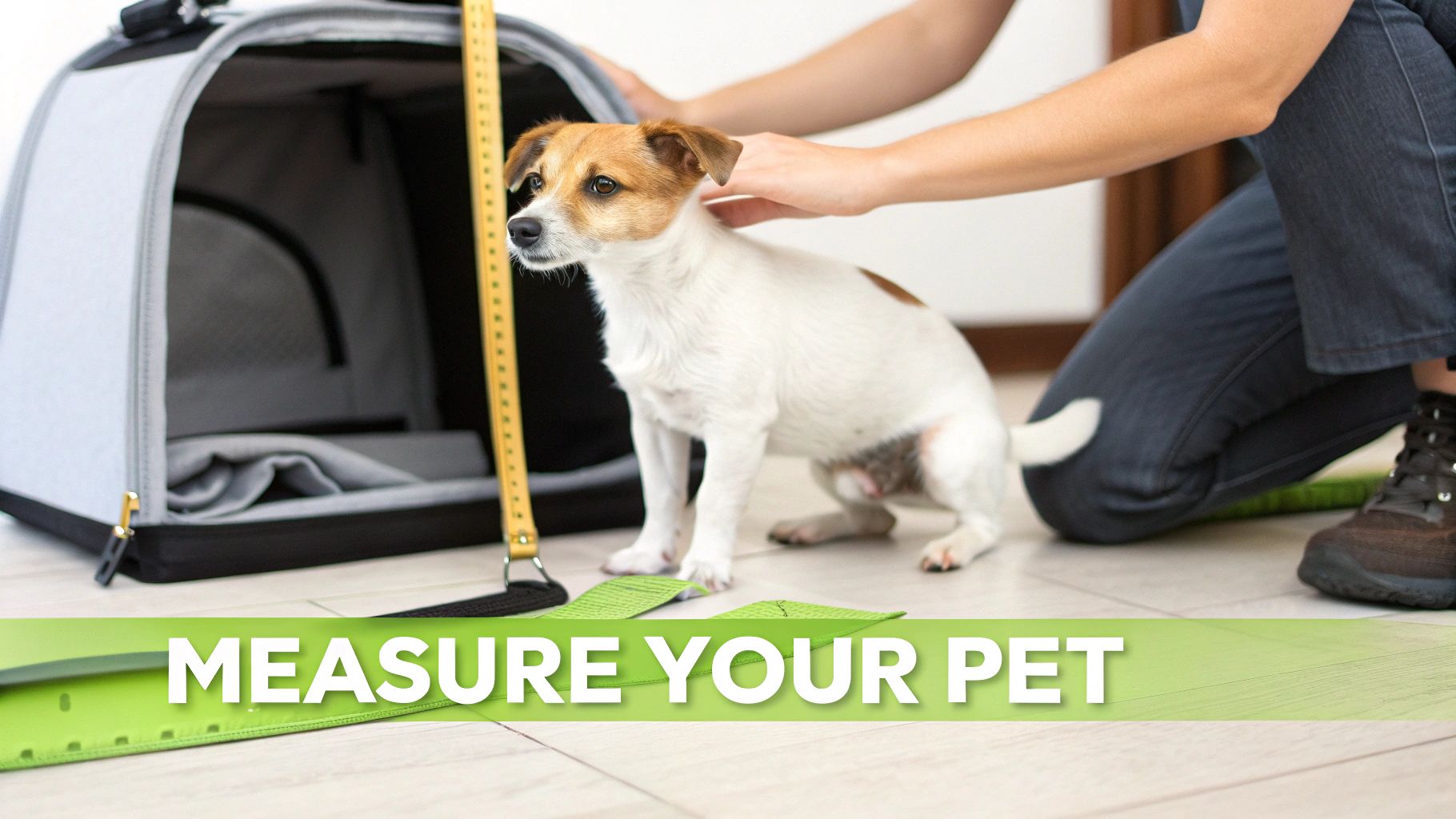
It all starts with two simple but super important measurements: your pet’s length and height. If a carrier is too small, it can cause real discomfort and distress. On the other hand, one that’s too big might not even fit under the seat and won't give your pet that secure, den-like feeling they need when they're nervous.
How to Correctly Measure Your Pet for a Carrier
Think of this like getting your pet fitted for a custom travel suit—you want to be precise. Grab a soft measuring tape and let's get started while your pet is standing in a relaxed, natural position.
- Measure the Length: Start right at the base of the neck (between the shoulder blades) and measure all the way to the base of the tail. Don't include the tail itself in this measurement!
- Measure the Height: With your pet standing, measure from the floor to the top of their head or the tips of their ears, whichever point is higher.
These two numbers are your foundation. A carrier that fits properly should be a few inches longer and taller than your pet. This gives them enough space to stand up, turn around, and lie down comfortably without feeling squished.
The "turn around" rule is a big one for every airline. If your pet can't easily reposition itself inside the carrier, you'll likely be denied boarding. This is all about animal welfare, so it’s completely non-negotiable.
Soft-Sided vs Hard-Sided Carriers
The kind of carrier you choose really boils down to where your pet will be flying. If they're in the cabin with you, a soft-sided carrier is almost always your best bet. For pets traveling in cargo, a hard-sided carrier is an absolute must.
A soft-sided carrier is perfect for in-cabin travel for a couple of key reasons. Its flexible sides can squish down just enough to fit under those notoriously tight and oddly shaped spaces beneath airline seats. That little bit of give can be the difference between sliding it under easily and being turned away at the gate. Plus, they’re lighter and a whole lot easier to carry through a busy airport.
Hard-sided carriers, however, are built tough for the cargo hold. They offer much better protection from shifting luggage and bumps along the way, but they're just too rigid and bulky for the passenger cabin.
Here’s a quick comparison to help you figure out what you need.
| Feature | Soft-Sided Carrier (In-Cabin) | Hard-Sided Carrier (Cargo) |
|---|---|---|
| Best For | Fitting under airline seats and easy portability. | Maximum protection and security in the cargo hold. |
| Flexibility | High. Can compress slightly to fit tight spaces. | None. Rigid construction offers no give. |
| Airline Preference | Strongly preferred for in-cabin travel by most major airlines. | Mandatory for any pet traveling as checked baggage or cargo. |
| Pet Comfort | Often perceived as cozier and less intimidating for anxious pets. | Can feel more exposed, but offers more structural integrity. |
For most of us planning to fly with our little buddy in the cabin, a soft-sided model is the clear winner. If you're looking for pointers specifically for your feline friend, we've got more tips in our article on choosing a cat carrier airline approved for travel.
Making the Final Choice
When you’re picking out the best airline approved pet carrier, don't forget to consider your pet’s personality. A shy dog or cat might feel safer in a carrier with more privacy flaps, while a curious pet would probably love one with big mesh windows for better airflow and a view.
At the end of the day, your decision comes down to three things: your airline’s specific size limits, your pet’s measurements, and the right carrier type for your travel plans. Getting this combo right is the single most important step you can take to make sure your furry family member has a safe and comfortable trip.
Must-Have Safety and Comfort Features
Okay, so you've double-checked the airline's size rules and measured your pet. Now it’s time to choose the actual carrier. A great airline-approved carrier isn't just a bag that meets size requirements—it's your pet's temporary home in the sky. Its design must prioritize keeping them safe and sound, turning a potentially scary trip into a cozy adventure.
Think of it like booking a hotel room for yourself. You'd want it to be secure, clean, and comfortable, right? Apply the same logic to your pet's carrier. Let's get into the non-negotiable features you need to look for.
The Foundation of a Secure Carrier
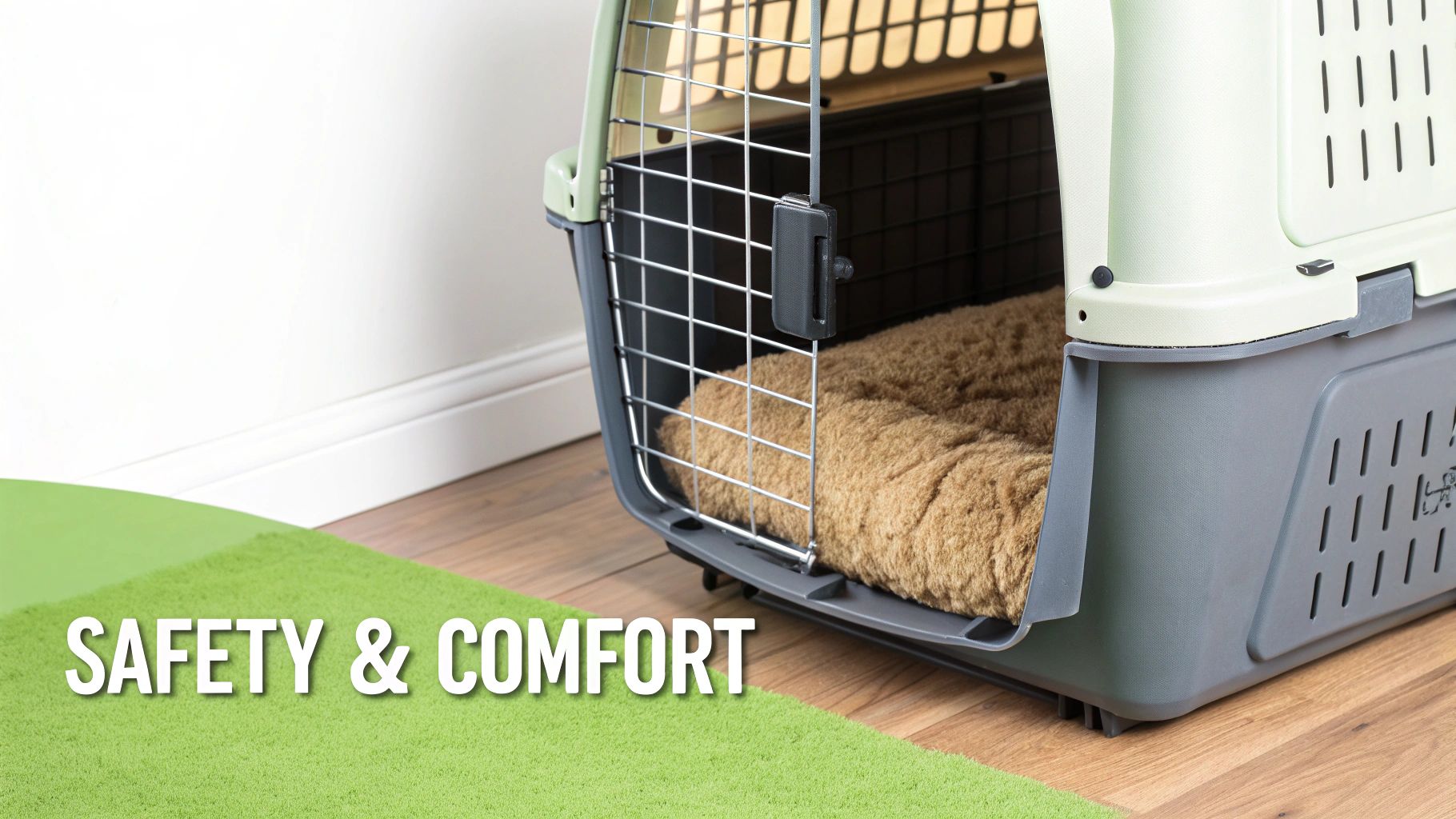
Some features are absolutely essential to prevent a determined pet from making a great escape in the middle of a bustling airport. A carrier that fails on these fundamentals just isn't safe for travel.
Here's what should be at the top of your checklist:
- Secure, Locking Zippers: A standard zipper is child's play for an anxious cat or dog. You need a carrier with locking clasps on the zipper pulls that stop them from being pushed open from the inside. This is probably the single most important feature for preventing a disaster.
- A Firm, Stable Base: A flimsy bottom that sags is both scary and unsafe for your pet. A quality carrier will have a rigid, reinforced base that gives them a solid floor to stand on, helping them keep their balance as you move around.
- Durable, Claw-Proof Mesh: Those mesh windows aren't just for looking out; they're a key part of the carrier's structure. Make sure the mesh is tough and tear-resistant enough to handle some serious scratching from nervous paws.
These three elements work together to create a secure bubble for your pet. Without them, a carrier is not up to the job.
Prioritizing Comfort and Airflow
Safety is king, but comfort is what will keep your pet's stress levels down. Being stuck in a stuffy, cramped space is a recipe for anxiety. This is why features that boost airflow and coziness are just as critical as the locks and sturdy base.
A well-ventilated carrier with soft bedding isn't a luxury; it's a necessity for your pet's well-being. Good airflow helps regulate their temperature and reduces feelings of confinement, which are major sources of travel anxiety.
This focus on the pet's experience is a big deal for owners these days. A multi-region survey found that a whopping 78% of pet owners put ventilation, cushioning, and secure closures at the top of their list when carrier shopping. And in North America, 70% of shoppers go for soft-sided carriers specifically because they squish down better under the seat. You can read the full research on pet carrier market trends to see just how much comfort drives carrier design now.
Your Practical Buying Checklist
When you're evaluating a carrier, use this practical checklist. A fantastic carrier will tick every single one of these boxes.
- Multiple Mesh Windows: Aim for a carrier with mesh panels on at least three sides. This creates cross-ventilation, keeping the air fresh and preventing your pet from getting too hot.
- Top-Loading Entry: Side doors are fine, but a top-loading option can be a total lifesaver. It makes it so much easier to place a reluctant cat or small dog inside without a big struggle.
- Plush, Washable Bedding: The floor of the carrier should have a comfy pad, preferably fleece or sherpa, that you can remove and toss in the washing machine. This adds cushioning and makes clean-up a breeze if there's an accident.
- Padded Shoulder Strap: Trust me, you’ll be carrying this thing through long airport terminals. A comfortable, padded shoulder strap that you can adjust will save your back and make the whole trek more manageable.
- Exterior Storage Pockets: A few pockets on the outside are perfect for stashing essentials like vaccination records, a leash, and a small bag of their favorite treats.
By using this checklist, you can confidently choose a carrier that isn't just airline-compliant, but a genuine safe haven for your best friend.
Your Pre-Flight Checklist for Traveling with a Pet
A smooth flight with your furry friend doesn't just happen; it's the result of smart planning that starts weeks before you even think about heading to the airport. Getting a head start is the secret sauce to turning a potentially chaotic travel day into a calm, controlled experience for both of you.
Think of it as getting your pet ready for their big debut as your co-pilot. You wouldn't hit the stage without a rehearsal, right? This checklist will walk you through the prep work, from making the carrier a five-star resort to packing the essentials.
Weeks Before Your Flight
Your first mission, which you should accept weeks in advance, is to make the carrier a happy place. The goal is to get your pet to see their carrier as a safe, comfy den, not a scary box. This takes a bit of patience and a lot of positive vibes, so don't rush it.
- Introduce the Carrier Early: Don't just spring it on them the night before. Place the best airline approved pet carrier in a main living area with the door wide open and let them investigate on their own time.
- Make It Inviting: Toss in their favorite blanket, a well-loved toy, or even an old t-shirt that smells like you. Familiar scents are incredibly comforting.
- Use Positive Reinforcement: Start by dropping high-value treats near the entrance. As they get bolder, toss them further inside. Make it a fun game!
- Feed Meals Inside: Once they’re comfortable stepping in, try feeding them their dinner inside the carrier (with the door still open). This builds a super strong positive connection.
This slow and steady approach is everything. A pet who views their carrier as a personal sanctuary is going to be a much calmer traveler.
The Days Leading Up to Travel
With the flight just around the corner, it's time to shift gears to packing and paperwork. I like to think of it as putting together a dedicated "pet-go-bag" so everything is in one place and you’re not scrambling at the last minute.
Packing for your pet is a lot like packing a diaper bag for a baby. You want to be ready for anything, whether it’s a long delay or a little accident. A well-stocked bag is your best friend for handling travel day surprises.
Here's what you'll want to have packed and ready in your pet’s travel bag:
- Health and Vaccination Records: Keep a hard copy of their rabies certificate and any other health documents in a waterproof folder. Some airlines and destinations demand a health certificate from a vet issued within 10 days of your flight.
- Familiar Comfort Items: Pack a small toy or blanket from home. That familiar smell can be a huge comfort when they're surrounded by the new sights and sounds of the airport and plane.
- Absorbent Carrier Liners: Line the carrier floor with a puppy pad or another absorbent liner. And definitely pack a few extras—you'll be glad you did if there's a spill or an accident.
- Food and Water Supplies: Bring a small, sealed bag of their regular food, especially if you have a layover. A collapsible water bowl is also a must-have for offering them a quick drink when the seatbelt sign is off.
For an even deeper dive into making the whole journey a breeze, check out our guide on how to travel with pets, which is packed with more tips for every stage.
On the Day of Your Flight
The morning of your flight really sets the mood for the whole trip. Your pet will pick up on your energy, so stay calm, stick to your normal routine as much as possible, and give yourself plenty of extra time.
A few final steps on travel day can make a world of difference for your pet's comfort.
- Mindful Feeding Schedule: Give your pet a light meal about four hours before you leave for the airport. Flying on a full stomach can sometimes lead to an upset tummy or motion sickness.
- Final Potty Break: Take your dog for a good, long walk or make sure your cat has plenty of time with their litter box right before you head out. Most airports have post-security pet relief areas these days, too.
- Navigating Security: This is a big one. You'll have to take your pet out of the carrier to go through the TSA checkpoint. Make sure they are on a snug harness and leash to prevent any surprise dashes while the carrier goes through the X-ray machine.
By following these steps, you’ll walk into the airport feeling prepared and in control, which is the best way to ensure a safe and comfortable trip for your favorite travel buddy.
Common Questions About Airline Approved Pet Carriers
Even after doing all your homework, it's totally normal to have a few last-minute questions before flying with your pet. We get it. This section is here to tackle the most common worries pet owners face, giving you straight-up answers so you can feel cool, calm, and collected on travel day.
Let's clear the air on any final doubts so you and your furry co-pilot are ready for takeoff.
What Does "Airline Approved" Really Mean for a Pet Carrier?
This is, without a doubt, the most confusing part for pet parents. The term "airline-approved" is really more of a marketing phrase than an official stamp from a group like the FAA or TSA. There isn't a single organization that gives a universal thumbs-up to pet carriers for every single airline.
When a carrier has that label, it simply means the manufacturer designed it to meet the typical requirements of most major airlines. These features usually include a soft-sided body, plenty of mesh for ventilation, zippers that lock securely, and dimensions that are generally sized to fit under an airplane seat.
But here's the crucial action item: that label is just a starting point.
You always have to check the specific size and weight rules directly with your airline before you fly. Their rules are the only ones that matter for your trip, and trust us, they can be surprisingly different from one airline to another.
Think of "airline-approved" as a helpful suggestion, not a golden ticket. The final responsibility to double-check is all on you.
Can I Use the Same Carrier for In-Cabin and Cargo Travel?
The short answer here is almost always a firm no. The requirements for traveling in the cabin versus the cargo hold are worlds apart, and they require two completely different kinds of carriers.
In-cabin carriers are made to be soft-sided and flexible for one main reason: to fit under the seat in front of you. That space can be awkward and tight, and a soft carrier has enough give to squish down a bit, something a hard crate just can't do.
Cargo carriers, on the other hand, are built like little fortresses for maximum safety in the plane's hold.
- Construction: They must be hard-sided, usually from tough plastic, wood, or metal.
- Security: They need a solid metal gate and must be held together with metal nuts and bolts—no flimsy plastic clips allowed. Many also need to meet standards set by the International Air Transport Association (IATA).
- Ventilation: There must be air holes on at least three sides.
A soft-sided carrier would never be allowed for cargo travel; it offers zero protection from shifting bags and lacks the required structural integrity. If your pet must fly in cargo, you'll need to purchase a separate, IATA-compliant hard-sided crate.
How Do I Get My Pet Through Airport Security?
Walking your pet through a TSA checkpoint can seem like a huge hurdle, but the process is actually pretty simple once you know the steps. The main thing to remember is that your pet must come out of its carrier.
Here’s your action plan for a smooth security screening:
- Get Ready in Line: While you're waiting, take off your shoes and jacket, and get your laptop out of your bag. This frees up your hands to focus on your pet when it's your turn.
- Secure Your Pet: Make sure your pet is in a snug-fitting harness and on a leash. A harness gives you much better control than a collar and makes it harder for a nervous pet to wriggle free.
- Take Your Pet Out: Gently remove your pet from the carrier.
- Send Your Stuff Through: Place the empty carrier, your bags, and other belongings on the conveyor belt for the X-ray scanner. Never let your pet go through the X-ray machine.
- Walk Through Together: You'll either carry your pet in your arms or walk them on their leash through the metal detector. A TSA agent will be right there to tell you what to do.
Once you’re both through screening, you can grab the carrier and your things. Find a quiet spot out of the way to safely put your pet back inside before you head to your gate.
Should I Sedate My Pet Before a Flight?
This is a really important question, and the advice from vets is overwhelmingly clear. Most veterinarians and airlines, including the American Veterinary Medical Association (AVMA), strongly recommend against sedating your pet for air travel.
Tranquilizers and sedatives can have risky side effects at high altitudes, messing with a pet's ability to regulate their breathing and body temperature. Sedation also throws off their balance, which can lead to injury if the carrier gets bumped around.
Instead of medication, your best action plan is to focus on making the carrier a happy place. Spend the weeks before your trip turning the carrier into a safe, comfy den for them. A familiar, cozy space does more to calm anxiety than drugs ever could. Always talk to your vet for advice tailored to your pet, but be prepared for them to suggest skipping the sedatives.
Ready to make your next trip with your furry friend a breeze? The right carrier makes all the difference. At Pet Magasin, we design TSA airline-approved carriers with the safety, comfort, and security features that matter most. Find the perfect travel solution for your pet at Pet Magasin.

Leave a comment