
Professional dog grooming equipment: A Pro's Guide to Essentials

Stepping into the world of professional dog grooming requires more than a love for dogs; you need a serious toolkit built for safety, speed, and that perfect, fluffy finish. The right professional dog grooming equipment isn't a luxury—it's the foundation of your business. It directly impacts the quality of your grooms, your own physical comfort, and the well-being of the pups in your care.
Building Your Professional Grooming Toolkit
Think of your toolkit like a chef's kitchen. A home cook gets by with one good knife, but a professional needs a full set—one for chopping, another for filleting, and a small one for paring. To get better, faster, and more beautiful results, you must use the right tool for the job. The exact same principle applies to dog grooming.
When you transition from grooming your own pet to offering it as a service, you must upgrade your gear to handle the daily grind. This means investing in tools that are more durable, more precise, and built with safety as a priority. This isn't just about having fancy equipment; it's a smart business move. In fact, the global pet grooming products market hit a whopping USD 9.15 billion and is expected to climb to USD 19.38 billion by 2035. This huge jump shows just how much people value high-quality pet care, making your investment in top-notch tools more important than ever.
Core Equipment Categories
To build a setup that can handle any dog, focus on a few key tool categories. Each one plays a crucial role in the grooming process, from the first brush-out to the final snip. Understanding these categories is the first step to investing your money wisely and building a functional, professional toolkit.
The real difference between an okay groom and a professional one often comes down to the quality and specialization of the tools. Invest in professional-grade equipment from the start to avoid replacing cheap tools, prevent aches and pains, and create a safer, more comfortable experience for every dog on your table.
Let’s take a quick look at the essential equipment that makes up the backbone of any pro grooming station. We'll dive deeper into each of these throughout this guide. For a closer look at the basics, you can also check out our guide on the best grooming tools for dogs.
Essential Professional Grooming Equipment at a Glance
Here's a simple breakdown of the core equipment you'll need. Use this table to understand what each tool does and why you should always choose the pro-grade version for your business.
| Equipment Category | Primary Function | Why Pro-Grade Matters |
|---|---|---|
| Cutting Tools | Clippers & shears for shaping and trimming coats. | Offers superior motor power, blade sharpness, and ergonomic design to prevent hand fatigue and ensure clean cuts. |
| Workspace Setup | Grooming tables, dryers & tubs for a safe environment. | Provides stability, reduces physical strain on the groomer, and speeds up the drying process safely and effectively. |
| Finishing Tools | Brushes, combs & nail care for final touches. | Designed for specific coat types to detangle without damage and provides precision for detailed, polished results. |
| Safety & Sanitation | Restraints & cleaning supplies for hygiene. | Ensures a secure, sterile environment, preventing accidents and the spread of germs between pets. |
Having these four categories covered with high-quality gear is what sets a professional operation apart and ensures you're ready for any coat, size, or temperament.
Choosing Your Core Cutting Tools
The heart of any professional groom comes down to the quality and precision of your cutting tools. Think of your clippers and shears as an artist’s paintbrushes—each one is designed for a specific stroke. Your goal is to master them to transform a quick trim into a true masterpiece.
When you're picking out professional dog grooming equipment, don't just look at the brand. You need to understand the mechanics behind the cut. Let's dig deeper than surface-level advice and look at what actually matters: motor power, blade materials, and the specific jobs each type of shear is built for. Making the right choices here will improve your work and keep the animals in your care safe and comfortable.
If you're wondering where to start, this decision tree can help guide your first investments based on your goals.
As you can see, your toolkit can start with the basics and expand into a full workspace setup as your needs and skills grow.
Selecting the Right Clippers and Blades
Professional dog clippers are the workhorses of your kit, and their performance boils down to the motor. You’ll mostly find two types. Rotary motors are powerful, versatile, and perfect for thick, matted coats. For any serious professional use, a rotary motor is the only way to go. Lighter magnetic motors, often found in less expensive models, simply won't hold up to daily use.
Next, consider speed, which is measured in strokes per minute (SPM). Higher SPM clippers cut faster but also get hotter. It’s crucial to match the SPM to the coat; using a speed that’s too slow on a thick coat will painfully pull the hair instead of cutting it cleanly.
A common mistake is thinking faster is always better. The real key is control. Choose a variable-speed clipper so you can use a lower SPM for delicate, sensitive areas and crank it up for dense fur on a dog's back. This tactic prevents blade heat and gives you a much smoother finish.
Finally, choose between the consistent power of a corded model and the freedom of a cordless one. Corded clippers deliver unwavering power, which is essential for long days. Cordless models give you incredible maneuverability when working around a wiggly dog. Industry trends show that while 60% of pros said extended battery life was a top priority, many also choose ergonomic tools to cut down on physical strain.
-
Blade Numbers Demystified: The number on a clipper blade indicates the length of fur it leaves. A lower number, like a #7F, leaves the hair longer (around 1/8"). A higher number, like a #30, cuts very close to the skin. Start with a #10 blade; it's the perfect all-rounder for most sanitary trims and general-purpose work.
-
Blade Materials Matter: Blades are usually made from steel or ceramic. Steel is tough and can be sharpened repeatedly, but it heats up fast. Ceramic blades stay cooler for much longer—a huge safety advantage—but they’re more brittle and can shatter if dropped.
For those just starting out, you can get a better handle on finding the right balance in our guide on the best dog grooming clippers for home use, which covers principles that are just as important for pros.
Understanding Your Shears
Use shears for the fine-tuning and artistic touches that clippers can't handle. Each pair has a specific job, and knowing when to use which is the mark of a skilled groomer. With pros increasingly spending on tools that can reduce hand fatigue by up to 35%, choosing the right shears is also an investment in your own career longevity.
Your Essential Shear Toolkit
- Straight Shears: These are your go-to, all-purpose scissors. Use them to create clean, straight lines when trimming the skirt on a Schnauzer or shaping a terrier's legs.
- Curved Shears: Absolutely essential for contouring and shaping rounded areas. You need them to achieve that perfect topknot on a Poodle or shape a Bichon Frise's head.
- Thinning Shears: These have one serrated blade and one solid blade. Use them to remove bulk and blend clipper lines to create a soft, natural finish without harsh marks.
- Chunkers (or Texturizing Shears): Think of these as thinning shears with wider teeth. They take out more hair and are fantastic for adding texture to a Golden Retriever's coat or softening hard scissor lines.
Once you master these core cutting tools, you'll have the confidence, efficiency, and artistry to tackle any coat that comes your way.
Establishing Your Grooming Workspace
Once you've selected your clippers and shears, it's time to build your workspace. A well-designed grooming station is the bedrock of safe and efficient work. This is more than just clearing a corner; it's about creating an environment that saves your back and keeps dogs comfortable and secure.
Your workspace rests on three pillars: the table, the dryer, and the tub. To elevate your setup, invest in solid, professional-grade versions of this foundational professional dog grooming equipment. This is the difference between wrestling a wet dog on the floor and having them safely positioned right where you need them.
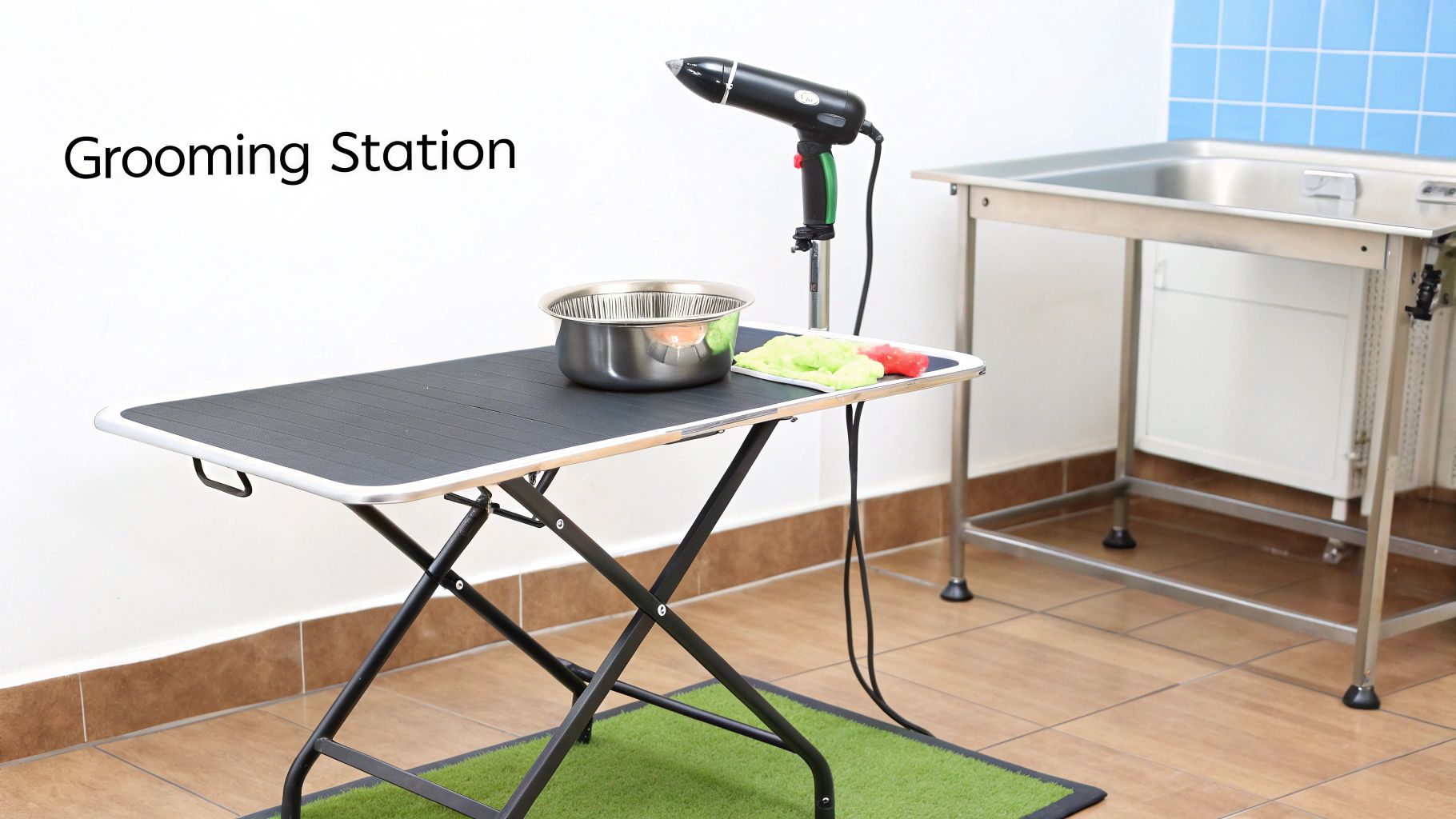
The Foundation A Sturdy Grooming Table
A professional grooming table does more than just lift the dog off the floor. It saves your back from constant strain and, most importantly, keeps the animal secure. You’ll mainly see two types on the market: hydraulic and electric.
Hydraulic tables use a foot pump to adjust height. They're reliable and don't need to be plugged in. Electric tables offer smooth, push-button adjustment, which is fantastic for making small height changes during detailed work.
No matter which type you choose, these features are non-negotiable.
- Non-Slip Surface: Ensure the tabletop has a textured, rubbery grip. A dog scrambling on a slippery surface can lead to panic and injury.
- Adjustable Grooming Arm: This L-shaped bar clamps to the table and holds the grooming loop (or "noose") to prevent a dog from jumping off.
- Weight Capacity: Always check the specs. Your table must comfortably handle the heaviest dogs you plan to groom, with a sturdy base that won't wobble and scare them.
A quality grooming table is one of the best investments you can make in your career longevity. To prevent chronic back pain, adjust the table to your height rather than hunching over for hours. This simple action will extend your ability to groom comfortably for years.
Choosing the Right Dryer for the Job
Drying can be the most time-consuming part of a groom, so the right tool makes a world of difference. Professional grooming dryers use powerful airflow, not scorching heat, to get the job done safely. To work efficiently, you need two types in your arsenal.
First, get a high-velocity dryer. Picture a leaf blower, but for dogs. Its job is to blast water out of the coat, which slashes your drying time. It’s a game-changer for removing loose undercoat from double-coated breeds like Huskies and Golden Retrievers. These should never have a heating element—the force of the air is so strong that it could easily cause skin burns if heated.
Second, you need a fluff (or stand) dryer. This one delivers a gentler, often warm, stream of air for styling and finishing. It leaves both your hands free, so you can brush the coat straight as it dries. Use this tool to get that perfect, fluffy, cloud-like finish on breeds like Poodles and Bichons.
The Professional Bathing Station
The final piece of your core workspace is a dedicated bathing tub. While a home bathtub can work in a pinch, a professional tub is built for the job. They’re designed for easy sanitation, durability, and handling dogs of all sizes with less fuss.
When setting up your grooming area, choose hygienic and tough surfaces. Consider a stainless steel lab table or tub, as this material is the industry standard for good reason. Stainless steel is non-porous, making it incredibly simple to clean and sanitize between dogs—a critical step in preventing the spread of skin issues or parasites.
Look for tubs with a walk-in ramp or door. This detail will save you from lifting heavy dogs, reducing the risk of injury to both you and the animal. A high backsplash is another great feature, as it helps contain splashes and keeps your grooming area cleaner and drier. When you bring these three pieces—table, dryer, and tub—together, you create a workspace that's truly professional, safe, and built for efficiency.
Mastering the Finishing Touches
A truly professional groom doesn't stop once the heavy cutting is done. The flawless details are what make the difference. After using your clippers and dryers, bring out your finishing tools to polish the final look. This is where you transform a good haircut into a stunning, refined style by perfecting every part of the dog, from coat to nails.
Do not skimp on your finishing tools; they are just as critical as your clippers or table. These tools are essential for the health, safety, and comfort of the pet. The entire dog grooming services industry, a global powerhouse valued at USD 6.89 billion, is built on this kind of specialized professional dog grooming equipment. And it's only getting bigger, projected to hit USD 10.35 billion by 2030. Quality tools are what drive this growth, as you can see from market insights on Grandview Research.
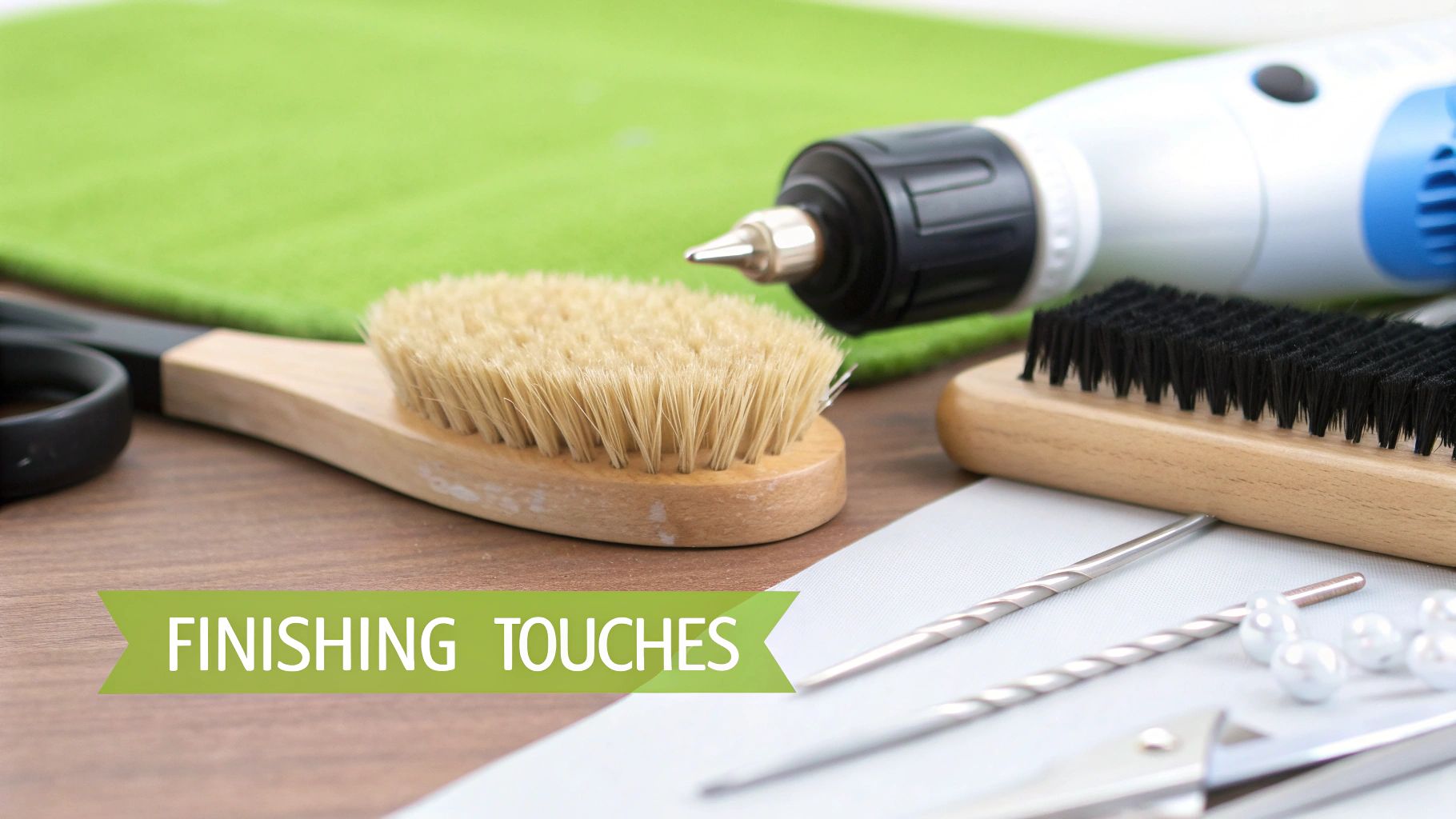
Brushes and Combs for Every Coat
Brushes are not a one-size-fits-all tool. Using the wrong one can cause a dog serious discomfort or even damage their coat and skin. Imagine trying to use a fine-toothed comb on thick, curly human hair—it's a recipe for disaster. As a pro groomer, you must build an arsenal of brushes to handle any coat type.
- Slicker Brushes: These are the MVPs for removing mats, tangles, and loose undercoat. Use their fine, bent wire bristles on double-coated breeds like German Shepherds or Golden Retrievers.
- Pin Brushes: With straight, widely spaced pins, these are your go-to for long, silky, or delicate coats like those on Yorkshire Terriers or Maltese. Use them to gently work through tangles without breaking the hair.
- Bristle Brushes: These are for finishing touches. Use them to spread natural oils through the coat to add shine and smoothness. They work best on short-coated dogs like Boxers or Beagles.
- Undercoat Rakes: This is an absolute must-have for heavy shedders like Huskies or Samoyeds. Use these rakes to get deep into the dense topcoat and pull out loose, dead undercoat without harming the healthy fur.
A good brush does more than just make a dog look pretty; it's a vital tool for their skin health. When you use the right one, you're removing dead hair and stimulating blood circulation, which helps prevent painful matting and keeps the skin aerated and healthy.
To get the best results, you need to match the tool to the job. Here’s a quick guide to help you pick the perfect brush for any coat that comes your way.
Choosing the Right Brush for Every Coat Type
| Coat Type | Primary Grooming Challenge | Recommended Brush or Comb | Pro Tip |
|---|---|---|---|
| Short & Smooth | Shedding, adding shine | Bristle Brush, Rubber Curry Comb | Use the curry comb in a circular motion to loosen dead hair before bathing, then finish with a bristle brush for a glossy look. |
| Double Coat | Heavy shedding, undercoat matting | Undercoat Rake, Slicker Brush | Start with the rake to remove the bulk of the loose undercoat, then follow up with a slicker brush to smooth the topcoat. |
| Long & Silky | Tangles, preventing breakage | Pin Brush, Steel Comb | Gently work through the coat with the pin brush first. Use a steel comb to find and carefully work out any small, stubborn knots. |
| Curly or Wiry | Matting, tangles close to the skin | Slicker Brush, Steel Comb | Brush in sections, line-brushing with the slicker to reach the skin. A "poodle" comb is great for fluffing and finishing. |
Having this variety on hand means you’re prepared for anything, ensuring every dog leaves looking and feeling their absolute best.
Perfecting the Pedicure Nail Care Essentials
For many dogs, nail care is the most dreaded part of grooming. That’s why you must use the right tool and a calm technique for a stress-free experience. Your two main options are traditional clippers and nail grinders.
Clippers vs. Grinders
The best choice often depends on the dog’s personality and your own confidence level.
- Nail Clippers: Coming in guillotine and scissor styles, clippers are quick. The downside? There's a higher risk of cutting the quick—the sensitive blood vessel inside the nail. This is a real challenge with dark nails where you can't see it.
- Nail Grinders: A grinder is a dog-friendly Dremel. It files the nail down gradually, giving you more control and drastically reducing the risk of hitting the quick. It also leaves a smooth, rounded finish that won’t snag on carpets.
Many pros find that a combination of both tools works best. Use clippers to remove the bulk of the length quickly, then switch to a grinder to smooth the edges and get closer to the quick safely. For more tips, check out our guide on how to choose a dog nail cutter that fits your needs.
Final Hygiene Ear and Eye Cleaning
The last step in a complete groom is ensuring the ears and eyes are clean and healthy. This isn’t just about appearance; it's a key part of preventative care.
Use a gentle, professionally formulated ear-cleaning solution on a cotton ball to wipe away wax and debris from the outer ear canal. Never insert anything deep into the ear!
For the eyes, a simple wipe with a soft, damp cloth is usually all you need to remove discharge or "sleep" from the corners. Cleaning them regularly helps prevent tear staining and gives you a chance to spot any signs of irritation or infection early. These final touches show a client you've delivered a thorough, professional service.
Extending the Life of Your Equipment
Your professional dog grooming equipment is a serious investment. It's the engine that runs your business, and keeping it in top shape is essential for ensuring every dog you groom is safe and comfortable. A simple, consistent maintenance routine is all it takes to prevent your tools from wearing out prematurely and to keep them performing reliably.
Think of it this way: just as you brush a dog’s coat to prevent painful mats, you must clean your tools to stop rust, dullness, and mechanical breakdowns. Make these small habits part of your end-of-day cleanup to add years to the life of your gear.
This isn’t just about longevity. A proactive approach is the backbone of good hygiene. Properly sanitized tools stop the spread of bacteria, fungi, and parasites from one pet to another, which is a fundamental part of being a responsible professional.
Daily and Weekly Maintenance Checklists
To fight equipment breakdown, consistency is your best friend. A structured cleaning schedule takes the guesswork out and turns crucial maintenance into an easy habit. The best way to start is by creating separate task lists for daily and weekly jobs.
Your daily routine should focus on immediate cleaning and sanitizing right after use. This simple step prevents hair, dander, and product gunk from building up and causing damage over time.
A well-maintained tool is a safe tool. Sharp, clean blades cut smoothly without pulling hair, properly sanitized surfaces prevent skin infections, and cool-running clippers eliminate the risk of burns. Your maintenance schedule is a direct reflection of your commitment to animal welfare.
Your weekly tasks are for a deeper dive. This is your chance to inspect parts for wear and tear, perform a more thorough cleaning, and ensure everything is in perfect working order for the week ahead.
Actionable Care for Your Core Tools
Let's get into the specifics for your most important equipment. These straightforward actions will keep your clippers, blades, and shears working like new.
For Clipper Blades and Shears:
- Clean Immediately: After every groom, use a stiff brush to get all the hair out of your blades and shears. Don't let it sit.
- Sanitize Thoroughly: Use a professional-grade blade wash or a disinfectant spray to kill any germs. This is non-negotiable for preventing cross-contamination.
- Dry Completely: Moisture is the arch-nemesis of metal tools. After cleaning, make sure every part of your blade or shear is bone-dry to stop rust.
- Oil Regularly: Apply a single drop of clipper oil on your blades before and after each use. For shears, oil the pivot point every day to keep the cutting action buttery smooth.
Beyond the daily grind, you must protect your metal tools from rust. You can discover some great, practical eco-friendly hacks for rust removal on equipment that will help keep your tools in prime condition.
For Your Clippers:
- Clear the Vents: The air vents keep the motor from overheating. Use a brush to clear them of hair and gunk daily.
- Inspect the Blade Drive: This small plastic piece makes the blade move. It’s designed to wear out, so check it weekly for cracks or wear. It's much better to replace it before it breaks mid-groom.
- Wipe Down the Housing: A quick wipe with a damp cloth keeps the outside of your clippers looking professional and ensures you have a secure grip.
Follow this simple maintenance plan, and your professional dog grooming equipment will not only last much longer but will also help you deliver safer, more efficient, and more beautiful grooms for every client.
Common Questions on Grooming Equipment
Let’s be honest, diving into the world of professional dog grooming equipment can feel overwhelming. Whether you're setting up shop for the first time or just trying to level up your tools, questions are bound to pop up. Getting good, straight answers is the only way to make smart buys that actually improve your grooms and make your life easier. This section is here to clear up some of the most common questions we hear from groomers.
Think of this as your quick-start guide for getting past those nagging uncertainties. We'll give you practical advice to help you pick the right tools, build out your station without breaking the bank, and always, always put safety first. A little bit of know-how now will save you a ton of time, money, and headaches down the road.
What Is the Most Important Piece of Grooming Equipment to Invest in First?
Hands down, your first and most important investment is a high-quality, professional-grade clipper and a solid set of blades. This tool is the absolute workhorse for nearly every groom. It does the heavy lifting, sets the stage for your scissor work, and has a massive impact on your efficiency.
Invest in a durable, ergonomic clipper with a powerful motor. It will pay off by saving you time, reducing hand and wrist strain, and giving you a much cleaner finish. A dependable clipper, a standard #10 blade for sanitary trims, and a set of universal guard combs will get you through the majority of your grooms from day one. You can build out the rest of your kit from there.
How Do I Choose Equipment Based on Specific Dog Breeds?
The secret is to think about the dog's coat type, not just the breed. That's what determines the tools you need.
For a double-coated dog like a German Shepherd or a Husky, a high-velocity dryer and a good undercoat rake are essential. You need these specific tools to blow out dense, shedding undercoat without damaging the top layer of fur.
On the other hand, if you're working on a curly-coated breed like a Poodle or a Bichon, you’re going to need a set of curved shears to shape those perfect topknots and round out their features. A slicker brush is also a must-have to stop mats from forming close to the skin. And for silky-coated breeds like Yorkshire Terriers, a pin brush and a steel finishing comb are your best friends for getting that smooth, flowing look without breaking their delicate hair.
Always match the tool to the task. It's that simple. Powerful clippers for thick coats, a gentle nail grinder for dogs with dark nails where you can't see the quick. This approach not only creates a beautiful groom but makes the whole experience safer and more comfortable for the dog.
What Are the Keys to Setting Up a Grooming Station on a Budget?
When money's tight, your mantra should be: prioritize a few high-quality, multi-functional tools over a bunch of cheap ones. Start with the core three: a professional-grade clipper set, a sturdy foldable grooming table with a reliable grooming arm, and one great pair of straight shears for all-around trimming. These are the foundation of your entire setup.
You don't need a fancy grooming tub right away; your own bathtub with a good non-slip mat will work just fine at the start. Instead of buying a whole case of clipper blades, begin with a #10 blade and a set of universal guard combs. That combo will let you achieve dozens of different lengths for a fraction of the price. The key is to focus on quality over quantity—your foundational tools have to be safe, dependable, and built to last.
What Safety Features Should I Look for in Grooming Equipment?
Safety must be your number one priority, with no compromises. For your grooming table, look for a non-slip surface and a strong, fully adjustable grooming arm and loop to keep dogs secure. When picking out clippers, choose models known for running cool to avoid burning a dog's skin, and always keep your blades sharp so they cut cleanly instead of pulling on hair.
For dryers, adjustable speed and temperature settings are a must. A high-velocity dryer should never have a heating element—the force of the air alone can get hot and cause burns. Make sure all your electrical tools have chew-resistant cords and are plugged into GFCI outlets, especially since you'll be near water. Lastly, all your gear should be made from materials that are easy to wipe down and sanitize to keep every pet safe and healthy.
Here at Pet Magasin, we know that professional-grade tools are the heart of any great groom. Feel free to explore our collections of durable grooming utensils and other high-quality pet supplies designed for both dedicated pet owners and seasoned pros. You'll find the reliable equipment you need to do your best work.

Leave a comment