


A Practical Guide to the Best Dog Grooming Clippers for Home Use
Grooming your dog at home is a practical way to save money, reduce your pet’s anxiety, and strengthen your bond. To succeed, you need the right tools. The best dog grooming clippers for home use have a quiet motor, blades matched to your dog's coat, and an ergonomic design. Choosing the right clippers transforms a daunting task into a manageable and rewarding routine.
Your Guide to Confident At-Home Grooming
This guide provides actionable steps for selecting and using dog clippers effectively. We'll demystify the technical features so you can choose the right tool and use it safely. We’ll start with the fundamentals—what makes a clipper effective—to ensure every grooming session is safe, efficient, and stress-free.
Grooming at home is more than a haircut; it's a wellness check in a calm environment. Professional grooming salons can be stressful for dogs due to unfamiliar sounds, smells, and handling. When you groom at home, you control the pace and create a positive experience.
Why Home Grooming Is Gaining Popularity
More pet owners are choosing to groom their dogs at home. The US pet grooming products market, valued at USD 4.5 billion, is projected to reach USD 7.8 billion by 2034. This growth is driven by a 70% increase in at-home grooming since 2020, with owners saving an average of $400 a year on professional services.
Actionable Tip: Grooming at home gives you direct control over your dog's safety and comfort. Take frequent breaks if you notice signs of stress, like panting or yawning. Ensure your tools are clean and appropriate for their specific coat type to prevent injury or discomfort.
Beyond cost savings, home grooming offers distinct advantages:
- Reduce Anxiety: Groom your dog in a familiar space to keep them calm and relaxed.
- Strengthen Your Bond: The hands-on care and gentle handling builds trust between you and your pet.
- Perform Early Health Checks: Use grooming time to check for skin irritations, lumps, or parasites.
To begin, you need the right tools. While clippers are essential, they are part of a complete grooming kit. For a full checklist, review our guide on the best grooming tools for dogs.
What’s Under the Hood? Clipper Motors and Noise Explained
The motor is the engine of your clippers. Its power and design directly impact your grooming results. Choosing the correct motor prevents frustrating sessions that leave both you and your dog stressed.
A powerful rotary motor is built to handle thick, matted fur without stalling. A magnetic motor, by contrast, is ideal for light-duty jobs on fine coats but will struggle with tougher tasks. Matching the motor to your dog's coat is non-negotiable.
Using a motor that's too weak for a dense, double-coated dog will cause the blades to snag and pull fur. This is painful for your pet and results in an uneven, choppy cut. Conversely, a heavy-duty motor is unnecessary for a small dog with a thin, single coat.
Decoding the Different Motor Types
You'll encounter three main motor types: rotary, pivot, and magnetic. Each is designed for specific grooming tasks. Understanding their differences will help you make a practical choice.
- Rotary Motors: These are the most powerful and versatile option, offering a wide range of speeds and the torque needed to cut through the toughest coats. They are the professional standard and the best choice for owners of heavy-coated breeds like Golden Retrievers, Poodles, or Bernese Mountain Dogs.
- Pivot Motors: This motor offers a great balance of power and speed. While not as fast as a rotary motor, it provides more cutting force than a magnetic one. This design effectively cuts through thick, dense, or damp fur without pulling, making it a reliable choice for many medium-to-heavy coated dogs.
- Magnetic Motors: These are simple motors often found in consumer-grade clippers. They move blades at high speeds but lack significant power. This makes them suitable only for light-duty work, such as trimming fur around the face and paws or for dogs with very fine, thin coats.
Actionable Tip: Match the motor power to your dog's coat density. Attempting to groom a thick-coated dog with a magnetic motor will cause painful pulling. For breeds like Huskies, German Shepherds, or Collies, invest in a rotary motor clipper to ensure a smooth, safe cut.
Why Speed (Strokes Per Minute) Matters
Strokes Per Minute (SPM) indicates how fast the clipper blades move. A higher SPM generally results in a faster, smoother cut, which helps you achieve a professional-looking finish at home.
For dogs with matted or thick fur, you need a higher SPM (in the 3,000 to 4,000 SPM range) to power through the coat without the blades bogging down. Single-speed clippers are straightforward, but multi-speed models offer greater control. You can use a lower speed for sensitive areas and a higher speed for the main body.
Noise and Vibration: The Make-or-Break Factors
For many dogs, the fear of grooming comes from the loud buzzing and vibrations of the clippers. A noisy, rattling tool can trigger anxiety, turning a grooming session into a struggle. Nearly 40% of dogs show clear signs of fear related to loud noises.
For this reason, select clippers with low noise and vibration levels. Many modern clippers are designed to operate under 60 dB, which is comparable to a normal conversation. This feature alone can significantly improve the experience for a nervous pet.
Lower vibration is also beneficial for you. It provides better handling for more precise cuts and reduces hand fatigue during longer grooming sessions. Investing in quiet, low-vibration clippers is a practical step toward ensuring your dog’s comfort and your own success.
Corded Versus Cordless: The Freedom of Choice
One of the most important decisions when selecting the best dog grooming clippers for home use is choosing between a corded and a cordless model. This choice will define your grooming workflow, flexibility, and the final quality of the cut.
A corded clipper is a reliable workhorse. Once plugged in, it delivers consistent, non-fading power. This is essential for tackling large dogs, thick or matted coats, or grooming multiple dogs in one session. You won't have to worry about a battery dying mid-groom.
The Allure of Unplugged Power
Cordless clippers offer unmatched freedom of movement. If your dog is anxious or tends to move around, a cordless model eliminates the hassle and potential danger of a cord. You can easily maneuver around your pet to reach difficult spots like the belly and under the legs without getting tangled.
This freedom is also ideal for quick touch-ups or for grooming in areas without convenient outlets, like a porch or bathroom. The convenience of cordless tools is a major factor in the rise of at-home grooming. The global dog grooming tool market reached USD 9.38 billion and is projected to hit USD 15.83 billion by 2032, with home clippers making up 28% of sales.
Since the pandemic, 72% of pet owners have started grooming at home. Of those, 55% continue due to the savings and convenience, contributing to a 35% increase in online sales for grooming tools since 2022. You can find more data on the growing dog grooming market on verifiedmarketresearch.com.
To help you decide, here is a direct comparison.
Corded vs Cordless Dog Clippers at a Glance
Use this table to compare corded and cordless clippers and determine which best fits your grooming needs.
| Feature | Corded Clippers | Cordless Clippers |
|---|---|---|
| Power | Consistent, high power that never fades. | Power can decrease as the battery drains (less of an issue with lithium-ion). |
| Best For | Long grooming sessions, thick/matted coats, multiple dogs. | Anxious dogs, quick touch-ups, hard-to-reach areas. |
| Mobility | Limited by cord length; can be cumbersome. | Complete freedom of movement; no tangles. |
| Run Time | Unlimited, as long as it's plugged in. | Limited by battery life (typically 60-180 minutes). |
| Weight | Often heavier and bulkier. | Generally lighter and more ergonomic. |
| Maintenance | Minimal; just blade care and cleaning. | Requires battery charging and eventual battery replacement. |
| Upfront Cost | Can be slightly less expensive for a powerful model. | Often a bit more expensive for models with good battery life. |
The best choice depends on your specific situation. If you need uninterrupted power for demanding jobs, choose a corded model. If you prioritize flexibility and ease of movement, a high-quality cordless clipper is the better investment.
What to Look For in Cordless Clippers
When choosing a cordless clipper, the battery is the most critical component. A poor-quality battery will lead to frustration and incomplete grooming sessions.
Before making a purchase, assess these three battery specifications:
- Run Time: How long does the clipper operate on a full charge? Look for a model that provides at least 60-90 minutes of continuous run time to complete a full groom without interruption.
- Charge Time: How long does it take to fully charge the battery? Faster charging times are a significant convenience, especially if you forget to plug it in ahead of time.
- Battery Type: Lithium-ion batteries are the industry standard. They provide consistent power until fully depleted, are lightweight, and hold their charge better than older battery technologies.
Actionable Tip: To avoid having your clipper die mid-groom, choose a cordless model with a run time of at least 90 minutes and a lithium-ion battery. Some models offer a quick-charge feature or can be used while plugged in, providing a valuable backup plan.
How to Select the Right Blades and Combs
The clipper motor provides the power, but the blades and combs do the cutting. They are what make contact with your dog's coat, and the right selection is crucial for a safe, precise, and attractive groom.
Steel vs. Ceramic: What’s the Difference?
The blade material is the foundation of a quality cut. Most blades are made from either high-carbon steel or ceramic. Steel blades are durable and hold a sharp edge for a long time, making them a reliable choice for any grooming task.
Ceramic blades have a key advantage: they stay cooler for longer. The friction from high-speed blade movement generates heat, which can irritate or burn your dog’s skin. Ceramic’s heat-resistant properties make it ideal for extended grooming sessions. Many groomers use a ceramic blade for the main body clip and switch to a steel blade for detailed work.
Cracking the Blade Number Code
The numbers on clipper blades—#10, #7F, #5F—indicate the length of the cut. The rule is simple: the higher the blade number, the shorter the hair will be.
A #10 blade is a standard for most groomers. It's a versatile blade that leaves the fur very short, about 1/16th of an inch (1.5mm). It is the go-to choice for sanitary trims, cleaning up paw pads, and initial passes on matted coats. A #7 blade leaves the hair longer at 1/8th of an inch (3.2mm).
The "F" after a number, as in a #7F blade, indicates the blade's tooth style.
- Finish Cut (F) Blades: These blades have closely spaced teeth that produce a smooth, velvety finish. They are most effective on clean, tangle-free fur.
- Skip-Tooth Blades: These blades have wider-spaced teeth, allowing them to feed thicker or slightly matted hair more easily. They are best for a first pass or a "rough cut" and will not leave as polished a finish.
Using Guide Combs for Longer Styles
To achieve longer, fluffier styles, you'll need guide combs. These plastic or metal attachments snap onto a clipper blade (typically a #10 or #30) and lift the hair before it is cut, ensuring a consistent length. They are available in various sizes, allowing you to leave the fur anywhere from 1/8th of an inch up to a full inch or longer.
This chart helps you choose between clipper types before selecting specific blades.
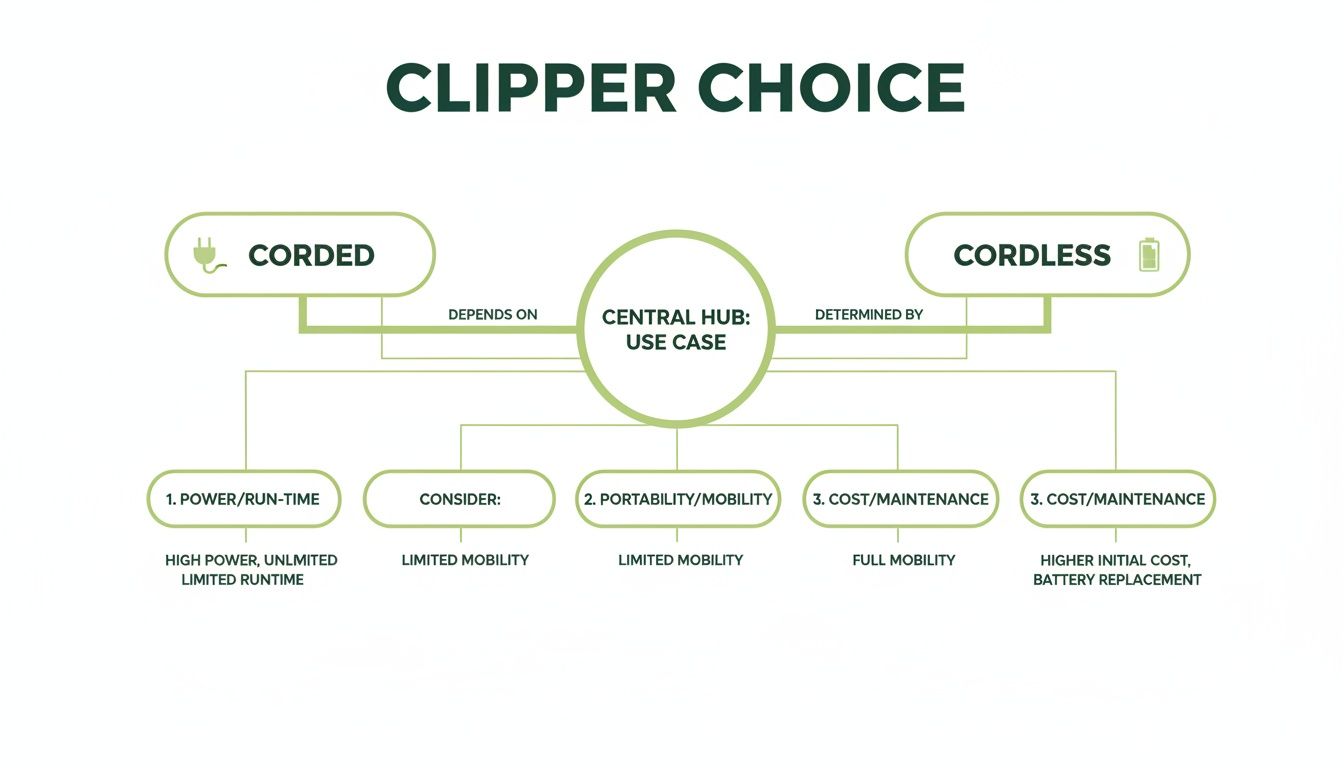
As the chart shows, your first practical decision is whether you need the sustained power of a corded model or the maneuverability of a cordless one.
Matching Blades and Combs to Your Dog
The right blade and comb combination depends on your dog's breed, coat type, and desired hairstyle. This control is a primary reason why more pet owners are choosing to groom at home.
Pro Tip: Always attach guide combs to a short blade, such as a #10 or #30. Using them with a longer blade can cause snagging and result in an uneven cut because the blade’s teeth cannot move freely beneath the comb.
Use this guide to match popular breeds with the blades and combs you'll need. You can find many of these tools in Pet Magasin's collection of high-quality pet grooming tools.
Clipper Blade and Comb Guide for Popular Dog Breeds
Match your dog's breed with the recommended blade and comb attachments to achieve a safe and consistent at-home groom.
| Dog Breed/Coat Type | Recommended Blade Size | Common Use |
|---|---|---|
| Poodle, Bichon Frise (Curly/Thick Coat) | #7F or #5F for the body | A #7F blade is effective for a short "puppy cut." For a longer style, use guide combs over a #10 blade on a thoroughly brushed, tangle-free coat. |
| Golden Retriever, Spaniel (Long, Silky Coat) | #7F or #5F for body/feathering | Use these blades to trim the body and neaten the longer "feathers" on legs and tail without cutting the hair too short. |
| Shih Tzu, Maltese (Long, Fine Coat) | Guide Combs over a #10 blade | Guide combs are essential for maintaining length on these breeds. The underlying #10 blade provides a smooth base and is used for sanitary trims. |
| Schnauzer, Terrier (Wiry Double Coat) | #10 for body, #7F for legs | A #10 blade creates the traditional short back, while a longer #7F blade helps blend the "skirt" and furnishings on the legs for a balanced cut. |
| All Breeds (Sanitary Areas, Paws) | #10 or #30 blade | A #10 blade is the safest and most common choice for trimming fur around paws, the belly, and the rear. This keeps sensitive areas clean and mat-free. |
This table provides a solid starting point for your grooming sessions. Remember that practice is key to mastering the techniques.
Essential Maintenance for Clipper Safety and Longevity
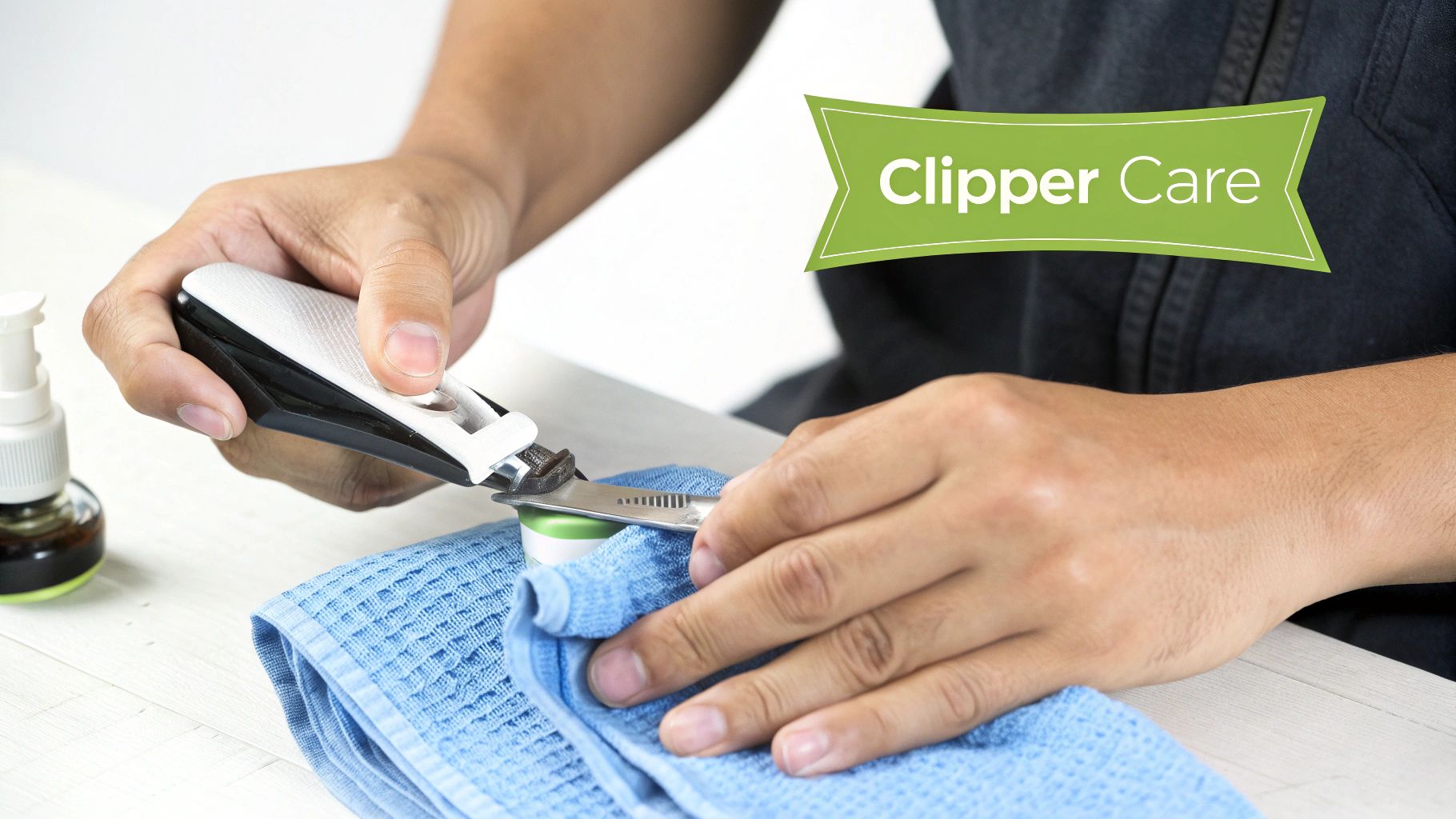
Selecting the right clippers is only the first step. Proper maintenance is essential for ensuring their longevity and your dog’s safety. Neglecting your clippers will lead to dull blades, a noisy motor, and an unsafe grooming experience.
A consistent cleaning routine after every groom is non-negotiable. Skipping this step can lead to rust, increased friction, and motor strain, which shortens the clipper's lifespan and can cause painful pulling on your dog's coat.
The Post-Groom Cleaning Routine
After each trim, your blades will be full of fur, dander, and oils. If left uncleaned, this buildup can cause rust and jam the cutting mechanism, leading to painful snagging. Your first task is always to clean the blades thoroughly.
Follow this simple process:
- Brush It Out: Use the small brush included with your clippers or an old toothbrush to remove all visible hair from between the blade teeth and the clipper housing.
- Wash the Blades: With the clippers running, dip the blades into a shallow container of blade wash for a few seconds. This solution flushes out fine debris and disinfects the metal.
- Wipe and Dry: Turn the clippers off and use a clean, soft cloth to wipe the blades completely dry. Removing all moisture is critical to prevent rust.
This routine takes less than two minutes but is the most effective way to protect your investment and ensure a hygienic groom every time.
A well-maintained blade is not just sharp—it's safe. Proper cleaning and oiling reduce friction, which prevents the blade from overheating and potentially burning your dog's sensitive skin.
Oiling for a Smooth and Cool Cut
After the blades are clean and dry, apply oil. Lubrication allows the metal parts to glide smoothly, which reduces friction and heat while creating a protective barrier against rust.
Apply two or three drops of clipper oil across the blade's teeth and one drop on each rear rail. Turn the clippers on for about 10 seconds to distribute the oil evenly, then wipe off any excess. This simple step will ensure your clippers run cooler, quieter, and cut more efficiently.
When to Sharpen or Replace Your Blades
Even with proper care, blades will eventually become dull. You'll know it's time for maintenance when you notice these signs:
- The clippers begin to pull or snag fur instead of cutting cleanly.
- You have to pass over the same area multiple times for an even cut.
- You see visible rust, chips, or broken teeth on the blades.
Using dull blades is frustrating for you and uncomfortable for your dog. If you have high-quality steel blades, professional sharpening is a cost-effective option. For damaged or inexpensive blades, replacement is often the safest and easiest solution. Inspect your blades before each grooming session as a critical safety check.
Your First Grooming Session: A Step-By-Step Guide
With the right clippers in hand, you're ready to start. Your first grooming session should focus on creating a calm and positive experience for your dog. A successful first groom sets the foundation for a lifetime of stress-free trims.
The most important work happens before you even turn the clippers on. Proper preparation of your dog and your workspace is the key to a smooth, even cut and a cooperative pet.
Step 1: Prepare Your Dog and Your Space
First, bathe your dog with a quality dog shampoo. Clippers move much more easily through clean fur. After the bath, it is essential to dry your dog completely. Attempting to clip a damp coat can cause blades to rust and will pull painfully on the hair.
Once your dog is dry, brush their coat thoroughly to remove all tangles and mats. Mats are a major obstacle for clippers; they will jam the blades and pull on your dog’s skin. For more detailed preparation steps, see our complete guide on how to groom your dog at home.
Step 2: Clipping with Confidence
Begin by attaching a longer guide comb than you think you need. You can always go shorter, but you can't undo a cut that's too close.
Allow your dog to sniff the clippers while they are off. Next, turn them on for a few seconds away from your dog to acclimate them to the sound.
The golden rule of clipping: always move the clippers in the direction of hair growth. Going against the grain can result in a choppy finish and may irritate your dog's skin. Use long, steady strokes rather than short, jerky motions.
Follow these practical tips for a successful first trim:
- Start on the Back: Begin clipping on a less sensitive area, like the back or shoulders, to help your dog get used to the sensation.
- Hold Skin Taut: In areas with loose skin, such as the belly or under the legs, use your free hand to gently pull the skin taut. This creates a flat surface and helps prevent nicks.
- Check Blade Temperature: Pause every few minutes to touch the blades. If they feel hot to your hand, they are too hot for your dog. Allow them to cool down or switch to a spare blade.
- Take Breaks: Keep the session brief and positive. If you or your dog become stressed, stop for the day. You can always finish the groom tomorrow.
The first few sessions are about practice, not perfection. Your primary goal is to build your confidence and make grooming a positive experience for your dog. Using the best dog grooming clippers for home use will simplify the learning process and help you achieve safe, great-looking results.
Got Questions About Dog Clippers? We've Got Answers.
Starting your home grooming journey can bring up a lot of questions. We've compiled answers to some of the most common queries to help you groom with confidence.
Having the right tools is essential, but a little extra knowledge can make a big difference in ensuring every grooming session is a success.
How Often Should I Be Clipping My Dog's Hair?
The frequency of clipping depends entirely on your dog's breed, coat type, and desired hairstyle. There is no one-size-fits-all schedule.
For breeds with hair that grows continuously, like Poodles or Shih Tzus, a trim every 4-8 weeks is typically necessary to prevent matting and maintain their style. Dogs with an undercoat may only require a full clip once or twice a year during periods of heavy shedding. The most important action you can take is to brush regularly between clips to prevent mats from forming.
Can I Just Use My Human Hair Clippers On My Dog?
No. This is a common but dangerous mistake. Human clippers are not designed for the unique challenges of a dog's coat and skin.
Using human clippers on a dog is ineffective and can be painful. The motors are too weak to handle thick dog fur and will snag and pull. More importantly, the blades are not designed for a dog's delicate skin and can easily cause nicks, cuts, or razor burn.
Dog clippers are engineered with critical differences:
- Stronger Motors: They have the power needed to cut through dense fur smoothly.
- Safer Blades: The teeth are spaced and shaped to protect a dog's skin.
- Quieter Operation: They are designed to minimize noise and vibration to keep pets calm.
What Should I Do If My Dog Is Scared Of The Clippers?
Patience and positive reinforcement are key. The goal is to gradually desensitize your dog to the clippers.
Start by letting your dog sniff the clippers while they are turned off, then give them a high-value treat and praise. Next, turn the clippers on for a few seconds nearby—without touching your dog—and reward them again. Slowly progress to briefly touching them with the non-cutting side of the clippers on a less sensitive area, like their back. Keep every interaction short, positive, and full of rewards.
My Clippers Are Getting Hot. Is That Normal?
It is normal for blades to become warm due to friction, but they should never get hot. If a blade is too hot to comfortably hold against the back of your hand, it is dangerously hot for your dog’s skin and can cause burns.
Make it a habit to check the blade temperature every few minutes. If it feels hot, stop immediately. A blade coolant spray can provide a quick fix, but a better strategy is to have a second, cool blade ready to swap out. Remember, properly oiled blades generate less friction and run cooler.
For a complete range of grooming tools designed for safety, comfort, and professional results at home, explore the collection at Pet Magasin. We're dedicated to providing high-quality, affordable supplies to help you give your pet the best care possible. https://www.petmagasin.com

Leave a comment