


A Practical Guide on How to Trim Dog Nails Without the Stress

Trimming your dog's nails is an essential health task, not just a cosmetic one. The goal is to make careful cuts to avoid the sensitive inner part, called the quick, while keeping their nails short enough for comfortable movement. Mastering this skill requires patience, the right tools, and a calm, confident approach. Your confidence is the first and most important tool you'll use.
Your Action Plan for a Calm and Successful Nail Trim
Learning how to trim your dog’s nails is a vital part of their overall health. Overly long nails can alter your dog's posture, leading to discomfort or joint pain. They can also split or break, which is incredibly painful and can lead to infection.
Many owners feel anxious about trimming nails, and dogs can sense that stress, making them anxious in return. Our goal is to transform this experience into a calm, manageable part of your routine.
Build Trust Before You Trim
Before picking up the clippers, your first action is to get your dog comfortable with you handling their paws. Do not rush this step.
Start by gently touching a paw for just a second, then immediately reward them with a high-value treat and praise. Repeat this daily, gradually increasing the time you hold their paw. This exercise builds a positive association and is a core part of successful at-home grooming. For more practical tips, see our guide on how to groom your dog at home.
This foundational work is critical. It results in a dog who trusts you, rather than one who runs and hides at the sight of nail clippers.
Key Takeaway: The secret to stress-free nail trims is preparation. Desensitizing your dog to having their paws handled before you introduce the tools is the most effective way to ensure a calm experience.
Use this checklist to ensure you have everything ready before you begin.
Nail Trimming Quick Start Checklist
| Category | Essential Items & Actions | Why It's Important |
|---|---|---|
| Tools & Supplies | High-quality clippers or grinder, styptic powder, high-value treats. | The right tools make the job easier and safer. Styptic powder is crucial for quickly stopping bleeding if you accidentally cut the quick. |
| Environment | A quiet, well-lit room where your dog feels comfortable. | A calm setting reduces stress for both you and your dog, minimizing the chance of sudden movements or anxiety. |
| Your Mindset | Project a calm, confident, and patient attitude. | Your dog mirrors your energy. If you're stressed, they will be too. Take deep breaths and stay positive. |
| Dog's State | Choose a time when your dog is relaxed or tired, like after a long walk. | A calm dog is far more cooperative. Avoid trimming nails when they are full of energy or anxious. |
| Prep Work | Desensitize your dog to having their paws touched and handled for several days beforehand. | This builds trust and reduces fear, making the actual trimming process go much more smoothly. |
Completing this checklist puts you in the best possible position for a successful trim.
Research shows that owner confidence is a major factor in a successful nail trimming experience. While 89% of dog owners believe regular grooming is important, many lack the confidence to trim nails themselves. This guide is designed to give you that confidence through actionable steps you can take at home.
Choosing the Right Tools for the Job
Selecting the right nail trimming tool depends on your dog's size, nail thickness, and temperament. The tool you choose can turn nail trims into a calm routine or a stressful event.
Your main options are traditional nail clippers and electric nail grinders. Each has distinct advantages, and sometimes, the best solution is to have both. You can use clippers to remove length and a grinder to smooth rough edges. Let's break down the options.
Traditional Nail Clippers
You'll find two main styles of clippers. Both are effective, but one might be a better fit for your dog.
- Scissor-Style Clippers: These function like a small, powerful pair of scissors. They are versatile and work well for dogs of all sizes, from small breeds to large dogs with thick nails. They also offer excellent control over the cutting angle.
- Guillotine-Style Clippers: This type has a single blade that slices through the nail. These are generally best for small- to medium-sized dogs with thinner nails. On thick nails, they can sometimes crush rather than cut cleanly.
For their power and precision, many owners prefer scissor-style clippers. To learn more, read our complete guide to choosing a dog nail cutter.
The Nail Grinder Alternative
If you're nervous about cutting the quick, a nail grinder is an excellent alternative. Instead of clipping, this tool uses a rotating abrasive band to gradually file the nail down.
This method provides exceptional control, making it much harder to injure your dog. Grinders are also perfect for smoothing sharp edges and are a good option for dogs who dislike the sound and pressure of clippers. The drawbacks include noise, vibration, and dust, which may require a desensitization period for your dog.
Pro Tip: When introducing a grinder, let your dog sniff it while it's off. Then, turn it on and hold it near them without touching their nails. Reward them with high-value treats for staying calm. This builds a positive association with the tool before you begin filing.
More pet owners are taking grooming into their own hands. The global dog nail grinders market was valued at about USD 38.4 million in 2024, and the clippers market is also seeing strong growth. This reflects a growing trend of owners investing in the right tools for confident at-home care.
Essential Support Items
Regardless of your primary tool, a few additional supplies will make the process safer and smoother.
- Styptic Powder: This is a non-negotiable part of your kit. If you accidentally nick the quick, a pinch of this powder applied with gentle pressure will stop the bleeding almost instantly. Do not trim without it.
- A Good Light Source: Proper lighting is crucial for seeing the quick, especially in dark-colored nails. Use a headlamp or a well-lit room to improve visibility.
- High-Value Treats: Keep special treats nearby to reward your dog's cooperation. Positive reinforcement is the fastest and kindest way to build their confidence for future trims.
The Step-by-Step Trimming Process
Now, let's move to the practical, step-by-step guide for trimming your dog's nails. The key is to stay calm and work methodically. Your dog's comfort is more important than speed.
Begin by positioning your dog securely and comfortably. For a small dog, sit on the floor and hold them in your lap, facing away from you. This provides good access to their paws while making them feel secure.
For a larger dog, have them lie on their side on a comfortable surface. You can also sit beside them and gently lift one paw at a time. A gentle arm over their shoulders can encourage them to stay put. Find the position that works best for both of you.
This overview shows the essential tools in your workflow.
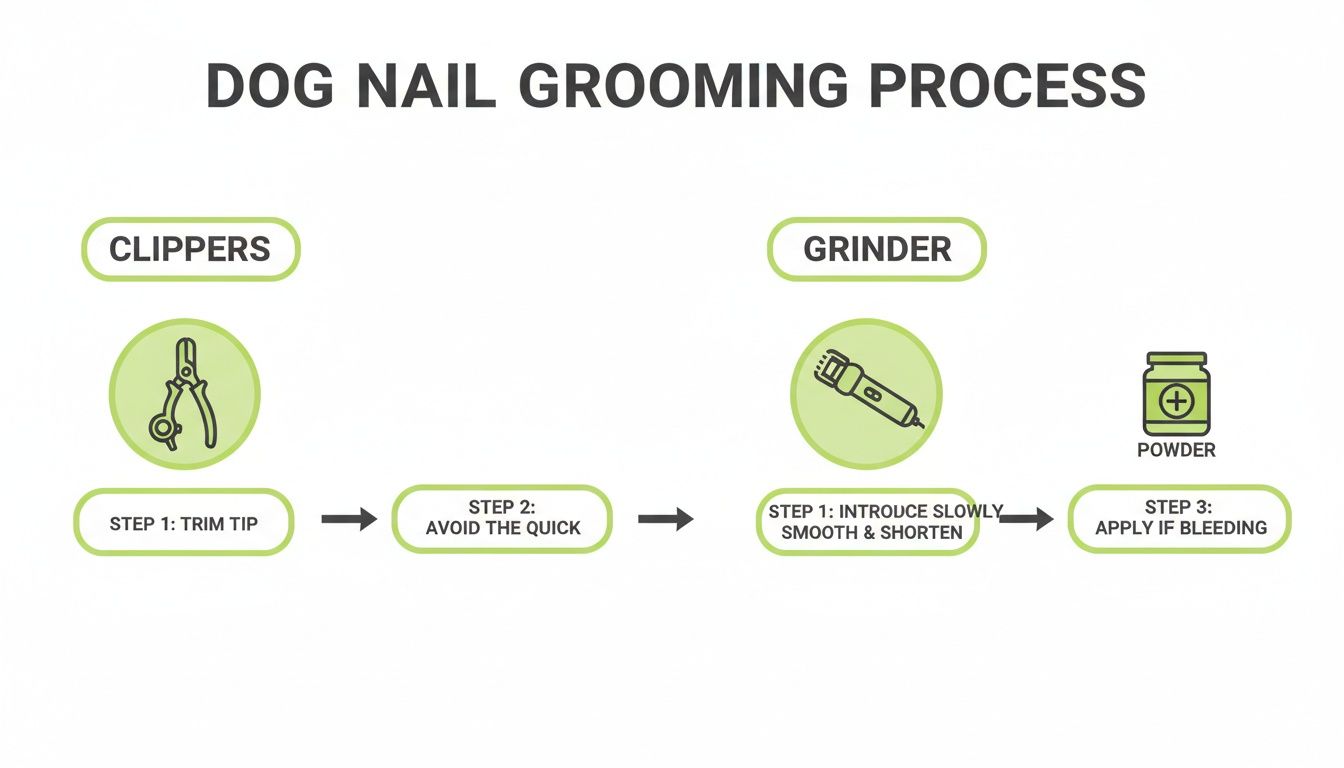
As you can see, the process moves from clipping or grinding to having styptic powder ready. Preparation is key.
Finding the Quick
The quick is the bundle of blood vessels and nerves inside the nail. Avoiding it is your top priority. Visibility of the quick depends on your dog's nail color.
- Light-Colored Nails: You can typically see the pinkish quick inside the nail. Trim only the white part, leaving a small buffer between your clippers and the pink area.
- Dark-Colored Nails: On black or dark nails, you cannot see the quick from the outside. The technique here is to examine the cut surface of the nail after each tiny snip. As you get closer to the quick, a small, dark circle will appear in the center. This is your signal to stop trimming.
The Art of the Small Sliver
Avoid trying to remove the overgrown tip in one large cut. This is a common mistake that often leads to cutting the quick. The safest approach is to trim off tiny slivers of the nail, one at a time.
Imagine slicing a carrot into very thin rounds. Each cut removes a tiny piece, giving you complete control. This method allows you to continuously check the nail's end for the "bullseye" on dark nails. It is slower but significantly safer, nearly eliminating the risk of causing pain.
Pro Tip: Cut at a slight angle that follows the nail's natural curve toward the ground, rather than straight across. This creates a more comfortable walking surface for your dog.
Making It a Positive Game
Turn nail trimming into a "touch-and-treat" game to change your dog's attitude. Before you cut, simply touch the clippers to one of your dog’s nails—without clipping—and immediately give them a high-value treat.
Repeat this several times to build a new, positive association: clippers mean a delicious reward is coming. This simple counter-conditioning technique works wonders on anxious dogs by shifting the experience from a scary procedure to a predictable, rewarding activity.
Managing Anxiety in Fearful Dogs
If the sight of nail clippers causes your dog to hide, you are not alone. Many dogs develop a fear of nail trims, often from a single negative experience. The solution is not force, but patience and changing your dog's emotional response.
The technique is counter-conditioning: replacing a negative feeling with a positive one. You want your dog to associate the clippers with a reward, like a favorite treat. This is a gradual process that builds trust.
Your calm demeanor is one of your most effective tools. Dogs are adept at reading our energy, and if you are tense, they will be too. It may be helpful to review a guide to reducing stress naturally to help you remain calm.
Reading Your Dog’s Subtle Signals
Learn to spot the early signs of stress in your dog. Recognizing these cues allows you to pause before your dog becomes overwhelmed, showing them that you respect their feelings. Forcing the issue will only increase their fear.
Watch for these quiet signals that indicate discomfort:
- Lip licking or yawning: These are common signs of anxiety outside of a tired context.
- Whale eye: This is when the whites of their eyes are visible in a crescent shape.
- Tense body or tucked tail: A rigid posture or a tail tucked under their body indicates fear.
- Pulling a paw away: This is a clear request for a break, not defiance.
When you see any of these signals, stop immediately. Let your dog relax, offer a treat for their cooperation so far, and try again later. This teaches them that their communication is effective.
For a very fearful dog, the "one nail a day" approach is highly effective. The goal is not to trim all the nails at once. Aim for one successful, calm snip, followed by praise and a favorite treat. Over a few weeks, you can trim all their nails without a single stressful episode.
Key Insight: The moment a nail trim becomes a struggle, you have already lost. Success comes from listening to your dog's signals and always ending on a positive note, even if you only managed to touch the clippers to one nail.
Use this table to quickly identify your dog's body language and how to respond.
Dog Anxiety Signals and Calming Responses
This guide helps you understand what your dog is communicating and how to respond in a way that builds trust.
| Anxiety Signal (What You See) | What It Means | Your Calming Response |
|---|---|---|
| Yawning, Lip Licking | "I'm feeling a bit uneasy about this." | Stop, let them take a breath. Offer a small treat and speak in a calm voice. |
| Whale Eye, Averting Gaze | "This is getting too intense for me." | Pause the session immediately. Let them move away if they want to. |
| Tucked Tail, Stiff Body | "I'm really scared right now." | End the session for the day. Provide comfort and end on a positive note. |
| Pulling Paw Away | "Please stop touching my foot." | Respect their boundary. Release their paw and try again later or switch to another paw. |
| Low Growl, Baring Teeth | "I'm about to cross my limit. Back off." | Serious warning. Stop everything. Do not punish the growl. Seek a professional's help. |
Responding with patience shows your dog they are safe, which is the foundation of any successful grooming routine.
Practical Distraction Techniques
For dogs with mild anxiety, distraction can be very effective. This is about giving their brain something more pleasant to focus on.
A lick mat is a popular tool for this. Smear xylitol-free peanut butter or plain yogurt on the mat and stick it to a wall. While your dog is occupied, you can often trim a few nails before they notice.
This method pairs the nail trim with a rewarding, calming activity, helping to build a positive association over time. A frozen Kong or another treat-dispensing toy can also provide a longer-lasting distraction.
What to Do If You Cut the Quick
It happens, even to experienced groomers and vets. If you cut the quick, the most important thing to do is stay calm. Your dog will read your energy; panicking will turn a minor incident into a traumatic event for them.
Take a deep breath. Your job is to stop the bleeding and reassure your dog. This is why having your supplies ready before you start is essential.
Stop the Bleeding Immediately
The fastest way to stop a bleeding quick is with styptic powder. This antihemorrhagic agent clots blood almost instantly. Take a generous pinch and press it firmly onto the tip of the bleeding nail. Hold it there with firm, gentle pressure for about 30 seconds.
If you don't have styptic powder, you can use items from your kitchen:
- Cornstarch: An effective alternative.
- Baking soda: Works similarly to cornstarch.
- Flour: Can also help stop bleeding in a pinch.
Dip the nail into a small bowl of the powder or pack it on with your fingers, applying the same steady pressure. The bleeding should stop within a minute or two.
Crucial Takeaway: Your calm and swift reaction is everything. A quick application of styptic powder or a substitute, followed by calm reassurance, teaches your dog that accidents are not a cause for panic.
Manage the Aftermath
Once the bleeding has stopped, provide emotional first aid. Your dog may be startled, so your calm leadership is important. Avoid making a dramatic fuss, as this can reinforce their anxiety.
Speak in a soft, soothing tone. Offer a high-value treat to end the session on a positive note, which helps overwrite the negative association. It is fine to stop for the day; you do not need to finish the rest of the nails.
Monitor the nail for the next 24-48 hours to ensure it does not start bleeding again and shows no signs of infection, such as redness or swelling. For a minor cut, keeping the area clean is usually sufficient. For additional peace of mind, you can learn about safe antiseptics like chlorhexidine spray for dogs to include in your pet first-aid kit.
Making Nail Trims a Normal Part of Life
Consistency is key to successful nail care. Making nail trims a predictable, regular event transforms it from a dreaded task into a routine part of your dog's life. The goal is to make it so routine it becomes uninteresting to your dog.
The frequency of trims varies. An active dog that runs on concrete may only need a trim every 4-6 weeks. A senior dog who primarily walks on soft surfaces may need their nails clipped every couple of weeks.
Finding the Right Rhythm for Your Dog
A clear sign that it's time for a trim is the click-clack sound of nails on hard floors. This indicates the nails are touching the ground before the paw pads, which can affect their gait and put pressure on their joints.
To determine the ideal schedule for your dog, consider:
- Their Lifestyle: Dogs that spend more time on hard surfaces will need less frequent trims.
- Age and Breed: Some breeds have faster-growing nails. Older, less active dogs often need more frequent trims.
- Their Diet: A healthy diet contributes to strong nails, which may require more frequent trimming.
A dog's overall well-being includes a safe, comfortable space, such as sturdy Dog Kennels. A secure dog is often more cooperative during grooming sessions.
Knowing When to Call in a Pro
There is no shame in seeking professional help. Knowing when to call a vet or groomer is a sign of responsible pet ownership. While 2024 data shows that 47% of U.S. pet owners now handle grooming tasks themselves, it's crucial to recognize when it is safer to call for backup. You can discover more insights about at-home pet care to see how this trend is growing.
It's time to make an appointment if you encounter these situations:
- Major Fear or Aggression: If your dog panics, growls, or tries to bite, do not force the issue. Professionals are trained to handle anxious dogs safely.
- Injuries or Medical Issues: If your dog has a sore paw, infection, or arthritis, let a vet handle the trim to avoid causing more pain.
- Seriously Overgrown Nails: When nails are extremely long, the quick also lengthens. If nails are curling under the paw, a vet can trim them safely.
The Bottom Line: Your confidence and your dog’s comfort are the priorities. While a consistent routine is the goal, never hesitate to call a professional. This ensures every nail trim is a safe and positive experience.
Here at Pet Magasin, we believe the right tools can turn a stressful grooming session into a great bonding moment. Take a look at our collection of high-quality, thoughtfully designed grooming supplies to help you feel more confident and keep your pet happy and healthy. Stop by and see us at https://www.petmagasin.com.

Leave a comment