
How to Start a Dog Grooming Business From Passion to Profit

So you want to turn your love for dogs into a real business? That’s fantastic. It’s an exciting journey, but it starts with a solid plan. Passion is the fuel, but a smart blueprint is the GPS that gets you to a profitable destination.
Your Blueprint for a Thriving Dog Grooming Business
Let's be clear: the pet care world is booming. We're not just talking about a growing industry; we're talking about an explosion. The global dog grooming market is on track to hit around $15 billion in 2025 and is expected to soar to $25 billion by 2033.
Why the massive growth? Simple. People treat their dogs like family and are willing to pay for top-notch care. This isn't just a fun side hustle—it's a serious business opportunity for anyone ready to do the work. The biggest mistake new groomers make is jumping in without a strategy. A well-thought-out plan is what separates the hobbyists from the successful business owners.
Choosing Your Business Path
First things first, you need to decide how you're going to operate. This is a huge decision that shapes everything from your startup budget to what your day-to-day life will look like. You've basically got three main options, each with its own set of pros and cons.
This little decision guide can help you figure out which model makes the most sense for your goals, your wallet, and the kind of lifestyle you want to build.
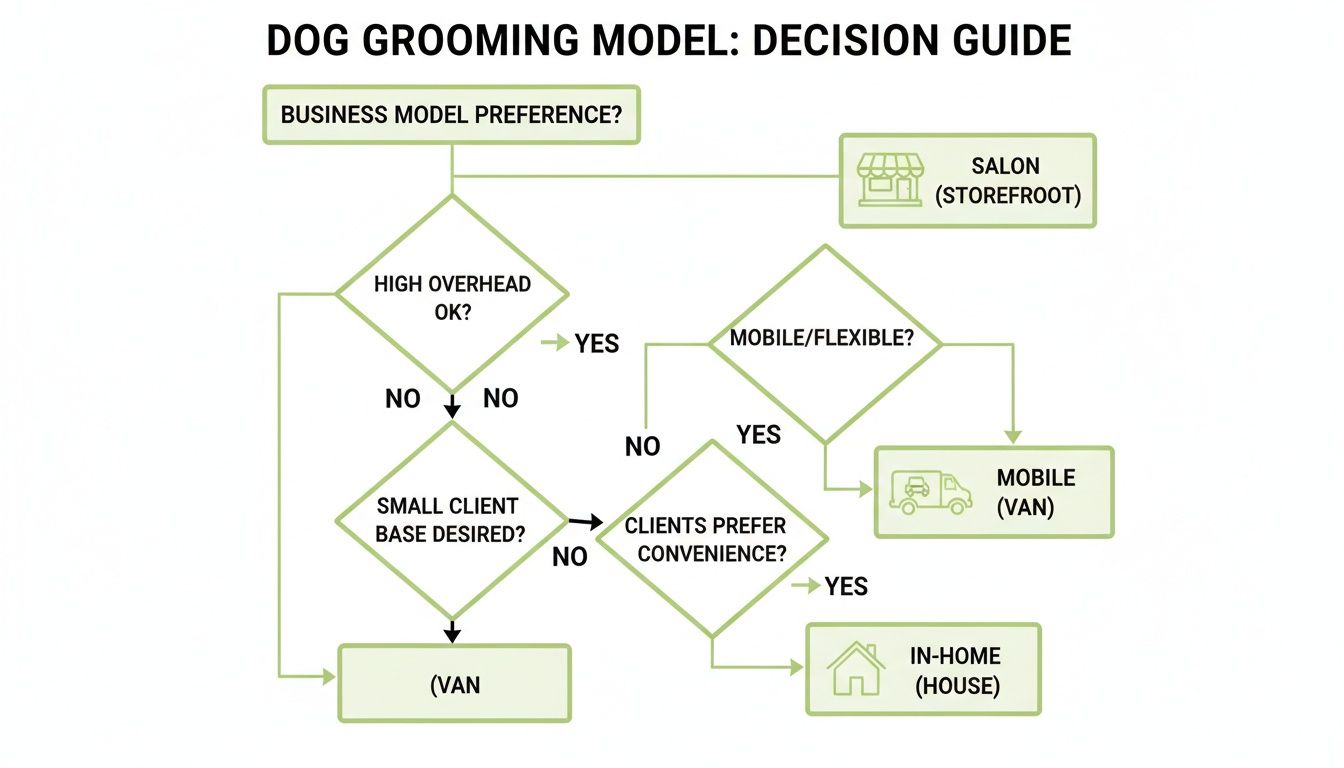
As you can see, it's all about balancing how much you can invest upfront with how much flexibility you need and what kind of service you want to offer your clients.
To help you weigh your options, here’s a quick comparison of the three primary business models. This table breaks down the essentials to help you see which path aligns best with your vision.
Comparing Dog Grooming Business Models
| Business Model | Typical Startup Cost | Operational Flexibility | Best Suited For |
|---|---|---|---|
| Brick-and-Mortar Salon | $50,000 - $100,000+ | Low (fixed location) | Groomers who want to build a large team, offer retail, and become a community hub. |
| Mobile Grooming Van | $40,000 - $80,000 | High (go to clients) | Independent groomers who value autonomy and want to offer premium, convenient services. |
| In-Home Grooming | $5,000 - $10,000 | Moderate (travel required) | Groomers starting with a very low budget who want maximum flexibility and minimal overhead. |
Choosing the right model is your first big step. A salon offers stability and growth potential, a mobile van provides incredible freedom, and in-home grooming is the leanest way to get started. Think hard about your personal and financial situation before you commit.
Laying the Financial Groundwork
No matter which path you choose, you have to get a handle on the money side of things. This is non-negotiable. Getting a firm grip on business financing for startups is a critical piece of your business blueprint. This means figuring out your initial investment for things like equipment, licenses, and marketing, plus what it'll cost to keep the lights on every month.
One of the most common traps for new groomers is underestimating their costs. Your prices can't just cover your time—they have to pay for insurance, supplies, vehicle maintenance, software, and taxes if you ever want to be profitable.
Building a detailed budget from day one is your best defense against nasty financial surprises down the road. Make sure you account for these key areas:
- Startup Capital: The big one-time costs to get the doors open (think a van down payment, a security deposit on a salon, or major equipment like tubs and tables).
- Operating Expenses: All your recurring monthly costs. This includes shampoos, fuel for your van, insurance premiums, and booking software.
- Emergency Fund: A cash cushion set aside for when things go wrong. And trust me, they will. A van engine will blow, a pipe will burst, or you'll have a slow month. Be prepared.
Getting Your Ducks (and Dogs) in a Row
Before you even think about buying your first pair of clippers, there are a few foundational pieces you need to get in place. This isn't just bureaucratic box-ticking; it’s about building a business that clients will trust from the moment they walk in the door.
Getting these first steps right protects you from liability and sets the stage for a professional, credible operation. Believe me, trying to fix these things later is a massive headache you don't need.
First things first, let's talk about your skills. A deep love for dogs is the perfect starting point, but professional training is what turns that passion into a paying career. It’s the critical difference between being a dog lover who can give a good bath and a professional groomer who can safely tackle a matted Poodle or execute a perfect Schnauzer cut.
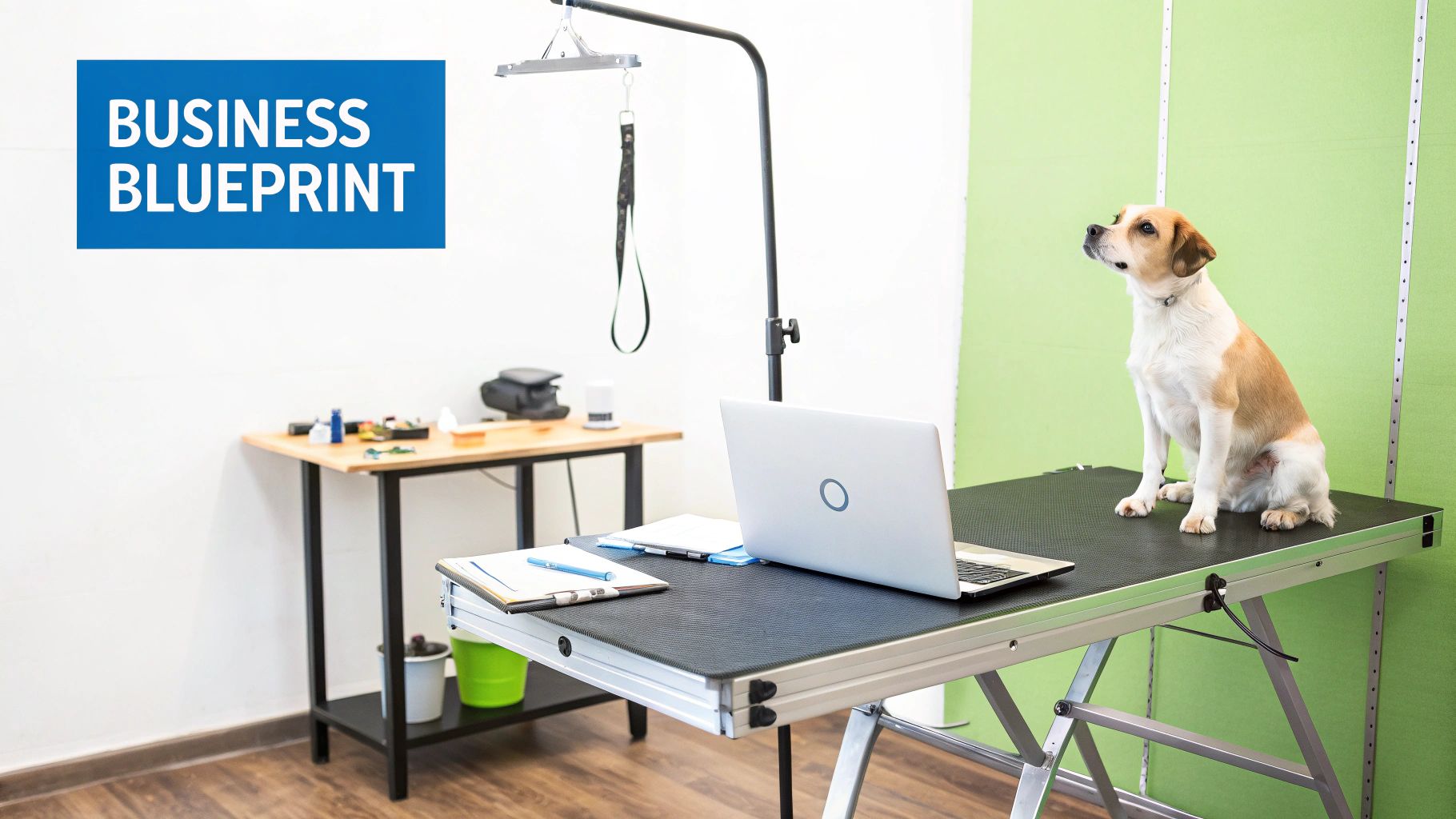
From Passion to Profession: Training and Certification
While most states don’t actually require a formal grooming license to operate, your clients will absolutely be looking for credentials. Think about it from their perspective: they're handing you a beloved member of their family. They need to see that you're committed to quality and safety.
A certificate from a reputable grooming school gives them that peace of mind. It shows you’ve put in the work to understand how to handle an anxious dog, spot a potential skin problem, and use your tools without causing an injury.
Look for programs from respected organizations like the National Dog Groomers Association of America (NDGAA). A solid curriculum will cover the essentials:
- Canine Anatomy & Health: Learning to recognize parasites, skin infections, or unusual lumps that a pet parent might have missed.
- Safe Handling: Knowing how to properly manage dogs of all sizes and temperaments to keep both the pet and yourself safe.
- Breed-Specific Cuts: Mastering the distinct grooming standards for different breeds is a must.
- Tool Expertise: Understanding how to properly use, clean, and maintain your clippers, shears, and dryers.
Your certification isn't just a piece of paper—it's one of your most powerful marketing tools. When you display those credentials in your salon or on your website, you instantly build trust and can confidently justify your prices.
Making It Official: The Legal Nitty-Gritty
Once your skills are sharp, it's time to make your business a legal entity. This part can feel a little daunting, but it’s really just a series of straightforward steps. The key is to remember that requirements can vary wildly from one town to the next, so local research is non-negotiable.
A great first stop is your local Small Business Administration (SBA) office or Chamber of Commerce. They exist to help people like you navigate the local rules.
Generally, here’s what you’ll be looking at:
- Register Your Business Name: You might file for a "Doing Business As" (DBA) if you’re a sole proprietor, or the name will be part of your LLC formation.
- Pick a Business Structure: Most new groomers start as a Sole Proprietorship (the simplest) or an LLC (Limited Liability Company) to protect their personal assets.
- Get Your EIN: An Employer Identification Number (EIN) is essentially a Social Security number for your business. It’s free from the IRS and you’ll need one to hire staff or open a business bank account.
- Secure Local Licenses: You’ll almost certainly need a general business license. If you're going mobile, you'll likely need a vendor permit, too.
Don’t Skip This: Getting the Right Insurance
I can’t stress this enough: insurance is non-negotiable. A single accident without proper coverage could sink your entire business and even put your personal savings at risk. You absolutely need a policy designed specifically for pet care professionals.
There are two main types of coverage you must have:
- General Liability Insurance: This covers things like a client tripping over a hose in your salon or you accidentally damaging something in their home.
- Professional Liability Insurance: This is the big one, often called "errors and omissions." It protects you if a dog is accidentally injured during a groom—a clipper burn, a nick from scissors, or an allergic reaction to a new shampoo.
Don't just grab the cheapest policy you can find. Talk to an agent who actually understands the pet industry. They'll make sure you're covered for the real-world risks you'll face every day. Getting these foundational pieces right is the bedrock of a long-lasting, professional dog grooming business.
Equipping Your Business for Success
The tools you choose and the way you set up your workspace will make or break your business. I'm not exaggerating. Your day-to-day efficiency, the safety of the dogs you groom, and the quality of your finished work all come down to your equipment. Skimping on the basics is a classic rookie mistake, and it always leads to frustration, slower grooms, and even potential injuries for you and the pets.
Think of your gear not just as a startup cost, but as a direct investment in your reputation. High-quality, durable tools pay for themselves over time, and clients can absolutely tell the difference.
Building Your Core Grooming Toolkit
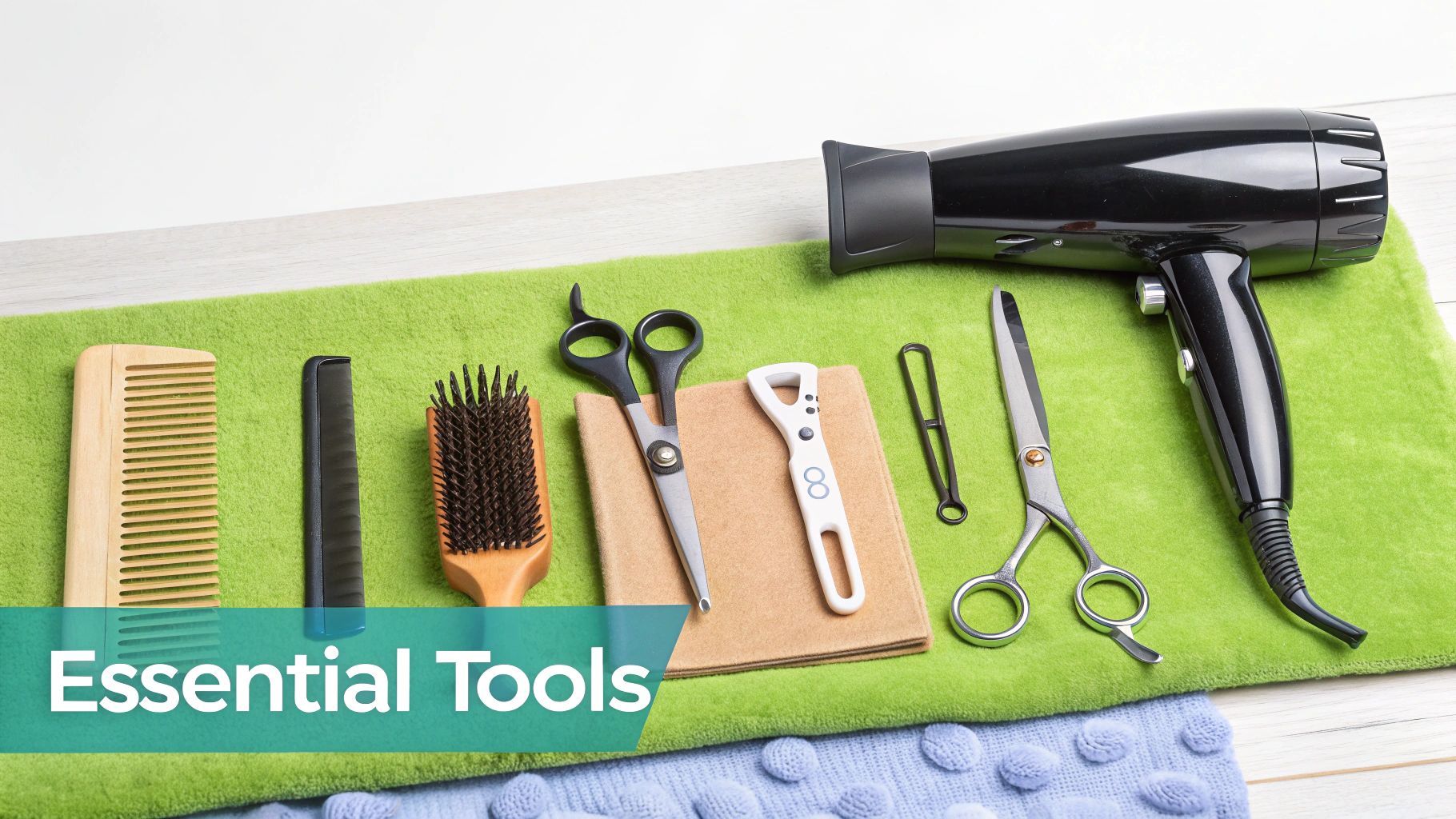
Whether you're opening a salon, hitting the road in a van, or grooming from your home, some tools are completely non-negotiable. This is the foundation of your entire operation. Investing in professional-grade, ergonomic equipment will save your body from strain and help you deliver those picture-perfect grooms every single time.
Here's a rundown of the absolute must-haves:
- Professional Clippers: You need a reliable, heavy-duty model with a motor that won't quit. A cordless clipper gives you amazing flexibility, but a corded one can be a real workhorse for those tough, matted jobs.
- A Versatile Blade Set: You’ll need a solid range of blades to handle different coats and lengths. Start with the basics like a #10, #7F, #5F, and #4F. Go for stainless steel or ceramic—they stay sharper, longer.
- High-Quality Shears: Don't go cheap here. A good starter set includes straight shears, curved shears for shaping around paws and faces, and thinning shears for blending.
- Sturdy Grooming Table: Safety first, always. Look for a hydraulic or electric table with a non-slip surface and a secure grooming arm. This is what keeps the dogs safely in place while you work.
- High-Velocity Dryer: This is a game-changer for getting coats dry safely and efficiently, especially on double-coated breeds like Huskies or Golden Retrievers. It will cut your drying time in half, easily.
- Safe Bathing Tub: A professional grooming tub is a must. A stainless steel one with a ramp for bigger dogs will save your back and create a much more secure bathing setup.
Beyond the big-ticket items, you'll need a solid stock of quality consumables. Having a variety of shampoos and conditioners for different needs—like hypoallergenic, oatmeal-based for itchy skin, and whitening shampoos—shows clients you're a true professional who's prepared for their dog's specific needs. You can dive deeper into the essentials in our guide on professional dog grooming equipment.
Workspace Design and Functionality
How you arrange your space is just as critical as the tools you fill it with. A smart, efficient layout keeps dogs calm and helps you work faster. Of course, the ideal setup looks very different depending on your business model.
A traditional brick-and-mortar salon needs a location with great visibility and easy parking. Inside, your layout should create separate, low-stress zones for each part of the grooming process. A well-designed shop will have distinct areas for:
- Reception and Check-in: A clean, welcoming spot for clients and their pups.
- Bathing Station: A waterproofed area with excellent drainage is a must.
- Drying Zone: A dedicated space where dogs can be dried away from the main floor helps reduce noise and stress for everyone.
- Styling Floor: Your main stage, with grooming tables and all your tools within reach.
- Holding Area: Secure, comfortable kennels for dogs waiting for their turn or for their parents to pick them up.
If you’re launching a mobile business, that van is everything—your salon, your office, and a rolling billboard. A professional van conversion is not something you can cut corners on. This means proper plumbing for hot and cold water, a reliable power source (like a generator or inverter system), and powerful ventilation to manage temperature and humidity.
The success of your dog grooming business hinges on having the right tools for the job. From ergonomic shears to specialized shampoos, quality equipment not only ensures a better groom but also communicates a high standard of care that clients will notice and appreciate.
The demand for these products is only growing. The pet grooming market for supplies like shampoos and sprays is projected to jump from $487.34 million in 2026 to an estimated $730.84 million by 2032. This tells you that pet owners are willing to pay for premium care, making your choice of high-quality supplies a key way to stand out.
Once you've got your physical setup figured out, it's smart to think about tools that make running the business easier. A great next step is learning how to integrate online booking for your pet grooming business.
Crafting Your Service Menu and Pricing Strategy
Figuring out what to charge is one of the trickiest—and most important—decisions you’ll make. It’s not just about covering your costs; it’s about signaling your value to potential clients.
The biggest pitfall I see new groomers fall into is trying to be the cheapest option in town. It seems like a good way to get your first few customers, but it's a trap. A low price tag attracts bargain hunters who have zero loyalty. The moment someone else undercuts you by a few bucks, they're gone.
Instead of a race to the bottom, focus on competing based on the value you provide. Your prices should be a reflection of your expertise, the professional-grade products you use, and the fantastic experience you give every dog that comes through your door. A great first step is to see what other established groomers in your area are charging. Don't just copy their prices—use them as a benchmark to understand the local market.
Designing a Tiered Service Menu
A smart service menu doesn't just list prices; it guides your clients toward making a great choice for their pet and, in turn, boosts your average sale. The best way to do this is with a tiered package system. It's clean, easy to understand, and naturally encourages upselling.
Here’s a simple, effective structure many successful groomers use:
- The Basic Bath & Brush: This is your essential, entry-level package. It should cover the fundamentals: a quality bath and blow-dry, a thorough brush-out, a nail trim, and an ear cleaning.
- The Full Groom: This will likely be your bread and butter. It includes everything from the basic package, plus a full haircut or breed-specific styling.
- The Spa Package: This is your premium, all-the-bells-and-whistles option. It bundles the full groom with luxurious extras like a deep-conditioning treatment, paw balm, a blueberry facial, and teeth brushing.
This kind of tiered menu takes the guesswork out of it for your clients. They aren't paralyzed by a long list of add-ons. Instead, they can quickly see the value in each package and choose what fits their dog’s needs and their budget.
Building Flexibility into Your Pricing
As any groomer knows, no two dogs are the same. A standard "small dog" price just doesn't work when you're comparing a well-behaved Shih Tzu with a severely matted Miniature Poodle. Your pricing absolutely must account for these differences.
Your menu should make it crystal clear that your prices are starting points. This sets the right expectations from the get-go and saves you from awkward conversations at checkout.
You need to have transparent upcharges for the common variables you'll encounter. Be prepared to adjust your base price for things like:
- Coat Condition: De-matting takes significant time, skill, and wear-and-tear on your equipment. It absolutely warrants a serious upcharge.
- Temperament: If a dog is especially difficult or requires a second person for safe handling, a special handling fee isn't just fair—it's necessary.
- Size and Coat Type: It’s simple math. A Standard Poodle takes much longer than a Yorkie, and a double-coated Husky is a bigger job than a Beagle.
When you communicate these potential charges upfront—on your website, in your brochure, and during the consultation—you position yourself as a true professional. It shows clients you know your stuff, builds trust, and justifies your prices. For more on how grooming schedules can play into your packages, check out our article on how often you should groom your dog.
Marketing Your Business and Attracting Loyal Clients
Let's be honest, an empty appointment book is every new groomer's worst nightmare. But here's the good news: filling it up isn't about having a huge marketing budget. It's about a smart, consistent strategy that mixes a little digital savvy with some good old-fashioned local networking.
Before we dive in, remember this: exceptional service is your single best marketing tool. Full stop. The local pet community is tight-knit and runs on word-of-mouth. A happy client who trusts you with their four-legged family member is going to be your biggest cheerleader at the dog park.
Building Your Digital Storefront
Your website is your online salon. It needs to be clean, inviting, and super easy for potential clients to use, especially on their phones. It absolutely must have your services, pricing, and contact info front and center.
But the real showstopper? A killer photo gallery. High-quality before-and-after photos are pure gold. They're instant proof of your skills and help a potential client picture their own scruffy pup looking just as fabulous.
Platforms like Instagram and Facebook are practically made for dog groomers. They’re the perfect place for:
- Showcasing Transformations: Those before-and-after shots are incredibly powerful.
- Sharing Quick Tips: A short video on the right way to brush a Golden Doodle or a tip for getting a dog used to nail trims positions you as the go-to expert.
- Behind-the-Scenes Peeks: Let people see your sparkling clean workspace and happy, relaxed dogs. It builds trust.
Your online presence is often the very first impression someone has of your business. Make it count. Show off your professionalism, your expertise, and most importantly, your genuine love for the animals you care for. You'll build trust before they even pick up the phone.
Creating Local Partnerships and Buzz
While a solid online game is crucial, you can't forget about your own backyard. Getting out there in the community is what builds a truly loyal, local client base. Start by thinking about who else is already serving the pet parents in your town.
Building a referral network is one of the most effective and cheapest ways to get new clients. Make friends with the people at:
- Local veterinary clinics
- Dog walking and pet-sitting services
- Boutique pet supply stores
- Doggy daycare facilities
Drop off a small stack of your business cards and propose a simple referral program. A "10% off their first groom" offer for any client they send your way is a great incentive. It’s a win-win that helps everyone’s business grow.
And the opportunity is huge. The pet grooming and boarding industry in the U.S. is on track to have 193,000 businesses by 2026, tapping into a massive $15.4 billion market. With 56% of U.S. dog owners using professional groomers—and an incredible 80% of them becoming repeat customers—the potential is definitely there. You can dig into the numbers on the growth in the pet grooming industry on IBISWorld.
Turning First-Time Clients into Raving Fans
Getting a new client in the door is just the first step. The real magic—and the key to a sustainable business—is turning them into a regular.
When the owner comes to pick up their beautifully coiffed pup, make rebooking feel natural and easy. As you're going over how everything went, you could say, "Bailey did so great today! To keep his coat from getting matted, I'd really recommend we see him again in about six weeks. Would you like to get that on the calendar now?" It's a helpful suggestion, not a hard sell, and it often secures the next appointment right then and there.
For pet parents who are new to this, you can also be a helpful resource. Pointing them to something like our guide on how to groom your dog at home shows you care about their pet's well-being, even between professional grooms.
Your First 90 Days: A Launch and Growth Plan
A killer launch doesn't just happen on its own; it's the payoff from a really solid, thought-out plan. Those first 90 days after you flip the "Open" sign are all about building momentum. Breaking this crucial time into three 30-day sprints makes the whole thing feel way less overwhelming and gives you clear, manageable goals to hit.

This is where all your planning gets real. You're finally turning that business plan into a living, breathing operation that brings in happy clients (and keeps them coming back).
Month 1: The Operational Readiness Sprint
Your first 30 days are all about making sure everything behind the scenes runs like a well-oiled machine before the public walks in. The mission here is to iron out every single kink, so your first paying customers have a fantastic, seamless experience. Think of it as your dress rehearsal.
A great way to do this is with a soft launch. Get your friends, family, and their pups in for some free or heavily discounted grooms. This is the perfect low-pressure situation to test everything from your new booking software to that fancy high-velocity dryer.
Your Action Checklist for Month 1:
- Systems Check: Fire up every piece of equipment, check the water pressure and temperature, and arrange your supplies so you can grab what you need without thinking.
- Booking Process Refinement: Make your "soft launch" guinea pigs book their appointments online. This is the best way to see if the process is actually easy to use or a frustrating mess.
- Timing Your Grooms: Use these first few grooms to get a real-world feel for how long different breeds and cuts actually take you. This info is gold when it comes to building an efficient schedule.
A smooth operational foundation isn't just nice to have—it's everything. Trust me, it's way easier (and less embarrassing) to fix a clunky booking system or a finicky water heater before your schedule is packed with paying clients.
Month 2: The Client Acquisition and Feedback Loop
Okay, your systems are humming along. Month two is all about getting those first real clients through the door and, more importantly, learning from them. Your marketing should be in full swing now. It's time to be proactive and turn every single appointment into a chance to build your reputation.
Don't be shy about asking for feedback. A simple, "Was there anything about your experience today that we could improve?" can give you incredible insights. This feedback is pure gold, helping you tweak your services to give people exactly what they want.
At the same time, you have to actively ask for online reviews. A business with zero reviews feels like a gamble to potential new clients. Politely ask your happy customers to leave a review on Google or Facebook. This kind of social proof is one of the most powerful marketing tools you've got.
Month 3: The Retention and Growth Phase
In the final 30-day sprint of your launch plan, the focus shifts from just getting clients to keeping them. Holding onto the customers you already have is so much cheaper and easier than constantly chasing new ones. This is the perfect time to roll out a simple loyalty program.
Think straightforward and effective:
- Punch Cards: A classic for a reason. Offer a free nail trim or a discount after five or ten grooms. People love a freebie.
- Referral Bonuses: Give an existing client a discount on their next groom when they send a new customer your way. It's a win-win.
This is also the month to really nail down your social media presence. Be consistent. Post your best before-and-after photos, share quick grooming tips, and show off the happy dogs leaving your salon. An active, engaging online profile keeps your business at the front of people's minds and starts to build a community around your brand—setting you up for real, long-term growth.
Your Top Questions Answered
When you're mapping out how to start a dog grooming business, a million questions probably pop into your head. It's completely normal. Let's tackle some of the most common ones we hear from groomers who are just starting out.
How Much Does It Really Cost to Start a Dog Grooming Business?
This is the big one, and the honest answer is: it depends entirely on the path you take.
You can get a lean, home-based business off the ground for as little as $2,000 to $5,000. That covers your essential training, a solid set of professional tools, and your first batch of supplies. This is definitely the route with the lowest financial hurdle.
Thinking about going mobile? That’s a much bigger investment. A professionally outfitted van is your main expense, and that can put your total startup costs anywhere from $40,000 to over $100,000.
Opening a physical salon is the most capital-intensive option. You're looking at $60,000 to $150,000+ once you factor in rent deposits, renovations, and a full suite of commercial-grade equipment.
Do I Actually Need a Certification to Be a Dog Groomer?
Legally speaking, most states don't require you to have a specific certification to groom dogs. But from a business perspective, getting one is one of the smartest things you can do.
Graduating from a respected grooming school or getting certified by an organization like the National Dog Groomers Association of America (NDGAA) is a huge trust signal for potential clients.
Think of it this way: your certification isn't just a piece of paper. It's proof that you're committed to professional standards, safety, and advanced skills. It gives you the confidence to charge what you're worth and helps new clients feel at ease leaving their furry family members with you.
What's the Most Profitable Dog Grooming Business Model?
Profitability is less about the type of business and more about how you run it. Each model has its own financial perks.
Mobile grooming often has fantastic profit margins. Your overhead is lower than a salon's, and you can charge a premium for the convenience of coming directly to your clients' homes.
A traditional brick-and-mortar salon has higher operating costs, but it also has the highest potential for overall revenue. You can scale up by hiring more groomers, offering doggy daycare, and selling retail products.
Home-based grooming is extremely profitable on a smaller scale simply because your expenses are so low. It's a fantastic, low-risk way to get your foot in the door and build a loyal client base.
For all your grooming needs, from durable shears to safe, effective shampoos, Pet Magasin provides professional-grade supplies designed for the highest standard of pet care. Equip your new business for success by exploring our collection at https://www.petmagasin.com.

Leave a comment