
How Often Should You Groom Your Dog: An Actionable Grooming Schedule

When it comes to grooming, every dog is different. While a full professional groom every 4-8 weeks is a good baseline, your daily tasks like brushing depend entirely on their coat. Plan on daily brushing for a long-haired breed, but you might only need to do it once a week for a short-coated pal.
Your Dog Grooming Schedule Simplified
Trying to create the perfect grooming schedule can feel overwhelming. There’s simply no one-size-fits-all answer. A Poodle's dense, curly coat has completely different needs than a Boxer's sleek, short fur, so a generic approach won’t work.
To avoid common grooming headaches, you need to build a routine that’s perfectly suited to your dog's specific coat. For example, consistent brushing is your primary tool for preventing painful mats on long-haired dogs, and it’s the key to managing shedding from double-coated breeds like Huskies. The right schedule keeps their skin healthy, their coat looking great, and most importantly, keeps them comfortable.
If you want to dig deeper into the specifics, you can explore a wide array of dog grooming topics for more great insights. For now, let's start with this actionable guide.
Grooming Frequency by Dog Coat Type
Use this table as your starting point to build a routine for brushing, bathing, and professional grooming based on your dog's coat.
| Coat Type | Brushing Frequency | Bathing Frequency | Professional Grooming |
|---|---|---|---|
| Short-Haired (e.g., Beagle, Boxer) | Once per week | Every 4-6 weeks | As needed for nails/ears |
| Long-Haired (e.g., Collie, Shih Tzu) | Daily to every other day | Every 4-6 weeks | Every 8-12 weeks |
| Double-Coated (e.g., Husky, German Shepherd) | 3-4 times per week | Every 6-8 weeks | Every 10-12 weeks for undercoat |
| Curly/Wavy-Coated (e.g., Poodle, Doodle) | Daily or every other day | Every 4-6 weeks | Every 4-6 weeks for trims |
| Wire-Haired (e.g., Terrier, Schnauzer) | 2-3 times per week | Every 6-8 weeks | Every 8-12 weeks for hand-stripping |
Apply these guidelines to create a grooming plan that works for you and your furry friend. Remember, consistency is the most important part of any routine.
Factors That Influence Your Grooming Routine
While your dog's coat type is a great place to start, it's really just the foundation. You still need to adjust your plan based on your dog's age, lifestyle, and overall health. What works for a neighbor's dog might not be the best fit for yours, even if they look similar.
To answer "how often should you groom your dog," you have to get specific. A rambunctious puppy who loves rolling in the mud requires a different schedule than a senior dog who prefers the couch. Your grooming plan should reflect their unique lives.
Age and Developmental Stage
A dog's age directly impacts how often—and how—you should groom them. Puppies, for instance, need frequent but very short and gentle grooming sessions. The goal is less about cleanliness and more about positive association. Your job is to teach them that brushes, clippers, and baths are normal, safe parts of life.
Senior dogs often require more specialized care. Their skin might be more sensitive, or arthritis could make standing for long periods difficult. You should plan to groom them more often but in shorter, gentler bursts, always prioritizing their comfort and hygiene.
Lifestyle and Activity Level
Your dog's daily activities are a huge factor in their grooming needs. A Golden Retriever who spends every weekend swimming and hiking will need more attention than a Pomeranian who is perfectly happy on the sofa. Outdoor activity means more mud, burrs, and potential for tangles that you'll need to manage.
A dog's lifestyle is a direct predictor of their grooming requirements. The more they explore the world, the more of the world they bring home in their fur.
Here’s how to adjust your routine for different lifestyles:
- The Outdoor Adventurer: Plan for frequent brush-outs to remove debris and check for ticks. Schedule more regular baths to wash away trail dirt.
- The City Dweller: Make paw wiping a daily ritual to clean off street grime, but you can schedule full-body baths less often.
- The Couch Companion: Focus on regular brushing to keep shedding under control, but you can stretch the time between baths.
This handy flowchart can help you visualize how to build a grooming plan based on your dog's specific coat.
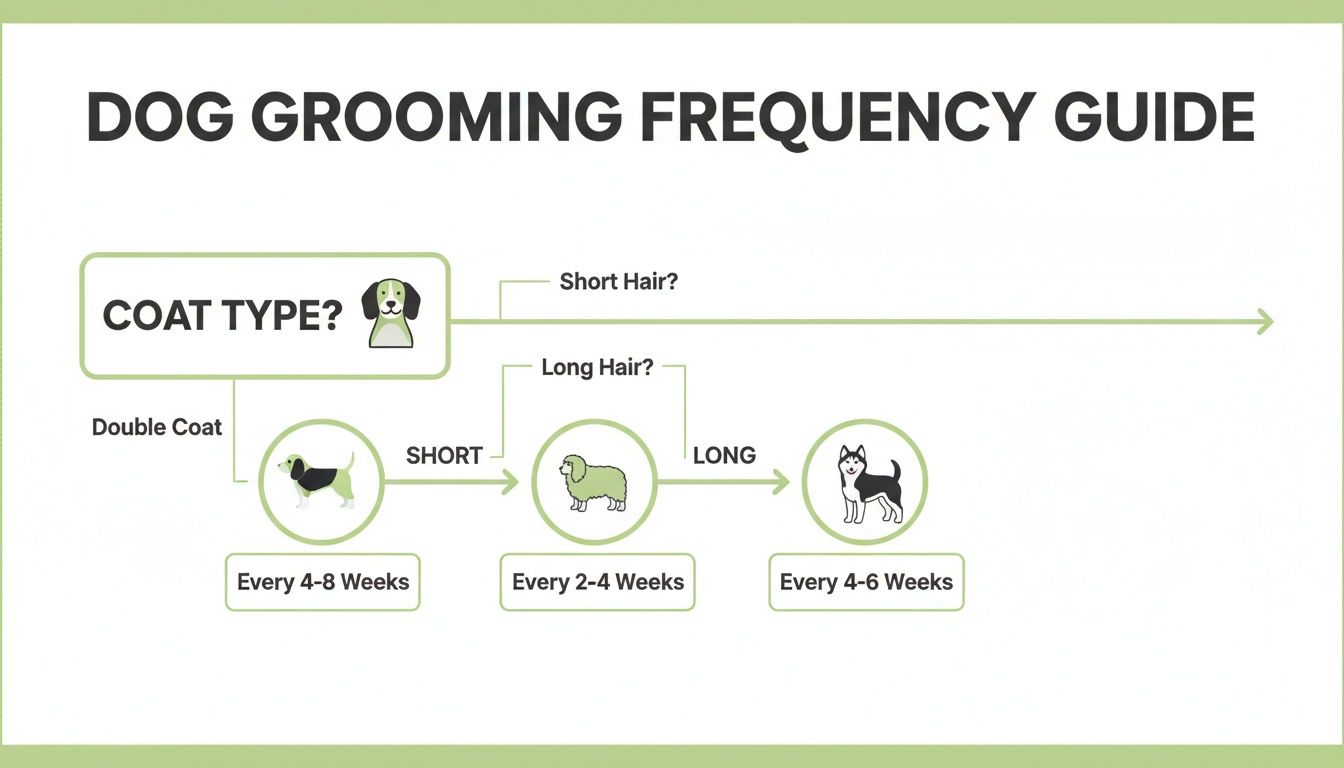
As you can see, the coat is the foundation, but lifestyle and health are crucial layers that shape the final routine.
Health and Skin Conditions
Underlying health issues can completely change your grooming plan. If your dog suffers from allergies, your vet might prescribe medicated baths far more often than typical for their coat type. These baths function as a medical treatment to soothe irritated skin and wash away allergens.
Similarly, if your dog is prone to ear infections, you must perform weekly ear cleanings, regardless of their breed. For heavy shedders, you may need to increase brushing sessions. For extra pointers, you can learn how to stop dog shedding with a few targeted strategies. Always consult your vet to ensure your grooming routine supports your dog's specific health needs.
Your Actionable Grooming Checklist
To turn grooming from a chore into a simple, consistent routine, break it down into daily, weekly, and monthly tasks. This approach eliminates guesswork and makes the entire process feel like a bonding ritual rather than a mountain to climb.
It’s all about small, manageable steps. Instead of a massive, stressful grooming session every few months, you perform small tasks regularly. This is like tidying your kitchen for five minutes every day versus facing a disaster zone once a month.
Daily Habits for Health
Perform these simple checks each day—they take less than a minute but can prevent bigger problems. These habits are essential for dogs with long fur or those who spend a lot of time outdoors.
- Quick Brush-Through: For any dog with a long or curly coat, perform a quick daily brush to stop tiny tangles from becoming painful mats.
- Wipe Paws: Use a damp cloth to wipe their paws after every walk to remove dirt, pollen, and de-icing salts that can irritate their paw pads.
- Check Eyes: Gently wipe away any discharge from the corner of their eyes with a soft, damp cloth to prevent buildup and tear stains.
Weekly Maintenance Routine
Set aside a specific time each week, like Sunday afternoon, for a more thorough check-in. This helps make it a habit that sticks.
Just 20-30 minutes once a week is enough to cover tasks that don't need daily attention but are critical for long-term health. Use this time to do a detailed inspection and handle key hygiene tasks.
A proactive weekly grooming routine is your best defense against common yet preventable health problems like dental disease, ear infections, and skin irritation. Consistency is everything in great pet care.
Here’s your weekly action plan:
- Thorough Brushing: Give your dog a full-body brush-out, regardless of their coat type. This distributes natural skin oils, removes loose fur, and controls shedding.
- Ear Cleaning: Look inside your dog’s ears for any redness, unusual odors, or discharge. Clean them weekly with a vet-approved solution to prevent infections, which is a must for floppy-eared breeds.
- Dental Care: Brush your dog’s teeth several times a week with a dog-friendly toothpaste. This is the most effective way to fight plaque and prevent painful dental disease.
Monthly and Seasonal Tasks
Monthly tasks are the bigger jobs that round out your grooming schedule. These tasks become much easier when you've kept up with daily and weekly maintenance.
Nail trimming is a crucial monthly job. If you hear their nails click-clacking on the floor, it's a clear signal they are too long and may be affecting their posture and comfort. If you're new to this task, review a guide on selecting the right dog nail cutter to get started correctly.
A professional groomer is another key part of your long-term plan. A survey of pet owners across five countries revealed that 37% take their dogs to a professional every 2-3 months. This timing aligns with hair growth cycles and allows an expert to maintain your dog's coat and spot any issues you might have missed. You can read more about consumer preferences in the grooming sector to see how other owners handle professional care.
Actionable Grooming Task Schedule
To make it even easier, use this checklist to stay on track. This table breaks down all the essential grooming tasks into a clear, manageable schedule.
| Frequency | Task | Recommended Tool |
|---|---|---|
| Daily | Quick brush (for long/curly coats) | Slicker Brush or Grooming Comb |
| Wipe paws after walks | Soft, damp cloth or pet-safe wipes | |
| Check & wipe eyes | Soft, damp cloth | |
| Weekly | Thorough all-over brushing | De-shedding tool or appropriate brush for coat type |
| Clean ears | Vet-approved ear cleaning solution & cotton balls | |
| Brush teeth (2-3 times) | Dog-specific toothbrush and toothpaste | |
| Monthly | Trim nails | Nail Clippers or grinder |
| Bathe as needed (varies by breed) | Dog-specific shampoo & conditioner | |
| Seasonally | Professional groom (every 2-4 months) | A trusted professional groomer |
| Check & update flea/tick prevention | As prescribed by your veterinarian |
This schedule provides a solid foundation. Adapt it to your dog’s unique needs to keep them happy, healthy, and well-groomed.
Building Your At-Home Grooming Toolkit
Having the right grooming tools is like having the right ingredients for a recipe—it makes the process smoother, safer, and yields a better result. A well-stocked toolkit can transform at-home grooming from a dreaded chore into a bonding experience. It’s the first step to confidently handling your dog's grooming needs yourself.
Investing in quality gear directly impacts your dog's comfort. A cheap brush can snag fur and pull at their skin, while dull nail clippers can crush the nail instead of cutting it cleanly. The right equipment makes the whole process more positive for both of you.
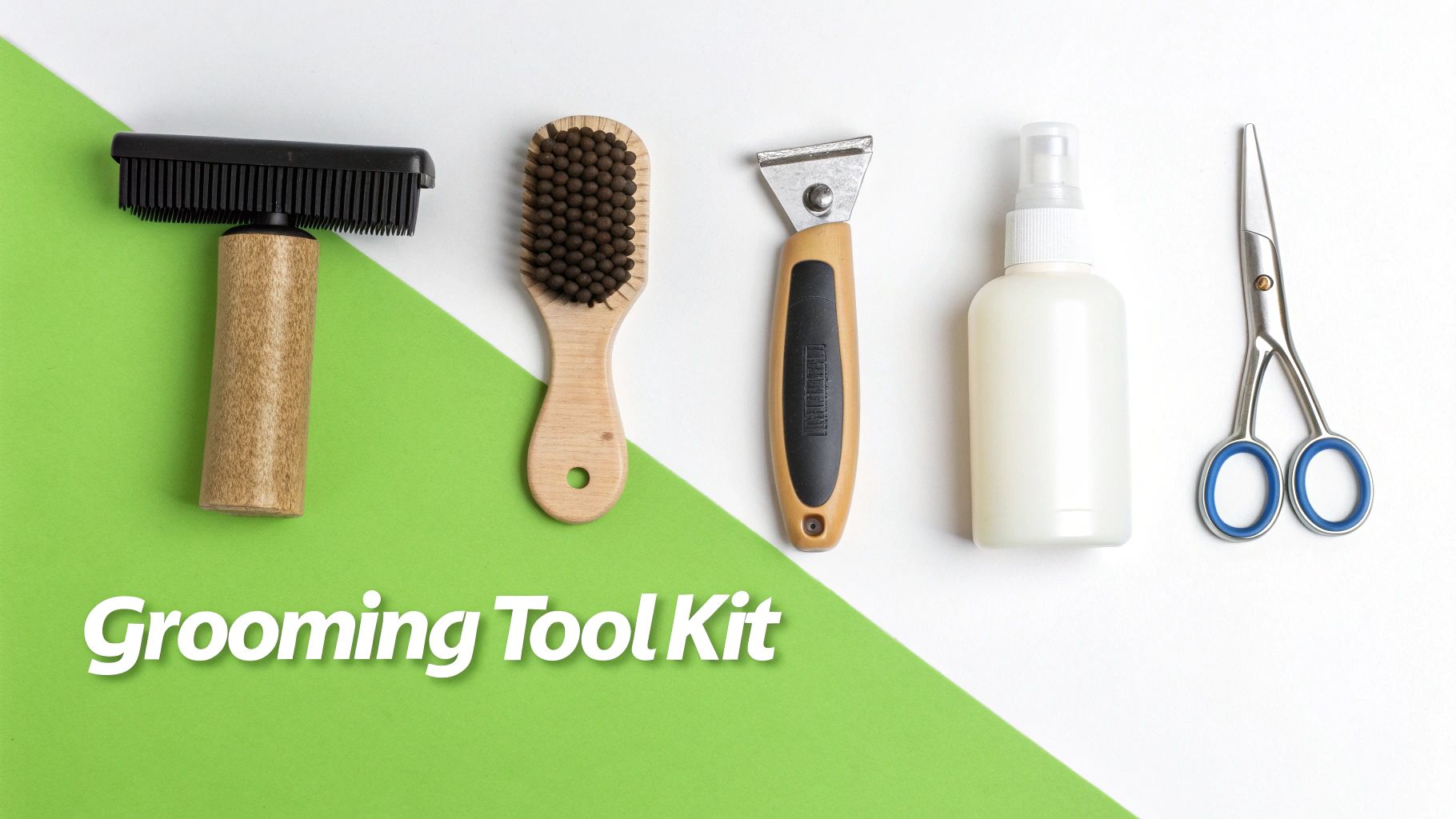
Essential Brushes and Combs
The brush is the most-used item in any grooming kit, and you must match the brush to the coat type to manage everything from shedding to tangles effectively.
- Slicker Brush: This is non-negotiable for dogs with medium-to-long or curly fur. Its fine, short wires excel at removing tangles, mats, and loose undercoat.
- Bristle Brush: If you have a short-haired, smooth-coated dog like a Beagle, use a bristle brush. It removes loose hair and distributes natural skin oils to create a healthy shine.
- De-Shedding Tool: For double-coated breeds like a Husky or German Shepherd, this tool is essential. It is specifically designed to pass through the topcoat and remove the dense, dead undercoat without damaging the guard hairs.
When you're ready to build your kit, browse different grooming and cleaning products to find the perfect match for every task.
Using the right brush isn't just for looks. It’s a vital part of preventing painful mats, keeping shedding under control, and supporting healthy skin.
Nail and Coat Care Must-Haves
Beyond brushing, a few other tools are essential for a complete at-home grooming session. These items help you manage the small details that are critical for your dog's health.
First, get a good pair of nail clippers or a grinder. When a dog’s nails get too long, it can alter their posture and cause discomfort or pain. Choose between guillotine or scissor-style clippers, or an electric grinder—whichever you and your dog are most comfortable using.
Next, ensure you have a dog-specific shampoo and conditioner. Human products have the wrong pH balance for a dog's skin and can strip away natural oils, leading to dryness and irritation. To get a full list of what your toolkit needs, review this guide to the best grooming tools for dogs. With these basics, you'll be prepared for any grooming task.
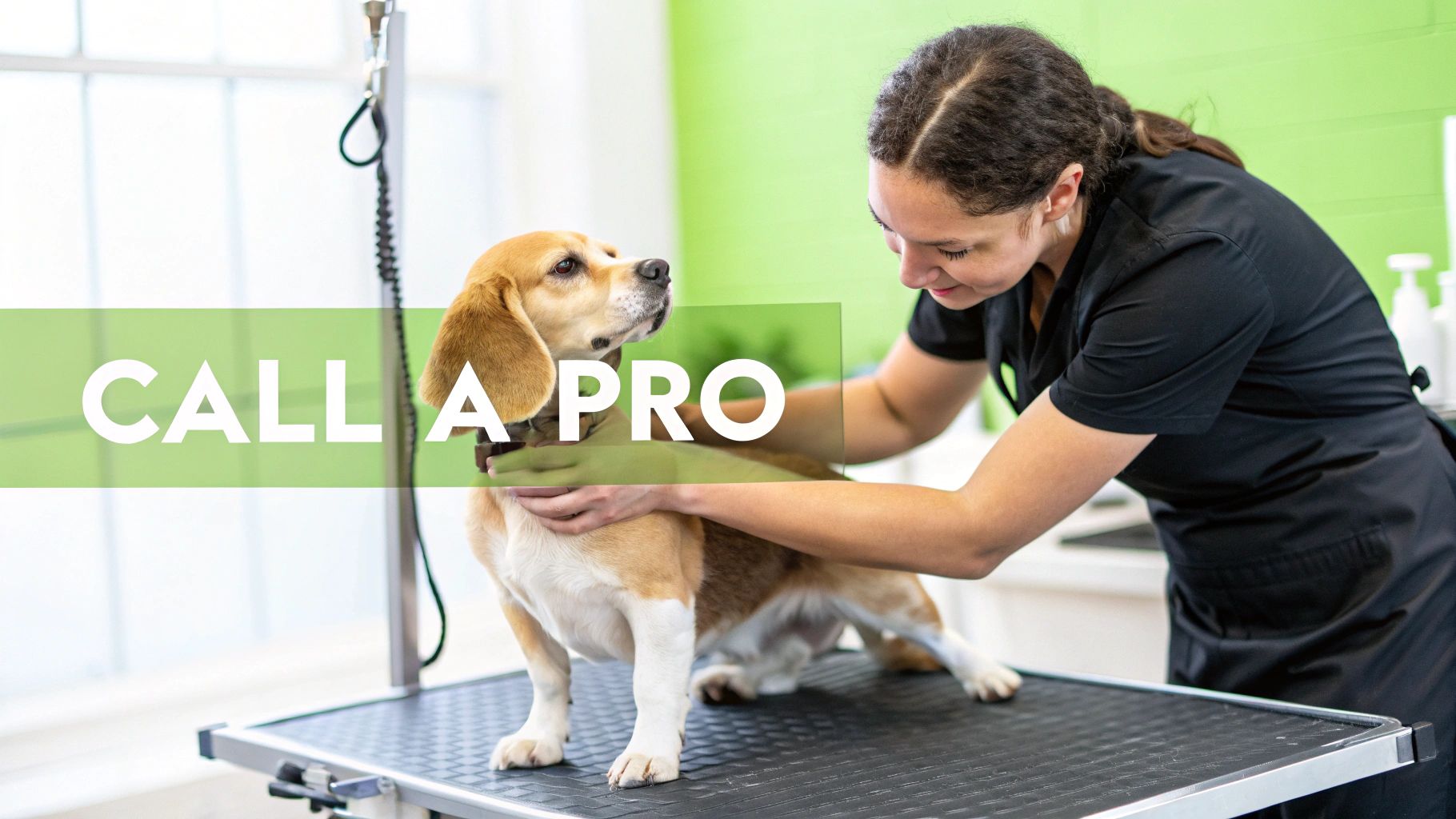
When To Call A Professional Groomer
Deciding between DIY grooming and a professional visit is a balancing act. Grooming your dog at home is a great way to bond and monitor their skin and coat, but there are times when an expert is necessary for your dog's health and comfort.
Knowing when to call a professional is a key part of any smart grooming routine. For many owners, a hybrid approach works best: you handle the daily maintenance, and a professional manages the more technical tasks. This gives your dog consistent care from you and the specialized touch of an expert.
Signs It’s Time For A Professional
While your home grooming kit is perfect for maintenance, some jobs require specialized tools and a trained hand. A professional groomer has the right equipment to handle difficult situations safely and efficiently, making them a valuable partner in your dog's care.
Book an appointment if you spot any of these signs:
- Severe Matting: If you find tight, tangled mats, do not try to cut them out at home. This can be painful and easily lead to skin injuries. Professionals have the tools to safely shave or work them out without harming your dog.
- Complex Haircuts: Achieving a specific look, like a Poodle or Schnauzer cut, requires precision and skill. Let a professional handle these breed-specific styles safely and correctly.
- Thick Double Coats: Breeds like Huskies and Malamutes need a periodic "blowout" to clear their dense undercoat. A groomer's high-velocity dryer is far more effective than any at-home brush.
- Anxious or Difficult Behavior: Some dogs behave better for a professional in a neutral environment. If grooming at home becomes a struggle, a professional can often get the job done with less stress for everyone involved.
A professional groomer does so much more than give stylish cuts. They're your second set of eyes, trained to spot things you might miss, like early signs of skin infections, ear troubles, or pesky parasites.
The Hybrid Approach: A Winning Strategy
The most effective strategy for most dog owners is a mix of DIY care and professional visits. You can handle the daily brushing, weekly ear checks, and regular nail trims. Then, book a trip to the groomer every 8-12 weeks for more technical work, like a full haircut or a deep de-shedding treatment.
This balanced approach is increasingly popular. In fact, 84% of pet owners get their dogs groomed at least once a year, with those using professional services averaging five visits annually. This shows that owners recognize expert grooming as a key part of responsible pet care. If you're curious about the numbers, you can discover more insights about pet grooming statistics. This strategy ensures your dog remains healthy, comfortable, and well-groomed all year long.
Your Top Dog Grooming Questions, Answered
Even with a solid grooming routine, specific questions will inevitably arise. Knowing how to handle these situations confidently will make your life easier and turn a potentially stressful event into a positive moment of care for your dog.
From managing an anxious dog during nail trims to knowing the signs of overdue grooming, here is the practical advice you need. Let's tackle some of the most common grooming challenges.
How Can I Make Grooming Less Stressful For My Anxious Dog?
The key is to reframe grooming as a positive, rewarding experience. Start by choosing a calm, quiet space in your home, away from other distractions.
Introduce grooming tools one at a time. Let your dog sniff each tool while you offer high-value treats and praise. This helps them associate the tools with something positive.
Keep initial sessions extremely short. Focus on one small task, like brushing a small patch of fur or holding a single paw for a few seconds, then stop.
A fascinating study on canine behavior showed that short, frequent, positive interactions are way more effective at reducing fear than long, drawn-out sessions. Think of it like building a trust bank with your dog—every small, happy deposit adds up over time.
For dogs with severe anxiety, hire a professional groomer who specializes in nervous pets. Their experience and techniques can make the process much smoother.
What Are The Signs My Dog Is Overdue For Grooming?
Your dog provides clear signals when they need grooming; you just have to know what to look for. The most obvious sign is matted or tangled fur. Check high-friction areas like behind the ears, under their legs, and on their belly. If left untreated, these knots can pull painfully on the skin.
Another key indicator is a persistent "doggy" odor. While all dogs have a natural scent, a strong or foul smell is a clear sign it’s time for a bath. It can also indicate an underlying skin or ear infection that requires a vet's attention.
Finally, listen for the sound of their nails clicking on the floor as they walk. If you hear it, their nails are too long. Overgrown nails can affect their posture, cause discomfort, and even lead to joint problems.
Can I Use Human Shampoo On My Dog?
No, you should never use human shampoo on your dog. Human skin and dog skin have different pH balances. Our shampoos are formulated for our more acidic skin, making them too harsh for a dog’s more alkaline skin.
Using human shampoo on your dog will strip the natural, protective oils from their coat and skin. This can cause a range of problems:
- Dry, flaky skin that leads to constant itching and irritation.
- Increased vulnerability to bacteria, parasites, and allergens.
- A dull, brittle coat that has lost its natural softness and shine.
Always use a shampoo formulated specifically for dogs. These products are designed to clean effectively while respecting their unique skin chemistry, keeping them healthy and comfortable.
What Can I Do If My Dog Hates Nail Trims?
The nail-trimming struggle is common, but you can make it a more peaceful process through desensitization.
Start by handling your dog's paws regularly without the clippers present. Gently touch and hold each paw for a few seconds, then reward them with a high-value treat for calm behavior.
Next, introduce the clippers or grinder slowly. Let them sniff the tool. Then, touch it to their nail without cutting. Reward them enthusiastically. When you're ready to trim, clip only the very tip of one nail per session. It is far more effective to do one nail a day for a week than to struggle through all four paws at once.
If you still face resistance, a nail grinder can be a great alternative. Many dogs find the vibrating sensation less frightening than the "snap" of clippers. And remember, there is no shame in asking for help. A professional groomer or vet tech can do the job quickly and safely, saving you both a lot of stress.
At Pet Magasin, we believe that the right tools and knowledge make all the difference in caring for your furry family members. Explore our collection of high-quality grooming supplies designed for safety, comfort, and effectiveness at https://www.petmagasin.com.

Leave a comment