
How to Stop Dog Shedding: A Practical Guide to a Cleaner Home

Trying to stop your dog from shedding entirely is a bit like trying to hold back the tide—it’s a natural, healthy part of a dog’s life. The real goal isn't to stop the shedding, but to get it under control. With an actionable game plan of regular grooming, the right food, and a few smart home strategies, you can significantly reduce the amount of fur clinging to your clothes, couch, and carpet.
First, Understand Why Your Dog Sheds
Before you can control shedding, you need to know what's causing it. It’s not a random inconvenience; it's a biological process driven by a few key factors. Knowing the why helps you choose the right tools and strategies instead of wasting time on fixes that don't work for your dog.
Shedding is simply the natural life cycle of hair. Old or damaged fur falls out to make way for new, healthy strands. How much and how often this happens depends almost entirely on your dog's breed, the season, and their overall health.
Why Breed and Coat Type Are Everything
The biggest factor in how much your dog sheds is their breed and coat. Dogs with thick, double coats—think Siberian Huskies, German Shepherds, and Golden Retrievers—are notorious shedders. They have a dense undercoat for insulation and a tougher topcoat of guard hairs.
These breeds often experience a "coat blow," where they shed their entire undercoat twice a year, usually in spring and fall. The amount of fur is staggering. In contrast, a single-coated breed like a Poodle or Boxer sheds more consistently year-round but in much smaller amounts.
Actionable Takeaway: You can't change your dog's genetics, but you can use them to your advantage. Match your grooming tools to your dog's coat type. An undercoat rake is a non-negotiable tool for a Husky, while a simple bristle brush is often sufficient for a Beagle.
The Impact of Seasons and Sunlight
Shedding is tied to the seasons, but it’s the amount of daylight—not the temperature—that triggers it. As days get longer in spring, dogs shed their heavy winter coats to prepare for warmer weather. As days shorten in the fall, they lose their lighter summer coat to make room for a thicker one.
This is also why indoor dogs often seem to shed constantly. Artificial lighting can confuse their natural cycles, leading to more consistent, year-round shedding instead of two distinct seasons. This common frustration has created a huge demand for solutions, with the global dog grooming market expected to hit an incredible $2.61 billion by 2034. You can see more on this trend in this detailed dog grooming market report.
Your Actionable Anti-Shedding Grooming Routine
Now it’s time to build a grooming system that stops loose fur before it takes over your home. An effective routine isn't just about occasional brushing; it's a consistent, multi-step approach tailored to your dog's specific coat.
Ditch the one-size-fits-all mindset. You wouldn't use the same comb on fine, straight hair that you would on thick curls—the same logic applies here. The key is matching the right tools to the job and sticking to a schedule you can manage.
Choose the Right Tools for Your Dog’s Coat
The grooming aisle can be overwhelming, but you only need a few key tools to get shedding under control. Your dog's coat type dictates which tools will actually work.
- For Double-Coated Dogs (Huskies, Golden Retrievers, German Shepherds): Your primary weapon is an undercoat rake. Its long pins reach through the topcoat to gently remove the loose, fluffy undercoat without damaging healthy hair.
- For Short, Smooth Coats (Boxers, Beagles, Greyhounds): These dogs shed constantly. A rubber curry comb, used in a circular motion, is your best tool. It lifts fine, loose hair while massaging the skin to improve circulation and coat shine.
- For Long-Haired Dogs (Shih Tzus, Collies): Your goal is to prevent mats that trap shedding fur. A slicker brush is essential for getting deep into the coat. Follow up with a steel comb to work through any remaining tangles.
- For Wiry Coats (Terriers, Schnauzers): A stripping knife or a firm slicker brush is perfect for removing the dead, coarse outer hair that doesn't shed easily on its own, helping maintain the coat's texture.
For a deeper dive into techniques, our complete guide on how to groom your dog at home breaks it all down.
The Power of a Practical Weekly Schedule
Consistency is the single most important factor in winning the war on shedding. A simple weekly plan makes a massive difference. You can tweak this based on your dog's needs, but it's a solid starting point that keeps you on top of the main causes of shedding: breed, season, and health.
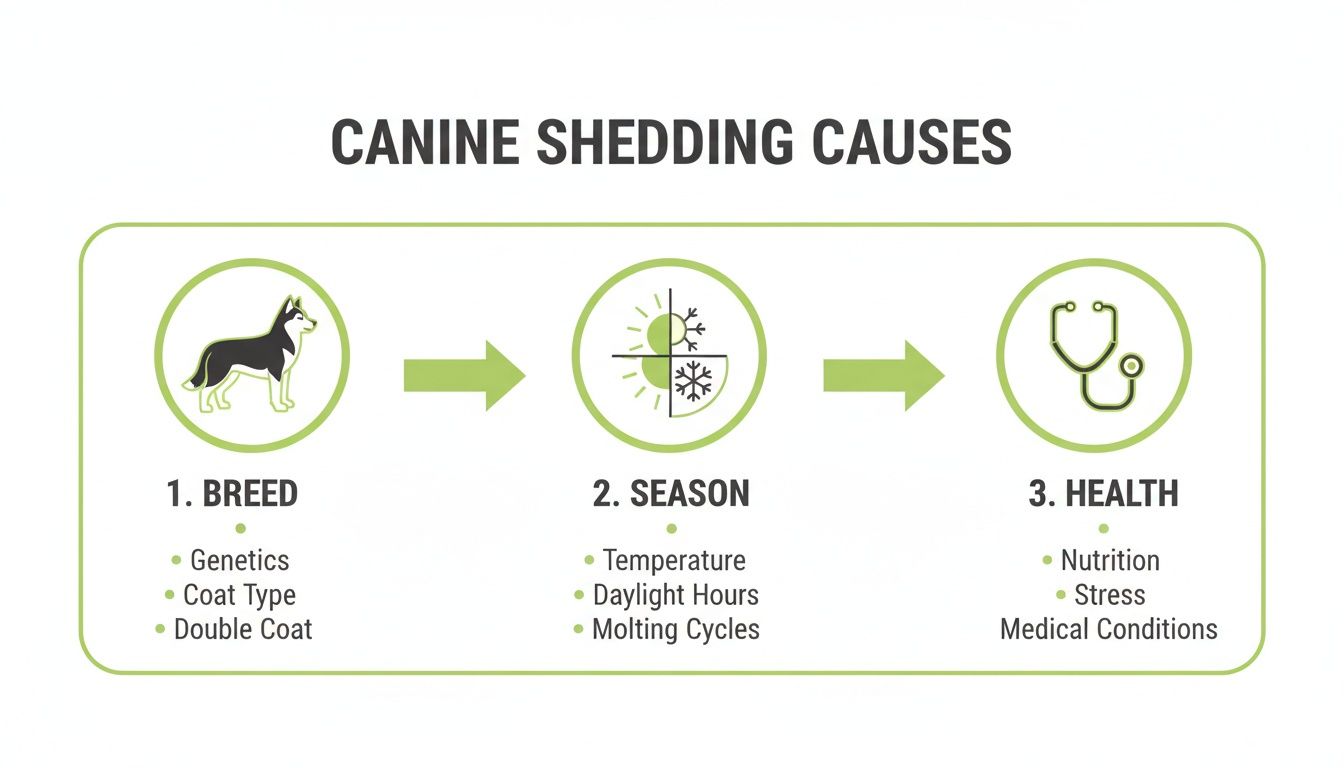
As you can see, genetics, seasonal shifts, and your dog's wellness all play a part in how much fur you're dealing with.
Here’s a quick-reference guide to help you match your dog's coat with the right tools and brushing frequency.
Grooming Schedule and Tool Guide by Coat Type
| Coat Type | Example Breeds | Brushing Frequency | Primary Tool | Secondary Tool |
|---|---|---|---|---|
| Double Coat | Husky, German Shepherd, Golden Retriever | 2-3 times per week (daily during shedding season) | Undercoat Rake | Slicker Brush |
| Short/Smooth Coat | Beagle, Boxer, Labrador Retriever | 1-2 times per week | Rubber Curry Comb | Bristle Brush |
| Long Coat | Collie, Shih Tzu, Yorkshire Terrier | 3-4 times per week | Slicker Brush | Steel Comb |
| Wiry Coat | Schnauzer, Airedale Terrier, Jack Russell | 2 times per week | Stripping Knife | Slicker Brush |
| Curly/Wavy Coat | Poodle, Bichon Frise | Nearly daily | Slicker Brush | Metal Comb |
This table is your starting point. Adjust the frequency based on how much fur you see around the house—you know your dog best.
Master the De-Shedding Bath
A bath can remove a huge amount of loose fur at once, but only if you do it correctly. A de-shedding bath is a multi-step process designed to release the stubborn undercoat.
Start with the right shampoo. Look for formulas with omega fatty acids, oatmeal, or aloe vera. These ingredients hydrate the skin and strengthen hair follicles, reducing breakage. Avoid harsh detergents that can dry out the skin and worsen shedding.
Here’s a step-by-step method for a de-shedding bath that gets results:
- Brush Before the Bath: Always brush your dog thoroughly before they get wet. Water tightens mats and makes a tangled undercoat impossible to manage.
- Lather and Massage: Work the de-shedding shampoo deep into the coat, massaging it down to the skin. Let it sit for 5-10 minutes to allow the conditioning agents to penetrate the hair follicles.
- Rinse Completely: This is non-negotiable. Leftover shampoo residue irritates the skin, leading to scratching and more shedding. Rinse until the water runs completely clear.
The Drying Process: Your Final Fur-Removal Weapon
The most critical part of a de-shedding bath happens after the rinse. Proper drying will remove pounds of loose fur that would otherwise end up on your floors.
Invest in a high-velocity (or "force") dryer. These dryers don't use much heat; instead, they blast air at high speed to literally blow dead, loose undercoat out of the dog's fur. It's the tool professional groomers use for that sleek, shed-free look.
When using a force dryer, keep the nozzle a few inches from the skin and keep it moving. You'll see clouds of fur fly off—that's all fur that won't be on your couch later. This single step can dramatically reduce shedding for weeks.
Fueling a Healthier Coat Through Nutrition
While grooming tackles shedding from the outside, your dog's diet fights it from the inside out. What's in their bowl is the foundation for healthy skin and a strong coat. A simple diet change can often deliver more dramatic, long-lasting results than any brush or shampoo.
Your dog's fur is made almost entirely of protein. If their diet lacks high-quality, digestible protein, their body cannot produce strong hair follicles. The result is dry, brittle fur that breaks and sheds easily.
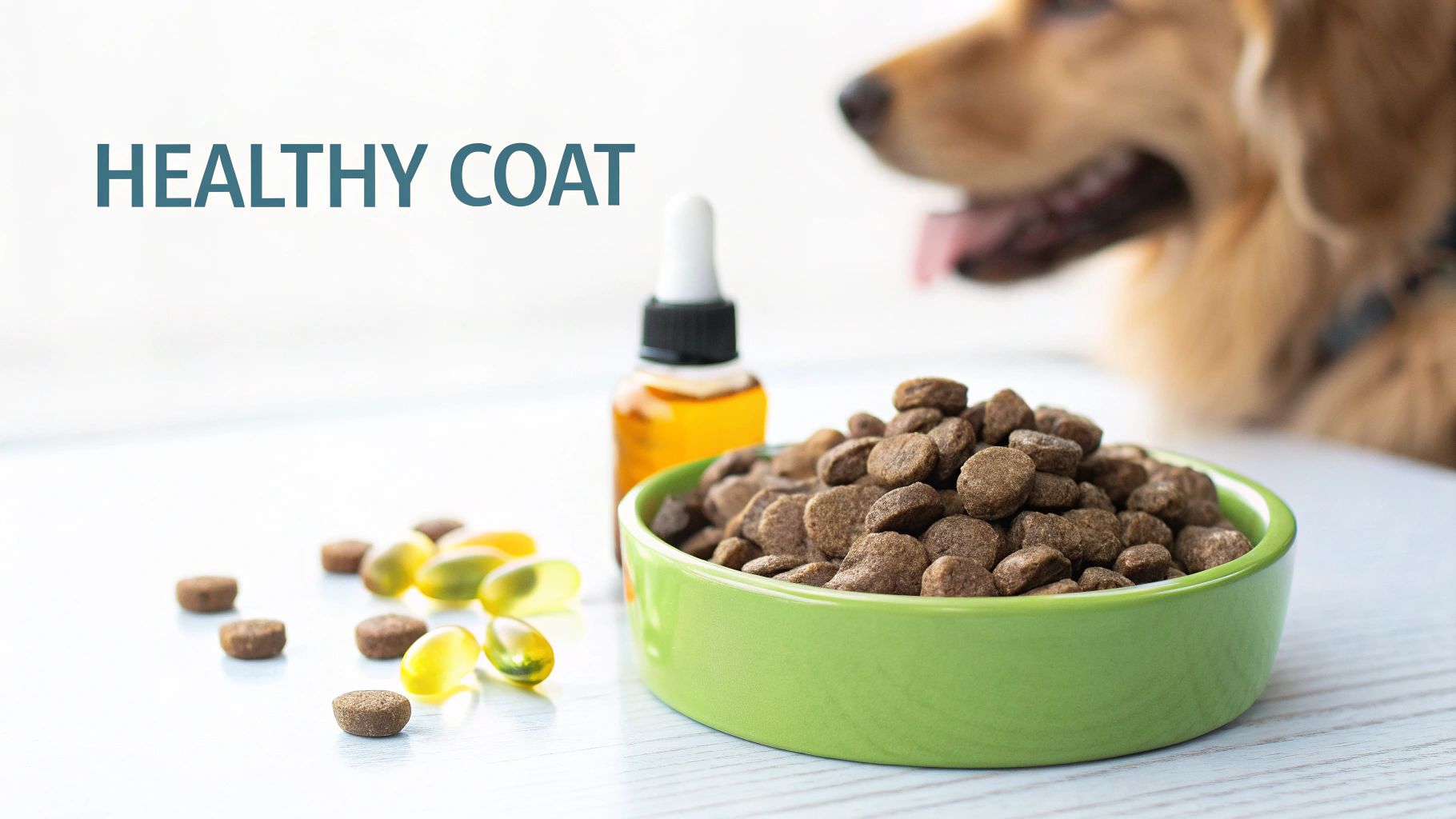
The link between diet and shedding is so clear that premium pet foods focused on skin and coat health are booming. Switching to one of these diets can be a game-changer, with some reports showing up to a 40% drop in fur loss in just eight weeks. Savvy pet owners now see nutrition as a primary tool to stop excessive shedding.
How to Read a Dog Food Label Like a Pro
Staring at the dog food aisle is overwhelming, but you can easily spot the good stuff once you know what to look for. The ingredients list is your roadmap.
The most important thing to check is the first ingredient. It should always be a specific, high-quality animal protein.
What to Look For:
- Specific Animal Proteins: "Deboned chicken," "lamb meal," or "salmon." These are quality sources.
- Healthy Fats: "Chicken fat" or "sunflower oil" provide essential fatty acids.
- Whole Foods: Sweet potatoes, peas, and carrots add valuable vitamins and fiber.
What to Avoid:
- Vague "Meat" Terms: "Meat by-products" or "animal meal" are non-specific and usually mean lower-quality ingredients.
- Common Fillers: Corn, wheat, and soy offer little nutritional value for most dogs and can be common allergens that trigger shedding.
- Artificial Additives: Avoid artificial colors, flavors, and preservatives like BHA or BHT.
Sometimes, even a high-quality protein can be the issue. Chicken is a common allergen that can cause skin irritation and increased shedding. If you suspect an allergy, exploring chicken-free dog food formulas can provide significant relief.
The Role of Essential Fatty Acids
Beyond protein, the secret weapon for a healthy coat is essential fatty acids (EFAs), particularly Omega-3 and Omega-6. A dog's body can't produce them, so they must come from food.
- Omega-6 Fatty Acids: Vital for maintaining the skin's moisture barrier. Found in chicken fat and sunflower oil.
- Omega-3 Fatty Acids: Powerful anti-inflammatories that calm irritated skin and reduce shedding caused by allergies. The best sources are fish-based, like salmon and fish oil.
Most dog foods contain enough Omega-6 but often lack Omega-3. Achieving the right balance is key to managing inflammation and promoting a glossy, healthy coat.
Supercharge Your Dog's Diet with Supplements
Even with a top-notch food, some dogs need an extra boost. Supplements provide a concentrated dose of the nutrients their coat craves.
Pro Tip: When introducing any new food or supplement, start with a small amount and gradually increase it over a week to allow their digestive system to adjust.
Consider adding one of these to your dog's daily meals:
- Fish Oil: The gold standard. It's a potent source of Omega-3s (EPA and DHA) and one of the most effective supplements for reducing inflammation and improving coat shine.
- Coconut Oil: Rich in healthy fats, it can soothe dry, itchy skin and add luster to their fur. Use a virgin, cold-pressed oil.
- Flaxseed Oil: A great plant-based source of Omega-3s (ALA), perfect for dogs with fish sensitivities.
Remember, nutrition is a long game. It typically takes 6 to 8 weeks to see a noticeable difference after a diet change as new, stronger hair grows in. To learn more about how the right dog food can significantly reduce shedding, check out some more resources.
Winning the War on Pet Hair in Your Home
Managing shedding is about more than grooming; it's about setting up your home so fur doesn't stand a chance. A proactive approach means less time spent cleaning up and more time enjoying your dog.
This system starts with your furniture. Your sofa doesn't have to be a monument to shedding season. One of the easiest and most effective strategies is using washable covers. For all-around protection against shedding and accidents, high-quality waterproof sofa covers are a game-changer. Just toss them in the wash.
Choose Your Cleaning Arsenal Wisely
When you're dealing with pet hair, not all cleaning tools are created equal. The right vacuum makes the difference between a frustrating chore and a clean floor. Look for models designed for pet hair—they have tangle-free brush rolls and the powerful suction needed to lift fur from deep within carpets.
Beyond a good vacuum, here are other must-haves for your cleaning toolkit:
- Robot Vacuum: A lifesaver for daily maintenance. Set it to run every day to stop "fur tumbleweeds" from forming.
- Rubber Squeegee or Broom: This is surprisingly effective on carpets. Drag the rubber edge across a rug to pull up embedded fur that even powerful vacuums miss.
- Lint Rollers and Brushes: Stash them everywhere—near the front door, in your car, and by the couch for quick touch-ups on clothes and furniture.
Of course, the best tools work better when there's less hair to pick up. Using the proper deshedding brushes for your dog's coat type ensures loose fur ends up in the trash can, not your rug.
Create a Sustainable Cleaning Schedule
The key to a clean home is a simple, sustainable schedule. Instead of a weekend-long cleaning marathon, try a "time chunking" approach.
Dedicate just 20-30 minutes each day to a specific cleaning task. This small, consistent effort prevents messes from piling up and makes the overall job feel much less daunting.
Here’s a sample weekly rotation that actually works:
| Day | Focus Area | Key Tasks |
|---|---|---|
| Monday | Floors | Run the robot vacuum; spot-clean any spills. |
| Tuesday | Furniture | Vacuum upholstery; wash one furniture cover or blanket. |
| Wednesday | Dusting | Wipe down surfaces where fur and dander collect. |
| Thursday | Floors | Do a full vacuum of all rooms, focusing on edges. |
| Friday | Bedding | Wash your dog’s bed cover and any other pet blankets. |
Improve Your Home’s Air Quality
Shedding isn't just about the fur you see; it's also about the dander and hair floating in the air, which can trigger allergies. An air purifier with a HEPA filter is a fantastic investment for capturing these tiny particles.
Also, consider your home's humidity. Dry air often leads to dry skin for your dog, which can increase shedding. Running a humidifier, especially during dry winter months, helps keep your dog's skin hydrated and can reduce the amount of loose fur.
Is It Normal Shedding or a Sign Something’s Wrong?
A bit of fur on the couch is part of being a dog owner. But when shedding becomes excessive or you notice other symptoms, it might be a sign of a health issue. Knowing the difference between what's normal and what's a red flag is a critical skill for any dog parent.
The key is to know your dog’s baseline. If your low-shedding Boxer suddenly starts dropping hair in clumps, or your Husky's spring shed seems unusually intense and patchy, it's time to investigate.
Spot the Warning Signs
Abnormal shedding is rarely the only symptom. It’s almost always accompanied by other clues that point to an underlying problem. Catching it early is always the best approach.
Keep a close eye out for these specific signs:
- Bald Patches (Alopecia): Circular or irregularly shaped spots of total hair loss are a major concern.
- Irritated Skin: Part the fur and look at the skin. Check for redness, rashes, bumps, or sores.
- Obsessive Behavior: Constant scratching, licking, or chewing at a specific area is a clear sign of discomfort.
- Dull, Brittle Coat: Healthy fur has a natural luster. A coat that feels dry, coarse, or breaks easily often points to a nutritional deficiency or illness.
- Thinning Fur: If you can see more of your dog's skin through their coat than usual, it's a classic sign of significant hair loss.
Common Medical Reasons for Excessive Shedding
When you notice the symptoms above, it’s usually tied to a medical issue that needs a vet's diagnosis. While you can manage the fur at home, these underlying problems require professional treatment.
Your groomer is often the first person to notice something is off. A great groomer can reduce shedding by 60-80%, but more importantly, they get a close look at your dog's skin. They estimate that about 40% of the excessive shedding cases they see are linked to fixable issues like fleas or a poor diet.
Here are a few of the most common medical culprits behind major hair loss:
- Allergies: Dogs can be allergic to food (like chicken or beef) or environmental factors (pollen, dust mites), leading to itchy skin and hair loss.
- Parasites: Fleas, mites (mange), and ticks cause intense irritation. The resulting scratching and biting can quickly lead to bald spots.
- Hormonal Imbalances: Conditions like hypothyroidism or Cushing's disease can cause symmetrical hair loss and changes in skin texture.
- Infections: Fungal (ringworm) and bacterial infections can attack the hair follicles directly, causing fur to fall out in patches.
The pet grooming industry is booming—projected to hit $10.35 billion by 2030—partly because owners are turning to pros to help spot these health concerns early. You can dive deeper into these trends in this in-depth analysis of the pet grooming industry.
If any of these warning signs sound familiar, your next call should be to your vet.
Your Game Plan for a Less-Hairy Home
Consistency is the secret to managing shedding. A little effort every day or week is far more effective than a massive grooming session when you can’t take the mess anymore. Think of it as a proactive strategy instead of a reactive cleanup.
This isn't about achieving a perfectly hair-free home—that’s a fantasy with most dogs! It's about creating a simple, manageable routine that keeps the fur under control.
The Shed-Control Checklist
Here’s how to break it down into a schedule that actually works.
Daily To-Dos (5-10 Minutes):
- Quick Brush-Down: Use a rubber curry or bristle brush for a quick pass to grab loose surface hair.
- Spot Checks: Keep a lint roller handy for last-minute touch-ups on your clothes or your dog's favorite spot on the sofa.
- Coat Support: Mix a pump of Omega-3 oil into their breakfast to support their skin and coat from the inside out.
Weekly Rituals (20-30 Minutes):
- The Deep Groom: Use a de-shedding tool or an undercoat rake to get into the dense underlayer of fur where most shedding originates.
- Laundry Day: Wash your dog’s bed, blankets, and any washable crate pads.
- The Big Vacuum: Give all floors and furniture a thorough vacuum, focusing on their favorite napping spots.
Pro Tip: If your dog dislikes brushing, keep sessions short and positive. Use high-value treats and a calm voice. Start with a softer tool, like a rubber curry comb, on areas they enjoy being petted, like their back or chest. Gradually work your way to other areas as they become more comfortable.
Monthly Must-Dos (1-2 Hours):
- De-Shedding Bath: Give them a proper bath with a de-shedding shampoo to loosen and remove trapped fur.
- Tool Maintenance: Clean your grooming tools. Pull out trapped hair so they're effective for the next use.
- Clear the Air: Clean or replace the filter in your air purifier to remove captured fur and dander.
Got Questions? We’ve Got Answers.
Even with a solid plan, a few questions always come up. Here are answers to the most common ones.
Can I Really Stop My Dog From Shedding Altogether?
No. Shedding is a natural and necessary process for a dog. It’s how they remove old, dead hair to make room for a new, healthy coat. Trying to stop it completely isn't possible or healthy.
The goal isn't to stop shedding, but to manage it. With the right grooming routine, a great diet, and smart cleaning habits, you can dramatically reduce the amount of loose fur in your home.
Do Anti-Shed Shampoos and Supplements Actually Work?
Yes, but they are not a magic bullet. Think of them as essential support tools that work alongside regular brushing and a quality diet.
- Anti-Shed Shampoos typically contain hydrating ingredients like oatmeal and omega fatty acids. They moisturize the skin and strengthen hair strands, which reduces breakage and premature shedding.
- Supplements, especially those with Omega-3s from fish oil, work internally. They strengthen hair follicles at the root, calm skin inflammation, and help grow a stronger coat that is less prone to shedding.
When used together with consistent grooming, you are tackling shedding from every angle.
I Switched My Dog’s Food. How Long Until I See a Difference?
Patience is key. After upgrading your dog’s food to one rich in skin-and-coat-supporting nutrients, you should expect to wait about six to eight weeks to see a significant change.
Why so long? It takes time for your dog’s body to absorb these high-quality nutrients and put them to use. That nutritional boost has to reach the skin to build stronger follicles, and then new, healthier hair must grow in and push the old hair out.
While you're waiting for the new diet to work its magic, stay consistent with your brushing and cleaning routine. This will manage the fur in the meantime and lead to the lasting results you're looking for.
Ready to build your ultimate anti-shedding toolkit? From undercoat rakes to the perfect slicker brush, Pet Magasin offers high-quality, durable grooming tools designed for the job. Head over to https://www.petmagasin.com and find exactly what your furry family member needs.

Leave a comment