
How to Prevent Dog Tear Stains for Good

Before you can tackle those reddish-brown tear stains, you need to understand why they’re happening. Wiping them away is just a temporary fix. The real solution comes from identifying the root cause—often a mix of genetics, health, and diet—and implementing a consistent plan to keep your dog's face clean and bright for good.
This guide provides actionable steps you can start today to prevent tear stains before they even form.
So, What's Really Causing Those Dog Tear Stains?
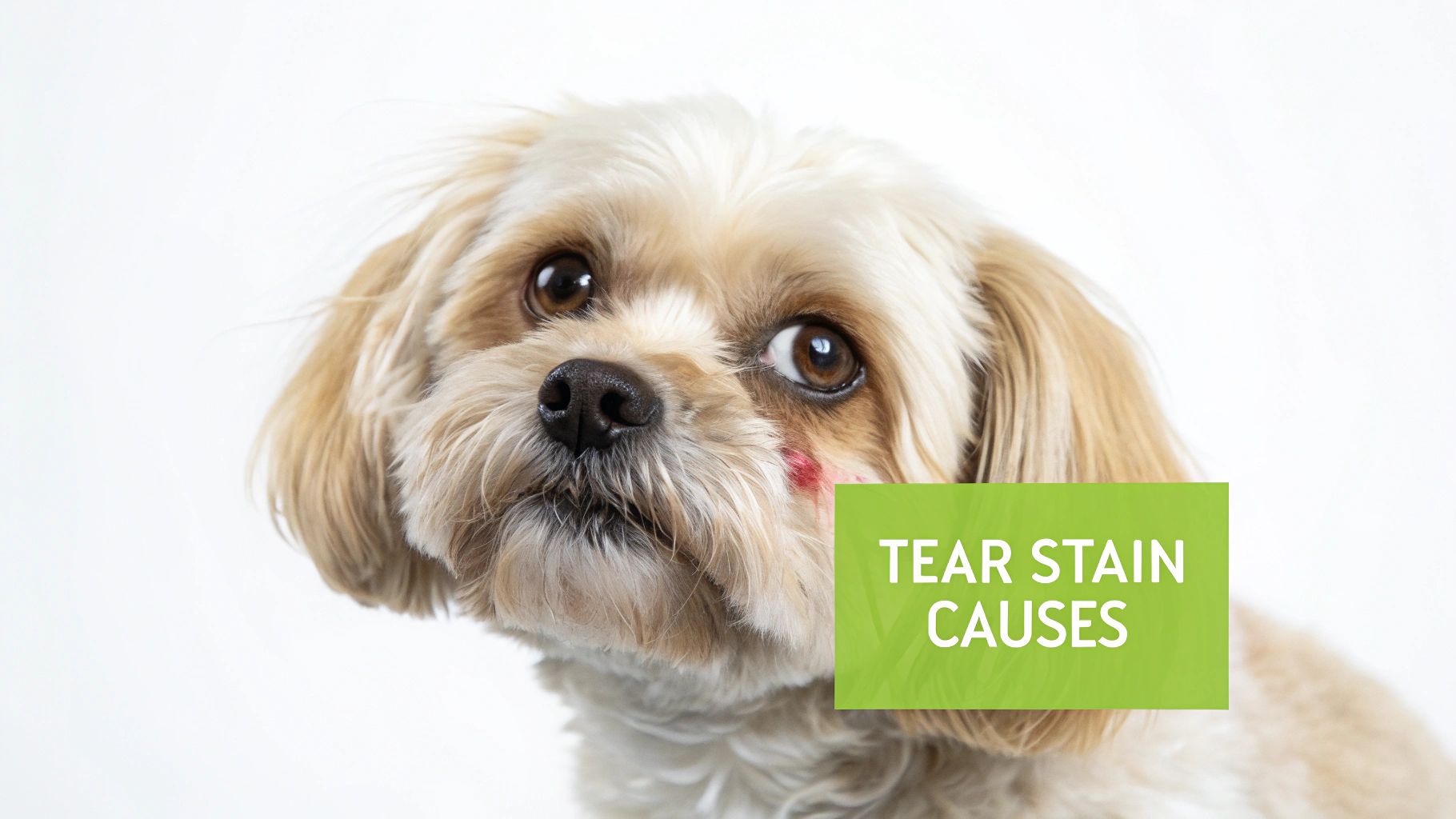
Those reddish-brown streaks aren’t a sign of sadness. The true culprit is a molecule called porphyrin.
Porphyrins are natural, iron-containing compounds produced when the body breaks down red blood cells. Dogs excrete these compounds through their tears, saliva, and urine.
When these iron-rich tears sit on your dog's fur and are exposed to sunlight, they oxidize. This chemical reaction creates the signature rusty stain, much like how metal rusts when left in the rain. This is also why stains may appear darker after your dog has spent time outside.
It's Often in Their Genes and Face Shape
For many dogs, a predisposition to tear stains is simply part of their DNA. Breed and physical traits play a significant role in whether tears drain normally or spill onto their face.
-
Light-Colored Coats: Breeds like the Maltese, Bichon Frise, and Poodle aren't necessarily more prone to tearing, but their light fur makes the reddish-brown porphyrins highly visible. The stains exist on darker dogs; you just can't see them as easily.
-
Facial Structure: A dog’s face shape is a major factor. Brachycephalic (flat-faced) breeds such as Pugs, Bulldogs, and Shih Tzus have shallow eye sockets. This anatomy prevents tears from draining properly through the tear ducts, causing them to overflow onto the face.
-
Hair Growth: Some dogs have hair that grows close to the eye. This fur can act like a wick, pulling tears out of the eye and onto the surrounding skin, creating a moist environment perfect for staining.
This genetic link is extremely common. Breeds like the Maltese and Shih Tzu are well-known for tear stains, and brachycephalic dogs are at an even higher risk. In fact, some studies show that over 70% of short-nosed breeds exhibit noticeable staining by age two. You can find more details in various veterinary guides to tear stains and their causes.
Actionable Insight: You can't change your dog's genetics, but you can be proactive. If you own a high-risk breed, make a daily wipe-down of the eye area a non-negotiable part of your routine.
Common Health Triggers for Watery Eyes
While genetics may set the stage, specific health issues can trigger excessive tearing (epiphora) and intensify staining. If your dog suddenly develops tear stains, it's a strong indicator of an underlying problem that needs investigation.
Addressing the root health issue is the only effective way to stop the stains from returning. Here are the most common health-related culprits:
- Blocked Tear Ducts: A primary cause of epiphora, this occurs when tear ducts are congenitally narrow or become clogged, preventing normal drainage.
- Allergies: Environmental allergens (pollen, dust, smoke) or food sensitivities can cause inflammation and watery eyes.
- Ear Infections: The ear canal and tear ducts are connected. An infection in one can cause pressure and swelling that blocks the other, leading to increased tearing.
- Teething in Puppies: The pressure and discomfort of teething can cause a temporary increase in tearing. This typically resolves on its own once their adult teeth are fully grown in.
- Eye Irritation: Physical irritants like ingrown eyelashes (distichiasis), inverted eyelids (entropion), or a corneal scratch can all trigger the eye to produce excess tears as a protective response.
Understanding that tear stains are often more than a cosmetic issue allows you to shift your focus from merely cleaning fur to actively supporting your dog's overall health.
Your Daily Routine for Clear Eyes
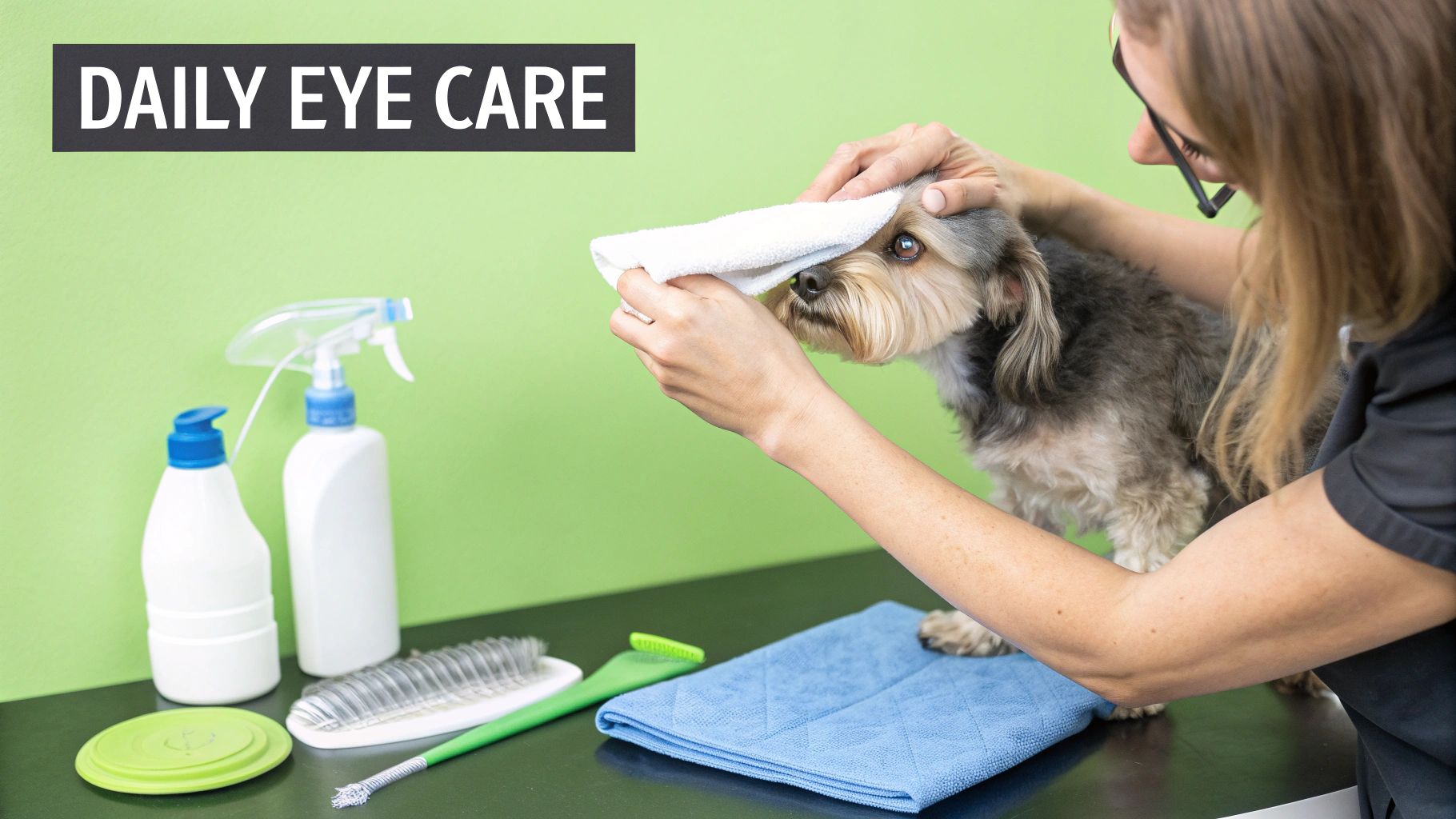
Knowing the cause of tear stains is step one; preventing them requires a consistent, gentle routine. Lasting results come not from a miracle product but from small, daily habits that create an environment where porphyrins never get a chance to settle and stain. Your goal is to keep the eye area clean, dry, and free of irritants.
Master the Daily Gentle Wipe Down
The cornerstone of tear stain prevention is the daily wipe. This simple task removes tear moisture before it can oxidize and stain the fur. It takes less than a minute and can be a positive bonding experience for you and your dog.
How to do it:
- Choose your tool: Use a soft, lint-free cloth (like microfiber) or a cotton ball dampened with lukewarm water. Vet-approved, fragrance-free eye wipes are also a great option. Avoid paper towels, which can be abrasive and leave behind fibers.
- Use the right technique: Always wipe away from the corner of the eye, moving gently downward and outward. You are cleaning the fur where tears collect, not the eyeball itself.
- Make it positive: Hold your dog's chin gently, make a few soft swipes, and immediately follow up with praise or a small treat. This turns the task into a rewarding routine.
Pro Tip: Create a 'care station' by stocking a small basket with cotton pads, a bowl for water, and treats. Keeping everything in one spot makes it easy to stay consistent, even on busy mornings.
Keep the Fur Around the Eyes Neatly Trimmed
Long hair around the eyes acts like a sponge, wicking tears onto the face and trapping moisture. This damp environment is a breeding ground for bacteria and yeast, which can deepen stains and lead to skin irritation. Keeping this area trimmed is a game-changer, especially for breeds like Shih Tzus, Poodles, and Maltese.
- Use the Right Tools: Invest in a pair of small, blunt-nosed grooming scissors. The rounded tips are a critical safety feature to protect your dog’s eyes from accidental pokes.
- Trim with Care: Only attempt trimming when your dog is calm. Use a small comb to lift the hair away from the eye and carefully snip the ends. Always cut parallel to the face, never pointing the scissors toward the eye.
- Know When to Call a Pro: If you're nervous, schedule a "sanitary trim" around the eyes with a professional groomer every few weeks. It's a small expense for peace of mind.
Regular trims not only help with how to prevent dog tear stains but also improve your dog's vision and prevent hair from poking and irritating their eyes.
A Consistent Routine is the Key to Success
Consistency turns these small actions into powerful, stain-preventing habits. A stop-and-start approach won't work; porphyrins will simply re-stain the fur. Use this checklist to stay on track.
Daily Tear Stain Prevention Checklist
Sticking to these steps is the most effective way to keep your dog's face clean and stain-free.
| Action Item | Frequency | Actionable Step |
|---|---|---|
| Gentle Eye Wipe | 1-2 times daily | Use a damp, soft cloth to wipe away tears before they oxidize and stain. |
| Check for Debris | Daily | Look for and remove stray hairs, dust, or other irritants near the eye. |
| Trim Eye-Area Fur | As needed (weekly/bi-weekly) | Use blunt-nosed scissors to keep fur from wicking tears onto the face. |
| Thorough Face Dry | After every wipe | Pat the area dry with a clean cloth to prevent yeast and bacteria growth. |
By making these steps a part of your daily rhythm, you shift from fighting stains to easily maintaining a clean, bright face for your dog.
How Diet and Water Quality Impact Tear Stains
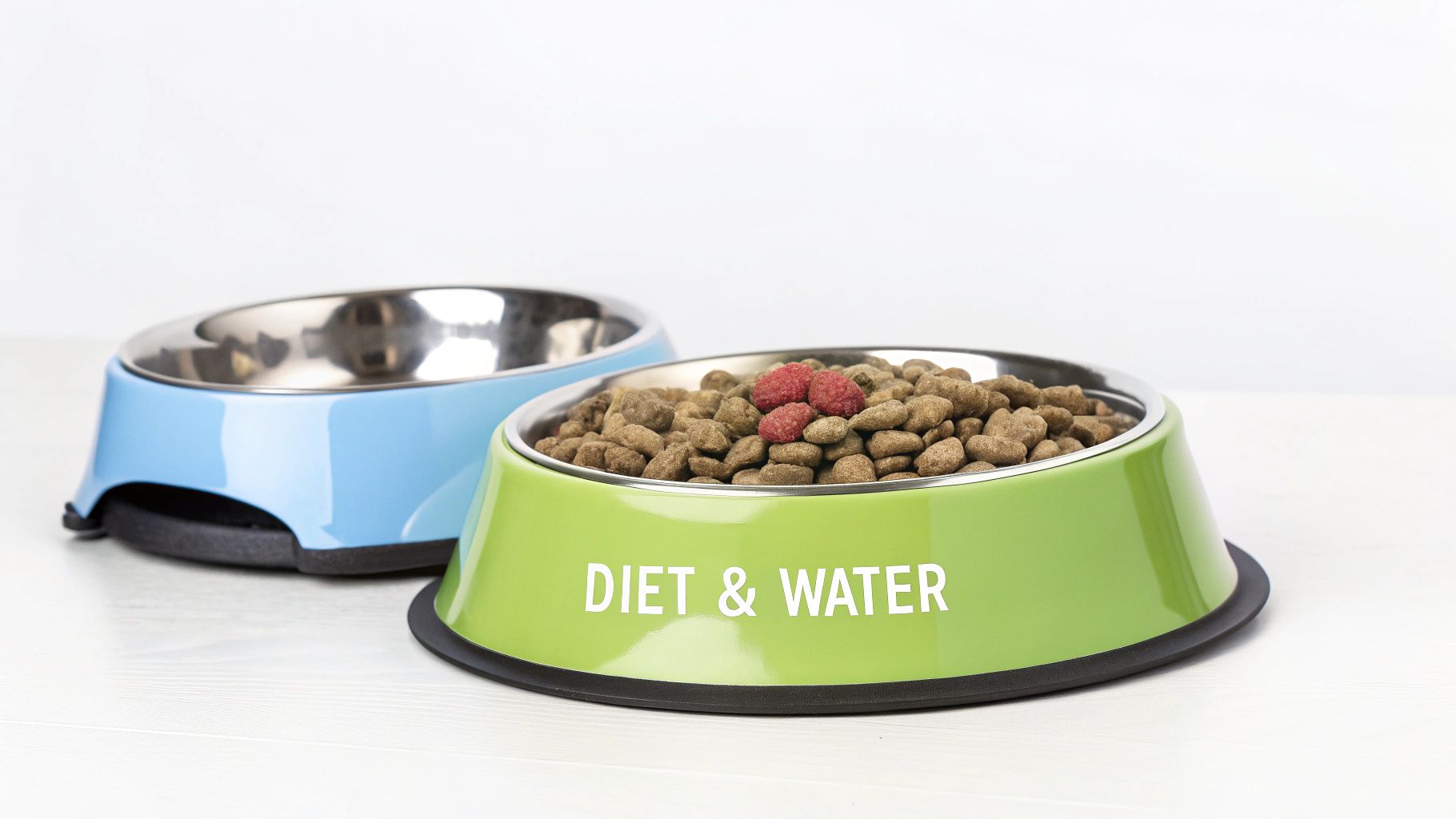
What your dog consumes directly affects their body's functions, including tear production. While daily wiping manages the symptom, true prevention often starts from the inside out. A high-quality diet can reduce inflammation and minimize the excessive tearing that fuels stubborn stains.
Choosing Foods That Fight Inflammation
Excessive tearing can be a sign of low-grade inflammation or a mild allergic reaction to food ingredients. Common culprits include artificial colors, fillers like corn and wheat, and even common proteins.
Actionable Steps:
- Switch to a limited-ingredient diet. These foods simplify digestion and minimize potential allergens. Look for a whole protein source (like duck, fish, or lamb) as the first ingredient.
- Read the label carefully. Choose foods with whole food ingredients (sweet potatoes, peas) and avoid those with vague terms like "meat by-products" or artificial additives.
- Look for Omega-3s. Ingredients like fish oil and flaxseed have powerful anti-inflammatory properties that support skin, coat, and eye health.
If your dog currently eats a chicken-based food, try switching to a fish or lamb formula for several weeks. A noticeable improvement in staining can indicate you've found the trigger. Learn more about the benefits of a chicken-free dog food in our detailed guide.
The Surprising Role of Water Quality
Unfiltered tap water can be a hidden contributor to tear stains. It often contains high levels of iron and other minerals. Since porphyrins are already iron-rich, adding more through drinking water can significantly darken the reddish-brown stains.
The Fix: Switch to filtered or purified water. A simple water filter pitcher or a faucet attachment can effectively remove excess minerals and reduce stain severity.
Research supports these changes. Studies show that grain-free diets can reduce allergen-induced tearing in up to 35% of dogs. Furthermore, trials have demonstrated that switching to filtered water alone can lead to a 50% reduction in stain severity by removing mineral catalysts. Find more details on these findings at StatsMarketResearch.com.
Why Your Dog's Bowls Matter
The material of your dog's bowls can also play a role. Plastic bowls develop microscopic scratches over time, creating a breeding ground for bacteria. Each time your dog eats or drinks, their face comes into contact with this bacteria, which can cause irritation and inflammation that leads to more tearing.
The Fix: Switch to non-porous bowls.
- Stainless Steel: The best option. It's durable, non-porous, easy to clean, and dishwasher safe, preventing bacteria buildup.
- Ceramic: A good alternative, provided the glaze is lead-free and intact. Check regularly for cracks or chips where germs can hide.
By combining a high-quality diet, clean water, and hygienic bowls, you build a powerful internal defense against the factors that cause tear stains.
Grooming and Home Care That Actually Works
While diet and daily wipes are your first line of defense, your grooming routine and home environment are critical for preventing tear stains, especially for predisposed dogs. Proactive grooming stops tears from settling into the fur, and a clean home can reduce the environmental triggers that cause excessive tearing in the first place.
Safely Trimming Hair Around the Eyes
Hair around the eyes acts as a wick, pulling moisture onto the fur and creating a damp area perfect for stains and bacteria. Keeping this hair trimmed is a crucial grooming step.
How to do it safely:
- Use blunt-nosed grooming scissors. Never use sharp, pointed scissors near your dog's eyes. The rounded tips are essential for safety.
- Wait for a calm moment. Trim when your dog is relaxed, perhaps after a walk or a nap.
- Use a small comb. Gently lift the hair away from the eye area. This provides a clear view and keeps fur from falling into the eye.
- Snip with caution. Angle the scissors away from the eye, cutting parallel to the face. Make small, careful snips rather than one large cut.
If you're not confident, a professional groomer can perform a quick "eye trim" every few weeks. Learn more by checking out our guide on how to groom your dog at home.
Effective and Safe Home Cleaning Solutions
You don't need harsh chemicals to keep the stained areas clean. A simple, homemade saline solution is often safer and more effective for daily maintenance, as it mimics natural tears and won't irritate sensitive skin.
DIY Saline Rinse Recipe:
- Boil one cup of distilled or filtered water to sterilize it.
- Stir in 1/4 teaspoon of salt until fully dissolved.
- Let the solution cool completely to room temperature before use.
To apply, soak a cotton ball in the solution and gently wipe the fur beneath your dog’s eyes. This helps rinse away porphyrins and crusty debris. Always pat the area dry with a clean cloth afterward—moisture is the enemy.
Important Takeaway: Never use hydrogen peroxide, apple cider vinegar, or human makeup removers near your dog’s eyes. These substances can cause severe stinging, irritation, or even permanent eye damage. Stick to gentle, vet-approved methods.
Reducing Allergens in Your Home Environment
Environmental allergens can cause the excessive tearing that leads to stains. By minimizing these irritants in your home, you can significantly reduce your dog's eye watering.
- Dust and Dander: Vacuum regularly with a HEPA filter, dust surfaces frequently, and wash your dog's bedding in hot water weekly.
- Pollen: Keep windows closed during high pollen seasons and consider using an air purifier. Wipe your dog's face and paws with a damp cloth after they come inside.
- Harsh Chemicals: Switch to unscented, pet-safe cleaning products. Avoid strong fumes from plug-in air fresheners, scented candles, and aerosol sprays.
- Smoke: Secondhand smoke is a major eye irritant. Ensure any smoking is done outside and away from your dog.
Combining diligent grooming with a low-allergen home tackles how to prevent dog tear stains from every angle for a happier, healthier pet.
Knowing When Tear Stains Mean a Trip to the Vet
While a daily routine manages most cosmetic tear stains, it's crucial to recognize when they signal a more serious health issue. Sudden onset of stains or a dramatic increase in tearing should always prompt a call to your veterinarian. Early detection ensures your dog gets the professional care they need.
This decision tree helps guide your actions, clarifying when to stick with home care and when to seek professional help.
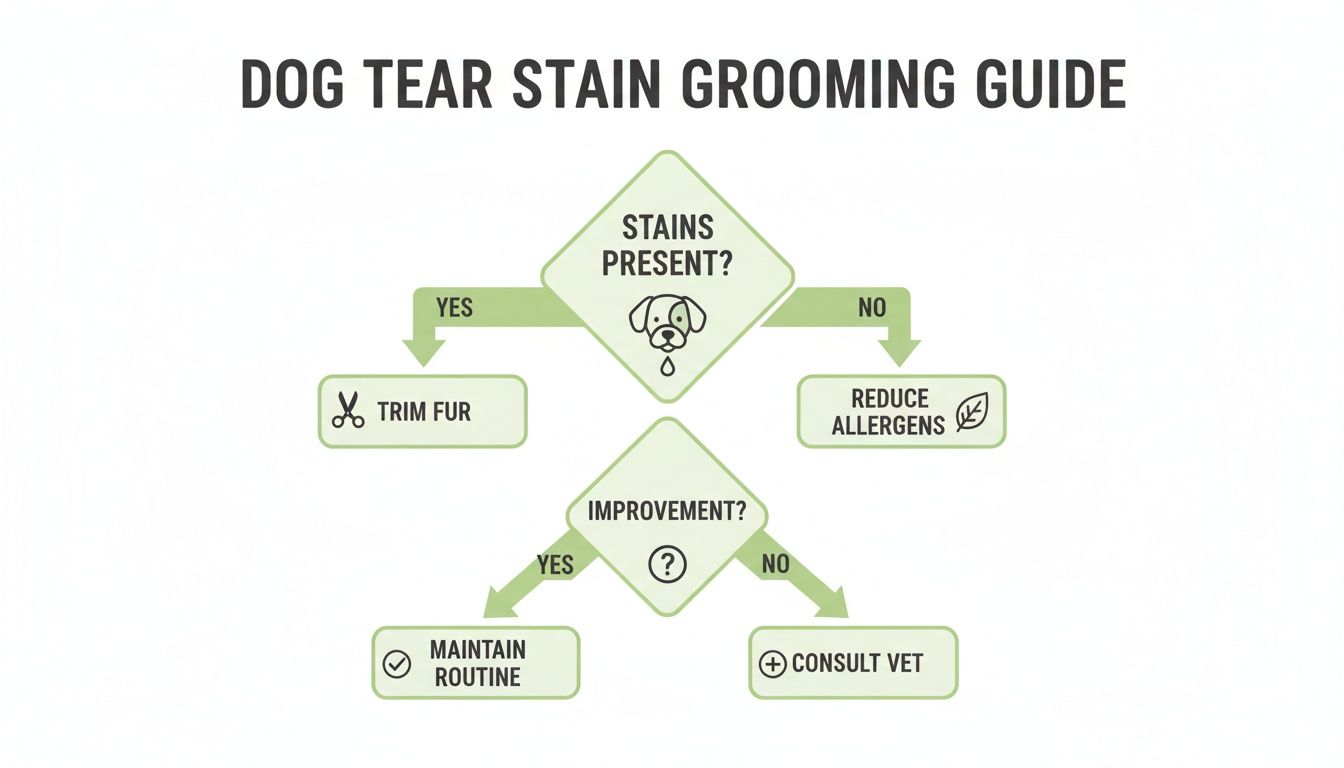
As the chart indicates, routine care is your foundation. However, the appearance of new or abnormal symptoms alongside the stains warrants a vet visit.
Red Flags That Warrant a Vet Visit
Use your daily eye-wiping session as a mini health check. If you observe any of the following signs, stop cleaning and contact your vet immediately. These symptoms suggest an infection, injury, or structural eye problem.
- Sudden Increase in Tearing: An abrupt onset of heavy tearing often indicates a new source of irritation.
- Change in Discharge Color: Normal tear discharge is clear. Yellow, green, or thick, mucus-like discharge is a classic sign of infection.
- Squinting or Pawing at the Eyes: These are clear signs of pain or discomfort. Your dog is indicating their eye hurts or itches.
- Redness and Swelling: The whites of the eyes (sclera) should be white. Any persistent redness, puffiness, or swelling around the eyelid is abnormal.
Pay attention to behavior. A dog that suddenly becomes head-shy or flinches when you approach their face may be experiencing eye pain. Don't ignore this cue.
Potential Medical Causes Your Vet Will Investigate
During an exam, your veterinarian will look beyond the stains to identify the root cause of the tearing. Their goal is to protect your dog's vision and overall eye health. Common issues they will investigate include:
- Blocked Tear Ducts (Epiphora): A vet can use a special, harmless dye to test if the ducts are draining properly. If not, a simple flushing procedure can often clear the blockage.
- Corneal Ulcers or Scratches: A scratch on the eye's surface is painful and causes significant tearing. The same dye test can highlight any damage to the cornea.
- Ingrown Eyelashes (Distichiasis): Eyelashes growing in the wrong place can constantly rub against the eye, causing chronic irritation.
- Entropion: A genetic condition, common in breeds like Shar-Peis, where the eyelid rolls inward, forcing lashes to scrape against the cornea with every blink.
A proper diagnosis is critical. For a minor infection, your vet might recommend a product like a chlorhexidine spray for dogs to help resolve the issue.
Ultimately, partnering with your veterinarian is the best way to determine how to prevent dog tear stains when home remedies aren't enough.
Frequently Asked Questions About Tear Stains
Even with a solid routine, questions can arise. Here are answers to some of the most common queries from pet owners.
How Long Until I See Results from a New Routine?
Patience is key. While daily wiping provides immediate cleaning, foundational changes like diet take time to show results.
You should expect to see a noticeable difference in new fur growth after about 3-4 weeks. This allows the body to adjust and for the old, stained fur to grow out. As you trim away the stained portions, you'll see clean, bright fur growing in its place.
Real-World Scenario: You switch your white Poodle to a lamb-based food and start using filtered water. For the first few weeks, you'll still be cleaning existing stains. But by week four, as you trim the hair around their eyes, you will notice the new growth is coming in clear. This is your proof that the changes are working.
Are Over-The-Counter Tear Stain Removers Safe?
You should be cautious. While many OTC products are safe, it's essential to read the ingredient list carefully. Avoid products containing antibiotics like Tylosin, unless specifically prescribed by your veterinarian. Start with gentle, natural options like a simple saline rinse, which is often just as effective without the risks associated with harsh chemicals.
Can Tear Stains Be a Sign of Something Serious?
Yes. While usually a cosmetic issue, tear stains can sometimes be the first indicator of a health problem.
Contact your vet immediately if you notice any of these red flags:
- Tearing suddenly becomes much worse.
- Discharge changes from clear to thick, yellow, or green.
- The eye area appears red or swollen.
- Your dog seems to be in pain (pawing at their face, squinting).
A prompt vet visit can rule out serious conditions like blocked tear ducts, eye infections, or corneal ulcers. For other common concerns, you may find answers in these general dog care FAQs. Professional evaluation provides peace of mind and ensures your pet remains healthy.
At Pet Magasin, we believe that the right tools make all the difference in your pet's care. From gentle grooming supplies to comfortable travel carriers, we design products that help you keep your furry family member healthy and happy. Explore our collection today at https://www.petmagasin.com.

Leave a comment