
A Practical Guide on How to Brush Cat Teeth

To successfully brush your cat's teeth, you need a gradual process using a cat-safe toothbrush and enzymatic toothpaste. Patience is the most critical tool you have. Start by letting them lick the paste from your finger. After a few days, gently touch the brush to their teeth for a few seconds. Slowly increase the duration over several sessions. Reward every positive step with praise and a favorite treat.
Why Brushing Your Cat’s Teeth Is Non-Negotiable

When you manage your cat's health care—diet, exercise, vet visits—dental hygiene must be on the list. Overlooking your cat's oral health can lead to serious and painful problems. This isn't just about preventing bad breath; it's about stopping a silent threat that directly impacts their quality of life.
The Hidden Dangers of Poor Dental Health
It all begins with plaque, a sticky film of bacteria. If not removed, plaque hardens into tartar in as little as 24-48 hours. This tartar buildup irritates the gums, causing inflammation known as gingivitis—the first stage of periodontal disease.
Left untreated, gingivitis progresses to periodontitis, a severe condition where gums pull away from the teeth, creating pockets for bacteria to thrive. This leads to severe outcomes:
- Painful Infections: Abscesses can form, making it excruciating for your cat to eat.
- Tooth Loss: The structures holding teeth in place are destroyed, causing them to loosen and fall out.
- Systemic Illness: Bacteria from the mouth can enter the bloodstream and damage vital organs.
Research confirms a clear link between advanced periodontal disease and serious heart, kidney, and liver problems. Brushing their teeth is a critical piece of preventative healthcare, not a cosmetic chore.
The most compelling reason to start is that dental disease is incredibly common. It’s one of the most frequently diagnosed health problems in cats, yet it is almost entirely preventable with consistent at-home care.
A Widespread but Preventable Problem
This isn't a rare issue. A 2023 report revealed that a staggering 64% of cats examined across the U.S. had dental-related issues. These problems often start with simple plaque that escalates into severe periodontal disease.
Learning how to brush cat teeth might seem daunting, but it's a small time investment with a huge health payoff. This daily interaction also reinforces your bond with your cat. By making dental care a priority, you are actively helping your friend live a longer, healthier, and happier life. For more in-depth information, review our broader guide on total cat dental care.
Gathering Your Feline Dental Toolkit
Before you start, you must have the right gear. Using the correct tools makes the process easier for you and safer for your cat. A little preparation now prevents significant hassle later.
The most important rule is to never use human toothpaste. The fluoride and foaming agents are toxic to cats. They swallow the paste instead of spitting it out, which can cause serious health issues. Only use products specifically formulated for felines.
Selecting the Perfect Cat Toothpaste
The most important item in your kit is the toothpaste. Feline-specific toothpaste is designed to be safely swallowed and comes in cat-friendly flavors like chicken, fish, or malt. This simple choice can turn a daily battle into a daily treat.
For maximum effectiveness, choose an enzymatic toothpaste. These formulas contain active enzymes that break down plaque and kill bacteria. This is a significant advantage, as the enzymes continue working long after your brushing session ends.
Quick tip when you're shopping: Glance at the ingredients. A good enzymatic toothpaste will list things like glucose oxidase and lactoperoxidase. These are the enzymes that create a natural antibacterial shield to fight plaque between brushings.
Finding the Right Toothbrush for Your Cat
Your cat’s mouth is small and delicate, so a human toothbrush is too large and harsh. You have several cat-friendly options, and you may need to experiment to find what your cat tolerates best.
- Silicone Finger Brushes: This is the best starting point. It's a soft sheath with rubbery nubs that fits over your finger, giving you excellent control and helping your cat get used to the sensation.
- Dual-Ended Cat Toothbrushes: These feature a small brush head on one end and an even smaller, angled one on the other. They are excellent for reaching back molars and tight spaces.
- Micro-Head Toothbrushes: These are miniature versions of human toothbrushes with ultra-soft bristles and a compact head designed for a cat's mouth. They provide effective cleaning once your cat is comfortable with the routine.
My advice? Buy both a finger brush and a small bristle brush. This allows you to test which tool your cat accepts more readily.
Choosing the Right Toothbrush for Your Cat
Selecting the right tool is crucial for your initial success. A cat that hates bristles might accept a soft silicone finger brush. This table breaks down the options to help you choose a starting point.
| Brush Type | Best For | Pros | Cons |
|---|---|---|---|
| Silicone Finger Brush | Beginners and sensitive cats | Excellent control; feels less intimidating to the cat. | May not clean below the gumline as effectively as bristles. |
| Dual-Ended Brush | Cats accustomed to brushing | Reaches back teeth and tight spaces with precision. | The handle can feel awkward or threatening to some cats initially. |
| Micro-Head Brush | General use for most cats | Soft bristles are effective at removing plaque. | Can be too bulky for very small kittens or cats with tiny mouths. |
Assembling your toolkit is the first practical step. By choosing a flavored enzymatic toothpaste and a comfortable, cat-sized toothbrush, you remove major barriers and set the stage for a successful, healthy habit.
Making Brushing a Positive Routine
The goal isn't just to learn how to brush cat teeth; it's to turn the task into a predictable, stress-free part of your day. Success comes from patience, positive reinforcement, and a step-by-step process that builds trust.
Move at your cat's pace. This isn't a race. You are building a foundation of comfort to make daily dental care a sustainable, long-term habit.
Setting the Stage for Success
First, create a calm environment. Do not attempt a brushing session when the house is chaotic or you have guests over.
Choose a quiet time when your cat is relaxed, such as after a nap. Use a comfortable spot, like your lap or a soft blanket. Using the same location every time helps build a predictable routine that your cat can learn to accept.
The Art of the Gentle Introduction
The entire process depends on a slow, deliberate approach. Your first goal is simply to get your cat comfortable with you touching their face and mouth.
Start by gently petting their head and cheeks. As they relax, lightly run your finger along their lips for a second. If they accept this, reward them immediately with praise and a high-value treat. Repeat this over several short sessions for a few days until they no longer pull away.
Once they are comfortable, introduce the toothpaste as a treat.
- The Flavor Test: Put a small dab of enzymatic cat toothpaste on your finger and let them lick it off. Repeat this once a day for a few days so they associate the taste with a positive reward.
- Gum Familiarization: Once they look forward to the toothpaste, put another dab on your finger and gently rub it along their outer gum line. Do not pry their mouth open. Simply lift their lip slightly for a quick swipe. Immediately follow with praise and another treat.
The point of these initial steps is to build a positive association. You are teaching your cat that tasty paste and treats happen when you handle their mouth. This builds trust, which is essential for long-term success.
Bringing in the Brush
Only introduce the brush when your cat is completely comfortable with you touching their gums with toothpaste on your finger. First, let them sniff the brush. Next, put a tiny bit of toothpaste on the bristles and let them lick it off.
Your first "brushing" session may only involve touching the brush to one tooth for two seconds. This is a huge success! End the session on that positive note. Over the next several days or weeks, gradually increase the time and the number of teeth you brush.
This infographic breaks down the core parts of your new dental routine, showing the simple flow from paste to brush to reward.
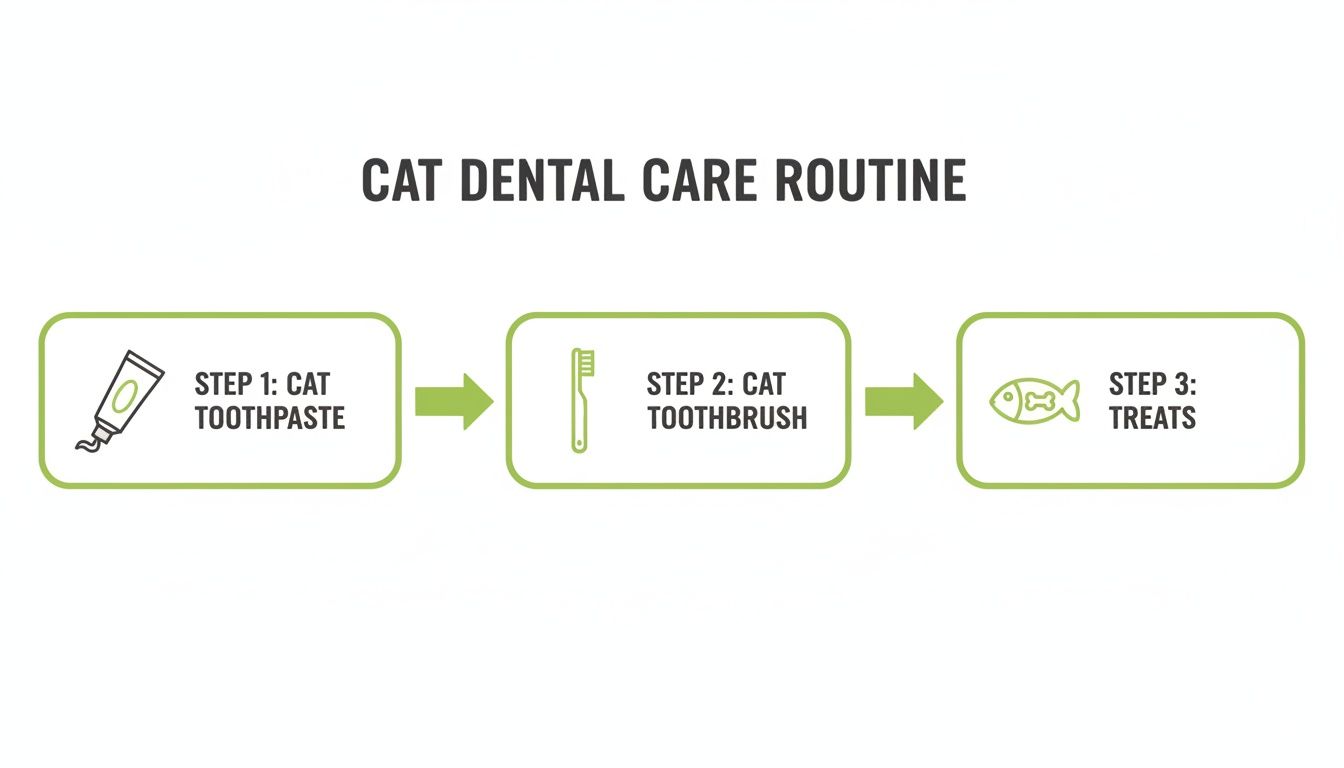
This visual reinforces that the process is a simple sequence where each step leads to a positive outcome: the reward.
Perfecting Your Brushing Technique
When you are both ready for a full session, find a comfortable position. It's often easiest to have your cat sit on your lap facing away from you, as this feels less confrontational and gives you better control.
Gently cup their head with your non-dominant hand. Use your thumb and index finger to lift their lip on one side. With your other hand, hold the brush at a 45-degree angle to the teeth.
Focus on the outer surfaces, where most tartar accumulates. Use small, gentle circles or back-and-forth motions. Pay close attention to the large canine teeth and back molars. Once your cat is fully accustomed to it, aim for about 30 seconds per side.
Do not worry about brushing the inner surfaces. A cat's rough tongue naturally keeps that area relatively clean. While establishing a grooming routine, it's also a good time to learn about other essential tools like the best nail clippers for cats.
Navigating Common Teeth Brushing Challenges
Even with a perfect plan, you will encounter challenges. Learning how to brush cat teeth often involves setbacks. Do not get discouraged if your cat resists.
Use these moments to understand your cat's boundaries and adjust your approach. The goal is to troubleshoot patiently and turn a struggle into a trust-building moment.
When Your Cat Completely Refuses the Brush
If your cat loves the toothpaste but flees at the sight of the brush, the brush itself is the problem. Take it out of the equation for now and try a different tool.
Consider these less-intimidating alternatives:
- Dental Wipes: These are textured pads you wrap around your finger to physically wipe away plaque. They feel less invasive to a cat than a plastic brush.
- Gauze Pad: A small piece of gauze wrapped around your finger creates enough friction to disrupt plaque without the foreign feel of bristles.
- Your Finger: If your cat allows you to rub their gums with toothpaste on your finger, continue doing that. It is far better than doing nothing.
Once your cat is comfortable with an alternative, you can slowly reintroduce the toothbrush. Start by having it nearby during your sessions before attempting to use it again.
Remember, the main goal is plaque removal. The specific tool you use is secondary. If your cat only ever accepts a dental wipe, that's still a huge win for their long-term oral health.
Handling Minor Gum Bleeding
A small pink spot on the brush can be alarming, but it's not always a crisis. A tiny bit of bleeding is often a sign of gingivitis (gum inflammation) caused by plaque buildup along the gumline.
If you see this, do not stop brushing permanently. Instead, be extra gentle in that area for the next few days. Consistent, gentle brushing can help reduce inflammation over time, leading to healthier gums that no longer bleed.
However, if the bleeding is heavy, persistent, or seems painful for your cat, stop immediately and call your veterinarian. This could indicate advanced periodontal disease requiring professional treatment.
Addressing Fear and Anxiety
Some cats are genuinely terrified of the process. Pushing a fearful cat will only increase their anxiety and destroy any chance of future success. If your cat shows signs of severe stress—hissing, growling, hiding, or swatting—stop the session immediately.
Go back to the very first step: touching their face and giving a reward. You may need to spend weeks rebuilding their trust. Keep every interaction extremely short and positive.
Veterinary guidance supports this approach. The 2019 AAHA Dental Care Guidelines strongly recommend starting these routines in kittenhood. This is a direct response to rising rates of dental disease, which affected 64% of U.S. cats in 2023. Studies show that while most owners notice problems, few perform proactive home care. You can find more information about these trends in feline dental health and owner awareness.
For a highly anxious cat, consult your vet. They may suggest calming supplements or pheromone diffusers to create a more relaxed environment for training. Never let a health routine become a traumatic event.
What If My Cat Absolutely Hates the Toothbrush?
Daily brushing is the gold standard for preventing dental disease. However, some cats will refuse to cooperate, no matter how patient you are.
If you have a cat that firmly resists the toothbrush, don't give up. Several alternatives can provide a layer of protection and support their oral hygiene.
Think of these options as valuable supplements, not direct replacements for the mechanical action of brushing. They work to reduce plaque and slow tartar formation. A solid Plan B is infinitely better than doing nothing at all.
Can Food Really Clean My Cat's Teeth?
Yes, some foods are specifically designed to clean teeth. Formulated dental diets are one of the most effective non-brushing strategies available.
Regular kibble shatters on impact, providing little cleaning action. Dental kibble is larger and has a unique fibrous texture that forces your cat to chew thoroughly. This allows the kibble to scrub the tooth's surface as they eat.
Dental treats work similarly. They are designed to encourage chewing and often contain ingredients that freshen breath or fight plaque. When shopping, look for the Veterinary Oral Health Council (VOHC) Seal of Acceptance. This seal certifies that the product has been scientifically proven to reduce plaque and tartar.
A common myth is that any dry food is good for a cat's teeth. The truth is, standard kibble is just too small and brittle to provide any real cleaning. It’s the specific size and texture of a true dental diet that makes the magic happen.
Passive Dental Care: Water Additives and Oral Gels
For a more hands-off approach, water additives and dental gels are excellent choices.
Water additives are tasteless, odorless liquids that you add to your cat's daily water bowl. They contain enzymes that kill bacteria and reduce the rate of plaque formation. It's an effortless way to boost their oral health.
Oral gels require a bit more interaction. You apply them directly to the gums and teeth. Many contain the same enzymatic ingredients found in cat toothpaste, working to break down plaque biofilm. If your cat tolerates a quick swipe of your finger in their mouth but not a brush, a dental gel is a fantastic compromise.
Even with these tools, bad breath can persist. If you're struggling with this, you can find great strategies on how to combat your pet's bad breath for additional tips.
Dental Care Alternatives Effectiveness Scorecard
How do you choose the right alternative for your cat? This scorecard breaks down the most common options to help you decide. A higher rating indicates a more effective tool, especially if brushing is not an option.
| Alternative Method | How It Works | Effectiveness Rating (1-5) | Best Used For |
|---|---|---|---|
| VOHC-Accepted Dental Diet | Mechanical scrubbing action from large, fibrous kibble | 4 | Primary food source for cats who refuse brushing |
| VOHC-Accepted Dental Treats | Abrasive texture scrapes teeth during chewing | 3 | Daily reward to supplement another dental routine |
| Dental Water Additives | Enzymatic ingredients reduce bacteria in the mouth | 2 | Easy, passive support for overall oral hygiene |
| Oral Gels/Sprays | Enzymes applied directly to teeth to break down plaque | 3 | Cats who tolerate mouth touching but not a brush |
The best approach is often a combination of methods. Using several of these together creates a stronger defense against dental disease. For a cat that fights every attempt to learn how to brush cat teeth, a VOHC-approved dental diet, daily treats, and a water additive can be a powerful and practical alternative.
Answering Your Cat Dental Care Questions
Even with the right tools and a solid plan, questions will arise. Learning how to brush cat teeth always brings up a few uncertainties. Here are answers to the most common questions.
Use this as a quick-reference guide for the details that make a significant difference in your cat's oral health.
How Often Should I Really Brush My Cat's Teeth
Ideally, you should brush your cat's teeth daily. This is the gold standard recommended by veterinarians because plaque begins forming within hours of a meal.
Within 24 to 48 hours, soft plaque can harden into tartar—the tough, yellow deposit that a toothbrush cannot remove. Daily brushing stops this process before it starts.
If daily brushing is not feasible, aim for a minimum of three times per week. Any less than that offers little preventative benefit.
Brushing less than every other day gives tartar a chance to set up camp, especially below the gumline where the real trouble starts. While it's better than nothing, you lose a lot of the power to stop gingivitis from progressing.
What Are the Warning Signs of Dental Problems
Cats are masters at hiding pain, so you must be observant. Early signs of dental trouble can be subtle.
Schedule a vet visit if you notice any of these red flags:
- Persistent Bad Breath: A consistently foul, strong odor is a primary indicator that something is wrong.
- Visible Changes: Look inside their mouth. Are the gums red, swollen, or bleeding? Do you see yellow or brown tartar buildup on the teeth, especially near the gumline?
- Behavioral Shifts: Is your cat dropping food, chewing on one side, or avoiding hard kibble? Other clues include drooling, pawing at their face, or recoiling when you touch their head.
Are Dental Wipes a Good Substitute for Brushing
Dental wipes are an excellent starting tool but are not a true substitute for brushing. They are, however, significantly better than doing nothing and can be a lifesaver for cats that refuse a toothbrush.
Wipes use a textured surface to remove some plaque from the smooth surfaces of the teeth. Their main limitation is that they cannot clean the critical area just under the gumline, where periodontal disease begins.
Use them as a helpful supplement or as a stepping stone to a full brushing routine, but remember that the bristles of a brush remain the most effective tool.
Is It Too Late to Start Brushing My Older Cat's Teeth
It is never too late to start caring for your cat's oral health. You can teach an older cat a new routine, but you must be extremely slow and patient.
First, schedule a veterinary check-up. If your senior cat already has significant tartar, painful gums, or loose teeth, attempting to brush will cause pain.
This will not only be unpleasant for your cat but will also ensure they never trust you near their mouth again. The best course of action is to have your vet perform a professional cleaning first. This provides a clean, pain-free mouth, setting you both up for success with your new at-home care routine.
At Pet Magasin, we understand that having the right tools makes any pet care routine easier and more effective. From grooming essentials to travel carriers, we design high-quality, affordable products to help you give your pet the best care possible. Discover our full range of supplies at https://www.petmagasin.com.

Leave a comment