
Cat Dental Care Your Complete Guide to Feline Oral Health

Your key to effective cat dental care is a simple, consistent routine you can do right at home. It starts with daily brushing—the single most effective action you can take to stop plaque buildup and prevent serious health problems down the road.
Why Your Cat's Dental Health Is a Top priority
It’s easy to overlook your cat's oral hygiene. Many owners dismiss bad breath as a normal part of having a cat, but this is a critical mistake. Your cat's mouth is a direct window into their overall health, and neglecting it can lead to issues far more serious than an unpleasant smell.
When dental care is ignored, painful conditions can develop that make it difficult for your cat to eat, play, or enjoy daily life. What begins as soft plaque quickly hardens into tartar, leading to gum inflammation (gingivitis) and eventually full-blown periodontal disease—a severe infection that can destroy gums and the bone supporting their teeth.
The Silent Threat of Dental Disease
Here’s a fact that should grab your attention: dental disease is one of the most common health problems in cats. A staggering 70% of cats show signs of gum disease by the age of three. This statistic highlights the urgent need to start a preventive dental care routine early.
The danger isn't confined to the mouth. Bacteria from infected gums can enter the bloodstream and travel to vital organs, potentially causing serious damage to the heart, kidneys, and liver.
Neglecting your cat’s dental care is a real gamble with their long-term health. The bacteria from a diseased mouth can affect the heart, kidneys, and liver, turning a preventable issue into a life-threatening one.
Beyond Bad Breath
While "kitty breath" might seem like a minor issue, it's often the first actionable sign that something is wrong. Addressing it early can save your cat from significant pain and discomfort. If you want to dive deeper, we have a whole guide on strategies for combating your pet's bad breath.
Think of proactive dental care not as a chore, but as a crucial part of responsible pet ownership. By establishing a simple at-home routine, you are taking a powerful step to protect your cat's health and ensure they remain a happy, comfortable member of your family for years to come.
Building a Stress-Free Dental Care Routine
The idea of brushing your cat's teeth can seem daunting, but it doesn't have to be a daily struggle. The secret to successful cat dental care is not force; it’s patience, trust, and positive reinforcement. Your goal is to transform this task into a calm, bonding experience.
First, abandon any idea of restraining your cat. This will only create fear and resistance. The objective is to make them a willing participant by integrating dental care into your normal petting and snuggle time, not treating it like a medical procedure.
The Foundation of Trust
Before you even think about a toothbrush, your cat must be comfortable with you handling their mouth. This is the most critical step, and it must be done at your cat's pace. Rushing will create anxiety that is difficult to overcome.
Action Plan: Week 1 - Mouth Handling
- Choose the Right Time: Wait until your cat is relaxed and content, like when they are purring on your lap.
- Start Small: Gently stroke their cheeks and the outside of their mouth during a regular petting session.
- Keep it Brief: Do this for only a few seconds. If they pull away, stop immediately and try again later.
- Gradual Progression: After a few successful days, briefly lift their lip for one or two seconds.
- Reward Immediately: Follow every successful interaction with a high-value treat or enthusiastic praise.
Patience is your most valuable tool. The point of these early sessions isn't to get a good look at their teeth. It's to teach your cat that you touching their mouth is a safe and rewarding experience. Every one of these short, positive interactions builds that crucial foundation of trust.
This slow, trust-building approach is the same one used for other grooming tasks, like getting a cat accustomed to having their paws handled long before introducing nail clippers for cats.
Introducing Toothpaste Without the Brush
Once your cat is calm about you touching their lips and gums, it’s time to introduce feline-specific toothpaste. Crucial reminder: Never use human toothpaste. It contains ingredients like fluoride and xylitol that are toxic to cats. Pet toothpaste is designed to be swallowed safely and comes in appealing flavors like poultry or malt.
Action Plan: Week 2 - Toothpaste Introduction
- Taste Test: Put a tiny dab of toothpaste on your finger and let your cat lick it off. Repeat this for a couple of days to create a positive association with the flavor.
- Combine Touch and Taste: During a calm moment, let them lick the paste from your finger. Then, use that same finger to gently rub the paste onto the outside of one or two teeth for a few seconds.
- Reinforce: Immediately reward them with praise and a favorite treat to solidify the positive connection.
For a truly stress-free routine, thinking about your cat's overall comfort can be a game-changer. Some comfort products are even Loved By Humans And Cats Too.
Creating a Consistent Ritual
Consistency will turn these small steps into a solid habit. Aim to practice these interactions at the same time each day. A highly effective strategy is to "stack" the new habit onto an existing one they enjoy, like right before a meal or during your evening cuddle session. This helps the dental routine feel like a natural part of their day.
By patiently building these layers of trust, you are creating a low-stress foundation. This method ensures that when you finally introduce a soft-bristled toothbrush or finger brush, it’s not a scary surprise—it’s just another small step in a familiar, positive routine.
Checking Your Cat's Teeth at Home and Brushing Like a Pro
Once your cat is comfortable with you handling their mouth, you are ready to become their primary defense against dental problems. Performing a quick, regular check at home is a cornerstone of good cat dental care. It allows you to spot trouble early, before it becomes painful and expensive.
Integrate this check into your daily petting routine. Choose a calm moment and a well-lit area. Gently lift their upper lip to inspect the teeth and gums. You don't need to force their jaw open; a simple lip lift provides a clear view of the outer tooth surfaces, where most plaque accumulates.
What to Look For During a Home Check
First, know the signs of a healthy mouth: mostly white teeth and solid, healthy pink gums. During your check, be vigilant for these warning signs:
- Red or Swollen Gums: A thin red line where the gums meet the teeth is the first sign of gingivitis.
- Yellow or Brown Buildup: This is tartar—hardened plaque. It typically starts at the gumline.
- Bad Breath: A persistent, foul odor is a major red flag for dental disease, not just "kitty breath."
- Broken or Chipped Teeth: Scan for any visible cracks or fractures.
- Pain or Flinching: If your cat pulls away when you touch a specific spot, that area is painful.
This visual check takes less than a minute but provides invaluable information. It’s similar to how you would check for other health issues, like in our guide on properly cleaning your cat's eyes.
Mastering the Tooth Brushing Technique
With the inspection complete, it's time to brush. Remember, the goal is consistency, not perfection.
Step-by-Step Brushing Guide:
- Prepare Your Tools: Get a soft-bristled cat toothbrush or finger brush. Apply a pea-sized amount of cat-specific enzymatic toothpaste.
- Position the Brush: Gently lift your cat’s lip. Place the brush against their teeth at a 45-degree angle to the gumline. This angle effectively cleans plaque from beneath the gum's edge.
- Use Gentle Motions: Use small, gentle circles, focusing only on the outer (cheek-facing) surfaces of the teeth. This is where most tartar forms and is the easiest area to access.
Pro Tip: Don't try to tackle their whole mouth at once. Start with just a couple of teeth on one side. Tomorrow, do a few more. Slowly build up to brushing all the outer surfaces as your cat gets more and more used to the routine.
The Right Tools and Why They Matter
Your tools are just as important as your technique. Never use human toothpaste. It's highly toxic to cats due to ingredients like fluoride and xylitol. Always use a vet-approved feline toothpaste, which is designed to be swallowed safely.
For the brush, choose one with extra-soft bristles. A small cat toothbrush or a soft finger brush is less intimidating. The goal is gentle friction, not aggressive scrubbing.
As more pet owners recognize the importance of dental health, the market for effective products is growing. The global pet dental health market reached USD 8,252 million in 2024. In the United States, the market was valued at USD 3.15 billion in 2024, driven by the understanding that periodontal disease affects over 80% of pets over three years old. You can dig into more stats about the growth of the U.S. pet dental health market if you're curious.
This trend provides you with more high-quality, effective tools. By combining regular at-home checks with a gentle, consistent brushing routine, you are taking the most important step to protect your cat from dental disease.
Brushing Alternatives For Cats Who Say "No Way"
Let's be realistic: some cats will never tolerate a toothbrush. If your daily attempts end in hissing and scratches, don't give up on your cat's dental health.
While brushing is the gold standard for cat dental care, a no-brush strategy is far better than doing nothing. The key is to layer several different methods to create a comprehensive defense against plaque and tartar. Think of it as a multi-pronged attack plan for a healthy mouth.
The Power of Dental Wipes and Gels
If a toothbrush is a non-starter, dental wipes or gels are your next best option. These products allow you to physically disrupt plaque without the intrusive feeling of bristles.
Dental wipes are small, textured cloths saturated with a cleaning solution. Simply wrap one around your finger and gently rub it over your cat’s teeth. Gels work similarly: apply a small amount to your finger and massage it onto their teeth and gumline. Many cats accept this because it mimics the feeling of being petted around the mouth. This is an effective way to remove food debris and fresh plaque before it hardens.
This decision tree can help you choose the best starting point for your cat:
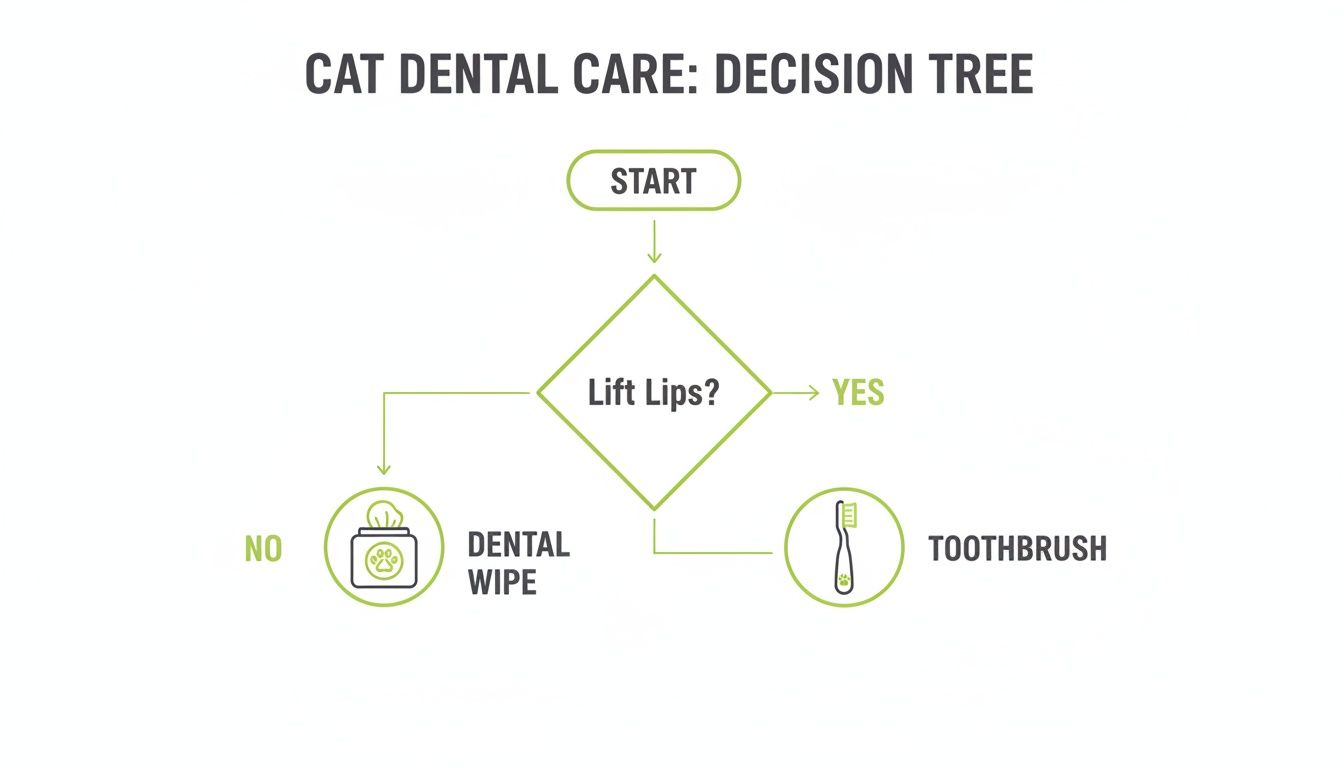
As you can see, the choice is pretty clear: if your cat is cool with you lifting their lips, a toothbrush is your best bet. If not, a dental wipe is an excellent and effective alternative.
Easy Wins with Passive Dental Care
Passive care products work in the background to improve your cat's oral environment with minimal daily effort.
Two of the most effective options are water additives and dental powders. A capful of an odorless, tasteless additive in their water bowl can help reduce bacteria and freshen breath without them even noticing. Sprinkling a dental powder over their food provides a similar set-it-and-forget-it approach to fighting plaque.
The convenience of these methods is a major reason the pet oral care market is projected to reach USD 4.28 billion by 2031, with cats being the fastest-growing segment at a 7.18% annual rate. This growth is fueled by cat-specific products like powders and additives that cater to picky felines. You can explore the latest insights on pet oral care products to see more of these trends.
The Role of Diet and Chews
Don't underestimate the power of what you feed your cat. Specially formulated dental diets have kibble with a unique size and texture that creates a scrubbing action as your cat chews, providing a gentle clean with every meal.
Dental chews and treats are another valuable tool:
- Scrubbing Action: The texture physically scrapes plaque off the teeth.
- Enzymatic Action: Many are infused with enzymes that help break down plaque-forming bacteria.
- Saliva Production: Chewing stimulates saliva, nature’s own mouthwash, which helps rinse away food particles.
When choosing any dental product—be it wipes, food, or treats—look for the Veterinary Oral Health Council (VOHC) Seal of Acceptance. This seal certifies that the product has been scientifically proven to reduce plaque or tartar.
The VOHC seal is your shortcut to knowing a product is legit. It’s an independent stamp of approval that tells you the product genuinely helps your cat's oral hygiene, making it a smart addition to any at-home dental routine.
The most successful approach is often a combination of methods tailored to your cat.
At-Home Cat Dental Care Options Compared
| Method | Best For | Effort Level | Key Benefit |
|---|---|---|---|
| Toothbrush & Paste | Cooperative cats; the most plaque removal | High | Gold standard for preventing dental disease. |
| Dental Wipes/Gels | Cats who dislike bristles but tolerate touch | Medium | Good mechanical cleaning without a brush. |
| Dental Diets | Cats who eat dry food; a good foundational tool | Low | Cleans teeth with every bite. |
| Dental Chews/Treats | Food-motivated cats; a fun way to clean | Low | Mechanical abrasion plus enjoyment for your cat. |
| Water Additives | All cats, especially picky ones | Very Low | Fights bacteria and freshens breath effortlessly. |
By combining several of these brushing alternatives, you can build a robust routine that fits your cat's temperament. A dental wipe a few times a week, a daily water additive, and a couple of dental treats can make a significant difference in preventing painful dental problems.
Knowing When to Call in the Professionals
Your at-home cat dental care routine is your first line of defense, but it has its limits. It is critical to recognize when a problem requires professional veterinary intervention.
Early detection can save your cat from significant pain and prevent minor issues from escalating into complex emergencies. Think of your vet as your partner in your cat's health; your daily care supports their professional work, and together you form a complete oral health plan.
Red Flags That Demand a Vet Visit
Cats are masters at hiding pain, an instinct from their wild ancestors. By the time you notice obvious signs of discomfort, the problem is likely already advanced. Be vigilant for subtle changes in behavior.
Schedule a vet appointment immediately if you observe any of the following:
- Sudden Refusal to Eat: If your cat approaches their food bowl but then backs away, they are likely experiencing severe mouth pain.
- Facial Swelling: Any puffiness around the jaw, cheeks, or below an eye could indicate a painful tooth root abscess.
- Visible Broken or Loose Teeth: A fractured tooth exposes the nerve, causing extreme pain and creating a pathway for infection.
- Excessive Drooling: While some cats drool, a sudden increase, or drool that is thick or blood-tinged, is a major red flag.
- Pawing at the Mouth: If your cat is constantly rubbing or pawing at their face, they are telling you something inside their mouth hurts.
When you're looking for professional help, the quality of the clinic matters. Finding a well-managed veterinary business can make all the difference in getting consistent, high-quality care for your furry family member.
Demystifying the Professional Dental Cleaning
The thought of putting your cat under anesthesia can be unsettling, but understanding the procedure can alleviate your concerns. A professional cleaning is not just cosmetic; it's a crucial medical procedure that addresses the hidden dangers below the gumline.
A professional cleaning, or dental prophylaxis, is a multi-step process. Your vet will first run pre-anesthetic bloodwork to ensure your cat is healthy enough for the procedure. Once safely anesthetized and monitored, the comprehensive cleaning begins.
A professional cleaning under anesthesia is the only way to perform a thorough oral exam, take crucial dental X-rays, and clean beneath the gumline. This isn't just a "cleaning"—it's an essential diagnostic and therapeutic procedure that prevents future suffering.
The veterinary team will conduct a full mouth exam, charting each tooth. They use an ultrasonic scaler to remove hardened tartar from above and below the gums, then polish the teeth to create a smooth surface that resists new plaque formation.
The Importance of Dental X-Rays
This may be the most critical part of the entire procedure. The visible part of the tooth is only one-third of the story; the other two-thirds—the roots—are hidden beneath the gums.
Dental X-rays are the only way for your vet to assess the health of the tooth roots and the surrounding jawbone. They can reveal painful conditions that are otherwise undetectable, such as:
- Tooth Root Abscesses: Deep infections at the tip of the root.
- Bone Loss: A clear indicator of advanced periodontal disease.
- Retained Roots: Fragments of broken teeth left behind.
- Feline Resorptive Lesions: A painful condition where the tooth structure dissolves.
Investing in a professional dental cleaning is more than just paying for clean teeth. It is essential medical care that eliminates existing pain, uncovers hidden problems, and sets your cat up for a healthier, more comfortable life. It represents the ultimate partnership between your diligent at-home care and your vet's expert intervention.
Answering Your Cat Dental Care Questions
Even with a solid routine, it's normal to have questions about maintaining your cat's oral health. Here are answers to some of the most common queries from cat owners.
How Often Should I Really Brush My Cat's Teeth?
Ideally, you should brush your cat's teeth daily. Vets recommend this frequency because it prevents soft plaque from hardening into tartar, which is the root cause of most dental issues.
However, daily brushing isn't always feasible. If you can manage to brush at least three times a week, you are still effectively disrupting plaque formation. Consistency is more important than perfection; a regular three-times-a-week routine is far better than sporadic, stressful attempts.
Are Dental Treats and Diets Enough on Their Own?
Dental treats and specialized diets are excellent supplementary tools, but they are not a substitute for brushing. These products work by using mechanical friction to scrape away some plaque as your cat chews.
Think of them like mouthwash for humans: a beneficial part of a routine, but not a replacement for brushing. Use these products in conjunction with brushing or as a primary tool for cats that absolutely refuse a toothbrush.
One of the biggest myths is that any dry kibble will clean a cat's teeth. While some prescription dental diets are designed to do this, regular kibble usually just shatters when they bite down, providing almost no cleaning benefit. Don't rely on standard dry food alone to do the job.
Is It Too Late to Start With My Senior Cat?
Absolutely not. It's never too late to improve your cat's oral health. The critical first step for a senior cat is a comprehensive dental exam by your vet. Any existing painful conditions must be identified and treated before you introduce a new at-home routine.
Once your vet has given the all-clear, you can begin a gentle routine. For an older cat, consider starting with softer tools like dental wipes or focusing on passive care like water additives if they find brushing too stressful. Even small, consistent efforts can significantly improve their comfort and prevent future problems.
What Is the Average Cost of a Professional Cleaning?
The cost of a professional dental cleaning varies widely based on your location, the clinic, your cat's age and health, and the extent of the dental disease found. A standard cleaning can range from a few hundred to over a thousand dollars.
This price typically includes:
- Pre-anesthetic bloodwork to ensure safety.
- Anesthesia and continuous monitoring by a veterinary technician.
- A comprehensive, tooth-by-tooth oral examination and charting.
- Ultrasonic scaling and polishing.
- Full-mouth dental X-rays to assess below-the-gumline health.
If extractions are necessary, the cost will increase. While it can seem like a significant expense, it is a vital investment in your cat's long-term health, preventing more painful, serious, and costly emergencies down the line.
At Pet Magasin, we believe that quality care shouldn't be complicated. We're dedicated to providing affordable, premium supplies that make pet ownership easier and more rewarding. Discover our full range of products designed for the well-being of your furry family at https://www.petmagasin.com.

Leave a comment