
Your Guide to the Perfect Dry Dog Bath

A dry dog bath is a quick, water-free wash that lets you clean your dog without a full-on bath. Using specially formulated sprays, powders, foams, or wipes, you can get your dog's coat looking and smelling fresh between grooming sessions. Follow this guide to make it a stress-free part of your routine.
When a Dry Dog Bath Is Your Best Friend
A traditional bath isn't always practical or even possible. A dry bath is not a total replacement for a water-and-shampoo scrub, but it's a smart, convenient tool for specific situations.
Use a dry dog bath when you need a quick fix: after a slightly muddy park visit, before unexpected guests arrive, or while traveling. In these moments, a waterless shampoo is your most effective solution.
A Kinder Choice for Sensitive Pups
For some dogs, a dry bath is the gentlest and least stressful cleaning method. Here's when to choose a waterless option:
- Anxious or Water-Averse Dogs: If running water causes distress, use a quiet, water-free cleaning session as a calm bonding experience.
- Senior Dogs: Older dogs with mobility issues can't always stand safely in a slippery tub. A dry bath allows them to get clean while lying down comfortably.
- Post-Surgery Recovery: When a vet advises you to keep stitches or surgical sites dry, a waterless bath lets you clean around the area without risking infection.
This method is also a practical choice for pets with skin conditions like canine atopic dermatitis. Frequent wet baths can strip essential oils from the coat, but a dry bath helps you manage odors and surface dirt with less irritation.
It's no surprise that these convenient grooming solutions are becoming more popular. This is all part of the "pet humanization" trend, where we're all looking for top-notch hygiene products for our four-legged family members. In fact, as of 2023, a whopping 66% of households in the U.S.—that's about 86.9 million homes—had a pet. You can dig into the numbers on this growing market over at Archive Market Research.
Choosing the Right Waterless Shampoo for Your Dog
The pet store aisle is filled with dry dog bath options: sprays, foams, powders, and wipes. The key is to match the product to your dog's coat type, skin condition, and the specific cleaning job you need to do.
Sprays, Foams, Powders, or Wipes?
Each type of waterless shampoo has a specific purpose. Think of it like your own hair products—you wouldn't use a heavy wax on fine hair. Apply the same logic to your dog's grooming routine.
Here's how to choose the right format for your needs:
- Sprays: Use these for a general all-over refresh. A quick spritz and a towel-down is perfect for neutralizing "outside" smells after a walk or removing light dust.
- Foams/Mousses: Choose a foam when you need more cleaning power. The texture lifts dirt and dander out of the coat, making it ideal for a genuinely dirty dog that doesn't need a full bath.
- Powders: If your dog has an oily or greasy coat (common in Terriers or Retrievers), a powder is your best tool. It absorbs excess oil and odors—just work it in and brush it out.
- Wipes: For quick spot-cleaning, nothing beats wipes. Use them to handle muddy paws, a dirty snout, or a small smudge in seconds.
This decision tree helps you visualize when to use a dry bath.
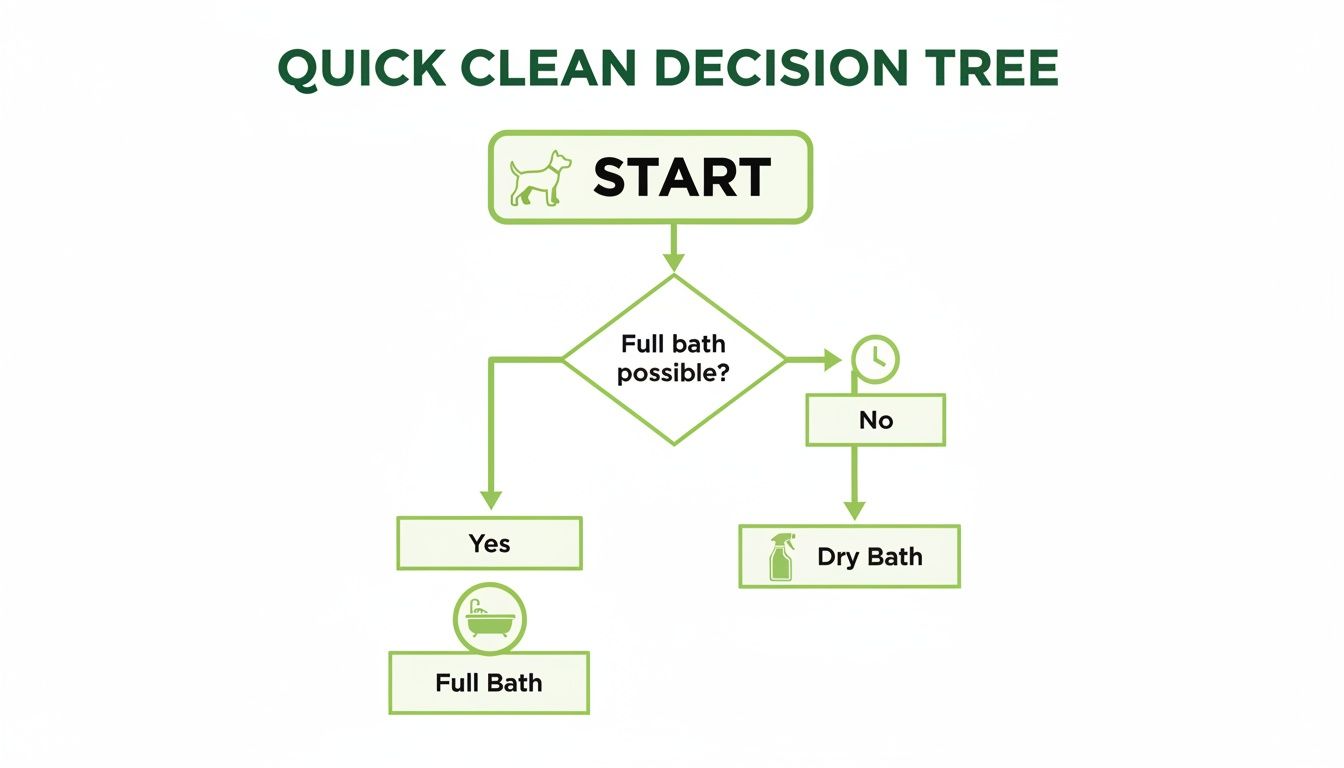
As you can see, a dry bath is the perfect problem-solver for those in-between moments when a full scrub isn't practical.
To make the choice even clearer, use this comparison table to pick the best product for your situation.
Dry Dog Bath Product Comparison
| Product Type | Best For | Application Tip | Consideration |
|---|---|---|---|
| Sprays | Quick deodorizing, light surface dirt, post-walk refresh. | Mist lightly over the coat (avoiding the face) and towel dry. | Best for short-haired dogs; may not penetrate dense coats well. |
| Foams/Mousses | Deeper cleaning, lifting embedded dirt and dander. | Work the foam into the coat with your hands before toweling off. | Offers a more thorough clean than sprays but takes slightly longer. |
| Powders | Absorbing excess oil and odor on greasy coats. | Sprinkle on, massage into oily areas, then brush out thoroughly. | Can be messy; requires vigorous brushing to remove all residue. |
| Wipes | Targeted spot-cleaning for paws, faces, and small messes. | Gently wipe the dirty area. Use a separate wipe for the face/eyes. | Not efficient for a full-body clean; best for small, specific spots. |
Choosing the right type of product is half the battle, but what's inside the bottle is just as critical.
Check the Ingredients List
Always turn the bottle over and read the ingredients to ensure they are safe and beneficial for your dog.
Actionable Tip: Look for products that are pH-balanced specifically for dogs. A dog's skin has a different pH level than human skin. Using the wrong product can cause dryness, itching, and irritation.
Opt for formulas with natural, soothing ingredients like oatmeal, aloe vera, or chamomile, especially if your dog has sensitive skin. Avoid harsh chemicals, parabens, sulfates, and artificial fragrances, as these can strip the coat's protective oils and trigger allergic reactions.
It's clear that pet owners are getting savvier about this. The global dog shampoo market is projected to be worth USD 730.84 million by 2032, largely because so many of us are now seeking out hypoallergenic and organic options. We want the best for our dogs, and the market is finally catching up.
To make sure your dog’s dry bath is a positive, irritation-free experience, start with the right product. If you're interested in learning more about what makes a great grooming formula, our guide on dog shampoo and conditioner is a great place to start.
How to Give a Stress-Free Dry Dog Bath
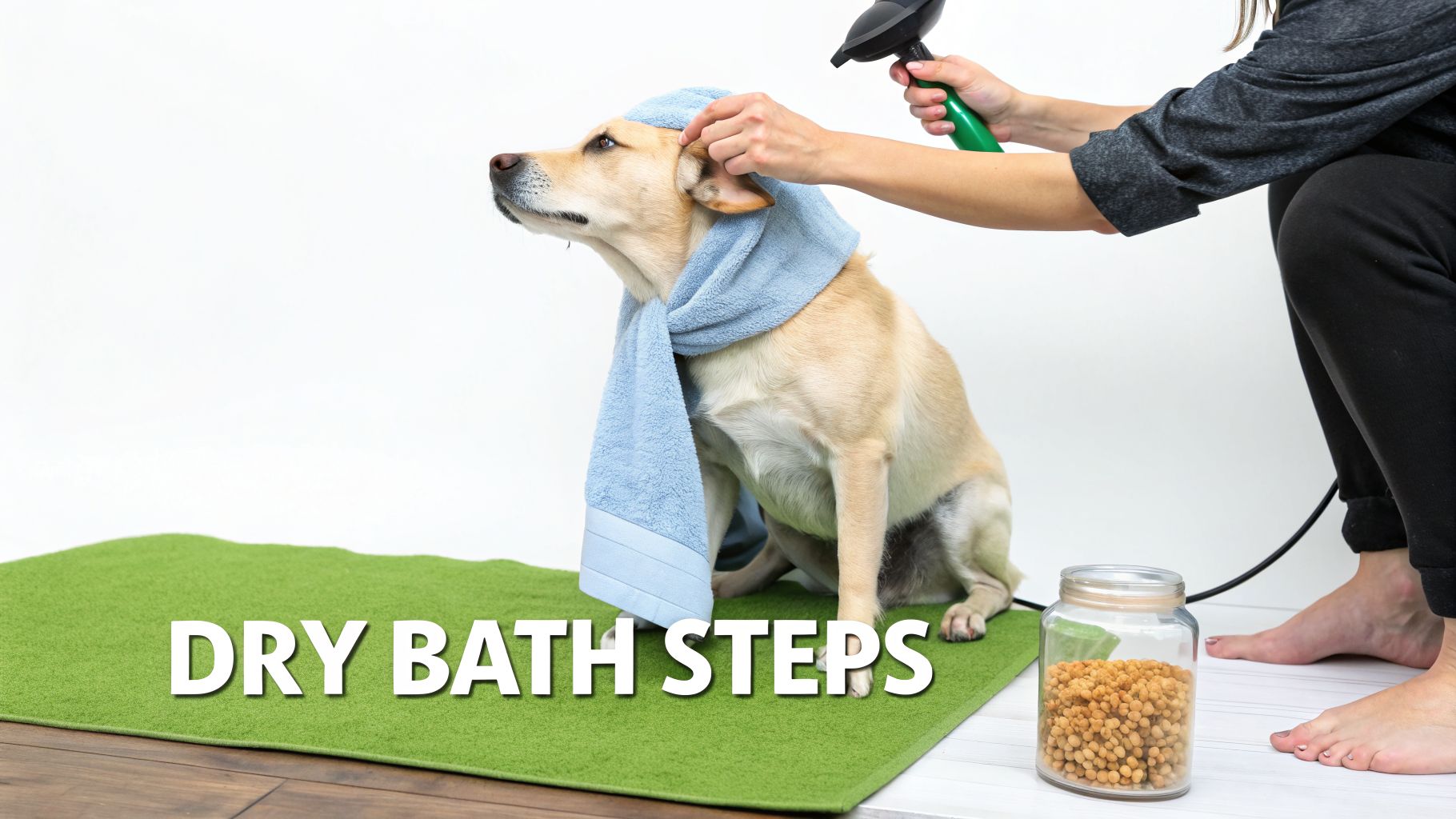
Turn your dog's waterless wash from a chore into a quick, pleasant spa session. A calm, predictable routine teaches your dog that there’s nothing to fear. Success comes from preparing your space and tools before you begin.
Getting Everything Ready
First, choose a spot where your dog feels secure, like their bed or a favorite rug. Avoid the bathroom or any area they associate with a stressful water bath.
Next, gather all your supplies and place them within arm's reach.
Your Supply Checklist:
- Your Chosen Product: Spray, foam, powder, or wipes.
- A Good Brush: A slicker brush or comb appropriate for your dog's coat.
- Two Towels: One for application and one for a final buffing.
- High-Value Treats: Keep their favorite snacks ready for rewarding calm behavior.
Before applying any product, give your dog a quick but thorough brushing. This removes loose fur, surface dirt, and tangles, allowing the dry shampoo to work more effectively.
Actionable Tip: Let your dog sniff the brush and the product bottle, then immediately give them a treat. Repeat this a few times to build a positive association and reduce anxiety before you even start.
Now that you're prepped, your application method will depend on the product you chose.
Working with Sprays and Foams
For an all-over refresh with a spray or foam, follow this three-step process: spray, massage, and brush.
Start by lightly misting the spray or applying foam to one section of your dog’s coat at a time, avoiding their face and eyes. Use your hands to massage the product down to the skin to lift dirt and ensure even distribution.
After massaging it in, use a clean towel to give their coat a vigorous rub-down. This action pulls out dirt and excess moisture. Finish with a final brush-through to smooth the coat and leave it looking its best.
The Powder Method
Powders are excellent for absorbing oil and odors on greasy coats. The method is simple: sprinkle, work in, and brush out completely.
Lightly sprinkle the powder over your dog's back, legs, and belly. A little goes a long way. Use your fingers to work the powder deep into the coat, focusing on oily or odorous areas.
Let the powder sit for a minute or two to absorb everything. Then, you must brush it out completely. Use a slicker brush to work through their coat until no powder residue remains. Skipping this step can leave the fur looking dull and may cause skin irritation.
The Simple Power of Wipes
Wipes are the ideal tool for quick, targeted cleanups. Simply wipe the dirty spot and toss the used wipe.
Use a wipe to clean muddy paws, a dirty spot on their back, or their face after a meal. Always use a fresh wipe when cleaning near the face to avoid spreading germs into their eyes or mouth. Wipes are your go-to for small messes that don’t require a full-body dry dog bath.
Throughout the process, speak to your dog in a calm, happy voice and offer praise and treats. Transforming grooming from a dreaded task into a positive bonding moment is a win for everyone. For more tips on making grooming a positive routine, check out our full guide on how to groom your dog at home.
Adapting the Dry Bath for Different Dog Coats
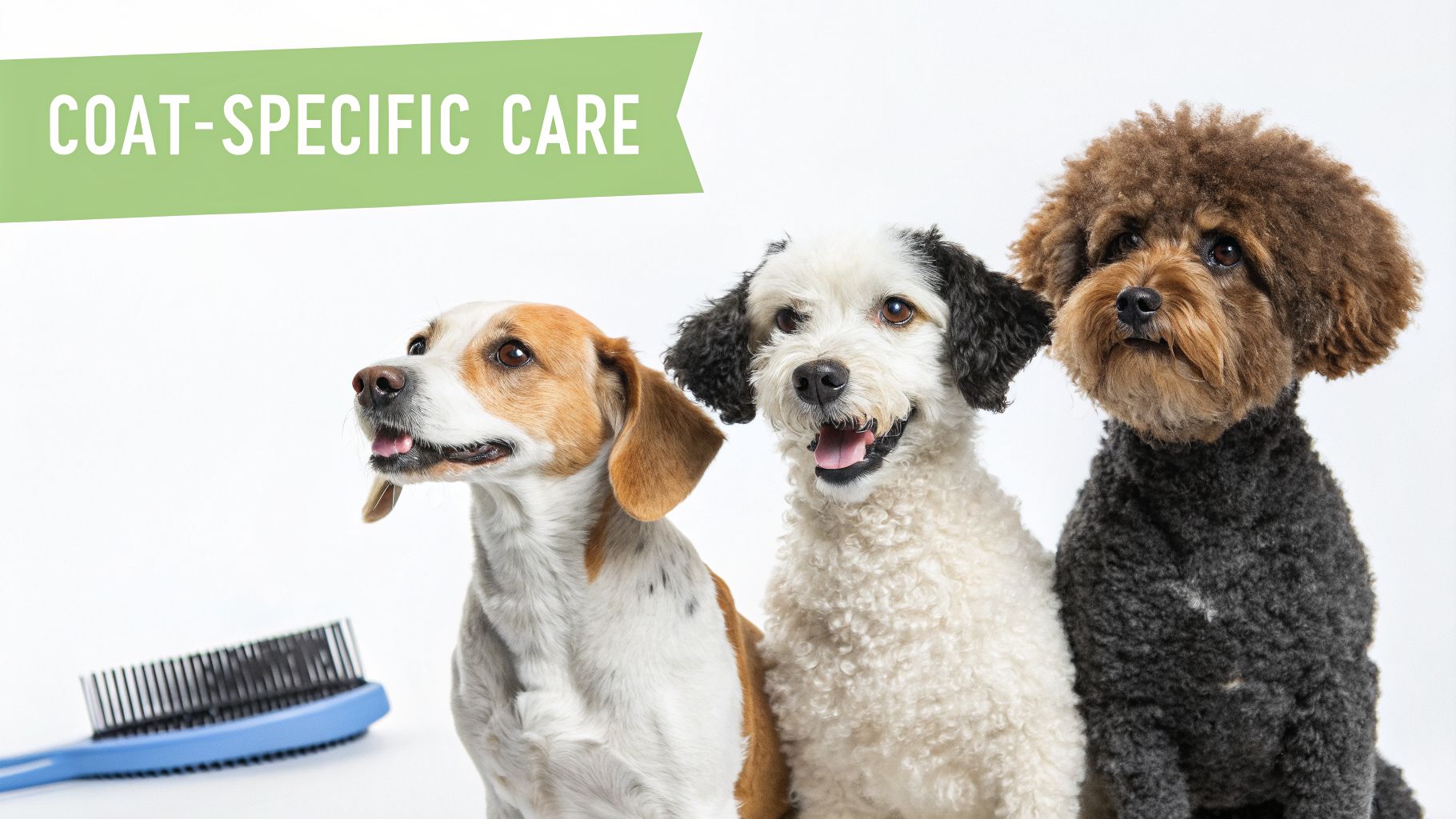 A successful dry dog bath requires you to tailor your product and technique to your dog's specific coat type. What works for a Poodle may not work for a Golden Retriever. Here’s how to get the best results for your dog.
For Short, Smooth Coats
Dogs like Beagles, Boxers, and Greyhounds have sleek, short coats that leave their skin more exposed and potentially sensitive.
- Best Product: Gentle sprays or pre-moistened wipes.
- Technique: Lightly mist a spray and follow with a brisk wipe-down using a towel. Use wipes for quick cleanups around the face or ears.
- Actionable Tip: Use products sparingly. A little goes a long way on short fur, and over-application can leave a residue. Your goal is to remove dust and add shine.
For Dense Double Coats
Breeds like Huskies, German Shepherds, and Golden Retrievers have a thick undercoat that traps dirt, oil, and odors.
- Best Product: Powders are your most effective tool. Foams can also work well.
- Technique: Use a powder-based dry dog bath to absorb excess oil in the undercoat. Sprinkle it on, then use your fingers to massage it down to the skin. Let it sit for a few minutes.
- Actionable Tip: You must brush the powder out completely. Use a slicker brush to lift the powder, which will take trapped dirt and oil with it. Always brush their coat before applying the powder to help it penetrate the dense fur. If you're not sure what tool to use, our guide on choosing the best grooming brush for dogs can point you in the right direction.
For busy pet parents, convenience is everything. A dry bath can cut grooming time by up to 80% compared to a full-on wet bath. It’s no surprise that the U.S. grooming products market, valued at USD 5.35 billion in 2023, is booming. This growth is all about owners like us seeking premium, skin-safe products for our dogs' specific needs. You can dig deeper into these trends with these insights on pet shampoo.
For Long or Silky Hair
For breeds like Yorkies, Shih Tzus, and Afghan Hounds, the primary goal is to clean without causing tangles or weighing down their long, fine hair.
- Best Product: A detangling spray or a very light foam.
- Technique: Mist the coat lightly, then use a comb or pin brush to work the product through. Gently tease out any knots as you go to prevent matting.
For Curly and Wiry Coats
For Poodles, Doodles, and many Terrier breeds, avoid powders that can get trapped in curls and cause matting.
- Best Product: A foam or mousse.
- Technique: Apply the foam to your hands first, then scrunch it into your dog's curls. This distributes the product evenly without disrupting the curl pattern. Blot the coat with a towel to finish.
Common Mistakes and How to Avoid Them
A great dry dog bath is all about proper technique. Avoiding a few common mistakes will ensure the experience is easy and effective for both you and your dog.
Watch this video to see these tips in action:
The Non-Negotiable Safety Checks
The biggest mistake is skipping basic safety. You must always protect your dog’s face when using any dry shampoo spray, foam, or powder. Their eyes, nose, and mouth are extremely sensitive to irritation.
- Actionable Tip: Apply the product to a cloth or your hands first, then gently work it into the fur around their head and neck. This gives you complete control and prevents accidental spraying in their face.
- Actionable Tip: Always perform a patch test with a new product. Apply a small amount to a discreet spot, like their inner thigh. Wait 24 hours and check for any redness, itching, or irritation before proceeding with a full dry dog bath.
Always remember that your dog's skin is their largest organ. Taking a moment to test a new product isn't being overly cautious; it's being a responsible pet parent and ensuring their comfort and safety.
Troubleshooting Lingering Odors and Dull Coats
If your dog still smells funky or their coat looks dull after a dry bath, it's usually due to one of two issues. Here are the simple fixes.
If a bad smell persists, it could be for two reasons:
- You're only cleaning the surface. Ensure you are working the product all the way down to the skin, where odor-causing oils and bacteria hide.
- There's an underlying issue. Persistent, strong odors can signal a skin infection that a dry bath won't solve. If the smell doesn't go away, schedule a check-up with your vet.
A dull or dusty-looking coat, especially after using a powder, almost always means one thing: you didn't brush it out thoroughly enough. The powder's job is to absorb oil, but it must be completely removed.
- Actionable Tip: If you see residue, go back and brush again. A vigorous session with a quality slicker brush is essential for removing every last bit of powder and buffing their coat to a healthy shine.
Frequently Asked Questions About Dry Dog Baths
Here are answers to the most common questions about dry dog baths to help you proceed with confidence.
How Often Can I Use a Dry Dog Bath?
For most dogs, using a dry bath once or twice a week is fine for managing daily odors and light dirt between full baths. The most important thing is to monitor your dog's skin and coat. If you notice any flakiness, dryness, or irritation, reduce the frequency.
Can a Dry Dog Bath Replace a Real Bath?
No. A dry bath is a maintenance tool for touch-ups, deodorizing, and spot-cleaning. It cannot replace the deep clean of a traditional water bath.
Think of it like using dry shampoo in your own hair—it's a lifesaver for a day or two, but eventually, you need a real wash. A water bath is the only way to remove caked-on mud, deep grime, and thoroughly cleanse the skin. A dry dog bath is a perfect partner to your regular bathing schedule, not a substitute.
Can I Use Human Dry Shampoo on My Dog?
No, you should never use human dry shampoo on your dog. Human and dog skin have different pH levels—dog skin is more alkaline, while ours is more acidic.
Using a product formulated for human pH will disrupt your dog's natural skin barrier and can lead to:
- Itchiness and irritation
- Dry, flaky skin
- Increased risk of skin infections
Always use products that are specifically formulated and pH-balanced for dogs to ensure they are both safe and effective.
Ready to make your grooming routine easier? The high-quality grooming tools from Pet Magasin are designed to keep your pet looking and feeling their best between baths. Explore our collection and find the perfect tools to complement your dry bath routine at https://www.petmagasin.com.

Leave a comment