


Dog vaccine schedule: A clear, vet-approved guide to puppy shots and boosters

Bringing home a new puppy is an incredible experience, but it also comes with a to-do list. Topping that list is their first-year vaccination schedule. This is your action plan for building their lifelong shield against serious diseases, and it starts the moment you bring them home.
Your puppy's first shots should happen when they are 6-8 weeks old. Your next step is to book follow-up vet visits for boosters every 3-4 weeks until they reach 16 weeks old. This isn't a flexible timeline; it's a carefully structured plan to build a strong immune system from scratch. Stick to it.
Your Puppy's First-Year Vaccine Schedule
So, why the frequent vet visits? It's all about something called maternal antibodies. Newborn puppies get temporary immunity from their mother's milk, which protects them for the first few weeks.
But this inherited protection fades, typically between 6 and 16 weeks of age. Your job, with your vet, is to start the vaccination series just as this natural shield weakens. Each shot prompts your puppy's body to create its own long-lasting defenses. Sticking to the schedule is the most direct action you can take to keep them safe during this vulnerable period.
Why a Series of Shots?
Think of it like this: one shot is a single lesson. The full series is the complete course. Each booster reinforces what the immune system has learned, making its response faster and stronger.
By scheduling these shots every few weeks, you close any potential immunity gaps as those maternal antibodies disappear. Actionable step: Do not skip or delay a booster. Doing so leaves your puppy exposed when they are most at risk.
Locking in this schedule also establishes a routine for future wellness visits. It's as crucial as any other part of their early training. For instance, consistency here works just like it does in our guide on creating a puppy potty training schedule.
Typical Puppy Vaccination Timeline
Here is a straightforward chart outlining what to expect and when to schedule your vet visits. Use this as your guide for your puppy's first few months.
| Puppy's Age | Core Vaccines Administered | Common Non-Core (Lifestyle) Vaccines |
|---|---|---|
| 6-8 Weeks | Distemper, Parvovirus (often in a combo shot like DHPP) | Bordetella (kennel cough), Canine Influenza |
| 10-12 Weeks | Second DHPP booster | Leptospirosis, Lyme disease (depending on region) |
| 14-16 Weeks | Final DHPP booster, Rabies | Boosters for any non-core vaccines started earlier |
Remember, this is a template. Your vet will customize it based on your location and your puppy's health. Your job is to make sure the appointments happen on time.
A Visual Guide to the First Few Months
Here’s a handy visual timeline to help you track the key vaccination milestones for your puppy's first year.
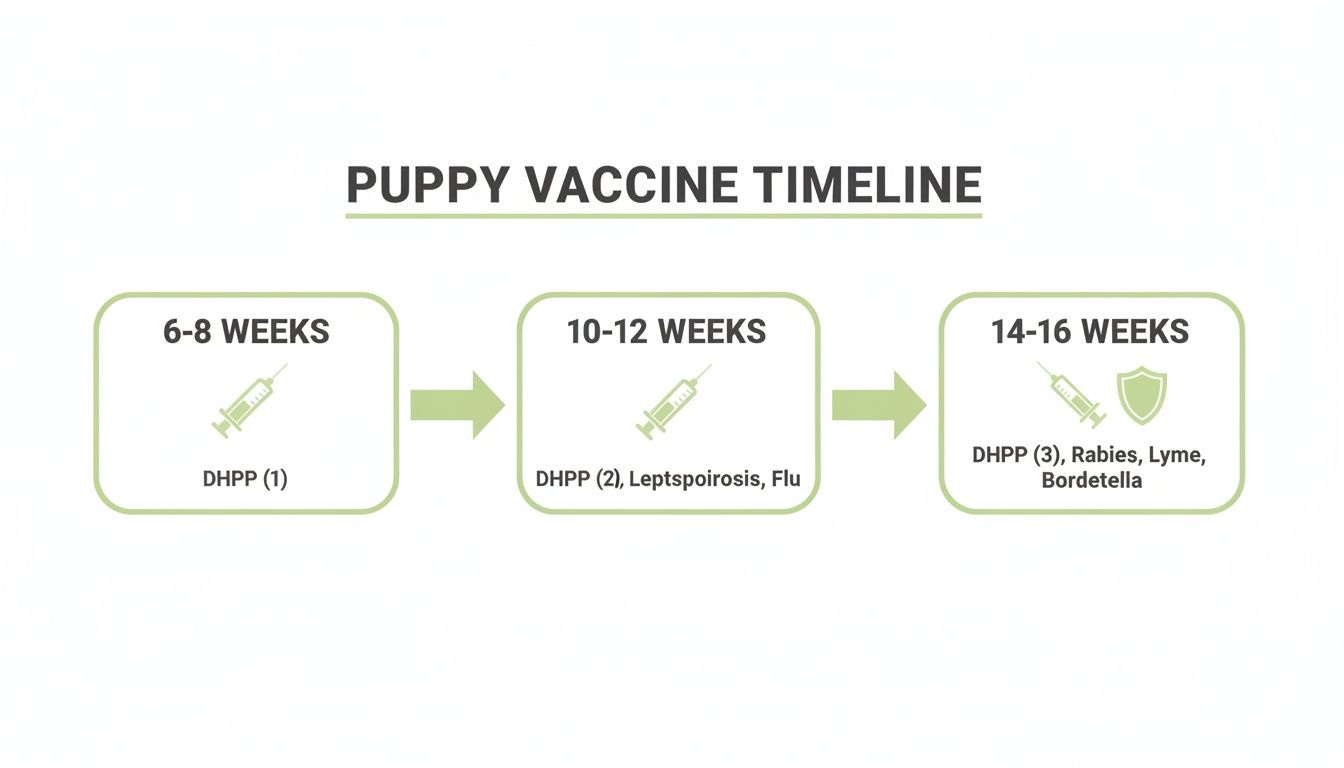
This graphic clearly shows the three crucial vet visits you need to schedule to give your puppy full protection by the 16-week mark.
Key Goals for Your Puppy’s Vet Visits
Partner with your veterinarian and ask questions to ensure you're on the right track. Every visit should accomplish these key goals:
- Build Foundational Immunity: This is your defense against highly contagious and often deadly diseases like distemper and parvovirus.
- Bridge the Immunity Gap: The schedule ensures your puppy develops their own antibodies just as their mother’s protection fades.
- Establish a Health Record: You will receive an official vaccination record, which you must have for groomers, boarding kennels, and puppy training classes.
Your takeaway: Following a consistent puppy vaccination schedule is the most effective and affordable action you can take to set your dog up for a long, healthy life. It’s a small investment of time that provides priceless peace of mind.
Understanding Core vs. Non-Core Vaccines
Looking at a vaccine list can feel like reading alphabet soup. To simplify it, you only need to understand two categories: "core" and "non-core."
Think of core vaccines as the seatbelts and airbags in a car—they are non-negotiable safety features every dog needs. Non-core vaccines are like all-terrain tires—you add them based on where you plan to go and what you plan to do.
Your veterinarian's job is to create a plan based on your dog's real-world risks. Your job is to provide them with the honest details of your dog's lifestyle so they can make the right recommendations.
The Essentials: Core Vaccines Explained
Core vaccines are the foundation of your dog’s preventative health. Your vet will insist on these for every single dog, regardless of breed or lifestyle. Why? Because they protect against diseases that are widespread, highly contagious, and often fatal.
Here are the threats core vaccines neutralize:
- Canine Distemper: A severe virus attacking the respiratory, digestive, and nervous systems.
- Canine Parvovirus: A highly contagious and aggressive virus, especially deadly for puppies, causing severe vomiting and diarrhea.
- Canine Adenovirus (Hepatitis): This virus causes infectious hepatitis, a serious illness targeting the liver, kidneys, and eyes.
- Rabies: A fatal viral disease that attacks the central nervous system and can be transmitted to humans.
To make it easy, most of these are bundled into a single combination shot, often called DHPP or DAPP. The rabies vaccine is always given separately.
Rabies vaccination is required by law in most places. This is not optional. It is the single biggest factor in eliminating urban canine rabies in the U.S. since the 1960s. For a disease with an over 99% mortality rate once symptoms appear, this vaccine is a non-negotiable lifesaver. You can read the full research about the impact of canine vaccines to learn more.
Lifestyle-Based: Non-Core Vaccines
This is where you need to be an active participant. Non-core vaccines are recommended based on your dog’s specific lifestyle and geographic location.
A city-dwelling Chihuahua has a different risk profile than a Labrador who hikes and swims in lakes every weekend. You must have a detailed conversation with your vet to build the right vaccine plan for your specific dog.
Is a Non-Core Vaccine Right for Your Dog?
To decide which non-core vaccines your dog needs, you and your vet must review your dog's daily activities. Use these questions to prepare for that conversation.
Here are the most common non-core vaccines and the key lifestyle questions to determine if your dog needs them:
| Vaccine Name | Recommended For Dogs Who... | Key Lifestyle Questions to Consider |
|---|---|---|
| Bordetella (Kennel Cough) | Frequently visit dog parks, daycare, groomers, or boarding kennels. | Does your dog interact with other dogs in enclosed spaces? |
| Leptospirosis | Live near wildlife, drink from puddles, or swim in lakes/ponds. | Does your dog have access to outdoor water sources or areas with wildlife? |
| Lyme Disease | Live in or travel to regions with a high tick population, especially wooded areas. | Do you hike or spend time in grassy or wooded areas known for ticks? |
| Canine Influenza (Dog Flu) | Travel frequently, attend dog shows, or stay in kennels with dogs from other regions. | Will your dog be in close contact with dogs from different geographical areas? |
By answering these questions honestly with your vet, you can create a practical, effective vaccine plan that keeps your dog safe without unnecessary shots.
The Adult Dog Vaccine Booster Schedule
Once your dog completes their puppy shots, your focus shifts from building immunity to maintaining it. This doesn't mean you need to schedule the same set of boosters every single year. Modern veterinary practice has moved beyond that one-size-fits-all approach.
The new goal is a smarter, strategic schedule. Instead of a rigid calendar, think of it as a long-term wellness plan customized for your dog. Your job is to work with your vet to keep their "immunity fortress" strong.
The Shift from Annual to Triennial Boosters
One of the biggest changes in veterinary medicine is the move from automatic annual shots to a 3-year (triennial) schedule for many core vaccines.
This is based on solid research showing that protection from certain vaccines lasts much longer than one year. For most adult dogs, the first booster for core vaccines like DHPP and Rabies is given one year after their final puppy shot. After that, you can often extend the interval.
The takeaway: Immunity doesn't expire on a set date. By shifting to a 3-year schedule for core vaccines, vets provide continuous protection while reducing the total number of injections a dog receives in its lifetime.
This is possible due to improved vaccine technology. For instance, studies confirm modern rabies vaccines protect a dog for nearly three years. You can discover more insights about vaccine advancements on grandviewresearch.com.
Common Adult Booster Protocols
Here is what a modern booster schedule typically looks like. Use this to plan your dog's long-term care with your vet:
- Core Vaccine Boosters (DHPP & Rabies): After the one-year booster, schedule these every 3 years. Note that the Rabies vaccine schedule is also dictated by local law; your vet will provide the exact timeline you must follow.
- Non-Core Vaccine Boosters: Vaccines for Bordetella, Lyme disease, or Leptospirosis usually require an annual booster. Immunity from these doesn't last as long, so if your dog's lifestyle puts them at risk, you need to schedule this yearly.
This staggered plan ensures your dog remains protected against major threats without being over-vaccinated.
What Is Titer Testing?
Your vet may suggest titer testing. This is a simple blood test that measures the level of antibodies in your dog's system for diseases like distemper and parvovirus. It's a direct way to see if their immunity is still strong.
If antibody levels are high, your dog is still protected, and your vet may recommend skipping the booster for another year. If levels are low, it's a clear signal that you need to schedule a booster to reinforce their defenses.
Actionable tip: Ask your vet if titer testing is a good option for your dog, especially if they are older or have other health issues. It helps you make data-driven decisions and vaccinate only when necessary.
Tailoring the Schedule to Your Dog's Unique Life
The standard vaccine schedule is a starting point, not a strict rulebook. Your veterinarian acts as a specialist, tailoring that standard pattern to fit your dog's specific needs based on their health, history, and even your travel plans.
This personalized approach is essential. It ensures your dog gets crucial protection without unnecessary vaccinations. To make this work, you must be an active partner. Advocate for your dog’s unique needs and collaborate with your vet to build a plan that makes sense for them.
Navigating Unknown Histories in Rescue Dogs
Adopting a rescue dog often means their medical history is a mystery. Veterinarians have a safe, effective protocol for this exact situation. The goal is to get your new dog fully protected without making risky assumptions.
- Starting Fresh: If you have no verifiable records, your vet will likely recommend a full round of core vaccines, like DHPP and Rabies, as if they've never been vaccinated.
- Booster Timing: A booster for the core combo vaccine is typically given 3-4 weeks after the first dose to ensure a strong immune response.
- The Titer Test Option: You can also ask your vet about performing a titer test first. This blood test checks for existing antibodies and can help you avoid a vaccine if your dog is already protected.
This process provides every rescue dog with a reliable foundation of immunity for their new life.
Vaccine Requirements for Traveling Dogs
If you plan to travel with your dog, their vaccine records become as important as your passport. Different locations have strict rules to prevent the spread of disease.
For U.S. travel, you will almost certainly need proof of an up-to-date Rabies vaccination. For international travel, the requirements are far more complex. You will likely need:
- A recent Rabies vaccine administered within a specific timeframe.
- A microchip for identification that matches their vaccine paperwork.
- Specific non-core vaccines, like Leptospirosis, depending on your destination.
- A health certificate signed by a USDA-accredited veterinarian shortly before your departure.
Actionable step: Research the pet import rules for your destination months in advance. This is the only way to avoid being denied entry at the border.
As you sort out a rescue dog's vaccine history, don't forget about parasites. Your vet will almost certainly recommend a deworming protocol alongside vaccinations. You can learn why this is a critical step by reading about deworming for dogs.
Special Considerations for Senior or Ill Dogs
As dogs age or develop chronic health issues, their immune systems change. This requires a more careful discussion about the risks and benefits of each vaccine. For senior or immunocompromised dogs, the goal is to maintain protection while minimizing stress on their bodies.
Your vet will weigh the risk of exposure against the potential for a negative reaction. This might mean extending the time between boosters or using titer tests to confirm immunity before giving a shot. This risk-benefit analysis ensures their vaccine plan supports their overall quality of life.
What to Expect After Your Dog Gets Vaccinated
It's common for dogs to feel a little "off" after their shots. Your job is to know what’s normal and what’s a red flag. Most reactions are mild and quick to fade—a positive sign that your dog's immune system is learning how to protect them.
Think of it like post-gym soreness. Their body is busy building strength, so they might feel tired. This means the vaccine is working as intended.
Common and Mild Side Effects
For the first 24 to 48 hours after their appointment, monitor your dog for these completely normal reactions:
- Lethargy: They may want to sleep more or show less interest in play.
- Soreness: The injection site might be tender, just like your arm after a shot.
- Mild Fever: A slight, temporary rise in temperature is a classic sign of an active immune response.
- Decreased Appetite: They might skip a meal or eat less for a day.
- Sneezing: If they received an intranasal vaccine (like for kennel cough), some sneezing is expected.
These signs almost always resolve on their own. Your action plan: Provide a comfortable, quiet place for them to rest with plenty of fresh water, and let them be.
When You Should Call Your Veterinarian
Serious reactions are rare, but you must know the warning signs. An adverse reaction typically occurs within a few minutes to a few hours after vaccination.
An essential part of any dog vaccine schedule is knowing how to monitor your pet afterward. While severe reactions affect less than 1% of dogs, being prepared allows you to act quickly if your dog is part of that small group.
Call your veterinarian immediately if you observe any of the following symptoms, as they could indicate a serious allergic reaction requiring urgent care:
- Persistent Vomiting or Diarrhea: Multiple episodes, not just one isolated incident.
- Facial Swelling: Any puffiness around their eyes, muzzle, or face.
- Hives or Bumps: Itchy, raised welts appearing on their skin.
- Difficulty Breathing: Wheezing, heavy coughing, or labored breathing.
- Collapse or Severe Weakness: Fainting, inability to stand, or extreme wobbliness.
To make it easier, use this quick-glance table to tell the difference between a normal reaction and a medical emergency.
Post-Vaccine Side Effects: Normal vs. When to Call the Vet
Use this reference guide to distinguish between common reactions and signs that require an immediate call to your vet.
| Symptom | What's Typically Normal | When to Contact Your Vet Immediately |
|---|---|---|
| Energy Level | A little tired or sluggish for 24-48 hours. | Extreme weakness, disorientation, or collapse. |
| Appetite | Skipping one meal or eating less for a day. | Refusing to eat or drink for more than 24 hours. |
| Injection Site | Mild soreness, slight swelling, or a small, firm lump. | Swelling that grows rapidly or seems very painful. |
| Behavior | Quiet, wants to be left alone to rest. | Constant crying, whining, or signs of severe pain. |
| Skin/Face | No noticeable changes. | Hives, rash, or any swelling of the face or muzzle. |
When in doubt, always call your vet. They would rather you call with a "false alarm" than have you wait when your pet truly needs help.
Managing Your Dog's Health Records and Vet Visits
Staying organized is a simple but powerful action you can take for your dog's long-term health. Think of their health records as a medical passport—it's an essential tool for proactive pet ownership.
Groomers, daycares, and boarding kennels will require these records. Actionable step: Keep a dedicated folder (physical or digital) with vaccination certificates and reminder notes for when boosters are due. This eliminates stress when you need to prove their health status. For those who travel, having these documents organized is non-negotiable, as explained in our guide on how to travel with pets.
Making Every Vet Visit Count
A booster appointment is more than just a shot; it's your chance to conduct a full wellness review with an expert. Arriving prepared transforms a routine visit into a comprehensive health check-in.
Understanding different veterinary care tools and procedures also helps you ask better questions and fully participate in your dog's care. When you treat each visit as a planning session, you and your vet become a team. This proactive approach ensures no booster is missed and that your dog vaccine schedule remains perfectly aligned with their changing needs.
Your takeaway: By keeping organized records and preparing for vet visits, you shift from being a reactive pet owner to a proactive health advocate. This simple strategy delivers significant returns for your dog's long-term well-being.
Questions to Ask Your Veterinarian
To maximize the value of your next appointment, arrive with a list of questions. Use this checklist to guide the conversation and get the clear answers you need.
- Lifestyle Check-in: "Have our routines changed enough to require any new non-core vaccines?"
- Booster Timing: "Is my dog on a 1-year or 3-year schedule for their core vaccines? Why was that chosen?"
- Titer Testing: "Is titer testing a good option for my dog at this time to check their immunity?"
- Next Steps: "What is the next vaccination my dog needs, and when should I schedule that appointment?"
Frequently Asked Questions About Dog Vaccinations
It's normal to have questions about dog vaccinations. Getting clear, practical answers will empower you to make confident decisions for your dog's health. Here are the answers to some of the most common questions from pet owners.
Can I Vaccinate My Dog Myself at Home?
No. While you can buy vaccines at feed stores, administering them yourself is a bad idea. A vet visit is a critical health check to confirm your dog is healthy enough for a vaccine. A vaccine given to a sick dog can be ineffective or even harmful.
Furthermore, a vet guarantees the vaccine has been stored correctly and provides the official, legal record of vaccination you will need for boarding, grooming, and travel. There is no benefit to doing it yourself.
What Happens if My Puppy Misses a Booster Shot?
If you are only late by a week or two, your vet can usually get your puppy back on schedule without issue. Call them to adjust the appointment.
However, a long delay is a serious problem. A significant gap leaves your puppy’s immune system vulnerable to deadly diseases. If you have missed a booster by several weeks, your vet may recommend restarting the entire vaccine series to ensure your puppy receives complete and reliable protection. Do not delay.
Sticking to the vaccine schedule is incredibly powerful. Even with some vaccine hesitancy out there, high vaccination rates in the U.S. have caused a 95%+ drop in preventable diseases, which is a huge reason our pets are living longer, healthier lives.
Is It Bad to Over-Vaccinate My Dog?
Yes, and modern veterinary practice is focused on preventing it. While vaccines are very safe, there is no benefit to giving an unnecessary injection that places even a small strain on your dog's system.
This is why vets now use a smarter, customized schedule:
- Lifestyle Assessment: Non-core vaccines are only recommended if your dog's activities (like visiting dog parks or hiking) create a tangible risk of exposure.
- 3-Year Boosters: Most core vaccines now protect for three years, which means fewer shots over your dog's life.
- Titer Tests: This blood test can confirm if your dog's protection is still strong, allowing you and your vet to safely skip a booster.
This modern, data-driven approach ensures your dog gets precisely the protection they need, and nothing they don't. For more details on choosing the right shots, read this guide on what vaccinations do I need for my dog.

Leave a comment