
Your Actionable Guide to Airline-Approved Dog Travel Carriers

Finding a dog travel carrier airline approved for your trip can feel overwhelming. Here's the direct truth: there's no universal "airline approved" certification. The term simply refers to a carrier with features that meet the requirements of most major airlines. The final decision always rests with the airline staff on your travel day. This guide provides the actionable steps to ensure you and your dog fly smoothly.
Your Essential Guide to Flying With Your Dog
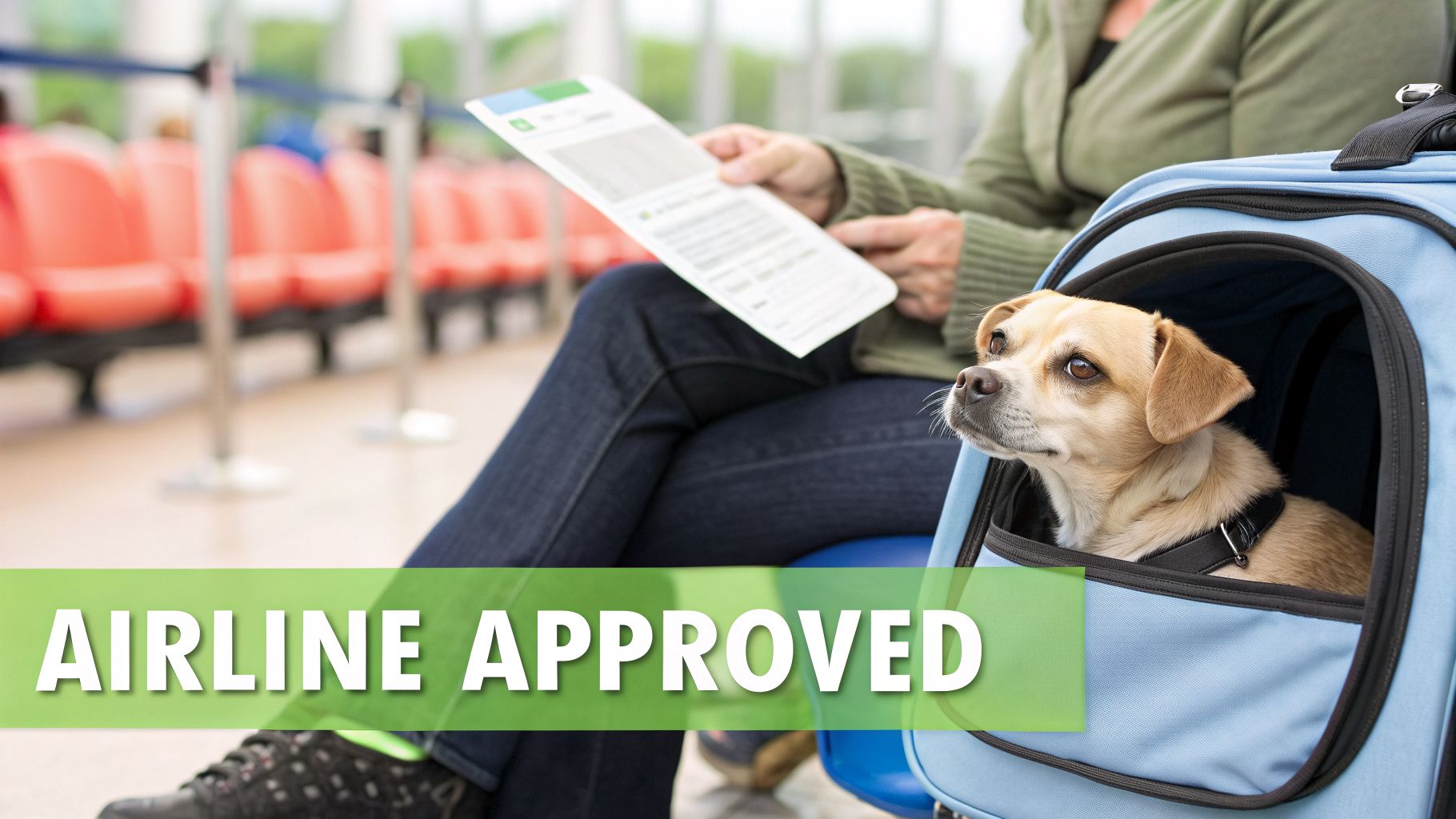
A successful trip with your dog comes down to one thing: preparation. The key is understanding what "airline approved" means in practice. Treat it not as a rigid rule, but as a practical checklist to ensure your dog's safety and compliance with airline policies.
This focus on safe pet travel is a growing trend. In 2024, the airline-friendly pet carrier market hit USD 1.47 billion and is projected to reach USD 2.53 billion by 2033. This growth reflects how many of us are traveling with pets and the increasing importance of proper gear. You can discover more insights about this growing market trend to understand the industry's direction.
Deconstructing the "Airline Approved" Label
What separates a carrier that gets you on the plane from one that gets you turned away at the gate? It's about meeting a few core requirements designed for safety and logistics during in-cabin travel.
Here are the four non-negotiable features your carrier must have to fly:
- Under-Seat Fit: This is the #1 rule. The carrier must fit completely under the seat in front of you. If it doesn't, it won't be allowed on board.
- Proper Ventilation: Your dog must have adequate airflow. The carrier needs mesh windows on at least two or three sides.
- Secure Enclosure: To prevent any escapes at 30,000 feet, the zippers must be secure, ideally with locking clips. The carrier must be fully enclosed so your dog cannot poke its head out.
- Durable, Safe Materials: The carrier's base must be waterproof to contain accidents. The structure must be sturdy enough to prevent collapse and resist tearing.
Actionable Insight: The term "airline approved" is a marketing claim, not an official certification. Your success depends on your carrier meeting the specific size and safety rules of the airline you're flying, verified by staff at the airport.
Use this checklist to evaluate any potential dog travel carrier.
Airline Approved Carrier Features at a Glance
| Essential Feature | Why It's Critical for Approval | What to Look For |
|---|---|---|
| Correct Dimensions | Must fit under the seat in front of you. This is the #1 rule. | Check your airline’s specific size limits. Aim for a soft-sided carrier for flexibility. |
| Adequate Ventilation | Ensures your dog has enough fresh air throughout the flight. | Mesh panels on at least 2-3 sides of the carrier. |
| Secure Zippers/Latches | Prevents your dog from escaping during travel, which is a major safety hazard. | Self-locking zippers or clips that prevent them from being nudged open. |
| Waterproof Bottom | Contains any potential accidents, keeping the cabin clean and hygienic. | A leak-proof, padded base that is easy to remove and clean. |
| Sturdy Construction | The carrier must not collapse on your dog or tear under stress. | Durable fabric, a firm frame, and strong seams. |
Meeting these five requirements is your most direct path to a smooth check-in.
Soft-Sided vs. Hard-Sided Carriers
For in-cabin travel, a soft-sided carrier is the most practical choice. A hard-sided carrier has no flexibility; if it's even a fraction of an inch too tall for the under-seat space, it will be rejected.
A soft-sided carrier, however, has some give. You can compress it slightly to fit into tight spaces without compromising your dog's comfort. This adaptability is crucial, as under-seat dimensions vary between aircraft. By choosing a quality soft-sided carrier, you maximize your chances of a stress-free boarding process.
Decoding Airline Pet Policies
The "airline approved" tag on a carrier is a helpful starting point, not a guarantee. There is no universal standard that all airlines accept. An airline approved dog travel carrier is designed to meet common requirements, but the final decision is always made by airline staff at the check-in counter or gate. They will verify that the carrier meets that specific airline's rules for that specific flight.
The Universal Requirements Most Airlines Agree On
While airline policies differ, a few core requirements are consistent across the board. Failing to meet any of these will result in being denied boarding.
These essentials are all based on safety and logistics:
- It Must Fit Under the Seat: This is non-negotiable. The carrier must slide completely under the seat in front of you and remain there for the duration of the flight.
- Sufficient Ventilation: Your dog requires ample fresh air. A compliant carrier features mesh windows on at least two, preferably three, sides.
- A Waterproof Base: Accidents can happen. A leak-proof bottom is mandatory to maintain cabin hygiene.
- Securely Enclosed: For everyone's safety, the carrier must be escape-proof. This means durable zippers with safety clips and fabric that resists tearing or clawing.
Actionable Insight: The most critical step is the final check at the airport. An airline employee will physically inspect your carrier to confirm it meets their dimensional and safety standards before allowing you to board.
The Soft-Sided Carrier Advantage
The type of carrier you choose directly impacts your success. While both hard and soft-sided carriers are available, soft-sided models offer a distinct advantage for in-cabin travel. A hard carrier is rigid; if it's slightly too large for the under-seat space, it simply won't fit.
A soft-sided carrier provides crucial flexibility. Its structure allows you to gently compress the top to slide it into a tight space without harming your dog or the carrier's integrity. This adaptability is your best tool against the minor variations in under-seat dimensions across different aircraft. To learn how rules vary by airline, consult our detailed guide on airline pet travel requirements.
Choosing a soft-sided carrier significantly increases your chances of a smooth check-in. It demonstrates proactive planning for the realities of air travel, where flexibility is key.
How to Measure Your Dog for the Perfect Carrier
Selecting a dog travel carrier airline approved for flight hinges on one crucial factor: a proper fit. This is not just for your dog's comfort; it's the primary factor airline staff use to approve or deny boarding. An ill-fitting carrier is an immediate red flag. An agent must see that your dog can stand up, turn around, and lie down comfortably. If these conditions aren't met, the carrier is deemed unsafe, and your travel plans will be halted.
Taking Your Dog’s Measurements Accurately
To avoid this gate-side problem, take two simple measurements using a soft measuring tape.
Here is the step-by-step process:
- For Length: With your dog standing, measure from the front of their chest to the base of their tail (not the tip).
- For Height: While your dog is standing or sitting, measure from the floor to the top of their head or the tip of their ears, whichever is higher.
These measurements are your baseline. The carrier must be larger than your dog to provide adequate room.
Actionable Insight: Add 2-3 inches to both your dog's length and height measurements when selecting a carrier. This buffer provides the necessary space for them to stand and turn, which is what airline staff will look for.
Translating Measurements into Carrier Dimensions
With your dog’s measurements, you can now shop for a carrier. The challenge is balancing your dog's interior space needs with the airline's exterior dimension limits.
This is the approval process you will face at the airport:
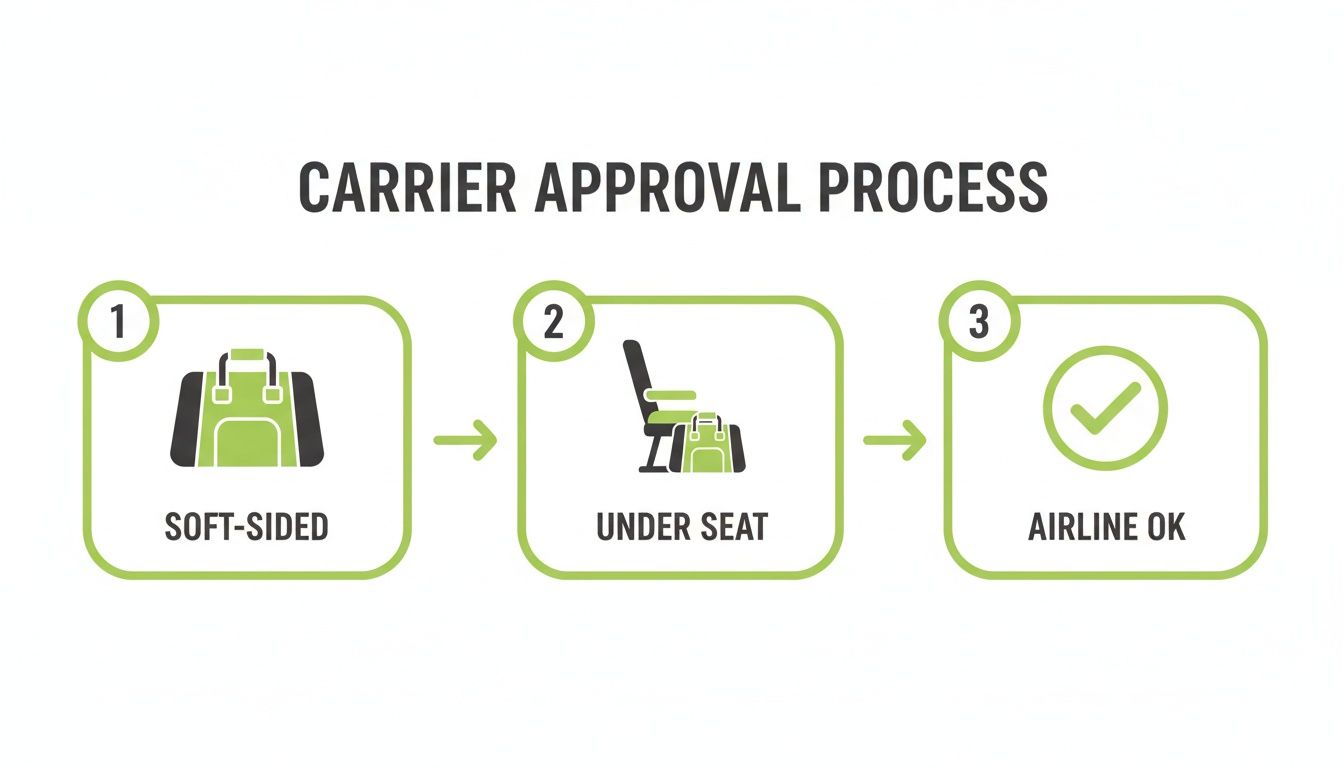
The path to approval is clear: a soft-sided carrier that fits under the seat is your best strategy.
The demand for such products is significant. Dogs represent a 57.8% market share of the pet carrier industry. This market is projected to grow from USD 951.8 million in 2025 to USD 1,408.9 million by 2035, driven by owners wanting to travel with their pets.
Matching to Airline Size Limits
The final step is to cross-reference your chosen carrier's external dimensions with your airline's specific rules. Always check the airline’s website before purchasing. For a general overview, see our guide on airline-approved pet carrier dimensions.
This table provides typical under-seat dimensions for major US airlines, but always verify directly with your airline before you fly.
| Major US Airline Under-Seat Dimensions for 2026 | | :--- | :---: | :---: | :---: | | Airline | Maximum Length (inches) | Maximum Width (inches) | Maximum Height (inches) | | Alaska Airlines | 17 | 11 | 9.5 | | American Airlines | 19 | 13 | 9 | | Delta Air Lines | 18 | 11 | 11 | | JetBlue | 17 | 12.5 | 8.5 | | Southwest Airlines | 18.5 | 13.5 | 9.5 | | United Airlines | 18 | 11 | 11 |
A comparative look at the maximum under-seat dimensions for in-cabin pet carriers on popular US airlines. Always verify with your airline before flying as rules can change.
This is why soft-sided carriers are the preferred choice. Their flexible tops can be compressed slightly to meet height restrictions, giving you a crucial inch or two of leeway that hard carriers lack. By measuring your dog, selecting a carrier with an appropriate buffer, and verifying its dimensions against airline rules, you set yourself up for a successful trip.
Must-Have Safety and Comfort Features
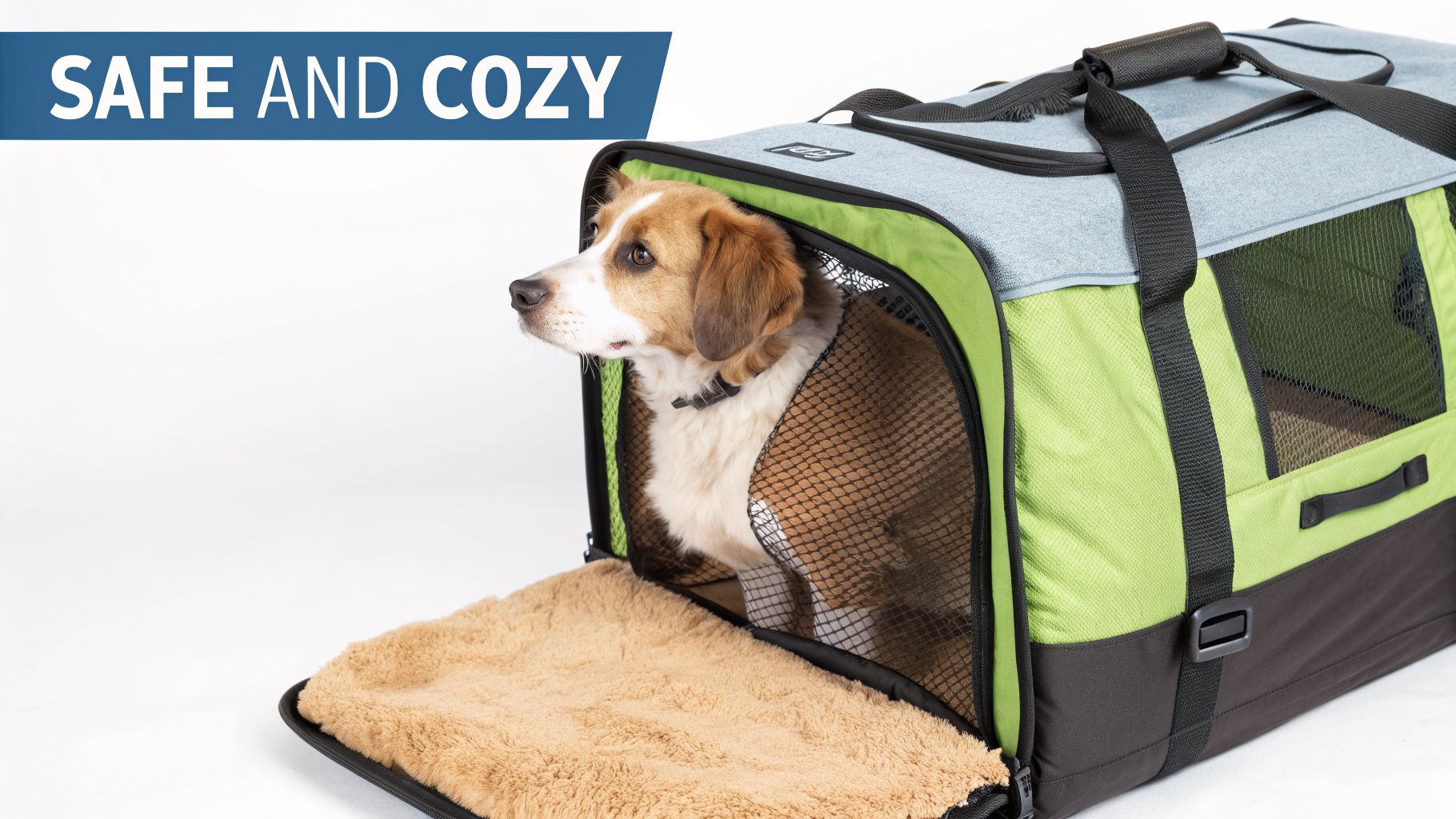
While size is the first hurdle, a truly effective dog travel carrier airline approved for flight prioritizes safety and comfort. The best carriers are more than just containers; they are secure, comfortable spaces that reduce travel stress for your dog. These features are not optional—they are essential for your dog’s well-being at 30,000 feet.
A focus on safety is paramount. The travel industry reports an incident rate of less than 0.01% among 161,335 animals transported, a testament to secure equipment. With two-thirds of dog owners planning to fly in 2024, the demand for high-quality, safe carriers is at an all-time high. You can read the full research on evolving pet travel trends to see how the market is adapting.
Non-Negotiable Safety Features
Prioritize these features to prevent accidents and ensure airline compliance.
-
Locking Safety Zippers: Standard zippers can be opened by a determined dog. Look for carriers with locking zippers that use clips or buckles to prevent escapes. A loose pet on a plane is a major safety risk.
-
Durable, Claw-Proof Mesh: All carriers require ventilation, but the mesh must be strong. Choose a carrier with claw-proof or tear-resistant mesh. Flimsy materials can be destroyed by an anxious dog, creating an escape route.
-
A Firm, Waterproof Base: The carrier floor must be solid. A rigid insert provides a stable surface for your dog. Critically, the base must be waterproof to contain any accidents—this is a universal airline requirement.
Actionable Insight: A carrier's primary function is to keep your dog secure. Features like locking zippers and reinforced mesh are not luxuries; they are fundamental safety requirements for air travel.
Features That Enhance Comfort and Reduce Stress
While safety is the priority, a comfortable dog makes for a much smoother journey. The right comfort features can help your dog view the carrier as a safe space rather than a source of anxiety.
Multiple Entry Points
A carrier with both top and side entry is highly practical. The side door allows your dog to enter and exit on their own, which is excellent for training. The top-loading door is invaluable for anxious pets, as it allows you to gently lower them in rather than forcing them into a dark space.
Plush, Washable Bedding
A soft liner transforms a carrier from a box into a bed. Look for a model with a removable and machine-washable liner. This provides a comfortable spot for your dog to rest and simplifies cleanup. A familiar-smelling bed can also significantly reduce travel anxiety.
Convenient Storage Pockets
External pockets are essential for organization. Use the zippered compartments on your dog travel carrier airline approved to store necessities like your dog’s health certificate, a bag of treats, poop bags, and a collapsible water bowl. This keeps critical items accessible without rummaging through your carry-on.
Preparing Your Dog for a Stress-Free Flight
You've selected the perfect carrier, but that's only half the battle. If your dog fears the carrier, your travel day will be stressful. The secret to a smooth flight begins weeks before you leave. Your goal is to transform the carrier from a strange object into your dog's personal safe space—a cozy den they willingly enter. A calm dog is essential, as airlines reserve the right to deny boarding to pets that are overly anxious or disruptive.
Getting Your Dog to Love Their Carrier
Success here relies on patience, positive reinforcement, and a gradual introduction. Start this process at least a few weeks before your trip to build a strong, positive association.
The Four-Step Introduction
-
Step 1: Make It Part of the Scenery Place the carrier in a common area of your home with the doors open. Casually toss high-value treats or a favorite toy inside. Don't force interaction; let your dog explore it at their own pace. When they go inside, offer praise and another treat. Keep it low-pressure.
-
Step 2: Practice with the Door Once your dog enters the carrier willingly, start closing the door for a few seconds. Give a treat as you close it, then open it immediately and offer praise. Gradually increase the duration the door is closed, always pairing the experience with a positive reward.
-
Step 3: A Quick Tour of the House With your dog comfortable inside the closed carrier, pick it up and walk around your home for a minute or two. Then, set it down and release them with praise. This helps acclimate them to the sensation of being carried.
-
Step 4: Take a Test Drive The final step is to take short car rides with your dog in the carrier. Drive around the block or to a fun destination like a park. This teaches your dog that the carrier can lead to positive experiences, not just stressful events like a vet visit.
Actionable Insight: The goal is to make the carrier so appealing that your dog chooses to enter it. Feeding meals inside the carrier or providing a special chew toy that is only available in the carrier are highly effective methods.
Getting Ready for the Airport
With your dog now comfortable in their carrier, you can focus on travel day logistics. Your calmness will have a positive influence on your dog. For pets with significant travel anxiety, consult your vet about management options like CBD for dog anxiety.
A pre-flight plan for food, water, and paperwork is essential.
Pre-Flight Checklist
- Food and Water: Limit food for four to six hours before the flight to reduce the risk of motion sickness or accidents. Small sips of water are fine, but avoid letting them drink a large amount right before leaving.
- Airport Potty Breaks: Before you leave home, look up the locations of pet relief areas at your departure airport. Plan for a final potty break just before you go through security.
- Have Your Paperwork Ready: Store your dog’s health certificate, vaccination records, and pet reservation confirmation in an easily accessible place, like the carrier's side pocket. This avoids delays at the check-in counter.
- Pack a "Go-Bag": Use the carrier’s pockets to hold a collapsible water bowl, a small bag of treats, poop bags, and a familiar, quiet toy. This keeps your dog’s essentials separate and easy to find.
Your Pre-Flight Checklist for a Smooth Journey
Knowing the rules is one thing; executing a solid plan is another. This two-part checklist provides actionable steps to ensure you are fully prepared for your trip. The first section covers purchasing the right gear, and the second focuses on travel day readiness.
Before You Buy the Carrier
Your journey begins with selecting the right carrier. This is a critical decision for your dog's safety and your peace of mind.
- Confirm Sizing: Measure your dog's height and length. Add 2-3 inches to each dimension to ensure they can stand, turn, and lie down comfortably. Airline staff will check this.
- Check Ventilation: The carrier must have claw-proof mesh on at least two (preferably three) sides for adequate airflow.
- Inspect Security Features: Prioritize locking zippers to prevent escapes. The carrier must be fully enclosed and secure.
- Verify the Base: Ensure the floor is firm to provide stability and 100% waterproof to contain any accidents, a mandatory airline rule.
Before You Head to the Airport
With the right carrier in hand, focus on your travel day preparations. Organization is the key to a calm departure.
Actionable Insight: This checklist transforms pre-travel anxiety into confidence. It’s a practical tool for responsible pet ownership.
Your final preparations are as crucial as your gear choice.
- Confirm Your Pet Reservation: Call the airline 24-48 hours before your flight to re-confirm your dog's spot in the cabin. In-cabin pet spaces are limited.
- Pack Your Dog's Essentials: Use the carrier’s external pockets for health documents, treats, poop bags, and a collapsible water bowl. For more packing strategies, review these essential carry on luggage packing tips.
- Arrive Early: Allow extra time at the airport. You must check in at the full-service counter (not a kiosk) to have your dog and carrier approved by an agent.
- Plan for Potty Breaks: Locate the airport's pet relief areas online before you leave home. Schedule a final bathroom break just before heading through security.
If you need more ideas for your trip, check out our guide on other helpful travel accessories for dogs.
Frequently Asked Questions About Dog Travel Carriers
Even with thorough preparation, last-minute questions often arise. Here are concise answers to the most common concerns from pet owners preparing to fly.
Can Two Small Dogs Fly in One Carrier?
Almost universally, the answer is no. Most airlines enforce a strict "one pet per carrier" rule for safety reasons. Even if your dogs are small and accustomed to sharing space, each pet needs its own carrier and a separate reservation to ensure they have adequate room and ventilation.
What if My Dog Is Slightly Too Tall for the Carrier?
This is where a soft-sided carrier is invaluable. If your dog's head touches the top when they stand, but they can still comfortably turn around and lie down in a natural position, it is generally acceptable. The flexibility of a soft-sided dog travel carrier airline approved for in-cabin use allows it to compress slightly under the seat.
Actionable Insight: The primary test is comfort. Your dog must be able to lie down completely. If they appear cramped or cannot settle, the carrier is too small. This may mean your dog is too large for in-cabin travel on that airline.
What Paperwork Do I Need for a Domestic Flight?
While not always mandatory for domestic flights within the U.S., it is highly advisable to travel with a health certificate (Certificate of Veterinary Inspection or CVI) from your vet, issued within 10 days of your trip. Additionally, carry a copy of your dog’s rabies vaccination records. State-specific entry requirements can vary, so being over-prepared is the best strategy.
How Do I Clean the Carrier After a Trip?
Proper cleaning maintains your carrier and your dog's health. Follow these steps:
- Wash the Bedding: Most quality carriers include a removable, machine-washable liner. Follow the washing instructions on the tag.
- Wipe Down the Inside: Use a pet-safe disinfectant wipe or a cloth with mild soap and water to clean the interior, especially the waterproof base.
- Let It Air Out: Leave all doors and windows open and allow the carrier to air dry completely before storing it. This prevents mildew and odors, ensuring it’s ready for your next trip.
For a carrier designed with all these travel needs in mind, explore the line of TSA-compliant travel solutions from Pet Magasin. Find the perfect fit for your furry co-pilot and travel with confidence at https://www.petmagasin.com.

Leave a comment